Creativity is not only an essential feature of language use, but it will be a key skill for employability over the coming decade. With classrooms moving progressively towards more online delivery, how can we ensure that we don’t lose one of the most fulfilling and engaging aspects of learning?
The mobile learning conceptMobile learning can be understood as any learning or training that takes place using a mobile phone or tablet device. This is a definition linked to specific technological objects rather than any pedagogical assumptions or underlying theories of learning. It is therefore helpful to consider the characteristics of mobile devices that lend themselves most readily to language learning. In this paper, we focus specifically on how we can use mobile apps to achieve language learning objectives.
I found this article truly interesting because it tells how important it is to use social media as a tool to learn more about a foreign language. Nowadays, it is fundamental to show the new generations other uses a mobile device can have besides entertaining and keeping contact with family and friends. In the 21st century, social media should also work as an educational and academic tool for students who are looking forward to study in a more dynamic way.
This article talks not only of the use of Mobile apps in classes, but also about these apps on an English class. Also, it explains how to implement that in those classes and how it could help for example in time managment, to evaluate students and to monitor them. Times has change and we can use technollogy very well if we want, even to teach or to do teaching more easy, and I think that this article is very interesting and usefull for me as a future English teacher, since it gives me a good option to make my classes more interactive and didactive through mobile apps. I can make use of them to keep my students organized, to keep them concentrated and to monitor them, for examplo with apps such a Schoology, in which I can be more aware of my future students, the tasks and exams.
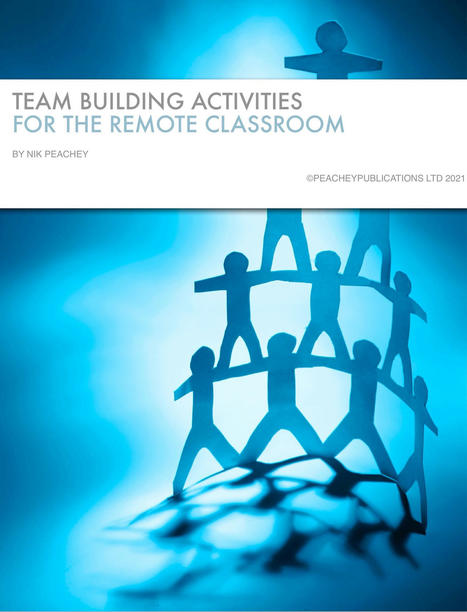
The purpose of this book is to enable socialisation in the remote classroom and to help you develop your students as a team, working together and collaborating to develop their language learning skills in the remote classroom.Many teachers an
Tonight, we listened to Nik Peachey's inspiring ideas, experiences and suggestions about language teaching, teaching experiences, online learning, technology and English language, importance of technology for language learning, technology and language skills, social media and English language, technological tools, creativity in language classrooms and etc.
This session explores various techniques for engaging students during online lessons. Nik explains the concept of Empathy Mapping, which you can use to better understand the individuals or groups that you are teaching, and suggests ideas for technical set-up.
Nik Peachey is a consultant and trainer with more than 20 years' experience of working with online and blending learning.
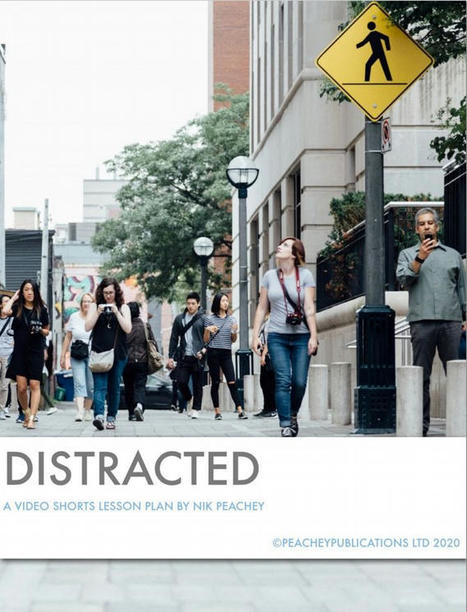
This lesson uses a short video clip, some quotes and an infographic to explore the impact that mobile phones and digital distractions can have on personal relationships. By the end of the lesson, students will have some tips for being a better listener and...
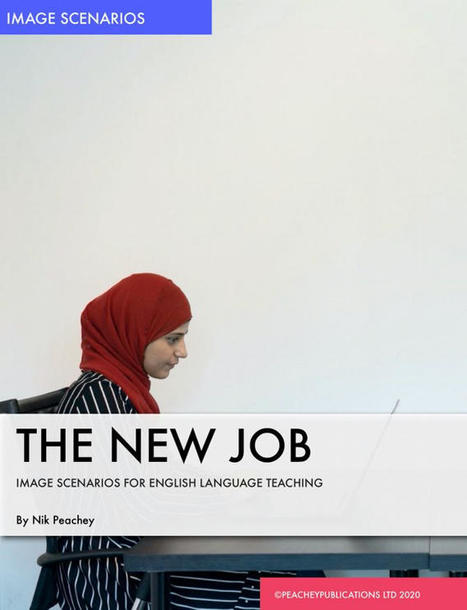
This lesson is based on an image of two women working at a desk. The students discuss the possible relationships between the two woman and build a back story to the image. They then role play a conversation between them.The lesson uses elements of critical...
This episode is the third in a series of interviews with 'ELT influencers' chosen by our TDSIG competition winners. Nik Peachey talks about his early involvement in technology and the likely forthcoming evolutions in language learning technology including artificial intelligence, virtual reality...
Good teaching is good teaching, whether it is done face-to-face or online. As a teacher, you will already have many skills and strategies that you can bring to teaching online, whatever digital tools you choose (or are asked) to use. And as a language teacher, you already know how to engage and motivate your students. You also know that you need to give your students opportunities to listen to and practise English. In this paper, we look at tools, techniques, and activities that will enable you to use these essential skills in your online teaching.
One of the first and most obvious things you’ll have to adapt to when starting to teach online is the change in space. As a teacher at the front of the classroom you have a three dimensional space to work in.
technology can give teachers many different opportunities to increase pedagogical habilities, whether you are working on it or as an alternative to present a different class from what you usually do in the four-walled classroom. thus, always is good to have the required knowledge to deal with a particular purpose, in this case, to let students to have an enriching opportunity, which is developing a class through a electornic platform. truly, teachers need to know how to manage different elements involved in the situation. the educator such have in mind, not only how they might be seen, but also how the sorrounding in which the class is presented is layout. therefore, knowing these important aspects, provide teachers with a good base to beging the enterprise of teaching through internet..
For many students listening is the hardest of the four skills to master. Unlike reading, listening happens in real time and it can be hard to control the speed of the information coming at them.
the use of technology in language teaching now is an essential part of a educators as it provides a whole range of opportunities. when thinking to present a class, however, teachers might not always be aware of this tools available. there is a long way full of oppotunities for educator to put on this armour, instead of letting these opportunities to pass by without noticing it.
In this episode, we speak to Nik Peachey, Director of Pedagogy at PeacheyPublications, an independent digital publishing company that specialises in the design of digital learning materials. We discuss digital resources to enhance both online and face-to-face classes, the importance of socialisation in the remote classroom, and developing your own digital materials. Nik also shares his thoughts on the future of digital ELT.
What makes flipped learning distinct from other forms of blended learning is the relationship between the independent study that students do alone and the work they do together.
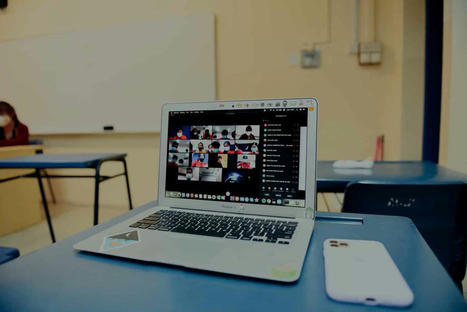
Over the last year, we have seen one of the biggest fundamental shifts in educational practice in history. Within the space of weeks, millions of students and their teachers were forced out of their classrooms and onto online platforms with the challenge of building rapport in a new context.
Video shorts are short video clips that in many cases contain a whole story. The shorts selected for this book are all animated clips and none have any spoken dialogue. This makes them ideal for language teaching as all communication is visual an
Free video of a 53-minute webinar with the great Nik Peachey. Don't miss this! -JL
"With many of us making the shift to remote teaching and learning it seems all the more important to remember to maintain the human aspect of language learning. What could be more human than the need to create? In this session Nik Peachey will share ideas, exercises and activities which foster our students’ creativity and enable them to use language in a creative way. The activities will show how the remote classroom can be leveraged to make language learning and use a creative and engaging experience."
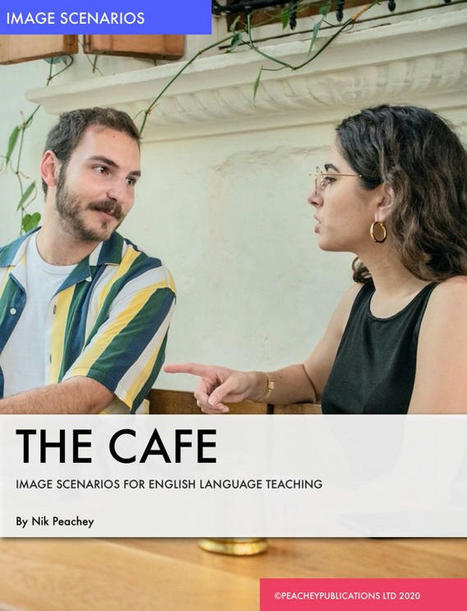
This lesson is based around an image of a man and a woman in a cafe together, but what’s their relationship and what is the man looking at on his computer? Get students to explore this image and take on the roles of these people as they negotiate this diff...
In this lesson, students listen to a woman talking about how she uses her phone and social media. They then have the chance to talk about their own phone and social media habits. This is followed by some discussion of the pros and cons of mobile devices.
Expect inspiring discussions about creativity and innovation in the classroom, recommendations for handy apps to use, as well as hidden pitfalls to avoid when using tech in the classroom.
I think it’s hard for anyone to deny that at present we live in polarized times with an increase in extreme views, extreme politics and extremism in religion...
To get content containing either thought or leadership enter:
To get content containing both thought and leadership enter:
To get content containing the expression thought leadership enter:
You can enter several keywords and you can refine them whenever you want. Our suggestion engine uses more signals but entering a few keywords here will rapidly give you great content to curate.