“The opening words of the United Nations Charter are: `We, the Peoples of the United Nations.’ This is the clearest possible statement that the United Nations does not belong to States alone. […] We live in an era in which international affairs are no longer dominated by States as the sole actors. The participants include non-governmental organizations, national parliaments, private companies, the mass media, universities, intellectuals, artists, and every woman and every man who considers him or herself to be part of the great human family.”
Secretary-General Kofi Annan
Messina, Italy, April 1997
What is an NGO?
A non-governmental organization (NGO) is any non-profit, voluntary citizens’ group which is organized on a local, national or international level. Task-oriented and driven by people with a common interest, NGOs perform a variety of services and humanitarian functions, bring citizens’ concerns to Governments, monitor policies and encourage political participation at the community level. They provide analysis and expertise, serve as early warning mechanisms and help monitor and implement international agreements. Some are organized around specific issues, such as human rights, the environment or health. Their relationship with offices and agencies of the United Nations System differs depending on their location and mandates.
Over 1,300 NGOs with strong information programmes on issues of concern to the United Nations are associated with the Department of Public Information (DPI), giving the United Nations valuable links to people around the world. DPI helps those NGOs gain access to and disseminate information about the range of issues in which the United Nations is involved, to enable the public to understand better the aims and objectives of the Organization.
How do NGOs and DPI cooperate?
The Department of Public Information and NGOs cooperate regularly. NGOs associated with DPI disseminate information about the UN to their membership, thereby building knowledge of and support for the Organization at the grassroots level. This dissemination includes, publicizing UN activities around the world on such issues as peace and security, economic and social development, human rights, humanitarian affairs and international law. Additionally, promote UN observances and international years established by the General Assembly to focus world attention on important issues facing humanity.
The NGO Relations Section within the Department of Public Information at the United Nations is the link with approximately 1,300 Non-governmental Organizations (NGOs) who are partners and members in association with the Department of Public Information and support the UN efforts to disseminate information on the priority issues on its agenda, including sustainable development, creating a safer and more secure world, the importance of prevention, helping countries in transition, empowering women and young people, and addressing poverty, among others.
Civil Society-BRICS Engagement Initiative was jointly undertaken by FIM - Forum for
Democratic Global Governance in Montreal, Canada and the Society for Participatory
Research in Asia (PRIA), India. We sincerely acknowledge the contributions of our in-country
partners from BRICS countries especially the Polis Institute (Brazil), the Isandla Institute
(South Africa), the Participation Centre (China) and the Commission on Social Policies, Labour
and Living Standards, Civic Chamber of the Russian Federation (Russia). We also
acknowledge the insights of other civil society organisations (CSOs) that actively participated
and contributed in various in-country consultations. We are thankful to various government
officials who participated and contributed in the in-country consultations.
This initiative could not have materialised without the leadership of FIM, especially Heather
Mackenzie and Nigel Martin. We deeply appreciate their contribution, support and guidance.
Rajesh Tandon &
Kaustuv Kanti Bandyopadhyay
New Delhi, June 2013
Acronyms
ASEAN Association of Southeast Asian Nations
BTTC BRICS Think Tanks Council
CRA Contingent Reserve Arrangement
CSO Civil Society Organisation
DAC Development Assistance Committee
IAEA International Atomic Energy Agency
IBSA India, Brazil, South Africa
IDS Institute for Development Studies
IFI International Financial Institution
IMF International Monetary Fund
INGO International Non-Governmental Organisation
MDG Millennium Development Goal
NEPAD New Partnership for Africa’s Development
NGO Non-Governmental Organisation
OECD Organisation for Economic Co-operation and Development
PIDA Programme for Infrastructure Development in Africa
SAARC South Asian Association for Regional Co-operation
SDG Sustainable Development Goal
UN United Nations
UNAOC United Nations Alliance of Civilisations
UNGA United Nation General Assembly
UNSC United Nation Security Council
WTO World Trade Organisation
Introduction
The established global order since post-World War II is changing quite dramatically,
particularly with the dawn of the new millennium. It seems the old global order characterised
by the North American and European hegemony is gradually being replaced by a new global
order, characterised by new forms of co-operation, across many emerging economies in the
global south. New forms of alliances are emerging amongst southern nations based on varied
interests ranging from regional, geo-political, security, trade, and so on. Examples include, the
Association of Southeast Asian Nations (ASEAN), a geo-political and economic organisation of
ten countries located in Southeast Asia, formed in 1967; the South Asian Association for
Regional Co-operation (SAARC) an organisation of South Asian nations, established in 1985;
New Partnership for Africa's Development (NEPAD) a technical agency of the African Union,
established in 2001; and Mercosur or Mercosul an economic and political agreement among
several Latin American countries, established in 1991. Amongst all these formations, an
alliance which has caught the attention of most people and seems to be capable of changing
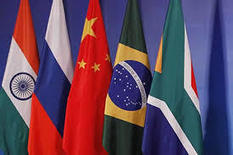
the global order significantly is called BRICS – an alliance of five nations - Brazil, Russia, India,
China and South Africa. These five nations are considered to be the most promising
economies, though some other economies like Indonesia, Nigeria, Mexico, and Turkey
present similar potential.
This paper reviews the emergence of BRICS and its perceived potential and limitation. More
importantly, it critically examines how it matters to civil society. Does BRICS as an alliance of
the 'rising powers' hold any promise to address the shared interests and concerns of civil
society in these countries nationally and globally? What does the collective BRICS represent in
the emerging architecture of global governance? Should civil society take notice of its agenda
and its implications on the citizens? Should civil society engage at all with BRICS? If answers to
these open ended questions are found in the affirmative, what should be the modalities and
purposes of such engagements? What are the potential pitfalls? In the next Section, BRICS'
emerging agendas and interests are analysed before addressing the above questions.
This paper has been produced under the project "Civil Society-BRICS Engagement Initiative"
supported by FIM – Forum for Democratic Global Governance in Montreal, Canada. The
initiative was jointly implemented by PRIA (India), the Polis Institute (Brazil), the Isandla
1 Goldman Sachs (2001)
2 Goldman Sachs (2003)
Institute (South Africa),the Participation Centre (China) and the Commission on Social
Policies, Labour and Living Standards, Civic Chamber of the Russian Federation (Russia). The
main purpose of this paper is to inform civil society about BRICS and initiate deliberations
primarily amongst indigenous civil society from BRICS countries and with civil society from
other developing countries (affected by BRICS' agenda) with a view to exploring the
relevance, scope and modalities of civil society engagement with BRICS.
History and Emergence of BRICS
In 2001 a Goldman Sachs Report called “Building Better Global Economic BRICs” first coined
the phrase BRICs. Another Goldman Sachs Report called “Dreaming with BRICs – The Path to
2 2050” was published in 2003 to further elaborate on the global economic significance of
Brazil, Russia, India and China (BRICs). The thrust of the argument of these reports was that
the four BRICs countries would together account for 27 per cent of world economy and 40 per
cent of its population by 2050. This projection made the policymakers of the world take notice
of a grouping which hitherto didnot exist as a collective. It also began to interest bankers,
investors and trade negotiators as they saw BRICs as engines of economic growth regionally
and globally.
However, the political dialogue amongst the four BRICs countries began only in September
2006 when the foreign ministers of these four countries met on the side lines of the United
Nation General Assembly (UNGA). As a follow-up, the Finance Ministers of the four BRICs
countries met in Sao Paulo (Brazil) on November 7, 2008 and in London on March 13, 2009
(mostly in the context of emerging G20 Heads of States gatherings then convened by the US
President George Bush and the British Prime Minister Tony Blair). At the initiative of Russia,
the first informal meeting of the four Heads of States from BRICs countries took place on the
side lines of the G8 summit in Japan on July 9, 2008. Russia offered to host the first BRICs
summit in 2009, and the rest is history.
Since its first formal Summit in Yekaterinburg (Russia) in June 2009, the BRICs have had five
Summits – the second in Brasilia (Brazil) in April 2010, the third in Sanya (China) in April 2011,
the fourth in New Delhi (India) in March 2012 and the fifth in Durban (South Africa) in March
History and Emergence of BRICS
It was in late December 2010 that South Africa was formally invited to join the collective
and the necessary transition from BRICs to BRICS was made.
As Cynthia Roberts cites, the then Russian President Dmitry Medvedev, while opening the
first formal BRICS Summit in 2009 said that the BRIC should create conditions for a more just
world order and described the June 2009 inaugural BRIC summit as an outstandng, historic
event marking the emergence of a new format for addressing global problems. The final
4 declaration from the First Summit called for 'a more democratic and just multi-polar world
order'. The Summit also called for 'reform of International Financial Institutions (IFIs), United
Nations(UN) and World Trade Organisation (WTO).' It reaffirmed that 'the emerging and
developing economies must have greater voice and representation in IFIs, and their heads
and senior leadership should be appointed through an open, transparent, and merit-based
selection process'. It particularly recognised 'the status of India and Brazil in international
affairs', and supported 'their aspirations to play a greater role in the United Nations'. In this
sense, the primary focus of the BRICs coalition has been to find ways to calibrate their
collective strategies in matters related to global finance, trade and economy. Yet, the political
implications of BRICs as a countervailing force to American 'unipolarism' and G7 western
capitalism was not lost sight of. When the Russian President suggested that the sovereign
funds of his country should be invested in other currencies (other than US Dollars), the US
Dollar fell by nearly one per cent in value in global trading markets. The declaration from the
Summit called for a 'stable, predictable and more diversified international monetary system'.
The primary thrust of the First Summit was to develop a shared perspective on issues facing
the global economy and its impact on the national economies of the four BRICs countries.
However, it also invited the international community to 'minimise the impact of the crisis on
development and ensure the achievement of the Millennium Development Goals (MDGs)'
and asked the developed countries to 'fulfil their commitment of 0.7 per cent of Gross National
Income for the Official Development Assistance and make further efforts in increasing
assistance, debt relief, market access and technology transfer for developing countries'. It
addition, it reaffirmed the need for stable, sustainable and diversified energy sources,
implementation of sustainable development principles, constructive dialogue on climate
change (based on the principle of common but differentiated responsibility), and contribution
to global food security.
By the time the Second Summit was held in Brasilia in April 2010, the global economy was in
such turmoil that the Summit was designed to strengthen financial co-operation amongst
these four 'emerging markets'. A major co-operation agreement was signed between the
National Development Banks of the four countries. The declaration also included
preparations for the forthcoming G20 meeting in South Korea in November 2010. The thrust
of the declaration was to take such a stand on global political economy issues and matters
related to UN reforms that other formations and associations of countries from the developing
world could find resonance. The declaration included almost all topics mentioned in the First
Summit's declaration but a stronger language and sentiment was used with regard to the
reforms of various global governance institutions. It reiterated that 'the International Monetary
Fund (IMF) and the World Bank urgently need to address their legitimacy deficits. Reforming
these institutions' governance structures requires first and foremost a substantial shift in voting
power in favour of emerging market economies and developing countries to bring their
participation in decision making in line with their relative weight in the world economy.' It
called for 'the voting power reform of the World Bank to be fulfilled in the upcoming Spring
Meetings, and expect the quota reform of the IMF to be concluded by the G-20 Summit in
November this year'. It emphasised 'the need for an open and merit based selection method,
irrespective of nationality, for the heading positions of the IMF and the World Bank and' staff
of these institutions needs to better reflect the diversity of their membership'. A strong position
was also articulated 'to resist all forms of trade protectionism and fight disguised restrictions
on trade.' At the same time stronger support was articulated in favour of 'Russia's bid for
accession to the WTO.'
In the run up to the Second BRIC Summit a number of inter-ministerial meetings, like the
Ministry of Agriculture and Agrarian Development and Ministry of Finance, were also
organised. The most interesting inclusion of non-state actors included the first meeting of
cooperatives, business forums and a conference of think tanks (which was later referred to as
the BRICS Academic Forum). However, any engagement with non-governmental
organisations (NGOs) and civil society organisations (CSOs) remained elusive. The only
window of opportunity that was made available through the declaration was an affirmation to
support the Alliance of Civilisations an initiative of the United Nations (UNAOC) to promote
international, intercultural and interreligious dialogue and co-operation.
5 Second BRIC Summit Declaration (2010), Brazil
Civil Society – BRICS Engagement : Opportunities and Challenges
By the time the Third BRICS Summit was hosted by China in April 2011 in Sanya, South Africa
had formally joined the collective and by then it was BRICS. The focus of deliberations
hereunder the theme “Broad Vision, Shared Prosperity”was far more explicit on such issues as
reforms of Bretton Woods Institutions, Doha Development round of WTO, international
6 terrorism, climate change and the achieving of the MDGs. The Summit declaration continues
to call for support to 'a multi-polar, equitable and democratic world order'. A major thrust of
the agreements at the China Summit was to strengthen co-operation amongst BRICS countries
beyond the official government bodies. Specific focus on co-operation in the areas of science,
agriculture, health, sports, arts and culture was mentioned; exchange of scholars, sports
persons, youth and various other formations (like trade associations) was explicitly planned
as joint programmes of BRICS. It is useful to note that there was still no reference to any
exchange or co-operation between NGOs or civil society among BRICS countries.
Both the articulation of purposes and programmes of BRICS and its public communications
improved during the Third Summit held in China. To reiterate its clear purposes:
To arrive at a consensus on how to cope with global challenges and make contributions
to resolving global problems.
To enhance coordination and collaboration among BRICS countries in international
affairs.
To further deepen and expand pragmatic co-operation of BRICS in all fields.
To further strengthen the bilateral relations among BRICS countries.
The fact that all the BRICS nations were present in the United Nation Security Council (UNSC)
concurrently during the year 2011, the Sanya declaration acknowledged it as 'a valuable
opportunity to work closely together on issues of peace and security'. It denounced any use of
force and supported the principle of maintaining the independence, sovereignty, unity and
territorial integrity of each nation.
The programme of work that evolved during this Summit identified common domestic issues
for co-operation more clearly – inequality, knowledge-intensive economic development,
social security, inflation and flow of 'hot' money. Beyond economics, focus on inequality and
social security broadened the scope of co-operation amongst BRICS.
The Fourth BRICS Summit in Delhi Declaration in March 2012 focused the discussions, under
the overarching theme, “BRICS Partnership for Global Stability, Security and Prosperity”. The
complexity of the Euro Zone crisis, the possibilities of the UN Conference on Sustainable
Development (Rio+20) and the Conference of Parties to the Convention on Biological
Diversity being hosted in Brazil and India respectively later this year; the upcoming G20
Summit in Mexico, the 8th WTO Ministerial Conference in Geneva, the emerging political
scenario in the Middle East and North provided the backdrop for this summit. The
commitment to the norms of international law and multilateral decision making for
maintaining macroeconomic stability was emphasised.
The Summit called for a more representative international financial architecture, with an
increase in the voice and representation of developing countries including quota and
governance reforms in the IMF to protect the voice and representation of the IMF's poorest
members. The World Bank was urged to give greater priority to mobilising resources and
meeting the needs of development finance while reducing lending costs and adopting
innovative lending tools, while welcoming the candidatures from the developing world for
the position of the President of the World Bank. It was reiterated that the Heads of IMF and
World Bank be selected through an open and merit-based process and the need for reforming
the governance structure that reflects current economic and political reality. A significant
articulation included a call to change the nature of the World Bank from an institution that
essentially mediates North-South co-operation to an institution that promotes equal
partnership with all countries as a way of dealing with development issues and to overcome
an out-dated donor-recipient dichotomy. China and Russia reiterated the importance they
attach to the status of Brazil, India and South Africa in international affairs and supported their
aspiration to play a greater role in the UN.
The Finance Ministers of the BRICS countries were directed to consider the possibility of
setting up a new Development Bank for mobilising resources for infrastructure and
sustainable development projects in BRICS and other emerging economies and developing
countries, to supplement the existing efforts of multilateral and regional financial institutions
for global growth and development. The recommendations were expected to be shared in the
next Summit in South Africa.
The Summit called for a resolution to settle the conflicts in the Middle East and North Africa, in
particular the Arab-Israel conflict on the basis of the universally recognised international legal
framework including the relevant UN Resolutions, the Madrid Principles and the Arab Peace
Initiative. Concerns were raised about the current situation in Syria and invited to end all
violence and violations of human rights. The leadership of BRICS recognised Iran's right to
peaceful uses of nuclear energy consistent with its international obligations including the
need for continuity of dialogue between the International Atomic Energy Agency (IAEA) and
Iran and in accordance with the provisions of the relevant UN Security Council Resolutions.
The Summit shared its commitment to Afghanistan for continued development assistance and
co-operation, preferential access to world markets, foreign investment and a clear end-state
strategy to attain lasting peace and stability.
The Summit called for actions to address the issues related to economic development,
eradicating poverty, and combating hunger and malnutrition in many developing countries. It
reiterated its support to the forthcoming UN Conference on Sustainable Development
(Rio+20) with the principle of common but differentiated responsibilities, Agenda 21 and the
Johannesburg Plan of Implementation. It affirmed that the concept of a 'green economy', still
to be defined at Rio+20, must be understood in the larger framework of sustainable
development and poverty eradication and is a means to achieve these fundamental and
overriding priorities, not an end in itself. It resisted the introduction of trade and investment
barriers in any form on the grounds of developing a green economy.
The Summit also viewed the MDGs to remain as a fundamental milestone in the development
agenda. It recognised that there is a storehouse of knowledge, know-how, capacities and best
practices available in the BRICS countries that can be shared and on which meaningful cooperation
can be built for the benefit of people.
Recognising the public health challenges, including universal access to health services, access
to health technologies, including medicines, increasing costs and the growing burden of both
communicable and non-communicable diseases, the BRICS Health Ministers were directed to
take necessary action. The Summit also mentioned the challenges of rapid urbanisation, faced
by all developing societies including the BRICS countries and directed the respective
authorities to coordinate efforts and learn from best practices and technologies available. A
plan of action included organising the first meeting of the BRICS Urbanisation Forum and the
second BRICS Friendship Cities and Local Governments Co-operation Forum in 2012 in India.
Civil Society – BRICS Engagement : Opportunities and Challenges
The Fifth BRICS Summit in Durban was organised in March 2013 under the overarching theme
“BRICS and Africa: Partnership for Development, Integration and Industrialisation”. The
8 declaration in continuation with the earlier summit declarations reaffirmed the commitment
to the promotion of international law, multilateralism and the central role of the UN and aim to
progressively develop BRICS into a full-fledged mechanism of current and long-term
coordination on a wide range of key issues of the world economy and politics. One of the
most significant decisions included the commitment to provide support to African countries in
their industrialisation process through stimulating foreign direct investment, knowledge
exchange, capacitybuilding and diversification of imports from Africa within the framework of
the NEPAD. It also recognised the need for infrastructure development in Africa through the
development of Programme for Infrastructure Development in Africa (PIDA).
Two other significant decisions were to set up a new BRICS Development Bank for mobilising
resources for infrastructure and sustainable development projects in BRICS, other emerging
economies and developing countries, to supplement the existing efforts of multilateral and
regional financial institutions for global growth and development. The second decision was to
construct a financial safety net through the creation of a self-managed Contingent Reserve
Arrangement (CRA) amongst BRICS countries with an initial size of US$ 100 billion. The
Summit continued to assert the needs for reforms in the IFIs and other global governance
institutions by changing the quota system in a time-bound manner. It maintained its
commitment to achieve the MDGs, and also emphasised the need for the UN to assume a
central role in determining the priorities in post-2015 development goals and Sustainable
Development Goals (SDGs).
Opportunities and Challenges of BRICS
The relationships between BRICS economies and other developing countries are being
considered as mutually beneficial affairs. The expansion of the BRICS' markets has enormous
potential to help countries in Africa, Latin America and Asia, which can increase their exports.
In return, BRICS can also take advantage of the rapid development of the market in these
Opportunities and Challenges of BRICS
developing countries to increase their own exports and growth. The BRICS' economies are
also increasing their overseas investment with fellow BRICS countries, for example, China is
the biggest investor in Brazil for mutual investments.
The BRICS have a lot in common. All the BRICS countries have taken a common position
against trade protectionism. All the BRICS' economies are also victims of the global financial
crisis. This has led to unprecedented co-operation in a bid to reform the international financial
and monetary system. It is important that the BRICS countries continue to speak in one voice
to increase their say and influence in the reform of the international financial system. Climate
change is a common challenge for the BRICS countries. All the BRICS countries are engaged in
negotiations with the developed countries on the transfer of environment friendly
technologies to the developing countries at a low cost. The most important thing is to learn
from each other in pursuing a common development goal. BRICS as a group is expected to act
as advocate and practitioner in forging a global partnership for development, with the aim to
enhancing the influence of emerging economies in world affairs, in the promotion of a more
just, democratic international order with respect to world economy, politics and security. On
the whole, the BRICS nations can play a much bigger role in global management by
systematically creating frameworks offering policy and development options for the emerging
9 nations.
Despite these commonalities BRICS as an entity also faces several challenges from within.
One of the challenges is the internal incongruence. “The challenge for BRICS countries has
always been the articulation of a common vision, with the member nations being at different
stages of political and socio-economic development. While some have evolved economically
and militarily they are yet to succeed in enabling plural governance structures, while others
who represent modern democratic societies are being challenged domestically by inequalities
and fault-lines created by caste, colour, religion and history” (ibid). Deutsche Bank Research
said in a report that “economically, financially and politically, China overshadows and will
continue to overshadow the other BRICS. China's economy is larger than that of the combined
10 economies of the other three BRIC countries.”As Lin Yueqin mentions, Brazil has a lower
growth rate, but it is wealthier than China or India on a per capita basis, the economy of Brazil
is potentially more diverse than the other BRICS due to its raw materials and manufacturing
potential. South Africa's economy is small relative to those of the four original BRIC members.
Even the economies of India and Russia are five times bigger than South Africa. On the other
hand, the BRICS countries are also competing against and oppressing one another. Another
criticism is that the BRICS is an assumption based projection and in many ways undemocratic.
Of great concern is the large scale disregard for human rights and democracy by Russia and
China. It is also true that the BRICS countries neither represent a regional coalition nor a global
one. In fact, all the five countries hardly share similar strengths or experience similar
development challenges. Thus, the notion of the BRICS countries as a set appears somewhat
forced or imposed.
Relevance of BRICS to Civil Society
have
Relevance of BRICS to Civil Society
a stronger voice at regional and global levels. Principles for CSO engagement with
multilateralism point to good practices that are based in well-established lessons and can help
to optimise civil society participation in such power shifts.
Before strategising what should civil society do to engage with BRICS, it would be useful to
clarify the rationale, if any, for such an engagement? To begin with, it is important to recognise
that BRICS is emerging as a global influencing mechanism beyond the five BRICS countries. As
previous analysis is showing, the BRICS collective is taking positions on several global issues
that affect other multi-lateral institutions (like UN, WTO, World Bank, IMF, etc.). They are also
taking a common stand with respect to issues such as climate change, MDGs and global
terrorism. In essence, therefore, BRICS is emerging as a mechanism whose influence on
economic trade and development and the security agenda is having an impact on countries
and populations beyond those of the BRICS.
At the same time, it is important to acknowledge that BRICS itself is a global governance
mechanism of inter-governmental nature. As such a mechanism, it is evolving, and
maintaining its structure in a rotating and multi-modal manner. The current practice in BRICS
is that the host of the Summit acts as a coordinator of the activities for the following year till the
next Summit. So, South Africa is expected to play such a coordinating and leadership role after
the Durban Summit. However, BRICS is a 'non-legitimate' global governance mechanism; as
many forums have been arguing, in its character, BRICS is similar to G7 or G8 of the previous
era, or G20 of the contemporary context. These are groupings of countries with a 'club-like'
nature, where membership is by invitation only. Unlike the UN system or even Bretton Woods
institutions, such 'clubs' do not have democratic legitimacy; hence, they also lack democratic
accountability to citizens and/or shareholders. Other than their own internal processes, such
global governance mechanisms (like G7, G8, G20, etc.) they do not 'owe' any external
accountability, even though their actions (or inactions) have a global impact on citizens,
communities and nations.
Therefore, development organisations in particular, and civil society in general, need to
understand what BRICS is doing, and what is the impact of its programmes of co-operation, or
what they are likely to have on development issues, policies and practices in these five
countries, as well as on a global platform. Since the agenda of BRICS co-operation is primarily
to advance its own national economic development, first and foremost is the focus of its
impact on the populations of these five countries in general, and its poor and the excluded in
particular. Such an understanding may create opportunities and spaces for more direct
engagement of national/ domestic civil society with the BRICS process in each of the five
countries.
The starting point for considerations of engagement is the review of the programme of cooperation
planned by BRICS Summits in terms of its social and human development agendas.
Environment, sustainability and equity concerns need to be kept in focus by civil society while
reviewing such BRICS programmes. Given the special thrust of civil society, it has to mainly
focus on the concerns of the poor and the marginalised at the centre of its analysis of the
BRICS programme of co-operation. For example, all BRICS countries are facing the
phenomenon of rapid urbanisation and growing urban poverty; how do they co-operate in
addressing this set of issues within their broad concern for inequality?
In addition, as BRICS is taking collective positions on many global governance institutions and
policies, it is also important that national/domestic civil society reviews these positions from
those perspectives as well. For example, a section of the New Delhi Summit discussed the
agenda for the Rio Sustainability Conference in June 2012; BRICS tried to develop a common
position to influence those negotiations. If civil society from BRICS countries have had
concerns about Rio negotiations, and wanted to influence those processes, one channel of
influencing that was through BRICS.
12 As Heather Mackenzie argues, CSOs in the BRICS countries must increase their participation
in global governance by building sustainable relationships with the BRICS multilateral
grouping. From this respect, it is useful to recognise that networks of civil society in each of
these five BRICS countries should come together to explore these questions of why to engage,
what to engage and how to engage BRICS from their own national/domestic perspective.
Some basic pre-conditions should be followed by CSOs while engaging with BRICS. These are
as follows.
In opening up a dialogue with BRICS, civil society does not, in any way, intend to confer
legitimacy upon BRICS as a global governance mechanism.
Civil society engaging diplomatically with BRICS will deal only with the issues affecting
civil society within all BRICS countries, and/or civil society globally.
Civil society engaging diplomatically with BRICS will not present itself as a gate keeper of
civil society throughout the BRICS countries.
Simultaneously, FIM has adopted the following eight general principles developed by and for
civil society to aid civil society actors in their engagement with multilaterals in general;
engagement with BRICS could also follow the same. These principles suggest that CSOs:
Build and maintain local to global and global to local links;
Document and disseminate their practitioner knowledge;
Embrace the full diversity of their sector;
Understand the broad context of global governance;
Are willing and able to engage, and to disengage, diplomatically with those who do not
share their vision of the common good;
Are actively committed to their long-term vision and goals;
Are open and transparent about whom they represent and to whom they are
accountable, and
Align their practice with their values.
In approaching this effort, two factors have to be kept in mind. First, the nature, scale and
strength of civil society across these five BRICS countries vary greatly. While civil society is
reasonably strong and visible in Brazil, India and South Africa, its nature and pattern is
considerably different in China and Russia. In addition, the democratic space for civil society,
though shifting constantly, is relatively open in the first three BRICS countries, as compared to
China and Russia. Therefore, civil society's engagements with national policy-makers,
political leaders and senior officials are very different in character across the BRICS; much
more active, constructive and critical engagements are taking place in Brazil and India, as well
as in South Africa, than in the other two at this stage.
Second, the formal political system of national governance also varies considerably in the
BRICS countries. India, Brazil and South Africa follow forms of democratic political systems
established in the 1950s, 1980s and 1990s. These can be said to be mature democracies. Russia
has acquired a democratic political system only in the late 1990s, and is still evolving. China's
political system is characterised by the one party rule. As these historical political realities have
evolved, each of these BRICS countries has other alliances and coalitions. India, Brazil and
South Africa have the IBSA axis (a coalition that is working regularly). Russia is part of the G8
too. China hosts the Shanghai Co-operation (which brings many Asian countries together with
Russia and India). Therefore, the spaces and models of civil society engagements across
BRICS have to contend with these complex, evolving and multi-faceted realities.
An interesting discussion took place on the idea/ possibility of the New Development Bank in
the meeting organised by the Observer Researcher Foundation on “Working Towards BRICS
Co-operation, Consultation and Coordination” on July 17, 2012 in New Delhi. The idea to form
such a bank evolved from the need for an organisation to perform the role of a financial
intermediary and mobilise savings. Emerging Market and Developing Economies (EMDEs)
require large investments in infrastructure in order to sustain a high rate of growth; relieve the
pressures of urbanisation and chart a course for sustainable development. The underlying
idea of the BRICS Development Bank is to make the grouping more cohesive and to rebalance
13 the global economy through a supplementary institution. Subsequently, the idea of the
BRICS Development Bank was further developed in New Delhi and Durban Summits,
however, a clear contour and modus operandi is yet to emerge.
In short, therefore, it seems that the larger social and human development agenda needs to be
the thrust of civil society engagement with BRICS. It must have the vantage point of social
inclusion and concerns for growing inequality and marginalisation. Its perspectives on social
justice, environmental sustainability and gender equality may further inform its approaches. It
is interesting to note that some of these issues have found a clear place in the
recommendations made by the BRICS Academic Forums. These meetings brought forth the
possibilities of BRICS engagement in areas such as climate change, food security and water,
urbanisation, universal access to healthcare, skilling and direct investments in education
sector, BRICS Development Bank and Impact Investment Fund and technology sharing,
innovation and co-operation across industries.
On the whole, though there exist interesting entry-points for civil society to engage with
BRICS; yet as Nigel mentions, for some BRICS States there may be a lurking doubt that civil
societies, and particularly the CSOs, are a western invention and not to be trusted/ relied
upon. Therefore it is imperative that the first civil society contact with BRICS must be made by
BRICS based civil society only. Probably, it will be wise to acknowledge and utilise the body
of knowledge within BRICS based civil society on how to influence inter-state governance
through quiet diplomacy.
Civil Society Experience of Engaging with BRICS
FIM-Forum for Democratic Global Governance launched the Civil Society-BRICS Engagement
Initiative in November 2011. Although the project was housed within FIM, essentially the
leadership of the project came from civil society within the BRICS countries. Towards that end,
FIM and PRIA, India agreed to co-ordinate the initiative in collaboration with the Polis Institute
in Brazil, the Isandla Institute in South Africa, the Participation Centre in China and the
Commission on Social Policies, Labour and Living Standards, Civic Chamber of the Russian
Federation. The primary objective of this initiative was to develop a strategy whereby civil
society actors from within the BRICS countries can begin to influence this key multilateral
initiative. Following the first round of five official BRICS meetings there has been no evidence
of a civil society component to the BRICS outreach. Thus the timing was right for civil society
to take a proactive position.
The first planning sessions was held in Stockholm on 1-2 November 2011 with participation
from civil society leaders from each of the BRICS countries. It was recognised from the outset
that the BRICS alliance is new and, at best, partially understood, even by its own leaders.
Therefore, civil society actors would consider working on two fronts from the outset. One
would be how to best sensitise broad civil society within the BRICS countries to the
importance and potential of BRICS. The second priority would be to identify appropriate entry
points for engagement and influence within BRICS. These entry points could be issueoriented
where an issue of common concern allows for ready collaboration, or countryoriented
where one or more BRICS members share the view that civil society engagement is
necessary to achieve certain objectives.
Following the initial planning meeting in Stockholm, PRIA in consultation with FIM prepared
a Briefing Note summarising the emergence, history, purpose and declarations from four
official BRICS Summits. This note served as a background document for various in-country
consultations with civil society. The objectives of in-country consultations were defined as: (i)
informing civil society in the BRICS countries about the current governance, functions, and
priorities of BRICS, and, (ii) facilitating civil society engagement with key BRICS actors with a
view to influencing their policy priorities and governance processes. Till date in-country
consultations have been organised in all five countries as part of this initiative. These are as
follows.
India Consultation, 23 March 2012 and 31 May 2013 in New Delhi organised by PRIA,
India
China Consultation, 24 August 2012 in Beijing organised by Participation Centre, China
Brazil Consultation, 27 November 2012 in Sao Paulo organised by Polis Institute, Brazil
South Africa Consultation, 19 February 2013 in Johannesburg organised by Isandla
Institute, South Africa
Russia Consultation, 14 June 2013 in Moscow, as part of Civil G20 meeting hosted by
Russia
The activities carried out under the current Civil Society-BRICS Engagement Initiative have
helped develop a deeper understanding of the functioning BRICS and the challenges and
opportunities for civil society engagement in the BRICS processes, as well as mapping of other
domestic and international initiatives with which the FIM initiative could foster a strategic
partnership.
One such initiative was “Engaging with the Rising Powers' Impact on Development Studies,
Development Policy and Development Practice” currently hosted by the Institute for
Development Studies (IDS), Sussex, United Kingdom. FIM and its BRICS partners have been
in dialogue with their IDS colleagues with a view to learning from each other, provide
complementarities and explore opportunities together.
In the run up of the Fifth BRICS Summit held at Durban, South Africa on 26-27 March 2013,
FIM, IDS and PRIA also hosted an International Civil Society Meeting on Future Strategies for
Civil Society-BRICS Engagement on 19-20 March 2013 at Johannesburg, South Africa. The
purpose of the meeting was: (i) sharing experiences and outcomes of in-country
consultations; (ii) stock-taking of Civil Society-BRICS Engagement Initiative focusing on
revisiting the relevance, challenges, opportunities and pitfalls; and (iii) defining future
strategies for civil society engagement with BRICS processes (focusing on thematic priorities,
missing agenda, capacities and resources).
The in-country consultations, the discussion in various international meetings, and informal
discussions with various civil society, academia and BRICS officials underlined the following
points.
The engagement of civil society with BRICS is pivotal in deepening and broadening the
agenda of democratising global governance institutions. This initiative has contributed to
fostering dialogues within civil society and consequently developing a broad consensus
on continued engagement with BRICS.
Many civil societies resonate with the fact that BRICS as a multilateral entity has taken up
an ambitious agenda, which may significantly change or at least provide an alternative to
the established norms and practices of international development co-operation, thus far
driven by the Organisation for Economic Co-operation and Development (OECD)/
Development Assistance Committee (DAC). They also hope that BRICS may significantly
intensify the volume and tone of the discourse on democratising global governance
institutions, particularly the World Bank, International Monetary Fund, World Trade
Organisation and the UN.
Since a significant amount of domestic public resources will be committed and spent in
other developing countries, civil society and citizens should know how the priorities will
be set, and what kind of norms and values will be established to determine these
priorities, and so on.
All the five BRICS Summits and particularly the Third and the Fourth Summits have called
for broadening the co-operation among the five countries beyond governments to
include business corporations, academic institutions, sports, culture and people to
people interactions. The most flourishing among these are the delegation of business
corporations and the BRICS Academic Forum, which has now been formalised through
the formation the BRICS Think Tanks Council (BTTC). Given the conspicuous omission
of civil society co-operation in any of these BRICS Summits, the argument could be made
even stronger by showcasing various relationships that CSOs have nourished and
strengthened particularly between India, South Africa and Brazil for the last 15-20 years
and increasingly with Chinese and Russian civil society groups. So the argument needs to
be made that CSOs must have their rightful place in the BRICS compact, as has been
envisaged and mentioned for other actors.
Civil society efforts to engage in dialogue with the BRICS officials in all the BRICS
countries have shown a positive trend. Notwithstanding the challenges ahead especially
to institutionalise such dialogues, none of the officials have outright rejected the
relevance of civil society engagement in BRICS.
The principal value addition of civil society would come from the expertise available
with the CSOs. Over the last three decades, civil society in many BRICS countries has
contributed to numerous innovations in social policies like health, education,
agriculture, management of natural resources, urban development etc.,which are already
included in the BRICS agenda. These innovations have been pursued particularly in the
context of internal diversities and scale, protection of rights, affirmative action; enabling
participation of the marginalised and so on. Civil society interventions have provided
alternative methodologies characterised by a bottom-up approach to development as
opposed to seeking top-down technical solutions only. The civil society innovations in
inclusive local economic development through promotion of micro enterprises and selfhelp
groups have been adopted by many governments including those outside BRICS
countries. Civil society particularly in Brazil, South Africa and India has been in the
forefront of promoting democratic decentralisation, participatory governance and social
accountability practices and policies. Civil society voices have worked at accelerating the
reforms in the UN, IMF, WTO and the World Bank long before the official BRICS
declarations. However, how far the BRICS country governments can go beyond the
parochial national interests is unclear at this stage. So far, the rhetoric is in the right place
as far as support to other developing countries is concerned.
Though BRICS has clearly articulated its mandate to focus on global economy and
'politics', most of the BRICS agenda seems to be geared towards economic development.
Given the diversity of political ideologies within BRICS, civil society needs to be sensitive
when engaging on issues related to global political governance. The engagement of
International NGOs (INGOs) particularly from the developed countries needs
circumspection as some of the BRICS governments are not amenable to open dialogue
with such INGOs. Civil society engagement with BRICS, therefore, has to be led by
domestic civil society from within BRICS countries.
As BRICS has generated considerable interest among academicians evidenced through a
number of articles and publications, civil society needs to broaden the engagement with
academia in each BRICS country. The civil society-academia-media axis could be a
considerable force to generate public debates and discussion on the BRICS policies,
programmes and practices.
Domestic civil society in each BRICS country is also confronted with the huge dilemma of
wholeheartedly engaging with BRICS. On one hand, each BRICS country is globally seen
as an emerging economy in terms of economic growth fuelled by economic globalisation
and liberalisation; on the other hand, each country also faces gigantic domestic
development problems of inequality, pockets of underdevelopment, poverty and
marginalisation. Many civil society actors believe that such engagement with BRICS may
divert their attention to something distant while many domestic issues require a definitive
resolution.
Many CSOs feel that there has been a historical lack of engagement between civil society
and foreign policy issues; there has been a divide between the development community
and the diplomatic community. As a result, the engagement is somewhat snail paced and
mutual appreciation is yet to evolve. They also feel that far better information would
enable civil society as a sector to formulate a position regarding a unified civil society
voice on issues hitherto confined to the foreign policy fraternity. A number of CSOs
raised questions like, does civil society understand what the objectives for each BRICS
country are in being part of BRICS and do we agree with this assessment or analysis? Is it
about better prioritising empowerment, development, trade or aid? Does civil society
know and understand what the geo-political objectives of BRICS are, especially in
respect of global economics, infrastructure development and poverty reduction? Is BRICS
attempting to create a multi-polar world? Does civil society understand how issues are
placed on the BRICS agenda, through whom and with whom civil society should be
liaising? Crucially, what are the grounds for inclusion and exclusion to the 'BRICS club'?
Future Directions for Civil Society-BRICS Engagement
The discussion among the partners on 'Future Strategies for Civil Society-BRICS Engagement'
suggested the following strategies.
Creating an information hub on BRICS for civil society – It was realised that a large section of
civil society is not fully aware about the development of BRICS policies, programmes and
practices on a regular basis. Civil societies in all BRICS countries do not have regular access to
ongoing commentaries and analysis on BRICS. Thus an information bridging role is crucial for
informed engagement by civil society.
Generating and communicating evidence in support of potential value addition by civil society
in BRICS – Civil society in many BRICS countries has made enormous contributions in
shaping domestic social and economic development policies and programmes over the last
three decades. As BRICS countries are readying to 'export' many such development policies
and programmes to other developing countries, the perspectives and contributions of civil
society need to be analysed and communicated to the BRICS policy makers. Thus there is a
need to undertake BRICS cross-country research studies particularly in two areas – (i)
contribution of domestic civil society (in BRICS countries) in shaping the social and economic
development policies and programmes, and (ii) transnational engagements of domestic civil
society (from BRICS countries).
Fostering dialogues between civil society and BRICS policy makers – As BRICS is an emerging
entity and continuously developing new areas of co-operation between the governments,
there is a need for continuous dialogue between civil society and the BRICS policy makers.
The in-country consultations organised in the current phase should be continued in each
BRICS country. The in-country and across the BRICS dialogues should be organised in two
inter-related ways: (i) by establishing various thematic working groups which could
undertake comparative research and convene dialogues for each thematic area, (ii) by
engaging with BRICS policy makers for further democratising the functioning of BRICS by
including a civil society network among its related affiliations.
References
Fifth BRICS Summit Declaration (2013), BRICS and Africa: Partnership for Development, Integration and Industrialisation, eThekwini Declaration, Durban: 27 March 2013, available at http://www.brics5.co.za/about-brics/summit-declaration/fifth-summit/, retrieved in March 2013 First BRIC Summit Declaration (2009), Joint Statement of the BRIC Countries Leaders June 16, 2009 Yekaterinburg, Russia, available athttp://www.brics5.co.za/aboutbrics/ summit-declaration/first-summit/, retrieved in January 2013 Fourth BRICS Summit Declaration (2012), Delhi Declaration, available at http://www.mea.gov.in/bilateraldocuments. htm?dtl/19158/Fourth+BRICS+Summit++Delhi+Declaration, retrieved on January 2013 Goldman Sachs (2001), Building Better Global Economic BRICs: Global Economics Paper No. 66 available at http://www.goldmansachs.com/our-thinking/archive/archivepdfs/ build-better-brics.pdf retrieved in January 2013 Goldman Sachs (2003), Dreaming with BRICs – The Path to 2050; available athttp://www.goldmansachs.com/ceoconfidential/CEO-2003-12.pdfretrieved in January 2013 MacKenzie H., 'Principles for Civil Society Engagement with Multilateralism', published in Heidi Moksnes and Mia Melin (ed), Global Civil Society: Shifting Powers in a Shifting World (2012), Uppsala University; Martin Nigel, (2012), 'Civil Society Strategies and Principles for Dialogue with the BRICS', FIM Forum for Democratic Global Governance; Observer Research Foundation, (2012) Fourth BRICS Academic Forum Meeting, March 2, 2012, New Delhi; available at http://www.observerindia.com/cms/export/orfonline/documents/other/forumdeclaration. pdf, retrieved in January 2013 Observer Research Foundation, (2012), Meeting on “Working towards BRICS cooperation, consultation and coordination”, July 17, 2012, New Delhi, available at http://www.orfonline.com/cms/sites/orfonline/modules/report/ReportDetail.html?cma id=39768&mmacmaid=39769, retrieved in January 2013 Report of Consultation on Civil Society-BRICS Engagement in Moscow, June 14, 2013 Report of the Engagement between South African Civil Society and Government on BRICS, Johannesburg, South Africa; organised by Isandla Institute, South Africa; February 19 2013 (Unpublished) Report of the In-country Consultation on Civil Society-BRICS Engagement Initiative in Beijing, China; August 24, 2012; organised by Participation Centre, China (Unpublished) Report of the In-country Consultation on Civil Society-BRICS Engagement Initiative in Sao Paulo, Brazil, November 27, 2012; organised by Polis Institute, Brazil (Unpublished) Report of the In-country Consultation on Civil Society-BRICS Engagement Initiative in New Delhi, India; organised by PRIA, India; March 23, 2012 (Unpublished) Report of the Workshop on India's Global Development Presences and Engagement of Indian Civil S
The object of the monitoring the status of the civil society are the structures, processes and phenomena of civil society. It is a society free of self-organization, including an aggregate of social relations, norms, values and actions of individual or collective human nature in the area is not their private (private) and public (or social) life.
The purpose of the research is to assess the current status of the civil society in the developing and the implementing state policy in the areas of the maintenance and the development of its institutions, providing concerned parties current, complete, accurate and regularly updated information necessary for analyzing and forecasting the development of civil society in Russia.
The empirical base of the research. Studies based on the methodology developed and used effectively by the Centre for Civil Society Studies and the nonprofit sector of HSE to explore various aspects of the civil society in Russia. The empirical base of the results of an all-Russian population-based surveys, surveys of socio-professional groups, national surveys of NGOs held in 2011, as well as in the previous waves of monitoring the state of civil society.
Overall, the results of studies related to:
The development of the scientific research by improving the methodology, developing new indicators and factors of the original collection tools of sociological data;
The provision of the government, NGOs, media and other stakeholders up to date, complete, reliable and regularly updated information necessary to understand the status of the civil society in Russia;
The contribution the formation of the state policy in the areas of maintenance and development of the civil society, support decision-making authority;
The elaboration recommendations on the development of the civil society, addressed to various stakeholders;
The provision of analytical materials to the Administration of the President, The Government of the Russian Federation, the working group "Development of public institutions" within the expert work on the socio-economic strategy for Russia until 2020, the Ministry of Economic Development of the Russian Federation, the Public Chamber of Russian Federation and regional public chambers to annual reports on the status of the civil society as a whole in Russia, and in some regions of Russia;
The application in teaching the knowledge base and analytical material obtained during the monitoring of the civil society.
23 April 2015–Civil society representatives yesterday expressed concern over strong trends to ‘outsource’ government responsibilities to the business sector during the post-2015 negotiations at the United Nations Headquarters, New York.
Local and international civil society groups in Cambodia warn a new law aimed at non-governmental organizations could harm the country's economy and slow ...
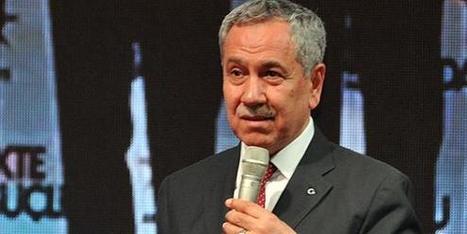
Deputy Prime Minister and Justice and Development Party (AK Party) spokesperson Bülent Arınç has criticized the police raids on three “reading rooms” that ...
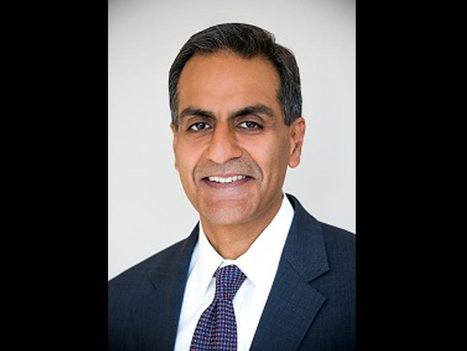
The US ambassador to New Delhi rebuked India's right-wing government Wednesday for a crackdown on non-governmental organisations, saying it could have a "chilling effect" on civil society.
Acting strict on the NGO receiving govt funding, government has cancelled licenses of 8975 NGOs for violation of Foreign Contribution Regulation Act and failing ...
This section examines the relationship between NGOs and states. NGOs do not have a single type of relationship with states. Some NGOs are created or funded by state governments, or have very close government ties. Other times, States actively try to undermine NGO activity by imposing severe restrictions curtailing their activities. This section analyzes the often complicated relationship between NGOs and States. Articles2013 | 2012|2011|2010 |2009 |2008 | 2007 | 2006 | Archived Articles2013Statement: Bahraini Human Rights Organizations Need Support (August 6, 2013)
As the Bahraini society is preparing for mass protests on the 14 August, the human rights situation in the country deteriorates, says a statement of six human rights organizations active in Bahrain published on the website of Social Watch, an international network of citizen’s organizations. The statement calls for international human rights organizations as well as journalists to come to Bahrain to monitor the situation, support the local organizations and report on the situation. The organizations also ask the UK Prime Minister David Cameron and US President Barack Obama to end their active support to the government of Bahrain. (Social Watch)
The ruling United Russia party has submitted a bill which aims to brand foreign funded nongovernmental organizations in Russia as “foreign agents.” The authors of the bill intend to stop the NGOs from “conspiring” and force them to admit that they are the agents of foreign governments. Rights activists accuse the Kremlin of seeking to discredit civil rights groups that oppose to the regime. (Radio Free Europe/Radio Liberty)
In December, Egyptian police raided the offices of several foreign “NGOs” leading to much Western press criticism. But the Western media has not investigated the history of the organizations and the nature of the charges. In fact, many of the groups are government sponsored organizations, receiving majority of their funding from the US National Endowment for Democracy which was formed to legally channel US government funds to opposition groups. By using the term NGO, the groups hide behind the illusion of innocent philanthropists, but if China or Cuba were funding opposition groups with a stated goal of regime change in the US, those involved would be facing much harsher consequences. (Irish Foreign Affairs)
Due to US anti-terror laws, many US citizens face severe restrictions when attempting to directly send money to Somali Famine victims. Somalia has not has a stable government or central banking system for the past 20 years. As a result, Somalis have created hawalas, or money transfer companies that relay money through a neighboring country’s bank. The system worked well before 9/11, but since then, sending money to hawalas has been classified as “financing” the terrorist group, al-Shabab, preventing individual citizens from sending crucial aid. (Colorlines)
In this Guardian opinion piece, William Easterly argues that US foreign aid should be re-imagined as poverty relief, not part of a defence or “nation-building” strategy. Easterly states that over the past ten years (under both the Bush and Obama Administration), aid has increasingly become inextricably linked to US Defense strategy. Though US aid is used as a political tool, it is imperative that the US acknowledge the need for poverty relief, separate from defense-building, in the wake of massive US budget cuts. (Guardian)
Western aid workers in Afghanistan operate in dangerous conditions and face severe lack of funding. Many aid workers have reported that their efforts have been ineffective because of corruption, failed policies and pressure from Western and the Karzai administration Afghani governments. According to one aid worker, the biggest mistake is linking development aid with military assistance, which muddies the relationship between aid workers and citizens in host countries. (Spiegel Online)
This Guardian opinion piece criticizes the US’s recent decision to cut foreign aid spending, arguing that this “short-sighted” effort will negatively impact both foreign recipients as well as the United States. Though the author argues that foreign aid is an investment, rather than charity, it is important that the US look at ways to ensure that the investment is not tainted by the US’s political motives. (Guardian)
The UN Office for the Coordination of Humanitarian Affairs reports that there not enough money or interest in the recent devastating floods in Pakistan. An official from International Federal of the Red Cross believes that the lack of donations is linked to the bad press Pakistan has received, particularly for its reputation for as a haven for armed groups. (IRIN)
Several Least Developed Countries (LDCs) have accused the United States and Japan of blocking funding for vulnerable countries to address climate change, even though they asked the LCDs to implement specific climate change initiatives. Though rich nations committed to provide $100 billion in climate finance by 2020, they failed to agree on ways to donate or distribute the money. (AlertNet)
As promised in July 2011, the US Congress froze the $200 million in Palestinian aid in retaliation for its statehood bid at the United Nations. This is the latest example of how the US privileges its geopolitical interests over its supposed commitment to humanitarian relief. Several Republican Congressman have proposed additional legislation to severe the relationship between the US and the UN, despite domestic support for increasing the US-UN relationship and for the US paying its full dues to the UN. (Foreign Policy)
Legislators have begun proposing deeper cuts to desperate humanitarian crises in Africa, Pakistan and Japan. NGOs fear that important US foreign aid programs will be eliminated in favour of American national security initiatives. (New York Times)
South Africa has granted a $350 million bailout to financially-starved Swaziland. However, King Mswati III of Swaziland is hesitant to sign the loan, as the conditions of the loan are unspecified. Swaziland has historically been hesitant to accept aid from outside parties, including the IMF. While Swaziland’s doubts may be justified, the worsening social and economic problems of the nation require immediate action. (IRIN)
A group of twenty NGOs have issued an open letter to the international community pleading that the lives of Somali famine victims must come before government politics. They state that due to lack of proper planning by aid agencies and constant movement of famine victims, only a portion of aid is being effectively delivered. The letter urges the “international community” to change its approach by “enhance[ing] its diplomatic engagement” with various political groups in Somalia in order to ensure that humanitarian aid is delivered. (IRIN)
During an Oxfam International event at the World Bank’s annual Fall meeting, a group of NGOs argued that investing in preventive measures is more effective than responding after a crisis has begun. As the cost and frequency of global crises--- from earthquakes to famines--- increases, many countries can no longer afford to repeatedly pay for short-term disaster relief. Donor countries must invest more in preventative measures. (IPS Terraviva)
Though the Ethiopian government has been accused of ethnic cleansing, widespread torture, and extra-judicial killings, the US, UK and EU continue to donate billions of dollars in development aid. The BBC News and the Bureau have documented several instances where the Ethiopian government has used this foreign aid as a means of political oppression, by creating “capacity-building programs” to promote its own political agenda and silence dissenters. Continuing to donate money to Ethiopia shows that the US, UK and EU values promoting their geopolitical interests, rather than a “humanitarian” agenda. (Alternet)
Foreign NGOs in Cambodia have called upon donor governments, such as the US, UK and Australia, to “reassess” their aid packages if Cambodia passes a controversial law curtailing NGO operations. NGOs in Cambodia have expressed concern that the law will prevent various organizations from representing and protecting marginalized Cambodians, such as farmers and the disabled. As more states begin to regulate NGO activities, it is important that changes are made for legitimate reasons, not political purposes. (Guardian)
The UN World Food Program (WFP) is investigating allegations that corrupt contractors have stolen thousands of sacks of grain and other supplies intended for Somalian famine victims. Food theft has occurred in Somalia since the early 90s, causing aid workers to coin the term “traditional distribution” to describe when food aid is stolen to be sold on the black market. Though this New York Times article largely criticizes al-Shabab and the new Somalian transitional government for active participation (and failed prevention) in this large scale food theft, this is only a part of the picture. The root causes of the famine are largely geopolitical, as the Somali people have been made vulnerable to exhausted food resources due to continuous military and political interventions in the region (particularly by Ethiopia, the AU, and the US).
The UN Conference on Trade and Development (UNCTAD) has released a report directly linking Palestine’s “dire” economic and social situation to Israeli occupation. Although Palestine is the 10th largest recipient of aid worldwide, the report highlights that foreign aid does little to improve the situation in Palestine because of Israeli trade barriers and restrictions. This Guardian article asserts that these aid packages mask the “inaction” of countries that how Israel’s systematically prevents the Palestinian economy from being wholly self-sufficient. Donor states must take active measures to challenge the Israeli occupation, or else their aid will continue to be squandered on ineffective economic and development packages.
Cambodia has released the third draft of a proposed law that would curtail NGO operations and prevent NGOs from providing crucial humanitarian assistance in Cambodia. NGOs fear that the latest draft of this law undermines the relationship between the Cambodia government and Civil Society, and would prevent various NGOs from representing and protecting “marginalized” Cambodians, such as farmers and the disabled. As more states begin to regulate NGO activities, it is important that changes are made for legitimate reasons, such as holding NGOs accountable for their actions, rather than for political purposes. (Guardian)
NGOs fear that US foreign aid programs will be eliminated during the highly controversial and partisan 2012 budget talks. Currently, US foreign aid funding is considered “discretionary spending,” and some worry that it will be cut as a short-term effort to reduce the federal deficit. This Guardian article warns that these short term fixes will cost more in the long-term and lead to security, humanitarian, and global health problems. Cutting these aid initiatives would show that the US values its geopolitical interests over its humanitarian interests. It would be a shame if US with $14.6 tn GDP could not afford to contribute a small fraction of its GDP to help the rest of the world.
The death of Jennifer Anguka, a Ugandan elected official, calls attention to Uganda’s inability to pay for its public health system even as it spends a half of billion dollars on its military. This New York Times article notes the perverse effects Close of foreign aid: African governments increasingly receive more money to fight AIDS and other infectious diseases they spend less money on public health care and shift their revenues to other priorities. Nations must continue to support and fund domestic institutions and not depend solely on foreign aid for essential public services. US Foreign Aid 'Needs Greater Coherence,' Report Says (July 29, 2011)
Following the 2011 Development Assistance Committee (DAC) peer review, the OECD issued a report card stating that the US should improve coordination among its more than twenty-four governmental departments to better ensure the delivery of humanitarian aid. The DAC also calls on the US to reduce the amount of aid that is required to be invested in US companies and products. The report card lacks the necessary criticism of where aid is directed and how it is delivered, ignoring cases such as the use of aid to further US political interests. However, the report did not address more contentious issues, such as who benefits from US aid, and how the US uses aid money to further its political interests. (Guardian)
Strained US-Pakistan relations over the assassination of Osama Bin Laden and the discovery of CIA-sponsored fake vaccination programs are hampering aid efforts to assist the millions of Pakistanis that are still affected by last summer’s devastating floods. Several western aid organizations have reported stricter visa regulations and restrictions on where western aid organizations can work are increasing the costs and delivery of aid to areas hit by the floods. As monsoon season approaches, it is important that US and Pakistan do not “politicize” aid efforts, and allow humanitarian assistance to be delivered. (Guardian)
Al-Shabib, a Somalian opposition group, has announced that it will continue the ban on foreign aid groups working in Somalia, despite prior announcements to lift the ban. Al-Shabib has rejected UN claims about the Somalia famine and requests to bring aid to the region, arguing that these claims are laden with hidden political agendas. However, Somalia has been most strongly affected by the drought in Horn of Africa region and refugees are fleeing the country. While aid is often politicized, Al-Shabib should allow necessary humanitarian assistance, such as food and water supplies. (Al Jazeera)
International NGOs working in the occupied Palestine territory have questioned the “motive” behind the Hamas government’s audit request. These NGOs are concerned that the audit will “jeopardize vital operations,” particularly for smaller NGOs who do not have the money or resources to conduct an extensive audit. While NGOs must be held accountable for their daily operations, it must be done for legitimate reasons. Aid policies should not be used to promote a political agenda or prevent the delivery of essential humanitarian assistance or services. (Al Jazeera)
A group of international NGOs, including CIVICUS, Asian Forum for Human Rights, and Freedom House, have created the “Embattled NGO Assistance Fund” (ENA) to help international NGO workers resist government crackdowns and pressure. While there are an increasing number of draft laws prohibiting international NGO activity that make aid work particularly necessary, particularly in places where NGOs have challenged government human rights violations, this Guardian articlecautions against the “soft power” associated with the majority of foreign aid. Many NGOs, like Freedom House, are primarily funded by governments and use their aid work to promote a specific political agenda. It is important that the ENA fund be used for legitimate, rather than political, humanitarian purposes. (Guardian)
Cambodia has restricted public access to a proposed law curtailing NGO operations. NGOs fear that the law will be used to ban NGOs that oppose government policies, preventing legitimate NGOs from providing crucial humanitarian assistance. As more states begin to regulate NGO activities, it is important that changes are made for legitimate reasons, such as holding NGOs accountable for their actions, rather than for political purposes. (Radio Free Asia)
A draft NGO law in Somaliland threatens the sustainability of NGO operations by increasing transaction costs and reducing the capacity of organizations to act independently of the government. As the size and influence of the NGO sector grows, Somaliland and other states are moving to regulate the activities of these organizations. While regulation is not of itself problematic, it must be done for legitimate reasons, and should not hamper the delivery of humanitarian assistance or be a mechanism to suppress opposition. (IRIN) Israel Aiming Punitive Measures at Soft Targets (April 5, 2011)
Israel is increasingly moving to suppress internal dissent as a rebuke to international criticism of its occupation in the Palestinian West Bank. In early 2011, legislation was passed in the Knesset to establish a commission to investigate the finances of NGOs. Later, Israel-Arab politician, Haneen Zoab, had her parliamentary privileges revoked for participating in the Mavi Marmara flotilla to Gaza. Additionally, non-violent Israeli activists have been beaten, arrested and subjected to surveillance, for protesting the demolition of Palestinian homes. (IPS Terraviva)
The NGO community in Sri Lanka is being assailed by the government, which purportedly sees these organizations as its opposition in governance. The state is particularly concerned about funding of local NGOs by foreign governments. These NGOs are viewed as the tools by which foreign powers are able to influence internal political affairs. The obscured influence of foreign governments through NGOs is a legitimate concern. However, this should not be used as an excuse for suppression of valid critics and opposition movements. (IPS Terraviva)
Médecins du Monde, a French humanitarian NGO, has been expelled from Darfur and 12 of its workers have been arrested. Sudanese authorities accuse the group of undermining the government and providing support to rebels. Médecins du Monde was one of the last groups operating in a region of Darfur under rebel control. The crackdown demonstrates the difficulty faced by organizations giving humanitarian aid to people living under the control of anti-government forces. Governments often equate aid to direct support of these forces, putting NGO operations in jeopardy. (Reuters Africa)
The Fate of Dr Binayak Sen will Help to Show the Real India (February 8, 2011)Dr Binayak Sen, the founder of Indian NGO Rupantar and prominent human rights activist, has had his application for bail refused by the Indian Supreme Court. Sen is serving a life sentence for allegedly supporting Maoist rebels and is charged under the same legislation used to incarcerate Ghandi. Sen has been critical of the government and his work has focused on providing basic services to people the state ignores, including those in Maoist regions. Sen has already been jailed for over two years without any evidence to support the accusations against him. The government has repeatedly denied justice to Sen, attracting widespread condemnation in India and internationally. (Amnesty International)Ban on Foreign Funding Leaves Venezuelan Activists in Limbo about Whether they are Targets (January 30, 2011)
Venezuela has introduced a law curtailing NGO operations - joining Israel and Cambodia which have both recently done the same. The law prevents NGOs from accepting foreign funding and penalizes "opinions that offend state institutions." As in Israel and Cambodia, the Venezuelan government apparently wants to weaken foreign-backed opposition. Many NGOs in Venezuela depend on foreign financial support and will struggle to maintain their operations without this funding. (Associated Press)
Israel's parliament has passed a proposal to investigate human rights NGOs. The right-wing Yisrael Beiteinu Party justifies the proposal by claiming the activities of human rights groups are "delegitimising" Israel's military. These groups, however, say the proposal is akin to McCarthyism in the US and view it as an attempt to quash internal criticism in Israel. (The Independent)
A draft law threatens to significantly restrict the operations of NGOs in Cambodia. Prime Minister Hun Sen says that NGOs in Cambodia are demanding too many rights. In its current form, the law will constrain freedom of association, including limiting founding members of NGOs to Cambodian nationals, prohibiting activities by non-registered NGOs and requiring foreign NGOs to collaborate with the Cambodian government. This is an example of a wider movement among states to implement or amend laws to control NGO operations (Phnom Penh Post)
Around 150 aid groups, including four foreign organizations, have been forced to shut down by a government-backed commission in Afghanistan. The commission was established by President Hamid Karzai as part of his anti-corruption drive and his suspicion of foreign organizations in Afghanistan. According to Afghan law, NGOs are required to submit reports every six months detailing their funding and activities. None of the NGOs ordered to end operations submitted the reports despite warning letters. This ruling follows a similar one in May where the commission shut down 172 NGOs, including 20 foreign groups, for the same reason. (Reuters)
Rabkin suggests that following the murder of IAM staff in Afghanistan, aid workers and the Taliban will be forced to cooperate. Humanitarian groups have historically had to strike a delicate balance of distance and cooperation with the Taliban to negotiate for their safety. Whilst aid workers' safety has improved through such communication with the Taliban, a conflict persists because the military insists on NGO cooperation, so NGO's can become identified with the foreign enemies. (NPR)
The Harper administration is reversing the traditional policy under which Canadian governments have provided funding to NGOs and civil-society groups, including those which oppose government policies. The hardest hit groups have been those working for women's rights - funding for groups such as International Planned Parenthood has already been cut and the Canadian International Development Agency has warned NGOs to omit phrases like "gender equality" from future proposals to have a chance at funding. Meanwhile international development assistance for projects dedicated to promoting gender equality in Pakistan and Kenya has also been considerably reduced. (The Globe and the Mail)
Increasing prosperity in China has been accompanied by the growth of an active civil society and an increasing number of NGOs. However, recent reports from China suggest that the government is placing restrictions, such as complex registration procedures and a required approval process for large grants, on NGOs that are speaking up against the government's actions. Furthermore, NGOs receiving foreign funding are being viewed with skepticism and in some cases, facing sanctions. Such intimidation tactics are often successful, as reflected by the appeasing tone of some NGOs' mission statements. Meanwhile there is a growing trend of unregistered grassroots organizations as an alternative to registered, and consequentially government regulated, NGOs. The tenuous relationship between the government and civil society actors is thus shaping the form that civil society action takes in China. (Wall Street Journal)
Several NGO coordination bodies in Afghanistan have declared that the Afghan government's decision to ban 152 local and 20 foreign NGOs was a fair one. Most of the dissolved NGOs had failed to comply with the Ministry of Economy regulations; others had simply closed operations and left the country without notice, while some were deemed to have activity levels that were "too low." However, NGOs are providing critical services to the Afghan population, and while some monitoring may be necessary, it is also important to hold the work of the government, donors and private contractors up to the same standards. (IRIN)
Wan YanHai - former Chinese Health Ministry Official and prominent leader of a Chinese AIDS advocacy group - has fled China, following repeated harrassment by government authorities. Despite acknowledging the spread of HIV and AIDS as a pressing national health concern, the Chinese government - which recently tightened its regulations on foreign donations to local NGOs - is distrustful and suspicious towards independent groups and activists, whom it views as potential threats to its sovereignty and authority. (The Associated Press)
The Russian government has recently announced its 2010 budget to fund local NGOs. 1 billion rubles - $33 million equivalent - will be distributed to the NGO community through five Moscow based organizations which all possess intimate relations with the ruling United Russia party. Such channeling of funds has been criticized by members of civil society as lacking in accountability and transparency. Yelena Panfilova of Transparency International says that allocation of funds by the five appointed organizations has frequently been questioned. (The Moscow Times)
Nine employees of Emergency - an Afghanistan based Italian aid NGO - were charged for hospital killings and plotting to assassinate an Afghan governor. All accusations have since been dropped, yet controversies continue to surround the humanitarian NGO. Emergency recently admitted to having acted on the Italian Foreign Ministry's instructions when it brokered an agreement between the Afghan government and the Taliban in 2007 to "swap" five Taliban prisoners for the release of kidnapped Italian journalist Daniele Mastrogiacomo. Should humanitarian NGOs negotiate and mediate on behalf of belligerent parties, especially when it claims to act in "good faith," and where human life is at risk? (IRIN)
More than 60 civil society representatives met with Canadian government officials in a symposium at Vancouver on April 16 - a week prior to the G8 international development conference in Halifax. While the Canada government – which currently chairs the G8 – actively consults large-scale NGOs such as CARE, UNICEF and World Vision on maternal and child health issues, smaller-scale members of civil society struggle to secure constructive dialogue with government officials for their advocacy efforts. (Embassymag.ca)
Until the 1980s, many failed to appreciate the role of NGOs in influencing and implementing development policy in Africa. This article argues that NGOs are a growing presence in modern Africa and that African states often fail to contribute to development due to their lack of capacity, accountability and transparency. While most governments acknowledge NGOs as valuable assets, many remain wary and consider the rapid expansion of NGO networks as challenges to "state autonomy, legitimacy, revenue and territorial hegemony." (Institute for Security Studies)
Release of the Goldstone report has led to tightening pressure on Israeli human rights NGOs as the Israeli government takes extreme measures to defend itself against war crimes accusations. Rights advocates now face increasing scrutiny, and are frequently attacked by critics who accuse their work as "endangering the country." This situation is worrying, as a senior aide to Israeli Prime Minister Benjamin Netanyahu affirmed in a recent interview that Israel will "dedicate time and manpower to combat human rights groups" which challenge the legitimacy of the Israeli government's human rights practices. (New York Times)
The Egyptian government has recently introduced new draft legislation which requires NGOs and advocacy groups to become members of a government-controlled federation. The federation manages NGO permits, work and funding. Thirty-sex local NGOs have since launched a protest, alleging that the new legislation's underlying purpose is to prevent civil society from monitoring upcoming parliamentary and presidential elections. (Guardian)
China has tightened its rules on foreign donations to local NGOs - a move civil society groups regard as open to abuse by states officials wanting to exercise greater control. From March 1 onwards, the State Administration of Foreign Exchange does not only demand foreign donations to go into "special foreign exchange bank accounts," it also requires the donations to be accompanied by translated agreement and registration documents by donors. Despite material concerns on legitimacy of NGO funding sources, many argue that new funding regualtions do more harm than good by causing further constraints on the work of "well-intended" NGOs. (Reuters)
Gerald Steinberg, founder of NGO Monitor - a web-based project of the Jerusalem Center for Public Affairs - claims that European-funded human rights NGOs constitute "grotesque distortion" of democracy in Israel due to their criticisms of Israel's human rights record. This article by contrast attributes the nation's worsening democratic deficit to a bill recently introduced by the Israeli legislature. The author argues that the bill - which constraints funding as well as freedom of speech among civil society organizations - legitimizes assaults on human rights organizations that work within occupied Palestinian territories. (Guardian)
One of the main effects of the war against terrorism has been the diversion of development assistance to front-line states, very often to the detriment of NGOs which address global poverty and worsening income inequalities. Most aid disbursements for "advancing human security" can be viewed as aid disbursements for protecting northern national security interests. This article explores the impact of anti-terror measures on civil society, and is based on eight policy dialogue workshops held over two years by the International NGO Training and Research Centre (INTRACT). It argues that broad anti-terror laws hinder and sometimes, even "criminalize" humanitarian efforts of NGOs in certain areas of the world. (Development and Change: International Institute of Social Studies)
NGOs including Oxfam, Save the Children and Doctors without Borders will now face restrictions in their work to serve the needs of the Palestinian population in East Jerusalem and the West Bank. This is due to Israel's new policy of issuing NGO employees with tourist visas instead of work visas. Such repressive policies could only lead to "more hostility, more suspicion and more recriminations." (Guardian)
The Global Political Agreement (GPA) - signed by three political parties in Zimbabwe - has led to the channeling of all aid and assistance through the Zimbabwean government. This awards the government the right to determine allocation of resources for humanitarian purposes. Zimbabwean political science lecturer Simon Badza supports centralized control of NGO finances, and asserts that "all sovereign states may want to monitor the operations of NGOs to see if they are operating within the parameters of the law." Government control of NGO funds can lead to further strains on NGO work, and it will create unnecessary delays for pressing needs. (All Africa)
They call themselves the "third sector" of global government or, in their loftier moments, "global civil society." The first two sectors, business and government, call them pests. Their generic name is non-governmental organizations, or NGOs for short. As the demonstrations at the World Trade Organization meeting in Seattle this week show, some formerly marginal NGOs have burst into the global economy in a big way and are becoming a serious force in the way the world is run in the global era.
All this is new, a child of the post-Cold War world and the communications revolution. It's a work in progress, but as the global society takes shape, NGOs are in the thick of it. At stake is a battle to write the rules that will govern the new global economy. This economy is powered by global markets, global corporations and global communications, all of which have escaped the laws and frontiers of individual nations.
This process is shifting power to international organizations such as the WTO and the International Monetary Fund. Until now, the rules of these organizations have been set, often in private, by governments and by the global corporations themselves. The usual democratic instruments-- parliaments, political parties, the press and courts--are national in character and cannot follow this new governance as it expands over the world.
The emerging NGOs--mostly small, nimble and at home in cyberspace--can and do jump national borders. In the past two or three years, they have learned how to become a potent voice in the framing of this new global government. "What has changed since 1990 is that we are in the economic political mainstream," said Charles Arden-Clark of the World Wide Fund for Nature, an environmental NGO. "International organizations are learning they have to talk to us at the beginning (of negotiations)."
The Seattle demonstrations involve tens of thousands of people from at least 700 organizations, but they are only the tip of the iceberg. An estimated 30,000 NGOs operate internationally. Some are huge: Amnesty International has a bigger budget than the United Nations human-rights monitors. Most are small, little more than two economists and a filing cabinet. But they all have computers and modems and have become expert at using the Internet to form ad hoc coalitions that can leverage their strengths.
In the '90s, NGOs working together have played major roles in writing the international treaty banning land mines, in turning global warming and Third World debt relief into major issues, in establishing an international criminal court, and in defeating attempts by the 29 leading industrial nations to frame ground rules for global investment.
Some NGOs, such as Doctors Without Borders, deal with health issues, or like Human Rights Watch, fight political and legal battles. But an increasing number focus on economic causes, such as labor, poverty and the environment. The WTO, the international organization overseeing world trade, is a lightning rod for their concerns about the global economy.
NGOs sometimes are called non-profit organizations. Both names tell only what they aren't. They aren't part of government, nor of business. They are private organizations, usually devoted to a single cause, funded by contributions, often from foundations. Some big foundations, such as Ford and the Chicago-based MacArthur, have become powerful behind-the-scenes figures in the global economy through their targeted funding of NGOs. "What the Ford and MacArthur program officers think is important has huge importance for us," said John Cavanagh, director of the left-leaning Washington-based Institute for Policy Studies, which relies on funding from "30 or 40 foundations" to fulfill its mandate "to work on behalf of the poorer half of humanity, to help build a global civil society." "Something new is being born," said one of those program officers, the Ford Foundation's Larry Cox. "There is a new global movement. We are right now having to work out global principles that transcend nations."
All this is part of "a shifting economic and political architecture worldwide--as most visibly manifested by the end of the Cold War, rapid economic globalization, the increasing power of international corporations, and the proliferation of cheap communication technologies," wrote Curtis Runyan, assistant editor of World Watch magazine. In this process, the Internet has been crucial. The same communications technology that created global markets and global corporations has empowered the NGO-led backlash.
Critics charge that NGOs are anti-business, anti-globalization, anti-capitalism and anti-almost everything. The fiercely pro-trade British magazine, The Economist, scornfully lumped them together as a "rag-bag." Some NGO members, like the more raucous demonstrators who touched off the clashed in Seattle on Tuesday, might fit that description. Others are more sedate. But others have become a true third party in global governance. The NGOs who helped write the land-mine and international court treaties are examples.
The UN has accredited 1,500 NGOs, and the World Bank has a set it recognizes. Both bodies keep these NGOs briefed on issues under debate and often ask their advice and their help in areas, such as the environment, where the NGOs might have expertise. The IMF and WTO remain uncomfortable with NGOs. The WTO has begun informal briefings for NGOs at the trade organization's headquarters in Geneva, but both sides admit that mutual suspicion has prevented much genuine cooperation.
NGOs can be constructive and destructive, according to Cavanagh of the Institute for Policy Studies. Most believe the WTO has too much power and want to restrain, reform or destroy it, he said. But other NGOs, such as the ones that are helping to create an international criminal court, recognize the power of the global economy and want to build a new web of global environmental, labor and economic regulations to replace what they see as outmoded national codes, he said.
NGOs cut their teeth on political issues, such as voting rights and torture, and political groups such as Amnesty International and Human Rights Watch have become the biggest and best-known NGOs. "But now the debate is changing," said Michael Posner, executive director of the Lawyers Committee for Human Rights. "The original focus was on state-sponsored violence, on civil rights regarding torture, disappearances and the like. This is still important. "But now we're in a post-Cold War world, with issues relating to workplace or economic rights, such as sweatshops, abuse of children and mistreatment of women. With a growing global market and growing disparity, and with global companies going to poorer countries, these issues will continue to rise," Posner said.
Critics of NGOs point out that they are non-elected organizations, beholden not to voters but to their financial backers, and so are no more democratic than the WTO and other global organizations. Defenders such as Lori Wallach, director of Global Trade Watch for Public Citizen, argue that NGOs often insist that the global economy abide by national laws and regulations, forged in the democratic process. "On a global scale, democratic accountability is lost," said Wallach, whose Washington-based consumer organization was founded by Ralph Nader. "The true role of international rules is to ensure that nation-states remain robust."
The Workshop “Policy Impact of Civil Society in BRICS countries: Best Practices Influencing Policy-Making”, is held by the Public Policy Department of the Social Sciences Faculty, National Research University Higher School of Economics (NRU HSE) with the support of international organization Oxfam under the EU funded project “Empowering CSO Networks in an Unequal Multi-Polar World” In partnership with CSO Networks from Brazil, Russian Federation, India, Indonesia, China, South Africa and Mexico.
The subject of the Workshop is of special importance for Russia because of the forthcoming VII Summit of BRICS and SCO Summit in June, 2015 in Russian Ufa and because of the complicated international politics and economics context for Russian Federation.
The goals of the Workshop include: - developing analytical skills of young researchers and representatives of the civil society;
- strengthening their ability to identify the most urgent policy issues of the state and civil society in BRICS countries; - proposing potential solutions including optimal forms and possible scenarios of more efficient dialogue between Non-Governmental and Governmental actors of public policy-making; - and presenting the means of increasing the influence of civil society on the state and the political leaders in BRICS countries.
The best practices analysis, and dissemination of positive experience are also among the priorities of the Workshop.
The Program of the Workshop includes 3 parts: the Plenary Session, the Group-work Sessions, and the Debates:
During the Plenary Session the invited experts present the materials about the civil society activities in the BRICS states. The reports include the review of the key policy issues specific to the particular BRICS countries, analysis of the policy-making process, and evaluation of the role and instruments used by the CS to initiate changes in public policy.
During the Group-work Sessions the participants divide into 5 groups. They initiate the group-work, get acquainted with the key social policy issues in a BRICS country, use the CIVICUS methodology or other alternatives to evaluate the development of civil society, analyze the format and contents of interaction between Non-Governmental and Governmental actors of public policy-making; discuss the practical cases and best practices of such interaction; identify and analyze the prospects of technologies that allow CS to have a more significant impact on policy-making in a particular country; evaluate the effectiveness of extended pressure and citizen control over the government either from within government system or from outside of it.
The Debates conclude the work and unite the participants again to present the most exemplary public policy cases together with the recommendations for improving the civil society – state dialogue and widening civil society participation in the public policy-making process. After the group-work sessions each group delegates representatives to the two debate teams. The first one is to prove that technologies allowing CS to have stronger impact on policy-making are more efficient when incorporated into government system. The second – that the efficiency of such tools is greater if the emphasis is placed on the external oversight through extended pressure and citizen control over the government.
The target audience includes academic staff (professors and researchers), Russian and foreign students of NRU HSE and other universities, experts and representatives of NGOs, academic, and analytical communities.
Date, time, and location The date: 19th of May 2015 The time: 10:00 – 19:30 The place: auditorium 330, Myasnitskaya 11, Moscow
The working language: English
Registration The registration is mandatory. The deadline is 17th of May 2015. To register please follow the link.
Contact person: Sergey Parkhomenko, associate professor, Public Policy Department, SSF, NRU HSE E-mail: policy@hse.ru
ATTENTION! To avoid losses of correspondence please use the title “BRICS”
The Workshop Materials: The Program of the Workshop and other materials will be posted here later:
African CSOs call for broadening of concept of illicit financial flows
The story of Africa in relation to illicit financial flows (IFFS) is a familiar one. It has assumed a dominant position in policy discourses both on the African Continent and beyond. In Africa it has necessitated the setting up of an African Union Commission High Level Panel (HLP) on IFFs, whose report was launched at the 24th Session of the African Union Heads of State' Summit held in Addis Ababa, Ethiopia from 30-31 January 2015.
Africa is a net exporter of capital, with the United Nations Economic Commission for Africa (UNECA) estimating Africa's net financial outflow between the years 1970 and 2008 at around 800 billion US dollars. The last decade has witnessed an exponential acceleration of illicit financial outflows from Africa. From a relatively modest figure of about 12.5 billion US dollars in 2002, illicit outflows rose to 68.1 billion US dollars in 2009 and have averaged over 50 billion US dollars over the period. Thus, the seemingly explosion of debate on IFFs and Africa's development by different actors and at various levels of policy discussions is understandable.
But the debate is not without conceptual weakness and confusion. The dominant policy perspectives on illicit financial flows and Africa's development tend to focus on the unethical, criminal, corrupt and regulatory dimensions of illicit financial flows. Even though these are legitimate focus, their treatment fails to deal with the structural and systematic dimensions of IFFs that make it easy for the draining of resources from Africa.
It was against this background that TWN-Africa convened a 3-day Africa-wide meeting in Accra, Ghana, from the 10-12th of November 2014 with the main objective of broadening and deepening the conception of IFFs and Africa's development transformation. The meeting brought together participants from academia, civil society organisations, the media and women groups for discussions on IFFs and structural transformation of Africa's economies.
In laying out the main issues for the conference, Dr Yao Graham, Coordinator of TWN-Africa, called for the discussions to go beyond illegality, corruption and governance and to focus on how economic surpluses are generated in Africa, the dominant players involved in the process of generation and the distribution of the surplus. Hence the meeting discussed a wide range of issues such as finance and the financial systems and architecture, taxation, foreign direct investment (FDI), the extractive sector and the role of the state.
The issue of illicit financial flows it became clear was only the tip of the iceberg and is a manifestation of an economic system that privileges foreign capital and corporations to the neglect of the interests of majority of Africans and domestic capital. The debate must thus be broadened to include structural drivers within African economies and not just “resource losses”. This is because such a focus does not capture the whole magnitude of resource leakage in Africa.
In using Foreign Direct Investments (FDIs) as an instrument and means by which Africa loses resources it was revealed that the expectations of FDIs in Africa have pushed most African countries to give generous concessions to foreign companies with the assumption that FDIs will help create wealth and lift millions out of poverty and develop African economies. This is done through rules, in most cases approved by legislative assemblies that legitimize the earnings of corporations. Today, in Africa and many parts of the world corporations wield enormous power over many states. Though the earning is 'legitimate' it is made possible by over- liberalized rules, which provide an avenue for accumulation and repatriation of profits. The fact that no country has ever developed through FDI seems to be lost on most African countries. In most cases, the developmental impacts of FDIs are high when there is a strong domestic investment component which foreign corporations complement. Currently, FDI contributes more to perpetuate Africa's role in the global division of labor as producers of primary commodities and help keep Africa subservient to the needs of the economic development of industrialized countries. So Africa's fetish about FDIs has to be reversed if it wants to minimize or control IFFs.
One other issue of concern was the financialisation of commodities as a systemic approach through which resources are drained from Africa. Thus instead of the financial sector playing its intermediation role in the productive sectors of the economies it has become a master. The privatization of the financial sector, capital account liberalization - abolition of forex controls, other forms of public regulations all introduced to promote interests of finance sector players-was not to structurally transform the continent. The most dominant financial institutions today in Africa are thus foreign ones with development banks disappearing or becoming rare on the continent. This has been made possible because of the notion that foreign capital and its owners would bring good regulation and therefore achieve a stable and reliable financial system. But this has turned out to be a means of draining resources out of Africa.
Moreso financialization is thriving in Africa based on Africa's resources, production, and surplus among others through trade agreements. Deregulation as contained in Free Trade Agreements (FTAs) on financial services sets limits on regulation and capital controls. For instance one of the rules on the General Agreement on Trade in Services (GATS), and repeated in the Economic Partnership Agreement (EPA) especially in the CARIFORUM EEPA and other FTAs states that parties should not limit the amount of foreign investors in their financial sector. Institutionalization of protection of investors through trade and investment agreements is rampant in Africa.
In order to stem illicit financial flows the role of the state must go beyond the regulatory function and the governance dimensions into active participation in the generation of economic surpluses in Africa. The state function cannot be reduced to regulations and monitoring the behavior of the corporations operating in Africa. This is because no country has achieved marketled development. Development is a political process propelled by nationalism. Hence the market cannot be an alternative to the state. The weakness of the African states should rather be fixed. Limiting the role of the state to the behavior of rules or good governance checklist is anti-developmental. To fix the state, citizens must be empowered to recapture the state from particular interest on one hand; and critical engagement with national governments.
By Sylvester Bagooro. Sylvester Bagooro is Programme Officer, Third World Network-Africa.
The Ford Foundation joins a growing list of foreign non-profit organizations – including Mercy Corps and the Sierra Club – whose funds have been restricted by the Indian government.
THIRTY-FOUR civil society organisations (CSOs) in Bulawayo yesterday threatened court action and mass protests against President Robert Mugabe following his disparaging and tribal remarks against Kalangas last week.
Egyptian human rights organizations have issued a joint statement, condemning what they called “aggressive actions by the Egyptian government against civil ...
Voice of AmericaPHNOM PENH—. Local and international civil society groups in Cambodia warn a new law aimed at non-governmental organizations could harm the
The Norwegian Refugee Council (NRC) is an independent, humanitarian non-governmental organisation which provides assistance, protection and durable solutions to refugees and internally displaced persons worldwide.
Scaling Up: Thinking Through the Issues Print Peter Uvin and David Miller The World Hunger Program 1994
The World Hunger Program is part of the Watson Institute of International Studies at Brown University. The 1970s and 1980s have witness ed a dramatic growth in the number, the size and the level of activity of non-profit/non-governmental organizations (NGOs) in the Third World. They include peasant associations, neighborhood associations, people's movements, community initiatives, urban a ction committees and intermediary NGOs, filling the ranks of what is often referred to as the "associative sector." This phenomenon parallels a slow but profound change in the international aid system. Since the middle of the 1970s, donor agencies have be come increasingly preoccupied with the issue of participation and have looked to Northern and Southern NGOs as the vehicles for carrying forward an agenda of participation. As a result, both the numbers of international and local NGOs and the number of do nor funded projects that have a participation component within them have grown remarkably over the past ten years. This growth in size, number and activities of organized participatory initiatives has become recognized within the development community as" scaling-up." It constitutes an objective, or desire, of many funders, field practitioners and scholars alike.
However, some important questions about scaling-up need to be answered. What role do the participants that expand the ranks of the scaled up o rganizations play within these organizations or within their funded projects? Is there a relationship between donor support of scaling-up and constituent participation? In what way will this new interest in scaling-up affect the rank and file of the parti cipation movement? Has the redirection of development assistance toward scaling-up initiatives been effective? As Edwards and Hulme stated it: "how can [NGOs] increase their development impact without losing their traditional flexibility, value-base and e ffectiveness at the local level?"[1]
Together, these questions constitute a research agenda that, to date, has not received adequate attention. Indeed, most of the literature on grassroots development movements is no rmative in nature; the rest is largely anecdotal. It is as if the usual laws of scientific inquiry, verification and experimentation do not apply when dealing with organizations whose social goals have often eluded the same rigors of measurement administe red among the bottom lines of government and for-profit organization.[2]
This article proposes a first scientific look at scaling up. It does not present any grand theory of scaling up, nor is it the result of detail ed comparative field research. Rather, it represents what can be called a "pre-theory:" the development of some clear definitions and taxonomies, which can constitute the basis for scientific investigation and discussion. Indeed, only when there is an und erstanding of the dimensions of the concept of scaling up can donor and beneficiary, participant and observer, scholar and practitioner, begin to communicate in a way that can address the questions above. This article will also supply the interested reade r with a foray into the existing literature, suggesting paths for further reading.
1. The History of Scaling-up
Schematically, since the 1960s, two basic organizational paradigms for promoting development have dominated th e scene. The first is the top-down, usually state-led model. In it, the central government, with support from the aid system, through its policies, programs and projects, attempts to set in motion development. The population will follow suit, as will `dev elopment.'
For most of the last thirty years, this model has been dominant, with Third World governments, the development aid system and most development scholars. Yet, it also has been the subject of severe criticism. Time has shown the central state often to be very inefficient in `creating' development: too far away from the population, rigid and bureaucratic, often controlled by elite interests and characterized by a condescending attitude towards the poor and the peasants, it does not respond ver y well to the needs of the majority of its population. Subject to internal rivalries and external pressures, plagued by poor budgets and staffed by badly trained and underpaid civil servants, it is a fertile ground for vested interest, rent taking and fac tional enrichment. Hence, the state has proven in most cases to be a poor organizational device to implement effective and just development strategies.[3] Similarly, top-down projects, even if not implemented by the stat e, were proven to be largely unsustainable because of a lack of local institutional involvement.[4]
The second model for organizing development is a reaction against the perceived deficiencies and injustices of the t op-down model. Its origin dates from the 1960s by NGOs and engaged scholars, but it gained only broad acceptance in the second half of the 1980s. The bottom-up, grassroots model seeks to organize development from below. It seeks to increase the capacity o f poor people and communities to take their fate in their own hands, to change the conditions of their lives; in short, to `empower' themselves through `participation' in their own development. This paradigm of participation centers on the creation and th e strengthening of NGOs and community based, grassroots organizations. They are to tap the latent energies of the poor in fostering endogenous development and social transformation.[5]
For various reasons, this strat egy became increasingly accepted by the development community in the 1980s, most of all on the level of discourse, but also, and increasingly so, in practice. The above described limits of the previous state-centered, top-down development strategy were be coming increasingly evident. Project and sectoral evaluations all through the 1980s revealed that projects that were not appropriated by local institutions tended to be much less successful and less sustainable than those in which local communities played a central role. As one Asian Development Bank researcher states it: "NGO provision of services is an effective and growing response to some of the problems that projects have faced in the past."[6] Moreover, a deep econ omic and financial crisis hit most Third World governments in the 1980s. It necessitated that new, internal, sources of financing and investment be found: tapping the financial and human resources of local communities were the evident alternative.[7] Finally, the dominant global ideology of the 1980s was strongly in favor of anything that was not public: private enterprise for the creation of wealth, and private association for its distribution. Hence, reasons of cost ef ficiency and ideological appeal combined to make the more fiscally conservative managers of development aid march down the same road as the more politically liberal advocates of economic and social transformation and popular empowerment.[8]
This "new" participatory, bottom-up, NGO-led, strategy is not without its detractors. Common critiques among many development specialists are that:
most NGO-led programs are too small, underfunded, poorly staffed, slow and localized in the face of the daunting size of the problems of poverty, hunger and environmental degradation, often NGOs actions do not match their rhetoric, for example in the fields of community participation, innovation, cost-effectiveness, reac hing the poorest, most existing NGOs are unable to absorb the massive quantities of money needed to make a difference, the anti-state attitude of most NGOs limits both their capacity to change some of the root causes of underdevelopment (policy level causes) or to have a large impact.
Existing NGO programs were thus considered to be only actions at the margin, capable of providing local relief and service, but not able to tackle the real issues of the eradication of hunger and poverty for hu ndreds of millions of people.[9]
Following this, at the beginning of the 1990s, a new model has been emerging, drawing on the best of both previous strategies. It holds that the state remains necessary, for only it h as the capacity to enable and coordinate the work of NGOs and private initiative on the scale that will make a difference. It can do this by providing certain public services, enabling legislation and subventions in the forms of entitlements. Interacting with the state should be a new breed of large, well managed and competent NGOs that are capable of mobilizing the participation of large numbers of people and channeling large sums of money to large-scale activities. At the state side of the equation, thi s involves a willingness and a capacity to take a partnership position with civil society, to create an "enabling environment" for private initiative. At the NGO side, it implies the need for "scaling-up," i.e. to increase their size, complexity, i mpact and interaction with the state. Presently, much money is poured by development assistance organizations into promoting such scaling-up of Third World NGO activity.
It is already clear that the basic, as yet unanswered, issue concerning scaling up will be the one of its relation with participation. It can be put like this: How can a development initiative move beyond the local level and make a larger impact while continuing to foster participation? Can a participatory, bottom-up program, or the or ganization managing it, scale up while avoiding the problems of cumbersome and overstaffed organizations, detached from their grassroots bases, becoming mere sub-contractors of the foreign aid system or of the state, unaccountable to the communities who t hey claim to represent? This paper will not supply an answer to that question; it will, however, provide some clear terms allowing to address it.
2. The Concept of Participation
The term "participation" has become one of t he most debated terms used in the development community. It has been used to explain a broad host of activities that have been done to, for and by NGO constituents. What is a participatory organization becomes nothing short of a philosophical question. We wish to define the term participation more precisely here, presenting a hierarchy of elements that can be identified in the way an organization conducts its affairs that enhances the participatory nature of that organization.[10]
At the bottom (zero-level) of the hierarchy we find participation by the target population as program beneficiaries -- the stated objective of every development program. Immediately above that, we find organizations seeking constituent part icipation in the costs and the work of their programs. This appears to be the most common form of participation supported by development institutions such as the World Bank, or by many Third World governments. On a higher level, we find people's participa tion in training that permits the transfer of organizational, managerial and technical capacities to members of the target community; supposedly, this will prepare them for taking over after the program or project departs. This is also a prelude to the ne xt level of participation whereby target groups participate in the management of development programs, making routine decisions over the day-to-day operations of the program (also called participation in implementation). While the community may make manag ement decisions, the strategic, goal-setting decisions continue to remain in the realm of the executing or funding agency. The next level -- participation in policy-making -- indeed puts decision making around program goals into the hands of the community (also called participation in design). The highest level of participation is ownership by target group members over the resources of the organization or program. Ownership can take many forms including worker-owned companies, producer or consumer coopera tives, land trusts, and limited equity housing schemes.
It appears that, for maximum effectiveness, each of these elements sits along a continuum that is inclusive of the elements below. For example, ownership of a program is preferable when the owner s are not absent from making policy. They make better policy if they have experience managing the programs. Program managers make better decisions when they have acquired relevant skills. Relevant skills are best learned when they are directly related to a participant's hands-on working experience. And workers are most motivated when they directly benefit from the programs in which they are working. In other words, the higher forms of participation are only superior if the lower forms are present too; if not, they can be meaningless (f.ex. cooperative ownership without decision-making power or capacity)
This paper deals with those organizations and/or programs in which program beneficiaries are engaged at least in the management of their programs, i.e. making decisions about the day-to-day operations and the ways to attain operational program objectives. We do not consider programs or organizations that allow for the lower levels of participation to be truly participatory ones. This, then, is q uite a high cut-off point, designed to exclude the many cases of participation in rhetoric, "that do not go beyond taking advantage of cheap local labor for construction of public works, or, for example, involve token consultation with village chiefs in o rder to gain the acquiescence of the population."[11] Examples of the latter include the socialist-type of participation, most rural cooperatives, or the World Bank type of participation.[1 2]
This definition does not mean, however, that participatory programs have been initiated solely by the target group, nor that they are entirely funded or managed by it.[13] This would be unrealistic and self-de feating. No meaningful development comes without outside contact; given the size of the needs of the poor and the hungry in the Third World, local (financial and human) resources alone are not sufficient to respond successfully to the many challenges faci ng Third World communities. The defining criterion for bottom-up development is not that there is no external funding or expertise, but rather that the people concerned are engaged in the decision-making concerning these resources.
In this paper, we de fine NGOs, approximately following Salamon & Anheier, as those organizations that are formally constituted, non-governmental, non-profit, not overly partisan (in a party political sense) and participatory. This is a broad definition including internat ional, national, regional and local membership organizations; funding, operational and advocacy NGOs; community associations, cooperatives, networks, service providers and intermediary NGOs.[14] In much of the American l iterature, the term NGO is used only for intermediary organizations, i.e. those non-governmental organizations (mainly from the North) that provide financial and technical assistance to grassroots organizations; in the US, the term PVO (Private Vol untary Organization) is also used for them.[15] As can be seen, we employ the term NGO in its larger, generic meaning.
If organizations, and the programs they run, are characterized by high levels of participation in policy-making and management or even ownership, then they really constitute cases of self-help, i.e. people taking care of their own problems through their own actions, maybe receiving some outside support. Hence, in this paper, following Koenraad Verhagen, we will often use the term self-help, distinguishing between two types of organizations: "self-help organizations" (SHOs -- membership organizations searching to advance their own interests through their own activities) and "self-help promotion organizations" (SHPOs -- intermediary organizations working at the behest of self-help organizations). SHOs tend to be local[16] and membership based (but they can form national coalitions), while SHPOs can exist on any geographic level and are usually not membership based.
3. A Taxonomy of Scaling-up
Different definitions of scaling-up have been used in the literature. In a recent USAID evaluation of tw o innovative Freedom From Hunger credit projects in Africa, the term scaling-up -- the focus of the study which is explicitly mentioned in its title -- is equated with `expansion', or, more precisely, the need to "reach several times the actual number of members" in the countries concerned. This definition of scaling-up as expansion of membership or target group is probably the most commonly used one.
Social scientists tend to propose more complicated definitions. Robert Berg, for example, talks about scaling-up organizationally, management-wise and financially, while Goran Hyden differentiates between scaling-up organizationally and functionally or activity-wise. "Organizationally" is defined by both authors as "serving larger constituencies," i.e . the same organization, keeping the same goals, grows in size. This, then, is the same meaning of the term as `expansion.' "Functionally" means that the same organization increases or diversifies its range of activities, regardless of size. Howes and Sattar talk about "intensification," referring to the addition of new activities to existing programs.
Clark, in his book on NGOs,[17] makes a different distinction among three types of scaling-up: project replicatio n, building grassroots movements and influencing policy reform. The first two are linked to expansion, but the latter is new. Fisher also defines scaling up as the process of influencing policy; she uses the term "scaling out" to describe expansion.[18] Although he does not use the term scaling-up in this context, Korten clearly discusses a similar type of scaling-up where he advocates so-called "third generation" NGOs.[19] The latter a re distinct from first and second generation ones by their concerns for "bridging the gap between micro and macro" (i.e. quitting the local level) and their desire to attack the (political) root causes of underdevelopment, and not its manifestation s. This involves the development of relationships with governments as well as international partnerships. Therefore, for Korten, Clark, Fisher and many others, influencing politics is considered to be an important form of scaling-up.
Finally, coming fr om a different tradition, Bernard Lecomte, a French grassroots specialist with decades of field experience in Africa (and co-founder of the "Six-S" movement) writes about different phases in the maturing of self-help organizations -- phases mainly charact erized by increased capacity to innovate, generate local resources and improved organizational capacity.[20] His scaling-up is a matter of autonomy, self-reliance, independence.
All in all the literature of scaling-u p is reminiscent of the Loch Ness monster. It has been sighted enough to make even the most skeptical give it a measure of respectability; and its description is as varied as the people who have written about it. We believe that this variety of def initions is important. It allows us to look at the phenomenon in a number of different ways, giving us some insight into the complexity of the associative sector itself. It also suggests that there are different types of scaling-up, which often go togethe r but are not identical. In the typology below, we look at scaling-up in terms of either structures, programs, strategies or resource base.
Structure
The first type of scaling-up is where a program or an organization expand s its size, through increasing their membership base (in the case of grassroots organizations) or their constituencies (for SHPOs) and, linked to that, their geographic working area or their budgets. This is the most evident kind of scaling-up, equaling ` growth' or `expansion' in their basic meanings. We call it quantitative scaling-up. It happens when participatory organizations draw increasing numbers of people into their realm.
Programs
A second type of scaling-up is where a community-based program or a grassroots organization expands the number and the type of its activities. Starting in agricultural production, for example, it moves into health, nutrition, credit, training, literacy, etc. This we label functi onal scaling-up. It takes place when participatory organizations add new activities to their operational range.
Strategy
The third type of scaling-up refers to the extent to which participator organizations move bey ond service delivery and towards empowerment and change in the structural causes of underdevelopment -- its contextual factors and its socio-political-economic environment. This will usually involve active political involvement and the development of rela tions with the state. This process, similar to a graduation to higher generations in Korten's parlance, we call political scaling-up.
Resource base
Finally, community-based programs or grassroots organizations can increase their organizational strength so as to improve the effectiveness and efficiency of their activities. It can be done financially, by diversifying their sources of subvention, increasing the degree of self-financing, creating activities that genera te income (cooperative enterprises, consultancy), or by assuring the enactment of public legislation earmarking entitlements within the annual budgets for the program. It can also be done institutionally, by creating external links with other development actors, both public and private (including the enterprise sector), and by improving the internal management capacity of the staff (such as through training or personnel development) allowing the organization and its programs to grow, to be flexible, to be sustainable. This we label organizational scaling-up.
These different types of scaling-up form part of the dynamics of successful community based development, in all sectors. Take the case of the fight against hunger. In that context, quantitat ive scaling-up essentially refers to the strategy for community mobilization employed by community-based programs: how did these organizations bring about community self-help in the field of food and hunger? How did they draw increasing numbers of people into their programs? How did they manage their expansion? The case of functional scaling-up asks the question of the type of activities organizations have undertaken to combat hunger. This is the more "technical" question on what type and sequence of acti vities organizations or programs undertook against hunger: increase food production or income, organize credit systems, cereal banks, etc. The analysis of political scaling-up asks to what extent have organizations attempted to influence local, regional, national and international factors that cause hunger? Do programs attack the political and economic forces that often underlie hunger such as unequal landholding, unequal access to credit and inputs, corruption and clientism, or the exploitation of ethnic groups, women and children? Finally, the question of organizational scaling-up leads us to the issues of civil society and sustainability. To what extent have organizations created legitimate and diverse social structures, allowing local communities to m anage their own affairs in a sustainable manner? Can existing programs continue, even after the (gradual) withdrawal of foreign aid? Are leadership and management capacity being built that can serve as the starting point for action in other fields? This i s a most important question, often neglected in the usual project approach to development or hunger eradication.
Following the taxonomies laid out above, we will now look more closely at how scaling-up occurs.
To get content containing either thought or leadership enter:
To get content containing both thought and leadership enter:
To get content containing the expression thought leadership enter:
You can enter several keywords and you can refine them whenever you want. Our suggestion engine uses more signals but entering a few keywords here will rapidly give you great content to curate.


 Your new post is loading...