Your new post is loading...
NEW GRANTMAKING STRATEGY ADDRESSES POLITICAL INFLUENCE BEYOND CAMPAIGN DONATIONS PUBLISHED ON JUNE 13, 2022 The goal of the Rockefeller Brothers Fund’s (RBF) Democratic Practice–United Statesprogram is to advance a vital and inclusive democracy. Since 2008, the program has been uniquely committed to addressing the corruptive power of money in politics, granting over $19 million toward these efforts. Work funded under the program’s Money in Politics strategy operated to reveal and address disproportionate policy capture and democratic disruption by wealthy campaign donors by increasing understanding of the relationship between money and representative democracy, mounting educational efforts to advance legislation on public financing and donor spending limits, and coordinating direct action to reduce the influence of corporate power in our political system. Over time, RBF staff found the focus on money as a proxy for political and economic elites’ asymmetric influence, which drives policy development and constrains accountability, to be insufficient. After engaging with grantees, elected officials, and the funding community, DP–U.S. staff arrived at the conclusion that “money in politics” is too narrow a scope to address the breadth of structural challenges that undermine U.S. representative democracy. By shaping both the definition of the problem and the source of the solutions around money, the Money in Politics strategy limited RBF’s ability to fund the full scope of activities that bolster the networks and power building necessary to address these challenges. As a result, the program has not adequately addressed the multiple vectors of power beyond campaign donations that can be leveraged by citizens and residents. In light of the evolving political and economic context in the United States; developments in research, organizing, and advocacy; feedback from grantees; and the Fund’s institutional learning and engagement, we have revised the Money in Politics strategy to focus on Equality of Representation. This new strategy will support innovations in systems and practices to strengthen equality of representation and disrupt corruptive influences, including money and privileged relationships. The Equality of Representation strategy more closely reflects the scope and breadth of work needed to dismantle systems, rules, and intellectual frameworks that support political dominance for a limited class of private actors. Its framing addresses the interrelated factors that influence the allocation of resources and shape the rules, practices, and structures— including structural racism, sexism, and ableism—and practices that control U.S. political and economic institutions and systems. The focus on innovation is designed to advance creative policy and practice ideation from the field in partnership with community organizations. This shift in strategy also helps to advance RBF commitments to anti-racism and anti-sexism by focusing on transformative changes in both the form and operation of democratic and economic systems and institutions to better align with demographic changes. It allows us to support technological innovations that enhance the standing of voters and communities to leverage democratic processes and contend for power. Activities funded under the reframed strategy will include limiting money in elections; advocating for structural changes that shift political incentives away from monetary donations; and advancing innovation to address concerns about the relationship between money, power, and U.S. representative democracy. We anticipate increasing support for new thinking to address structures, power, and race within the context of U.S. representative democracy and experiments to test the ideas it generates. Across all its strategies, the Democratic Practice–U.S. program prioritizes efforts to dismantle structural sexism, racism, and ableism in U.S. democratic systems when considering grant requests. Changing our strategic grantmaking focus from Money in Politics to Equality of Representation provides an opportunity for the Fund to help the field reframe its work and shore up opportunities for collaboration with other funders. The broader scope will allow us to support a more comprehensive range of grantee work to combat policy and legislative capture by shifting power from the few to the many, expand the space for democratic engagement, and improve prospects for governance policies and practices that further the interests of broad majorities of people. Read the full Democratic Practice–United States program guidelines here.
RBF PRESIDENT STEPHEN HEINTZ JOINS ABA TASK FORCE FOR AMERICAN DEMOCRACY PUBLISHED ON AUGUST 14, 2023 RBF President Stephen Heintz has joined the American Bar Association (ABA) Task Force for American Democracy. ABA President Mary Smith announced the new task force, co-chaired by former Federal Judge J. Michael Luttig and former Secretary of Homeland Secretary Jeh Charles Johnson, on August 8, 2023. It is a politically diverse blue-ribbon group of recognized national leaders with expertise in American government, democracy, and the rule of law. The Task Force will focus on depoliticizing the administration of elections, educating the public on the principles of our democracy and driving ownership of those principles into the American culture, and identifying and advancing improvements and innovations in our systems of elections that will address the root causes of the current politicization and lack of trust in our elections and in our democracy. To accomplish its mission, the Task Force will host listening tours and public conversations, as well as one-on-one and smaller discussions, with a broad spectrum of Americans to hear their concerns, experiences, and suggestions for restoring and preserving our democracy. Read more on the American Bar Association website.
RBF STATEMENT ON GRANTMAKING IN ISRAEL-PALESTINE PUBLISHED ON DECEMBER 11, 2023 Since 2011, the Rockefeller Brothers Fund has made grants in pursuit of justice, security, dignity, and peace for all Israelis and Palestinians: not just the cessation of violence but the building of institutions and structures that sustain peaceful societies and uplift shared humanity. Our grantees are Israeli, Palestinian, U.S., and international groups that work to open space for pluralistic debate and build civic and political will for successful future negotiations toward just and durable peace. All our partners have been profoundly impacted by the barbaric October 7 Hamas attack and Israel’s devastating invasion of Gaza. Even in these unimaginable circumstances, our grantees continue to advance their work to shift the logic from one of conflict, terrorism, and occupation to one of constructive peacebuilding. Amid the fear and devastation sparked by the intense human suffering in Israel and Palestine, disinformation and anger have taken root. The RBF is deeply concerned about growing antisemitism and Islamophobia in the United States and across the globe and forcefully condemns any individual or organization who would poison the work toward just and durable peace with these hateful ideologies. It is important not to conflate activism that criticizes the policies of the Israeli government with antisemitism or challenges to Israel's existence. Several of our partners take policy positions that are critical of the government of Israel, but each shares our conviction that all human life is precious and valued. The RBF believes that the only way to achieve justice and security for Israelis and Palestinians is to bring Israel’s 50-plus-year occupation of the Palestinian territories to an end and to ensure full human rights and civil liberties for all. Organized civil disobedience has a long and successful history in social movements in the United States and worldwide, and the RBF vigorously supports free speech and the right to peaceful protest. Widespread public demonstrations, which have helped spark discourse that opened the opportunity for a pause in the fighting and the provision of humanitarian aid in Gaza, are consistent with historical examples of the constructive impact of peaceful civil disobedience. We categorically reject any claim that our grantee organizations support, materially or ideologically, acts of terrorism. The RBF deplores violence against civilians under any circumstance. We conduct robust due diligence to ensure our grantees comply with all U.S. laws and regulations. As a private foundation, the RBF is independent from the Rockefeller family and other Rockefeller entities. Half of RBF trustees are members of the Rockefeller family and half are nonfamily experts in our fields of work. The RBF does not speak on behalf of, nor necessarily reflect the views of, nontrustee members of the Rockefeller family or any other Rockefeller-named entity. This statement was revised on December 13, 2023, to further clarify the nature of grantee work and the characterization of other Rockefeller-named entities.
A NEW GRANTMAKING STRATEGY IN THE CHINA PROGRAM PUBLISHED ON MARCH 4, 2024 Photo courtesy of China Blue Sustainability Institute. The last review of the China program took place in 2018. Since then, various global and domestic developments have had major implications for the RBF’s grantmaking in China. In 2020, China announced its domestic goals to peak carbon emissions before 2030 and reach carbon neutrality by 2060. Today, China is the world’s largest renewable energy producer and investor and will likely reach its target of 1,200 GW of installed clean energy capacity by 2025—five years ahead of schedule. China also leads the world in production of clean energy technologies, electric vehicles (EVs), batteries, and transition minerals. Between 2012 and 2022, China enacted 31 environmental laws and over a hundred administrative regulations at the national level and over 1,000 rules and measures at subnational levels. The successful expansion of China’s regulatory capacity for environmental and climate concerns illustrates how concerted and sustained investment in institutional infrastructure can help a country usher in a more sustainable and healthy future for its people. Chinese NGOs, universities, and public institutions have all played essential roles in advancing this progress, and RBF support has allowed many such organizations to experiment with new interventions. If leveraged effectively, China’s experiences scaling up clean energy systems could help inform and accelerate other countries’ energy transitions. However, the COVID-19 pandemic and the Russia-Ukraine war highlighted the tenuous nature of international cooperation on global challenges, including public health, energy, and trade. A sharp deterioration in U.S.-China relations also marked this period. The contentious dynamics between the world’s largest emitters create an ever more challenging environment for addressing climate change. China’s role in global sustainable development and climate action is indispensable, given the size of its domestic economy, its robust trade linkages with emerging economies, and its increasingly proactive role in international fora. Its Belt and Road Initiative (BRI), launched in 2013, has come to encompass a range of large-scale development projects, including significant investments in energy and transportation infrastructure, in dozens of countries across the Global South. RBF support has helped China’s environmental and climate field lay the foundations for greater regional and international engagement between China and the Global South. Our grantees in China are now leveraging their established relationships and accumulated experience to collaborate with partners in Vietnam, Indonesia, and Brazil, helping to define how global civil society actors could partner to bring about more effective change in global sustainable development. In light of these changes and upon review of the program’s current portfolio, the China program has updated its grantmaking guidelines. The program will retire its strategy focused on indigenous philanthropy because that work has been incorporated into other existing strategies. It will also add a new strategy to build the capacity of Chinese partners in support of China’s constructive role in global climate and environmental governance. Read the new China program guidelines.
NEW PHILANTHROPIC COLLABORATIVE: THE TRUST FOR CIVIC LIFE PUBLISHED ON JUNE 5, 2024 Image Photo Credit: Vic Hinterlang The Trust for Civic Life, a sponsored project of Rockefeller Philanthropic Advisors, is a new philanthropic collaborative tackling America’s crisis of polarization where it matters most: in the local communities where Americans live, work, and experience day-to-day democracy. The Trust grew out of the American Academy of Arts and Sciences’ Our Common Purpose report, co-authored by Rockefeller Brothers Fund President and CEO Stephen Heintz, calling for a reinvention of civic life as a necessary path to a stronger democracy. Americans’ trust in institutions and each other is broken, and the need to reinvent civic life is critical and urgent. Traditional stewards of connection, like churches and membership clubs, are in rapid decline. The country’s collective willingness to support violence is on the rise, driven by growing extremism and a fragmented media environment. Despite that, Americans continue to express a shared yearning to live in a country where they can be successful and feel a deep sense of belonging. The desire for a different kind of American experience exists, but there is a need for localized civic opportunities that will make it a reality. The Trust is addressing this gap by connecting philanthropy with the local groups and leaders who are pulling their communities together to solve problems and build trust. The Trust is starting with rural communities—particularly in the Black Belt, Central Appalachia, the Southwest border, Tribal communities, and those going through economic or demographic transition—a deeply influential factor in America’s democratic future who are regularly overlooked by both policymakers and funders. The Trust’s new grants will invest in local civic entrepreneurs who are introducing new, innovative programs to their communities and the civic hubs like community foundations, business groups, and art associations that are creating the conditions for those entrepreneurs to succeed. The Trust’s initial funding partners, the Rockefeller Brothers Fund, Stand Together, and Omidyar Networks, share a strong commitment to civic investment and our country’s civic fabric, as well as meaningfully different ideological perspectives, institutional approaches, and areas of expertise. Now the Trust is assembling a cross-ideological set of philanthropists to invest $10 million annually in a new wave of people, places, and programs that increase trust, belonging, and unity. The first set of grants will be awarded in June with an initial focus on rural areas and small towns, places chronically overlooked by national funders. As investment in local places, people, and programs grows, the way Americans interact with their communities, their democratic institutions, and each other will start to transform. Over the next five years, the Trust will work to recruit more funding partners who share the belief that investing in local civic life is a direct path to addressing polarization and immediate threats to American democracy. Get involved with the Trust’s work and learn more at www.trustforciviclife.org.
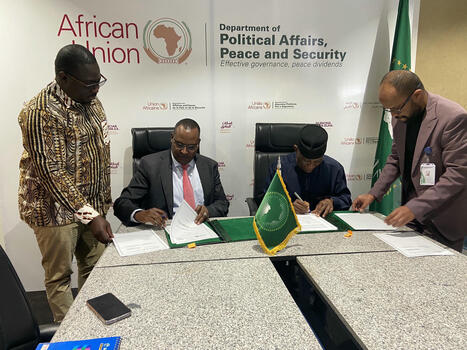
African Union Conflict and Governance Programme International IDEA AUC International IDEA Africa and West Asia Programme has signed memorandum of understanding with the African Union Commission (AUC) to support peace and good governance in Africa. It was signed on 20 February 2023 by H.E. Ambassador Bankole Adeoy, African Union Commissioner for Political Affairs, Peace, and Security and International IDEA Regional Director for Africa and West Asia, Roba Sharamo. The African Union Conflict and Governance Programme aims to reduce the risk of conflict escalation in countries at risk of political violence in Africa. This objective is in line with the third and seventh priorities of the new African Union Commission to silence the guns in Africa and work against disrespect of constitutionalism, rule of law and exclusion. The programme works with the AU Commission Directorate of Governance and Conflict Prevention, Directorate of Conflict Management in the Department of Political Affairs, Peace, and security, and the Early Warning and Governance Monitoring Desks of the Directorate of Conflict Management. The programme extends to policy makers and builds ties with civil society organizations at regional and country levels. The programme also uses International IDEA's well -stablished relationship to work with selected regional economic communities and mechanisms to advance its goals.
Details Donors Funding / Award amount 5,000,000 NOK Key contacts Roba Sharamo - Director for Africa and West Asia Dr Roba D. Sharamo is the Regional Director for Africa and West Asia. Dr Sharamo, has over 23 years of experience in international peace and security, conflict resolution, mediation, negotiation and diplomacy where he worked in senior management…
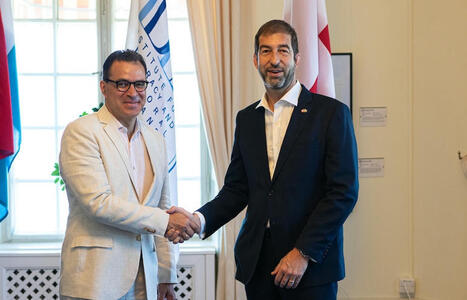
International IDEA & Switzerland reaffirm their partnership for democracy with four-year, 3.3-million-euro agreement The International Institute for Democracy and Electoral Assistance (International IDEA) and Switzerland announced today a four-year, 3.3-million- euro (3.5 million CHF) agreement to support International IDEA’s democracy efforts. Switzerland will provide core funds for IDEA’s operations and knowledge production and the implementation of its new Institutional Strategy announced in December 2022. “Switzerland is a critical partner to International IDEA in our shared mission to strengthen peaceful, inclusive democracy for all,” said International IDEA Secretary-General Kevin Casas-Zamora. “At a time when democracy continues to be under attack around the world, Switzerland’s core support sends a strong signal of their continued commitment to the Institute and to democratic principles worldwide. We are grateful and look forward to our growing collaboration.” Since 2006 Switzerland has been Member State of International IDEA, an intergovernmental organization with 34 Member States focused on advancing and protecting sustainable democracy worldwide. The four-year agreement for continued support is a clear endorsement of International IDEA and the shared dedication to democracy. “Switzerland is pleased to affirm our continued close partnership with International IDEA through this agreement,” said Christine Schneeberger, Head of Peace, Governance and Equality, Swiss Development and Cooperation Agency. “Switzerland is strongly committed to democracy and uses the platform and knowledge of International IDEA for policy dialogues and countless programmes in partner countries that we have been running for decades.” Press contact Alistair Scrutton - Head of Communications and Knowledge Management Alistair Scrutton is the Head of Communications and Knowledge Management as of 23 March 2020.Members of the press may contact Alistair Scrutton via email at a.scrutton@idea.int or mobile phone +46…
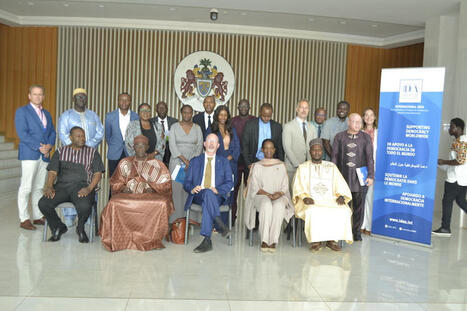
International IDEA supports launches a new project in The Gambia The European Union Delegation to the Gambia and the International Institute for Democracy and Electoral Assistance (International IDEA), on July, 6, 2023, held an event to officially launch a new project in the Gambia under the title “Supporting Consolidation to Democratic Dispensation in the Gambia (CODE)”. With funding from the European Union and to be implemented by International IDEA, this project aims to provide technical assistance to key democratic institutions namely: the National Assembly, the National Human Rights Commission, and the Gambia Press Union; to lay the foundation of an inclusive, participatory, gender sensitive and peaceful transition to democratic governance in the Gambia. The project will have a duration of three years started on 7 February 2023 to end on 6 February 2026. The overall objective of the Consolidation of Democratic Dispensation in The Gambia" (CODE) is to contribute to the consolidation of a participatory, inclusive and human rights based transition in The Gambia, with an aim to increase the legitimacy of the transitional justice process and the overall success of the peaceful consolidation to a democratic dispensation in the Gambia and reduce the grounds for instability in the country. The project will be implemented through various interventions such as capacity development of institutions and individuals, advisory services to institutions, comparative knowledge generation and dissemination. The CODE project will also complement the various ongoing initiatives that support the consolidation of democratic dispensation in the Gambia conducted or supported by other international partners. The official launch was attended by several guests including Hon. Fabakary Jatta, Speaker of the Gambia National Assembly; Emmanuel Daniel Joof, Chairman of the National Human Rights Commission; Muhammed Bah, President of Gambia Press Union; the EU Ambassador to the Gambia H.E. Pampaloni; Roba Sharamo, Africa and West Asia Regional Director of International IDEA; representatives from the Attorney General Office and the ministry of Justice; the United Nations Development Programme UNDP; the United Nations in the Gambia, as well as members of diplomatic corps, Gambian Civil Society Organizations and media. During the launch, the three project partners made a strong commitment towards implementing the project and contribute to the consolidation of democratic dispensation in The Gambia. About the authors Sami Ahmed - Communication Officer Press contact Maurice Mboula Jean-Claude Didier Enguélégué - Senior Adviser, Constitution-Building Processes, Africa and West Asia Maurice Enguélégué is the Senior Adviser, Constitution-Building Processes for the Africa and West Asia region. He is a Professor of Political Science and has taught for 20 years in French… Read on November 21, 2024 Mapping Disasters and Responses during Elections November 12, 2024 New Dashboard Tracking the Growing Impact of Extreme Weather on Elections Globally UNDP Regional Service Center for Africa, Addis Ababa and Online Policy Dialogue on Elections in Africa hosted by UNDP and International IDEA Hotel Fundador. París, 888. Santiago Centro, Chile. Violencia política de género en la esfera digital en América Latina
23 to 24 JanuaryCape Town International Convention Centre UNLOCKING VOTING POTENTIAL The Art of Resourcing and Skilling For Winning Campaigns COMMUNICATION MOBILIZATION TECHNOLOGY BUSINESS LOGISTICS COMMUNICATION MOBILIZATION TECHNOLOGY BUSINESS LOGISTICS A global nexus of political brilliance created to spark innovation in political campaigns.
The expo brings together political parties, election management bodies, campaign strategists, tech innovators, academics and researchers in AI and Big Data from the African continent and beyond. WELCOME TO THE SECOND IPE EXPO The theme for IPE25 is "Unlocking voter potential: The art of resourcing and skilling for winning campaigns." The expo will feature an array of expert-led sessions and interactive experiences tailored to address resourcing in campaigns. Learn From Leading Experts In The Field Network with like-minded individuals, and establish international alliances and partnerships Practical Skills For Successful Campaigns Gain insights into global political practices, electoral strategies, and governance models for adaptation and implementation Sponsorship And Exhibition Showcase your brand to an international audience of political professionals, decision-makers, and influencers. EXHIBITORS Showcase your work or service related to political campaigns - Campaign Management Software
- Data Analytics Services
- Digital Marketing and Branding Services
- Event Planning and Production Services
- Fundraising Platforms
- Polling and Survey Services
Gain exposure for your business: Increase visibility for your business and attract potential clients or collaborators MEDIA ACCREDITATION Accreditation for the International Political Campaigns Expo 2025 provides exclusive access to high-profile areas and expert insights. Please note, you will need to provide evidence that you are a journalist We will require: - A valid official press badge that must not have expired
- Picture credits for photographers
Accreditation is valid for January 25 & 26 and only includes free access to the event’s proceedings. OUR EXPERTS IN THE POLITICALLANDSCAPE At IPE, we pride ourselves on hosting seasoned experts in the political arena. Our speakers and panelists are leaders and pioneers in their fields, offering unparalleled insights and firsthand knowledge gained over many years. Interested in Exhibiting at IPE25? Elevate your brand by showcasing a product of value and impact at the International Political Campaigns Expo. Join us for an exclusive Exhibitor’s Informational Breakfast at the Saxon Hotel on October 11th at 9 AM. Don’t miss this opportunity—email or call now to secure your seat. Limited spots available Program coming soon. Keep visiting for updates Sponsorship opportunities for IPE25 available. Tap the button below GET THERE Location Cape Town International Convention Center Email info@internationalpolexpo.com
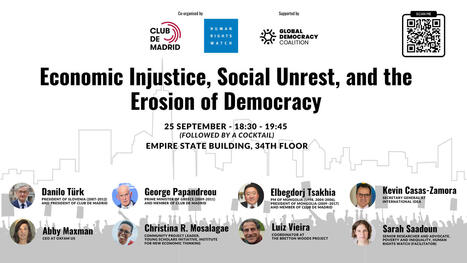
Panel: Economic Injustice, Social Unrest, and the Erosion of Democracy 34th floor, Empire State Building, 350 Fifth Avenue Hosted by Human Rights Watch, this panel will explore how economic inequality fuels social unrest and the weakening of democratic institutions. Featuring former heads of state and civil society leaders, this event aims to identify actionable strategies to address economic injustices while promoting democratic governance. Participants include the Secretary-General of International IDEA Kevin Casas-Zamora, Danilo Turk, former President of Slovenia, Elbegdorj Tsakhia, former Prime Minister and President of Mongolia, George Papandreou, former Prime Minister of Greece and General Rapporteur on Democracy in the Council of Europe, Abby Maxman, CEO of Oxfam US, and Sarah Saadoun, Senior Researcher and Advocate at Human Rights Watch. Related Events New York, USA Monitoring Progress on SDG16 at the Time of the Pandemic: Launch of the SDG16 Data Initiative 2020 Global Report Online event Supporting civil society to protect civic space in South-East Asia Online Event Mainstreaming SDG 16+ in VNRs and National Development Planning Online Protecting Democratic Politics from Dirty Money: Using online technologies to promote transparency in political finance
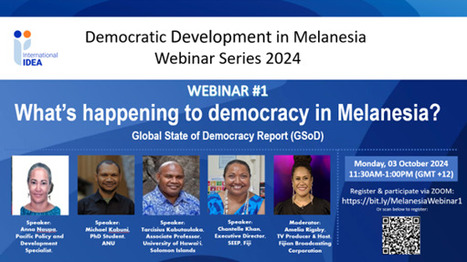
Webinar 1: Global State of Democracy Report 14 October 2024 11:30am - 1:00pm (GMT +12) Online View our themes Democracy Assessment Register hereAdd to calendar Share The International Institute for Democracy and Electoral Assistance (International IDEA) invites you to an online panel event, Webinar 1: “Global State of Democracy Report”, on Monday, 14 October 2024, from 11:30 - 01:00 GMT +12. The Global State of Democracy (GSoD) report, the flagship publication of the International Institute for Democracy and Electoral Assistance (International IDEA), provides annual analysis of democratization in 173 countries across the globe. The GSoD Indices, which are a quantitative data set, provide the majority of the data on which this report is based. The Indices measure national performance across discrete areas of democracy, broadly understood as a system in which there is public control over decision making and decision makers and in which there is equality in the exercise of that control. The data cover the years 1975–2024. The Indices are organized through a hierarchical conceptual framework oriented around four core categories of democratic performance: Representation, Rights, Rule of Law and Participation (see Figure below). Below the four categories are factors (such as Credible Elections or Judicial Independence). Finally, at the lowest level are specific indices, or subfactors (such as Freedom of Expression or Social Group Equality). Image In 2024, democracy is experiencing a significant milestone with a record number of voters participating globally. However, this achievement is overshadowed by a decline in the quality of elections in many countries. Compared to previous years, voter turnout has been decreasing, while incidents of protests and riots related to elections have been on the rise. Between mid-2020 and mid-2024, one in five elections faced legal challenges, particularly concerning voting and vote counting processes. Additionally, during this period, one in five elections saw losing candidates or parties publicly rejecting the results, and opposition parties boycotted one in ten elections. This era is characterized by radical uncertainty, with multiple, compounding challenges threatening the stability and growth of democratic processes. Political leaders’ public statements disputing election credibility or challenging results in court have become more common, sending mixed signals to voters. These actions can either highlight legitimate concerns or serve as cynical attempts to undermine public trust in electoral outcomes. Overall, the current state of democracy is marked by both unprecedented voter engagement and significant challenges to the integrity and stability of electoral processes. In this webinar, we will explore the data of Fiji, Papua New Guinea, the Solomon Islands, and Vanuatu and hear from the guest speakers as they provide comments on their respective countries. SPEAKERS - Anna Naupa, Pacific Policy and Development Specialist.
- Michael Kabuni, PhD Student.
- Tarcisius Kabutaulaka, Associate Professor, University of Hawai'i, Solomon Islands.
- Chantelle Khan, Executive Director, SEEP, Fiji
MODERATOR - Amelia Rigsby, TV Producer & host, Fijian Broadcasting Corporation.
Related Events 14 Sep 18 Yangon, Myanmar Reflecting on the Global State of Democracy and Linking with Myanmar’s Democratic Transition 27 Oct 21 Online Event Global democracy at risk: What are the local ways forward? 13 Dec 17 Colombo, Sri Lanka Launch and IDEAthon for The Global State of Democracy: Colombo, Sri Lanka 08 Nov 18 United Nations Conference Center, Bangkok The King Prajadhipok’s Institute 20th Congress
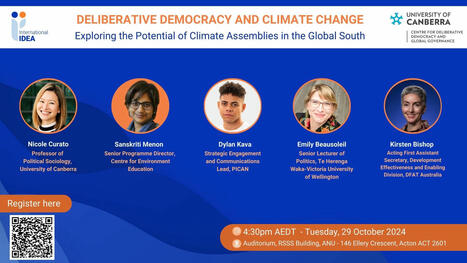
Deliberative Democracy and Climate Change: Exploring the Potential of Climate Assemblies in the Global South Auditorium, RSSS Building at the Australian National University (ANU), ACT Climate change is the central policy challenge of our time. It directly threatens the well-being of people around the world as natural hazards, weather unpredictability, and ecosystem disruptions have increasing and compounding effects for human security. The citizens of Asia and the Pacific are particularly vulnerable to the harms of extreme weather events, rising sea levels, health risks and climate migration. Climate change also presents fundamental challenges to democracy, as effective policies are hindered by the difficulties of translating public concern into action, vested economic interests and short-termism. Yet, no country has crafted policies that fully respond to the severity and urgency of the climate crisis, despite increasing calls from citizens for meaningful action. International IDEA’s new report on ‘Deliberative Democracy and Climate Change: Exploring the Potential of Climate Assemblies in the Global South’ demonstrates how citizens assemblies and other deliberative practices have the potential to improve climate policies and climate action. On 29 October 2024, International IDEA and the Centre for Deliberative Democracy and Global Governance at the University of Canberra will organize a panel to discuss findings of the report, explore challenges and innovations of climate-related deliberative practices and the potential of climate assemblies in Asia and the Pacific.
To attend in-person, please register here
This event will be livestreamed on International IDEA's Youtube channel. Speakers Leena Rikkilä Tamang Director for Asia and the Pacific Read more Nicole Curato Professor, University of Canberra and co-author of the Deliberative Democracy and Climate Change Dr Sanskriti Menon Senior Program Director, Centre for Environment Education, India Dylan Kava Strategic Engagement and Communications Lead, Pacific Islands Climate Action Network (PICAN), Fiji Dr. Emily Beausoleil Senior Lecturer of Politics, Te Herenga Waka-Victoria University of Wellington Kirsten Bishop Acting First Assistant Secretary, Development Effectiveness and Enabling Division, Department of Foreign Affairs and Trade, Australia John Dryzek Distinguished Professor, Centre for Deliberative Democracy and Global Governance at the University of Canberra Wendy Conway-Lamb Centre for Deliberative Democracy and Global Governance at the University of Canberra Related Events Online Event Democracy and the Challenges of Climate Change Taipei, Taiwan The Eighth Melbourne Forum on Constitution Building in Asia and the Pacific UN Building, Bangkok Roundtable discussion on Indigenous inclusion in governance Department of Pacific Affairs, ANU State of the Pacific 2024: Challenges of Cross-Border Displacement
|
PHILANTHROPIC JOINT STATEMENT IN RESPONSE TO THE SUPREME COURT'S DECISION IN 'STUDENTS FOR FAIR ADMISSIONS' CASES PUBLISHED ON JUNE 29, 2023 The following is a statement by funders and philanthropic organizations in response to the U.S. Supreme Court’s rulings in Students for Fair Admissions v. University of North Carolina and Students for Fair Admissions v. President and Fellows of Harvard College. A full, updated list of signatories is available at the Robert Wood Johnson Foundation. The Supreme Court’s decision impedes colleges and universities from selecting their own student bodies and fully addressing systemic racial inequalities that persist. The ruling threatens to return this nation to a time when education and opportunity were reserved for a privileged class. It endangers sixty years of multiracial movements to challenge our nation to live up to the ideals enshrined in our founding documents. The decision erects new barriers to building a society in which everyone has the opportunity to improve their lives, communities, health, and education. Today's ruling will make the vital work of building inclusive college campuses much harder. Experience has shown that substituting socioeconomic status as a proxy for race will not achieve the diversity that strengthens the fabric of all universities. Educators and communities dedicated to teaching and mentoring young people and adults from every imaginable background understand how all students—not just students of color—benefit from diverse racial and socioeconomic learning environments. Decades of research show that students educated with people from different backgrounds and experiences improve their analytical thinking, creativity, communication, and collaboration. These skills are essential to building our future workforce, our military, and a healthy democracy. In the realm of health, research shows that racially and ethnically representative medical schools produce better-trained physicians and care teams that reflect the communities they serve. Universities and colleges and those organizations supporting them deserve the resources and support to continue their critical mission. They need our resolve, too. Philanthropies are vital partners in our nation’s progress. We will remain steadfast in our collective mission to create a more equitable nation within the bounds of the law. To forge ahead, we must continue to advocate for the human dignity of all people—regardless of their race, gender, ethnicity, religion, sexual orientation, or country of origin—with renewed vigor and commitment. Our nation's future prosperity, vitality, and unity depend upon America becoming a true multiracial democracy—an aspiration that requires racial equity and diversity in higher education. Despite today’s ruling, our foundations will not waver in our commitment to those making the nation’s high ideals a reality for all communities and all people.
RBF AND OSF HOST THIRD BALKANS DONOR FORUM PUBLISHED ON NOVEMBER 15, 2023 Andi Dobrushi of Open Society Foundations–Western Balkans and Mia Vukojević of RBF at the 2023 Balkans Donor Forum. Photo by Jakov Simovic. Returning to the joint platform for the first time since 2019, over 150 stakeholders discussed priorities and approaches of the donor community in the Balkans. On Monday November 6, at Hilton Hotel in Belgrade, Open Society Foundations-Western Balkans and the Rockefeller Brothers Fund kicked-off the third forum of donors working across the Southeastern European region. The forum, titled “Rallying a response to polycrisis,” brought together around 150 representatives from over 120 public and private donors, as well as local Western Balkans philanthropies, for the first time since the last convening in Skopje in 2019. The two-day closed event was structured around plenary sessions that involved mapping of donor trends, reflections on changes, and forecasts for the region and Europe, as well as thematic working groups allowing for peer-to-peer re-examination of priorities and approaches. Welcoming participants from across the region and Europe on Monday afternoon, Andi Dobrushi, Director of Open Society Foundations-Western Balkans, remarked that the ambition of the forum was to discuss the most apt response to the multi-crises affecting societies in the region. “We at the Open Society Foundations have decided to amplify our impact by launching a compact regional unit, the Open Society Foundations-Western Balkans. This unit will collaborate closely with other progressive actors, both private and governmental, to support regional initiatives in digital transformation, green transition, European integration, and economic and political cooperation," Dobrushi stated. Joining the welcoming remarks, Mia Vukojević, Western Balkans Program Director at the Rockefeller Brothers Fund, expressed how pleased she was at the number of attendees that confirmed the donor community’s commitment to Western Balkans. “This is the biggest gathering that focuses exclusively on exchange amongst the public, private, and corporate funders that support civil society,” Vukojević said. “In the next two days we will have the opportunity to discuss some of the key challenges in the Western Balkans: defending democracy, peace and security, climate change, and preparing for the digital present and future.” Inviting participants to reflect on current geopolitical developments, keynote speaker Tim Judah emphasized the uncertainty marking the current moment. “You probably want to hear me give some sober and certain ideas about the future and how this can affect your work and so on, but the problem is that not only do we not live in predictable times but, worse, we live, more than ever before, in ‘black swan times,’” Judah said, referencing Nassim Nicholas Taleb. Despite such occurrences making prediction difficult, Judah invited guests to reflect on “deeper, slower moving changes,” such as the demographic shift experienced globally and particularly in the Western Balkans region. Judah’s keynote was followed by a lively panel discussion amongst three academics from the region: Lura Pollozhani, University of Graz; Bojan Baca, University of Montenegro; and Dzeneta Karabegovic, University of Salzburg. Closing the first plenary, U.S. Ambassador to Serbia Christopher R. Hill addressed the audience. “The Western Balkans countries need to get to their destination…and the destination is full integration into the West. That is the path that will improve lives for this and future generations,” Ambassador Hill said. The forum continued with breakout sessions on Tuesday, November 7, with donor representatives discussing major thematic and operational trends in the region, their ongoing interventions, and plans for the future. Participants discussed key thematic issues such as climate change, peace and reconciliation, and defending democracy. They also had the chance to discuss in-depth donor approaches, particularly core and flexible funding, pooled funding, and regional programming.
INTRODUCING THE TRUST FOR CIVIC LIFE PUBLISHED ON FEBRUARY 12, 2024 On Friday, February 9, 2024, the RBF celebrated the launch of the Trust for Civic Life. The Trust is a new philanthropic collaborative and learning network with a simple mission: support local efforts that bring residents together to solve the challenges they decide are most critical for their community to thrive. The Trust for Civic Life was born out of Our Common Purpose, a set of recommendations to reinvent American democracy by the Commission on the Practice of Democratic Citizenship, which was co-chaired by RBF President Stephen Heintz. The American Academy of Arts & Sciences has been the driving force behind an urgent and powerful effort to implement the recommendations by 2026. Over the past year, the Trust and its funding members, including the RBF, have developed a strategy and team to bolster locally led civic ecosystems strengthening communities and rebuilding trust to reduce polarization. Exciting times are ahead for American democracy.
RBF STATEMENT ON CAMPUS PROTESTS PUBLISHED ON MAY 11, 2024 On December 11, 2023, the Rockefeller Brothers Fund (RBF) issued a statement on its support for Israeli, Palestinian, U.S., and international grantees working “to open space for pluralistic debate and build civil and political will for successful future negotiations toward just and durable peace” in the Middle East. The statement also expressed the Fund’s deep concern for growing antisemitism and Islamophobia, both in the United States and internationally. In the half-year since, the people of Israel-Palestine have experienced enormous human suffering. More than 35,000 people have been killed, most of them women and children in Gaza. Thousands of Israelis have taken to the streets calling for the safe return of their friends and loved ones held hostage by Hamas, while still in mourning for their 1,200 Israeli neighbors brutally murdered on October 7. Families across northern Gaza are in the grips of a “severe manmade hunger crisis” as Israel limits the flow of humanitarian aid. Unprecedented direct military exchanges between Israel and Iran in April have been contained but still risk turning the Israel-Hamas war into a broader regional war that could claim thousands more lives. Given this desperate situation, significant numbers of Americans have chosen to protest their government’s role in the conflict. The First Amendment guarantees “the right of the people peaceably to assemble, and to petition the Government for a redress of grievances.” The RBF rigorously defends this precious right and is dismayed by the excessive use of law enforcement against peaceful protestors. Public protest has been a hallmark of American democracy since our nation’s founding. However, incidents of antisemitism, intimidation, violence, and property damage at today's protests are morally repugnant and undermine the majority of peaceful protesters and their genuine efforts to focus attention on the humanitarian crisis in Gaza. The RBF respects Israel’s right to exist and supports the right to self-determination for both the Israeli and Palestinian peoples. Since 2011, the RBF has made $22 million in grants to help build durable peace that provides justice, dignity, and security for both peoples. Our grantees include think tanks, independent media, lawyers, human rights defenders, advocates, and activists committed to nonviolence. Significant misinformation about RBF and campus protests has circulated in the media and online communities. The RBF has had no direct involvement in the campus protests nor have we earmarked funds for them. Some RBF grantees have provided training, messaging, and/or legal support to student protest leaders. The Fund does not direct the activities of any grantee organizations. Details of all our grants for the last five years are published on our website and annually in our publicly available PF990 annual tax forms. The Rockefeller Brothers Fund is an independent private foundation that operates on income from an endowment established by its founders in the 1940s through the 1960s. A board of trustees provides fiduciary oversight of the Fund's vision, mission, and activities. A professional staff of grantmakers selects organizations and initiatives that will help advance the vision set forth by the trustees.
CIVIL SOCIETY DYNAMISM INSPIRES NEW WESTERN BALKANS PROGRAM GUIDELINES PUBLISHED ON JUNE 18, 2024 From its inception in 2001, the Rockefeller Brothers Fund (RBF) Western Balkans program has focused its support on European integration through democratic practice, peacebuilding, and sustainable development. The last review of the Western Balkans program, in 2019, described a region in transition. Five years later, the region still faces challenges. The Balkans have not been immune from global democratic backsliding. Ethnic nationalism, which drove the devastating Balkan Wars of the 1990s, is back on the rise. And despite assistance from the European Union (EU), trade deficits and increased emigration are contributing to the region’s economic decline. The Russian invasion of Ukraine continues to impact countries of the Western Balkans politically, economically, and symbolically. But the Russia-Ukraine war also highlighted the Balkans’ regional importance, and the EU returned its attention to the region in 2023, emphasizing fundamental reforms to strengthen democracy and pave the way for accession. There are other reasons for hope. Across the region, authoritarians are losing support, new grassroots political forces are emerging, and civil society is growing stronger. RBF support has contributed to these advancements. Our grantees helped strengthen an organic, cross-border network of environmental advocates that highlights the democratizing potential of environmental movements and empowered victims of war crimes to demand their rights. They have expanded the capacity of investigative media to expose corruption and led the development of local philanthropy, which has grown from two regional foundations to a network of hundreds of foundations, development networks, and professional associations. Recognizing both the region’s challenges and signs of progress, the Western Balkans program has made minor adjustments to its grantmaking guidelines. The program will continue to prioritize democratic reform and peacebuilding in response to the urgent situation in the Western Balkans. It will also strengthen engagement in sustainable development to respond to environmental degradation and the impacts of climate change in the region. Given the promising progress of domestic giving ecosystems in the Balkans, the program will retire its strategy focused on indigenous philanthropy with confidence that longtime partners in the region will continue philanthropic development. The RBF Western Balkans program remains steadfast in its support for civil society organizations under threat, effective partnerships, and regional initiatives. Progress in the Balkans is important not only for the region, but also for Europe and for prospects of global peace.
We partner with our Member States and donors to deliver on our mission to advance democracy worldwide. Donors We partner with our Member States and donors to deliver on our mission to advance democracy worldwide. How we are funded Contributions from donors are vital to support our mission. Contributions are classified as Unrestricted (or core) funding and Restricted (or project) funding. Core funding supports programming for our institutional priorities, and project funding supports specific activities mutually agreed upon between us and the donor. Latin America and the Caribbean 6,001,053 (11.53%) Total funding by programme 2023 Latin America and the Caribbean Top core funders Sweden Norway The Netherlands Switzerland Germany Finland Chile Brazil Estonia Spain
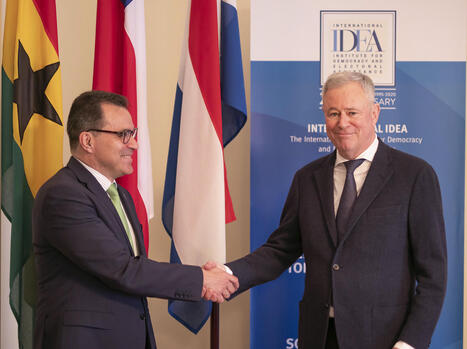
International IDEA & the Netherlands Reaffirm their Partnership for Democracy with Six-Year, 12-million-euro agreement The International Institute for Democracy and Electoral Assistance (International IDEA) and the Netherlands announced today a six-year, 12-million-euro agreement to support International IDEA’s critical democracy work. Leer esta nota de prensa en español. The Netherlands will provide both core funds for IDEA’s operations and knowledge production and dedicated funds to support peace, democracy, and the rule of law in priority fragile and conflict affected regions. “We are grateful to the Netherlands for advancing this agreement with International IDEA,” said International IDEA Secretary-General Kevin Casas-Zamora. “Now more than ever flexible and confirmed support of this kind is vital to respond to ongoing threats to democracy around the world and to strengthen peaceful, inclusive democracy for all. The Netherlands and International IDEA are partners in this shared mission, and we look forward to our continued collaboration.” The Netherlands is a founding Member State of International IDEA, an intergovernmental organization with 34 Member States focused on advancing and protecting sustainable democracy worldwide. As Chair of the Council of Member States for 2023, the Netherlands is working closely with International IDEA to start implementation of the new Institutional Strategy announced in December 2022. The six-year agreement for continued support is a strong endorsement of that strategy, and of the Netherlands’ ongoing commitment to democracy. “The Netherlands stands behind International IDEA and their important work and we are pleased to affirm our continued close partnership through this agreement” said Marriet Schuurman, Director Stabilisation and Humanitarian Assistance, Netherlands Ministry of Foreign Affairs. “The Netherlands has a strong commitment to democracy and rule of law and we are eager to work with International IDEA and our fellow Member States to continue to advance this effort worldwide.” Press contact Alistair Scrutton - Head of Communications and Knowledge Management Alistair Scrutton is the Head of Communications and Knowledge Management as of 23 March 2020.Members of the press may contact Alistair Scrutton via email at a.scrutton@idea.int or mobile phone +46…
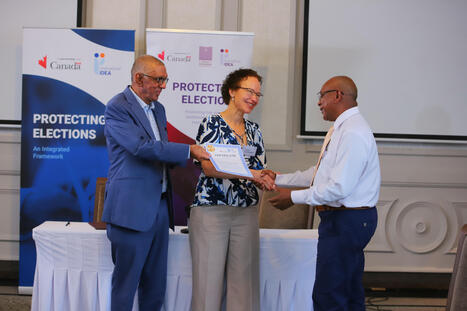
International IDEA to Develop an Integrated Framework for Protecting Elections New global project funded by Canada supports tackling challenges to electoral integrity The International Institute for Democracy and Electoral Assistance (International IDEA) received a generous grant from the Government of Canada to implement the Protecting Elections Project. As part of the Project, the Institute will organize several high-level expert discussions, develop, test and pilot knowledge resources, and provide training for national and regional electoral stakeholders. The primary beneficiaries are Electoral Management Bodies (EMBs) and other state and non-state actors with a mandate and interest to protect electoral integrity. At the end of the three-year project, the Institute will deliver an Integrated Framework for Protecting Elections as a global public good. This Framework will combine several related and gender-sensitive resources, including the guide for practitioners, an assessment tool, a training curriculum and toolbox that consolidates remedies for addressing challenges to electoral integrity. The project is grounded in International IDEA’s work on electoral risk management, democracy resilience, the conduct of elections during the Covid-19 crisisand the impact of natural hazards on elections. “In order to protect democracy, we must protect elections. That’s why I am so pleased that International IDEA is enhancing its longstanding expertise on electoral processes with the new Protecting Elections Project,” said Kevin Casas-Zamora, Secretary-General of International IDEA. “Through this three-year effort funded by the Government of Canada, we will build democracies’ knowledge and capacity to protect elections against diverse threats, ranging from disenfranchisement to disinformation – thereby improving democratic resilience worldwide.” An Expert Meeting held 14-15 March 2023, the first project milestone, was attended by 26 experts from EMBs, international organizations and academia, including International IDEA experts. Experts’ input strengthened and validated the project’s key concepts and implementation steps. Also, experts benefited by expanding their knowledge of challenges, policies and practices for protecting elections in different contexts. See more information in the event report. The project is supported by the Government of Canada. Prime Minister Justin Trudeau of Canada’s statement during the Summit for Democracy 2023 reflects continued support to democracy and working with International IDEA. Canada is an International IDEA Member State since 1997. Press contact Alistair Scrutton - Head of Communications and Knowledge Management Alistair Scrutton is the Head of Communications and Knowledge Management as of 23 March 2020.Members of the press may contact Alistair Scrutton via email at a.scrutton@idea.int or mobile phone +46… Read on November 21, 2024 Mapping Disasters and Responses during Elections November 12, 2024 New Dashboard Tracking the Growing Impact of Extreme Weather on Elections Globally UNDP Regional Service Center for Africa, Addis Ababa and Online Policy Dialogue on Elections in Africa hosted by UNDP and International IDEA Hotel Fundador. París, 888. Santiago Centro, Chile. Violencia política de género en la esfera digital en América Latina
Transforming Political Campaigns: How AI and Big Data Amplify Voter Engagement and Shape Political Campaigns in Africa FOREWORD BY GLEN MPANI IPE 2024 Host and Convenor We express our profound pleasure for successfully concluding the recently held International Pol Campaigns Expo (IPE 2024) in Cape Town. We pride ourselves for being the pioneers in hosting the first global Political Campaign Expo in a year that sees 60 countries holding elections worldwide. It is estimated that 3.8 billion citizens are set to cast their votes within the next 2 years. The IPE 2024 theme was framed “Transforming Political Campaigns: How AI and Big Data Amplify Voter Engagement and Shape Political Campaigns in Africa.” This expo is both timely and significant, taking cognisance of the pivotal role that campaigns play in shaping our public affairs discourse. We extend our appreciation to the key stakeholders of this event, namely political parties and election management bodies. We are fully aware of the time and extensive resources invested in this endeavour and without them, the smooth execution of election cycles and processes would not be possible. This Expo will continue to be held annually, serving as a platform for service providers in the political campaigns sector, to showcase their products and expertise. The International Political Campaign Expo promises to be a vital event for anyone seeking comprehensive knowledge on political campaigns. We are privileged to have partnered wit Afrobarometer and the International Institute for Democracy and Electoral Assistance (International IDEA), whose expertise has lent credibility International PolCampaigns Expo Report 1 and substance to this event. The former, is well known for measuring public attitudes on economic, political, and social issues. While the latter, seeks to support and strengthen democratic institutions to ensure credible voting processes and the establishment of legitimate democracies. THE EXPO WAS COMMITTED TO MEETING THE FOLLOWING OBJECTIVES: Facilitating collaboration and knowledge exchange among political parties, election management bodies, technology innovators, and academics, to foster a dynamic ecosystem for enhancing political campaigns. Provide a platform for service providers to showcase and exhibit their latest tools, assets, and advertorial materials for campaigns. 1 Empowering political parties and election management bodies with modern, technology-driven tools, and evidence-based strategies that enhance voter and citizen engagement. 2 Utilising the potential of Big Data to optimise political campaigns through more efficient, data-driven and responsive tools that encourage citizen participation. 3 Encouraging election management bodies to explore existing tools governing political campaigns, assess their efficacy, and formulate ethical and effective policies governing the use of technology and data in these campaigns. 4 5 We extend our heartfelt thanks for your invaluable support and eagerly anticipate your continued backing in 2025. 2 International PolCampaigns Expo Report ACKNOWLEDGEMENTS Dr. Joseph Asunka Chief Executive Officer at Afrobarometer Afrobarometer was pleased to be part of the IPE 2024 Conference and share our findings. This was an important audience to be able to demonstrate: (1) the disconnect between Africans demand for democracy but dissatisfaction with what their multiparty systems produce; (2) declining levels of trust in institutions, including political parties, particularly among the youth; (3) sharp disparities amongst the continent’s political parties in the extent to which they engage voters between and during elections; and (4) inequalities amongst citizens in terms of whether parties bring them into the electoral process. It is against this backdrop that we need to consider the future role of data and new technologies in Africa’s election campaigns. Dr. Roba D. Sharamo Regional Director, Africa and West Asia, International Institute for Democracy and Electoral Assistance (International IDEA) IPE2024 provided a strategic platform for African political parties, election management bodies, experts, tech visionaries, and academics to robustly engage on the profound impact of Artificial Intelligence (AI) and Big Data on voter engagement. As International IDEA, we were excited to be part of a high-level conversation on how AI and Big Data amplify voter engagement and shape political campaigns in Africa. The conference resonated with our current focus on “Digitalisation and Democracy”. AI poses multiple risks to democracies, as it is also a powerful tool for information pollution that can discredit the integrity of the process and also trigger tensions resulting in electoral-related conflict and even violence. It is imperative that Africa should not lag behind. Africa should proactively develop frameworks and policies that align AI development with its socio-economic and political priorities. Therefore, we encourage partnerships with stakeholders such as Research ICT Africa (RIA) and the African Union High Level Panel on Emerging Technologies (APET), to ensure further development and application of the Africa Internet Governance Framework (AfIGF). We also believe that democratic elections must adhere to a body of international laws and treaties that states have agreed. Hence there is a need for further engagement and development of binding regulatory frameworks. INTRODUCTION The pervasive integration of Artificial Intelligence (AI) and Big Data (BD) has become increasingly evident, playing an important role in shaping political communication, campaigning, and election management. Following two days of robust discussions, delegates departed with a myriad of ideas and questions regarding the relationship between AI and Big Data, and their influence on election governance and political communication. In line with set out objectives, the event provided a platform for idea sharing and fostering collaboration. KEY RECOMMENDATIONS THAT CAME OUT OF THE DISCUSSIONS INCLUDED: Collaborative governance and investment It was agreed that multiple stakeholders must join forces in pooling resources (funding, technology, knowledge databases and human capital). This is in line with Sustainable Development Goal 17.6 as postulated by the United Nations Development Programme (UNDP), which seeks to enhance cooperation on access to technology, innovation and knowledge sharing, on mutually agreed terms. It is imperative for all states to participate in the development of guidelines for the ethical use of AI and Big data. National, regional, and international bodies governing the ethical and responsible political use of AI and Big data should be established and empowered to ensure regulatory oversight and accountability. Election governance frameworks should include guidelines on voter and candidate education, electoral management body (EMB) personnel training, media training, and dealing with AI and Big Data associated challenges. Timeous action against fake content The pervasive and extraterritorial infiltration of AI-generated content necessitates timely interventions to prevent and mitigate challenges posed by deceptive information or deepfakes. Standardized fact-checking procedures and tools should be developed and enabled for public use. It is highly likely that the use of Big Data technologies to micro target voters may further empower well-resourced political parties and increase inequality within countries. This would in turn widen turnout gaps and undermine engagement with groups of voters who are often missed or ignored by registration and voter mobilisation campaigns. N.B* There are lessons to be learnt from forthcoming elections, especially regarding the use and detection of deepfakes, alerting the public about false information, and blocking the use and spread of fake content. Forthcoming elections will also reveal insights regarding biased access to, and use of Big Data and AI tools for campaigning and election management. 4 International PolCampaigns Expo Report International PolCampaigns Expo Report 5 Implications of the global digital divide The digital divide is the root of many inequities. This is due to the fact that most African countries are not host to experts or tech companies responsible for developing AI and Big data tools. For this reason, greater collaboration is needed with those who do. That said, the ownership and security of big data should not be yielded to foreign entities. African countries need to work towards developing and safeguarding their own data. International rules should be put in place to guard against the use of the ‘Off-switch’, which could lead to election interference or sabotage. Those providing services for election management, social media monitoring, or predictive analytics should also commit to preventing the misuse or misappropriation of data. Platform responsibility We must ensure that the internet remains open, accessible, and secure. The threat of disinformation requires interventions that do not necessitate temporary shutdowns or blocking of networks for political reasons, e.g., during peak election periods. Website hosts, social media account managers, and application developers should be held responsible for content moderation and adhere to regulatory frameworks on the use of AI and Big Data in political communication and campaigning. In addition, transnational platforms such as Meta, WhatsApp, and X (formerly Twitter), should endeavour to place alerts on campaign related content. This could be done remotely or through the deployment of regional and local task teams in African countries. AI literacy for all Governments, political parties, media entities, educators, tech companies and election management bodies should work together to ensure policy development and widespread education on AI. Customized educational content is required for journalists, researchers, the voting publics, candidates, political parties, and election management bodies, to name a few. These initiatives should cater to contextual realities such as local languages and methods of information dissemination. The adoption of context-relevant technologies The common consensus is that despite the extra territorial extent of the internet and social media, countries should make efforts to craft and ensure compliance to context-relevant needs. This especially applies to decisions relating to: (i) tools utilised to collect and communicate about public opinions; as well as (ii) hardware and software acquired for voter registration, polling or counting. Fair regulation The credibility of elections rests on whether they are perceived as free and fair processes, in which citizens can vote free from manipulation or intimidation. The use of digital technology to threaten or coerce the electorate could lead to heightened levels of fear or apathy. Misinformation and manipulative data could lead to wrong candidate or party choices, for those who rely on internet- based data in political decision making. Lack of AI regulations and solutions to technological challenges could inspire greater mistrust of governments, EMBs, political parties, and candidates. N.B*The reality is that regulation moves slower than technological development. That notwithstanding, regulations could improve rules regarding platform responsibility, algorithmic accountability, data protection, and AI literacy.
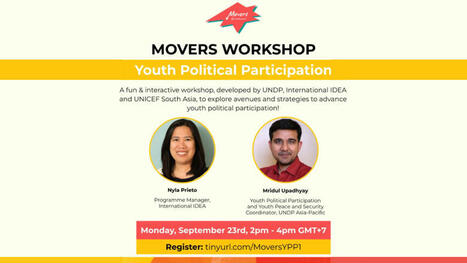
Movers Workshop on Youth Political Participation 23 September 2024 2:00 PM - 4:00 PM (Bangkok) Register nowAdd to calendar Share This workshop, developed by UNDP, with the support of the International IDEA and UNICEF South Asia, is open for everyone (more suitable for youth under the age of 35), regardless of your current knowledge of YPP. This workshop will be engaging and interactive with group discussions, presentations and reflections. You’ll receive a certificate after attending the workshop. Join us to: - Learn more about the avenues and strategies to advance the Youth Political Participation (YPP).
- Share your experience of youth political participation and discuss with youth across the region why YPP matters to them.
- Have the opportunity to raise awareness about the YPP in your community by joining the Movers Programme.
Time/Date: Monday, 23 September, 2pm-4pm GMT+7. Convert to your local time zone! Register Join this youth-led, guided and online train-the-trainer workshop on the YPP and become a trainer to advance youth political participation in your communities. You'll get fully developed materials and mentorship support for that. Related Events 05 Sep 18 Colombo, Sri Lanka The Third Annual Melbourne Forum on Constitution-Building in Asia and the Pacific 14 Sep 18 Yangon, Myanmar Reflecting on the Global State of Democracy and Linking with Myanmar’s Democratic Transition 17 Aug 20 Virtual (Zoom) Fifth Annual Melbourne Forum on Constitution-building in Asia and the Pacific 26 Jan 21 Online event Supporting civil society to protect civic space in South-East Asia
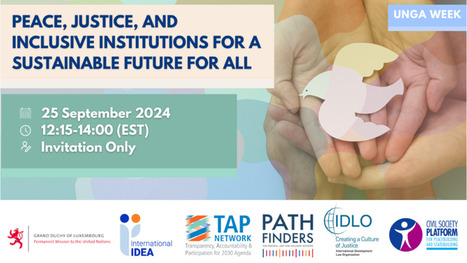
Peace, Justice, and Inclusive Institutions for a Sustainable Future for All 25 September 2024 12:15-14:00 EST New York Pre-register for this event hereAdd to calendar Share This high-level side-event during the high-level week of the United Nations General Assembly (UNGA) aims to invigorate global efforts towards SDG16+, encouraging innovative solutions and reinforcing commitments to peace, justice, equality, inclusion and democratic principles as crucial drivers for a sustainable future for all, as reflected in the 2030 Agenda, the 2023 SDG Summit Political Declaration and the Pact for the Future. According to the UN Secretary-General’s Sustainable Development Goals Report of 2024, only 17% of the Sustainable Development Goals (SDG) were on track to meet their targets by 2030, with SDG 16 on peace, justice and inclusive institutions severely off track. The upcoming Summit of the Future will serve as a critical moment for Member States to commit to further action around a wide range of issues related to SDG16+ with lasting impacts on future generations. Promoting peaceful and inclusive societies, providing access to justice for all, and building effective, transparent and accountable institutions are key to achieving sustainable development. SDG 16 is thus an enabler, accelerator and one of the key conditions for achieving all SDGs through its cross-cutting characteristics that address complex interlinkages across the entire 2030 Agenda. Organized by International IDEA, the Permanent Mission of Luxembourg to the UN, and members of the Global SDG16+ Coalition, this event will bring high-level speakers for a discussion on the achievements, good practices, gaps, and challenges in the implementation of SDG 16, and the importance of partnerships and investments in SDG 16 for the implementation of the 2030 Agenda to ensure lasting and positive results for generations to come. Registration: This event has limited seating capacity, therefore, those interested in attending must pre-register using the link provided on this page. A confirmation e-mail will be sent out with additional information pertaining to the event. This event is organized by the International Institute for Democracy and Electoral Assistance (IDEA) and the Permanent Mission of Luxembourg to the UN, and co-hosted with the Members of the Steering Committee of the SDG 16+ Coalition (Civil Society Platform for Peacebuilding and Statebuilding (CSPPS); International Development Law Organization (IDLO); Transparency, Accountability & Participation (TAP) Network; and the Pathfinders for Peaceful, Just and Inclusive Societies). Sponsors of this event include the Carter Center. Speakers Kevin Casas-Zamora Secretary-General Read more H.E. Xavier Bettel Deputy Prime Minister, Minister for Foreign Affairs and Foreign Trade of Luxembourg Read more Dr. Felipe Paullier Assistant Secretary-General for Youth Affairs, United Nations Youth Office Read more H.E. Javiera Toro Cáceres Minister of Social Development and Family of Chile Read more H.E. Dr. Rui Alberto de Figueiredo Soares Minister of Foreign Affairs, Cooperation, and Regional Integration of Cabo Verde Read more Ambassador Patricia Danzi Director General of the Swiss Agency for Development and Cooperation of the Federal Department of Foreign Affairs of Switzerland Read more Ms. Florence Syevuo Executive Director of the SDGs Kenya Forum Read more Ambassador Martin Kimani Executive Director of the Center on International Cooperation Read more Related Events 14 Dec 20 Online Protecting Democratic Politics from Dirty Money: Using online technologies to promote transparency in political finance 02 Mar 21 Brussels Senior Experts Dialogue: Upgrading Democracy in Europe: Gender Equality, Diversity and Inclusion as core drivers 12 Sep 20 Online Event Democracy Day in the Time of the Pandemic: A Sustainable Response to the Global Crisis based on Multilateralism and the Rule of Law 10 Nov 20 New York, USA Monitoring Progress on SDG16 at the Time of the Pandemic: Launch of the SDG16 Data Initiative 2020 Global Report Comments Thank you for your interest in this event. Please share your experiences. Send comments Follow us FacebookXYoutube
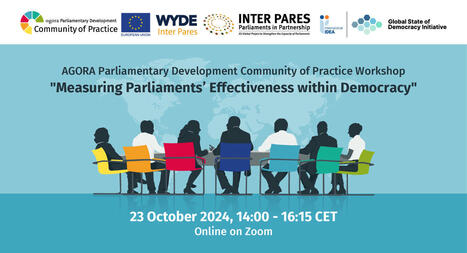
Measuring Parliaments’ Effectiveness within Democracy Helping parliaments evaluate their performance and strengthen democratic governance through data-driven assessment tools will be in focus at the AGORA Community of Practice Workshop on "Measuring Parliaments’ Effectiveness within Democracy", held online on 23 October 2024, from 14:00 to 16:15 CEST. This workshop will introduce participants to International IDEA’s Democracy Assessment Tools, including the Global State of Democracy (GSoD) Indices and the Democracy Tracker. These tools are designed to support parliaments in evaluating their performance and contributing to broader democratic governance. The event will feature: - A live demonstration of the GSoD Indices and Democracy Tracker, showcasing their application to parliamentary contexts.
- An interactive Practice Lab, where participants will engage directly with these tools in teams.
- Expert discussions on the role of parliaments in democracy, focusing on how comparative indicators can better reflect parliamentary performance.
We hope you will join this valuable opportunity to explore how these resources can be used to inform parliamentary policy and strengthen democratic processes globally. Please see the full concept note and register to confirm your participation.
Related Events Online event Supporting civil society to protect civic space in South-East Asia New York, USA Monitoring Progress on SDG16 at the Time of the Pandemic: Launch of the SDG16 Data Initiative 2020 Global Report Online Event Mainstreaming SDG 16+ in VNRs and National Development Planning Online Protecting Democratic Politics from Dirty Money: Using online technologies to promote transparency in political finance
|