



Humans are conditioned for overstimulation and overscheduling, which become chronic stressors that lead to behavioral, mood and attention disorders.

 Your new post is loading...
 Your new post is loading...
Your new post is loading...
 Scoop.it!
Humans are conditioned for overstimulation and overscheduling, which become chronic stressors that lead to behavioral, mood and attention disorders. 
No comment yet.
Sign up to comment
Scoop.it!

Conventional wisdom is that procrastination is a bad habit that we should try to eliminate at all costs. But what if we embraced putting things off?
Scoop.it!
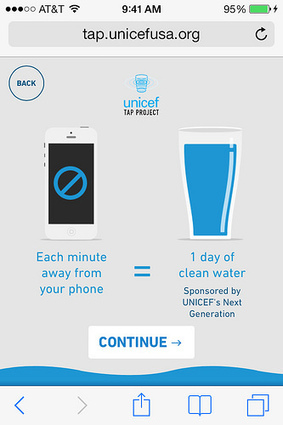
The UNICEF Tap Project sponsors projects to provide clean drinking water to the hundreds of millions of people who don't have it. This year, they've created an online challenge: for every minute you spend away from the phone, Giorgio Armani will pony up for a day's clean water. (Just go...
Scoop.it!

The evangelists of unplugging might just have another agenda
Beth Kanter's insight:
Morozov sees two problems with the movement. First, digital detoxes aim to help people recharge their mental batteries so they'll have more energy to spend on social media-- in effect, it encourages people to live more interesting lives so they won't bore their friends on Facebook, not to rethink how they live. Second, and more important, the movement makes the individual responsible for overconnection, and implicitly absolves companies of trying to commoditize and resell their user's attention.
Scoop.it!

We all procrastinate. We put things off we know we shouldn't - then scramble to get them done. But is it a fault of our environment? Or a trait for which we are hard-wired? Continue reading →
Scoop.it!

From
99u

Pro end-of-day tip: write what you want to do the next day on a post-it.
Beth Kanter's insight:
Good technique to avoid begin overwhelmed
Scoop.it!

Focus booster is a pomodoro app.This digital application of the pomodoro technique allows you to use a pomodoro timer conveniently, on your computer.
Beth Kanter's insight:
The pomodoro technique is a time management methodology created by Francesco Cirillo. Pomodoro enables you to take the stress out of deadlines by breaking down your day into segments, you work solidly during these periods and remove all distractions. At the end of the pomodoro session you reward yourself with a break.
Scoop.it!

The checklist itself is not a new concept: do these items every week. I think you’ll agree, though, that the Checklist of Doom is different than most.
Scoop.it!
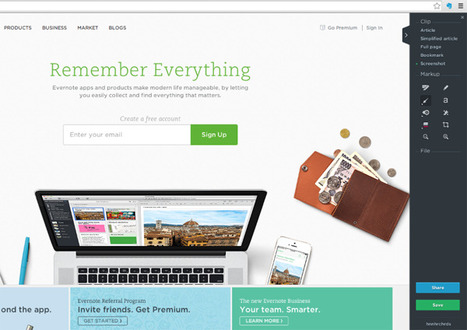
Evernote's an amazingly powerful notebook app. But it can also be rather overwhelming at first. Here's everything you need to get started with Evernote and get your info saved into notes, organized with notebooks and tags. You'll even learn how to clip anything you find online into your notebook, and search like a pro. | Difficulty: Beginner; Length: Medium; Tags: App Training, Productivity, Evernote Via Ana Cristina Pratas

Tracy Hanson's curator insight,
February 15, 2014 1:01 PM
I am certainly going to learn how to use my Evernote more effectively. I don't remember Anything! 
Richard Whiteside's curator insight,
March 28, 2014 6:39 AM
If you've ever thought of getting into using Evernote, but weren't sure where to start, this would be a good place. Teachers can use Evernote to organise all sorts and share with students. It's a great tool, I'd recommend giving it a go.
Scoop.it!
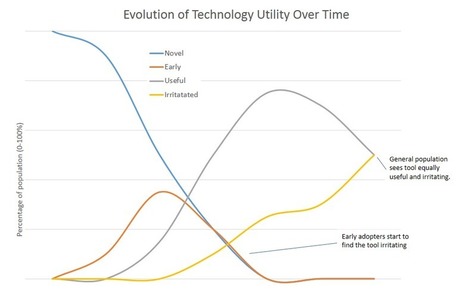
How often do you hear things like "let's ban email", "no more attachments", "death to PowerPoint decks", "we're going paperless", "meeting free friday" or one of dozens of "bans" designed to do awa...
Beth Kanter's insight:
It is easy to complain about a tool. Sometimes the complaints are about the work itself and the tool is just the scapegoat. There’s value in looking at tool usage or process creation from a team or management perspective. My own experience is that the clarion calls to ban a tool or process have some common warning signs that are worth keeping an eye out for as the team might avoid the jump to banning something, which we know won’t work.
Scoop.it!

"Critical Thinking" may sound like an obnoxious buzzword from liberal arts schools, but it's actually a useful skill. Critical thinking just means absorbing important information and using that to form a decision or opinion of your own--rather than just spouting off what you hear others say. This doesn't always come naturally to us, but luckily, it's something you can train yourself to do better. Critical thinking doesn't end. The more knowledge you cultivate, the better you'll become at thinking about it. It's navel gazing in that you're constantly thinking about thinking, but the end result is a brain that automatically forms better arguments, focused ideas, and creative solutions to problems. Via Gust MEES

Brent MacKinnon's curator insight,
February 9, 2014 8:18 AM
A very practical description with examples of ways to become better in your critical thinking. A good primer for sense making as part of the PKM framework. 
Terry Doherty's curator insight,
February 15, 2014 8:00 PM
"Navel gazing." I haven't heard that term in ages ... and don't do it near enough.

Todd Bratcher's curator insight,
February 18, 2014 6:46 PM
Critical thinking means to ask questions that need to be asked. it involves finding the significance in every piece of information you come across and formulating opinions and plans of action. You have to ask the tough questions and the best one to start with is "Why?" Critical thinking is about being curious and allowing your sense of curiosity to follow the "why".Often times following the why will lead to finding the truths and finding lies. Critical thinking is also about honing in ones BS detector. Take time to analyze information before accepting it's credibility.
Scoop.it!

It's getting harder and harder to see the content you really *want* to see in your Facebook News Feed these days. Make good use of the List feature!
|
Scoop.it!

This year, we’re not just challenging our community to re-examine how our lives are impacted by social media and technology — both positively and negatively — but we’re also asking ourselves to be more introspective. We issued a challenge to turn off our phones during Valentine’s Day to reconnect with a loved one. We discussed...
Scoop.it!

Tim Ferriss tells us "To do the impossible, you have to ignore the popular". Here are the most controversial productivity tips to do exactly that:
Beth Kanter's insight:
4.) Work less
Within the Buffer team, we have an informal rule, that goes something like this:
This is derived from Tony Schwartz’ book “The Power of Full Engagement”, where he proposes a solution to working, that completely changed my productivity. His key idea is simple: “Manage your energy, not your time.” Harvard Business School professor Leslie Perlow also has some explanations:
So if you start working less, you will have to think really hard about what you will spend your time doing. Here is also more on managing energy, rather than time.
Scoop.it!
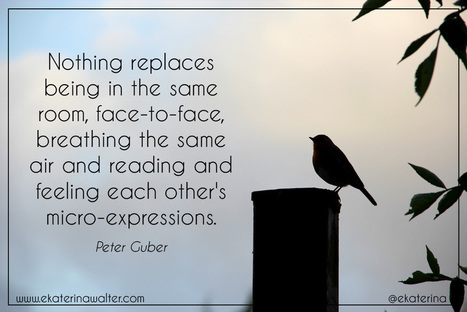
People do business with people, not with technology. Whether you are a person or a brand, to truly build long-lasting personal relationship with another person or a brand advocate you need way more than just a couple of tweets and a LinkedIn connection request, you need face-to-face time.

Marianne Hart's curator insight,
February 28, 2014 3:24 PM
Sometimes the best PLN is right next door, just down the hall, or in your building!!
Scoop.it!

Evgeny Morozov has a short critical piece in The New Republic about digital detoxes, mindfulness and technology. I think the swipe at mindfulness is on the shallow side, but his argument that the digital detox movement is problematic-- or rather, that it runs the risk of solving one problem by...
Beth Kanter's insight:
This is a perfect little example of what users face today: a near-constant exposure to efforts to shape their behavior in ways that might serve them (at some times), but definitely serve the interests of companies and advertisers. Ironically, critics who see the digital detox movement as one that fetishizes analog authenticity enable this (or as it were, distract us from the real issue):
I think Morozov is exactly right that there's a danger that practices like a digital detox or digital Sabbath can be shallow, and that we can miss the opportunity they offer us to rethink how we use our information technologies. But any good thing can be practiced in a shallow way (this is why we have the words humility and sanctimony), and any good opportunity can be wasted. But it's not inevitable that they're shallow. It's important to note that there are people for whom digital detoxes actually work the way Morozov advocates. When I wrote The Distraction Addiction, I made a point to talk about people for whom disconnection isn't a fad or a quick fix. The people who get the most out of it are the people who practice it regularly. They often discover that they don't need to be frantically connected, and they become a little more aware of how companies try to capture their attention. And they realize that the challenge isn't to disconnect completely or get back to "real life," but to lead a richer life. They're still going IRL, but going for a different "R."
Scoop.it!

from Portico (by Portico. Present Better.)
Beth Kanter's insight:
via Tammy Gordon
Scoop.it!

Heavy use of iPhones and other devices makes workers much less effective, according to new research.
Beth Kanter's insight:
Hard habit to break
Scoop.it!

One of the most fun and useful things I’ve been doing lately is automating small processes I do all the time. It took me a while to work up the courage to dive into automation, as it always seemed like a really difficult, technical thing to do, which should be left to programmers. Luckily, there [...] Via Howard Rheingold

Howard Rheingold's curator insight,
February 18, 2014 4:59 PM
Automating repetitive processes, including those you use to seek, filter, tag, store, and retrieve information, can be a useful infotention practice. I've Scooped IFTTT before. This blog post is by social media management service Buffer, so the examples are Buffer-centric, but any of these automation tools can be applied to a variety of platforms, services, and practices. 
Tara Verner's curator insight,
February 23, 2014 1:42 PM
Get some handy tips on how to automate every day tasks with online tools.
Scoop.it!

We can’t expect to get the most from texts, instant messaging, e-mails, or discussion boards if we approach them as we would a novel or textbook.
Beth Kanter's insight:
As we increase our reliance on technology to share information, what are the implications for listening? As we’ve adapted our expression to leverage the range of electronic methods at our disposal, we must also adapt our reception. The act previously known as reading must evolve to a new competency: online listening. Skills and behaviors
Scoop.it!

Note: I was introduced to this idea somewhere on Hacker News a few weeks back, though I haven’t been able to find the exact discussion again [1]. I adapted the original concept to fit my own style, and it’s changed the way I approach my work. Uber Productivity – How To Knock Out More Work Than …
Scoop.it!

Successfully running a small business is challenging. It requires perseverance, resolve and the ability to oversee multiple projects at once. With so many
Scoop.it!

Email overload is a hot topic. Replace “email” in the title of this post with “message” and the point becomes more obvious.
Beth Kanter's insight:
Social displaces some interactions that are inefficient over email, but overall introduces more messages for workers to sift through. That’s not necessarily a bad thing. In fact, many organizations invest in enterprise social for the additional collaborative interaction (i.e., messaging) it facilitates. First, let’s look at how social displaces some interactions that are inefficient over email. In contrast to a private model -- which relies on addressing specific individuals and restricting who can see messages -- a public model allows everyone to more easily:
At the same time however, social introduces more messages for us to sift through. Email has a low signal-to-noise ratio, but social is even noisier. In fact Forrester’s survey data shows that compared to workers who don’t use enterprise social, those that do actually spend more time in their typical workday looking for information. That doesn’t necessarily mean they are being inefficient. Rather, I believe it means they are tapping their peers and taking more time to make informed decisions.
Scoop.it!

When we shared this image from the @buffer Twitter account recently, it got me thinking. The Tweet resulted in over 1,000 retweets, which somehow was an indication that a lot of people seemed to agree with this statement.
|






