Practical Networked Leadership Skills
8.9K views | +5 today
Practical Networked Leadership Skills
The soft skills you need to lead and succeed in a networked world.  This includes:   professional learning network, content curation for self-directed learning and professional development, professional learning networks, personal branding, training your attention, self-care and management, managing up and down.
Curated by Beth Kanter
Your new post is loading...
Scooped by Beth Kanter
January 23, 2014 1:37 PM
Scoop.it!

Satisficing: How Overachievers Stay Sane and Avoid Burn-Out

Satisficing: How Overachievers Stay Sane and Avoid Burn-Out | Practical Networked Leadership Skills | Scoop.it
Trying to maximize every task and squeeze every drop of productivity out of your creative work is a recipe for exhaustion and procrastination.
Beth Kanter's insight:

Good advice: 

No comment yet.
Scooped by Beth Kanter
January 15, 2014 11:15 PM
Scoop.it!

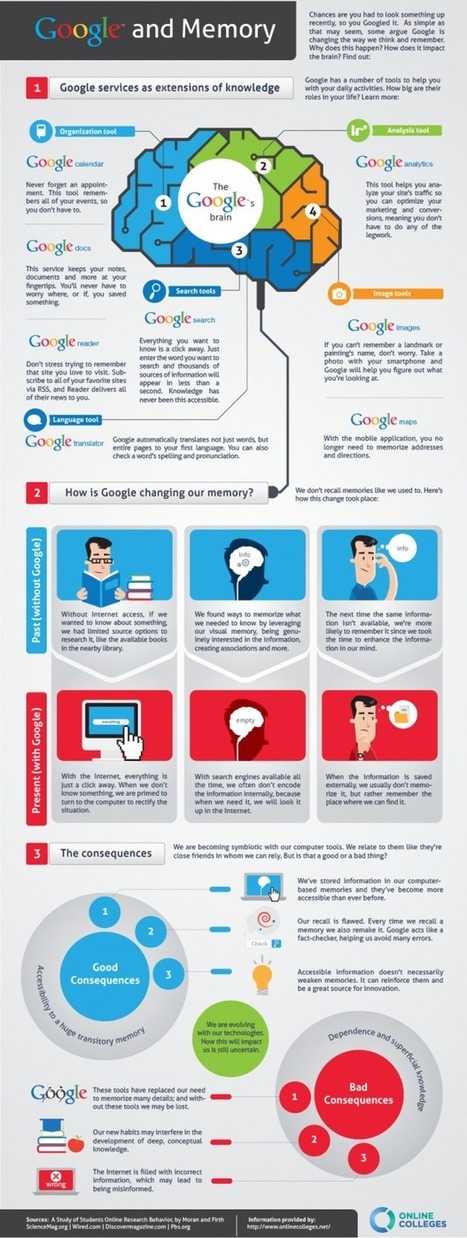
The Impact of Google on Our Memory ~ Educational Technology and Mobile Learning

The Impact of Google on Our Memory ~ Educational Technology and Mobile Learning | Practical Networked Leadership Skills | Scoop.it
Beth Kanter's insight:

No wonder I can't remember anythning

No comment yet.
Scooped by Beth Kanter
January 5, 2014 8:40 PM
Scoop.it!

Management Be Nimble - NYTimes.com

Management Be Nimble - NYTimes.com | Practical Networked Leadership Skills | Scoop.it
Beth Kanter's insight:

The Hazards of Email

Bring up the subject of workplace email during conversations with C.E.O.’s, and the mood often shifts. Email is a hot-button issue, and clearly a source of endless frustration.

The problem, of course, is that for all the obvious benefits of email in speeding communication, it is also a dangerous trap. Emails are too easily misinterpreted, with often-disastrous consequences for the culture of an organization, because they can damage whatever connective tissue exists between colleagues. Yet the allure of email is powerful, and people fall repeatedly into the same trap, thinking that email is the best way to accomplish a lot of work in a short time.

Many C.E.O.’s are perceptive observers of the hazards of email, and they establish a variety of rules in their companies to discourage its use and encourage people to talk instead.

“If there’s a conflict and you need to resolve it, you cannot really do it in an email because people don’t know tone,” said Nancy Aossey, chief executive of the International Medical Corps. “They don’t know expression. Even if they like you and they know you, they might not know if you were irritated or joking in an email. There are things we can say in conversation that you can’t say in email because people don’t know tone and expression.

“People change when they talk in person about a problem, not because they chicken out, but because they have the benefit of seeing the person, seeing their reaction, and getting a sense of the person. But arguing over email is about having the last word. It plays into something very dangerous in human behavior. You want to have the last word, and nothing brings that out more than email because you can sit there and hit ‘send,’ and then it just kind of ratchets up and you don’t have the benefit of knowing the tone.”

By talking over the phone or in person, you’ll not only avoid dangerous misunderstandings, but you’ll also develop relationships and a sense of trust with colleagues — essential ingredients in fostering the kind of high-performing culture that drives innovation.

No comment yet.
Scooped by Beth Kanter
December 31, 2013 12:32 PM
Scoop.it!

Focus Diagnostics

Focus Diagnostics | Practical Networked Leadership Skills | Scoop.it
Beth Kanter's insight:

The FOCUS Diagnostic is designed to accompany FOCUS: Using Different Ways of Seeing the World for Success and Influence, the highly-anticipated new book published by Hudson Street Press/Penguin in April, 2013. The purpose of the FOCUS Diagnostic is to give you insight into your dominant focus, at work and in general, along with a sense of how well you work with both promotion and prevention motivation.

No comment yet.
Rescooped by Beth Kanter from Content Curation World
December 16, 2013 3:01 PM
Scoop.it!

Here's How To Hand-Curate Your Life In An Effective Way


Via Robin Good
Beth Kanter's insight:

I just discovered that one of the better curators is also a manual list maker.  That is - not using the online tools to make to do lists, but writing it out on paper.    


I found that doing too much of my work online line - with hands on the keyboard and eyes on the monitor gets me into a distracted space.    But, when I write down a list or the bullet points as this method points out. I'm all of sudden more focused! 


Robin Good's curator insight, December 14, 2013 10:28 AM


Bullet Journaling is a simplified manual method to organize, plan and archive all of your most important life activities, meetings and things you want to do with just pen and paper.


Forget Evernote or Asana, this is only for those who really crave for staying away from the digital tools - at least for this task - and who love to "curate" by hand their daily tasks and future activities, while maintaining a useful paper track of it all.


I am one of them.


As you can read on the Bullet Journal home page: "For the list-makers, the note-takers, the Post-It note pilots, the track-keepers, and the dabbling doodlers.


Bullet journal is for those who feel there are few platforms as powerful as the blank paper page.


It’s an analog system for the digital age that will help you organize the present, record the past, and plan for the future."


Bullet Journaling, invented by Ryder Carroll, is a way to organize on paper your personal (or professiomal) life, not a way to "curate" your life or experiences.


But it is from the keen ability to organize and put things in order that a curator can then extract and identify what has been of value and what not.  


For this reason I am looking at Bullet Journaling not jut as a way of curating your life priorities but also as a good example of the curator's best spirit and attitude:
 

  • manual
  • attentive to detail
  • capable of looking both at the individual item
    and the at the whole 
  • always updating, questioning, reviewing
  • ready to categorize on-the-fly
  • looking forward and looking back


The reference web site is a destination worth checking out. Made just of one long page, organized into sections, it offers a complete how-to manual on getting started immediately with bullet-journaling. 


Fascinating. Useful. Ingenious. 9/10


Find out more: http://www.bulletjournal.com/ 


Original video: http://youtu.be/GfRf43JTqY4 


Check this review: http://www.fastcodesign.com/3016456/this-note-taking-system-turns-you-into-an-efficiency-expert 


Luis Ferreira's curator insight, December 18, 2013 11:33 AM

good

Sue Rizzello's curator insight, December 18, 2013 12:48 PM

In the beginning there was paper. In between the to do list systems and GTD platforms, there was paper. All the productive people I meet have a strong affinity with paper lists and systems, even if they play fast and loose on occasion with Evernote et al.

Could this chap have the answer? Well, I will give it a try, why don't you too. We have nothing to lose but the chaos.

Scooped by Beth Kanter
December 16, 2013 1:05 PM
Scoop.it!

Use a "Listmaker" Account to Tap the Power of Twitter Lists

Use a "Listmaker" Account to Tap the Power of Twitter Lists | Practical Networked Leadership Skills | Scoop.it
Twitter lists are a powerful way to structure your attention on Twitter so that you focus on the people who matter most.
Beth Kanter's insight:

Twitter lists are a powerful way to structure your attention on Twitter so that you focus on the people who matter most. By providing a way to sort different types of contacts into different HootSuite streams, lists help you focus on different people or conversations at different times or in specific contexts. They are just as helpful at a company-wide level, since it allows colleagues to build and share lists of people to follow without requiring them to follow everyone who might be relevant to anyone in the company.

But they have a crucial limitation: unless you keep your account and/or your list private, other people can see who you are tracking and how you’re tracking them. That’s why it’s useful to create a second “listmaker” Twitter account for the specific purpose of managing and sharing Twitter lists with your colleagues. Use this account to create lists like:

No comment yet.
Scooped by Beth Kanter
December 15, 2013 1:57 PM
Scoop.it!

NDU – Join The National Day Of Unplugging – March 7-8, 2014

NDU – Join The National Day Of Unplugging – March 7-8, 2014 | Practical Networked Leadership Skills | Scoop.it
No comment yet.
Scooped by Beth Kanter
December 15, 2013 1:53 PM
Scoop.it!

How to Block Annoying Political Posts on Facebook

How to Block Annoying Political Posts on Facebook | Practical Networked Leadership Skills | Scoop.it
Election Day is over, and we all know what that means: tomorrow you'll wake up to an onslaught of annoying, ignorant Facebook posts from your friends (God love 'em) complaining about whichever candidate won.
Beth Kanter's insight:

Instructions for using social fixer

No comment yet.
Scooped by Beth Kanter
December 15, 2013 1:51 PM
Scoop.it!

How to Declutter Your Facebook News Feed Once and For All

How to Declutter Your Facebook News Feed Once and For All | Practical Networked Leadership Skills | Scoop.it
When was the last time you looked at your Facebook feed and actually liked everything you saw? For all of Facebook's fancy algorithms, it can never create the perfect feed for you.
Beth Kanter's insight:

These are some simple tips for flitering and fine-tuning your FB newsfeed so you get updates and content that are of more interest - more signal to noise. 


Note that most of these tricks apply to your Facebook friends, but the same rules can often be applied to pages you've liked as well, so don't forget to give those a thorough cleaning using the same tips once you're done culling your friends lists.

No comment yet.
Scooped by Beth Kanter
October 15, 2013 12:23 PM
Scoop.it!

4 quick tricks for a more creative week

4 quick tricks for a more creative week | Practical Networked Leadership Skills | Scoop.it
Beth Kanter's insight:

Good tips to keep creative

No comment yet.
Scooped by Beth Kanter
August 25, 2013 12:01 PM
Scoop.it!

10 Distractions You MUST Avoid as a Facebook Page Owner

10 Distractions You MUST Avoid as a Facebook Page Owner | Practical Networked Leadership Skills | Scoop.it
Do you struggle to use your time wisely when running your Facebook Page? I know I do. That's why I put together this list of distractions you MUST avoid.
Heather Card's comment, September 19, 2013 9:19 AM
Thanks...good list!
Scooped by Beth Kanter
May 24, 2013 12:47 PM
Scoop.it!

Contemplative Computing

Contemplative Computing | Practical Networked Leadership Skills | Scoop.it
The blog for the contemplative computing project, which documents efforts to create technologies and interactions that don't distract users and fracture their attention, but promote concentration and mindfulness.
Beth Kanter's insight:

This is the Alex Soo Jung-Kim's blog.  He is the author of the forthcoming book called "The Distraction Addiction."     He uses the term: Contemplative computing.   This may sound like an oxymoron, but it's really quite simple. It's about how to use information technologies and social media so they're not endlessly distracting and demanding, but instead help us be more mindful, focused and creative.


Here's 2011 talk and good introduction to the project and its big ideas.


A more recent Guardian post that puts it more in context of this mindful online movement


http://www.guardian.co.uk/technology/2013/may/10/conscious-computing-twitter-facebook-google

No comment yet.
Scooped by Beth Kanter
May 23, 2013 8:35 PM
Scoop.it!

Conscious computing: how to take control of your life online

Conscious computing: how to take control of your life online | Practical Networked Leadership Skills | Scoop.it
Twitter, Facebook, Google… we know the internet is driving us to distraction. But could sitting at your computer actually calm you down? Oliver Burkeman investigates the slow web movement
Beth Kanter's insight:

Great piece.   Love the idea of "calming technology" 


This is the question motivating the embryonic movement known variously as "calming technology", "the slow web", "conscious computing" or (Pang's preferred term) "contemplative computing". Its members hope that we might be able to perform a sneaky bit of jujitsu on the devices that dominate our lives: to turn the agents of distraction into agents of serenity. Their inventions so far include wearable sensors that deliver rewards ("calm points") for breathing well while you work, developed by Stanford University's calming technology laboratory; iPad apps to help you meditate yourself into a state of super-focused concentration; software that lets friends decide collectively to disable their smartphonesfor the duration of a restaurant meal; and scores of pieces of "zenware" designed to block distractions, with names such as Isolator andStayFocusd and Shroud and Turn Off The Lights. I wrote most of this article using OmmWriter, which filled my screen with a wintry backdrop of bare trees and my headphones with the hypnotic clanking of old railway engines. I also used f.lux, which changed the glare of my screen to yellowy evening light, precisely timed to synchronise with the sunset outside.

God Is.'s comment May 24, 2013 9:51 AM
I feel like grasshopah...
Scooped by Beth Kanter
January 23, 2014 1:34 PM
Scoop.it!

7 Things “Star Wars” Taught Me About Productivity

7 Things “Star Wars” Taught Me About Productivity | Practical Networked Leadership Skills | Scoop.it
When life gets tough, James Altucher asks himself What would a Jedi do?
Beth Kanter's insight:

Love that it uses a star wars metaphor

No comment yet.
Scooped by Beth Kanter
January 10, 2014 6:32 PM
Scoop.it!

10 Apps & Tools for Maximizing Personal Efficiency | Apps on GOOD

10 Apps & Tools for Maximizing Personal Efficiency | Apps on GOOD | Practical Networked Leadership Skills | Scoop.it
Here is the list:
1. Organize your email: Sanebox
2. Keep track of all your notes: Evernote
3. Store your documents in the cloud: Dropbox
4. Prioritize your to-do list: Action Method
5.
No comment yet.
Scooped by Beth Kanter
December 31, 2013 12:33 PM
Scoop.it!

Dr. Heidi Grant Halvorson

Dr. Heidi Grant Halvorson | Practical Networked Leadership Skills | Scoop.it
No comment yet.
Scooped by Beth Kanter
December 30, 2013 5:33 PM
Scoop.it!

What Happened to Downtime? The Extinction of Deep Thinking & Sacred Space

What Happened to Downtime? The Extinction of Deep Thinking & Sacred Space | Practical Networked Leadership Skills | Scoop.it
We're addicted to distraction, and it's holding us back. To find genius in the 21st century, we must build a discipline of unplugging and deep thinking.
Beth Kanter's insight:

The potential of our own creativity is rapidly being compromised by the era we live in. I believe that genius in the 21st century will be attributed to people who are able to unplug from the constant state of reactionary workflow, reduce their amount of insecurity work, and allow their minds to solve the great challenges of our era. Brilliance is so rare because it is always obstructed, often by the very stuff that keeps us so busy.

No comment yet.
Scooped by Beth Kanter
December 16, 2013 1:43 PM
Scoop.it!

Energy, Time, Priority, Work/Life: 4 New Ways To Organize Your To-Do List

Energy, Time, Priority, Work/Life: 4 New Ways To Organize Your To-Do List | Practical Networked Leadership Skills | Scoop.it
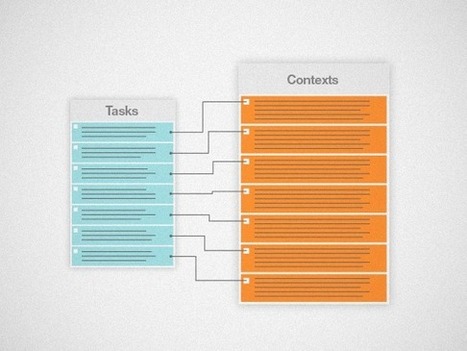
Not all tasks were created equal. Add “contexts” to your action items to make sure you get them done when you need to.
Beth Kanter's insight:

I love these ideas, especially the energy-based context way of writing up your to do list.  I find that I have to create several versions of my to do list, with one that is putting it on my calendar.

No comment yet.
Scooped by Beth Kanter
December 16, 2013 12:55 PM
Scoop.it!

Twitter Lists: Love, Hate, Hot or Not? Let Us Change Your Mind | UGC list creation, content curation & crowdsourcing.

Twitter Lists: Love, Hate, Hot or Not? Let Us Change Your Mind | UGC list creation, content curation & crowdsourcing. | Practical Networked Leadership Skills | Scoop.it
Twitter Lists are awesome. Or not? What's your view? You have a view? Do you love to hate lists? Can we change your mind? We dare you to find out! Take us for a spin.
Beth Kanter's insight:

The best feature for filtering your Twitter feed is the use of lists, but they are not social.  List.ly is now integrated.  That means you can manage your Twitter lists and also make them social - have folks add to them.


Here are the steps

https://listly.tenderapp.com/kb/twitter-lists-managed-by-listly-invite-only-beta/twitter-lists-now-generally-available


No comment yet.
Scooped by Beth Kanter
December 15, 2013 1:54 PM
Scoop.it!

How to Make Facebook Infinitely Better with One Browser Extension

How to Make Facebook Infinitely Better with One Browser Extension | Practical Networked Leadership Skills | Scoop.it
With each update, Facebook has gotten incrementally more cluttered, perplexing, and ornery—and I'm not even talking about all your annoying acquaintances flooding it with inane status updates.
Beth Kanter's insight:

More instructions for using social fixer

No comment yet.
Scooped by Beth Kanter
December 15, 2013 1:52 PM
Scoop.it!

Social Fixer: The app that Fixes Facebook annoyances!

Social Fixer: The app that Fixes Facebook annoyances! | Practical Networked Leadership Skills | Scoop.it
Social Fixer for Facebook is a FREE browser extension that fixes annoyances, adds features, and enhances existing functionality to make Facebook more fun and efficient
Beth Kanter's insight:

Social Fixer for Facebook plugs into your browser and improves the existing Facebook.com web site. You get to pick which features you want to use:

 Filter your news feed by keyword, author, and more
 Tabbed news feed organizes posts by games, apps, etc
 Hide parts of the page you don't want to see
 Don't show posts you've already read
 Auto-switch to the Most Recent news feed
 Add some style with custom themes
No comment yet.
Scooped by Beth Kanter
November 13, 2013 12:16 PM
Scoop.it!

10 Online Apps for Better Focus

10 Online Apps for Better Focus | Practical Networked Leadership Skills | Scoop.it
How to Relax and Better Focus? 10 Online Apps for Better Focus. See more
No comment yet.
Rescooped by Beth Kanter from Infotention
September 26, 2013 1:22 PM
Scoop.it!

How to write faster

How to write faster | Practical Networked Leadership Skills | Scoop.it

"Significant gains in writing productivity can be gained by a combination of the right kind of practice and the right kind of tools. I’ve written about many of these tools and techniques previously, but I’ve organised all the advice here into a three step program, with links to useful resources.

Review your writing tools

Often the ‘industry standard’ software is not the best tool for the job. Take Word processors as just one example. You must move back and forth over the text to achieve flow and make sure everything is in the right place. If you can move around your documents more easily your writing speed will increase. Unfortunately the industry default, MS Word, does not, out of the box, perform this task well.

Anyone who has been reading this blog for a while will know this is the key reason I am a huge Scrivener fan. Scrivener is a different kind of word processor that enables you to write ‘chunks’ and move them around easily..."


Via Howard Rheingold
Howard Rheingold's curator insight, September 25, 2013 12:36 PM

This is about infotention -- "combination of the right kind of practice and the right kind of tools." I share thesis whisperer's enthusiasm for Scrivener for long projects or even short writing projects that have many moving parts.

Ra-eesah Mohamed's curator insight, October 2, 2013 9:38 AM

writing faster in class is a constant battle in lectures then learning how to write faster seems like a legit tool to use in everyday life. 


Scooped by Beth Kanter
July 22, 2013 12:24 AM
Scoop.it!

Lifehacker Pack for iPhone 2013: Our List of the Best iPhone Apps

Lifehacker Pack for iPhone 2013: Our List of the Best iPhone Apps | Practical Networked Leadership Skills | Scoop.it
The iPhone has the largest selection of apps on the mobile side, but that means it's also the most frustrating to find what's worthwhile.
No comment yet.
Rescooped by Beth Kanter from Infotention
May 24, 2013 12:39 PM
Scoop.it!

The Art of Staying Focused in a Distracting World

The Art of Staying Focused in a Distracting World | Practical Networked Leadership Skills | Scoop.it
The tech-industry veteran Linda Stone on how to pay attention

Via Howard Rheingold
Beth Kanter's insight:

Some new books coming out on the distraction issue, one that takes a technologist approach (Alex Pang).  But always good to understand the thought leaders of this space - including Howard Rheingold and Linda Stone

Howard Rheingold's curator insight, May 24, 2013 12:20 PM

Linda Stone was one of the inspirations for infotention and I quote her heavily in Net Smart.