
The Importance of Phonetics and Phonology in the Teaching of Pronunciation.Introduction The teaching of pronunciation has witnessed remarkable changes
Via Marina N. Cantarutti, Olaf Husby


 Your new post is loading...
 Scoop.it! The Importance of Phonetics and Phonology in the Teaching of Pronunciation.Introduction The teaching of pronunciation has witnessed remarkable changes Via Marina N. Cantarutti, Olaf Husby 
No comment yet.
Sign up to comment
Scoop.it!

There are as many as 800 languages spoken in New York City, and nowhere in the world has more than Queens, according to the Endangered Language Alliance. Via Aurora Humarán, Olaf Husby
Scoop.it!

RT @theCLILSHIFT: 21 Digital Tools To Build Vocabulary - https://t.co/bs1wmPFQ5I
Via Jersus Colmenares, Olaf Husby, Pascual Pérez-Paredes

LizJardim's curator insight,
May 24, 2016 8:33 AM
21 digital tools - so many to chose from. Wonderful collection and useful classroom resources.

Lacey Mack's curator insight,
May 26, 2016 3:35 AM
Interesting range of modes to incorporate new vocab into everyday lessons. In this way, students are able to engage in the words, explore and comprehend - increasing their ability to recall for later use.
Scoop.it!

Is it the modern lexicographer’s job to protect the English language, or to document it? Via Evdokia Roka, Deb Wood
Scoop.it!

At the root of all good writing lies an understanding of how sentences are built. In kindergarten, we learn the fundamentals of grammar and the basic concepts of how sentences are constructed. For most of our elementary and secondary training in writing, we are taught simply to improve those grammatical and mechanical skills. A good writer, however, understands the complexities and rhetorical effects of how modifying sentence structure (known as sentence "schemes") improves the flow, interest, a Via Joe Willey, Evdokia Roka
Scoop.it!

As neuroscience brings greater understanding of the human brain, experts are applying those findings in the classroom to improve how we teach and learn. In recent decades we’ve seen the rise of an emerging interdisciplinary field that brings together neuroscientists and educators. As technologies like brain mapping and scanning continue to advance our understanding of the human brain, a sub-sector of experts are applying those findings to the classroom. Instead of being based on traditional or individual assumptions about learning, education is beginning to be treated more like a science. The new discipline, neuroeducation, serves to apply the scientific method to curricula design and teaching strategies. This comes with attempts for a more objective understanding of learning that is based on evidence. What Is Neuroeducation? All human abilities, including learning, are a result of our brain activity. Hence, a better understanding of how our brains operate can result in a better understanding of learning. As we continue to unravel the issues and limitations of traditional education, many solutions involve a better scientific basis behind how we teach. The goal of neuroeducation (also known as mind and brain education or educational neuroscience) is to solidify a scientific basis in teaching and learning. The field uses the latest findings from neuroscience, psychology, and cognitive science to inform education and consequently, teaching strategies. Via Wildcat2030

Ocean´s five's curator insight,
October 27, 2017 3:23 AM
¿Qué es la neuroeducación?
Todas las habilidades humanas, incluido el aprendizaje, son el resultado de nuestra actividad cerebral. Por lo tanto, una mejor comprensión de cómo funciona nuestro cerebro puede resultar en una mejor comprensión del aprendizaje. 
Dani Rivera's curator insight,
November 2, 2017 11:35 AM
It shows findings in neuroeducation and how does that affect the nree metholodiges and techniques for teaching int he classroom, for instance that affective filters is linked with theories like neurolinguistic and linguistic programming, (you are able to understand and to perfom activities if you think you can do it and have the abilities to do it), another finding is that in the future mind mappings could be done per individuals of the brain, this means that teachers in the future will be able to understand the synapsis of the brain of the students, in order to know how they learn and how their neurons activate through different learning styles.
Scoop.it!

Ear-rent, slug-a-bed and merry-go-sorry are among the words that academics want to revive. Via Michelle Maglitto, Evdokia Roka
Scoop.it!

Delivering content—in any class—through a story has positive effects on your students’ information retention. Via Stephania Savva, Ph.D, Lon Woodbury, Dean J. Fusto, Mark E. Deschaine, PhD

Lon Woodbury's curator insight,
September 16, 2017 1:50 PM
Our brain is geared toward understanding through stories, so it makes sense to adapt story telling to academics. -Lon
Scoop.it!

miguel baranda's curator insight,
June 2, 2018 7:32 PM
Un vídeo que explica la formación del condicioal.
Scoop.it!
Scoop.it!
In everyday speech, speakers often report what others say. They quote what other people told them, or they repeat what they said themselves. Americans use a few interesting expressions and verb tenses to report speech - including "be like," go, and the "historic present" tense. Via David M
|
Scoop.it!

The Oldest Words in the English Language Well, like many languages English is pretty old. In fact, it’s been round for thousands of years. English is a language formed from many different sources, but what were the first words ever Via Aurora Humarán, Olaf Husby
Scoop.it!

Test your knowledge with amazing and interesting facts, trivia, quizzes, and brain teaser games on MentalFloss.com. Via Pascual Pérez-Paredes, Olaf Husby
Scoop.it!
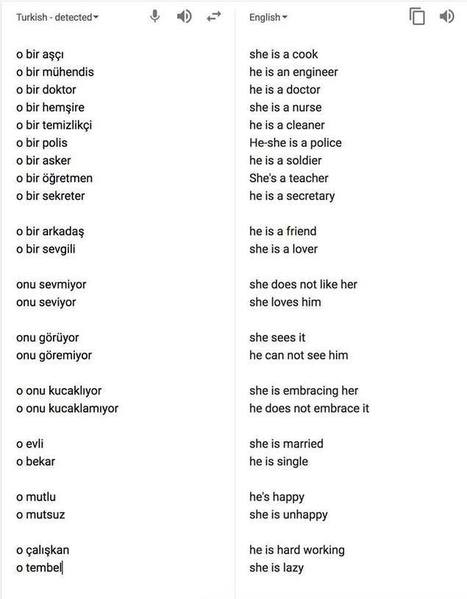
A daily blog about all things linguistic by Gretchen McCulloch. I also cohost a linguistics podcast, Lingthusiasm. Via Olaf Husby
Scoop.it!

This year’s Scripps National Spelling Bee champs spelled words like “Feldenkrais” and “Mischprache," but it turns out most Americans are struggling with considerably simpler words.
Via Pascual Pérez-Paredes, Olaf Husby
Scoop.it!
When we talk about ‘English’, we often think of it as a single language. But what do the dialects spoken in dozens of countries around the world have in common with each other, or with the writings of Chaucer? Claire Bowern traces the language from the present day back to its ancient roots, showing how English has evolved through generations of speakers.
Scoop.it!

From
reset

Brain plasticity is a two-way street; it is just as easy to generate negative changes as it is positive ones. You have a “use it or lose it” brain. It’s almost as easy to drive changes that impair memory and physical and mental abilities as it is to improve these things. Merzenich says that older people are absolute masters at encouraging plastic brain change in the wrong direction. Via Nik Peachey

Lisa Marie Blaschke's curator insight,
October 29, 2017 3:39 AM
You can go negative or positive in influencing brain neuroplasticity. What road do we as educators and institutions take? Article gives some insights on how to do it right.

Volkmar Langer's curator insight,
October 29, 2017 5:39 AM
Learning - always stay tuned - use it or lose it
Scoop.it!
In today's report, we explore common reasons and situations in which Americans use the word 'the.' We show you how they use it when speaking, when they write, and even in books and films. Via David M
Scoop.it!
Introduction of neuroscience in the pedagogical research has provided a meaning path through which school environment can become a place where learning is at the center of education. Via EdTechReview (@etr_in), Mark E. Deschaine, PhD
Scoop.it!

Our accents are an intimate part of who we are, central to how we express ourselves in speech. They can reveal things about our identity and background, such as Via Michelle Maglitto, Evdokia Roka
Scoop.it!

Many people find these small conversations about random topics difficult. Some people say they hate it. Others say small talk is a waste of time. They may even call it idle chitchat or idle chatter, meaning it doesn’t do anything. However, small talk is important. Via David M
Scoop.it!

In this week's report, we are going to explore one pattern that is commonly used in academic writing. The structure we are exploring is this: noun + that clause. Academic writers often use it to evaluate an idea. Via David M
|