Your new post is loading...

|
Scooped by
Gilbert C FAURE
May 17, 2017 3:56 AM
|
Theory, methods, and principles of landscape ecology enhance our understanding of
the spatial scales, patterns, and processes that underlie host-microbiota interactions.
As examined in this Review by Proctor and Relman, the human nose, mouth, and throat
are attractive study sites for elucidating microbial biogeography, host physiology,
and immune function.
|
|
Scooped by
Gilbert C FAURE
May 15, 2017 9:20 AM
|
Mediators of Inflammation is a peer-reviewed, Open Access journal that publishes original research and review articles on all types of inflammatory mediators, including cytokines, histamine, bradykinin, prostaglandins, leukotrienes, PAF, biological response modifiers and the family of cell adhesion-promoting molecules.
|
|
Scooped by
Gilbert C FAURE
May 14, 2017 5:15 AM
|
The European Biotech News Website
|
|
Scooped by
Gilbert C FAURE
May 10, 2017 2:59 AM
|
Med Microbiol Immunol. 2017 May 4. doi: 10.1007/s00430-017-0510-5. [Epub ahead of print]
|
|
Scooped by
Gilbert C FAURE
April 30, 2017 3:37 AM
|
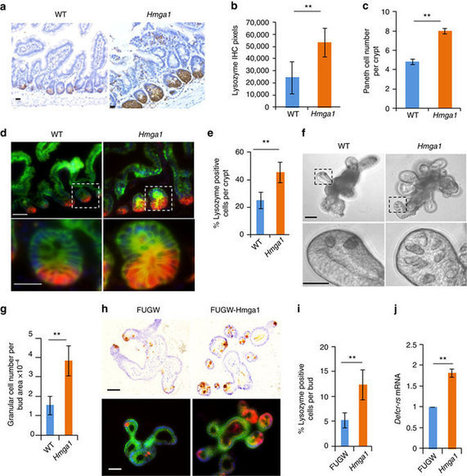
The function of high mobility group A1 (Hmga1) chromatin remodelling proteins in intestinal stem cells (ISC) is unknown.
|
|
Scooped by
Gilbert C FAURE
April 28, 2017 4:37 AM
|
Background Neonatal sepsis in preterm infants is often due to organisms that colonize the skin including Staphylococcus spp. and Candida spp. Development and maturation of the skin microbiome in the neonatal period, especially in preterm infants, may be critical in preventing colonization with pathogens and subsequent progression to neonatal sepsis. Development of the skin microbiome in preterm infants or its determinants in the first 4 weeks of life has not been evaluated. Methods We evaluated the skin microbiome from three body sites, antecubital fossa, forehead and gluteal region, in a prospective cohort of 15 preterm (birth weight < 1500 g and < 32 weeks of gestation) and 15 term neonates. The microbiome community membership and relative abundance were evaluated by amplification and sequencing the bacterial V3-V5 region of the16S rRNA gene on the 454 GS FLX platform. We used linear mixed effects models to analyze longitudinal data. Results The structure and composition of the skin microbiome did not differ between the three sampling sites for term and preterm infants in the neonatal period. However, skin bacterial richness was positively associated with gestational age in the first four weeks of life. Intravenous antibiotics negatively impacted the bacterial diversity of the skin but we did not see differences with respect to feeding or mode of delivery. Conclusions Gestational age, which influences the maturity of skin structure and function, is associated with the development of the preterm cutaneous microbiome. Understanding the maturation of a healthy skin microbiome, prevention of pathogen colonization and its role in the development of immunity will be pivotal in the development of novel interventions to prevent infections in critically ill preterm infants.
|
|
Scooped by
Gilbert C FAURE
April 28, 2017 4:00 AM
|
Mechanical engineers studying the hydrodynamics of soft matter have a new universal constant to add to the annals of science: On average, most mammals take just 12 seconds to poop. The researchers studiously observed that mammals from cats to elephants all apply about the same amount of pressure to finish the job, regardless of body size, according to New Scientist.
|
|
Scooped by
Gilbert C FAURE
April 26, 2017 12:53 PM
|
Mucosal Immunology is the official publication of the Society of Mucosal Immunology (SMI). It aims to provide a forum for both basic and clinical scientists to discuss all aspects of immunity and inflammation involving mucosal tissues. The journal reflects the interests of scientists studying gastrointestinal, pulmonary, nasopharyngeal, oral, ocular, and genitourinary immunology through the publication of original research articles, scholarly reviews, and timely commentaries, editorials and letters.
|
|
Scooped by
Gilbert C FAURE
April 25, 2017 4:56 AM
|
J Allergy Clin Immunol. 2017 Apr 19. pii: S0091-6749(17)30657-7. doi: 10.1016/j.jaci.2017.01.045. [Epub ahead of print]
|
|
Scooped by
Gilbert C FAURE
April 24, 2017 3:02 PM
|
IgA is necessary for maintaining gut homeostasis, and its production depends on microbial sampling by the gut-associated lymphoid tissue (GALT). Takayanagi and colleagues identify a novel population of mesenchymal cells in the GALT that control M cell differentiation and function of gut epithelium.
|
|
Scooped by
Gilbert C FAURE
April 24, 2017 9:37 AM
|
Mucosal Immunology is the official publication of the Society of Mucosal Immunology (SMI). It aims to provide a forum for both basic and clinical scientists to discuss all aspects of immunity and inflammation involving mucosal tissues. The journal reflects the interests of scientists studying gastrointestinal, pulmonary, nasopharyngeal, oral, ocular, and genitourinary immunology through the publication of original research articles, scholarly reviews, and timely commentaries, editorials and letters.
|
|
Scooped by
Gilbert C FAURE
April 23, 2017 2:31 PM
|
The microbiome impinges on cancer development and cancer treatments. The ways in which
it could do so by interfacing with the immune systems’ ability to detect and respond
to tumor cells and how it could impact immunotherapy are discussed.
|
|
Scooped by
Gilbert C FAURE
April 18, 2017 5:31 AM
|
Vaccinations are known to protect against pathogens such as bacteria or viruses. They direct the body to form protective antibodies (IgA), and have been successfully used against some intestinal infections.
|

|
Suggested by
LIGHTING
May 15, 2017 1:15 PM
|
Bill Gates has applauded India on it's 'Clean India' initiative, as well as issuing a challenge to design safe, sustainable and affordable toilets.
|
|
Scooped by
Gilbert C FAURE
May 14, 2017 6:54 AM
|
Tissue adaptation is an intrinsic component of immune cell development, influencing both resistance to pathogens and tolerance. Chronically stimulated surfaces of the body, in particular the gut mucosa, are the major sites where immune cells traffic and reside. Their adaptation to these environments requires constant discrimination between natural stimulation coming from harmless microbiota and food, and pathogens that need to be cleared. This review will focus on the adaptation of lymphocytes to the gut mucosa, a highly specialized environment that can help us understand the plasticity of leukocytes arriving at various tissue sites and how tissue-related factors operate to shape immune cell fate and function.
|
|
Scooped by
Gilbert C FAURE
May 10, 2017 8:07 PM
|
Author summary Pseudomonas aeruginosa is an opportunistic pathogen that causes life-threatening infections. P. aeruginosa disease is increasing in prevalence while bacteria continue to evolve antibiotic resistance. It is not clear how mucosal fluids usually protect against opportunistic pathogens. Knowing the key ingredients would help us understand susceptibility and develop novel biocompatible therapeutics. Mucosal fluid factors suppressing bacterial virulence may induce less bacterial resistance than traditional antimicrobials. Here we show that DMBT1, an abundant mucosal fluid glycoprotein, enabled tear fluid to inhibit P. aeruginosa twitching motility. We also show DMBT1 directly binds pili, which mediate twitching motility, suggesting a potential mechanism for twitching inhibition. Reflecting the known importance of twitching motility in virulence, purified DMBT1 reduced P. aeruginosa traversal of human cornea epithelial cell layers in vitro, and protected against P. aeruginosa induced disease in vivo, as does whole human tear fluid. These findings contribute to our understanding of mucosal fluid protection against infection, and suggest that DMBT1, or its derivatives, have potential as novel anti-virulence agents that protect against infection.
The measles virus (MeV) is a contagious pathogenic RNA virus of the family Paramyxoviridae, genus Morbillivirus, that can cause serious symptoms and even fetal complications. Here, we summarize current molecular advances in MeV research, and emphasize the connection between host cells and MeV replication. Although measles has reemerged recently, the potential for its eradication is promising with significant progress in our understanding of the molecular mechanisms of its replication and host-pathogen interactions.
Via Kenzibit
|
|
Scooped by
Gilbert C FAURE
April 29, 2017 1:05 AM
|
The B cells inhabited in mucosa play a vital role in mediating homeostasis with autoantigens and external Ags. Tumor-infiltrating lymphocytes are potential prognostic markers and therapeutic agents for cancer. However, the spatial heterogeneity of the B cell repertoire in intestinal mucosa and the tumor-infiltrating lymphocytes in colorectal cancer (CRC) remain poorly understood. In this study, we developed an unbiased method to amplify the IgH repertoire, as well as a bioinformatic pipeline to process these high-throughput sequencing data. With biopsies from seven intestinal mucosal segments, we uncovered their strong spatial homogeneity among the large intestine, where the clone overlap rate was up to 62.21%. The heterogeneity between terminal ileum and large intestine was also observed, including discrepant isotype distribution and low clone overlap rate. With tumor and adjacent normal mucosal tissues from CRC and colorectal advanced adenoma (AD) patients, we observed a similar IgH profile between tumor and adjacent normal mucosal tissues in AD, as well as a slight difference in CRC. Interestingly, we found distinct repertoire properties in the CRC tumor from AD and normal mucosa. Finally, we identified 1445 public clones for the normal mucosa, and 22 public clones for the CRC tumor with characteristic features. These data may be of potential use in clinical prognosis, diagnosis, and treatment of CRC.
|
|
Scooped by
Gilbert C FAURE
April 28, 2017 4:36 AM
|
The molecule CD103 is key to the long-term residence of T cells in the skin and to their anti-tumor function, report a team of researchers at the Medical University of South Carolina and the Dartmouth-Hitchcock Norris Cotton Cancer Center In the April 14, 2017, Science Immunology.
|
|
Scooped by
Gilbert C FAURE
April 26, 2017 12:54 PM
|
Over the past decade, numerous studies have found an association between the gut microbiota composition and many diseases. However, is it reality? Or is the truth hidden in the shadow of several thousand publications a year with inflated expectations in almost any disease?
|
|
Scooped by
Gilbert C FAURE
April 25, 2017 11:17 AM
|
Lloyd and Marsland review the multiple pathways that underlie effective lung immunity
in health and discuss the impact of the microbiota in lung immune development and
function, including the setting of the threshold for immune responses that maintains
the balance between tolerance and chronic inflammation in the lung.
|
|
Scooped by
Gilbert C FAURE
April 25, 2017 4:55 AM
|
It is now possible to simultaneously visualize multiple bacterial strains in the gut by making them express unique combinations of fluorescent proteins. This approach allowed the researchers to pinpoint the location of the bacteria in the gut based on the rainbow of colors they emitted. Additionally, these tools also allowed precise control of the activity of bacterial genes in real time and in specific locations.
|
|
Scooped by
Gilbert C FAURE
April 24, 2017 9:38 AM
|
Mucosal Immunology is the official publication of the Society of Mucosal Immunology (SMI). It aims to provide a forum for both basic and clinical scientists to discuss all aspects of immunity and inflammation involving mucosal tissues. The journal reflects the interests of scientists studying gastrointestinal, pulmonary, nasopharyngeal, oral, ocular, and genitourinary immunology through the publication of original research articles, scholarly reviews, and timely commentaries, editorials and letters.
|
|
Scooped by
Gilbert C FAURE
April 24, 2017 8:14 AM
|
Mucosal Immunology is the official publication of the Society of Mucosal Immunology (SMI). It aims to provide a forum for both basic and clinical scientists to discuss all aspects of immunity and inflammation involving mucosal tissues. The journal reflects the interests of scientists studying gastrointestinal, pulmonary, nasopharyngeal, oral, ocular, and genitourinary immunology through the publication of original research articles, scholarly reviews, and timely commentaries, editorials and letters.
|
|
Scooped by
Gilbert C FAURE
April 19, 2017 3:35 PM
|
Author summary Melioidosis is a common cause of community-acquired pneumonia and sepsis in Asia. The causative agent, Burkholderia pseudomallei, is listed as a potential bioterror weapon. The intestinal microbiota has been suggested to be a modulator of innate immune defenses against bacterial infections. Here we investigated in mice whether the intestinal microbiota affects the clinical course of melioidosis and vice versa. The composition of the gut microbiota changed strongly during melioidosis. Mice with a disrupted gut microbiota showed increased bacterial dissemination when compared with controls following intranasal infection with B. pseudomallei, indicating that the intestinal microbiota acts as a protective factor in host defense against melioidosis. Macrophages in microbiota-disrupted mice showed a diminished capacity to phagocytose B. pseudomallei. Further research is needed to explore whether this knowledge could be used to the advantage of patients.
|