Your new post is loading...

|
Suggested by
Société Francaise d'Immunologie
November 5, 2018 9:38 AM
|
Intestinal stem cells act as non-conventional antigen presenting cells, and these
interactions with T helper cells modulate ISC renewal and differentiation to shape
the intestine.

|
Scooped by
Gilbert C FAURE
November 3, 2018 2:58 PM
|
Tuberculosis (TB), caused by the airborne bacterial pathogen Mycobacterium tuberculosis, remains a major source of morbidity and mortality worldwide. So far, the study of host-pathogen interactions in TB has mostly focused on the physiology and virulence of the pathogen, as well as on the various innate and adaptive immune compartments of the host. Microbial organisms endogenous to our body, the so-called microbiota, interact not only with invading pathogens, but also with our immune system. Yet, the impact of the microbiota on host defense against M. tuberculosis remains poorly understood. In order to address this question, we adapted a mouse model of microbial dysbiosis based on a combination of wide-spectrum antibiotics. We found that microbiota dysbiosis resulted in an increased early colonization of the lungs by M. tuberculosis during the first week of infection, correlating with an altered diversity of the gut microbiota during this time period. At the cellular level, no significant difference in the recruitment of myeloid cells, including macrophages, dendritic cells and neutrophils, to the lungs could be detected during the first week of infection between microbiota-competent and -deficient mice. At the molecular level, microbiota depletion did not impact the global production of pro-inflammatory cytokines, such as interferon (IFN)γ, tumor necrosis factor (TNF)α and interleukin (IL)-1β in the lungs. Strikingly, a reduced number of mucosal-associated invariant
|
|
Scooped by
Gilbert C FAURE
November 3, 2018 12:22 PM
|
|
|
Scooped by
Gilbert C FAURE
November 3, 2018 12:22 PM
|
Infant nutrition and maternal weight gain during pregnancy impact early-life acquisition and function of the gut microbiome .
|
|
Scooped by
Gilbert C FAURE
November 3, 2018 12:21 PM
|
New research reveals that Mycoplasma pathogens make DNA in a unique way that may protect them from our immune response. The result could provide new avenues to combat the pathogens that utilize this strategy.
|
|
Scooped by
Gilbert C FAURE
November 3, 2018 12:20 PM
|
Acute lung injury is a neutrophil-dominant, life-threatening disease without effective therapies and better understanding of the pathophysiological mechanisms involved is an urgent need. Here we show that interleukin (IL)-22 is produced from innate lymphoid cells (ILC) and is responsible for...
|
|
Scooped by
Gilbert C FAURE
October 31, 2018 12:28 PM
|
|
|
Scooped by
Gilbert C FAURE
October 30, 2018 1:43 PM
|
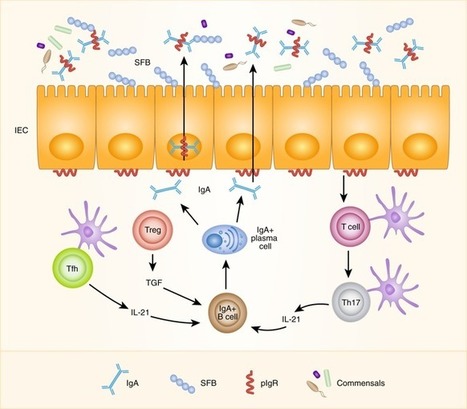
The gut microbiota is important in health and disease. Whereas the intestinal immune
system has evolved to protect the mucosal barrier against pathogens, there is much
interest in understanding how it influences the composition and functions of resident
microbial communities.
|
|
Scooped by
Gilbert C FAURE
October 29, 2018 5:04 AM
|
An analysis of more than 10,000 metagenomes from the TEDDY study provides a detailed functional profile of the gut microbiome in relation to islet autoimmunity, and supports the protective effects of short-chain fatty acids in early-onset type 1 diabetes.
|
|
Scooped by
Gilbert C FAURE
October 28, 2018 8:13 AM
|
Metagenomic sequencing analysis of stool samples from 903 children as part of the TEDDY study shows that breastfeeding was the most important factor associated with microbiome structure, and the cessation of breast milk resulted in faster maturation of the gut microbiome.
|
|
Scooped by
Gilbert C FAURE
October 23, 2018 3:52 PM
|
Bing Tian, Steven G. Widen, Jun Yang, Thomas G. Wood, Andrzej Kudlicki, Yingxin Zhao, Allan R.Brasier...
|
|
Scooped by
Gilbert C FAURE
October 16, 2018 8:31 AM
|
|
|
Scooped by
Gilbert C FAURE
October 15, 2018 1:31 PM
|
Bacteria-derived metabolites pervade the mammalian host, shaping immunity and metabolism.
Using stable isotope tracing, Uchimura and colleagues profile the scope and depth
of host tissue penetration by bacterial metabolites.
|
|
|
Scooped by
Gilbert C FAURE
November 5, 2018 1:48 AM
|
Sojka et al., used a novel NK cell reporter mouse model to determine which cell population cNK or trNK cells is responsible for proliferation of uNK cells
|
|
Scooped by
Gilbert C FAURE
November 3, 2018 12:23 PM
|
|
|
Scooped by
Gilbert C FAURE
November 3, 2018 12:22 PM
|
T cells that react to SpCas9 are observed in the peripheral blood mononuclear cells isolated from healthy humans. These findings may have implications for CRISPR–Cas9 therapeutics.
|
|
Scooped by
Gilbert C FAURE
November 3, 2018 12:21 PM
|
The modern techniques of microbiome science can be applied to the development and evaluation of all microbiota-directed products, including probiotics and fecal microbiota transplantation.
|
|
Scooped by
Gilbert C FAURE
November 3, 2018 12:20 PM
|
Generation of protective immune responses requires coordinated stimulation of innate and adaptive immune responses. An important mediator of innate immunity is stimulator of IFN genes (STING, MPYS, MITA), a ubiquitously but differentially expressed adaptor molecule that functions in the relay of...
|
|
Scooped by
Gilbert C FAURE
November 1, 2018 1:39 PM
|
Many products claim to contain probiotics, but what are probiotics, and what do they actually do. Here, we explore the answers to these questions.
|
|
Scooped by
Gilbert C FAURE
October 30, 2018 3:17 PM
|
Studying the uterine lymphocyte pool is difficult due to its dynamic nature induced by various pregnancy-related factors. Here the authors provide, using transcriptome data from sorted mouse group 1 innate lymphoid cells (ILC), a molecular atlas of these cells, which implicates tissue-resident...
|
|
Scooped by
Gilbert C FAURE
October 29, 2018 10:26 AM
|
![Figure][1]
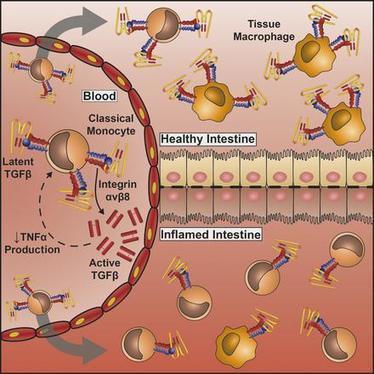
Monocytes are crucial immune cells involved in regulation of inflammation either directly or via differentiation into macrophages in tissues. However, many aspects of how their function is controlled in health and disease are not understood. Here we show that human blood monocytes activate high levels of the cytokine TGFβ, a pathway that is not evident in mouse monocytes. Human CD14+, but not CD16+, monocytes activate TGFβ via expression of the integrin αvβ8 and matrix metalloproteinase 14, which dampens their production of TNFα in response to LPS. Additionally, when monocytes differentiate into macrophages, integrin expression and TGFβ-activating ability are maintained in anti-inflammatory macrophages but down-regulated in pro-inflammatory macrophages. In the healthy human intestine, integrin αvβ8 is highly expressed on mature tissue macrophages, with these cells and their integrin expression being significantly reduced in active inflammatory bowel disease. Thus, our data suggest that integrin αvβ8–mediated TGFβ activation plays a key role in regulation of monocyte inflammatory responses and intestinal macrophage homeostasis.
[1]: pending:yes
|
|
Scooped by
Gilbert C FAURE
October 28, 2018 3:39 PM
|
Using wild mice housed in laboratory conditions, researchers find that gut bacteria compositions change little from one generation to the next.
|
|
Suggested by
Société Francaise d'Immunologie
October 27, 2018 4:52 AM
|
|
|
Scooped by
Gilbert C FAURE
October 23, 2018 3:51 PM
|
A major aspect of the regulatory function of mast cells appears to be their role as
intermediaries between the nervous and immune systems. Mast cells are activated by
neurotransmitters allowing neural control of innate and adaptive immunity.

|
Suggested by
LIGHTING
October 16, 2018 2:05 AM
|
|


 Scoop.it!