 Your new post is loading...

|
Scooped by
Gilbert C FAURE
December 10, 2018 11:34 AM
|
Recurrence of primary glomerulonephritis in the post-transplant period has been described in the literature but the risk remains poorly quantified and its impact on allograft outcomes and implications for subsequent transplants remain under-examined.
|
|
Scooped by
Gilbert C FAURE
December 10, 2018 11:32 AM
|
Studying long noncoding RNAs (lncRNAs) may improve diagnosis and treatment of inflammatory bowel disease (IBD). These RNAs are found between genes in DNA regions previously thought to be “junk,” and have recently been shown to be important in development of various diseases.
|
|
Scooped by
Gilbert C FAURE
December 10, 2018 11:32 AM
|
While the vertebrate microbiota is critical to the normal function of many host traits, hosts may expend a large amount of energy to constrain and interface with their microbiota via their immune system to avoid the high fitness costs associated with gut dysbiosis, pathobionts, and opportunistic...
|
|
Scooped by
Gilbert C FAURE
December 8, 2018 4:06 AM
|
Seasonal influenza vaccines are typically less than 50 percent effective, according to Centers for Disease Control and Prevention studies.
|
|
Scooped by
Gilbert C FAURE
December 7, 2018 12:29 PM
|
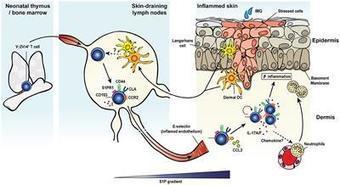
Epithelial and mucosal barriers are critical interfaces physically separating the body from the outside environment and are the tissues most exposed to microorganisms and potential inflammatory agents. The integrity of these tissues requires fine tuning of the local immune system to enable the efficient elimination of invasive pathogens while simultaneously preserving a beneficial relationship with commensal organisms and preventing autoimmunity. Although they only represent a small fraction of circulating and lymphoid T cells, T cells form a substantial population at barrier sites and even outnumber conventional T cells in some tissues. After their egress from the thymus, several T cell subsets naturally establish residency in predetermined mucosal and epithelial locations, as exemplified by the restricted location of murine V5+ and V3V1+ T cell subsets to the intestinal epithelium and epidermis, respectively. More recently, a growing body of studies have shown that T cells form long-lived memory populations upon local inflammation or bacterial infection, some of which permanently populate the affected tissues after pathogen clearance or resolution of inflammation. Natural and induced resident T cells have been implicated in many beneficial processes such as tissue homeostasis and pathogen control, but their presence may also exacerbate local inflammation under certain circumstances. Further understanding of the biology and role of these unconventiona
|
|
Scooped by
Gilbert C FAURE
December 3, 2018 8:11 AM
|
|
|
Rescooped by
Gilbert C FAURE
from Immunology and Biotherapies
December 2, 2018 5:26 AM
|
To study the current evidence on the role of immunotherapy in IVF and in the management
of recurrent pregnancy loss (RPL).
Via Krishan Maggon
|
|
Scooped by
Gilbert C FAURE
December 1, 2018 12:05 PM
|
The same taste receptors found on the tongue are in the stomach, intestines and elsewhere, too. What are they doing there? Well, a lot.
|
|
Scooped by
Gilbert C FAURE
December 1, 2018 4:41 AM
|
The requirement for delivery by injection is currently a limitation for the use of biologic drugs such as antibodies. In this Review, Mitragotri and colleagues discuss advances made in non-invasive drug delivery for biologics, including the transdermal, oral and inhalation routes, highlighting...
|
|
Scooped by
Gilbert C FAURE
November 30, 2018 9:12 AM
|
Role of eosinophils in airway inflammation of chronic obstructive pulmonary disease Donald P Tashkin,1 Michael E Wechsler2 1Department of Medicine, David Geffen School of Medicine at UCLA, Los Angeles, CA, USA; 2Department of Medicine, National Jewish Health, Denver, CO, USA Abstract: COPD is a...
|
|
Scooped by
Gilbert C FAURE
November 29, 2018 9:21 AM
|
Nephrol Dial Transplant. 2018 Nov 20. doi: 10.1093/ndt/gfy323.[Epub ahead of print]...
|
|
Scooped by
Gilbert C FAURE
November 29, 2018 4:53 AM
|
This Review outlines the current understanding of IL-12 and IL-23 biology in IBD, as well as the roles of major downstream cytokines, including IL-17. The authors also discuss how emerging knowledge influences the development of therapeutic strategies in IBD.
|
|
Scooped by
Gilbert C FAURE
November 28, 2018 1:35 PM
|
Macrophages are increasingly recognised as essential players in the maintenance of intestinal homeostasis and as key sentinels of the intestinal immune system. However, somewhat paradoxically, they are also implicated in chronic pathologies of the gastrointestinal tract, such as inflammatory bowel disease (IBD) and are therefore considered potential targets for novel therapies. In this review, we will discuss recent advances in our understanding of intestinal macrophage heterogeneity, their ontogeny and the potential factors that regulate their origin. We will describe how the local environment of the intestine imprints the phenotypic and functional identity of the macrophage compartment, and how this changes during intestinal inflammation and infection. Finally, we highlight key outstanding questions that should be the focus of future research.
|
|
|
Scooped by
Gilbert C FAURE
December 10, 2018 11:33 AM
|
Canadian Journal of Gastroenterology and Hepatology is a peer-reviewed, Open Access journal that publishes original research articles, review articles, and clinical studies in all areas of gastroenterology and hepatology.
|
|
Scooped by
Gilbert C FAURE
December 10, 2018 11:32 AM
|
In coeliac disease, ingestion of gluten induces the production of transglutaminase 2 (TG2)-targeted autoantibodies by TG2-specific plasma cells present at high frequency in the small intestinal mucosa in untreated disease.
|
|
Scooped by
Gilbert C FAURE
December 8, 2018 7:21 AM
|
Chronic rhinosinusitis (CRS) is a heterogeneous inflammatory disease with an as-yet-undefined etiology. The management of CRS has historically been phenotypically driven, and the presence or absence of nasal polyps has frequently guided diagnosis, prognosis, and treatment algorithms.
|
|
Scooped by
Gilbert C FAURE
December 7, 2018 1:21 PM
|
Enterovirus A71 (EV-A71) has emerged as a major pathogen causing hand, foot, and mouth disease, as well as neurological disorders. The host immune response affects the outcomes of EV-A71 infection, leading to either resolution or disease progression. However, the mechanisms of how the mammalian innate immune system detects EV-A71 infection to elicit antiviral immunity remain elusive. Here, we report that the Toll-like receptor 3 (TLR3) is a key viral RNA sensor for sensing EV-A71 infection to trigger antiviral immunity. Expression of TLR3 in HEK293 cells enabled the cells to sense EV-A71 infection, leading to type I, IFN-mediated antiviral immunity. Viral double-stranded RNA derived from EV-A71 infection was a key ligand for TLR3 detection. Silencing of TLR3 in mouse and human primary immune cells impaired the activation of IFN-β upon EV-A71 infection, thus reinforcing the importance of the TLR3 pathway in defending against EV-A71 infection. Our results further demonstrated that TLR3 was a target of EV-A71 infection. EV-A71 protease 2A was implicated in the downregulation of TLR3. Together, our results not only demonstrate the importance of the TLR3 pathway in response to EV-A71 infection, but also reveal the involvement of EV-A71 protease 2A in subverting TLR3-mediated antiviral defenses.
|
|
Scooped by
Gilbert C FAURE
December 7, 2018 12:28 PM
|
Introduction: We have previously reported that clinically relevant, dramatic reductions occur in intestinal bacterial diversity during allogeneic hematopoietic stem cell transplant (allo-HSCT). These are likely attributable to antibiotic exposure, nutritional alterations, and intestinal mucosa injury from high-dose chemotherapy. Patients undergoing autologous hematopoietic stem cell transplantation (AHCT) also receive antibiotics and experience nutritional alterations due to mucositis and other gastrointestinal toxicities. We hypothesized that the pattern of dysbiosis seen in AHCT patients would reflect the changes in allo-HSCT patients. Here, we present a novel analysis of microbiota diversity in AHCT patients from two independent institutions. Methods: We retrospectively identified a cohort of 365 patients (median age 60 years) who underwent AHCT for treatment of hematologic malignancy between May 2009 to February 2018 at two large-volume transplant centers in the US. The population was diverse in terms of histology, conditioning regimens and remission status prior to transplant, with 179 (49%) patients diagnosed with multiple myeloma, 153 (42%) patients diagnosed with lymphoma, and 33 (9%) patients with other diseases. Stool samples from the selected patients were collected approximately weekly during inpatient hospitalization. Sequencing of the V4-V5 region of the bacterial 16S rRNA genes from all samples was performed on the Illumina platform at a central site. Microbial diversity was measured by the Simpson reciprocal a-diversity index (S). We defined the pre-AHCT period as days -10 to 0, and computed median values for patients with multiple samples within that period. We additionally defined monodomination of the microbiota as a single operational taxonomic unit comprising >30% of bacterial abundance. For comparison, we sequenced samples from 17 healthy volunteers and used a public dataset of sequences from 313 healthy volunteers from the NIH Human Microbiome Project (HMP). Median pre-transplant microbial diversity in the healthy patient and AHCT groups was compared by a pairwise Wilcox test to a retrospective cohort of allo-HSCT patients. Results: We evaluated 857 samples from 365 adult patients undergoing AHCT, with 316 patients from Memorial Sloan Kettering Cancer Center (MSKCC) and 49 patients from Duke University Medical Center (DUMC). Median pre-transplant diversity in AHCT patients from both centers was significantly lower than in normal controls (Fig 1A) (HMP vs MSKCC AHCT, S=12.05 vs. 9.19, p<0.005; HMP vs DUMC AHCT, S=12.05 vs 6.91, p<0.005) and reduced in both AHCT patients and allo-HSCT patients (MSKCC AHCT vs MSKCC allo-HSCT, S = 12.05 vs 8.74, p=0.53). In samples taken from days -10 to +30 after transplant, diversity decreased comparably after AHCT and allo-HSCT across both centers, while AHCT patients demonstrated a more rapid recovery at day +30 compared to allo-HSCT patients (Fig 1B). Finally, monodominance was observed in the samples (Fig 1C), with Streptococcus as the most common genus. The cumulative incidence of intestinal domination by any organism was >50% by day 0 and was >75% by day +14. Conclusion: Microbial diversity is reduced prior to transplant in both AHCT and allo-HSCT patients. Loss of diversity after AHCT occurs across centers and the degree of injury is comparable to the dysbiosis in allo-HSCT patients. Preliminary analysis suggests that lower diversity may correlate with worse progression-free survival (PFS) in myeloma patients in our diverse AHCT cohort. Given the known associations of alterations in microbiota composition with toxicities and overall survival in allo-HSCT patients, further evaluation of microbiota injury and its associations with toxicities, PFS, and overall survival (OS) in AHCT patients is warranted. Figure 1: A: The median Simpson reciprocal a-diversity index (S) of pre-transplant (days -10 to 0) samples of AHCT and allo-HSCT patients from two centers, as well as two cohorts of healthy volunteers, was plotted and a pairwise Wilcox test was performed, with p-values as indicated. B: (S) was plotted against time relative to allo-HSCT (on L) and AHCT (on R), for samples collected from day -10 to day +30. Larger values indicate greater diversity. C: Microbiota composition and changes in bacterial monodominance after transplant (days -14 to +28); the most common genus post-transplant is Streptococcus.
Via Krishan Maggon
|
|
Scooped by
Gilbert C FAURE
December 2, 2018 3:07 AM
|
A research team at the Academy of Immunology and Microbiology, within the Institute for Basic Science (IBS) has discovered a possible therapeutic target that pulls the reins of immunity. In Nature Communications, the scientists reported that mice lacking Foxp1 protein in some specific immune cells are more susceptible to immune-induced inflammation.
|
|
Scooped by
Gilbert C FAURE
December 1, 2018 4:42 AM
|
Author summary Helminths are large multicellular parasites that infect approximately every third person. Infections are controlled by a concerted action of innate and adaptive immune responses. Basophils and mast cells are innate effector cells with overlapping functions that have recently been...
|
|
Scooped by
Gilbert C FAURE
November 30, 2018 9:18 AM
|
The effects of caesarean section delivery on mother-to-neonate transmission of microbiota are unclear. Here the authors show that caesarean section delivery can affect the transmission of specific microbial strains and the immunomodulatory potential of the microbiota.
|
|
Scooped by
Gilbert C FAURE
November 29, 2018 9:22 AM
|
J Dig Dis. 2018 Nov 22. doi: 10.1111/1751-2980.12688.[Epub ahead of print]...

|
Suggested by
LIGHTING
November 29, 2018 5:04 AM
|

|
Suggested by
Société Francaise d'Immunologie
November 28, 2018 2:05 PM
|
An important practical limitation of the three-dimensional geometry of stem-cell derived intestinal organoids is that it prevents easy access to the a…
|













not so many for IgAN