Your new post is loading...

|
Scooped by
Gilbert C FAURE
October 20, 2019 4:34 AM
|
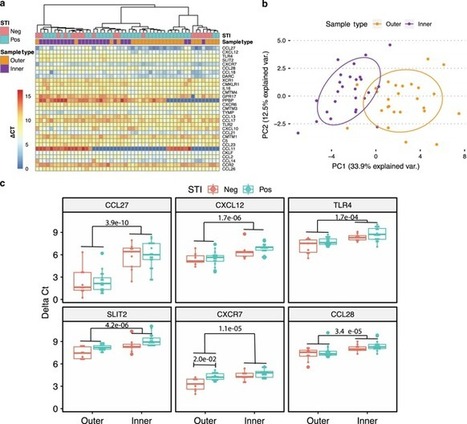
We compared outer and inner foreskin tissue from adolescent males undergoing medical male circumcision to better understand signals that increase HIV target cell availability in the foreskin. We measured chemokine gene expression and the impact of sexually transmitted infections (STIs) on the...
|
|
Scooped by
Gilbert C FAURE
October 20, 2019 4:32 AM
|
Interleukin-7 (IL-7) is a critical cytokine in B- and T-lymphocyte development and maturation. Recent evidence suggests that IL-7 is a preferential homeostatic and survival factor for RORγt+ innate T cells such as natural killer T (NKT) cells, γδT cells, and mucosal-associated invariant T (MAIT)...
|
|
Scooped by
Gilbert C FAURE
October 20, 2019 12:35 AM
|
Materials and Methods Twelve mice were divided into two groups and immunized orally with S. suberu (3.10: g, m) and S. strasburg from the OD2 group (O.....
|
|
Scooped by
Gilbert C FAURE
October 12, 2019 5:25 AM
|
Glycerol monolaurate (GML), a compound found in human breast milk, fights against the effects of harmful bacteria while allowing beneficial bacteria to thrive. GML also inhibits inflammation in epithelial cells, helping to prevent both bacterial and viral infections of the gut.
|
|
Scooped by
Gilbert C FAURE
October 8, 2019 2:52 AM
|
Uncontrolled interferon γ (IFNγ)-mediated T-cell responses to commensal microbiota are a driver of inflammatory bowel disease (IBD). Interleukin-10 (IL-10) is crucial for controlling these T-cell responses, but the precise mechanism of inhibition remains unclear. A better understanding of how IL-10 exerts its suppressive function may allow identification of individuals with suboptimal IL-10 function among the heterogeneous population of IBD patients. Using cells from patients with an IL10RA deficiency or STAT3 mutations, we demonstrate that IL-10 signaling in monocyte-derived dendritic cells (moDCs), but not T cells, is essential for controlling IFNγ-secreting CD4+ T cells. Deficiency in IL-10 signaling dramatically increased IL-1β release by moDCs. IL-1β boosted IFNγ secretion by CD4+ T cells either directly or indirectly by stimulating moDCs to secrete IL-12. As predicted a signature of IL-10 dysfunction was observed in a subgroup of pediatric IBD patients having higher IL-1β expression in activated immune cells and macroscopically affected intestinal tissue. In agreement, reduced IL10RA expression was detected in peripheral blood mononuclear cells and a subgroup of pediatric IBD patients exhibited diminished IL-10 responsiveness. Our data unveil an important mechanism by which IL-10 controls IFNγ-secreting CD4+ T cells in humans and identifies IL-1β as a potential classifier for a subgroup of IBD patients.
|
|
Scooped by
Gilbert C FAURE
October 6, 2019 12:28 PM
|
Persistent immune activation in virologically suppressed HIV-1 patients, which may be the consequence of various factors including microbial translocation, is a major cause of comorbidities. We have previously shown that different profiles of immune activation may be distinguished in virological responders. Here, we tested the hypothesis that a particular profile might be the consequence of microbial translocation. To this aim, we measured 64 soluble and cell surface markers of inflammation and CD4+ and CD8+ T-cell, B cell, monocyte, NK cell, and endothelial activation in 140 adults under efficient antiretroviral therapy, and classified patients and markers using a double hierarchical clustering analysis. We also measured the plasma levels of the microbial translocation markers bacterial DNA, lipopolysaccharide binding protein (LBP), intestinal-fatty acid binding protein, and soluble CD14. We identified five different immune activation profiles. Patients with an immune activation profile characterized by a high percentage of CD38+CD8+ T-cells and a high level of the endothelial activation marker soluble Thrombomodulin, presented with higher LBP mean (± SEM) concentrations (33.3 ± 1.7 vs. 28.7 ± 0.9 μg/mL, p = 0.025) than patients with other profiles. Our data are consistent with the hypothesis that the immune activation profiles we described are the result of different etiological factors. We propose a model, where particular causes of immune activation, as microbia
|
|
Scooped by
Gilbert C FAURE
September 30, 2019 6:18 AM
|
|
|
Scooped by
Gilbert C FAURE
September 27, 2019 2:36 PM
|
Scientists have identified a pair of molecules critical for T cells, part of the immune system, to travel to and populate the lungs. A potential application could be strengthening vaccines against respiratory pathogens such ...
|
|
Rescooped by
Gilbert C FAURE
from Immunology and Biotherapies
September 27, 2019 4:08 AM
|
The revolution in microbiota research over the past decade has provided invaluable knowledge about the function of the microbial species that inhabit the human body. It has become widely accepted that these microorganisms, collectively called ‘the microbiota’, engage in networks of interactions with each other and with the host that aim to benefit both the microbial members and the mammalian members of this unique ecosystem. The lungs, previously thought to be sterile, are now known to harbor a unique microbiota and, additionally, to be influenced by microbial signals from distal body sites, such as the intestine. Here we review the role of the lung and gut microbiotas in respiratory health and disease and highlight the main pathways of communication that underlie the gut–lung axis. Marsland and colleagues review the role of the lung and gut microbiotas in respiratory health and disease.
Via Krishan Maggon
|
|
Scooped by
Gilbert C FAURE
September 25, 2019 9:32 AM
|
Omeros Corporation today announced publication of study results showing that inhibition of mannan-binding lectin-associated serine protease-2 protects against renal injury caused by proteinuria ...| September 25, 2019...
|
|
Scooped by
Gilbert C FAURE
September 21, 2019 4:41 AM
|
Group 3 innate lymphoid cells (ILC3s) are major regulators of inflammation, infection, microbiota composition and metabolism1. ILC3s and neuronal cells have been shown to interact at discrete mucosal locations to steer mucosal defence2,3. Nevertheless, it is unclear whether neuroimmune circuits operate at an organismal level, integrating extrinsic environmental signals to orchestrate ILC3 responses. Here we show that light-entrained and brain-tuned circadian circuits regulate enteric ILC3s, intestinal homeostasis, gut defence and host lipid metabolism in mice. We found that enteric ILC3s display circadian expression of clock genes and ILC3-related transcription factors. ILC3-autonomous ablation of the circadian regulator Arntl led to disrupted gut ILC3 homeostasis, impaired epithelial reactivity, a deregulated microbiome, increased susceptibility to bowel infection and disrupted lipid metabolism. Loss of ILC3-intrinsic Arntl shaped the gut ‘postcode receptors’ of ILC3s. Strikingly, light–dark cycles, feeding rhythms and microbial cues differentially regulated ILC3 clocks, with light signals being the major entraining cues of ILC3s. Accordingly, surgically or genetically induced deregulation of brain rhythmicity led to disrupted circadian ILC3 oscillations, a deregulated microbiome and altered lipid metabolism. Our work reveals a circadian circuitry that translates environmental light cues into enteric ILC3s, shaping intestinal health, metabolism and organismal homeostasis. Circadian circuits, entrained by light and tuned by the brain, regulate intestinal group 3 innate lymphoid cells in mice, along with epithelial reactivity, microbiome composition and lipid metabolism.
|
|
Scooped by
Gilbert C FAURE
September 18, 2019 3:22 PM
|
Immediately after birth, newborn babies experience rapid colonization by microorganisms from their mothers and the surrounding environment1. Diseases in childhood and later in life are potentially mediated by the perturbation of the colonization of the infant gut microbiota2. However, the effects of delivery via caesarean section on the earliest stages of the acquisition and development of the gut microbiota, during the neonatal period (≤1 month), remain controversial3,4. Here we report the disrupted transmission of maternal Bacteroides strains, and high-level colonization by opportunistic pathogens associated with the hospital environment (including Enterococcus, Enterobacter and Klebsiella species), in babies delivered by caesarean section. These effects were also seen, to a lesser extent, in vaginally delivered babies whose mothers underwent antibiotic prophylaxis and in babies who were not breastfed during the neonatal period. We applied longitudinal sampling and whole-genome shotgun metagenomic analysis to 1,679 gut microbiota samples (taken at several time points during the neonatal period, and in infancy) from 596 full-term babies born in UK hospitals; for a subset of these babies, we collected additional matched samples from mothers (175 mothers paired with 178 babies). This analysis demonstrates that the mode of delivery is a significant factor that affects the composition of the gut microbiota throughout the neonatal period, and into infancy. Matched large-scale culturing and whole-genome sequencing of over 800 bacterial strains from these babies identified virulence factors and clinically relevant antimicrobial resistance in opportunistic pathogens that may predispose individuals to opportunistic infections. Our findings highlight the critical role of the local environment in establishing the gut microbiota in very early life, and identify colonization with antimicrobial-resistance-containing opportunistic pathogens as a previously underappreciated risk factor in hospital births. Delivery via caesarean section, maternal antibiotic prophylaxis and colonization by opportunistic pathogens associated with the hospital environment affect the composition of the gut microbiota of children from birth until infancy.
|
|
Scooped by
Gilbert C FAURE
September 18, 2019 2:26 PM
|
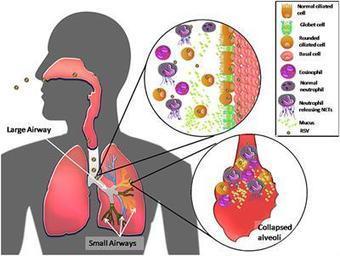
Respiratory syncytial virus (RSV) is the most prevalent viral etiological agent of acute respiratory tract infection. Although RSV affects people of all ages, the disease is more severe in infants and causes significant morbidity and hospitalization in young children and in the elderly. Host factors, including an immature immune system in infants, low lymphocyte levels in patients under 5 years old, and low levels of RSV-specific neutralizing antibodies in the blood of adults over 65 years of age, can explain the high susceptibility to RSV infection in these populations. Other host factors that correlate with severe RSV disease include high concentrations of proinflammatory cytokines such as interleukins (IL)-6, IL-8, tumor necrosis factor (TNF)-α, and thymic stromal lymphopoitein (TSLP), which are produced in the respiratory tract of RSV-infected individuals, accompanied by a strong neutrophil response. In addition, data from studies of RSV infections in humans and in animal models revealed that this virus suppresses adaptive immune responses that could eliminate it from the respiratory tract. Here, we examine host factors that contribute to RSV pathogenesis based on an exhaustive review of in vitro infection in humans and in animal models to provide insights into the design of vaccines and therapeutic tools that could prevent diseases caused by RSV.
|
|
|
Scooped by
Gilbert C FAURE
October 20, 2019 4:32 AM
|
A new study reveals that a novel serotonin sensor in the spore-forming gut bacteria, Turicibacter sanguinis, might be important for host lipid and steroid metabolism. These findings support the emerging concept that bidirectional signalling pathways can influence bacterial community structure and...
|
|
Scooped by
Gilbert C FAURE
October 20, 2019 4:31 AM
|
ILC3s are critical for gut homeostasis and host defense. Chun et al. unveil a role
for the metabolite-sensing receptor Ffar2 (GPR43) in colonic ILC3 populations and
delineate how Ffar2 signaling regulates ILC3 function.
|
|
Scooped by
Gilbert C FAURE
October 12, 2019 1:46 PM
|
Visual Abstract Significance Statement IgA nephropathy (IgAN) is the leading primary GN worldwide. The disease is thought to result from glomerular deposition of circulating immune complexes of IgG bound to galactose-deficient IgA1 (Gd-IgA1). However, routine immunofluorescence microscopy fails to detect IgG in many kidney biopsies from patients with IgAN and the specificity of IgG in immunodeposits has not been tested. The authors show that IgG specific for Gd-IgA1 was extracted from remnant IgAN kidney-biopsy specimens, even when IgG was not detected by routine immunofluorescence. Using confocal microscopy, the authors confirmed that glomerular IgA and IgG colocalize in biopsies, including those negative for IgG by routine immunofluorescence microscopy, suggesting the two form a complex. The results highlight the pivotal role of IgG autoantibodies in IgAN, and bolster the hypothesis that Gd-IgA1–specific IgG autoantibodies are involved in the pathogenesis of the disease. Abstract Background IgA nephropathy (IgAN) is the leading primary GN worldwide. The disease is thought to result from glomerular deposition of circulating immune complexes of IgG bound to galactose-deficient IgA1 (Gd-IgA1). However, routine immunofluorescence microscopy fails to detect IgG in many kidney biopsies from patients with IgAN and the specificity of IgG in immunodeposits has not been tested. Methods We used remnant frozen kidney-biopsy specimens from 34 patients with IgAN; 14 were IgG-positive and 20 were IgG-negative by routine immunofluorescence microscopy. Six patients with primary membranous nephropathy (MN) and eight with lupus nephritis (LN) served as controls. IgG in the kidney tissue was extracted and its amount determined by ELISA. IgG molecular integrity was assessed by SDS-PAGE immunoblotting. Antigenic specificity of extracted IgG was determined by ELISA using phospholipase A2 receptor (PLA2R) or Gd-IgA1 as antigen. In addition, ten other IgAN cases, six IgG-positive and four IgG-negative by routine immunofluorescence, were used for colocalization studies by confocal microscopy. Results IgG extracted from MN but not IgAN immunodeposits reacted with PLA2R. Conversely, IgG extracted from IgAN but not MN or LN immunodeposits reacted with Gd-IgA1. Even IgAN kidney-biopsy specimens without IgG by routine immunofluorescence microscopy had IgG specific for Gd-IgA1. Confocal microscopy confirmed the presence of IgG in the IgAN biopsies with colocalization of glomerular IgA and IgG. Conclusions These results reveal for the first time that IgAN kidney biopsies, with or without IgG by routine immunofluorescence, contain Gd-IgA1–specific IgG autoantibodies. These findings support the importance of these autoantibodies in the pathogenesis of IgAN. Copyright © 2019 by the American Society of Nephrology
|
|
Scooped by
Gilbert C FAURE
October 12, 2019 2:54 AM
|
Stras et al. develop an immune cell atlas of human fetal and infant small and large
intestinal tissue. Using a combination of mass cytometry and next-generation sequencing,
the authors show complexity of the intestinal immune system starting in the 2nd trimester.
|
|
Scooped by
Gilbert C FAURE
October 7, 2019 2:28 PM
|
San Diego researchers are taking a close look into why break milk is so nutritious—and investigating how to make those nutrients stretch further
|
|
Scooped by
Gilbert C FAURE
September 30, 2019 1:48 PM
|
Despite broad scientific interest in harnessing the power of Earth’s microbiomes, knowledge gaps hinder their efficient use for addressing urgent societal and environmental challenges. We argue that structuring research and technology developments around a design–build–test–learn (DBTL) cycle will advance microbiome engineering and spur new discoveries of the basic scientific principles governing microbiome function. In this Review, we present key elements of an iterative DBTL cycle for microbiome engineering, focusing on generalizable approaches, including top-down and bottom-up design processes, synthetic and self-assembled construction methods, and emerging tools to analyse microbiome function. These approaches can be used to harness microbiomes for broad applications related to medicine, agriculture, energy and the environment. We also discuss key challenges and opportunities of each approach and synthesize them into best practice guidelines for engineering microbiomes. We anticipate that adoption of a DBTL framework will rapidly advance microbiome-based biotechnologies aimed at improving human and animal health, agriculture and enabling the bioeconomy. Microbiome engineering has many potential applications, ranging from agriculture to medicine. In this Review, Lawson, McMahon and colleagues guide us through the design–build–test–learn cycle that has been successful in many disciplines and explain how it applies to microbiome engineering.
|
|
Scooped by
Gilbert C FAURE
September 27, 2019 2:36 PM
|
Abstract Background Tissue‐resident memory T cells accelerate the clearance of pathogens during recall response. However, whether CD4+ TRM cells themselves can provide gastric immunity is unclear. ...
|
|
Scooped by
Gilbert C FAURE
September 27, 2019 2:29 PM
|
Abstract Background Biologic therapies are widely used in patients with ulcerative colitis. Head-to-head trials of these therapies in patients with inflammatory bowel disease are lacking. Methods I...
|
|
Scooped by
Gilbert C FAURE
September 25, 2019 9:33 AM
|
The most common form of the kidney disease called glomerulonephritis is IgA nephropathy.
|
|
Scooped by
Gilbert C FAURE
September 23, 2019 9:18 AM
|
Citrobacter rodentium is an extracellular enteric mouse-specific pathogen used to model infections with human pathogenic Escherichia coli and inflammatory bowel disease. C. rodentium injects type III secretion system effectors into intestinal epithelial cells (IECs) to target inflammatory, metabolic and cell survival pathways and establish infection. While the host responds to infection by activating innate and adaptive immune signalling, required for clearance, the IECs respond by rapidly shifting bioenergetics to aerobic glycolysis, which leads to oxygenation of the epithelium, an instant expansion of mucosal-associated commensal Enterobacteriaceae and a decline of obligate anaerobes. Moreover, infected IECs reprogramme intracellular metabolic pathways, characterized by simultaneous activation of cholesterol biogenesis, import and efflux, leading to increased serum and faecal cholesterol levels. In this Review we summarize recent advances highlighting the intimate relationship between C. rodentium pathogenesis, metabolism and the gut microbiota. Citrobacter rodentium, an extracellular mouse-specific enteric pathogen, provides a robust model for the study of physiological host–pathogen–microbiota interactions. In this Review, Frankel and colleagues highlight how the C. rodentium model has advanced our understanding of enteric infections and inflammatory bowel disease, in particular changes to host metabolism and inflammation.
|
|
Scooped by
Gilbert C FAURE
September 20, 2019 6:17 AM
|
Understanding the intestinal microbiome is an important, emerging area of research to better understand overall metabolism and chronic infections. Colon cleanses, thought by some to be beneficial to colonic health, are now more than ever showing to cause more harm than good.
|
|
Scooped by
Gilbert C FAURE
September 18, 2019 3:22 PM
|
Hundreds of commensal bacterial species inhabit the gastrointestinal tract. This diverse microbial ecosystem plays a crucial role in the prevention and resolution of infectious diseases. In thi
|