Your new post is loading...

|
Scooped by
Gilbert C FAURE
November 26, 2020 1:47 PM
|
Andres Salumets has been appointed as Professor of Reproductive Medicine at the Division of Obstetrics & Gynecology, Department of Clinical Science, Intervention and Technology - CLINTEC.
The chair was established with a generous grant from a Swedish Company - Vitrolife (10 MSEK/5 years) and will be co-financed by the Center for Innovative Medicine - CIMED.

|
Suggested by
LIGHTING
November 25, 2020 3:42 AM
|
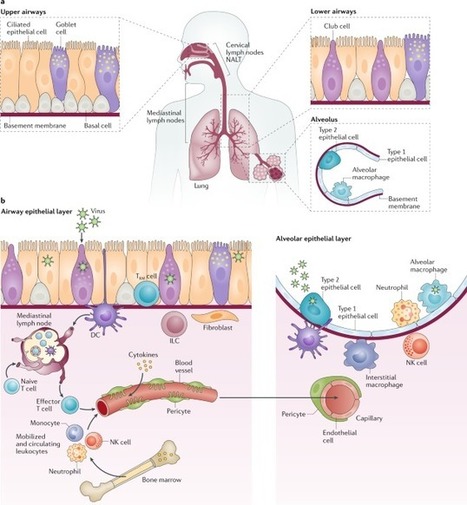
Severe acute respiratory syndrome coronavirus 2 (SARS-CoV-2) is the causative agent of coronavirus disease 2019 (COVID-19). Understanding of the fundamental processes underlying the versatile clinical manifestations of COVID-19 is incomplete without comprehension of how different immune cells are recruited to various compartments of virus-infected lungs, and how this recruitment differs among individuals with different levels of disease severity. As in other respiratory infections, leukocyte recruitment to the respiratory system in people with COVID-19 is orchestrated by specific leukocyte trafficking molecules, and when uncontrolled and excessive it results in various pathological complications, both in the lungs and in other organs. In the absence of experimental data from physiologically relevant animal models, our knowledge of the trafficking signals displayed by distinct vascular beds and epithelial cell layers in response to infection by SARS-CoV-2 is still incomplete. However, SARS-CoV-2 and influenza virus elicit partially conserved inflammatory responses in the different respiratory epithelial cells encountered early in infection and may trigger partially overlapping combinations of trafficking signals in nearby blood vessels. Here, we review the molecular signals orchestrating leukocyte trafficking to airway and lung compartments during primary pneumotropic influenza virus infections and discuss potential similarities to distinct courses of primary SARS-CoV-2 infections. We also discuss how an imbalance in vascular activation by leukocytes outside the airways and lungs may contribute to extrapulmonary inflammatory complications in subsets of patients with COVID-19. These multiple molecular pathways are potential targets for therapeutic interventions in patients with severe COVID-19. In this Perspective, Alon and colleagues discuss how insights into immune cell trafficking during pneumotropic influenza virus infections may inform our understanding of immune cell recruitment to the respiratory tract in patients with coronavirus disease 2019 (COVID-19). Moreover, they examine the emerging knowledge of vascular pathologies beyond the lung caused by severe acute respiratory syndrome coronavirus 2 (SARS-CoV-2).

|
Suggested by
Société Francaise d'Immunologie
November 19, 2020 12:51 PM
|
Achieving sanitation for all is not just about building more toilets. We also need to consider what people want to do and use, whether we are putting the lives and wellbeing of others at risk, and whether we are realistically calculating and off-setting the monetary costs involved.
|
|
Scooped by
Gilbert C FAURE
November 18, 2020 5:52 AM
|
<b><i>Aim:</i></b> To investigate the relationship between hemoglobin levels and the progression of IgA nephropathy (IgAN).<b><i>Methods:</i></b> In a two-center cohort of 1,828 cases with biopsy-pro...
|
|
Scooped by
Gilbert C FAURE
November 17, 2020 11:51 AM
|
Glomerular C4d (C4dG) as an indicator of the lectin pathway of complement activation in immunoglobulin A nephropathy (IgAN) has been associated with m…...
|
|
Scooped by
Gilbert C FAURE
November 17, 2020 11:49 AM
|
Various new technologies have been applied for developing vaccines against various animal diseases. Virus-like particle (VLP) vaccine technology was used for manufacturing the porcine circovirus type 2 and RNA particle vaccines based on an alphavirus ...
|
|
Scooped by
Gilbert C FAURE
November 14, 2020 1:35 PM
|
In situ hybridization and immunohistochemical examinations of surgically resected specimens of human hyperplastic tonsils showed that macrophages in the germinal center and mast cells in the parafo...
|
|
Suggested by
LIGHTING
November 12, 2020 6:29 AM
|
|
|
Scooped by
Gilbert C FAURE
November 8, 2020 10:57 AM
|
Observational findings achieved during the past two decades suggest that the intestinal microbiota may contribute to the metabolic health of the human host and, when aberrant, to the pathogenesis of various common metabolic disorders including obesity, type 2 diabetes, non-alcoholic liver disease, cardio-metabolic diseases and malnutrition. However, to gain a mechanistic understanding of how the gut microbiota affects host metabolism, research is moving from descriptive microbiota census analyses to cause-and-effect studies. Joint analyses of high-throughput human multi-omics data, including metagenomics and metabolomics data, together with measures of host physiology and mechanistic experiments in humans, animals and cells hold potential as initial steps in the identification of potential molecular mechanisms behind reported associations. In this Review, we discuss the current knowledge on how gut microbiota and derived microbial compounds may link to metabolism of the healthy host or to the pathogenesis of common metabolic diseases. We highlight examples of microbiota-targeted interventions aiming to optimize metabolic health, and we provide perspectives for future basic and translational investigations within the nascent and promising research field. In this Review, Fan and Pedersen discuss how the gut microbiota and derived microbial compounds may contribute to human metabolic health and to the pathogenesis of common metabolic diseases, and highlight examples of microbiota-targeted interventions aiming to optimize metabolic health.
|
|
Scooped by
Gilbert C FAURE
November 6, 2020 2:20 PM
|
Colonic antigen-experienced lymphocytes such as tissue-resident memory CD8<sup>+</sup> T cells can respond rapidly to repeated antigen exposure. However, their cellular phenotypes and the mechanisms by which they drive immune regulation and inflammation remain unclear.
|
|
Scooped by
Gilbert C FAURE
November 5, 2020 9:59 AM
|
bioRxiv - the preprint server for biology, operated by Cold Spring Harbor Laboratory, a research and educational institution
|
|
Rescooped by
Gilbert C FAURE
from Cancer Vaccines Collection
November 3, 2020 11:46 AM
|
Marinaik et al. report that carbomer and TLR-based combination adjuvants elicit airway-
and lung-resident memory and confer heterosubtypic immunity to influenza virus. Further, they show that combination adjuvants stimulate varying levels of TCR signaling and cytokines in lungs and drive disparate...
Via Krishan Maggon
|
|
Rescooped by
Gilbert C FAURE
from AUTOIMMUNITY
November 2, 2020 5:08 AM
|
Analysis of saliva samples obtained from 16 patients with Sjögren’s syndrome and 10 sicca controls revealed reduced methylation levels of the H19 locus imprinting control region in the patient grou
|
|
|
Scooped by
Gilbert C FAURE
November 26, 2020 8:21 AM
|
The distal lung contains terminal bronchioles and alveoli that facilitate gas exchange. Three-dimensional in vitro human distal lung culture systems would strongly facilitate investigation of pathologies including interstitial lung disease, cancer, and SARS-CoV-2-associated COVID-19 pneumonia. We generated long-term feeder-free, chemically defined culture of distal lung progenitors as organoids derived from single adult human alveolar epithelial type II (AT2) or KRT5+ basal cells. AT2 organoids exhibited AT1 transdifferentiation potential while basal cell organoids developed lumens lined by differentiated club and ciliated cells. Single cell analysis of basal organoid KRT5+ cells revealed a distinct ITGA6+ITGB4+ mitotic population whose proliferation further segregated to a TNFRSF12Ahi subfraction comprising ~10% of KRT5+ basal cells, residing in clusters within terminal bronchioles and exhibiting enriched clonogenic organoid growth activity. Distal lung organoids were created with apical-out polarity to display ACE2 on the exposed external surface, facilitating SARS-CoV-2 infection of AT2 and basal cultures and identifying club cells as a novel target population. This long-term, feeder-free organoid culture of human distal lung, coupled with single cell analysis, identifies unsuspected basal cell functional heterogeneity and establishes a facile in vitro organoid model for human distal lung infections including COVID-19-associated pneumonia.
|
|
Scooped by
Gilbert C FAURE
November 20, 2020 3:02 AM
|
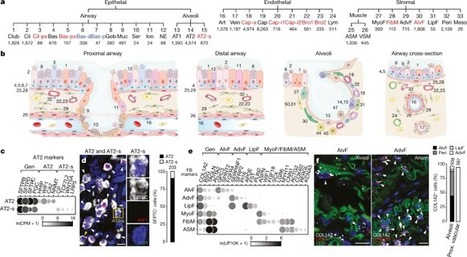
Although single-cell RNA sequencing studies have begun to provide compendia of cell expression profiles1–9, it has been difficult to systematically identify and localize all molecular cell types in individual organs to create a full molecular cell atlas. Here, using droplet- and plate-based single-cell RNA sequencing of approximately 75,000 human cells across all lung tissue compartments and circulating blood, combined with a multi-pronged cell annotation approach, we create an extensive cell atlas of the human lung. We define the gene expression profiles and anatomical locations of 58 cell populations in the human lung, including 41 out of 45 previously known cell types and 14 previously unknown ones. This comprehensive molecular atlas identifies the biochemical functions of lung cells and the transcription factors and markers for making and monitoring them; defines the cell targets of circulating hormones and predicts local signalling interactions and immune cell homing; and identifies cell types that are directly affected by lung disease genes and respiratory viruses. By comparing human and mouse data, we identified 17 molecular cell types that have been gained or lost during lung evolution and others with substantially altered expression profiles, revealing extensive plasticity of cell types and cell-type-specific gene expression during organ evolution including expression switches between cell types. This atlas provides the molecular foundation for investigating how lung cell identities, functions and interactions are achieved in development and tissue engineering and altered in disease and evolution. Expression profiling on 75,000 single cells creates a comprehensive cell atlas of the human lung that includes 41 out of 45 previously known cell types and 14 new ones.
|
|
Scooped by
Gilbert C FAURE
November 19, 2020 12:50 PM
|
Abstract A subset of oncogenic human papilloma viruses (HPVs) is the main cause of genital cancers, most importantly cervical cancer, as well as an increasing number of head and neck cancers. Despi...
|
|
Scooped by
Gilbert C FAURE
November 18, 2020 3:53 AM
|
Le virus responsable du syndrome respiratoire aigu sévère 2 (SARS-CoV-2) est un Betacoronavirus de la famille des Coronaviridae. Il est responsable de la maladie appelée Covid-19. Les premiers cas d’infection au SARS-CoV-2 ont été rapportés en décembre 2019, dans la province de Wuhan en Chine. Depuis, le virus s’est propagé sur tous les continents, provoquant une pandémie. Comme la majorité des virus respiratoires, le SARS-CoV-2 se transmet principalement par voie aérienne, sous forme de gouttelettes. Ces gouttelettes se déposent sur des surfaces et vecteurs inertes (« fomites »). Le virus peut ensuite être transmis par contact avec ces surfaces (OMS 2020). Il est donc crucial dans la lutte contre la propagation du virus de disposer de moyens de décontamination surfacique. Ce travail s’inscrit dans cet objectif d’évaluer l’efficacité virucide sur le SARS-CoV-2 de différents biocides appliqués à la décontamination de surface. Les laboratoires et hôpitaux utilisent le plus souvent des solutions commerciales, telles que l’Anioxy-Spray™, le Surfa’Safe™ (Laboratoires ANIOS) et le Septalkan™ (Alkapharm), pour la décontamination des objets et plans de travail selon une action volontaire, sous la forme d’une pulvérisation dirigée sur les surfaces à traiter. Toutes ces solutions sont indiquées comme étant efficaces sur les virus (Laboratoire ANIOS, n.d.; Laboratoires ANIOS, n.d.; Alkapharm, n.d.), selon les normes EN 14 476, EN 13 610 et EN 14 675. D’autres produits chimiques plus communs, que nous pourrions appeler «grand public», peuvent aussi présenter des propriétés biocides. Citons par exemple l’éthanol (principal principe actif du gel hydro-alcoolique), efficace en milieu liquide sur les coronavirus SARS-CoV-1 (responsable de l’épidémie de 2003), MERS-CoV (coronavirus du syndrome respiratoire du Moyen-Orient) et SARS-CoV-2 (Kratzel et al. 2020 ; Kariwa et al. 2004), l’Eau de Javel, à une concentration minimale de 500 ppm en chlore (Lai et al. 2005) ou bien encore le vinaigre d’alcool, à une concentration de 6 % en acidité (Rabenau et al. 2005) efficaces en phase liquide sur le SARS-CoV-1. Enfin, des biocides utilisés dans des secteurs non médicaux ou de laboratoire peuvent aussi être utiles dans la lutte contre le SARS-CoV-2. Il s’agit par exemple du Bactipal ELV™; une solution à base d’acide peracétique (5 %), de peroxyde d’hydrogène et d’acide acétique utilisée en horticulture (homologuée par le Ministère de l’Agriculture et de l’Alimentation). Il présente une activité virucide à une concentration finale de 2 % (JohnsonDiversey, n.d.). L’objectif du travail présenté ici n’est pas d’aboutir à une normalisation de ces produits biocides. Il s’agit pour nous de vérifier leur activité, déjà éprouvée contre d’autres micro-organismes, sur des dépôts de SARS-CoV-2 en suspension dans une matrice comportant deux niveaux d’interférents, décrits par la norme NF EN 14 675, représentatives de conditions réelles de travail ou de circonstances de la vie quotidienne (salissures ménagères par exemple). Toutes les études avec du virus vivant ont été réalisées dans un laboratoire de niveau de sécurité biologique 3 (NSB3) selon les recommandations de la SFM (SFM avril 2020). Le matériel et méthode détaillé est présenté en annexe de ce texte. Brièvement, 10 µL d’une suspension virale à 2×10⁶ pfu/mL, soit 2×10⁴ pfu, ont été déposés sur des cupules stériles en inox de 9 mm de diamètre. Cette concentration est une condition majorante par rapport à des niveaux de contamination observés dans des prélèvements humains et des prélèvements de surface en milieu hospitalier (Wölfel et al. 2020, Ong et al. 2020). Les dépôts ont été séchés à température ambiante pendant 40 minutes. Cette étape de séchage engendre une chute de titre viral de 1,2 ± 0,6 log10 . A l’issue du séchage, une solution biocide a été appliquée sur la surface de la cupule. Le tableau 1 récapitule les résultats de ces évaluations. La réduction du titre viral est calculée par rapport à la moyenne des titres viraux des contrôles non traités par le biocide, correspondant à un dépôt de 10 µL de suspension virale séché pendant 40 minutes en même temps que les dépôts des cupules traitées. Les cupules témoin ne reçoivent pas de biocide mais subissent le même temps de séchage que les cupules essais. Les conditions pour lesquelles aucune particule virale n’a pu être mise en évidence après traitement figurent dans les cases grisées.
|
|
Scooped by
Gilbert C FAURE
November 17, 2020 11:49 AM
|
The immune system may be viewed as an organ that is distributed throughout the body to provide host defense against pathogens wherever these may enter or spread. Within the immune system, a series of anatomically distinct compartments can be distinguished, each of which is specially adapted to...
|
|
Scooped by
Gilbert C FAURE
November 17, 2020 11:46 AM
|
The cumulative risk score (CRS) is a mathematical salivary diagnostic model to define an individual’s risk of having periodontitis. In order to further validate this salivary biomarker, we investigated how periodontal bacteria, lipopolysaccharide (LPS), and systemic and local host immune...
|
|
Scooped by
Gilbert C FAURE
November 14, 2020 6:19 AM
|
Patients who received SNG001 had greater odds of improvement and recovered more rapidly
from SARS-CoV-2 infection than patients who received placebo, providing a strong rationale
for further trials.
|
|
Scooped by
Gilbert C FAURE
November 8, 2020 11:02 AM
|
Intraepithelial T lymphocytes (T-IEL) contain subsets of innate-like T cells that evoke innate and adaptive immune responses to provide rapid protection at epithelial barrier sites. In the intestine, T-IEL express variable T cell antigen receptors (TCR), with unknown antigen specificities. Intriguingly, they also express multiple inhibitory receptors, many of which are normally found on exhausted or antigen-experienced T cells. This pattern suggests that T-IEL are antigen-experienced, yet it is not clear where, and in what context, T-IEL encounter TCR ligands. We review recent evidence indicating TCR antigens for intestinal innate-like T-IEL are found on thymic or intestinal epithelium, driving agonist selection of T-IEL. We explore the contributions of the TCR and various co-stimulatory and co-inhibitory receptors in activating T-IEL effector functions. The balance between inhibitory and activating signals may be key to keeping these highly cytotoxic, rapidly activated cells in check, and key to harnessing their immune surveillance potential.
|
|
Scooped by
Gilbert C FAURE
November 8, 2020 10:45 AM
|
Chronic rhinosinusitis (CRS) occurs in >10% of the adult population in Europe and the USA and can be differentiated into CRS without nasal polyps and CRS with nasal polyps (CRSwNP). Both phenotypes are characterized by a high disease burden and an overlapping spectrum of symptoms, with facial pain and loss of smell being the most differentiating. Great progress has been made in the understanding of CRS pathophysiology: from the epithelium and epithelial–mesenchymal transition to innate and adaptive immunity pathways and, finally, on the role of eosinophils and Staphylococcus aureus in the persistence of disease. Although clinical manifestations and diagnostic tools (including nasal endoscopy and imaging) have undergone major changes over the past few years, management (including pharmacotherapy, surgery and biologics) has experienced enormous progress based on the growing knowledge of key mediators in severe CRSwNP. The introduction of endotyping has led to a differentiation of ‘tailored’ surgical approaches, focusing on the mucosal concept in those with severe CRSwNP and on the identification of patients eligible for extended surgery and possibly biologics in the future. This Primer on chronic rhinosinusitis summarizes the epidemiology, physiology, diagnosis and management of this disorder and discusses the quality of life of patients with this condition.
Summary γδ T cells comprise the third cell lineage of lymphocytes that use, like αβ T cells and B cells, V(D)J gene rearrangement with the potential to generate a highly diverse T cell receptor (TC...
Via Krishan Maggon
|
|
Scooped by
Gilbert C FAURE
November 5, 2020 3:06 AM
|
The central nervous system has historically been viewed as an immune-privileged site, but recent data have shown that the meninges—the membranes that surround the brain and spinal cord—contain a diverse population of immune cells1. So far, studies have focused on macrophages and T cells, but have not included a detailed analysis of meningeal humoral immunity. Here we show that, during homeostasis, the mouse and human meninges contain IgA-secreting plasma cells. These cells are positioned adjacent to dural venous sinuses: regions of slow blood flow with fenestrations that can potentially permit blood-borne pathogens to access the brain2. Peri-sinus IgA plasma cells increased with age and following a breach of the intestinal barrier. Conversely, they were scarce in germ-free mice, but their presence was restored by gut re-colonization. B cell receptor sequencing confirmed that meningeal IgA+ cells originated in the intestine. Specific depletion of meningeal plasma cells or IgA deficiency resulted in reduced fungal entrapment in the peri-sinus region and increased spread into the brain following intravenous challenge, showing that meningeal IgA is essential for defending the central nervous system at this vulnerable venous barrier surface. IgA-secreting plasma cells that originate in the intestine are found in the meninges, where they protect the brain against pathogens.
The National Institute for Health and Care Excellence (NICE) are looking for an adult patient expert who lives with ulcerative colitis and has experience of using biologic medicines. A patient expert can also be a carer of someone who has this experience.
Via Krishan Maggon
|