Your new post is loading...

|
Scooped by
Gilbert C FAURE
December 2, 2023 3:02 AM
|
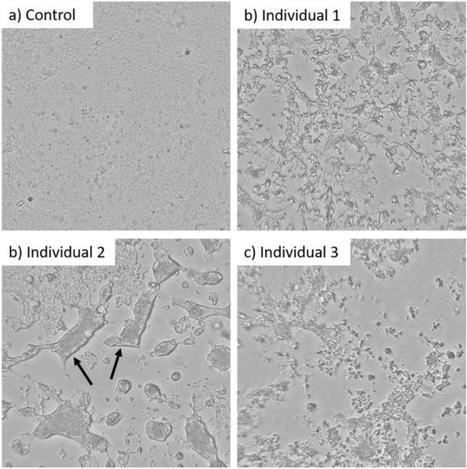
Exhaled SARS-CoV-2-containing aerosols contributed significantly to the rapid and vast spread of covid-19. However, quantitative experimental data on the infectivity of such aerosols is missing. Here, we quantified emission rates of infectious viruses in exhaled aerosol from individuals within...
|
|
Scooped by
Gilbert C FAURE
November 30, 2023 4:42 AM
|
Why are severe courses of SARS-CoV-2 infection much less common in children and adolescents than in adults?Scientists at the German Cancer Research Center have now discovered that the immune system in the upper respiratory tract is much more alert and active in children before infection than in adu...
|
|
Scooped by
Gilbert C FAURE
October 12, 2023 3:57 AM
|
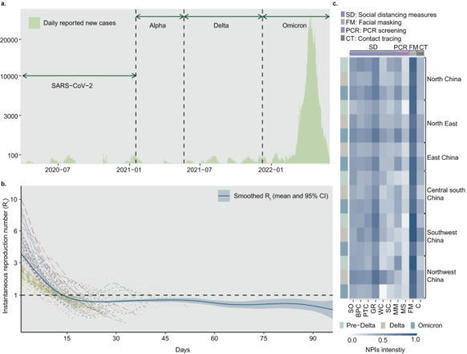
Targeted public health interventions for an emerging epidemic are essential for preventing pandemics. During 2020-2022, China invested significant efforts in strict zero-COVID measures to contain outbreaks of varying scales caused by different SARS-CoV-2 variants. Based on a multi-year empirical dataset containing 131 outbreaks observed in China from April 2020 to May 2022 and simulated scenarios, we ranked the relative intervention effectiveness by their reduction in instantaneous reproduction number. We found that, overall, social distancing measures (38% reduction, 95% prediction interval 31-45%), face masks (30%, 17-42%) and close contact tracing (28%, 24-31%) were most effective. Contact tracing was crucial in containing outbreaks during the initial phases, while social distancing measures became increasingly prominent as the spread persisted. In addition, infections with higher transmissibility and a shorter latent period posed more challenges for these measures. Our findings provide quantitative evidence on the effects of public-health measures for zeroing out emerging contagions in different contexts. China maintained a ‘zero-COVID’ policy from early in the pandemic until late 2022 that employed various public health interventions with the aim of COVID-19 containment. Here, the authors use data from 131 outbreaks in China to estimate the effects of a range of interventions against different SARS-CoV-2 variants in diverse settings.
|
|
Scooped by
Gilbert C FAURE
July 30, 2023 9:55 AM
|
A discovery by Stanford Medicine researchers and colleagues may pave the way for a “morning after” or prophylactic nasal spray to prevent infection.
|
|
Scooped by
Gilbert C FAURE
June 25, 2023 9:44 AM
|
Results of a human challenge trial in which volunteers were inoculated with SARS-CoV-2 have shed more light into the modes of transmission of the virus. The… | 16 commentaires sur LinkedIn
|
|
Scooped by
Gilbert C FAURE
March 9, 2023 12:33 PM
|
IntroductionCurrent approved COVID-19 vaccines, notably mRNA and adenoviral vectored technologies, still fail to fully protect against infection and transmission of various SARS-CoV-2 variants. The mucosal immunity at the upper respiratory tract represents the first line of defense against respiratory viruses such as SARS-CoV-2 and is thus critical to develop vaccine blocking human-to-human transmission.MethodsWe measured systemic and mucosal Immunoglobulin A (IgA) response in serum and saliva from 133 healthcare workers from Percy teaching military hospital following a mild infection (SARS-CoV-2 Wuhan strain, n=58) or not infected (n=75), and after SARS-CoV-2 vaccination (Vaxzevria®/Astrazeneca and/or Comirnaty®/Pfizer).ResultsWhile serum anti-SARS-CoV-2 Spike IgA response lasted up to 16 months post-infection, IgA response in saliva had mostly fallen to baseline level at 6 months post-infection. Vaccination could reactivate the mucosal response generated by prior infection, but failed to induce a significant mucosal IgA response by itself. Early post-COVID-19 serum anti-Spike-NTD IgA titer correlated with seroneutralization titers. Interestingly, its saliva counterpart positively correlated with persistent smell and taste disorders more than one year after mild COVID-19.DiscussionAs breakthrough infections have been correlated with IgA levels, other vaccine platforms inducing a better mucosal immunity are needed to control COVID-19 infection in the future. Our result
|
|
Scooped by
Gilbert C FAURE
March 3, 2023 5:26 AM
|
Physicians say they hope the needle-free jab will fuel booster demand, helping squash transmission of the pandemic virus.
|
|
Scooped by
Gilbert C FAURE
January 31, 2023 5:22 AM
|
Most studies of adaptive immunity to SARS-CoV-2 infection focus on peripheral blood, which may not fully reflect immune responses at the site of infection. Using samples from 110 children undergoing tonsillectomy and adenoidectomy during the COVID-19 pandemic, we identified 24 samples with evidence of previous SARS-CoV-2 infection, including neutralizing antibodies in serum and SARS-CoV-2-specific germinal center and memory B cells in the tonsils and adenoids. Single-cell B cell receptor (BCR) sequencing indicated virus-specific BCRs were class-switched and somatically hypermutated, with overlapping clones in the two tissues. Expanded T cell clonotypes were found in tonsils, adenoids and blood post-COVID-19, some with CDR3 sequences identical to previously reported SARS-CoV-2-reactive T cell receptors (TCRs). Pharyngeal tissues from COVID-19-convalescent children showed persistent expansion of germinal center and antiviral lymphocyte populations associated with interferon (IFN)-γ-type responses, particularly in the adenoids, and viral RNA in both tissues. Our results provide evidence for persistent tissue-specific immunity to SARS-CoV-2 in the upper respiratory tract of children after infection. Manthiram and colleagues analyze the peripheral blood, tonsils and adenoids in children undergoing tonsillectomy or adenoidectomy and find evidence of continued tissue-specific immunity to SARS-CoV-2 and viral RNA persistence weeks to months after acute infection.
|
|
Scooped by
Gilbert C FAURE
January 26, 2023 1:53 PM
|
The gut microbiome has been shown to play a critical role in maintaining a healthy state. Dysbiosis of the gut microbiome is involved in modulating disease severity and potentially contributes to long-term outcomes in adults with COVID-19.
|
|
Scooped by
Gilbert C FAURE
January 20, 2023 10:18 AM
|
The nasal vaccine is based on research carried out at the University of Helsinki and the University of Eastern Finland.
|
|
Scooped by
Gilbert C FAURE
December 26, 2022 5:17 AM
|
COVID-19 vaccination with mRNA vaccines induces immune responses capable of neutralizing SARS-CoV-2. Commercially available serological anti-SARS-CoV-2 quantitative and neutralizing assays are essential for the determination of immune responses to vaccines.
|
|
Scooped by
Gilbert C FAURE
December 20, 2022 8:01 AM
|
Mucosal immunity is the largest component of the immune system, providing protection at mucosal surfaces such as the respiratory tract [1]. It differs from systemic immunity on a structural, cellular, molecular and functional level [2], with a distinctive repertoire of lymphocytes [3] and small foci of lymphocytes and plasma cells scattered throughout the lamina propria of the gut wall [3]. Advances in mucosal vaccine development and immunomodulation for treating autoimmune diseases and allergies are being made [4]. The Society of Mucosal Immunology publishes Mucosal Immunology to provide a forum for scientists to discuss all aspects of immunity and inflammation involving mucosal tissues [5]. Was this result accurate? 1. Mucosal Immunity in COVID-19: A Neglected but Critical Aspect of SARS ... The mucosal immune system is the largest component of the entire immune system, having evolved to provide protection at the main sites of infectious threat: the mucosae. As SARS-CoV-2 initially infects the upper respiratory tract, its first interactions with the immune system must occur predominantly at the respiratory mucosal surfaces, during ... 2. What is Mucosal Immunity? - News-Medical.net Mucosal immunity differs from systemic immunity on a structural, cellular, molecular, and functional level. The intestinal mucosa is the home of more than 80% of the activated B cells which ... 3. The mucosal immune system - Immunobiology - NCBI Bookshelf 10-14. The mucosal immune system contains a distinctive repertoire of lymphocytes. In addition to the organized lymphoid tissue in which induction of immune responses occurs within the mucosal immune system, small foci of lymphocytes and plasma cells are scattered widely throughout the lamina propria of the gut wall. These represent the effector cells of the gut mucosal immune system. 4. Mucosal immunity and vaccines - PubMed There is currently great interest in developing mucosal vaccines against a variety of microbial pathogens. Mucosally induced tolerance also seems to be a promising form of immunomodulation for treating certain autoimmune diseases and allergies. Here we review the properties of the mucosal immune system and discuss advances in the development of ... 5. Mucosal Immunology - Nature Mucosal Immunology is the publication of Society of Mucosal Immunology (SMI). It provides a forum for scientists to discuss all aspects of immunity and inflammation involving mucosal tissues.
|
|
Scooped by
Gilbert C FAURE
December 17, 2022 1:56 AM
|
SARS-CoV-2; IFN alpha; IFN beta; Type I interferon; Interferon-stimulated genes (ISGs);
COVID-19; children; adults; Poly (I:C); RSV.
|
|
|
Scooped by
Gilbert C FAURE
November 30, 2023 4:43 AM
|
When the COVID-19 pandemic first started, no effective anti-viral drugs were available to fight the disease. However, in record time, so-called monoclonal antibodies were developed as a lifesaving treatment.
|
|
Rescooped by
Gilbert C FAURE
from Virus World
November 6, 2023 3:40 AM
|
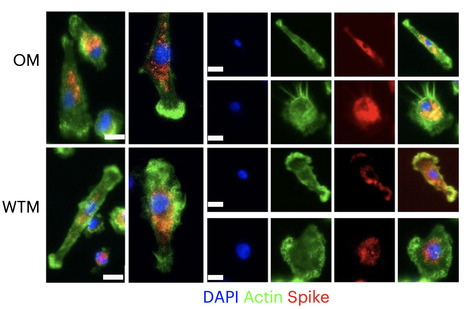
Severe acute respiratory syndrome coronavirus 2 (SARS-CoV-2) RNA generally becomes undetectable in upper airways after a few days or weeks postinfection. Here we used a model of viral infection in macaques to address whether SARS-CoV-2 persists in the body and which mechanisms regulate its persistence. Replication-competent virus was detected in bronchioalveolar lavage (BAL) macrophages beyond 6 months postinfection. Viral propagation in BAL macrophages occurred from cell to cell and was inhibited by interferon-γ (IFN-γ). IFN-γ production was strongest in BAL NKG2r+CD8+ T cells and NKG2Alo natural killer (NK) cells and was further increased in NKG2Alo NK cells after spike protein stimulation. However, IFN-γ production was impaired in NK cells from macaques with persisting virus. Moreover, IFN-γ also enhanced the expression of major histocompatibility complex (MHC)-E on BAL macrophages, possibly inhibiting NK cell-mediated killing. Macaques with less persisting virus mounted adaptive NK cells that escaped the MHC-E-dependent inhibition. Our findings reveal an interplay between NK cells and macrophages that regulated SARS-CoV-2 persistence in macrophages and was mediated by IFN-γ. Huot et al. show that interferon-γ (IFN-γ) regulates the persistence of severe acute respiratory syndrome coronavirus 2 (SARS-CoV-2) in bronchoalveolar macrophages from cynomolgus macaques up to 18 months postinfection. Published in Nat. Immunology (Nov. 2, 2023): https://doi.org/10.1038/s41590-023-01661-4
Via Juan Lama

|
Suggested by
LIGHTING
August 19, 2023 5:11 AM
|
One of the most preferable characteristics for a COVID-19 vaccine candidate is the ability to reduce transmission and infection of SARS-CoV-2, in addition to disease prevention. Unlike intramuscular vaccines, intranasal COVID-19 vaccines may offer this by generating mucosal immunity. In this open-label, randomised, multicentre, phase 3 clinical trial (CTRI/2022/02/40065; ClinicalTrials.gov: NCT05522335), healthy adults were randomised to receive two doses, 28 days apart, of either intranasal adenoviral vectored SARS-CoV-2 vaccine (BBV154) or licensed intramuscular vaccine, Covaxin®. Between April 16 and June 4, 2022, we enrolled 3160 subjects of whom, 2971 received 2 doses of BBV154 and 161 received Covaxin. On Day 42, 14 days after the second dose, BBV154 induced significant serum neutralization antibody titers against the ancestral (Wuhan) virus, which met the pre-defined superiority criterion for BBV154 over Covaxin®. Further, both vaccines showed cross protection against Omicron BA.5 variant. Salivary IgA titers were found to be higher in BBV154. In addition, extensive evaluation of T cell immunity revealed comparable responses in both cohorts due to prior infection. However, BBV154 showed significantly more ancestral specific IgA-secreting plasmablasts, post vaccination, whereas Covaxin recipients showed significant Omicron specific IgA-secreting plasmablasts only at day 42. Both vaccines were well tolerated. Overall reported solicited reactions were 6.9% and 25.5% and unsolicited reactions were 1.2% and 3.1% in BBV154 and Covaxin® participants respectively.
|
|
Scooped by
Gilbert C FAURE
July 13, 2023 2:15 PM
|
A new nasally administered Covid-19 vaccine shows greater promise in protecting patients from both Omicron infection and disease progression than traditional vaccines.
|
|
Scooped by
Gilbert C FAURE
April 12, 2023 1:22 PM
|
Current available vaccines for COVID-19 are effective in reducing severe diseases and deaths caused by SARS-CoV-2 infection but less optimal in preventing infection. Next-generation vaccines which are able to induce mucosal immunity in the upper respiratory to prevent or reduce infections caused by highly transmissible variants of SARS-CoV-2 are urgently needed. We have developed an intranasal vaccine candidate based on a live attenuated influenza virus (LAIV) with a deleted NS1 gene that encodes cell surface expression of the receptor-binding-domain (RBD) of the SARS-CoV-2 spike protein, designated DelNS1-RBD4N-DAF. Immune responses and protection against virus challenge following intranasal administration of DelNS1-RBD4N-DAF vaccines were analyzed in mice and compared with intramuscular injection of the BioNTech BNT162b2 mRNA vaccine in hamsters. DelNS1-RBD4N-DAF LAIVs induced high levels of neutralizing antibodies against various SARS-CoV-2 variants in mice and hamsters and stimulated robust T cell responses in mice. Notably, vaccination with DelNS1-RBD4N-DAF LAIVs, but not BNT162b2 mRNA, prevented replication of SARS-CoV-2 variants, including Delta and Omicron BA.2, in the respiratory tissues of animals. The DelNS1-RBD4N-DAF LAIV system warrants further evaluation in humans for the control of SARS-CoV-2 transmission and, more significantly, for creating dual function vaccines against both influenza and COVID-19 for use in annual vaccination strategies. Current vaccines are less efficient in preventing infection. Here, the authors show that an intranasal vaccine (DelNS1-RBD) based on a live attenuated influenza virus induces robust levels of neutralizing antibodies and T cells and prevents replication of SARS-CoV-2 Delta and Omicron variants in respiratory tissues.
|
|
Scooped by
Gilbert C FAURE
March 8, 2023 8:25 AM
|
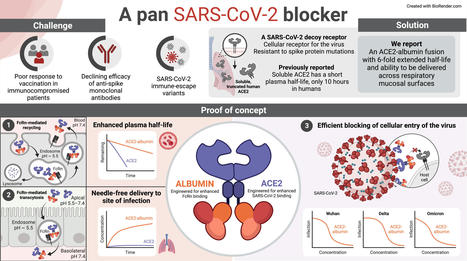
ACE2 plays fundamental roles in human physiology and disease. This review summarizes
ACE2’s functions, highlights its relationship with SARS-CoV-2, describes implications
for long COVID, and provides a framework for developing universal therapeutic strategies
against current and future SARS-CoV-2 variants by exploring the ACE2 pathway and interfering
with the spike-ACE2 interaction.
|
|
Rescooped by
Gilbert C FAURE
from Veille Coronavirus - Covid-19
February 1, 2023 5:02 AM
|
Background: Unlike intramuscular vaccines, intranasal COVID-19 vaccines may generate mucosal immunity, which may be critical for to prevent infection and human-
Via HAS-veille
|
|
Scooped by
Gilbert C FAURE
January 29, 2023 3:37 AM
|
An effective nasal vaccine could stop the virus that causes COVID-19 right at its point of entry. But devising one that works has been a challenge for researchers.
|
|
Scooped by
Gilbert C FAURE
January 24, 2023 3:40 AM
|
Unlike traditional vaccines, mucosal vaccines enter through our mucous membranes, either through our nose or through our gut .- Articles from The Weather Channel | weather.com...
|
|
Scooped by
Gilbert C FAURE
January 12, 2023 9:41 AM
|
Assess presence, durability, and neutralization capacity of SARS-CoV-2-specific antibodies in breastfeeding infants’ stool, mother’s plasma and milk following maternal vaccination. Thirty-seven mothers and 25 infants were enrolled between December 2020 and November 2021 for this prospective...
|
|
Rescooped by
Gilbert C FAURE
from Veille Coronavirus - Covid-19
December 20, 2022 2:03 PM
|
La vaccination est souvent associée à une piqure. Elle peut également prendre la forme d’un spray nasal : une approche encore rare, mais qui pourrait être efficace contre le Covid. Voici pourquoi.
Via HAS-veille
|
|
Scooped by
Gilbert C FAURE
December 18, 2022 7:23 AM
|
Mucosal DNA Vaccine: Created using a vector developed by a Centre National de la Recherche Scientifique (CNRS) researcher at the Immunology and New Concepts in Immunotherapy Laboratory, Nantes University, France, this vaccine acts in a manner similar to that of RNA vaccines on the market.
|