Your new post is loading...

|
Scooped by
Kamoun Lab @ TSL
August 25, 2012 7:44 AM
|
Commentaries and Letters to the Editor of The Plant Cell on recognition specificity of the FLS2 receptor (2012)
Does the Arabidopsis receptor FLS2 respond to CLV3 and Ax21 peptides? "The editors of The Plant Cell feel that they have taken responsibility for opening up the scientific debate on FLS2 and innate immune signaling, and they have gone as far as possible to ensure a fair and balanced discussion of issues of particular interest to its readership": Cathie Martin. Commentaries and Letters to the Editor of The Plant Cell http://tinyurl.com/d6mgbmf Katharina Mueller, Delphine Chinchilla, Markus Albert, Anna K. Jehle, Hubert Kalbacher, Thomas Boller, and Georg Felix. Contamination Risks in Work with Synthetic Peptides: flg22 as an Example of a Pirate in Commercial Peptide Preparations http://tinyurl.com/c2u3pr6 Cécile Segonzac, Zachary L. Nimchuk, Martina Beck, Paul T. Tarr, Silke Robatzek, Elliot M. Meyerowitz, and Cyril Zipfel. The Shoot Apical Meristem Regulatory Peptide CLV3 Does Not Activate Innate Immunity http://tinyurl.com/bslnq4o Horim Lee, Ashok Khatri, Julia M. Plotnikov, Xue-Cheng Zhang, and Jen Sheen. Complexity in Differential Peptide–Receptor Signaling: Response to Segonzac et al. and Mueller et al. Commentaries http://tinyurl.com/c2csqm3 Cristian H. Danna, Xue-Cheng Zhang, Ashok Khatri, Andrew F. Bent, Pamela C. Ronald, and Frederick M. Ausubel. FLS2-Mediated Responses to Ax21-Derived Peptides: Response to the Mueller et al. Commentary http://tinyurl.com/d2a36cr Mueller et al. also used the CLV3 peptide as negative control in this Plant cell paper: http://tinyurl.com/bszkm24 These are the two contested papers: Danna, C.H., Millet, Y.A., Koller, T., Han, S.W., Bent, A.F., Ronald, P.C., and Ausubel, F.M. (2011). The Arabidopsis flagellin receptor FLS2 mediates the perception of Xanthomonas Ax21 secreted peptides. Proc. Natl. Acad. Sci. USA 108: 9286–9291. http://tinyurl.com/brwkb4w Lee, H., Chah, O.-K., and Sheen, J. (2011). Stem-cell-triggered immunity through CLV3p-FLS2 signalling. Nature 473: 376–379. http://tinyurl.com/3thgqut
|
|
Scooped by
Kamoun Lab @ TSL
August 24, 2012 2:49 PM
|
|
|
Scooped by
Kamoun Lab @ TSL
August 24, 2012 2:14 PM
|
Plants evoke innate immunity against microbial challenges upon recognition of pathogen-associated molecular patterns (PAMPs), such as fungal cell wall chitin. Nevertheless, pathogens may circumvent the host PAMP-triggered immunity. We previously reported that the ascomycete Magnaporthe oryzae, a famine-causing rice pathogen, masks cell wall surfaces with α-1,3-glucan during invasion. Here, we show that the surface α-1,3-glucan is indispensable for the successful infection of the fungus by interfering with the plant's defense mechanisms. The α-1,3-glucan synthase gene MgAGS1 was not essential for infectious structure development but was required for infection in M. oryzae. Lack or degradation of surface α-1,3-glucan increased fungal susceptibility towards chitinase, suggesting the protective role of α-1,3-glucan against plants' antifungal enzymes during infection. Furthermore, rice plants secreting bacterial α-1,3-glucanase (AGL-rice) showed strong resistance not only to M. oryzae but also to the phylogenetically distant ascomycete Cochlioborus miyabeanus and the polyphagous basidiomycete Rhizoctonia solani; the histocytochemical analysis of the latter two revealed that α-1,3-glucan also concealed cell wall chitin in an infection-specific manner. Treatment with α-1,3-glucanase in vitro caused fragmentation of infectious hyphae in R. solani but not in M. oryzae or C. miyabeanus, indicating that α-1,3-glucan is also involved in maintaining infectious structures in some fungi. Importantly, rapid defense responses were evoked (a few hours after inoculation) in the AGL-rice inoculated with M. oryzae, C. miyabeanus and R. solani as well as in non-transgenic rice inoculated with the ags1 mutant. Taken together, our results suggest that α-1,3-glucan protected the fungal cell wall from degradative enzymes secreted by plants even from the pre-penetration stage and interfered with the release of PAMPs to delay innate immune defense responses. Because α-1,3-glucan is nondegradable in plants, it is reasonable that many fungal plant pathogens utilize α-1,3-glucan in the innate immune evasion mechanism and some in maintaining the structures.
|
|
Scooped by
Kamoun Lab @ TSL
August 23, 2012 8:37 AM
|
Lipochitin oligosaccharides called Nod factors function as primary rhizobial signal molecules triggering legumes to develop new plant organs: root nodules that host the bacteria as nitrogen-fixing bacteroids. Here, we show that the Lotus japonicus Nod factor receptor 5 (NFR5) and Nod factor receptor 1 (NFR1) bind Nod factor directly at high-affinity binding sites. Both receptor proteins were posttranslationally processed when expressed as fusion proteins and extracted from purified membrane fractions of Nicotiana benthamiana or Arabidopsis thaliana. The N-terminal signal peptides were cleaved, and NFR1 protein retained its in vitro kinase activity. Processing of NFR5 protein was characterized by determining the N-glycosylation patterns of the ectodomain. Two different glycan structures with identical composition, Man3XylFucGlcNAc4, were identified by mass spectrometry and located at amino acid positions N68 and N198. Receptor–ligand interaction was measured by using ligands that were labeled or immobilized by application of chemoselective chemistry at the anomeric center. High-affinity ligand binding was demonstrated with both solid-phase and free solution techniques. The Kd values obtained for Nod factor binding were in the nanomolar range and comparable to the concentration range sufficient for biological activity. Structure-dependent ligand specificity was shown by using chitin oligosaccharides. Taken together, our results suggest that ligand recognition through direct ligand binding is a key step in the receptor-mediated activation mechanism leading to root nodule development in legumes.
|
|
Scooped by
Kamoun Lab @ TSL
August 22, 2012 8:30 AM
|
This theme issue covers research progress in protein secretion through bacterial membranes. Secretion systems are important virulence factors in pathogenic bacteria and they are also used by bacteria to adapt to their environment. Recent years have witnessed an explosion of new mechanistic insights, the major ones being fostered by breakthrough in membrane protein biochemistry and structural biology. Secretion systems in bacteria can be classified into a number of categories, termed "type X secretion systems", but each mediating a different type of transport applying to different types of substrates. It is this emphasis in variety in function that will be the primary driver for this issue.
|
|
Rescooped by
Kamoun Lab @ TSL
from Food Security
August 19, 2012 9:47 AM
|
In an exclusive interview on Thought Economics published today, CGIAR Consortium Board Chair, Carlos Perez del Castillo, joins Ertharin Cousin of WFP and economist Jeffrey Sachs to explore the scale and nature of global hunger. Thoughtful comments reiterate the gravity of this phenomenon but also look at possible solutions. All agree now is the time to act.
Via CIMMYT, Int.
|
|
Scooped by
Kamoun Lab @ TSL
August 16, 2012 2:00 PM
|
Video: Jeff Dangl's interview at the 77th CSH Symposium on Quantitative Biology "The Biology of Plants"
|
|
Scooped by
Kamoun Lab @ TSL
August 16, 2012 12:10 PM
|
|
|
Scooped by
Kamoun Lab @ TSL
August 15, 2012 1:18 PM
|
Although jawless vertebrates are apparently capable of adaptive immune responses, they have not been found to possess the recombinatorial antigen receptors shared by all jawed vertebrates. Our search for the phylogenetic roots of adaptive immunity in the lamprey has instead identified a new type of variable lymphocyte receptors (VLRs) composed of highly diverse leucine-rich repeats (LRR) sandwiched between amino- and carboxy-terminal LRRs. An invariant stalk region tethers the VLRs to the cell surface by means of a glycosyl-phosphatidyl-inositol anchor. To generate rearranged VLR genes of the diversity necessary for an anticipatory immune system, the single lamprey VLR locus contains a large bank of diverse LRR cassettes, available for insertion into an incomplete germline VLR gene. Individual lymphocytes express a uniquely rearranged VLR gene in monoallelic fashion. Different evolutionary strategies were thus used to generate highly diverse lymphocyte receptors through rearrangement of LRR modules in agnathans (jawless fish) and of immunoglobulin gene segments in gnathostomes (jawed vertebrates).
|
|
Scooped by
Kamoun Lab @ TSL
August 14, 2012 5:48 PM
|
Pathogen recognition is the first step of immune reactions. In animals and plants, direct or indirect pathogen recognition is often mediated by a wealth of fast-evolving receptors, many of which contain ligand-binding and signal transduction domains, such as leucine-rich or tetratricopeptide repeat (LRR / TPR) and NB-ARC domains, respectively. In order to identify candidates potentially involved in algal defence, we mined the genome of the brown alga Ectocarpus siliculosus for homologues of these genes, and assessed the evolutionary pressures acting upon them. We thus annotated all Ectocarpus LRR-containing genes, in particular an original group of LRR-containing GTPases of the ROCO family, and 24 NB-ARC-TPR proteins. They exhibit high birth and death rates, whilst diversifying selection is acting on their LRR (respectively TPR) domain, probably affecting ligand-binding specificities. Remarkably, each repeat is encoded by an exon, and intense exon shuffling underpins the variability of LRR and TPR domains. We conclude that the Ectocarpus ROCO and NB-ARC-TPR families are excellent candidates for being involved in recognition / transduction events linked to immunity. We further hypothesize that brown algae may generate their immune repertoire via controlled somatic recombination, so far only known from vertebrate adaptive immune systems.
|
|
Rescooped by
Kamoun Lab @ TSL
from Publications
August 10, 2012 7:25 PM
|
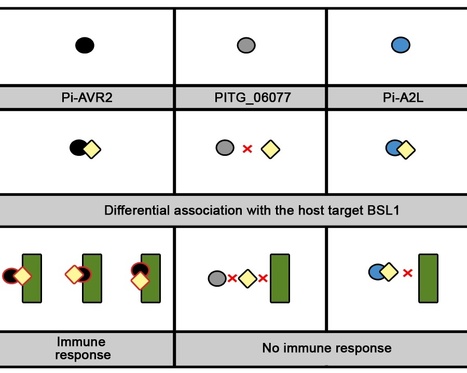
Plant pathogens secrete effector proteins to modulate plant immunity and promote host colonization. Plant nucleotide binding leucine-rich repeat (NB-LRR) immunoreceptors recognize specific pathogen effectors directly or indirectly. Little is known about how NB-LRR proteins recognize effectors of filamentous plant pathogens, such as Phytophthora infestans. AVR2 belongs to a family of 13 sequence-divergent P. infestans RXLR effectors that are differentially recognized by members of the R2 NB-LRR family in Solanum demissum. We report that the putative plant phosphatase BSU-LIKE PROTEIN1 (BSL1) is required for R2-mediated perception of AVR2 and resistance to P. infestans. AVR2 associates with BSL1 and mediates the interaction of BSL1 with R2 in planta, possibly through the formation of a ternary complex. Strains of P. infestans that are virulent on R2 potatoes express an unrecognized form, Avr2-like (referred to as A2l). A2L can still interact with BSL1 but does not promote the association of BSL1 with R2. Our findings show that recognition of the P. infestans AVR2 effector by the NB-LRR protein R2 requires the putative phosphatase BSL1. This reveals that, similar to effectors of phytopathogenic bacteria, recognition of filamentous pathogen effectors can be mediated via a host protein that interacts with both the effector and the NB-LRR immunoreceptor.
|
|
Scooped by
Kamoun Lab @ TSL
August 10, 2012 4:50 AM
|
When Nature recently accepted a review co-authored by Sarah Gurr, the plant pathologist from the University of Oxford in the United Kingdom sent the journal a self-produced image to consider for its cover. It shows a fungus looking like one of those colossal, menacing tripods from H. G. Wells's War of the Worlds, stalking through a field, with bats, frogs, and toads fleeing before it in a crazed panic. “Fungal Wars of the World,” Gurr called it. The picture didn't make it, but many scientists agree with its message: Fungi have now become a greater global threat to crops, forests, and wild animals than ever before. They have killed countless amphibians, pushing some species to extinction, and they're threatening the food supply for billions of people. More than 125 million tons of the top five food crops—rice, wheat, maize, potatoes, and soybeans—are destroyed by fungi every year. Like other infectious agents, fungi benefit from a combination of trends, such as increased global travel and trade, new agricultural practices, and perhaps global warming. But they have several unique features, researchers say—including the way they can switch from asexual to sexual reproduction—that enable them to exploit these opportunities particularly effectively.
The wet wet summer in the UK means that it's been a bad yar for late blight, but the better to demonstrate the protection conferred by introduced disease resistance genes. Check it out...
Via Mary Williams
|
|
|
Scooped by
Kamoun Lab @ TSL
August 24, 2012 5:15 PM
|
|
|
Scooped by
Kamoun Lab @ TSL
August 24, 2012 2:37 PM
|
It is generally correct to think of plants as the hearty autotrophs, gamely harnessing photons to make food and existing perennially (or annually) at the bottom of the food chain. However, thousands of plant species have lost the ability to feed themselves and have become adapted, instead, to live as parasites of other plants. Not surprisingly, these parasitic plants, especially witchweed root parasites such as Striga and Orobanche, have become major agricultural problems, causing substantial agricultural losses in regions where resources such as water are limited. Parasitic plants grow penetrating structures called haustoria, which connect to the vasculature of the host, allowing them to take water and nutrients from the host plant. Removing a parasite is a not so simple matter of finding a treatment that will kill the parasite, but not the host. When both host and parasite are plants, the matter becomes increasingly complicated (reviewed in Rispail et al., 2007). Agronomic practices such as crop rotation and selective herbicides have proved to be of limited usefulness. Moreover, genetic resistance for resistance to parasitic plants has been difficult to find and has only proven successful in a few instances, although transgenic and marker-assisted selection strategies may provide more success. These complications show that novel strategies will be required to control these damaging parasites. Macromolecules can be transferred from host to parasite; for example, RNA interference (RNAi) has been proposed, and explored with limited success, as one potential mechanism to control plant parasites (reviewed in Yoder et al., 2009). Alakonya et al. http://www.plantcell.org/content/24/7/3153 use the broad host-range parasitic plant dodder (Cuscuta pentagona) and the host plant tobacco (Nicotiana tabacum) to test an RNAi strategy.
|
|
Scooped by
Kamoun Lab @ TSL
August 23, 2012 5:51 PM
|
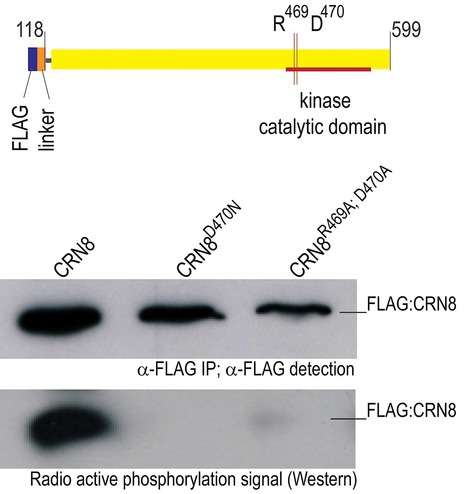
Phytopathogenic oomycetes, such as Phytophthora infestans, secrete an arsenal of effector proteins that modulate plant innate immunity to enable infection. We describe CRN8, a host-translocated effector of P. infestans that has kinase activity in planta. CRN8 is a modular protein of the CRN effector family. The C-terminus of CRN8 localizes to the host nucleus and triggers cell death when the protein is expressed in planta. Cell death induction by CRN8 is dependent on its localization to the plant nucleus, which requires a functional nuclear localization signal (NLS). The C-terminal sequence of CRN8 has similarity to a serine/threonine RD kinase domain. We demonstrated that CRN8 is a functional RD kinase and that its auto-phosphorylation is dependent on an intact catalytic site. Co-immunoprecipitation experiments revealed that CRN8 forms a dimer or multimer. Heterologous expression of CRN8 in planta resulted in enhanced virulence by P. infestans. In contrast, in planta expression of the dominant-negative CRN8R469A;D470A resulted in reduced P. infestans infection, further implicating CRN8 in virulence. Overall, our results indicate that similar to animal parasites, plant pathogens also translocate biochemically active kinase effectors inside host cells.
|
|
Scooped by
Kamoun Lab @ TSL
August 23, 2012 5:33 AM
|
Two scientists at the James Hutton Institute and the University of Dundee's Division of Plant Sciences have been awarded highly prestigious European Research Council (ERC) Starting Grants. Dr Jorunn Bos of the Cell and Molecular Sciences group and Dr Edgar Huitema of the Division of Plant Sciences are based both based at the James Hutton Institute in Dundee. The grants, each worth around 1.4 million euros, will support their research on important pathogens and pests of crops over the next five years.
|
|
Scooped by
Kamoun Lab @ TSL
August 21, 2012 9:22 AM
|
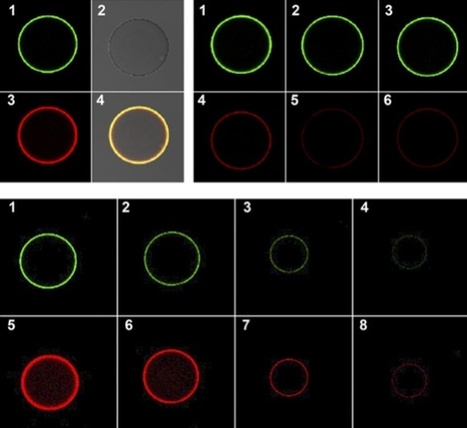
The potato cyst nematode Globodera rostochiensis invades roots of host plants where it transforms cells near the vascular cylinder into a permanent feeding site. The host cell modifications are most likely induced by a complex mixture of proteins in the stylet secretions of the nematodes. Resistance to nematodes conferred by NB-LRR proteins usually results in a programmed cell death in and around the feeding site, and is most likely triggered by the recognition of effectors in stylet secretions. However, the actual role of these secretions in the activation and suppression of effector-triggered immunity is largely unknown. Here we demonstrate that the effector SPRYSEC-19 of Globodera rostochiensis physically associates in planta with the leucine-rich repeat (LRR) domain of a member of the SW5 resistance gene cluster in tomato (Solanum lycopersicum). Unexpectedly, this interaction did not trigger defense-related programmed cell death and resistance to G. rostochiensis. By contrast, agroinfiltration assays showed that the co-expression of SPRYSEC-19 in leaves of Nicotiana benthamiana suppresses programmed cell death mediated by several CC-NB-LRR immune receptors. Furthermore, SPRYSEC-19 abrogated resistance to Potato Virus X mediated by the CC-NB-LRR resistance protein Rx1, and resistance to Verticillium dahliae mediated by an unidentified resistance in potato. The suppression of cell death and disease resistance did not require a physical association of SPRYSEC-19 and the LRR domains of the CC-NB-LRR resistance proteins. Altogether, our data demonstrated that potato cyst nematodes secrete effectors that enable the suppression of programmed cell death and disease resistance mediated by several CC-NB-LRR proteins in plants.
|
|
Scooped by
Kamoun Lab @ TSL
August 18, 2012 3:33 AM
|
The biology of aphids is bizarre: they can be born pregnant and males sometimes lack mouths, causing them to die not long after mating. In an addition to their list of anomalies, work published this week indicates that they may also capture sunlight and use the energy for metabolic purposes. Aphids are unique among animals in their ability to synthesize pigments called carotenoids. Many creatures rely on these pigments for a variety of functions, such as maintaining a healthy immune system and making certain vitamins, but all other animals must obtain them through their diet. Entomologist Alain Robichon at the Sophia Agrobiotech Institute in Sophia Antipolis, France, and his colleagues suggest that, in aphids, these pigments can absorb energy from the Sun and transfer it to the cellular machinery involved in energy production.
|
|
Scooped by
Kamoun Lab @ TSL
August 16, 2012 1:59 PM
|
Video: Sophien Kamoun's interview at the 77th CSH Symposium on Quantitative Biology "The Biology of Plants"
|
|
Scooped by
Kamoun Lab @ TSL
August 15, 2012 5:54 PM
|
From now till the start of the 2012 BGRI Workshop, the BGRI blog will preview the exciting sessions upcoming in Beijing. For more information, visit the Workshop page http://tinyurl.com/cyt8eqf
|
|
Scooped by
Kamoun Lab @ TSL
August 15, 2012 3:00 AM
|
They don't call them plant killers for nothing!
|
|
Rescooped by
Kamoun Lab @ TSL
from Plant Pathogenomics
August 11, 2012 5:43 AM
|
Nicotiana benthamiana is a widely used model plant species for the study of fundamental questions in molecular plant-microbe interactions and other areas of plant biology. This popularity derives from its well-characterized susceptibility to diverse pathogens and especially its amenability to virus-induced gene silencing (VIGS) and transient protein expression methods. Here we report the generation of a 63-fold coverage draft genome sequence of N. benthamiana and its availability on the Sol Genomics Network (http://solgenomics.net/) for both BLAST searches and for downloading to local servers. The estimated genome size of N. benthamiana is ~3 gigabases (Gb). The current assembly consists of ~141,000 scaffolds, spanning 2.6 Gb of which >50% are longer than 89 kilobases. Of the ~16,000 N. benthamiana unigenes available in GenBank, >90% are represented in the assembly. The usefulness of the sequence was demonstrated by the retrieval of N. benthamiana orthologs for 24 immunity-associated genes from other species including Ago2, Ago7, Bak1, Bik1, Crt1, Fls2, Pto, Prf, Rar1 and MAP kinases. The sequence will also be useful for comparative genomics in the Solanaceae as shown here by the discovery of microsynteny between N. benthamiana and tomato in the region encompassing the Pto/Prf genes.
|
|
Scooped by
Kamoun Lab @ TSL
August 10, 2012 5:38 AM
|
In exclusive, here is the now famous cover that was "rejected" by Nature - as narrated in the Science article "Attack of the Clones": "When Nature recently accepted a review co-authored by Sarah Gurr, the plant pathologist from the University of Oxford in the United Kingdom sent the journal a self-produced image to consider for its cover. It shows a fungus looking like one of those colossal, menacing tripods from H. G. Wells's War of the Worlds, stalking through a field, with bats, frogs, and toads fleeing before it in a crazed panic. “Fungal Wars of the World,” Gurr called it. The picture didn't make it, but many scientists agree with its message: Fungi have now become a greater global threat to crops, forests, and wild animals than ever before..." The cover was designed by Prof. Sarah Gurr and PhD student Sarah McCraw, University of Oxford. Check Sarah Gurr's website at http://dps.plants.ox.ac.uk/plants/staff/sarahgurr.aspx
|
|
Scooped by
Kamoun Lab @ TSL
August 10, 2012 5:11 AM
|
"A highly contagious fungus [sic] that destroys tomato plants has quickly spread to nearly every state in the Northeast and the mid-Atlantic, and the weather over the next week may determine whether the outbreak abates or whether tomato crops are ruined…" - The New York Times, 18 July 2009, J. Moskin "You say tomato, I say agricultural disaster." - The New York Times, 9 August 2009, D. Barber
|