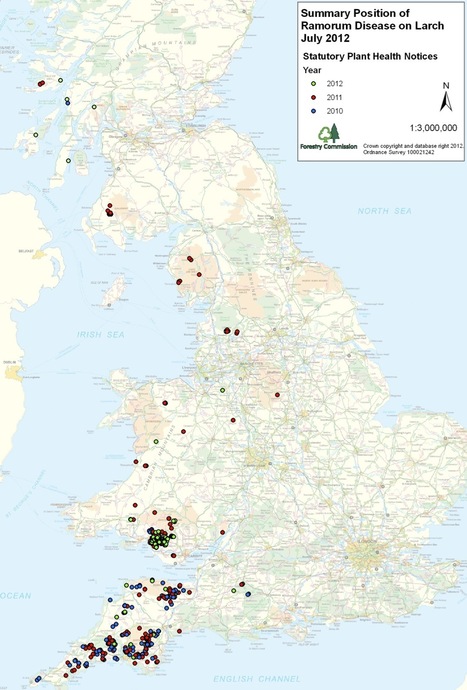
The outbreak map identifies areas with currently confirmed or suspected infection. The red dots indicate larch woodland sites where infection by P. ramorum has been confirmed or presumed since April 2011. The blue dots indicate larch woodland sites where infection by P. ramorum had been confirmed or presumed before April 2011. We are still establishing the extent of the disease through surveys, so additional sites added to the map in the next few weeks do not necessarily indicate a fresh spread of the disease, but simply a reflection of our improving knowledge of existing distribution.
Maize is one of the major staples in Bhutan and is cultivated by about 70 percent of households throughout the country. Poor farmers sustain their families by consuming maize as a staple food, using it as animal feed, and selling it for further income. Thus, the 2007 outbreak of Gray Leaf Spot (GLS), a new disease caused by Cercospora zeae-maydis, posed a major challenge to the Bhutanese maize program and maize farmers, many of whom lost over 70 percent of their production.
To contain the disease, the National Maize Program collaborated with the CIMMYT South Asia Regional Office in Nepal to develop or identify new GLS-tolerant maize varieties able to adapt to the high-altitude, rainfed, mountainous, maizegrowing highlands of Bhutan.
Bacterial Leaf Spot has been the major unsolved disease problem in tomatoes for over 60 years. Chemical treatments based on copper compounds have led to the selection of copper resistant pathogens. These compounds no longer have useful effect, and yet they continue to be used despite negative environmental impacts. Other more benign treatments, such as bacterial viruses and systemic inducers of disease resistance have been tested, but these compounds are considerably more expensive than copper, require special handling and storage, and are only mildly effective.
Disease resistance genes have been sought in tomato and its wild relatives, but to date none have been isolated or bred into commercial tomato lines. Disease resistance does exist in pepper, a close relative of tomato, and a gene known as Bs2 was isolated and found to confer resistance in both species.
2Blades currently supports research to transfer Bs2 into a high-performing Florida tomato variety, and we have demonstrated a significant positive impact on plant health and fruit yield over six years of multi-site field trials in Florida.
The Sheng Yang He Lab at Michigan State University welcomes you! Our research focuses on the molecular biology of host-microbe interactions, microbial pathogenesis, and hormone signaling in disease.
Pseudomonas savastanoi pv. savastanoi is the causal agent of olive (Olea europaea) knot disease and an unorthodox member of the P. syringae complex, causing aerial tumours instead of the foliar necroses and cankers characteristic of most members of this complex. Olive knot is present wherever olive is grown; although losses are difficult to assess, it is assumed that olive knot is one of the most important diseases of the olive crop. The last century witnessed a large number of scientific articles describing the biology, epidemiology and control of this pathogen. However, most P. savastanoi pv. savastanoi strains are highly recalcitrant to genetic manipulation, which has effectively prevented the pathogen from benefitting from the scientific progress in molecular biology that has elevated the foliar pathogens of the P. syringae complex to supermodels. A number of studies in recent years have made significant advances in the biology, ecology and genetics of P. savastanoi pv. savastanoi, paving the way for the molecular dissection of its interaction with other nonpathogenic bacteria and their woody hosts. The selection of a genetically pliable model strain was soon followed by the development of rapid methods for virulence assessment with micropropagated olive plants and the analysis of cellular interactions with the plant host. The generation of a draft genome of strain NCPPB 3335 and the closed sequence of its three native plasmids has allowed for functional and comparative genomic analyses for the identification of its pathogenicity gene complement. This includes 34 putative type III effector genes and genomic regions, shared with other pathogens of woody hosts, which encode metabolic pathways associated with the degradation of lignin-derived compounds. Now, the time is right to explore the molecular basis of the P. savastanoi pv. savastanoi–olive interaction and to obtain insights into why some pathovars like it necrotic and why some like it knot.
• The Phytophthora sojae genome encodes hundreds of RxLR effectors predicted to manipulate various plant defense responses, but the molecular mechanisms involved are largely unknown. Here we have characterized in detail the P. sojae RxLR effector Avh241. • To determine the function and localization of Avh241, we transiently expressed it on different plants. Silencing of Avh241 in P. sojae, we determined its virulence during infection. Through the assay of promoting infection by Phytophthora capsici to Nicotiana benthamiana, we further confirmed this virulence role. • Avh241 induced cell death in several different plants and localized to the plant plasma membrane. An N-terminal motif within Avh241 was important for membrane localization and cell death-inducing activity. Two mitogen-activated protein kinases, NbMEK2 and NbWIPK, were required for the cell death triggered by Avh241 in N. benthamiana. Avh241 was important for the pathogen’s full virulence on soybean. Avh241 could also promote infection by P. capsici and the membrane localization motif was not required to promote infection. • This work suggests that Avh241 interacts with the plant immune system via at least two different mechanisms, one recognized by plants dependent on subcellular localization and one promoting infection independent on membrane localization.
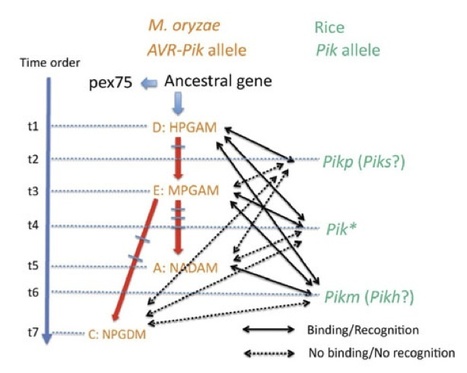
Between pathogen and host, attack and counter-attack impose strong reciprocal selection on the involved organisms, leading to the development of arms race evolutionary dynamics. Here we show that Magnaporthe oryzae avirulence gene AVR-Pik and cognate rice resistance (R-) gene Pik are highly variable with multiple alleles differing by DNA replacements causing amino acid changes. There is a tight recognition specificity of AVR-Pik alleles by different Pik alleles. We found that AVR-Pik physically binds the N-terminal coiled-coil (CC) domain of Pik in yeast 2-hybrid assay as well as in in-planta co-immunoprecipitation assay. This binding specificity correlates the recognition specificity between AVR and R-genes. We propose that AVR-Pik and Pik are locked up in arms race co-evolution that is driven by their direct physical interactions.
All organisms live in close associations with other organisms. As we will recognise from our own relationships with others, partners can be perceived differently, sometimes with friendliness but other times with hostility. Plant encounters with other organisms, which can negatively or positively affect performance of the plant, are very complex as well, and this has fascinated plant scientists for more than a century. The economic and social consequences of intimate encounters of crop plants with harmful pathogens and insects are enormous, as exemplified by the high annual crop losses (25–40%) due to plant diseases and pests, representing a value of over €450 billion worldwide. As a result of the rapidly growing human population, mankind faces the enormous challenge of increasing agricultural productivity while decreasing our ecological footprint in a changing climate. Hence, novel strategies for crop protection need to be developed, which creates major challenges for the plant science research community. This special issue of Plant Biology demonstrates that research on plant–attacker interactions now encompasses highly diverse approaches, from in silico genome-wide analyses to laboratory and field tests, all concentrating on the question of how the plant immune system orchestrates the intimacies with different interacting organisms.
Text extracted from the Editorial by Saskia C. M. van Wees, entitled: "Unravelling intimacies between plants and their enemies"
RNA silencing (RNAi) induced by virus-derived double-stranded RNA (dsRNA), which is in a sense regarded as a pathogen-associated molecular pattern (PAMP) of viruses, is a general plant defense mechanism. To counteract this defense, plant viruses express RNA silencing suppressors (RSSs), many of which bind to dsRNA and attenuate RNAi. We showed that the tobacco calmodulin-like protein, rgs-CaM, counterattacked viral RSSs by binding to their dsRNA-binding domains and sequestering them from inhibiting RNAi. Autophagy-like protein degradation seemed to operate to degrade RSSs with the sacrifice of rgs-CaM. These RSSs could thus be regarded as secondary viral PAMPs. This study uncovered a unique defense system in which an rgs-CaM–mediated countermeasure against viral RSSs enhanced host antiviral RNAi in tobacco.
This course is aimed at PhD students and post-doctoral researchers who are working on all aspects of fungal and oomycete-induced disease in plants. The primary aim of this course is to familiarize the participants with the toolset and data available for analysis of host and pathogen genomes, and infectious phenotypes.
Lectures will provide an overview with the data available for plant pathogens, the technologies used to generate these data and the resources that make them available. Practicals will consist of computer exercises that will familliarise users with tools and resources at first hand, using relevent examples from the study of pathogenesis.
The course will cover primarily the PhytoPath resource, the associated Ensembl databases for plants, fungi and protists, and PHI-base. Additional tools and resources used in the analysis of genome-scale data will also be covered, including the Ondex software for network analysis. An introductory practical on genome assembly and alignment (using next-generation sequencing data) will also be provided.
To suppress plant defense responses and favor the establishment of disease, phytopathogenic bacteria have gained the ability to deliver effector molecules inside host cells through the type III secretion system. Inside plant cells, bacterial effector proteins may be addressed to different subcellular compartments where they are able to manipulate a variety of host cellular components and molecular functions. Here we review how the recent identification and functional characterization of plant components targeted by bacterial effectors, as well as the discovery of new pathogen recognition capabilities evolved in turn by plant cells, have significantly contributed to further our knowledge about the intricate molecular interactions that are established between plants and their invading bacteria.
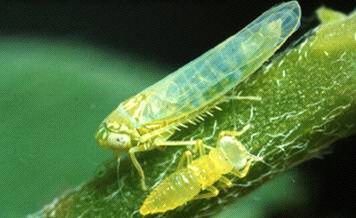
An horde of insidious insects has been poisoning crops and using the drought to cover the crime. Potato leafhoppers, usually rare in Ontario, are ravaging alfalfa crops. Not content to merely feed on the alfalfa’s juices, the 3mm-long sap-suckers actually inject toxic saliva into the plants, which inhibits their circulation system. “The sap becomes sort of gelatinous and it doesn’t flow,” said provincial field crop specialist Gilles Quesnel. The internal damage is tough to spot at first, allowing the leafhopper population to explode undetected. And the drought has given leafhoppers an extra edge since they swept up from the southern United States — not only has the hot weather spurred insect intercourse, it has also made farmers more likely to the blame lack of water for stunted crops. “It’s been dry, but for the alfalfa crop, the biggest impact has been this insect,” Quesnel said. “Because it’s not an insect that we have as a problem every year, growers, their normal tendency is to think that it’s drought that’s the problem.” “It’s been hard to get the word across.” In fact, alfalfa’s deep-reaching roots make it less vulnerable to drought, preserving it for the destructive green bugs. The economic impact will be severe. Because the insect has flown under the radar for so long, Quesnel estimates that about 30% of the alfalfa crop may be lost this year, a loss of about $150 to $200 per acre.
Plant-parasitic cyst nematodes secrete CLAVATA3 (CLV3)/ENDOSPERM SURROUNDING REGION (ESR) (CLE)-like effector proteins. These proteins act as ligand mimics of plant CLE peptides and are required for successful nematode infection. Previously, we showed that the CLV2/CORYNE (CRN) heterodimer receptor complex is required for nematode CLE signaling. However, there was only a partial reduction in nematode infection when this signaling was disrupted, indicating there might be additional nematode CLE receptors. In this study, we demonstrate that CLV1 and RECEPTOR-LIKE PROTEIN KINASE 2/TOADSTOOL2 (RPK2), two additional receptors that can transmit the CLV3 signal independent of CLV2/CRN for shoot apical meristem maintenance, also play a role in nematode CLE perception. Localization studies showed that both receptors are expressed in nematode-induced syncytia. Infection assays with clv1 and rpk2 single mutants revealed a decrease in both nematode infection and syncytium size. Significantly, further reduction in nematode infection was observed when rpk2 was combined with clv1 and clv2 mutants. Taken together, our results indicate that parallel signaling pathways involving CLV1, CLV2, and RPK2 are important for nematode parasitism.
We investigated whether lines of transgenic tomato (Solanum lycopersicum) expressing the Bs2 resistance gene from pepper, a close relative of tomato, demonstrate improved resistance to bacterial spot disease caused by Xanthomonas species in replicated multi-year field trials under commercial type growing conditions. We report that the presence of the Bs2 gene in the highly susceptible VF 36 background reduced disease to extremely low levels, and VF 36-Bs2 plants displayed the lowest disease severity amongst all tomato varieties tested, including commercial and breeding lines with host resistance. Yields of marketable fruit from transgenic lines were typically 2.5 times that of the non-transformed parent line, but varied between 1.5 and 11.5 fold depending on weather conditions and disease pressure. Trials were conducted without application of any copper-based bactericides, presently in wide use despite negative impacts on the environment. This is the first demonstration of effective field resistance in a transgenic genotype based on a plant R gene and provides an opportunity for control of a devastating pathogen while eliminating ineffective copper pesticides.
Bacterial pathogens have evolved specific effector proteins that, by interfacing with host kinase signalling pathways, provide a mechanism to evade immune responses during infection1, 2. Although these effectors contribute to pathogen virulence, we realized that they might also serve as valuable synthetic biology reagents for engineering cellular behaviour. Here we exploit two effector proteins, the Shigella flexneri OspF protein3 and Yersinia pestis YopH protein4, to rewire kinase-mediated responses systematically both in yeast and mammalian immune cells. Bacterial effector proteins can be directed to inhibit specific mitogen-activated protein kinase pathways selectively in yeast by artificially targeting them to pathway-specific complexes. Moreover, we show that unique properties of the effectors generate new pathway behaviours: OspF, which irreversibly inactivates mitogen-activated protein kinases4, was used to construct a synthetic feedback circuit that shows novel frequency-dependent input filtering. Finally, we show that effectors can be used in T cells, either as feedback modulators to tune the T-cell response amplitude precisely, or as an inducible pause switch that can temporarily disable T-cell activation. These studies demonstrate how pathogens could provide a rich toolkit of parts to engineer cells for therapeutic or biotechnological applications.
A new pathogen, Pseudomonas syringae pv. averrhoi (Pav), which causes bacterial spot disease on carambola was identified in Taiwan in 1997. Many strains of this pathovar have been isolated from different locations and several varieties of hosts. Some of these strains, such as HL1, are nonmotile and elicit a strong hypersensitive response (HR) in nonhost tobacco leaves, while other strains, such as PA5, are motile and elicit a weak HR. Based on the image from a transmission electron microscope, the results showed that HL1 is flagellum-deficient and PA5 has normal flagella. Here we cloned and analyzed the fliC gene and glycosylation island from Pav HL1 and PA5. The amino acid sequences of FliC from HL1 and PA5 are identical to P. s. pvs. tabaci (Pta), glycinea and phaseolicola and share very high similarity with other pathovars of P. syringae. In contrast to the flagellin mutant PtaΔfliC, PA5ΔfliC grows as well as wild type in the host plant, but it elicits stronger HR than wild type does in non-host plants. Furthermore, the purified Pav flagellin, but not the divergent flagellin from Agrobacterium tumefaciens, is able to impair the HR induced by PA5ΔfliC. PA5Δfgt1 possessing nonglycosylated flagella behaved as its wild type in both bacterial growth in host and HR elicitation. Flagellin was infiltrated into tobacco leaves either simultaneously with flagellum-deficient HL1 or prior to the inoculation of wild type HL1, and both treatments impaired the HR induced by HL1. Moreover, the HR elicited by PA5 and PA5ΔfliC was enhanced by the addition of cycloheximide, suggesting that the flagellin is one of the PAMPs (pathogen-associated molecular patterns) contributed to induce the PAMP-triggered immunity (PTI). Taken together, the results shown in this study reveal that flagellin in Pav is capable of suppressing HR via PTI induction during an incompatible interaction.
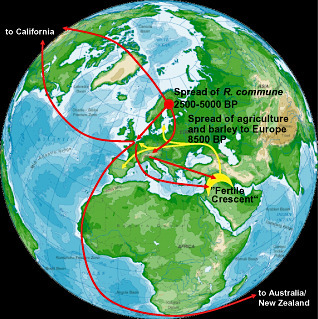
Rhynchosporium commune is a haploid fungus causing scald or leaf blotch on barley, other Hordeum spp. and Bromus diandrus.
Taxonomy - Rhynchosporium commune is an anamorphic Ascomycete closely related to the teleomorph Helotiales genera Oculimacula and Pyrenopeziza.
Disease symptoms - Rhynchosporium commune causes scald-like lesions on leaves, leaf sheaths and ears. Early symptoms are generally pale grey oval lesions. With time, the lesions acquire a dark brown margin with the centre of the lesion remaining pale green or pale brown. Lesions often merge to form large areas around which leaf yellowing is common. Infection frequently occurs in the leaf axil, which can lead to chlorosis and eventual death of the leaf.
Life cycle - Rhynchosporium commune is seed borne, but the importance of this phase of the disease is not fully understood. Debris from previous crops and volunteers, infected from the stubble from previous crops, are considered to be the most important sources of the disease. Autumn-sown crops can become infected very soon after sowing. Secondary spread of disease occurs mainly through splash dispersal of conidia from infected leaves. Rainfall at the stem extension growth stage is the major environmental factor in epidemic development.
With the increased attention given to the genus Phytophthora in the last decade in response to the ecological and economic impact of several invasive species (such as P. ramorum, P. kernoviae, and P. alni), there has been a significant increase in the number of described species. In part, this is due to the extensive surveys in historically underexplored ecosystems (e.g., forest and stream ecosystems) undertaken to determine the spread of invasive species and the involvement of Phytophthora species in forest decline worldwide (e.g., oak decline). The past decade has seen an approximate doubling in the number of described species within the genus Phytophthora, and the number will likely continue to increase as more surveys are completed and greater attention is devoted to clarifying phylogenetic relationships and delineating boundaries in species complexes. The development of molecular resources, the availability of credible sequence databases to simplify identification of new species, and the sequencing of several genomes have provided a solid framework to gain a better understanding of the biology, diversity, and taxonomic relationships within the genus. This information is much needed considering the impact invasive or exotic Phytophthora species have had on natural ecosystems and the regulatory issues associated with their management. While this work is improving our ability to identify species based on phylogenetic grouping, it has also revealed that the genus has a much greater diversity than previously appreciated.
The Q-bank Phytoplasma database contains DNA sequences (Barcodes) of more than 100 strains that are of relevance to phytoplasma phytopathology (International Phytoplasmologist Working Group). The official micropropagated collection of phytoplasma strains is maintained mainly in periwinkle at the University of Bologna (Phytoplasma Collection). The distribution as well as relevant EPPO-protocols for the phytoplasmas can be downloaded from www.eppo.org.
Phytoplasma DNA in the Q-bank collection can be ordered from Dr. Assunta Bertaccini (assunta.bertaccini@unibo.it)
Leaf infilitration of Nicotiana benthamiana with a solution of the bacterium Agrobacterium tumefaciens. This assay enables transient gene expression in plant leaves and is routinely used in plant biology research.
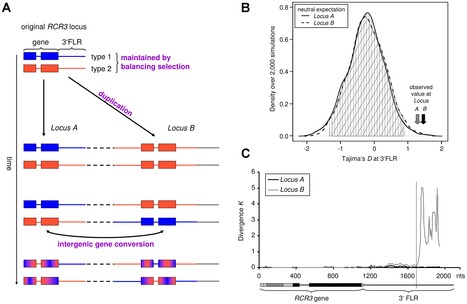
Coevolution between hosts and pathogens is thought to occur between interacting molecules of both species. This results in the maintenance of genetic diversity at pathogen antigens (or so-called effectors) and host resistance genes such as the major histocompatibility complex (MHC) in mammals or resistance (R) genes in plants. In plant–pathogen interactions, the current paradigm posits that a specific defense response is activated upon recognition of pathogen effectors via interaction with their corresponding R proteins. According to the “Guard-Hypothesis,” R proteins (the “guards”) can sense modification of target molecules in the host (the “guardees”) by pathogen effectors and subsequently trigger the defense response. Multiple studies have reported high genetic diversity at R genes maintained by balancing selection. In contrast, little is known about the evolutionary mechanisms shaping the guardee, which may be subject to contrasting evolutionary forces. Here we show that the evolution of the guardee RCR3 is characterized by gene duplication, frequent gene conversion, and balancing selection in the wild tomato species Solanum peruvianum. Investigating the functional characteristics of 54 natural variants through in vitro and in planta assays, we detected differences in recognition of the pathogen effector through interaction with the guardee, as well as substantial variation in the strength of the defense response. This variation is maintained by balancing selection at each copy of the RCR3 gene. Our analyses pinpoint three amino acid polymorphisms with key functional consequences for the coevolution between the guardee (RCR3) and its guard (Cf-2). We conclude that, in addition to coevolution at the “guardee-effector” interface for pathogen recognition, natural selection acts on the “guard-guardee” interface. Guardee evolution may be governed by a counterbalance between improved activation in the presence and prevention of auto-immune responses in the absence of the corresponding pathogen.
To get content containing either thought or leadership enter:
To get content containing both thought and leadership enter:
To get content containing the expression thought leadership enter:
You can enter several keywords and you can refine them whenever you want. Our suggestion engine uses more signals but entering a few keywords here will rapidly give you great content to curate.


 Your new post is loading...