


Plants and Microbes
401.5K views |
+21 today
Everything related to the science of plant-microbe interactions
Curated by
Kamoun Lab @ TSL
 Your new post is loading...
 Scoop.it! 
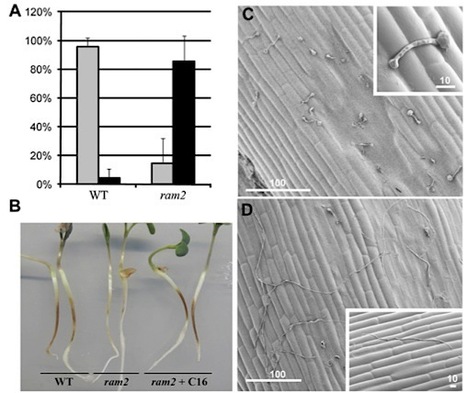
Fungal diseases of plants represent one of the most eminent threats to agriculture. Given the food needs of a growing world population and that more and more crops are devoted to fuel production, the necessity to develop crops with better resistance to disease is increasing. To accomplish this, the mechanisms that plant pathogenic fungi use to colonize plants need to be elucidated. As of now, there are only few examples/models in which this can be done on a functional, genome-wide level, taking into account both the pathogen and its host plant. The fungus Ustilago maydis (U. maydis) is one of these examples. It is a member of the smut fungi: a large group of parasites infecting mostly grasses, including several important crop plants such as maize (Figure 1B), wheat, barley, and sugar cane. Smut fungi are biotrophs, i.e., parasites that need the living host plant to complete their sexual life cycle. They do not establish prominent feeding structures like the related, haustoria-forming rust fungi. During penetration, the host plasma membrane invaginates and completely encases the intracellular hyphae (Figure 1A), establishing an extended interaction zone mediating the exchange of molecules between fungus and host. In contrast to most smut fungi that cause a systemic infection, remaining symptomless until the plant flowers, U. maydis can infect all above-ground parts of the maize plant but fails to spread systemically. U. maydis induces local tumors in which spores develop (Figure 1B) – a unique feature that allows detection of symptoms in corn seedlings less than a week after syringe infection with high levels of inoculum. This, together with the toolbox developed for reverse genetics, cell biology, and functional studies, has contributed to its status as a model for biotrophic basidiomycete fungi. Here the current level of our understanding of the elaborate molecular crosstalk between U. maydis and its host plant will be discussed. 
Scoop.it!
Scoop.it!

A foreign fungus threatens almost a third of British woodland - To plant a tree is to make an investment for somebody else’s future; to chop one down is to call time on the hopes of the past. Soon Britain may be chopping down a great many trees. From Monday the Government will ban the import of ash trees in an attempt to save Britain’s ash population from a fungal parasite called Chalara fraxinea.
Scoop.it!

Typically, pathogens deploy virulence effectors to disable defense. Plants defeat effectors with resistance proteins that guard effector targets. Here, we show that a pathogen exploits a resistance protein by activating it to confer susceptibility. Interactions of victorin, an effector produced by the necrotrophic fungus Cochliobolus victoriae, TRX-h5, a defense-associated thioredoxin, and LOV1, an Arabidopsis susceptibility protein, recapitulate the guard mechanism of plant defense. In LOV1's absence, victorin inhibits TRX-h5 resulting in compromised defense but not disease by C. victoriae. In LOV1's presence, victorin binding to TRX-h5 activates LOV1 and elicits a resistance-like response that confers disease susceptibility. We propose that victorin is or mimics a conventional pathogen virulence effector that was defeated by LOV1 and confers virulence to C. victoriae solely because it incites defense.
Scoop.it!
|


|
Scooped by
Kamoun Lab @ TSL
October 23, 2012 12:43 PM
|
Scoop.it!
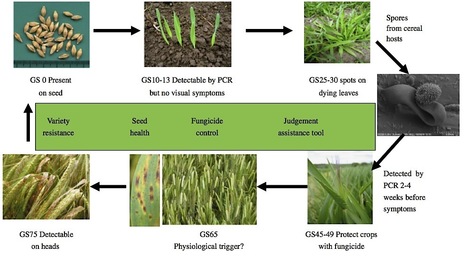
Ramularia collo-cygni is now recognized as an important pathogen of barley in Northern Europe and New Zealand. It induces necrotic spotting and premature leaf senescence, leading to loss of green leaf area in crops, and can result in substantial yield losses. The fungus produces a number of anthraquinone toxins called rubellins, which act as host nonspecific toxins with photodynamic activity. These toxins induce lipid peroxidation and are possibly the cause of the chlorosis and necrosis observed in leaves infected with R. collo-cygni. The fact that the fungus can remain latent in barley plants until flowering, coupled with its very slow growth in vitro, makes it difficult to detect in crops. As a result, the epidemiology of this pathogen remains poorly understood. However, the recent development of rapid and reliable PCR methods for specific detection of R. collo-cygni offers the prospect of increased understanding of its epidemiology and improved disease control.
|
|
Scooped by
Kamoun Lab @ TSL
October 21, 2012 10:39 AM
|
Scoop.it!

ETH-Zurich researcher Valentin Queloz describes the species of fungus responsible for the ash dieback recently observed in Switzerland as a "familiar stranger." However, researchers still don't know why a harmless leaf colonizer could turn into an aggressive pathogen. The uncanny phenomenon began in eastern Poland. In the nineties ash trees started dying apparently out of the blue, and entire forests shrank. Then, in 2006 a Polish scientist succeeded in isolating a previously unknown fungus from 70 percent of the dead ash trees. Only consisting of hyphae, he called his discovery Chalara fraxinea -- a vegetative form that produces sticky spores, known as conidia, asexually. It wasn't until later that researchers in Poland found little yellow-white fungal fruiting bodies on the leaf remains of ash trees that they were able to identify as Hymenoscyphus albidus. It later transpired that Chalara fraxinea and the fruiting bodies were one and the same species but, as is often the case in mycology, carry two different names: one for the anamorph and one for the teleomorph.H. albidus wasn't a stranger after all, having first been characterized in 1851. But why should this fungus, which had always been regarded as a harmless litter decomposer, suddenly turn on its host, the ash?
|
|
Scooped by
Kamoun Lab @ TSL
October 18, 2012 5:30 PM
|
Scoop.it!

During antagonistic coevolution between viruses and their hosts, viruses have a major advantage by evolving more rapidly. Nevertheless, viruses and their hosts coexist and have coevolved, although the processes remain largely unknown. We previously identified Tm-1 that confers resistance to Tomato mosaic virus (ToMV), and revealed that it encodes a protein that binds ToMV replication proteins and inhibits RNA replication. Tm-1 was introgressed from a wild tomato species Solanum habrochaites into the cultivated tomato species Solanum lycopersicum. In this study, we analyzed Tm-1 alleles in S. habrochaites. Although most part of this gene was under purifying selection, a cluster of nonsynonymous substitutions in a small region important for inhibitory activity was identified, suggesting that the region is under positive selection. We then examined the resistance of S. habrochaites plants to ToMV. Approximately 60% of 149 individuals from 24 accessions were resistant to ToMV, while the others accumulated detectable levels of coat protein after inoculation. Unexpectedly, many S. habrochaites plants were observed in which even multiplication of the Tm-1-resistance-breaking ToMV mutant LT1 was inhibited. An amino acid change in the positively selected region of the Tm-1 protein was responsible for the inhibition of LT1 multiplication. This amino acid change allowed Tm-1 to bind LT1 replication proteins without losing the ability to bind replication proteins of wild-type ToMV. The antiviral spectra and biochemical properties suggest that Tm-1 has evolved by changing the strengths of its inhibitory activity rather than diversifying the recognition spectra. In the LT1-resistant S. habrochaites plants inoculated with LT1, mutant viruses emerged whose multiplication was not inhibited by the Tm-1 allele that confers resistance to LT1. However, the resistance-breaking mutants were less competitive than the parental strains in the absence of Tm-1. Based on these results, we discuss possible coevolutionary processes of ToMV and Tm-1.
|
|
Scooped by
Kamoun Lab @ TSL
October 18, 2012 6:56 AM
|
Scoop.it!

The US is facing the challenge of producing food for more and more people while facing problems such as drought, dwindling harvests, and human wastefulness. Newsnight's Science Editor Susan Watts reports.
|
|
Rescooped by
Kamoun Lab @ TSL
from science education
October 17, 2012 4:47 PM
|
Scoop.it!
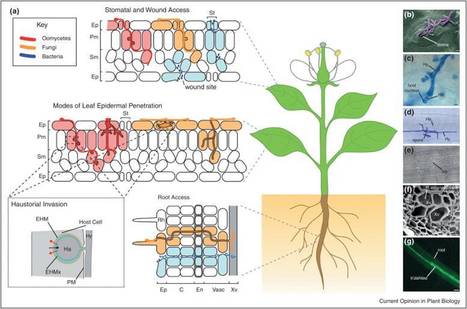
All plant organs are vulnerable to colonisation and molecular manipulation by microbes. When this interaction allows proliferation of the microbe at the expense of the host, the microbe can be described as a pathogen. In our attempts to understand the full nature of the interactions that occur between a potential pathogen and its host, various aspects of the molecular mechanisms of infection and defence have begun to be characterised. There is significant variation in these mechanisms. While previous research has examined plant–pathogen interactions with whole plant/organ resolution, the specificity of infection strategies and changes in both gene expression and protein localisation of immune receptors upon infection suggest there is much to be gained from examination of plant-microbe interactions at the cellular level.
Via Nicolas Denancé, Mary Williams, S&M
|
|
Scooped by
Kamoun Lab @ TSL
October 16, 2012 6:16 PM
|
Scoop.it!

The registration page for the 33rd Annual International Crown Gall (Agrobacterium) Conference is now open.
For more details contact Brad Goodner: GoodnerBW @ hiram.edu
|
|
Scooped by
Kamoun Lab @ TSL
October 16, 2012 5:29 AM
|
Scoop.it!

Grow your own enthusiasts and ‘allotment amateurs’ have been blamed for spreading potato blight that is hitting the national crop and pushing up prices.
Potato blight, that caused the Irish potato famine, is an airborne disease that can devastate a crop. The Potato Council said the fungal disease, that manifests itself as a mould on the leaf and roots, has hit the potato crop badly this year due to the wet weather. ‘Allotment amateurs’ were also blamed for a "disproportionate amount of overall blight pressure." Inexperienced gardeners could make blight spread by dumping infected potatoes on the compost, where the spores can spread on the wind to neighbouring farms. In contrast commercial farms regularly spray the crop with fungicide to stop infection and bury any infected potatoes. Allan Stevenson, Chairman of the Potato Council, told trade journal The Grocer, that people should be buying potatoes from the supermarket rather than growing their own as this may help spread blight. "People should be encouraged to grown their own vegetables to learn about the origins of their food,” he said. "But the blight risk is real and it would be preferable if people bought healthy, well produced potatoes from their retailer rather than grow their own." The wet weather has added even more to the cost of potatoes as farmers have struggled to harvest the crop in the wet ground. The cost of fuel, fungicide and fertiliser is also rising. The wholesale price of potatoes, as a result of the poor harvest, has gone up by 61 per cent in the last year and there are fears this could be passed onto the customer, especially as wider food prices also rise.
|
|
Scooped by
Kamoun Lab @ TSL
November 3, 2012 2:26 AM
|
Scoop.it!
In two papers to be published in Current Biology, researchers from JIC and The Sainsbury Laboratory on the Norwich Research Park, and Rothamsted Research and the University of York identify genes that help plants interact with microbes in the soil.
Professor Giles Oldroyd of the John Innes Centre explains how plant roots form beneficial interactions with soil microbes. Almost all plants associate with mycorrhizal fungi to help in the uptake of nutrients such as phosphate. Some plants, particularly legumes, also associate with bacteria that ‘fix’ atmospheric nitrogen into a form the plant can use as fertiliser.
These two interactions are mediated within the plant by a common signalling pathway. The researchers have identified a specific mycorrhizal transcription factor. They also show how the signalling pathway has been recruited by pathogenic microbes, presenting a challenge to the plant. Its ability to form beneficial interactions can leave it vulnerable to invasion by pathogens.
Wang, E., Schornack, S., Marsh, J.F., Gobbato, E., Schwessinger, B., Eastmond, P., Schultze, M., Kamoun, S., and Oldroyd, G.E.D. (2012). A common signaling process that promotes mycorrhizal and oomycete colonization of plants. Curr. Biol. http://dx.doi.org/10.1016/j.cub.2012.09.043
Gobbato, E., Marsh, J.F., Vernie´ , T., Wang, E., Maillet, F., Kim, J., Miller, J.B., Sun, J., Bano, S.A., Ratet, P., et al. (2012). A GRAS-type transcription factor with a specific function in mycorrhizal signalling. Curr. Biol. http://dx.doi.org/10.1016/j.cub
|
|
Scooped by
Kamoun Lab @ TSL
November 1, 2012 2:04 AM
|
Scoop.it!

Salicylic acid (SA) is a small phenolic molecule that not only is the active ingredient in the multi-functional drug aspirin, but also serves as a plant hormone that affects diverse processes during growth, development, responses to abiotic stresses and disease resistance. Although a number of SA-binding proteins (SABPs) have been identified, the underlying mechanisms of action of SA remain largely unknown. Efforts to identify additional SA targets, and thereby elucidate the complex SA signaling network in plants, have been hindered by the lack of effective approaches. Here, we report two sensitive approaches that utilize SA analogs in conjunction with either a photoaffinity labeling technique or surface plasmon resonance-based technology to identify and evaluate candidate SABPs from Arabidopsis. Using these approaches, multiple proteins, including the E2 subunit of α-ketoglutarate dehydrogenase and the glutathione S-transferases GSTF2, GSTF8, GSTF10 and GSTF11, were identified as SABPs. Their association with SA was further substantiated by the ability of SA to inhibit their enzymatic activity. The photoaffinity labeling and surface plasmon resonance-based approaches appear to be more sensitive than the traditional approach for identifying plant SABPs using size-exclusion chromatography with radiolabeled SA, as these proteins exhibited little to no SA-binding activity in such an assay. The development of these approaches therefore complements conventional techniques and helps dissect the SA signaling network in plants, and may also help elucidate the mechanisms through which SA acts as a multi-functional drug in mammalian systems.
|
|
Rescooped by
Kamoun Lab @ TSL
from Microbes, plant immunity, and crop science
October 30, 2012 12:38 AM
|
Scoop.it!

Bacterial flagellin is perceived as a microbe (or pathogen)-associated molecular pattern (MAMP or PAMP) by the extracellular pattern recognition receptors, FLS2 and TLR5, of plants and mammals, respectively. Flagellin accidently translocated into mammalian cells by pathogen type III secretion systems (T3SSs) is recognized by nucleotide-binding leucine-rich repeat receptor NLRC4 as a pattern of pathogenesis and induces a death-associated immune response. The nonpathogen Pseudomonas fluorescens Pf0-1, expressing a Pseudomonas syringae T3SS, and the plant pathogen P. syringae pv. tomato DC3000 were used to seek evidence of an analogous cytoplasmic recognition system for flagellin in the model plant Nicotiana benthamiana. Flagellin (FliC) was secreted in culture and translocated into plant cells by the T3SS expressed in Pf0-1 and DC3000 and in their ΔflgGHI flagellar pathway mutants. ΔfliC and ΔflgGHI mutants of Pf0-1 and DC3000 were strongly reduced in elicitation of reactive oxygen species production and in immunity induction as indicated by the ability of challenge bacteria inoculated 6 h later to translocate a type III effector-reporter and to elicit effector-triggered cell death. Agrobacterium-mediated transient expression in N. benthamiana of FliC with or without a eukaryotic export signal peptide, coupled with virus-induced gene silencing of FLS2, revealed no immune response that was not FLS2 dependent. Transiently expressed FliC from DC3000 and Pectobacterium carotovorum did not induce cell death in N. benthamiana, tobacco, or tomato leaves. Flagellin is the major Pseudomonas MAMP perceived by N. benthamiana, and although flagellin secretion through the plant cell wall by the T3SS may partially contribute to FLS2-dependent immunity, flagellin in the cytosol does not elicit immune-associated cell death. We postulate that a death response to translocated MAMPs would produce vulnerability to the many necrotrophic pathogens of plants, such as P. carotovorum, which differ from P. syringae and other (hemi)biotrophic pathogens in benefitting from death-associated immune responses.
Via Nicolas Denancé
|
|
Scooped by
Kamoun Lab @ TSL
October 26, 2012 7:59 PM
|
Scoop.it!
Time lapse of Phytophthora capsici infecting tomato plants. P. capsici is a 'broad host range' pathogen and can infect plants from many different families including Solanaceae (tomato, pepper), Cucurbiteae (cucumber, melon) and Fabaceae (beans).
/via Remco Stem @Crinklers http://twitter.com/Crinklers
|
|
Scooped by
Kamoun Lab @ TSL
October 27, 2012 9:03 PM
|
Scoop.it!
Read the tweets about the ash dieback epidemic that is currently raging in the UK #ashdieback #chalara #conservation #treesandforests
|
|
Rescooped by
Kamoun Lab @ TSL
from Plant Biology Teaching Resources (Higher Education)
October 24, 2012 12:47 PM
|
Scoop.it!
Plant Cell Teaching Tool: A really useful pathogen, Agrobacterium tumefaciens (2012)

The soil bacterium Agrobacterium tumefaciens has a special place in plant biology. Through a rare inter-kingdom DNA transfer, the bacteria move some of their genes into their host's genome, thereby inducing the host cells to proliferate and produce opines, which are nutrients sources for the pathogen. Agrobacterium's ability to transfer DNA makes can be adapted to introduce other genes, such as those encoding useful traits, into plant genomes. The development of Agrobacterium as a tool to transform plants is a landmark event in modern plant biology. This new "Teaching Tool in Plant Biology" provides an introduction to Agrobacterium tumefaciens and related species, focusing on their modes of pathogenicity, their usefulness as tools for plant transformation, and their use as a model for the study of plant-pathogen interactions.
Find it here: http://www.plantcell.org/site/teachingtools/TTPB23.xhtml (subscription to Plant Cell or ASPB membership required).
Via Mary Williams

Lidia Pérez de Obanos's curator insight,
November 27, 2013 9:15 AM
Agrobacterium tumefaciens es un vector muy útil para muchos tipos de genes que se quieren introducir en distintas plantas. Gracias a ella hemos podido realizar múltiples experimentos y es muy fácil de realizar.
|
|
Scooped by
Kamoun Lab @ TSL
October 21, 2012 10:44 AM
|
Scoop.it!

Chalara dieback of ash is a serious disease of ash trees caused by a fungus called Chalara fraxinea (C. fraxinea). The disease causes leaf loss and crown dieback in affected trees, and it can lead to tree death.
Ash trees suffering from symptoms likely to be caused by C. fraxinea have been found widely across Europe. These have included forest trees, trees in urban areas such as parks and gardens, and also young trees in nurseries. In February 2012 it was found in a consignment of infected trees sent from a nursery in the Netherlands to a nursery in Buckinghamshire, England. In June 2012 it was found in ash trees planted at a car park in Leicestershire which had been supplied by a nursery in Lincolnshire, and the origins of the disease in this case are being investigated. In July 2012 our colleagues in the Food & Environment Research Agency (Fera) confirmed cases in the nursery trade in West and South Yorkshire and Surrey, and by September 2012 it had been reported in a nursery in Cambridgeshire. It has also been found at four recently planted sites - a Forestry Commission Scotland woodland at Knockmountain, near Kilmacolm, west of Glasgow; the car park in Leicester, a college campus in South Yorkshire, and a property in County Durham.
|
|
Scooped by
Kamoun Lab @ TSL
October 20, 2012 5:08 AM
|
Scoop.it!

Zoospores are central to the life cycles of most of the eukaryotic microbes known as oomycetes, but some genera have lost the ability to form these flagellated cells. In the plant pathogen Phytophthora infestans, genes encoding 257 proteins associated with flagella were identified by comparative genomics. These included the main structural components of the axoneme and basal body, proteins involved in intraflagellar transport, regulatory proteins, enzymes for maintaining ATP levels, and others. Transcripts for over three-quarters of the genes were up-regulated during sporulation, and persisted to varying degrees in the pre-zoospore stage (sporangia) and motile zoospores. Nearly all of these genes had orthologs in other eukaryotes that form flagella or cilia, but not species that lack the organelle. Orthologs of 211 of the genes were also absent from a sister taxon to P. infestans that lost the ability to form flagella, the downy mildew Hyaloperonospora arabidopsidis. Many of the genes retained in H. arabidopsidis were also present in other non-flagellates, suggesting that they play roles both in flagella and other cellular processes. Remnants of the missing genes were often detected in the H. arabidopsidis genome. Degradation of the genes was associated with local compaction of the chromosome and a heightened propensity towards genome rearrangements, as such regions were less likely to share synteny with P. infestans.
|
|
Scooped by
Kamoun Lab @ TSL
October 18, 2012 12:46 PM
|
Scoop.it!

"By 1940, the field had matured from its beginnings as an offshoot of applied mycology and botany in the nineteenth century into a separate scientific discipline standing on its own merits (Campbell et al., 1999). Along the way, as Large so aptly describes, plant pathologists uncovered many of the basic secrets of our most destructive plant pathogens and achieved numerous successes in the control of the diseases they cause. Presumably many readers of The Advance of the Fungi learned for the first time about economically important and devastating plant diseases and the discipline dedicated to fighting them that had emerged in the mid-1800s, side-by-side with Pasteur s germ theory. Reviewers were overwhelmingly positive and praised the author s lucid writing style that "grips the reader s interest from the first page" (Lagage, 1941). Reviewers particularly commented on Large s skill in making a technical subject accessible to both the practicing plant pathologist and the general reader. A reviewer in The Economic History Review lauded Large s "ability . . . to blend accurate and careful research with a felicitous style," and singled it out as "a rare possession" (Fussell, 1941). Readers were encouraged to read the book to learn how plant diseases like potato late blight, stem rust, coffee rust, and fire blight, among others, had impacted their lives. One reviewer insisted, "This book should be read by everyone who is interested in the profound effects of parasitic organisms on human civilization all over the world" (Lagage, 1941).
|
|
Scooped by
Kamoun Lab @ TSL
October 17, 2012 5:18 PM
|
Scoop.it!

The Fungal Genetics Policy Committee invites you to attend the 27th Fungal Genetics Conference, sponsored by the Genetics Society of America. The meeting is held every two years at the Asilomar Conference Grounds, Pacific Grove, California (near Monterey, California). The conference will open on Tuesday evening, March 12 with an Opening Mixer from 7:30 pm – 10:30 pm and end on Sunday, March 17. Regine Kahmann will present the Perkins/Metzenberg Lecture on Saturday, March 16 at 6:30 pm, followed by the banquet and closing party.
|
|
Scooped by
Kamoun Lab @ TSL
October 17, 2012 5:31 AM
|
Scoop.it!
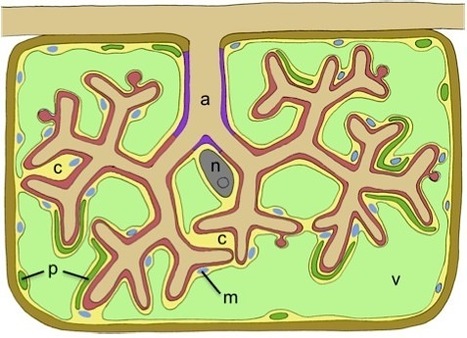
As sessile organisms that cannot evade adverse environmental conditions, plants have evolved various adaptive strategies to cope with environmental stresses. One of the most successful adaptations is the formation of symbiotic associations with beneficial microbes. In these mutualistic interactions the partners exchange essential nutrients and improve their resistance to biotic and abiotic stresses. In arbuscular mycorrhiza (AM) and in root nodule symbiosis (RNS), AM fungi and rhizobia, respectively, penetrate roots and accommodate within the cells of the plant host. In these endosymbiotic associations, both partners keep their plasma membranes intact and use them to control the bidirectional exchange of signaling molecules and nutrients. Intracellular accommodation requires the exchange of symbiotic signals and the reprogramming of both interacting partners. This involves fundamental changes at the level of gene expression and of the cytoskeleton, as well as of organelles such as plastids, endoplasmic reticulum (ER), and the central vacuole. Symbiotic cells are highly compartmentalized and have a complex membrane system specialized for the diverse functions in molecular communication and nutrient exchange. Here, we discuss the roles of the different cellular membrane systems and their symbiosis-related proteins in AM and RNS, and we review recent progress in the analysis of membrane proteins involved in endosymbiosis.
|
|
Scooped by
Kamoun Lab @ TSL
October 16, 2012 9:50 AM
|
Scoop.it!
Nature: A soybean cyst nematode resistance gene points to a new mechanism of plant resistance to pathogens (2012)

http://www.nature.com/nature/journal/vnfv/ncurrent/full/nature11651.html
Soybean (Glycine max (L.) Merr.) is an important crop that provides a sustainable source of protein and oil worldwide. Soybean cyst nematode (Heterodera glycines Ichinohe) is a microscopic roundworm that feeds on the roots of soybean and is a major constraint to soybean production. This nematode causes more than US$1 billion in yield losses annually in the United States alone1, making it the most economically important pathogen on soybean. Although planting of resistant cultivars forms the core management strategy for this pathogen, nothing is known about the nature of resistance. Moreover, the increase in virulent populations of this parasite on most known resistance sources necessitates the development of novel approaches for control. Here we report the map-based cloning of a gene at the Rhg4 (for resistance to Heterodera glycines 4) locus, a major quantitative trait locus contributing to resistance to this pathogen. Mutation analysis, gene silencing and transgenic complementation confirm that the gene confers resistance. The gene encodes a serine hydroxymethyltransferase, an enzyme that is ubiquitous in nature and structurally conserved across kingdoms. The enzyme is responsible for interconversion of serine and glycine and is essential for cellular one-carbon metabolism. Alleles of Rhg4 conferring resistance or susceptibility differ by two genetic polymorphisms that alter a key regulatory property of the enzyme. Our discovery reveals an unprecedented plant resistance mechanism against a pathogen. The mechanistic knowledge of the resistance gene can be readily exploited to improve nematode resistance of soybean, an increasingly important global crop.




