The phytotoxin coronatine (COR) promotes various aspects of Pseudomonas syringae virulence, including invasion through stomata, growth in the apoplast, and induction of disease symptoms. COR is a structural mimic of active jasmonic acid (JA) conjugates. Known activities of COR are mediated through its binding to the F-box–containing JA coreceptor CORONATINE INSENSITIVE1. By analyzing the interaction of P. syringae mutants with Arabidopsis thaliana mutants, we demonstrate that, in the apoplastic space of Arabidopsis, COR is a multifunctional defense suppressor. COR and the critical P. syringae type III effector HopM1 target distinct signaling steps to suppress callose deposition. In addition to its well-documented ability to suppress salicylic acid (SA) signaling, COR suppresses an SA-independent pathway contributing to callose deposition by reducing accumulation of an indole glucosinolate upstream of the activity of the PEN2 myrosinase. COR also suppresses callose deposition and promotes bacterial growth in coi1 mutant plants, indicating that COR may have multiple targets inside plant cells.
In plants, the trans-Golgi network and early endosomes (TGN/EE) function as the central junction for major endomembrane trafficking events, including endocytosis and secretion. Here, we demonstrate that the KEEP ON GOING (KEG) protein of Arabidopsis thaliana localizes to the TGN/EE and plays an essential role in multiple intracellular trafficking processes. Loss-of-function keg mutants exhibited severe defects in cell expansion, which correlated with defects in vacuole morphology. Confocal microscopy revealed that KEG is required for targeting of plasma membrane proteins to the vacuole. This targeting process appeared to be blocked at the step of multivesicular body (MVB) fusion with the vacuolar membrane as the MVB-associated small GTPase ARA6 was also blocked in vacuolar delivery. In addition, loss of KEG function blocked secretion of apoplastic defense proteins, indicating that KEG plays a role in plant immunity. Significantly, KEG was degraded specifically in cells infected by the fungus Golovinomyces cichoracearum, suggesting that this pathogen may target KEG to manipulate the host secretory system as a virulence strategy. Taking these results together, we conclude that KEG is a key component of TGN/EE that regulates multiple post-Golgi trafficking events in plants, including vacuole biogenesis, targeting of membrane-associated proteins to the vacuole, and secretion of apoplastic proteins.
Insect galls are dramatic examples of extended phenotypes: although composed of host plant tissues, their development is largely controlled by insect genes. Adaptive explanations for gall traits should thus be expressed in terms of impacts on insect fitness, but the extent to which interspecific variation in gall structure is adaptive, and the possible selective pressures driving diversification in gall form remain controversial. In colonial aphids and thrips, gall structures probably diversified in response to selection for enhancement of the surface area available for feeding. In other taxa, such as gall wasps and gall midges, diversity is expressed predominantly in non-nutritive tissues, particularly those on the gall surface. All natural enemies attack the occupants of closed galls by penetrating gall tissue, and modifications that reduce enemy attack rates should thus be favoured. Recent studies of intraspecific variation in gall form strongly support a defensive role for several traits, but, to date, there is little empirical support for enemies as a cause of interspecific variation in gall form. Selection imposed by enemies nevertheless remains the most probable adaptive explanation for the evolution of diversity. We suggest that this hypothesis has yet to be tested explicitly, and discuss the requirements for an appropriate cross-species analysis.
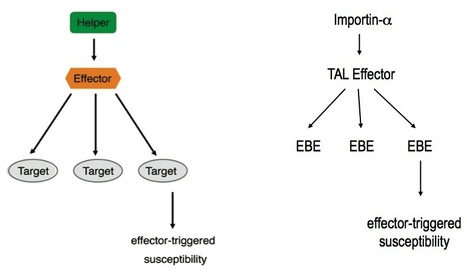
Every plant is closely associated with a variety of living organisms. Therefore, deciphering howplants interact with mutualistic and parasitic organisms is essential for a comprehensive understanding of the biology of plants. The field of plant–biotic interactions has recently coalesced around an integrated model. Major classes of molecular players both from plants and their associated organisms have been revealed. These include cell surface and intracellular immune receptors of plants, as well as apoplastic and host-cell translocated (cytoplasmic) effectors of the invading organism. This article focuses on effectors, molecules secreted by plant-associated organisms that alter plant processes. Effectors have emerged as a central class of molecules in our integrated view of plant–microbe interactions. Their study has significantly contributed to advancing our knowledge of plant hormones, plant development, plant receptors, and epigenetics. Many pathogen effectors are extraordinary examples of biological innovation; they include some of themost remarkable proteins knownto function inside plant cells. Here, we review some of the key concepts that have emerged from the study of the effectors of plant-associated organisms. In particular, we focus on how effectors function in plant tissues and discuss future perspectives in the field of effector biology.
Many trees operate with only a narrow margin of safety when it comes to their water supply, so many of the world's important forest species are vulnerable to hydraulic failure.
A warming climate creates summertime water stress for trees like these mountain pines in Montana, making them more vulnerable to attack by beetles. The gray trees above died several years ago.
Prior to 2007, late blight was not reported as a serious threat to tomato cultivation in India although the disease has been known on potato since 1953. During the July–December cropping season of 2009 and 2010, severe late blight epidemics were observed in Karnataka state of India, causing crop losses up to 100%. Nineteen Phytophthora isolates, recovered from late blight affected tomato tissues from different localities in Karnataka state between 2009 and 2010, were identified as Phytophthora infestans based on morphology, a similarity search of ITS sequences at GenBank and species-specific PCR using PINF/ITS5 primer pair. The isolates were further assessed for metalaxyl sensitivity, mating type, mitochondrial DNA (mtDNA) haplotype, DNA fingerprinting patterns based on simple sequence repeats (SSR) and RFLPs using the RG57 probe and aggressiveness on tomato. All isolates were metalaxyl resistant, A2 mating type, mtDNA haplotype Ia and had identical SSR and RG57 fingerprints and highly aggressive on tomato. The phenotypic and genotypic characters of isolates examined in this study were found to be similar to that of 13_A2 genotype of P. infestans population reported in Europe. Thus, appearance of new population similar to 13_A2 genotype was responsible for severe late blight epidemics on tomato in South-West India.
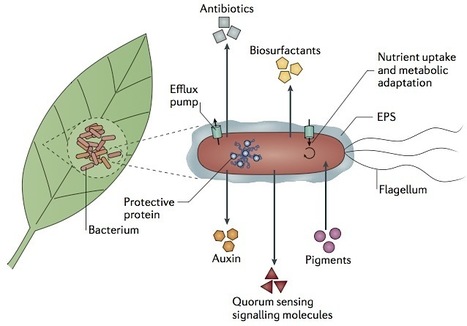
Our knowledge of the microbiology of the phyllosphere, or the aerial parts of plants, has historically lagged behind our knowledge of the microbiology of the rhizosphere, or the below-ground habitat of plants, particularly with respect to fundamental questions such as which microorganisms are present and what they do there. In recent years, however, this has begun to change. Cultivation-independent studies have revealed that a few bacterial phyla predominate in the phyllosphere of different plants and that plant factors are involved in shaping these phyllosphere communities, which feature specific adaptations and exhibit multipartite relationships both with host plants and among community members. Insights into the underlying structural principles of indigenous microbial phyllosphere populations will help us to develop a deeper understanding of the phyllosphere microbiota and will have applications in the promotion of plant growth and plant protection.
Wheat stem rust has two hosts, wheat and barberry. Barberry, the "alternate" host, is needed for the fungus to complete it sexual cycle and geneticly diversify. Without barberry, the fungus only reproduces vegetatively. Therefore, the presence of the alternate host is good for the fungus, but bad for wheat. Barberry eradication programs succeeded in eliminating most barberry plants from wheat growing regions, but continued monitoring is important. This video describes the contribution of barberry to the spread of stem rust, and shows how to identify barberry plants and examine them for the presence of the rust.
Phytopathogens and herbivores induce plant defences. Whereas there is evidence that some pathogens suppress these defences by interfering with signalling pathways involved in the defence, such evidence is scarce for herbivores. We found that the invasive spider mite Tetranychus evansi suppresses the induction of the salicylic acid and jasmonic acid signalling routes involved in induced plant defences in tomato. This was reflected in the levels of inducible defence compounds, such as proteinase inhibitors, which in mite-infested plants were reduced to even lower levels than the constitutive levels in herbivore-free plants. Additionally, the spider mite suppressed the release of inducible volatiles, which are implicated in plant defence. Consequently, the mites performed much better on previously attacked plants than on non-attacked plants. These findings provide a new perspective on plant–herbivore interactions, plant protection and plant resistance to invasive species.
Phytoplasmas are a group of bacteria that are capable of multiplying and causing severe diseases in a wide range of plant species and are transported between plants by insect vectors in which the bacteria can also multiply.
Includes cutting-edge methods and protocols Provides step-by-step detail essential for reproducible results Contains key notes and implementation advice from the experts
The primary role of Actin-Depolymerizing Factors (ADFs) is to sever filamentous actin, generating pointed ends, which in turn are incorporated into newly formed filaments, thus supporting stochastic actin dynamics. Arabidopsis ADF4 was recently shown to be required for the activation of resistance in Arabidopsis following infection with the phytopathogenic bacterium Pseudomonas syringae pv. tomato DC3000 (Pst) expressing the effector protein AvrPphB. Herein, we demonstrate that the expression of RPS5, the cognate resistance protein of AvrPphB, was dramatically reduced in the adf4 mutant, suggesting a link between actin cytoskeletal dynamics and the transcriptional regulation of R-protein activation. By examining the PTI (PAMP Triggered Immunity) response in the adf4 mutant when challenged with Pst expressing AvrPphB, we observed a significant reduction in the expression of the PTI-specific target gene FRK1 (Flg22-Induced Receptor Kinase 1). These data are in agreement with recent observations demonstrating a requirement for RPS5 in PTI-signaling in the presence of AvrPphB. Furthermore, MAPK (Mitogen-Activated Protein Kinase)-signaling was significantly reduced in the adf4 mutant, while no such reduction was observed in the rps5-1 point mutation under similar conditions. Isoelectric focusing confirmed phosphorylation of ADF4 at serine-6, and additional in planta analyses of ADF4's role in immune signaling demonstrates that nuclear localization is phosphorylation independent, while localization to the actin cytoskeleton is linked to ADF4 phosphorylation. Taken together, these data suggest a novel role for ADF4 in controlling gene-for-gene resistance activation, as well as MAPK-signaling, via the coordinated regulation of actin cytoskeletal dynamics and R-gene transcription.
AshTag is collating possible sightings by the public of the tree disease. Here are the latest findings, verified by its experts. Submit your sightings via the iPhone app, Android app, or online.
Although the functions of a few effector proteins produced by bacterial and oomycete plant pathogens have been elucidated in recent years, information for the vast majority of pathogen effectors is still lacking, particularly for those of plant-pathogenic fungi. Here, we show that the avirulence effector AvrPiz-t from the rice blast fungus Magnaporthe oryzae preferentially accumulates in the specialized structure called the biotrophic interfacial complex and is then translocated into rice (Oryza sativa) cells. Ectopic expression of AvrPiz-t in transgenic rice suppresses the flg22- and chitin-induced generation of reactive oxygen species (ROS) and enhances susceptibility to M. oryzae, indicating that AvrPiz-t functions to suppress pathogen-associated molecular pattern (PAMP)-triggered immunity in rice. Interaction assays show that AvrPiz-t suppresses the ubiquitin ligase activity of the rice RING E3 ubiquitin ligase APIP6 and that, in return, APIP6 ubiquitinates AvrPiz-t in vitro. Interestingly, agroinfection assays reveal that AvrPiz-t and AvrPiz-t Interacting Protein 6 (APIP6) are both degraded when coexpressed in Nicotiana benthamiana. Silencing of APIP6 in transgenic rice leads to a significant reduction of flg22-induced ROS generation, suppression of defense-related gene expression, and enhanced susceptibility of rice plants to M. oryzae. Taken together, our results reveal a mechanism in which a fungal effector targets the host ubiquitin proteasome system for the suppression of PAMP-triggered immunity in plants.
At least ten tree diseases and pests are now ‘epidemic’ in Britain, including ash dieback, according to a Government adviser.
Dr Joan Webber said there are now 10 tree diseases that are epidemic:
1) Dutch elm disease arrived in two waves in the 1920s and 1960s and destroyed most of the country’s elm trees. The second, more lethal pathogen, is still at large in the countryside killing off mature trees.
2) Alder phytophthora is killing alders along our riversides. Up to a quarter of alders are already infected by the disease or dead.
3) Red band needle blight or dothistroma needle blight is a significant threat to conifer plantations. It was first found in Corsican pine the 1950s in East Anglia but is now across the country and threatening the native Scots pine.
4) Sudden oak death or phytophthora ramorum is widespread across south-west England, Wales and south-west Scotland. Despite the name, it affects mostly Japanese larch trees. Already more than four million have been felled to try and stop the spread of the disease.
5) Bleeding canker is now found in half the country’s horse chestnut or conker trees, according to the Forestry Commission. It will weaken the tree until it dies or has to be felled for health and safety reasons.
6) Phytophthora lateralis threatens to wipe out Lawson cypress, a popular ornamental tree in many stately homes. It has killed trees in western Scotland, Yorkshire, the South West and Wales.
7) Phytophthora austrocedrae kills native juniper, a tree that conservationists are trying to re-establish after going extinct in many areas. The disease has killed juniper in the Lake District and Scotland.
8) Chestnut leaf miner is a moth that is now in most conker trees. Although it does not necessarily kill the tree it will weaken it and can kill in combination with bleeding canker. It also makes conkers smaller.
9) Phytophthora pseudosyringae kills the southern beech tree. Although the tree is not widespread in the UK it was hoped it could spread as the climate becomes warmer but is in danger of being wiped out by this disease.
10) Ash dieback, known as Chalara Fraxinea, is now in 222 sites around the UK. In other countries is has infected 90 per cent of ash trees and could wipe out a huge proportion of Britain’s 92 million ash trees.
Foraging, defense and waste disposal are essential for sustaining social insect colonies. Hence, their nest generally has an open structure, wherein specialized castes called workers and soldiers perform these tasks. However, some social aphids form completely closed galls, wherein hundreds to thousands of insects grow and reproduce for several months in isolation. Why these social aphids are not drowned by accumulated honeydew has been an enigma. Here we report a sophisticated biological solution to the waste problem in the closed system: the gall inner surface is specialized for absorbing water, whereby honeydew is promptly removed via the plant vascular system. The water-absorbing closed galls have evolved at least twice independently among social aphids. The plant-mediated waste removal, which entails insect’s manipulation of plant morphogenesis and physiology, comprises a previously unknown mechanism of nest cleaning, which can be regarded as ‘extended phenotype’ and ‘indirect social behavior’ of the social aphids.
Assortative mating resulting from host plant specialization has been proposed to facilitate rapid ecological divergence in biotrophic plant pathogens. Downy mildews, a major group of biotrophic oomycetes, are prime candidates for testing speciation by host plant specialization.
Here, we combined a phylogenetic and morphological approach with cross-pathogenicity tests to investigate host plant specialization and host range expansion in grapevine downy mildew. This destructive disease is caused by Plasmopara viticola, an oomycete endemic to North America on wild species and cultivated grapevines.
Multiple genealogies and sporangia morphology provide evidence that P. viticola is a complex of four cryptic species, each associated with different host plants. Cross-inoculation experiments showed complete host plant specialization on Parthenocissus quinquefolia and on Vitis riparia, whereas cryptic species found on V. aestivalis, V. labrusca and V. vinifera were revealed to be less specific. We reconstructed the recent host range expansion of P. viticola from wild to cultivated grapevines, and showed that it was accompanied by an increase in aggressiveness of the pathogen.
This case study on grapevine downy mildew illustrates how biotrophic plant pathogens can diversify by host plant specialization and emerge in agrosystems by shifting to cultivated hosts. These results might have important implications for viticulture, including breeding for resistance and disease management.
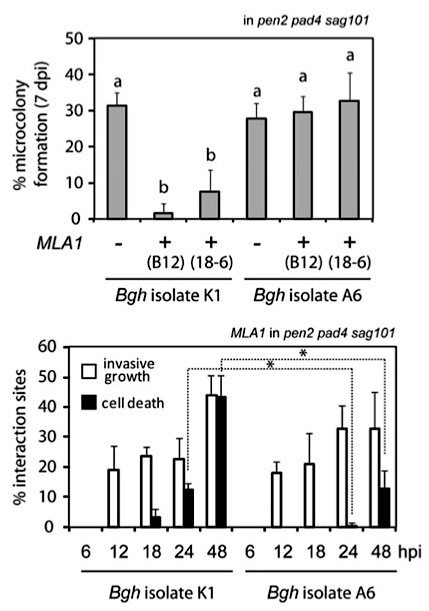
The nucleotide-binding domain and leucine-rich repeat (NLR) family of plant receptors detects pathogen-derived molecules, designated effectors, inside host cells and mediates innate immune responses to pathogenic invaders. Genetic evidence revealed species-specific coevolution of many NLRs with effectors from host-adapted pathogens, suggesting that the specificity of these NLRs is restricted to the host or closely related plant species. However, we report that an NLR immune receptor (MLA1) from monocotyledonous barley is fully functional in partially immunocompromised dicotyledonous Arabidopsis thaliana against the barley powdery mildew fungus, Blumeria graminis f. sp. hordei. This implies ∼200 million years of evolutionary conservation of the underlying immune mechanism. A time-course RNA-seq analysis in transgenic Arabidopsis lines detected sustained expression of a large MLA1-dependent gene cluster. This cluster is greatly enriched in genes known to respond to the fungal cell wall-derived microbe-associated molecular pattern chitin. The MLA1-dependent sustained transcript accumulation could define a conserved function of the nuclear pool of MLA1 detected in barley and Arabidopsis. We also found that MLA1-triggered immunity was fully retained in mutant plants that are simultaneously depleted of ethylene, jasmonic acid, and salicylic acid signaling. This points to the existence of an evolutionarily conserved and phytohormone-independent MLA1-mediated resistance mechanism. This also suggests a conserved mechanism for internalization of B. graminis f. sp. hordei effectors into host cells of flowering plants. Furthermore, the deduced connectivity of the NLR to multiple branches of immune signaling pathways likely confers increased robustness against pathogen effector-mediated interception of host immune signaling and could have contributed to the evolutionary preservation of the immune mechanism.
The population structure of Phytophthora infestans in China was studied and three mitochondrial haplotypes (Ia, IIa, IIb) were observed. Genetic analysis with 10 highly informative SSR markers identified 68 different genotypes, including three dominant clonal lineages. In the Chinese P. infestans population, the genotypes were strongly clustered according to their geographic origin. One of dominant clonal lineages was genetically similar to Blue_13, a dominant clonal lineage found in Europe since 2004. This is the first report of Blue_13 outside Europe. Only one mating type (A1) was found in the northern and southeastern provinces, but in southern and northwestern China both mating types were observed. The mating type ratio and SSR allele frequencies indicate that in China the sexual cycle of P. infestans is rare. These results emphasize that the migration of asexual propagules and the generation of subclonal variation are the dominant driving factors of the population structure of P. infestans in China. They may also have implications for the role of monitoring P. infestans populations in potato late blight management strategies in China.
The activity of surface receptors is location specific, dependent upon the dynamic membrane trafficking network and receptor-mediated endocytosis (RME). Therefore, the spatio-temporal dynamics of RME are critical to receptor function. The plasma membrane receptor FLAGELLIN SENSING2 (FLS2) confers immunity against bacterial infection through perception of flagellin (flg22). Following elicitation, FLS2 is internalized into vesicles. To resolve FLS2 trafficking, we exploited quantitative confocal imaging for colocalization studies and chemical interference. FLS2 localizes to bona fide endosomes via two distinct endocytic trafficking routes depending on its activation status. FLS2 receptors constitutively recycle in a Brefeldin A (BFA)–sensitive manner, while flg22-activated receptors traffic via ARA7/Rab F2b– and ARA6/Rab F1–positive endosomes insensitive to BFA. FLS2 endocytosis required a functional Rab5 GTPase pathway as revealed by dominant-negative ARA7/Rab F2b. Flg22-induced FLS2 endosomal numbers were increased by Concanamycin A treatment but reduced by Wortmannin, indicating that activated FLS2 receptors are targeted to late endosomes. RME inhibitors Tyrphostin A23 and Endosidin 1 altered but did not block induced FLS2 endocytosis. Additional inhibitor studies imply the involvement of the actin-myosin system in FLS2 internalization and trafficking. Altogether, we report a dynamic pattern of subcellular trafficking for FLS2 and reveal a defined framework for ligand-dependent endocytosis of this receptor.
Plant pathogens are perceived by pattern recognition receptors, which are activated upon binding to pathogen-associated molecular patterns (PAMPs). Ubiquitination and vesicle trafficking have been linked to the regulation of immune signaling. However, little information exists about components of vesicle trafficking involved in immune signaling and the mechanisms that regulate them. In this study, we identified Arabidopsis thaliana Exo70B2, a subunit of the exocyst complex that mediates vesicle tethering during exocytosis, as a target of the plant U-box–type ubiquitin ligase 22 (PUB22), which acts in concert with PUB23 and PUB24 as a negative regulator of PAMP-triggered responses. We show that Exo70B2 is required for both immediate and later responses triggered by all tested PAMPs, suggestive of a role in signaling. Exo70B2 is also necessary for the immune response against different pathogens. Our data demonstrate that PUB22 mediates the ubiquitination and degradation of Exo70B2 via the 26S Proteasome. Furthermore, degradation is regulated by the autocatalytic turnover of PUB22, which is stabilized upon PAMP perception. We therefore propose a mechanism by which PUB22-mediated degradation of Exo70B2 contributes to the attenuation of PAMP-induced signaling.
Although bacterial endosymbioses are common among phloeophagous herbivores, little is known regarding the effects of symbionts on herbivore host selection and population dynamics. We tested the hypothesis that plant selection and reproductive performance by a phloem-feeding herbivore (potato psyllid, Bactericera cockerelli) is mediated by infection of plants with a bacterial endosymbiont. We controlled for the effects of herbivory and endosymbiont infection by exposing potato plants (Solanum tuberosum) to psyllids infected with “Candidatus Liberibacter solanacearum” or to uninfected psyllids. We used these treatments as a basis to experimentally test plant volatile emissions, herbivore settling and oviposition preferences, and herbivore population growth. Three important findings emerged: (1) plant volatile profiles differed with respect to both herbivory and herbivory plus endosymbiont infection when compared to undamaged control plants; (2) herbivores initially settled on plants exposed to endosymbiont-infected psyllids but later defected and oviposited primarily on plants exposed only to uninfected psyllids; and (3) plant infection status had little effect on herbivore reproduction, though plant flowering was associated with a 39% reduction in herbivore density on average. Our experiments support the hypothesis that plant infection with endosymbionts alters plant volatile profiles, and infected plants initially recruited herbivores but later repelled them. Also, our findings suggest that the endosymbiont may not place negative selection pressure on its host herbivore in this system, but plant flowering phenology appears correlated with psyllid population performance.
In recent years, multipronged research efforts have brought a new level of understanding about this pathogen's complex biology and disease mechanisms, leading to better management strategies. The key papers presented below, published in Phytopathology, Plant Disease, and Molecular Plant-Microbe Interactions, tell a story of progress. Free access is available to these papers for a limited time.
"Weeding the Gems" (http://blog.garnetcommunity.org.uk/) is a new community blog from GARNet that posts summaries of papers, events and items of general interest to the plant biology community.
Their latest two posts look at the fungal pathogen Botrytis cinerea. The first is an overview of a paper from The Plant Cell that looks at high resolution transcriptional responses of Arabidopsis to Botrytis (http://dx.doi.org/10.1105/tpc.112.102046).
They follow up with a fun post of a time-lapse video showing what Botrytis does to a strawberry, and a video about how the wine industry sometimes benefits from Botrytis infection - yummy
To get content containing either thought or leadership enter:
To get content containing both thought and leadership enter:
To get content containing the expression thought leadership enter:
You can enter several keywords and you can refine them whenever you want. Our suggestion engine uses more signals but entering a few keywords here will rapidly give you great content to curate.


 Your new post is loading...