Your new post is loading...

|
Scooped by
Kamoun Lab @ TSL
August 6, 2013 5:07 AM
|
Plants are integral to human wellbeing, and many species have been domesticated for over ten thousand years. Evidence of plant scientific investigation and classification can be found in ancient texts from cultures around the world (Chinese, Indian, Greco-Roman, Muslim etc.), while early modern botany can be traced to the late 15th and early 16th centuries in Europe. During the past several decades plant biology has been revolutionized first by molecular biology and then by the genomic era. The model organism Arabidopsis thaliana has proved an invaluable tool for investigation into fundamental processes in plant biology, many of which share commonalities with animal biology. Plant-specific processes from reproduction to immunity and second messengers have also yielded to extensive investigation. With the genomes of more than thirty plant species now available and many more planned in the near future, the impact on our understanding of plant evolution and biology continues to grow. Our increased ability to engineer plant species to a variety of ends may provide novel solutions to ensure adequate and reliable food production and renewable energy even as climate change impacts our environment. The decision to focus the 2012 Symposium on plant science reflects the enormous research progress achieved in recent years, and is intended to provide a broad synthesis of the current state of the field, setting the stage for future discoveries and application. This is the first Symposium in this historic series focused exclusively on the botanical sciences.
|
|
Scooped by
Kamoun Lab @ TSL
August 5, 2013 5:41 AM
|
The plant’s innate immune system detects potential biotic threats through recognition of microbe-associated molecular patterns (MAMPs), or danger-associated molecular patterns (DAMPs), by pattern recognition receptors (PRRs). A central regulator of pattern-triggered immunity (PTI) is the BRI1 associated kinase 1 (BAK1) which undergoes complex formation with PRRs upon ligand binding. Although viral patterns inducing PTI are well known from animal systems, nothing similar has been reported for plants. Antiviral defense in plants is rather thought to be mediated by posttranscriptional gene silencing of viral RNA, or through effector-triggered immunity, i.e. recognition of virus-specific "effectors" by resistance proteins. Nevertheless, infection by compatible viruses can also lead to the induction of defense gene expression, indicating that plants may also recognize viruses through PTI. Here we show that PTI, or at least the presence of the regulator BAK1, is important for antiviral defense of Arabidopsis plants. Arabidopsis bak1 mutants show increased susceptibility to three different RNA viruses during compatible interactions. Furthermore, crude viral extracts, but not purified virions, induce several PTI marker responses in a BAK1-dependent manner. Overall, we conclude that BAK1-dependent PTI contributes to antiviral resistance in plants.
|
|
Scooped by
Kamoun Lab @ TSL
August 2, 2013 5:50 AM
|
Our understanding of the forms, functions, and movement of RNA continues to expand. Not only can RNA control gene expression by multiple mechanisms within a cell, it appears to travel outside the cell within an organism as well. This raises the interesting question of whether the RNA world extends beyond the boundaries of the organism. Can RNA traffic integrate an organism into its environment—is there “social RNA”? Examining the mechanism of RNA interference (RNAi) may be a good route for seeking the answer.
|
|
Scooped by
Kamoun Lab @ TSL
July 30, 2013 11:21 AM
|
History tells us that plant diseases cause famines, pestilence and war. Now one is coming for our chocolate - A few degrees north of the equator, in the hot, humid rainforests of Ghana, two groups of farmers are vying for dominance over the world’s most productive chocolate-growing region. Chocolate is made from cocoa beans found in the large, rugby-ball-shaped pods of cocoa trees. People have been planting these trees in Ghana since the late 19th century and the crop is a mainstay of the country’s economy. But the trees have recently proved an inviting target for a wily group of rival agriculturalists, whose practices threaten the long-term survival of cocoa in Ghana. The trouble is, these competitors aren’t humans. They’re ants. Ants have been farming for millions of years longer than humans. These particular ants herd mealybugs — small, sap-sucking insects that look like woodlice dipped in flour. The ants shepherd and protect the mealybugs so they can ‘milk’ the sugary nutritious fluids in their waste. The bugs used to drink primarily from local rainforest trees, but when humans started clearing the forest to make way for cocoa, the ants adapted, by driving their livestock into the fresh cocoa pastures. This strategy shift entangled the cocoa trees in a web of pests and pestilence. When mealybugs drink from trees, they inject them with a pathogen called cacao swollen shoot virus (CSSV). In local rainforest trees, the effects of CSSV are mild, but cocoa — a newcomer to these forests — hasn’t had a chance to evolve countermeasures. As a result, the virus pummels the trees, swelling their shoots and roots well beyond their usual size while draining the colour from their leaves. Before long, often only a few years, the trees die. The trees’ woes don’t end there, for these ants are builders as well as farmers. They strip cocoa pods to build tents for themselves and their mealybugs, protecting them from predators and pesticides. But the pods don’t have to be fresh. The ants are happy to harvest building materials from pods that have blackened with rot, thanks to two funguslike parasites — Phytophthora megakarya and Phytophthora palmivora. As they do so, they move spores from the parasites into uninfected trees, spreading black-pod disease in their wake. These parasites and viruses make for a dangerous mix. Just as HIV makes humans more susceptible to other infections, CSSV reduces pressure inside a tree, making it easier for Phytophthora to infiltrate its tissues and create a permanent reservoir of infection. Even when the diseased pods are cleared and the ants and bugs are removed,Phytophthora can still trigger fresh bouts of black pod from within the tree.
|
|
Scooped by
Kamoun Lab @ TSL
July 29, 2013 10:53 AM
|
The bacterial flagellin (FliC) epitopes flg22 and flgII-28 are microbe-associated molecular patterns (MAMPs). Although flg22 is recognized by many plant species via the pattern recognition receptor FLS2, neither the flgII-28 receptor nor the extent of flgII-28 recognition by different plant families is known.Here, we tested the significance of flgII-28 as a MAMP and the importance of allelic diversity in flg22 and flgII-28 in plant–pathogen interactions using purified peptides and a Pseudomonas syringae ∆fliC mutant complemented with different fliC alleles.The plant genotype and allelic diversity in flg22 and flgII-28 were found to significantly affect the plant immune response, but not bacterial motility. The recognition of flgII-28 is restricted to a number of solanaceous species. Although the flgII-28 peptide does not trigger any immune response in Arabidopsis, mutations in both flg22 and flgII-28 have FLS2-dependent effects on virulence. However, the expression of a tomato allele of FLS2 does not confer to Nicotiana benthamiana the ability to detect flgII-28, and tomato plants silenced for FLS2 are not altered in flgII-28 recognition.Therefore, MAMP diversification is an effective pathogen virulence strategy, and flgII-28 appears to be perceived by an as yet unidentified receptor in the Solanaceae, although it has an FLS2-dependent virulence effect in Arabidopsis.
|
|
Scooped by
Kamoun Lab @ TSL
July 29, 2013 7:49 AM
|
The first putative prokaryotic Cys2His2 zinc-finger domain has been identified in the transcriptional regulator Ros from Agrobacterium tumefaciens, indicating that the Cys2His2 zinc-finger domain, originally thought to be confined to the eukaryotic kingdom, could be widespread throughout the living kingdom from eukaryotic, both animal and plant, to prokaryotic. In this article we report the NMR solution structure of Ros DNA-binding domain (Ros87), providing 79 structural characterization of a prokaryotic Cys2His2 zinc-finger domain. The NMR structure of Ros87 shows that the putative prokaryotic Cys2His2 zinc-finger sequence is indeed part of a significantly larger zinc-binding globular domain that possesses a novel protein fold very different from the classical fold reported for the eukaryotic classical zinc-finger. The Ros87 globular domain consists of 58 aa (residues 9–66), is arranged in a βββαα topology, and is stabilized by an extensive 15-residue hydrophobic core. A backbone dynamics study of Ros87, based on 15N R1, 15N R2, and heteronuclear 15N-{1H}-NOE measurements, has further confirmed that the globular domain is uniformly rigid and flanked by two flexible tails. Mapping of the amino acids necessary for the DNA binding onto Ros87 structure reveals the protein surface involved in the DNA recognition mechanism of this new zinc-binding protein domain.
|
|
Scooped by
Kamoun Lab @ TSL
July 26, 2013 6:45 AM
|
Breeding lettuce (Lactuca sativa) for resistance to the downy mildew Bremia lactucae is mainly achieved by introgression of dominant Dm resistance genes. New Bremia races quickly render Dm genes ineffective, possibly by mutation of recognized host-translocated effectors or by suppression of effector-triggered immunity. We have previously identified 34 potential RXLR(-like) effector proteins of Bremia that were here tested for specific recognition within a collection of 129 Bremia-resistant Lactuca lines. Two effectors triggered a hypersensitive response; BLG01 in 52 lines, predominantly L. saligna, and BLG03 in two L. sativa lines containing Dm2 resistance. The N-terminal sequences of BLG01 and BLG03, containing the signal peptide and GKLR variant of the RXLR translocation motif, are not required for in planta recognition, but function in effector delivery. The locus responsible for BLG01 recognition maps to the bottom of lettuce chromosome 9, whereas recognition of BLG03 maps in the RGC2 cluster on chromosome 2. Lactuca lines that recognize the BLG effectors are not resistant to Bremia isolate Bl:24 that expresses both BLG genes, suggesting Bl:24 can suppress the triggered immune responses. In contrast, lettuce segregants displaying Dm2-mediated resistance to Bremia isolate Bl:5 are responsive to BLG03, suggesting that BLG03 is a candidate Avr2 protein.
|
|
Scooped by
Kamoun Lab @ TSL
July 23, 2013 3:21 PM
|
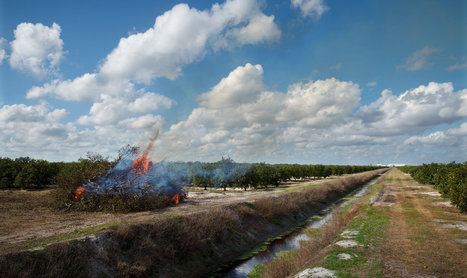
In October 2014, organic regulations in the United States are set to change drastically in the fight against fire blight, a contagious disease that affects apple and pear trees. A regulatory ban established by the National Organic Standards Board will take effect against the antibiotic oxytetracycline to treat the potentially devastating disease. Although the government restriction keeps consumer interests in mind, concern is growing among organic producers about alternative treatment options. Jessica Shade, director of science programs at the Organic Center, explained that organic farmers may not yet have the tools or knowledge necessary to drop oxytetracycline. “It’s one of the only things that has really been proven to prevent fire blight. It’s not the only material out there but it’s the one farmers trust the most,” Shade said. “When farmers are handling trees that they’ve invested thousands of dollars in, they really want to have something they know for sure is going to work when the lives of their trees are at stake. That’s why it has been so widely used up until this point.” Concern about the pending ban does not, however, stem solely from the fact that farmers currently prefer the agent. As Shade explained, the problem is that many do not know what to do without it. “One of the researchers who’s working on this project, David Granatstein, did polls throughout Washington State of organic growers and came up with some really frightening numbers that 70-90% of all organic producers might drop out of organic production if there aren’t alternatives available for them,” Shade said. “It’s not worth it for them to gamble their really expensive trees on organic practices that may put the lives of their trees at risk.”
|
|
Rescooped by
Kamoun Lab @ TSL
from Botany teaching & cetera
July 21, 2013 5:12 AM
|
The cellulose binding elicitor lectin (CBEL) of the genus Phytophthora induces necrosis and immune responses in several plant species, including Arabidopsis thaliana. However, the role of CBEL-induced responses in the outcome of the interaction is still unclear. This study shows that some of CBEL-induced defence responses, but not necrosis, required the receptor-like kinase BAK1, a general regulator of basal immunity in Arabidopsis, and the production of a reactive oxygen burst mediated by respiratory burst oxidases homologues (RBOH). Screening of a core collection of 48 Arabidopsis ecotypes using CBEL uncovered a large variability in CBEL-induced necrotic responses. Analysis of non-responsive CBEL lines Ws-4, Oy-0, and Bla-1 revealed that Ws-4 and Oy-0 were also impaired in the production of the oxidative burst and expression of defence genes, whereas Bla-1 was partially affected in these responses. Infection tests using two Phytophthora parasitica strains, Pp310 and Ppn0, virulent and avirulent, respectively, on the Col-0 line showed that BAK1 and RBOH mutants were susceptible to Ppn0, suggesting that some immune responses controlled by these genes, but not CBEL-induced cell death, are required for Phytophthora parasitica resistance. However, Ws-4, Oy-0, and Bla-1 lines were not affected in Ppn0 resistance, showing that natural variability in CBEL responsiveness is not correlated to Phytophthora susceptibility. Overall, the results uncover a BAK1- and RBOH-dependent CBEL-triggered immunity essential for Phytophthora resistance and suggest that natural quantitative variation of basal immunity triggered by conserved general elicitors such as CBEL does not correlate to Phytophthora susceptibility.
Via Nicolas Denancé
|
|
Scooped by
Kamoun Lab @ TSL
July 12, 2013 9:12 AM
|
Foraging for evidence of a fungal disease that threatens the nation’s ash trees has inspired a group of A-level students to bridge the worlds of art and science.
|
|
Rescooped by
Kamoun Lab @ TSL
from Trends in MPMI
July 9, 2013 2:35 AM
|
As part of their immune system, plants have pattern recognition receptors (PRRs) that can detect a broad range of microbe-associated molecular patterns (MAMPs). Here, we identified a PRR of Arabidopsis thaliana with specificity for the bacterialMAMP eMax from xanthomonads. Response to eMax seems to be restricted to theBrassicaceae family and also varied among different accessions of Arabidopsis. In crosses between sensitive accessions and the insensitive accession Shakhdara, eMax perception mapped to RECEPTOR-LIKE PROTEIN1 (RLP1). Functional complementation of rlp1 mutants required gene constructs that code for a longer version of RLP1 that we termed ReMAX (for receptor of eMax). ReMAX/RLP1 is a typical RLP with structural similarity to the tomato (Solanum lycopersicum) RLP Eix2, which detects fungal xylanase as a MAMP. Attempts to demonstrate receptor function by interfamily transfer of ReMAX to Nicotiana benthamiana were successful after using hybrid receptors with the C-terminal part of ReMAX replaced by that of Eix2. These results show that ReMAX determines specificity for eMax. They also demonstrate hybrid receptor technology as a promising tool to overcome problems that impede interfamily transfer of PRRs to enhance pathogen detection in crop plants.
Via Suayib Üstün, CP
|
|
|
Scooped by
Kamoun Lab @ TSL
August 6, 2013 4:05 AM
|
While host immune receptors detect pathogen-associated molecular patterns to activate immunity, pathogens attempt to deregulate host immunity through secreted effectors. Fungi employ LysM effectors to prevent recognition of cell wall-derived chitin by host immune receptors, although the mechanism to compete for chitin binding remained unclear. Structural analysis of the LysM effector Ecp6 of the fungal tomato pathogen Cladosporium fulvum reveals a novel mechanism for chitin binding, mediated by intrachain LysM dimerization, leading to a chitin-binding groove that is deeply buried in the effector protein. This composite binding site involves two of the three LysMs of Ecp6 and mediates chitin binding with ultra-high (pM) affinity. Intriguingly, the remaining singular LysM domain of Ecp6 binds chitin with low micromolar affinity but can nevertheless still perturb chitin-triggered immunity. Conceivably, the perturbation by this LysM domain is not established through chitin sequestration but possibly through interference with the host immune receptor complex.
|
|
Scooped by
Kamoun Lab @ TSL
August 4, 2013 1:15 PM
|
Host ranges are commonly quantified to classify herbivores and plant pathogens as either generalists or specialists. Here, we summarize patterns and mechanisms in the interactions of plants with these enemies along different axes of specificity. We highlight the many dimensions within which plant enemies can specify and consider the underlying ecological, evolutionary and molecular mechanisms. Host resistance traits and enemy effectors emerge as central players determining host utilization and thus host range. Finally, we review approaches to studying the causes and consequences of variation in the specificity of plant–enemy interactions. Knowledge of the molecular mechanisms that determine host range is required to understand host shifts, and evolutionary transitions among specialist and generalist strategies, and to predict potential host ranges of pathogens and herbivores.
|
|
Scooped by
Kamoun Lab @ TSL
July 30, 2013 4:23 PM
|
Tree health authorities are appealing to the public to be on the alert during August and September for two species of beetle which could damage a wide range of trees and shrubs if they became established in the United Kingdom. Eradication action taken against an outbreak of Asian longhorn beetles with the co-operation of local landowners in Kent last year appears to have been successful. Further monitoring will be carried out in the area over the next three years to confirm this, or deal with any remaining beetles. The earlier an outbreak is detected, the greater are the chances of a successful response, and the smaller the area over which host trees must be removed to achieve eradication. The call comes as part of wide-ranging efforts to step up the UK's defences against tree pests and diseases. Government is taking a range of measures, and action is already under way to implement two of the recommendations in the recent report of an independent Tree Health and Plant Biosecurity Expert Taskforce: a prioritised risk register and improved preparedness for dealing with outbreaks. Work done so far on the risk register has confirmed that Asian longhorn beetle (ALB) and its close relative citrus longhorn beetle (CLB) represent a major threat, and that imported wooden packing material is a key potential pathway for these and some other tree pests.
|
|
Scooped by
Kamoun Lab @ TSL
July 30, 2013 3:33 AM
|
First list of confirmed Plenary and Concurrent Session speakers released
|
|
Scooped by
Kamoun Lab @ TSL
July 29, 2013 7:57 AM
|
The ros chromosomal gene is present in octopine and nopaline strains of Agrobacterium tumefaciens as well as in Rhizobium meliloti. This gene encodes a 15.5-kDa protein that specifically represses the virC and virD operons in the virulence region of the Ti plasmid. The ros gene was cloned from a genomic bank by electroporation and complementation in Agrobacterium cells. Reporter fusion to the ros gene indicates that the level of transcription is controlled in part by autoregulation. A consensus inverted repeat sequence present in the ros promoter and in the virC and virD promoters of pTiC58, pTiA6, and pRiA4b suggests that a specific Ros binding site exists in these promoters. In the virC and virD promoter region, this binding site is within a cluster of vir box consensus sequences in which the VirG protein binds. This suggests possible binding competition between Ros and VirG at the virC and virD promoters. That the Ros protein binds DNA is suggested by the presence of a 'zinc finger' consensus sequence in the protein.
|
|
Scooped by
Kamoun Lab @ TSL
July 28, 2013 4:58 AM
|
CLEWISTON, Fla. — The call Ricke Kress and every other citrus grower in Florida dreaded came while he was driving. “It’s here” was all his grove manager needed to say to force him over to the side of the road. The disease that sours oranges and leaves them half green, already ravaging citrus crops across the world, had reached the state’s storied groves. Mr. Kress, the president of Southern Gardens Citrus, in charge of two and a half million orange trees and a factory that squeezes juice for Tropicana and Florida’s Natural, sat in silence for several long moments. “O.K.,” he said finally on that fall day in 2005, “let’s make a plan.” In the years that followed, he and the 8,000 other Florida growers who supply most of the nation’s orange juice poured everything they had into fighting the disease they call citrus greening. To slow the spread of the bacterium that causes the scourge, they chopped down hundreds of thousands of infected trees and sprayed an expanding array of pesticides on the winged insect that carries it. But the contagion could not be contained. They scoured Central Florida’s half-million acres of emerald groves and sent search parties around the world to find a naturally immune tree that could serve as a new progenitor for a crop that has thrived in the state since its arrival, it is said, with Ponce de León. But such a tree did not exist. “In all of cultivated citrus, there is no evidence of immunity,” the plant pathologist heading a National Research Council task force on the disease said. In all of citrus, but perhaps not in all of nature. With a precipitous decline in Florida’s harvest predicted within the decade, the only chance left to save it, Mr. Kress believed, was one that his industry and others had long avoided for fear of consumer rejection. They would have to alter the orange’s DNA — with a gene from a different species.
|
|
Scooped by
Kamoun Lab @ TSL
July 25, 2013 6:01 PM
|
To further its pathogenesis, S. Typhimurium delivers effector proteins into host cells, including the novel E3 ubiquitin ligase (NEL) effector SspH2. Using model systems in a cross-kingdom approach we gained further insight into the molecular function of this effector. Here, we show that SspH2 modulates innate immunity in both mammalian and plant cells. In mammalian cell culture, SspH2 significantly enhanced Nod1-mediated IL-8 secretion when transiently expressed or bacterially delivered. In addition, SspH2 also enhanced an Rx-dependent hypersensitive response in planta. In both of these nucleotide-binding leucine rich repeat receptor (NLR) model systems, SspH2-mediated phenotypes required its catalytic E3 ubiquitin ligase activity and interaction with the conserved host protein SGT1. SGT1 has an essential cell cycle function and an additional function as an NLR co-chaperone in animal and plant cells. Interaction between SspH2 and SGT1 was restricted to SGT1 proteins that have NLR co-chaperone function and accordingly, SspH2 did not affect SGT1 cell cycle functions. Mechanistic studies revealed that SspH2 interacted with, and ubiquitinated Nod1 and could induce Nod1 activity in an agonist-independent manner if catalytically active. Interestingly, SspH2 in vitro ubiquitination activity and protein stability were enhanced by SGT1. Overall, this work adds to our understanding of the sophisticated mechanisms used by bacterial effectors to co-opt host pathways by demonstrating that SspH2 can subvert immune responses by selectively exploiting the functions of a conserved host co-chaperone.
|
|
Rescooped by
Kamoun Lab @ TSL
from Plant-Microbe Symbiosis
July 24, 2013 6:30 AM
|
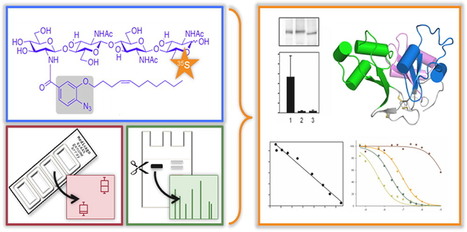
While chitooligosaccharides (COs) derived from fungal chitin are potent elicitors of defense reactions, structurally related signals produced by certain bacteria and fungi, called lipo-chitooligosaccharides (LCOs), play important roles in the establishment of symbioses with plants. Understanding how plants distinguish between friend and foe through the perception of these signals is a major challenge. We report the synthesis of a range of COs and LCOs, including photoactivatable probes, to characterize a membrane protein from the legumeMedicago truncatula. By coupling photoaffinity labeling experiments with proteomics and transcriptomics, we identified the likely LCO-binding protein as LYR3, a lysin motif receptor-like kinase (LysM-RLK). LYR3, expressed heterologously, exhibits high-affinity binding to LCOs but not COs. Homology modeling, based on the Arabidopsis CO-binding LysM-RLK AtCERK1, suggests that LYR3 could accommodate the LCO in a conserved binding site. The identification of LYR3 opens up ways for the molecular characterization of LCO/CO discrimination.
Via Jean-Michel Ané
|
|
Scooped by
Kamoun Lab @ TSL
July 22, 2013 5:46 AM
|
Necrotrophs are plant pathogens that kill host cells and proliferate on nutrients from dead or dying tissues causing devastating diseases of horticultural and agronomic crops. Their interactions with plants involve a complex network of pathogen disease factors and corresponding plant immune response regulators. Mechanisms of quantitative resistance and the major regulators intersect regardless of pathogen life style. By contrast, some plant immune responses, such as effector-triggered immunity (ETI), a major source of qualitative resistance to biotrophs, are co-opted by necrotrophs to promote disease, which highlights the disparate plant immunity systems. Advances towards understanding mechanisms and processes underlying host responses to necrotrophs are summarized.
|
|
Scooped by
Kamoun Lab @ TSL
July 19, 2013 4:45 AM
|
In contrast to many mammalian pathogens, potential bacterial pathogens of plants remain outside the host cell. The plant must, therefore, promote an active resistance mechanism to combat the extracellular infection. How this resistance against bacteria is manifested and whether similar processes mediate basal, gene-for-gene, and salicylate-associated defense, however, are poorly understood. Here, we identify a specific plasma membrane syntaxin, NbSYP132, as a component contributing to gene-for-gene resistance in Nicotiana benthamiana. Silencing NbSYP132 but not NbSYP121, the apparent orthologue of a syntaxin required for resistance to powdery mildew fungus, compromised AvrPto-Pto resistance. Because syntaxins may play a role in secretion of proteins to the extracellular space, we performed a limited proteomic analysis of the apoplastic fluid. We found that NbSYP132-silenced plants were impaired in the accumulation of at least a subset of pathogenesis-related (PR) proteins in the cell wall. These results were confirmed by both immunoblot analysis and imunolocalization of a PR protein, PR1a. These results implicate NbSYP132 as the cognate target soluble N-ethylmaleimide-sensitive factor attachment protein receptor for exocytosis of vesicles containing antimicrobial PR proteins. NbSYP132 also contributes to basal and salicylate-associated defense, indicating that SYP132-dependent secretion is a component of multiple forms of defense against bacterial pathogens in plants.
|
|
Scooped by
Kamoun Lab @ TSL
July 12, 2013 11:58 AM
|
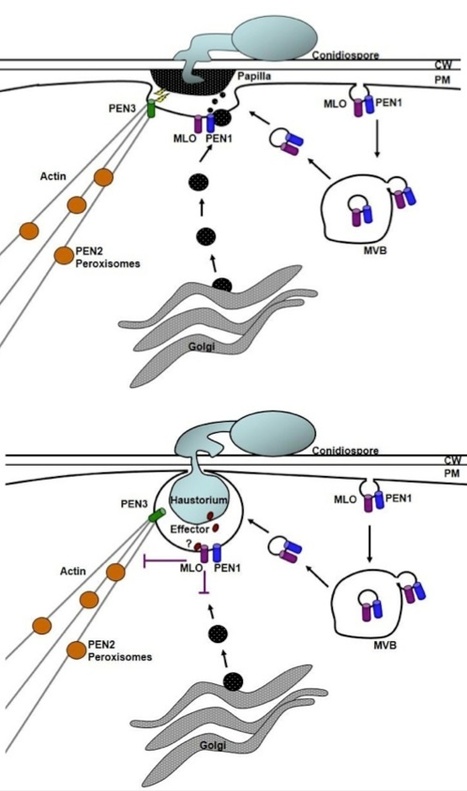
Challenge by a non-adapted powdery mildew fungal pathogen leads to the formation of a local cell wall apposition (papilla) beneath the point of attempted penetration. Several plasma-membrane (PM) proteins with opposing roles in powdery mildew infection, including Arabidopsis thaliana PEN1 and barley (Hordeum vulgare) MLO, are localised to the site of powdery mildew attack. PEN1 contributes to penetration resistance to non-adapted powdery mildews, whereas MLO is a susceptibility factor required by adapted powdery mildew pathogens for host cell entry. Our previous studies have demonstrated that the vesicle and endosomal trafficking inhibitors, brefeldin A (BFA) and wortmannin (WM), have opposite effects on the penetration rates of adapted and non-adapted powdery mildews on grapevine. These findings prompted us to study the pathogen-induced intracellular trafficking of grapevine variants of MLO and PEN1. We first identified grapevine (Vitis vinifera) VvPEN1 and VvMLO orthologs that rescue Arabidopsis Atpen1 and Atmlo2 mlo6 mlo12 null mutants respectively. By using endomembrane trafficking inhibitors in combination with fluorescence microscopy, we demonstrate that VvMLO3/ VvMLO4 and VvPEN1 are co-trafficked together from the PM to the site of powdery mildew challenge. This focal accumulation of VvMLO3/VvMLO4 and VvPEN1 to the site of attack seems to be required for their opposing functions during powdery mildew attack, as their subcellular localisation is correlated with the outcome of attempted powdery mildew penetration.
|
|
Scooped by
Kamoun Lab @ TSL
July 10, 2013 5:12 AM
|
The Arabidopsis PENETRATION RESISTANCE 3 (PEN3) ATP binding cassette transporter participates in nonhost resistance to fungal and oomycete pathogens and is required for full penetration resistance to the barley powdery mildew Blumeria graminis f. sp. hordei. PEN3 resides in the plasma membrane and is recruited to sites of attempted penetration by invading fungal appressoria, where the transporter shows strong focal accumulation. We report that recruitment of PEN3 to sites of pathogen detection is triggered by perception of pathogen-associated molecular patterns, such as flagellin and chitin. PEN3 recruitment requires the corresponding pattern recognition receptors but does not require the BAK1 coreceptor. Pathogen- and pathogen-associated molecular pattern-induced focal accumulation of PEN3 and the PENETRATION RESISTANCE 1 (PEN1) syntaxin show differential sensitivity to specific pharmacological inhibitors, indicating distinct mechanisms for recruitment of these defense-associated proteins to the host–pathogen interface. Focal accumulation of PEN3 requires actin but is not affected by inhibitors of microtubule polymerization, secretory trafficking, or protein synthesis, and plasmolysis experiments indicate that accumulation of PEN3 occurs outside of the plasma membrane within papillae. Our results implicate pattern recognition receptors in the recruitment of defense-related proteins to sites of pathogen detection. Additionally, the process through which PEN3 is recruited to the host–pathogen interface is independent of new protein synthesis and BFA-sensitive secretory trafficking events, suggesting that existing PEN3 is redirected through an unknown trafficking pathway to sites of pathogen detection for export into papillae.
|