 Your new post is loading...

|
Scooped by
Kamoun Lab @ TSL
September 18, 2013 4:36 AM
|
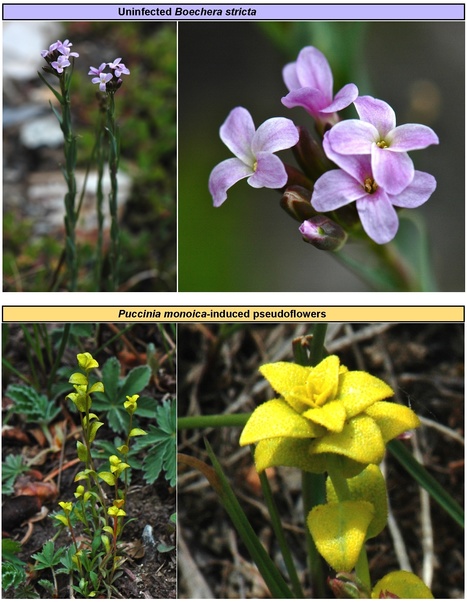
Puccinia monoica is a spectacular plant parasitic rust fungus that triggers the formation of flower-like structures (pseudoflowers) in its Brassicaceae host plant Boechera stricta. Pseudoflowers mimic in shape, color, nectar and scent co-occurring and unrelated flowers such as buttercups. They act to attract insects thereby aiding spore dispersal and sexual reproduction of the rust fungus. Although much ecological research has been performed on P.monoica-induced pseudoflowers, this system has yet to be investigated at the molecular or genomic level. To date, the molecular alterations underlying the development of pseudoflowers and the genes involved have not been described. To address this, we performed gene expression profiling to reveal 256 plant biological processes that are significantly altered in pseudoflowers. Among these biological processes, plant genes involved in cell fate specification, regulation of transcription, reproduction, floral organ development, anthocyanin (major floral pigments) and terpenoid biosynthesis (major floral volatile compounds) were down-regulated in pseudoflowers. In contrast, plant genes involved in shoot, cotyledon and leaf development, carbohydrate transport, wax biosynthesis, cutin transport and L-phenylalanine metabolism (pathway that results in phenylethanol and phenylacetaldehyde volatile production) were up-regulated. These findings point to an extensive reprogramming of host genes by the rust pathogen to induce floral mimicry. We also highlight 31 differentially regulated plant genes that are enriched in the biological processes mentioned above, and are potentially involved in the formation of pseudoflowers. This work illustrates the complex perturbations induced by rust pathogens in their host plants, and provides a starting point for understanding the molecular mechanisms of pathogen-induced floral mimicry.
|
|
Scooped by
Kamoun Lab @ TSL
September 16, 2013 12:58 PM
|
Beneficial associations between plants and arbuscular mycorrhizal fungi play a major role in terrestrial environments and in the sustainability of agroecosystems. Proteins, microRNAs, and small molecules have been identified in model angiosperms as required for the establishment of arbuscular mycorrhizal associations and define a symbiotic ‘toolkit’ used for other interactions such as the rhizobia–legume symbiosis. Based on recent studies, we propose an evolutionary framework for this toolkit. Some components appeared recently in angiosperms, whereas others are highly conserved even in land plants unable to form arbuscular mycorrhizal associations. The exciting finding that some components pre-date the appearance of arbuscular mycorrhizal fungi suggests the existence of unknown roles for this toolkit and even the possibility of symbiotic associations in charophyte green algae.
|
|
Scooped by
Kamoun Lab @ TSL
September 13, 2013 1:59 PM
|
Small polypeptides are widely used as signaling molecules in cell-to-cell communication in animals and plants. The CLAVATA3/EMBRYO SURROUNDING REGION-RELATED (CLE) gene family is composed of numerous genes that contain conserved CLE domains in various plant species and plant-parasitic nematodes. Here, we review recent progress in our understanding of CLE signaling during stem cell maintenance in Arabidopsis and grasses. We also summarize the roles of CLE signaling in the legume-Rhizobium symbiosis and infection by plant-parasitic nematodes. CLE signaling is important for diverse aspects of cell-to-cell signaling and long-distance communication, which are critical for survival, and the basic components of the CLE signaling pathway are evolutionarily conserved in both plants and animals.
|
|
Scooped by
Kamoun Lab @ TSL
September 8, 2013 11:16 AM
|
Small RNAs play important roles in resistance to plant viruses and the complex responses against pathogens and leaf-chewing insects. We investigated whether small RNA pathways are involved in Arabidopsis resistance against a phloem-feeding insect, the green peach aphid (Myzus persicae). We used a 2-wk fecundity assay to assess aphid performance on Arabidopsis RNA silencing and defence pathway mutants. Quantitative real-time polymerase chain reaction was used to monitor the transcriptional activity of defence-related genes in plants of varying aphid susceptibility. High-performance liquid chromatography-mass spectrometry was employed to measure the accumulation of the antimicrobial compound camalexin. Artificial diet assays allowed the assessment of the effect of camalexin on aphid performance. Myzus persicae produces significantly less progeny on Arabidopsis microRNA (miRNA) pathway mutants. Plants unable to process miRNAs respond to aphid infestation with increased induction of PHYTOALEXIN DEFICIENT3 (PAD3) and production of camalexin. Aphids ingest camalexin when feeding on Arabidopsis and are more successful on pad3 and cyp79b2/cyp79b3mutants defective in camalexin production. Aphids produce less progeny on artificial diets containing camalexin. Our data indicate that camalexin functions beyond antimicrobial defence to also include hemipteran insects. This work also highlights the extensive role of the miRNA-mediated regulation of secondary metabolic defence pathways with relevance to resistance against a hemipteran pest.
|
|
Scooped by
Kamoun Lab @ TSL
September 5, 2013 10:39 AM
|
Executive Summary
A greater focus on the role of microbiology in agriculture combined with new technologies can help mitigate potential food shortages associated with world population increases according to a new report from the American Academy of Microbiology.
“Microbes are essential partners in all aspects of plant physiology, but human efforts to improve plant productivity have focused mostly on the plant,” says Ian Sanders of University of Lausanne, chair of the colloquium that produced the report. “Optimizing the microbial communities that live in, on and around plants, can substantially reduce the need for chemical fertilizers, pesticides and herbicides.”
The report, "How Microbes can Help Feed the World," is based on the deliberation of a group of scientific experts who gathered for two days in Washington DC in December 2012 to consider a series of questions regarding how plant-microbe interactions could be employed to boost agricultural productivity in an environmentally and economically responsible way.
It starts with a startling statistic: In order to feed the estimated global population of 9 billion in the year 2050, agricultural yields will have to increase by 70-100%.
Improved understanding of plant-microbe interactions has the potential to increase crop productivity by 20% while reducing fertilizer and pesticide requirements by 20%, within 20 years, according to the report. These estimates rest on the recognition that all plants rely on microbial partners to secure nutrients, deter pathogens and resist environmental stress.
The report looks in depth at the intimate relationship between microbes and agriculture including why plants need microbes, what types of microbes they need, how they interact and the scientific challenges posed by the current state of knowledge. It then makes a series of recommendations, including greater investment in research, the taking on of one or more grand challenges such as characterization of the complete microbiome of one important crop plant, and the establishment of a formal process for moving scientific discoveries from the lab to the field.
“New technologies are making plant-microbe ecosystems easier to study and investment in this area of research could have dramatic benefits,” says Marilynn Roossinck, Pennsylvania State University, who helped organize the colloquium.
|
|
Scooped by
Kamoun Lab @ TSL
September 3, 2013 12:47 PM
|
To Kill or Not to Kill: Toward a Unified Terminology - In the broadest sense, pathogens can be divided into killers and non-killers. The ultimate goal of killer pathogens is the conversion of living tissue into dead organic matter, and they are therefore programmed to efficiently kill host cells. Non-killer pathogens aim to keep their host alive, and are therefore programmed to prevent host cells from dying. In between there are a variety of intermediate situations, such as hemibiotrophs and dimorphic pathogens that switch their mode of action from non-killers to killers at different stages of their life cycle. Accordingly, host organisms use opposite defense strategies against killer and non-killer pathogens: they are programmed to activate self-cell death when facing non-killer pathogens, and block cell death when attacked by killer pathogens. Control of cell death is therefore a central element in all types of pathogen–host interactions. A major type of controlled cell death in animals is apoptosis, a type of programmed cell death (PCD) that is important for development as well as in pathogen interactions. Apoptotic-like PCD is also known in plants, where it plays a role in defense, and in fungi, where it is involved in pathogenic interactions with plants. Autophagy, a process that leads to recycling of intracellular organelles, is closely associated with apoptotic cell death and is part of the PCD-related processes that take place during pathogenic interactions.
|
|
Scooped by
Kamoun Lab @ TSL
August 30, 2013 12:29 AM
|
The mechanisms underpinning broad compatibility in root symbiosis are largely unexplored. The generalist root endophyte Piriformospora indica establishes long-lasting interactions with morphologically and biochemically different hosts, stimulating their growth, alleviating salt stress, and inducing local and systemic resistance to pathogens. Cytological studies and global investigations of fungal transcriptional responses to colonization of barley and Arabidopsis at different symbiotic stages identified host-dependent colonization strategies and host-specifically induced effector candidates. Here, we show that in Arabidopsis, P. indicaestablishes and maintains biotrophic nutrition within living epidermal cells, whereas in barley the symbiont undergoes a nutritional switch to saprotrophy that is associated with the production of secondary thinner hyphae in dead cortex cells. Consistent with a diversified trophic behavior and with the occurrence of nitrogen deficiency at the onset of saprotrophy in barley, fungal genes encoding hydrolytic enzymes and nutrient transporters were highly induced in this host but not in Arabidopsis. Silencing of the high-affinity ammonium transporter PiAMT1 gene, whose transcripts are accumulating during nitrogen starvation and in barley, resulted in enhanced colonization of this host, whereas it had no effect on the colonization ofArabidopsis. Increased levels of free amino acids and reduced enzymatic activity for the cell-death marker VPE (vacuolar-processing enzyme) in colonized barley roots coincided with an extended biotrophic lifestyle of P. indica upon silencing of PiAMT1. This suggests that PiAmt1 functions as a nitrogen sensor mediating the signal that triggers the in planta activation of the saprotrophic program. Thus, host-related metabolic cues affect the expression of P. indica’s alternative lifestyles.
|
|
Scooped by
Kamoun Lab @ TSL
August 22, 2013 8:12 PM
|
Sexual reproduction may be cryptic or facultative in fungi and therefore difficult to detect. Magnaporthe oryzae, which causes blast, the most damaging fungal disease of rice, is thought to originate from southeast Asia. It reproduces asexually in all rice-growing regions. Sexual reproduction has been suspected in limited areas of southeast Asia, but has never been demonstrated in contemporary populations. We characterized several M. oryzae populations worldwide both biologically and genetically, to identify candidate populations for sexual reproduction. The sexual cycle of M. oryzae requires two strains of opposite mating types, at least one of which is female-fertile, to come into contact. In one Chinese population, the two mating types were found to be present at similar frequencies and almost all strains were female-fertile. Compatible strains from this population completed the sexual cycle in vitro and produced viable progenies. Genotypic richness and linkage disequilibrium data also supported the existence of sexual reproduction in this population. We resampled this population the following year, and the data obtained confirmed the presence of all the biological and genetic characteristics of sexual reproduction. In particular, a considerable genetic reshuffling of alleles was observed between the 2 years. Computer simulations confirmed that the observed genetic characteristics were unlikely to have arisen in the absence of recombination. We therefore concluded that a contemporary population of M. oryzae, pathogenic on rice, reproduces sexually in natura in southeast Asia. Our findings provide evidence for the loss of sexual reproduction by a fungal plant pathogen outside its centre of origin.
|
|
Scooped by
Kamoun Lab @ TSL
August 18, 2013 2:12 AM
|
Science's Special Issue on Smarter Pest Control includes news and reviews on the plant immune system, pesticide's effect on young brains, and preventing suicides by locking up pesticides. The Pesticide Paradox
Martin Enserink et al. Infographic: Pesticide Planet
A global look at the uses, benefits, and drawbacks of pesticides.
A Lethal Dose of RNA
Kai Kupferschmidt
A new generation of genetically modified crops will kill insects by silencing their genes.
The War Against Weeds Down Under
Erik Stokstad
For decades, Australia's wheat farmers have had the worst weed problem in the world. Now, nonchemical weapons are helping to turn the tide. Vietnam Turns Back a 'Tsunami of Pesticides'
Dennis Normile Convincing Vietnamese rice farmers to use less pesticide came down to letting them see the benefits for themselves. In Rural Asia, Locking Up Poisons to Prevent Suicides
Mara Hvistendahl
Pesticide ingestion accounts for one-third of the world's suicides. Can a simple plastic lockbox keep toxic chemicals out of desperate people's hands? Growing Up With Pesticides
Amanda Mascarelli
Long-term studies of the effects of pesticides and other environmental chemicals on the very young brain are coming up with worrisome results. Special Issue Review: Current Challenges and Trends in the Discovery of Agrochemicals
Clemens Lamberth et al. Pivoting the Plant Immune System from Dissection to Deployment
Jeffery L. Dangl et al. Evaluating Pesticide Degradation in the Environment: Blind Spots and Emerging Opportunities
Kathrin Fenner et al. Wildlife Ecotoxicology of Pesticides: Can We Track Effects to the Population Level and Beyond?
Heinz-R. Köhler and Rita Triebskorn
RenSeq is a NB-LRR gene-targeted, Resistance gene enrichment and sequencing method that enables discovery and annotation of pathogen resistance gene family members in plant genome sequences. We successfully applied RenSeq to the sequenced potatoSolanum tuberosum clone DM, and increased the number of identified NB-LRRs from 438 to 755. The majority of these identified R gene loci reside in poorly- or previous un-annotated regions of the genome. Sequence and positional details on the twelve chromosomes have been established for 704 NB-LRRs and can be accessed through a genome browser that we provide. We compared these NB-LRR genes and the corresponding oligonucleotide baits with the highest sequence similarity and demonstrated that ~80% sequence identity is sufficient for enrichment. Analysis of the sequenced tomato S. lycopersicum extended the NB-LRR complement to 394 loci. We further describe a methodology that applies RenSeq to rapidly identify molecular markers that co-segregate with a trait of interest. In two independent segregating populations involving the wild Solanum species S. berthaultii (Rpi-ber2) and S. ruiz-ceballosii (Rpi-rzc1), we were able to apply RenSeq to successfully identify markers that co-segregate with resistance towards the late blight pathogenPhytophthora infestans. These SNP identification workflows were designed as easy-to-adapt Galaxy pipelines.
Via The Sainsbury Lab
|
|
Scooped by
Kamoun Lab @ TSL
August 12, 2013 7:04 PM
|
Leguminous plants establish a symbiosis with rhizobia to enable nitrogen fixation in root nodules under the control of the presumed root-to-shoot-to-root negative feedback called autoregulation of nodulation. In Lotus japonicus, autoregulation is mediated by CLE-RS genes that are specifically expressed in the root, and the receptor kinase HAR1 that functions in the shoot. However, the mature functional structures of CLE-RS gene products and the molecular nature of CLE-RS/HAR1signalling governed by these spatially distant components remain elusive. Here we show that CLE-RS2 is a post-translationally arabinosylated glycopeptide derived from the CLE domain. Chemically synthesized CLE-RS glycopeptides cause significant suppression of nodulation and directly bind to HAR1 in an arabinose-chain and sequence-dependent manner. In addition, CLE-RS2 glycopeptide specifically produced in the root is found in xylem sap collected from the shoot. We propose that CLE-RS glycopeptides are the long sought mobile signals responsible for the initial step of autoregulation of nodulation.
|
|
Scooped by
Kamoun Lab @ TSL
August 10, 2013 11:40 AM
|
Caribbean banana farmers are abandoning fields where crops have been badly affected by Black Sigatoka disease. Black Sigatoka has badly affected several countries in the region, including Dominica, St. Lucia, Grenada and Guyana. Black Sigatoka is considered the most destructive disease of bananas and plantains and is caused by the fungus Mycosphaerella fijiensis. It first arrived in the Caribbean in 1991, and has since established and spread throughout the region. Severely infected leaves die, significantly reducing fruit yield and causing mixed and premature ripening of banana bunches. As part of the response to Black Sigatoka outbreaks in the Caribbean the Food and Agriculture Organisation of the United Nations (FAO) provided an intensive training programme in management of the disease in Dominica back in June this year. The workshop trained technicians from Dominica, St. Lucia, Grenada, Guyana and St. Vincent and the Grenadines. The Caribbean’s tropical climate with high rainfall and high humidity is conducive to the spread of Black Sigatoka, hence the training program focused on the management of the disease, including the strategic and careful use of fungicides in order to manage the disease while aiming to prevent fungicide resistance developing. Last year, FAO provided an expert from Cuba to assess the management efforts of each country in the Caribbean affected by the disease, and identify areas for improvement. For each country, a management and action plan was created in conjunction with the CARICOM Secretariat, the OECS Secretariat, the Caribbean Agricultural Research & Development Institute (CARDI), Inter-American Institute for Cooperation in Agriculture (IICA), CIRAD, the Ministry of Agriculture of Trinidad & Tobago and the Banana Board of Jamaica.
|
|
Scooped by
Kamoun Lab @ TSL
August 7, 2013 2:16 AM
|
Forty years after Dutch elm disease wreaked havoc on the countryside, Britain’s trees are again under attack. The Forestry Commission has highlighted 15 pests and diseases – ranging from the Asian longhorn beetle and pine tree lappet moth to chestnut blight and Dothistroma needle blight – that are infesting our woodland. Acute oak decline, which can kill within four or five years, is reported to be on the rise. And the latest high-profile invader, ash dieback (caused by the fungus Chalara fraxinea), now affects 17 counties across the nation; last month, thousands of trees had to be destroyed in Devon alone.
As if all this wasn’t bad enough, an even more lethal scourge is on the loose. It is killing larch, sycamore, beech, bay laurel and sweet and horse chestnut trees in Britain, and has already destroyed millions of trees in the United States. The cause of destruction is the fungus-like Phytophthora ramorum, commonly known as sudden oak death. Its name is misleading on every count. The disease does not always result in death. Nor are the effects sudden – although it can kill trees within a single season. But most importantly, it is not restricted to oak. That does not mean, however, that this disease is anything less than a menace. In the past four years, it has claimed hundreds of thousands of acres of commercially grown Japanese larch in South Wales, Devon and Cornwall. “The landscape,” says Matt Elliot of the government agency Forest Research, “has been changed for ever in certain parts of the country.”
Ramorum blight, as scientists are renaming sudden oak death, can infect and colonise around 150 different species of shrubs and trees, producing a significant knock‑on effect on insects, birds and other wildlife. Since the pathogen – which probably comes from Asia – appeared in Scotland in 2002, it has been the subject of emergency EU measures, regulatory action and, in England and Wales, containment and eradication policies.
|
|
|
Scooped by
Kamoun Lab @ TSL
September 17, 2013 4:47 PM
|
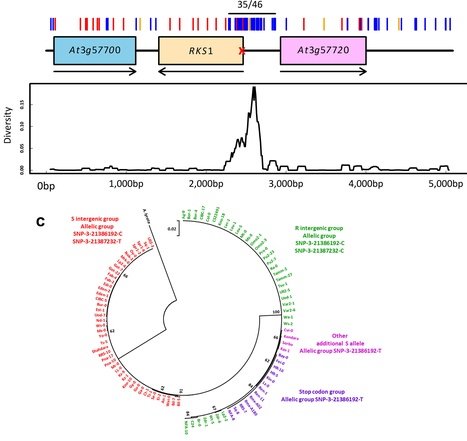
The failure of gene-for-gene resistance traits to provide durable and broad-spectrum resistance in an agricultural context has led to the search for genes underlying quantitative resistance in plants. Such genes have been identified in only a few cases, all for fungal or nematode resistance, and encode diverse molecular functions. However, an understanding of the molecular mechanisms of quantitative resistance variation to other enemies and the associated evolutionary forces shaping this variation remain largely unknown. We report the identification, map-based cloning and functional validation of QRX3 (RKS1, Resistance related KinaSe 1), conferring broad-spectrum resistance to Xanthomonas campestris (Xc), a devastating worldwide bacterial vascular pathogen of crucifers. RKS1 encodes an atypical kinase that mediates a quantitative resistance mechanism in plants by restricting bacterial spread from the infection site. Nested Genome-Wide Association mapping revealed a major locus corresponding to an allelic series at RKS1 at the species level. An association between variation in resistance and RKS1 transcription was found using various transgenic lines as well as in natural accessions, suggesting that regulation of RKS1 expression is a major component of quantitative resistance to Xc. The co-existence of long lived RKS1 haplotypes in A. thaliana is shared with a variety of genes involved in pathogen recognition, suggesting common selective pressures. The identification of RKS1 constitutes a starting point for deciphering the mechanisms underlying broad spectrum quantitative disease resistance that is effective against a devastating and vascular crop pathogen. Because putative RKS1 orthologous have been found in other Brassica species, RKS1 provides an exciting opportunity for plant breeders to improve resistance to black rot in crops.
|
|
Scooped by
Kamoun Lab @ TSL
September 13, 2013 2:15 PM
|
Effector proteins represent a refined mechanism of bacterial pathogens to overcome plants’ innate immune systems. These modular proteins often manipulate host physiology by directly interfering with immune signaling of plant cells. Even if host cells have developed efficient strategies to perceive the presence of pathogenic microbes and to recognize intracellular effector activity, it remains an open question why only few effectors are recognized directly by plant resistance proteins. Based on in-silico genome-wide surveys and a reevaluation of published structural data, we estimated that bacterial effectors of phytopathogens are highly enriched in long-disordered regions (>50 residues). These structurally flexible segments have no secondary structure under physiological conditions but can fold in a stimulus-dependent manner (e.g., during protein–protein interactions). The high abundance of intrinsic disorder in effectors strongly suggests positive evolutionary selection of this structural feature and highlights the dynamic nature of these proteins. We postulate that such structural flexibility may be essential for (1) effector translocation, (2) evasion of the innate immune system, and (3) host function mimicry. The study of these dynamical regions will greatly complement current structural approaches to understand the molecular mechanisms of these proteins and may help in the prediction of new effectors.
|
|
Scooped by
Kamoun Lab @ TSL
September 9, 2013 5:04 AM
|
|
|
Scooped by
Kamoun Lab @ TSL
September 6, 2013 7:21 AM
|
Virtually since the discovery of nitrogen fixing Rhizobium-legume symbioses, researchers have dreamed of transferring this capability into nonlegume crop species (e.g., corn). It has been generally assumed that nonlegumes lack the ability to respond to the rhizobial lipo-chitin Nod factors, which are the essential signal molecules that trigger legume nodulation. However, our data indicate that Arabidopsis thaliana, as well as other nonlegume plants, do indeed recognize the rhizobial Nod factor via a mechanism that results in strong suppression of microbe-associated molecular pattern (MAMP)–triggered immunity. The mechanism of action leads to reduced levels of pattern recognition receptors on the plasma membrane involved in MAMP recognition.
|
|
Scooped by
Kamoun Lab @ TSL
September 4, 2013 2:12 AM
|
In 1950 the East German government claimed the Americans were dropping potato beetles out of planes over GDR fields in an attempt to sabotage their crops. Was it true, or an example of Cold War propaganda?
|
|
Scooped by
Kamoun Lab @ TSL
September 3, 2013 1:35 AM
|
In Magnaporthe oryzae, the causal ascomycete of the devastating rice blast disease, the conidial germ tube tip must sense and respond to a wide array of requisite cues from the host in order to switch from polarized to isotropic growth, ultimately forming the dome-shaped infection cell known as the appressorium. Although the role for G-protein mediated Cyclic AMP signaling in appressorium formation was first identified almost two decades ago, little is known about the spatio-temporal dynamics of the cascade and how the signal is transmitted through the intracellular network during cell growth and morphogenesis. In this study, we demonstrate that the late endosomal compartments, comprising of a PI3P-rich (Phosphatidylinositol 3-phosphate) highly dynamic tubulo-vesicular network, scaffold active MagA/GαS, Rgs1 (a GAP for MagA), Adenylate cyclase and Pth11 (a non-canonical GPCR) in the likely absence of AKAP-like anchors during early pathogenic development in M. oryzae. Loss of HOPS component Vps39 and consequently the late endosomal function caused a disruption of adenylate cyclase localization, cAMP signaling and appressorium formation. Remarkably, exogenous cAMP rescued the appressorium formation defects associated with VPS39 deletion in M. oryzae. We propose that sequestration of key G-protein signaling components on dynamic late endosomes and/or endolysosomes, provides an effective molecular means to compartmentalize and control the spatio-temporal activation and rapid downregulation (likely via vacuolar degradation) of cAMP signaling amidst changing cellular geometry during pathogenic development in M. oryzae.
|
|
Scooped by
Kamoun Lab @ TSL
August 23, 2013 10:16 AM
|
Bacteria have a kind of adaptive immune system, which enables them to fight off repeated attacks by specific viruses, that works through precise targeting of DNA. In January, four research teams reported harnessing the system, called CRISPR, to target the destruction of specific genes in human cells. And in the following 8 months, various groups have used it to delete, add, activate or suppress targeted genes in human cells, mice, rats, zebrafish, bacteria, fruit flies, yeast, nematodes and crops, demonstrating broad utility for the technique. With CRISPR, scientists can create mouse models of human diseases much more quickly than before, study individual genes much faster, and easily change multiple genes in cells at once to study their interactions.
|
|
Scooped by
Kamoun Lab @ TSL
August 18, 2013 2:16 AM
|
Stem rust fungus Ug99 is deadly to unprotected wheat strains (two stems on the right), but not to those protected by innate resistance genes (three stems on the left). In this special issue, we explore past and future strategies for responding to diseases and infestations caused by pests. The solutions demand our best knowledge of chemistry, immune responses, and ecosystem stability. Photo: Evans Lagudah and Zak Pretorius Identification of Wheat Gene Sr35 That Confers Resistance to Ug99 Stem Rust Race Group
Cyrille Saintenac et al.
Two resistance genes are identified that could protect wheat from a virulent fungus that can severely reduce crop yields.
The Gene Sr33, an Ortholog of Barley Mla Genes, Encodes Resistance to Wheat Stem Rust Race Ug99
Sambasivam Periyannan et al.
Two resistance genes are identified that could protect wheat from a virulent fungus that can severely reduce crop yields.
|
|
Scooped by
Kamoun Lab @ TSL
August 16, 2013 8:49 PM
|
We show the histone mark H3K9me2, which is known to mediate transposon silencing, to determine the choice between alternative polyadenylation sites within the Arabidopsis thaliana disease resistance gene RPP7. High H3K9me2 levels recruited to the first RPP7 intron by the COPIA-R7retrotransposon suppress use of a promoter-proximal polyadenylation site. Modulating H3K9me2 levels at this site shifts the balance between full-length and incomplete RPP7 transcripts. By recruiting H3K9me2-dependent polyadenylation control to RPP7, the COPIA-R7 insertion provided a new switch to fine-tune RPP7 expression. Selective advantages resulting from this mechanism likely contributed to the domestication of COPIA-R7 at RPP7.
See also Researchers Discover Beneficial Jumping Gene - UC Riverside geneticists show the COPIA-R7 transposon enhances the immunity of its host against a pathogenic microorganism http://ucrtoday.ucr.edu/16990
|
|
Scooped by
Kamoun Lab @ TSL
August 13, 2013 3:12 AM
|
The public are being asked to help in the fight against ash dieback by playing a computer game that analyses genetic data on the disease. The Facebook game aims to use the power of social media to find a scientific solution to protecting ash trees from theChalara fraxinea fungus. Many of the UK's 80m ash trees are threatened by ash dieback. Scientists believe some trees may have natural immunity to Chalara and could be used to grow resistant forests. They hope to identify potential woodland survivors by studying the genetics of British ash trees. They are also looking at the genetics of the fungus to find out more about how it spreads. Dr Joan Webber is principal pathologist and head of the tree health research group at the government agency Forest Research. "The game itself is really helping with building our picture of what the genome is of ash," she said. "And the reason we want to have more information about that is simply looking for resistance - looking for resistant individuals or the genes around resistance to Chalara in our ash trees." The Fraxinus game, launched to the public on Tuesday, challenges players to match sequences of genetic "letters" represented by coloured leaf shapes. This sorts genetic information into matching sequences and pinpoints genetic variation in the tree or the fungus. Experts hope it will give clues to the origins of the disease, and help identify the best ash trees to grow in the future. Dr Dan MacLean, of the John Innes Centre [sic] in Norwich, is the scientist who came up with the idea. He told BBC News: "Primarily we designed the game to be fun and engrossing in and of itself. "That's where the basic value is for the player - how we get the most out of it is if people want to come back to it and play it with their friends. That it's for a good cause is a bonus." Click here to go to the game http://apps.facebook.com/fraxinusgame/ See also: MacLean, D. Cutting edge: changing the rules of the game. eLife 2:e01294. http://elife.elifesciences.org/content/2/e01294
|
|
Scooped by
Kamoun Lab @ TSL
August 10, 2013 12:00 PM
|
|
|
Scooped by
Kamoun Lab @ TSL
August 10, 2013 7:33 AM
|
|











ok, this is just so cool (even if it is a fungus!)
So very cool...So what's wrong with insects attracted to purple flowers?
As a rust, why not just put your spores in the anthers like Microbotryum?