Your new post is loading...

|
Scooped by
Kamoun Lab @ TSL
February 19, 2014 7:47 AM
|
The α-proteobacterium Sinorhizobium meliloti establishes a chronic intracellular infection during the symbiosis with its legume hosts. Within specialized host cells, S. meliloti differentiates into highly polyploid, enlarged nitrogen-fixing bacteroids. This differentiation is driven by host cells through the production of defensin-like peptides called “nodule-specific cysteine-rich” (NCR) peptides. Recent research has shown that synthesized NCR peptides exhibit antimicrobial activity at high concentrations but cause bacterial endoreduplication at sublethal concentrations. We leveraged synchronized S. meliloti populations to determine how treatment with a sublethal NCR peptide affects the cell cycle and physiology of bacteria at the molecular level. We found that at sublethal levels a representative NCR peptide specifically blocks cell division and antagonizes Z-ring function. Gene-expression profiling revealed that the cell division block was produced, in part, through the substantial transcriptional response elicited by sublethal NCR treatment that affected ∼15% of the genome. Expression of critical cell-cycle regulators, including ctrA, and cell division genes, including genes required for Z-ring function, were greatly attenuated in NCR-treated cells. In addition, our experiments identified important symbiosis functions and stress responses that are induced by sublethal levels of NCR peptides and other antimicrobial peptides. Several of these stress-response pathways also are found in related α-proteobacterial pathogens and might be used by S. meliloti to sense host cues during infection. Our data suggest a model in which, in addition to provoking stress responses, NCR peptides target intracellular regulatory pathways to drive S. meliloti endoreduplication and differentiation during symbiosis.
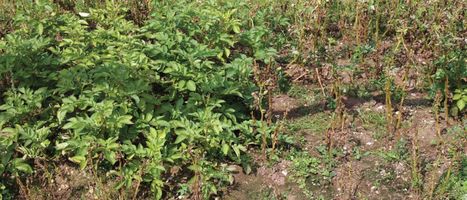
Essentially all plant species exhibit heritable genetic variation for resistance to a variety of plant diseases caused by fungi, bacteria, oomycetes or viruses. Disease losses in crop monocultures are already significant, and would be greater but for applications of disease-controlling agrichemicals. For sustainable intensification of crop production, we argue that disease control should as far as possible be achieved using genetics rather than using costly recurrent chemical sprays. The latter imply CO2 emissions from diesel fuel and potential soil compaction from tractor journeys. Great progress has been made in the past 25 years in our understanding of the molecular basis of plant disease resistance mechanisms, and of how pathogens circumvent them. These insights can inform more sophisticated approaches to elevating disease resistance in crops that help us tip the evolutionary balance in favour of the crop and away from the pathogen. We illustrate this theme with an account of a genetically modified (GM) blight-resistant potato trial in Norwich, using the Rpi-vnt1.1 gene isolated from a wild relative of potato, Solanum venturii, and introduced by GM methods into the potato variety Desiree.
Via The Sainsbury Lab
|
|
Scooped by
Kamoun Lab @ TSL
February 16, 2014 2:10 PM
|
Powdery mildew is an important disease of cereals, affecting both grain yield and end-use quality. The causal agent of powdery mildew on cereals, Blumeria graminis, has been classified into eight formae speciales (ff.spp.), infecting crops and wild grasses. Advances in research on host specificity and resistance, and on pathogen phylogeny and origins, have brought aspects of the subspecific classification system ofB. graminis into ff.spp. into question, because it is based on adaptation to certain hosts rather than strict host specialization. Cereals therefore cannot be considered as typical non-hosts to non-adapted ff.spp. We introduce the term ‘non-adapted resistance’ of cereals to inappropriate ff.spp. of B. graminis, which involves both pathogen-associated molecular pattern-triggered immunity (PTI) and effector-triggered immunity (ETI). There is no clear distinction between the mechanisms of resistance to adapted and non-adapted ff.spp. Molecular evolutionary data suggest that the taxonomic grouping of B. graminis into different ff.spp. is not consistent with the phylogeny of the fungus. Imprecise estimates of mutation rates and the lack of genetic variation in introduced populations may explain the uncertainty with regard to divergence times, in the Miocene or Holocene epochs, of ff.spp. of B. graminis which infect cereal crop species. We propose that most evidence favours divergence in the Holocene, during the course of early agriculture. We also propose that the forma specialis concept should be retained for B. graminis pathogenic on cultivated cereals to include clades of the fungus which are strongly specialized to these hosts, i.e. ff.spp. hordei, secalis and tritici, as well as avenae from cultivated A. sativa, and that the forma specialis concept should no longer be applied to B. graminis from most wild grasses.
|
|
Scooped by
Kamoun Lab @ TSL
February 8, 2014 1:05 PM
|
Focus on Translational Research John M. McDowell, John Carr, and Matteo Lorito http://apsjournals.apsnet.org/doi/pdf/10.1094/MPMI-27-03-0195 ------------------------------------------------------------------------
Effectors as Tools in Disease Resistance Breeding Against Biotrophic, Hemibiotrophic, and Necrotrophic Plant Pathogens Vivianne G. A. A. Vleeshouwers and Richard P. Oliver http://apsjournals.apsnet.org/doi/pdf/10.1094/MPMI-10-13-0313-IA ------------------------------------------------------------------------
A Time for More Booms and Fewer Busts? Unraveling Cereal–Rust Interactions Scot Hulbert and Michael Pumphrey http://apsjournals.apsnet.org/doi/pdf/10.1094/MPMI-09-13-0295-FI ------------------------------------------------------------------------
The Potyviridae Cylindrical Inclusion Helicase: A Key Multipartner and Multifunctional Protein M. Sorel, J. A. Garcia, and S. German-Retana http://apsjournals.apsnet.org/doi/pdf/10.1094/MPMI-11-13-0333-CR ------------------------------------------------------------------------
Characterization of a Tryptophan 2-Monooxygenase Gene from Puccinia graminis f. sp. tritici Involved in Auxin Biosynthesis and Rust Pathogenicity Chuntao Yin, Jeong-Jin Park, David R. Gang, and Scot H. Hulbert http://apsjournals.apsnet.org/doi/pdf/10.1094/MPMI-09-13-0289-FI ------------------------------------------------------------------------
Mycosphaerella graminicola LysM Effector-Mediated Stealth Pathogenesis Subverts Recognition Through Both CERK1 and CEBiP Homologues in Wheat Wing-Sham Lee, Jason J. Rudd, Kim E. Hammond-Kosack, and Kostya Kanyuka http://apsjournals.apsnet.org/doi/pdf/10.1094/MPMI-07-13-0201-R ------------------------------------------------------------------------
Production of Xylella fastidiosa Diffusible Signal Factor in Transgenic Grape Causes Pathogen Confusion and Reduction in Severity of Pierce's Disease Steven Lindow, Karyn Newman, Subhadeep Chatterjee, Clelia Baccari, Anthony T. Lavarone, and Michael Ionescu http://apsjournals.apsnet.org/doi/pdf/10.1094/MPMI-07-13-0197-FI ------------------------------------------------------------------------
A Bacterial Type III Secretion Assay for Delivery of Fungal Effector Proteins into Wheat Narayana M. Upadhyaya, Rohit Mago, Brian J. Staskawicz, Michael A. Ayliffe, Jeffrey G. Ellis, and Peter N. Dodds http://apsjournals.apsnet.org/doi/pdf/10.1094/MPMI-07-13-0187-FI ------------------------------------------------------------------------
Substitutions of Two Amino Acids in the Nucleotide-Binding Site Domain of a Resistance Protein Enhance the Hypersensitive Response and Enlarge the PM3F Resistance Spectrum in Wheat Daniel Stirnweis, Samira Désiré Milani, Tina Jordan, Beat Keller, and Susanne Brunner http://apsjournals.apsnet.org/doi/pdf/10.1094/MPMI-10-13-0297-FI ------------------------------------------------------------------------
A Novel, Sensitive Method to Evaluate Potato Germplasm for Bacterial Wilt Resistance Using a Luminescent Ralstonia solanacearum Reporter Strain Andrea Paola Zuluaga Cruz, Virginia Ferreira, María Julia Pianzzola, María Inés Siri, Núria S. Coll, and Marc Valls http://apsjournals.apsnet.org/doi/pdf/10.1094/MPMI-10-13-0303-FI ------------------------------------------------------------------------
Methods to Study PAMP-Triggered Immunity in Brassica Species Simon R. Lloyd, Henk-jan Schoonbeek, Martin Trick, Cyril Zipfel, and Christopher J. Ridout http://apsjournals.apsnet.org/doi/pdf/10.1094/MPMI-05-13-0154-FI ------------------------------------------------------------------------
Disruption of Vector Transmission by a Plant-Expressed Viral Glycoprotein Mauricio Montero-Astúa, Dorith Rotenberg, Alexandria Leach-Kieffaber, Brandi A. Schneweis, Sunghun Park, Jungeun K. Park, Thomas L. German, and Anna E. Whitfield http://apsjournals.apsnet.org/doi/pdf/10.1094/MPMI-09-13-0287-FI
|
|
Rescooped by
Kamoun Lab @ TSL
from TAL effector science
February 2, 2014 5:03 PM
|
The recognition between disease resistance ( R) genes in plants and their cognate avirulence ( Avr) genes in pathogens can produce a hypersensitive response of localized programmed cell death. However, our knowledge of the early signaling events of the R gene–mediated hypersensitive response in plants remains limited. Here, we report the cloning and characterization of Xa10, a transcription activator–like (TAL) effector-dependent R gene for resistance to bacterial blight in rice ( Oryza sativa). Xa10 contains a binding element for the TAL effector AvrXa10 ( EBEAvrXa10) in its promoter, and AvrXa10 specifically induces Xa10 expression. Expression of Xa10 induces programmed cell death in rice, Nicotiana benthamiana, and mammalian HeLa cells. The Xa10 gene product XA10 localizes as hexamers in the endoplasmic reticulum (ER) and is associated with ER Ca2+ depletion in plant and HeLa cells. XA10 variants that abolish programmed cell death and ER Ca2+ depletion in N. benthamiana and HeLa cells also abolish disease resistance in rice. We propose that XA10 is an inducible, intrinsic terminator protein that triggers programmed cell death by a conserved mechanism involving disruption of the ER and cellular Ca2+ homeostasis.
Via dromius
|
|
Scooped by
Kamoun Lab @ TSL
January 31, 2014 6:32 AM
|
On August 8 and 9, 2014 (Friday and Saturday) a "North American Late Blight Symposium" will be held in Minneapolis, Minnesota, U.S.A., that will focus on the late blight diseases of potato and tomato. The symposium will last 1.5 days (all day Friday and Saturday until noon) and take place in the Minneapolis Convention Center. It will occur immediately before the joint meeting of the American and Canadian Phytopathological Societies, which is being held in the same location.
Details are still being finalized, but our meeting will include a keynote address by Geert Kessel of Wageningen University, shorter talks, and a poster session. The program will include the following topics:
• Epidemiology
• Pathogen Biology and Diversity
• Plant-based resistance
• Integrated Disease Management
• Chemical Control
Students and postdoctorals may apply for travel awards.
|
|
Scooped by
Kamoun Lab @ TSL
January 29, 2014 6:21 PM
|
Thin sections of petrified fossils made during the latter part of the nineteenth and early twentieth centuries to investigate the internal tissue systems of plants now provide an important new source of information on associated micro-organisms. We report a new heterokont eukaryote (Combresomyces williamsoniisp. nov.) based on exquisitely preserved fossil oogonia, antheridia and hyphae from the Carboniferous (Pennsylvanian: Bashkirian stage) of UK. The structure of the oogonia and antheridia and features observed within the hyphae demonstrate a relationship with Oomycetes (Peronosporomycetes). The fossil micro-organism was documented in situ in petrified stem cortex and rootlets of the extinct seed fern Lyginopteris oldhamia (Pteridospermales). The main observed features point towards a pythiaceous Oomycete but links to biotrophic Albuginales or Peronosporaceae cannot be ruled out owing to the observation of a possible haustorium. Our study provides the earliest evidence for parasitism in Oomycetes.
|
|
Scooped by
Kamoun Lab @ TSL
January 28, 2014 5:01 AM
|
Plant Cell: Geminivirus Vectors Deliver Reagents for Plant Genome Engineering (2014)
|
|
Scooped by
Kamoun Lab @ TSL
January 24, 2014 5:16 AM
|
Tropical forests are important reservoirs of biodiversity1, but the processes that maintain this diversity remain poorly understood2. The Janzen–Connell hypothesis3, 4 suggests that specialized natural enemies such as insect herbivores and fungal pathogens maintain high diversity by elevating mortality when plant species occur at high density (negative density dependence; NDD). NDD has been detected widely in tropical forests5, 6, 7, 8, 9, but the prediction that NDD caused by insects and pathogens has a community-wide role in maintaining tropical plant diversity remains untested. We show experimentally that changes in plant diversity and species composition are caused by fungal pathogens and insect herbivores. Effective plant species richness increased across the seed-to-seedling transition, corresponding to large changes in species composition5. Treating seeds and young seedlings with fungicides significantly reduced the diversity of the seedling assemblage, consistent with the Janzen–Connell hypothesis. Although suppressing insect herbivores using insecticides did not alter species diversity, it greatly increased seedling recruitment and caused a marked shift in seedling species composition. Overall, seedling recruitment was significantly reduced at high conspecific seed densities and this NDD was greatest for the species that were most abundant as seeds. Suppressing fungi reduced the negative effects of density on recruitment, confirming that the diversity-enhancing effect of fungi is mediated by NDD. Our study provides an overall test of the Janzen–Connell hypothesis and demonstrates the crucial role that insects and pathogens have both in structuring tropical plant communities and in maintaining their remarkable diversity.
|
|
Scooped by
Kamoun Lab @ TSL
January 23, 2014 4:48 AM
|
Plants are sessile organisms that need to respond to changing environments during development. As a result they have evolved unique signalling mechanisms through plasmodesmata that allow rapid communication between different parts of the plant. Communication through plasmodesmata involves the trafficking of informational macromolecules such as transcription factors, gene transcripts, and small RNAs. Moreover, viral pathogens exploit these cell wall channels for intercellular and systemic spread, which often results in serious crop diseases. The EMBO workshop will bring together scientists working on plasmodesmata structure and regulation, plant development, defense signaling, gene silencing, and virus movement.
|
|
Scooped by
Kamoun Lab @ TSL
January 17, 2014 5:36 AM
|
The first workshop of the action, focussing on cellular dynamics of effector action and recognition is scheduled to take place in Toulouse, France from 9-11 April 2014. The workshop will be hosted by the Laboratory of Plant-Microbe Interactions and is expected to welcome 30 participants.
Recent years have shown that the localization of effectors, their target proteins and their immune receptors hold important information for the understanding of their function. Effectors can act in many different cellular compartments to promote disease or act, in certain cases, only on particular cell types. NB-LRR proteins acting as receptors of the plant immune system can undergo complex relocalizations which proved in certain cases crucial for their function. Since this is a fast moving research field, it appeared important to adress cellular dynamics of effector action and recognition by a workshops. The following topics will be adressed: 1. Which host cells and tissues are subject to effector action? 2. How do effectors enter the host cell (compartments)? 3. Where do effectors localize and act in the host cell? 4. How do effectors affect the localization and cellular dynamics of their host targets? This includes mechanisms related to complex formation/dissociation, (de)stabilizing host targets, post-translational modifications effecting the distribution in the cell 5. Where do immune receptors/R proteins localize and act in the cell and how do effectors manipulate this? Confirmed speakers are: Richard O’Connell, INRA Versailles-Grignon FR Bruno Favery, INRA Sophia, FR Nemo Peeters, INRA Toulouse, FR Sebastian Schornack CUSL, Cambridge, UK Petra Boevink, JHI, Dundee, UK Edgar Huitema, Dundee university UK Ralh Hueckelhoven, Technical University Munich DE Laurent deslandes, CNRS, Toulouse, FR Hans Thordal-Christensen, Copenhagen University DK Silke Robatzek, TSL, Norwich,UK Aska Goverse, Wageningen university, NL Thomas Kroj, INRA Montpellier, FR
|
|
Scooped by
Kamoun Lab @ TSL
January 15, 2014 7:30 AM
|
Perception of microbe-associated molecular patterns (MAMPs) through pattern recognition receptors (PRRs) triggers various defense responses in plants. This MAMP-triggered immunity plays a major role in the plant resistance against various pathogens. To clarify the molecular basis of the specific recognition of chitin oligosaccharides by the rice PRR, CEBiP (chitin-elicitor binding protein), as well as the formation and activation of the receptor complex, biochemical, NMR spectroscopic, and computational studies were performed. Deletion and domain-swapping experiments showed that the central lysine motif in the ectodomain of CEBiP is essential for the binding of chitin oligosaccharides. Epitope mapping by NMR spectroscopy indicated the preferential binding of longer-chain chitin oligosaccharides, such as heptamer-octamer, to CEBiP, and also the importance of N-acetyl groups for the binding. Molecular modeling/docking studies clarified the molecular interaction between CEBiP and chitin oligosaccharides and indicated the importance of Ile122 in the central lysine motif region for ligand binding, a notion supported by site-directed mutagenesis. Based on these results, it was indicated that two CEBiP molecules simultaneously bind to one chitin oligosaccharide from the opposite side, resulting in the dimerization of CEBiP. The model was further supported by the observations that the addition of (GlcNAc)8 induced dimerization of the ectodomain of CEBiP in vitro, and the dimerization and (GlcNAc)8-induced reactive oxygen generation were also inhibited by a unique oligosaccharide, (GlcNβ1,4GlcNAc)4, which is supposed to have N-acetyl groups only on one side of the molecule. Based on these observations, we proposed a hypothetical model for the ligand-induced activation of a receptor complex, involving both CEBiP and Oryza sativa chitin-elicitor receptor kinase-1.
|
|
Scooped by
Kamoun Lab @ TSL
January 14, 2014 10:35 AM
|
One of most important challenges in plant breeding is improving resistance to the plethora of pathogens that threaten our crops. The ever growing world population, changing pathogen populations and fungicide resistance issues have increased the urgency of this task. In addition to a vital inflow of novel resistance sources into breeding programmes, the functional characterisation and deployment of resistance also needs improvement. Plant breeders therefore need to adopt new strategies and techniques. In modern resistance breeding, effectors are emerging as tools to accelerate and improve the identification, functional characterisation and deployment of R genes. Since genome-wide catalogues of effectors have become available for various pathogens, including biotrophs as well as necrotrophs, effector-assisted breeding has been shown to be successful for various crops. “Effectoromics” has contributed to classical resistance breeding as well as for GM approaches. Here we present an overview of how effector-assisted breeding and deployment is being exploited for various pathosystems.
|
|
|
Scooped by
Kamoun Lab @ TSL
February 19, 2014 4:28 AM
|
Pathogenicity of Pseudomonas syringae is dependent on a type III secretion system, which secretes a suite of virulence effector proteins into the host cytoplasm, and the production of a number of toxins such as coronatine (COR), which is a mimic of the plant hormone jasmonate-isoleuce (JA-Ile). Inside the plant cell, effectors target host molecules to subvert the host cell physiology and disrupt defenses. However, despite the fact that elucidating effector action is essential to understanding bacterial pathogenesis, the molecular function and host targets of the vast majority of effectors remain largely unknown. Here, we found that effector HopX1 fromPseudomonas syringae pv. tabaci (Pta) 11528, a strain that does not produce COR, interacts with and promotes the degradation of JAZ proteins, a key family of JA-repressors. We show that hopX1 encodes a cysteine protease, activity that is required for degradation of JAZs by HopX1. HopX1 associates with JAZ proteins through its central ZIM domain and degradation occurs in a COI1-independent manner. Moreover, ectopic expression of HopX1 in Arabidopsisinduces the expression of JA-dependent genes, represses salicylic acid (SA)-induced markers, and complements the growth of a COR-deficient P. syringae pv. tomato (Pto) DC3000 strain during natural bacterial infections. Furthermore, HopX1 promoted susceptibility when delivered by the natural type III secretion system, to a similar extent as the addition of COR, and this effect was dependent on its catalytic activity. Altogether, our results indicate that JAZ proteins are direct targets of bacterial effectors to promote activation of JA-induced defenses and susceptibility in Arabidopsis. HopX1 illustrates a paradigm of an alternative evolutionary solution to COR with similar physiological outcome.
|
|
Scooped by
Kamoun Lab @ TSL
February 16, 2014 2:28 PM
|
Resistance in tomato against race 1 strains of the fungal vascular wilt pathogens Verticillium dahliae and V. albo-atrum is mediated by the Ve locus. This locus comprises two closely linked inversely oriented genes, Ve1 and Ve2, which encode cell surface receptors of the extracellular leucine-rich repeat receptor-like protein (eLRR-RLP) type. While Ve1 mediates Verticilliumresistance through monitoring the presence of the recently identified V. dahliae Ave1 effector, no functionality for Ve2 has been demonstrated in tomato. Ve1 and Ve2 contain 37 eLRRs and share 84% amino acid identity, facilitating investigation of Ve protein functionality through domain swapping. In this study it is shown that Ve chimeras in which the first thirty eLRRs of Ve1 were replaced by those of Ve2 remain able to induce HR and activate Verticilliumresistance, and that deletion of these thirty eLRRs from Ve1 resulted in loss of functionality. Also the region between eLRR30 and eLRR35 is required for Ve1-mediated resistance, and cannot be replaced by the region between eLRR30 and eLRR35 of Ve2. We furthermore show that the cytoplasmic tail of Ve1 is required for functionality, as truncation of this tail results in loss of functionality. Moreover, the C-terminus of Ve2 fails to activate immune signaling as chimeras containing the C-terminus of Ve2 do not provide Verticillium resistance. Furthermore, Ve1 was found to interact through its C-terminus with the eLRR-containing receptor-like kinase (eLRR-RLK) interactor SOBIR1 that was recently identified as an interactor of eLRR-RLP (immune) receptors. Intriguingly, also Ve2 was found to interact with SOBIR1.
|
|
Rescooped by
Kamoun Lab @ TSL
from Plant-Microbe Symbiosis
February 9, 2014 11:57 AM
|
Expression of chimeric receptors in plants is a way to activate specific signaling pathways by corresponding signal molecules. Defense signaling induced by chitin from pathogens and nodulation signaling of legumes induced by rhizobial Nod factor (NFs) depend on receptors with extracellular LysM domains. Here, we constructed chimeras by replacing the ectodomain of chitin elicitor receptor kinase 1 (AtCERK1) of Arabidopsis thaliana with ectodomains of NF receptors of Lotus japonicus (LjNFR1 and LjNFR5). The hybrid constructs, named LjNFR1-AtCERK1 and LjNFR5-AtCERK1, were expressed in cerk1-2, an A. thaliana CERK1 mutant lacking chitin-induced defense signaling. When treated with NFs from Rhizobium sp. NGR234, cerk1-2 expressing both chimeras accumulated reactive oxygen species, expressed chitin-responsive defense genes and showed increased resistance to Fusarium oxysporum. In contrast, expression of a single chimera showed no effects. Likewise, the ectodomains of LjNFR1 and LjNFR5 were replaced by those of OsCERK1 (Oryza sativa chitin elicitor receptor kinase 1) and OsCEBiP (O. sativa chitin elicitor binding protein), respectively. The chimeras, namedOsCERK1-LjNFR1 and OsCEBiP-LjNFR5, were expressed in L. japonicus NF receptor mutants (nfr1-1; nfr5-2) carrying a GUS (β-glucuronidase) gene under the control of the NIN (nodule inception) promoter. Upon chitin treatment, GUS activation reflecting nodulation signaling was observed in roots of NF receptor mutants expressing both chimeras, whereas a single construct was not sufficient for activation. Hence, replacement of ectodomains in LysM domain receptors provides a way to specifically trigger NF-induced defense signaling in non-legumes and chitin-induced nodulation signaling in legumes.
Via Jean-Michel Ané
|
|
Scooped by
Kamoun Lab @ TSL
February 3, 2014 9:08 AM
|
Plants sense potential pathogens by recognizing conserved pathogen-associated molecular patterns (PAMPs) that cause PAMP-triggered immunity (PTI). We previously reported that rice recognizes flagellin from the rice-incompatible N1141 strain of Acidovorax avenae and subsequently induces immune responses. Cell extracts isolated from flagellin-deficient N1141 (Δfla1141) still induced PTI responses, suggesting that Δfla1141 possesses an additional PAMP distinct from flagellin. Here, we show that elongation factor Tu (EF-Tu), one of the most abundant bacterial proteins, acts as a PAMP in rice and causes several PTI responses. In Brassicaceae species, EF-Tu and an N-acetylated peptide comprising the first 18 amino acids of the N-terminus, termed elf18, are fully active as inducers of PTI responses. By contrast, elf18 did not cause any immune responses in rice, whereas an EF-Tu middle region comprising Lys176 to Gly225, termed EFa50, is fully active as a PAMP in rice. In the leaves of rice plants, EF-Tu induced H2O2 generation and callose deposition, and also triggered resistance to coinfection with pathogenic bacteria. Taken together, these data demonstrate that rice recognizes EFa50, which is distinct from elf18, and that this epitope induces PTI responses.
|
|
Scooped by
Kamoun Lab @ TSL
January 31, 2014 9:33 AM
|
|
|
Scooped by
Kamoun Lab @ TSL
January 30, 2014 2:59 PM
|
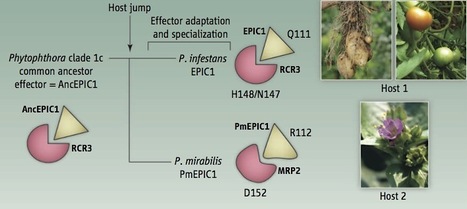
Plants can be attacked by a vast range of pathogen classes, causing substantial agricultural losses. The Phytophthora (meaning “plant killer”) genus is a particularly destructive pathogen that causes root and stem base decay in a wide range of plants. Phytophthora infestans, which precipitated the Irish potato famine, originated in Central Mexico and is closely related to other Phytophthora species with distinct host ranges. Pathogen effectors that are secreted during infection play a key role in disease biology, but effector-induced adaptation to new hosts is an understudied topic. In this issue, Dong et al. investigate how Phytophthora effector proteins evolve the ability to specialize on new hosts (see the figure). Read the original paper by Dong et al. at http://www.sciencemag.org/content/343/6170/552.abstract
|
|
Scooped by
Kamoun Lab @ TSL
January 29, 2014 2:51 AM
|
The biotrophic fungus Ustilago maydis causes smut disease in maize with characteristic tumor formation and anthocyanin induction. Here, we show that anthocyanin biosynthesis is induced by the virulence promoting secreted effector protein Tin2. Tin2 protein functions inside plant cells where it interacts with maize protein kinase ZmTTK1. Tin2 masks a ubiquitin–proteasome degradation motif in ZmTTK1, thus stabilizing the active kinase. Active ZmTTK1 controls activation of genes in the anthocyanin biosynthesis pathway. Without Tin2, enhanced lignin biosynthesis is observed in infected tissue and vascular bundles show strong lignification. This is presumably limiting access of fungal hyphae to nutrients needed for massive proliferation. Consistent with this assertion, we observe that maize brown midrib mutants affected in lignin biosynthesis are hypersensitive to U. maydis infection. We speculate that Tin2 rewires metabolites into the anthocyanin pathway to lower their availability for other defense responses. - See more at: http://elife.elifesciences.org/content/3/e01355#sthash.iLxIM1Ig.dpuf
|
|
Scooped by
Kamoun Lab @ TSL
January 27, 2014 4:54 AM
|
Proteins with nucleotide binding and leucine-rich repeat domains (NLRs) serve as immune receptors in animals and plants that recognize pathogens and activate downstream defense responses. As high accumulation of NLRs can result in unwarranted autoimmune responses, their cellular concentrations must be tightly regulated. However, the molecular mechanisms of this process are poorly detailed. The F-box protein Constitutive expressor of PR genes 1 (CPR1) was previously identified as a component of a Skp1, Cullin1, F-box protein E3 complex that targetsNLRs, including Suppressor of NPR1, Constitutive 1 (SNC1) and Resistance toPseudomonas syringae 2 (RPS2), for ubiquitination and further protein degradation. From a forward genetic screen, we identified Mutant, snc1-enhancing 3 (MUSE3), an E4 ubiquitin ligase involved in polyubiquitination of its protein targets. Knocking outMUSE3 in Arabidopsis thaliana results in increased levels of NLRs, including SNC1 and RPS2, whereas overexpressing MUSE3 together with CPR1 enhances polyubiquitination and protein degradation of these immune receptors. This report on the functional role of an E4 ligase in plants provides insight into the scarcely understood NLR degradation pathway.
|
|
Scooped by
Kamoun Lab @ TSL
January 23, 2014 6:42 AM
|
Plants need to finely balance resources allocated to growth and immunity to achieve optimal fitness. A trade-off between pathogen-associated molecular pattern (PAMP)-triggered immunity (PTI) and brassinosteroids (BR)-mediated growth was recently reported, but more information about the underlying mechanisms is needed. Here, we identify the bHLH transcription factor HBI1 as a negative regulator of PTI signaling. HBI1 expression is down-regulated in response to different PAMPs. HBI1 over-expression leads to reduced PAMP-triggered responses. This inhibition correlates with reduced steady-state expression of immune marker genes leading to increased susceptibility to the bacterium Pseudomonas syringae. Over-expression of the HBI1-related bHLHs BEE2 and CIB1 inhibits partially immunity, indicating that BEE2 and CIB1 may act redundantly with HBI1. In contrast to its expression pattern upon PAMP treatment, HBI1 expression is enhanced by BR treatment. Also, HBI1 over-expressing plants are hyper-responsive to BR, and more resistant to the BR biosynthetic inhibitor BRZ. HBI1 is nuclear-localized and a mutation in a conserved leucine residue within the first helix of the protein interaction domain impairs its function in BR signaling. Interestingly, HBI1 interacts with several inhibitory atypical bHLHs, which likely keep HBI1 under negative control. Hence, HBI1 is a positive regulator of BR-triggered responses and its negative effect of PTI is likely due to the antagonism between BR and PTI signaling. Together, this study identifies a novel component involved in the complex trade-off between innate immunity and BR-regulated growth.
|
|
Scooped by
Kamoun Lab @ TSL
January 21, 2014 10:00 AM
|
Aphids evolved novel cells, called bacteriocytes, that differentiate specifically to harbour the obligatory mutualistic endosymbiotic bacteria Buchnera aphidicola. The genome of the host aphid Acyrthosiphon pisum contains many orphan genes that display no similarity with genes found in other sequenced organisms, prompting us to hypothesize that some of these orphan genes are related to lineage-specific traits, such as symbiosis. We conducted deep sequencing of bacteriocytes mRNA followed by whole mount in situhybridizations of over-represented transcripts encoding aphid-specific orphan proteins. We identified a novel class of genes that encode small proteins with signal peptides, which are often cysteine-rich, that are over-represented in bacteriocytes. These genes are first expressed at a developmental time point coincident with the incorporation of symbionts strictly in the cells that contribute to the bacteriocyte and this bacteriocyte-specific expression is maintained throughout the aphid's life. The expression pattern suggests that recently evolved secretion proteins act within bacteriocytes, perhaps to mediate the symbiosis with beneficial bacterial partners, which is reminiscent of the evolution of novel cysteine-rich secreted proteins of leguminous plants that regulate nitrogen-fixing endosymbionts.
|
|
Scooped by
Kamoun Lab @ TSL
January 16, 2014 5:40 AM
|
A bacteria carried by a tiny insect from China could dry up orange juice in the United States and the world. The sprawling citrus orchard that Victor Story toured recently sure looked like a steal at $11,000 an acre. The investors who owned it were going to lose money, and potential buyers such as Story might have stood to reap a handsome reward. But as he bumped along the 40 acres of groves in a large SUV, Story was taken aback by the sickly look of the trees. Their leaves were an inch shorter than normal and yellowing. Full-size oranges were still apple green. Other mature oranges that should have been the size of baseballs were no bigger than ping-pong balls. “That fruit’s never going to be of any value,” said Story, 68, who has been growing fruit all his life. He said his pickers wouldn’t even bother to reach for it. “It’s going to fall off the tree. It’s never going to get squeezed,” he said. “These investors paid $15,000 an acre for that grove. I know because they bought it from a friend. I frankly don’t think it will sell for $11,000.”
|
|
Scooped by
Kamoun Lab @ TSL
January 14, 2014 11:59 AM
|
Biologists have long been intrigued by the diversity of tropical forests, where 1 hectare may hold more than 650 tree species—more than in all of Canada and the continental United States. Ecological theory suggests that if species are too similar in their resource use, one will out-compete the others; hence, neighboring species must exploit different niches if they are to coexist. However, given that plants in one hectare of rainforest experience very similar physical environments, ecologists have struggled to demonstrate sufficient niche differentiation to support such high diversity. In addition to the puzzle of high local diversity, tropical forests also have high species richness overall. Recent studies show that interactions with pests may promote local plant diversity, accelerate plant evolution, and enhance the proliferation of species over evolutionary time.
|