Your new post is loading...
Thousands of putative biosynthetic genes in Arabidopsis thaliana have no known function, which suggests that there are numerous molecules contributing to plant fitness that have not yet been discovered1, 2. Prime among these uncharacterized genes are cytochromes P450 upregulated in response to pathogens3, 4. Here we start with a single pathogen-induced P450 (ref. 5), CYP82C2, and use a combination of untargeted metabolomics and coexpression analysis to uncover the complete biosynthetic pathway to 4-hydroxyindole-3-carbonyl nitrile (4-OH-ICN), a previously unknown Arabidopsis metabolite. This metabolite harbours cyanogenic functionality that is unprecedented in plants and exceedingly rare in nature6, 7; furthermore, the aryl cyanohydrin intermediate in the 4-OH-ICN pathway reveals a latent capacity for cyanogenic glucoside biosynthesis8, 9 in Arabidopsis. By expressing 4-OH-ICN biosynthetic enzymes in Saccharomyces cerevisiae and Nicotiana benthamiana, we reconstitute the complete pathway in vitro and in vivo and validate the functions of its enzymes. Arabidopsis 4-OH-ICN pathway mutants show increased susceptibility to the bacterial pathogen Pseudomonas syringae, consistent with a role in inducible pathogen defence. Arabidopsis has been the pre-eminent model system10, 11 for studying the role of small molecules in plant innate immunity12; our results uncover a new branch of indole metabolism distinct from the canonical camalexin pathway, and support a role for this pathway in the Arabidopsis defence response13. These results establish a more complete framework for understanding how the model plant Arabidopsis uses small molecules in pathogen defence.
Via Jim Alfano

|
Scooped by
Kamoun Lab @ TSL
September 17, 2015 5:05 AM
|
Plants and animals rely on immune receptors, known as nucleotide-binding domain and leucine-rich repeat containing proteins (NB-LRR or NLR), to defend against invading pathogens and activate immune responses. How NLR receptors respond to pathogens is inadequately understood. We previously reported single-residue mutations that expand the response of the potato immune receptor R3a to AVR3aEM, a stealthy effector from the late blight oomycete pathogen Phytophthora infestans. I2, another NLR that mediates resistance to the wilt causing fungus Fusarium oxysporum f. sp. lycopersici, is the tomato ortholog of R3a. We transferred previously identified R3a mutations to I2 to assess the degree to which the resulting I2 mutants have an altered response. We discovered that wild-type I2 protein responds weakly to AVR3a. One mutant in the N-terminal coiled-coil domain, I2I141N, appeared sensitized and displayed markedly increased response to AVR3a. Remarkably, I2I141N conferred partial resistance to P. infestans. Further, I2I141N has an expanded response spectrum to F. oxysporum f. sp. lycopersici effectors compared to the wild-type I2 protein. Our results suggest that synthetic immune receptors can be engineered to confer resistance to phylogenetically divergent pathogens and indicate that knowledge gathered for one NLR could be exploited to improve NLRs from other plant species.
Pathogens utilize effectors to suppress basal plant defense known as PTI (Pathogen-associated molecular pattern-triggered immunity). However, our knowledge of PTI suppression by filamentous plant pathogens, i.e. fungi and oomycetes, remains fragmentary. Previous work revealed that the co-receptor BAK1/SERK3 contributes to basal immunity against the potato pathogen Phytophthora infestans. Moreover BAK1/SERK3 is required for the cell death induced by P. infestans elicitin INF1, a protein with characteristics of PAMPs. The P. infestans host-translocated RXLR-WY effector AVR3a is known to supress INF1-mediated cell death by binding the plant E3 ligase CMPG1. In contrast, AVR3aKI-Y147del, a deletion mutant of the C-terminal tyrosine of AVR3a, fails to bind CMPG1 and does not suppress INF1-mediated cell death. Here, we studied the extent to which AVR3a and its variants perturb additional BAK1/SERK3-dependent PTI responses in N. benthamiana using the elicitor/receptor pair flg22/FLS2 as a model. We found that all tested variants of AVR3a suppress defense responses triggered by flg22 and reduce internalization of activated FLS2. Moreover, we discovered that AVR3a associates with the Dynamin-Related Protein 2 (DRP2), a plant GTPase implicated in receptor-mediated endocytosis. Interestingly, silencing of DRP2 impaired ligand-induced FLS2 internalization but did not affect internalization of the growth receptor BRI1. Our results suggest that AVR3a associates with a key cellular trafficking and membrane-remodeling complex involved in immune receptor-mediated endocytosis. We conclude that AVR3a is a multifunctional effector that can suppress BAK1/SERK3-mediated immunity through at least two different pathways.
Via The Sainsbury Lab
|
|
Scooped by
Kamoun Lab @ TSL
September 8, 2015 9:36 AM
|
|
|
Scooped by
Kamoun Lab @ TSL
September 6, 2015 2:48 PM
|
- Nonhost resistance (NHR) is the most prevalent form of plant immunity. In Arabidopsis, NHR requires membrane-localized ATP-binding cassette (ABC) transporter PENETRATION (PEN) 3. Upon perception of pathogen-associated molecular patterns, PEN3 becomes phosphorylated, suggestive of PEN3 regulation by post-translational modification. Here, we investigated the PEN3 protein interaction network.
- We probed the Arabidopsis protein microarray AtPMA-5000 with the N-terminal cytoplasmic domain of PEN3. Several of the proteins identified to interact with PEN3 in vitro represent cellular Ca2+ sensors, including calmodulin (CaM) 3, CaM7 and several CaM-like proteins, pointing to the importance of Ca2+ sensing to PEN3-mediated NHR.
- We demonstrated co-localization of PEN3 and CaM7, and we confirmed PEN3–CaM interaction in vitro and in vivo by PEN3 pull-down with CaM Sepharose, CaM overlay assay and bimolecular fluorescence complementation. We also show that just like in pen3, NHR to the nonadapted fungal pathogens Phakopsora pachyrhizi and Blumeria graminis f.sp. hordei is compromised in the Arabidopsis cam7and pen3 cam7 mutants.
- Our study discloses CaM7 as a PEN3-interacting protein crucial to Arabidopsis NHR and emphasizes the importance of Ca2+ sensing to plant immunity.
|
|
Scooped by
Kamoun Lab @ TSL
September 4, 2015 6:04 AM
|
- Development of resistant crops is the most effective way to control plant diseases to safeguard food and feed production. Disease resistance is commonly based on resistance genes, which generally mediate the recognition of small proteins secreted by invading pathogens. These proteins secreted by pathogens are called ‘avirulence’ proteins. Their identification is important for being able to assess the usefulness and durability of resistance genes in agricultural settings.
- We have used genome sequencing of a set of strains of the melon wilt fungus Fusarium oxysporum f. sp. melonis (Fom), bioinformatics-based genome comparison and genetic transformation of the fungus to identify AVRFOM2, the gene that encodes the avirulence protein recognized by the melon Fom-2 gene.
- Both an unbiased and a candidate gene approach identified a single candidate for the AVRFOM2 gene. Genetic complementation of AVRFOM2 in three different race 2 isolates resulted in resistance of Fom-2-harbouring melon cultivars. AvrFom2 is a small, secreted protein with two cysteine residues and weak similarity to secreted proteins of other fungi.
- The identification of AVRFOM2 will not only be helpful to select melon cultivars to avoid melon Fusarium wilt, but also to monitor how quickly a Fom population can adapt to deployment of Fom-2-containing cultivars in the field.
|
|
Scooped by
Kamoun Lab @ TSL
September 4, 2015 5:08 AM
|
The first US caged field studies of a genetically modified (GM) insect for use in agriculture began in July in upstate New York. The GM diamondback moth developed by Oxitec, a spin-out from Oxford University, headquartered in Milton Park, UK, is intended as a tool for crop growers to control infestations without chemical insecticides. Cornell entomologist Anthony Shelton has started testing the transgenic moths, which carry an autocidal gene that causes the insects' female progeny to die before reaching reproductive stage. The results of these trials, and of a handful of others in the works, will provide an indication whether the approach has commercial potential in agriculture and will provide a barometer of attitudes to the release of GM insects that lack a compelling trait for consumers.
Diamondback moths, Plutella xylostella, are an invasive species and a global nemesis of brassica vegetables such as broccoli, cabbage, kale, Brussels sprouts and the field crop canola. Diamondback moths cost the global economy an estimated $4–5 billion annually in damaged crops and pest control methods. “The damage the diamondback moth can do is incredible. I've seen whole fields wiped out,” says Shelton. The moth has also evolved resistance to over 90 insecticide ingredients, forcing farmers to increase pesticide use, further exacerbating resistance.
Oxitec's solution to this pest is the OX4319L moth. The genetically engineered insect contains a synthetic 'self-limiting' gene encoding tetracycline repressible transcription activator variant (tTAV). At high expression levels this protein ties up cells' transcriptional machinery, shutting down cell function and eventually killing the insect. The tTAV protein also binds and induces the tetracycline operator (tetO) sequences, which in turn increases expression of tTAV. The more tTAV binds to tetO, the more tTAV is produced—a positive feedback system. The moths also carry a fluorescent marker gene (DsRed2) that gives the insects color under a certain wavelength of green light, enabling them to be distinguished from wild pests.
|
|
Scooped by
Kamoun Lab @ TSL
August 26, 2015 9:04 AM
|
Background: Direct targets for plant NLR proteins in immune signalling are largely unknown.
Results: The Rx1 NLR protein of potato binds and distorts DNA following pathogen perception resulting in immune activation.
Conclusion: DNA is a direct signalling target for a plant NLR immune receptor.
Significance: Plant NLR receptors might regulate immune transcriptional responses by directly interacting with plant chromatin.
Plant NLR proteins enable cells to respond to pathogen attack. Several NLRs act in the nucleus, however, conserved nuclear targets that support their role in immunity are unknown. Previously we noted a structural homology between the NB domain of NLRs and DNA replication origin-binding Cdc6/Orc1 proteins. Here we show that the NB-ARC domain of the Rx1 NLR of potato binds nucleic acids. Rx1 induces ATP-dependent bending and melting of DNA in vitro dependent upon a functional P-loop. In situ full-length Rx1 binds nuclear DNA following activation by its cognate pathogen-derived effector protein, the coat protein of potato virus X. In line with its obligatory nucleocytoplasmic distribution, DNA-binding was only observed when Rx1 was allowed to freely translocate between both compartments and was activated in the cytoplasm. Immune activation induced by an unrelated NLR-effector pair did not trigger a Rx1-DNA interaction. DNA-binding is therefore not merely a consequence of immune activation. These data establish a role for DNA distortion in Rx1 immune signalling and defines DNA as a molecular target of an activated NLR.
|
|
Scooped by
Kamoun Lab @ TSL
August 26, 2015 5:37 AM
|
Background - Powdery mildew, caused by the obligate biotrophic fungus Blumeria graminis, is a major problem in cereal production as it can reduce quality and yield. B. graminis has evolved eight distinct formae speciales (f.sp.) which display strict host specialization. In the last decade, powdery mildew has emerged on triticale, the artificial intergeneric hybrid between wheat and rye. This emergence is probably triggered by a host range expansion of the wheat powdery mildew B. graminis f.sp. tritici. To gain more precise information about the evolutionary processes that led to this host range expansion, we pursued a combined pathological and genetic approach.
Results - B. graminis isolates were sampled from triticale, wheat and rye from different breeding regions in Europe. Pathogenicity tests showed that isolates collected from triticale are highly pathogenic on most of the tested triticale cultivars. Moreover, these isolates were also able to infect several wheat cultivars (their previous hosts), although a lower aggressiveness was observed compared to isolates collected from wheat. Phylogenetic analysis of nuclear gene regions identified two statistically significant clades, which to a certain extent correlated with pathogenicity. No differences in virulence profiles were found among the sampled regions, but the distribution of genetic variation demonstrated to be geography dependent. A multilocus haplotype network showed that haplotypes pathogenic on triticale are distributed at different sites in the network, but always clustered at or near the tips of the network.
Conclusions - This study reveals a genetic structure in B. graminis with population differentiation according to geography and host specificity. In addition, evidence is brought forward demonstrating that the host range expansion of wheat isolates to the new host triticale occurred recently and multiple times at different locations in Europe.
|
|
Scooped by
Kamoun Lab @ TSL
August 25, 2015 3:56 AM
|
Plants have evolved intracellular immune receptors to detect pathogen proteins known as effectors. How these immune receptors detect effectors remains poorly understood. Here we describe the structural basis for direct recognition of AVR-Pik, an effector from the rice blast pathogen, by the rice intracellular NLR immune receptor Pik. AVR-PikD binds a dimer of the Pikp-1 HMA integrated domain with nanomolar affinity. The crystal structure of the Pikp-HMA/AVR-PikD complex enabled design of mutations to alter protein interaction in yeast and in vitro, and perturb effector-mediated response both in a rice cultivar containing Pikp and upon expression of AVR-PikD and Pikp in the model plant Nicotiana benthamiana. These data reveal the molecular details of a recognition event, mediated by a novel integrated domain in an NLR, which initiates a plant immune response and resistance to rice blast disease. Such studies underpin novel opportunities for engineering disease resistance to plant pathogens in staple food crops.
The plant hormone jasmonate plays crucial roles in regulating plant responses to herbivorous insects and microbial pathogens and is an important regulator of plant growth and development1, 2, 3, 4, 5, 6, 7. Key mediators of jasmonate signalling include MYC transcription factors, which are repressed by jasmonate ZIM-domain (JAZ) transcriptional repressors in the resting state. In the presence of active jasmonate, JAZ proteins function as jasmonate co-receptors by forming a hormone-dependent complex with COI1, the F-box subunit of an SCF-type ubiquitin E3 ligase8, 9, 10, 11. The hormone-dependent formation of the COI1–JAZ co-receptor complex leads to ubiquitination and proteasome-dependent degradation of JAZ repressors and release of MYC proteins from transcriptional repression3, 10, 12. The mechanism by which JAZ proteins repress MYC transcription factors and how JAZ proteins switch between the repressor function in the absence of hormone and the co-receptor function in the presence of hormone remain enigmatic. Here we show that Arabidopsis MYC3 undergoes pronounced conformational changes when bound to the conserved Jas motif of the JAZ9 repressor. The Jas motif, previously shown to bind to hormone as a partly unwound helix, forms a complete α-helix that displaces the amino (N)-terminal helix of MYC3 and becomes an integral part of the MYC N-terminal fold. In this position, the Jas helix competitively inhibits MYC3 interaction with the MED25 subunit of the transcriptional Mediator complex. Our structural and functional studies elucidate a dynamic molecular switch mechanism that governs the repression and activation of a major plant hormone pathway.
Via Francis Martin
|
|
Scooped by
Kamoun Lab @ TSL
August 12, 2015 6:49 AM
|
Distinct modifications fine-tune the activity of jasmonic acid (JA) in regulating plant growth and immunity. Hydroxylated JA (12OH-JA) promotes flower and tuber development but prevents induction of JA signaling, plant defense or both. However, biosynthesis of 12OH-JA has remained elusive. We report here an antibiotic biosynthesis monooxygenase (Abm) that converts endogenous free JA into 12OH-JA in the model rice blast fungus Magnaporthe oryzae. Such fungal 12OH-JA is secreted during host penetration and helps evade the defense response. Loss of Abm in M. oryzae led to accumulation of methyl JA (MeJA), which induces host defense and blocks invasive growth. Exogenously added 12OH-JA markedly attenuated abmΔ-induced immunity in rice. Notably, Abm itself is secreted after invasion and most likely converts plant JA into 12OH-JA to facilitate host colonization. This study sheds light on the chemical arms race during plant-pathogen interaction, reveals Abm as an antifungal target and outlines a synthetic strategy for transformation of a versatile small-molecule phytohormone.
|
|
Rescooped by
Kamoun Lab @ TSL
from Rice Blast
August 6, 2015 12:57 PM
|
Rice blast fungus, Magnaporthe oryzae, is the most destructive pathogen in the rice-growing area. This fungus has a biotrophic phase early in infection and later switches to a necrotrophic lifestyle. During the biotrophic phase, the fungus competes with its host for nutrients and oxygen. Continuous uptake of oxygen is essential for successful establishment of blast disease of this pathogen. Here, we report transcriptional responses of the fungus to oxygen limitation. Transcriptome analysis using RNA-Seq identified that 1,047 genes were up-regulated in response to hypoxia. Those genes are involved in mycelial development, sterol biosynthesis, and metal ion transport based on hierarchical GO terms, and are well-conserved among three fungal species. In addition, null mutants of two hypoxia-responsive genes were generated and their roles in fungal development and pathogenicity tested. The mutant for the sterol regulatory element-binding protein gene, MoSRE1, exhibited increased sensitivity to a hypoxia-mimicking agent, increased conidiation, and delayed invasive growth within host cells, which is suggestive of important roles in fungal development. However, such defects did not cause any significant decrease in disease severity. The other null mutant, for the alcohol dehydrogenase gene MoADH1, showed no defect in the hypoxia-mimicking condition (using cobalt chloride) and fungal development. Taken together, this comprehensive transcriptional profiling in response to a hypoxic condition with experimental validations would provide new insights into fungal development and pathogenicity in plant pathogenic fungi.
Via Elsa Ballini
|
|
|
Scooped by
Kamoun Lab @ TSL
September 18, 2015 11:18 AM
|
Ash dieback is caused by Hymenoscyphus fraxineus, a cryptic species of the putatively harmless Hymenoscyphus albidus. Recently, H. fraxineus was found to be native to East Asia. However, the virulence of Asian H. fraxineus strains on Fraxinus excelsior and the virulence of European H. albidus on hosts other than F. excelsior and Fraxinus mandshurica have not yet been assessed. In a wound inoculation study, the virulence of four H. albidus and four European and Japanese H. fraxineus strains was assessed on F. excelsior and Fraxinus pennsylvanica in a climate chamber. Lesion lengths were measured after approximately three and a half months. No lesions were observed on the negative control or on trees inoculated with H. albidus. In contrast, inoculation with H. fraxineus induced typical symptoms of ash dieback on both tree species. Japanese H. fraxineus strains induced significantly longer lesions compared to European strains. Fraxinus excelsior was highly susceptible and developed lesions averaging lengths of 1·7 and 8·4 cm for European and Japanese strains, respectively. Fraxinus pennsylvanica was less susceptible and developed average lesion lengths of 1·6 and 4·8 cm for European and Japanese strains, respectively. Most strains were successfully reisolated from necrotic lesions or inocula, fulfilling Koch's postulates. The data show that additional introductions of H. fraxineusstrains from the native range to Europe could pose a threat to the conservation of F. excelsior. In addition, introduction of H. fraxineus to North America could potentially have a negative effect on the indigenous F. pennsylvanica.
|
|
Scooped by
Kamoun Lab @ TSL
September 16, 2015 11:36 AM
|
Pathogen attack sequentially confers pattern-triggered immunity (PTI) and effector-triggered immunity (ETI) after sensing of pathogen patterns and effectors by plant immune receptors, respectively. Reactive oxygen species (ROS) play pivotal roles in PTI and ETI as signaling molecules. Nicotiana benthamiana RBOHB, an NADPH oxidase, is responsible for both the transient PTI ROS burst and the robust ETI ROS burst. Here, we show that RBOHB transactivation mediated by MAPK contributes to R3a/AVR3a-triggered ETI (AVR3a-ETI) ROS burst. RBOHB is markedly induced during the ETI and INF1-triggered PTI (INF1-PTI), but not flg22-tiggered PTI (flg22-PTI). We found that the RBOHB promoter contains a functional W-box in the R3a/AVR3a and INF1 signal-responsive cis-element. Ectopic expression of four phospho-mimicking mutants of WRKY transcription factors, which are MAPK substrates, induced RBOHB, and yeast one-hybrid analysis indicated that these mutants bind to the cis-element. Chromatin immunoprecipitation assays indicated direct binding of the WRKY to the cis-element in plants. Silencing of multiple WRKY genes compromised the upregulation of RBOHB, resulting in impairment of AVR3a-ETI and INF1-PTI ROS bursts, but not the flg22-PTI ROS burst. These results suggest that the MAPK-WRKY pathway is required for AVR3a-ETI and INF1-PTI ROS bursts by activation of RBOHB.
|
|
Scooped by
Kamoun Lab @ TSL
September 12, 2015 2:17 PM
|
|
|
Scooped by
Kamoun Lab @ TSL
September 8, 2015 4:27 AM
|
The tomato I-3 and I-7 genes confer resistance to Fusarium oxysporum f. sp. lycopersici (Fol) race 3 and were introgressed into the cultivated tomato, Solanum lycopersicum, from the wild relative Solanum pennellii. I-3 was identified previously on chromosome 7 and encodes an S-receptor-like kinase, but little was known about I-7. Molecular markers have been developed for the marker-assisted breeding of I-3, but none were available for I-7. We used an RNA-seq and SNP-analysis approach to map I-7 to a small introgression of S. pennellii DNA (ca. 210 kb) on chromosome 8 and identify I-7 as a gene encoding a leucine-rich-repeat receptor-like protein (LRR-RLP), thereby expanding the repertoire of resistance protein classes conferring resistance to Fol. Using an eds1 mutant of tomato we showed that I-7, like many other LRR-RLPs conferring pathogen resistance in tomato, is EDS1 dependent. Using transgenic tomato plants carrying only the I-7 gene for Fol resistance, we found that I-7 also confers resistance to Fol races 1 and 2. Given that Fol race 1 carries Avr1, resistance to Fol race 1 indicates that I-7-mediated resistance, unlike I-2 or I-3-mediated resistance, is not suppressed by Avr1. This suggests Avr1 is not a general suppressor of Folresistance in tomato leading us to hypothesise that Avr1 may be acting against an EDS1-independent pathway for resistance activation. The identification of I-7 has allowed us to develop molecular markers for marker-assisted breeding of both genes currently known to confer Folrace 3 resistance (I-3 and I-7). Given that I-7-mediated resistance is not suppressed by Avr1, I-7 may be a useful addition to I-3 in the tomato breeder's toolbox.
|
|
Scooped by
Kamoun Lab @ TSL
September 4, 2015 12:47 PM
|
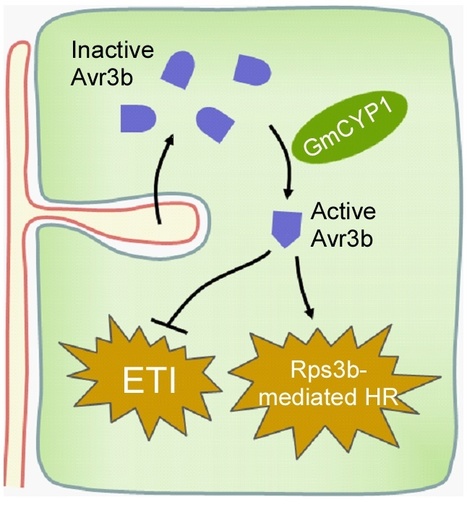
Plant pathogens secrete an arsenal of effector proteins to impair host immunity. Some effectors possess enzymatic activities that can modify their host targets. Previously, we demonstrated that a Phytophthora sojae RXLR effector Avr3b acts as a Nudix hydrolase when expressed in planta; and this enzymatic activity is required for full virulence of P. sojae strain P6497 in soybean (Glycine max). Interestingly, recombinant Avr3b produced by E. coli does not have the hydrolase activity unless it was incubated with plant protein extracts. Here, we report the activation of Avr3b by a prolyl-peptidyl isomerase (PPIase), cyclophilin, in plant cells. Avr3b directly interacts with soybean cyclophilin GmCYP1, which activates the hydrolase activity of Avr3b in a PPIase activity-dependent manner. Avr3b contains a putative Glycine-Proline (GP) motif; which is known to confer cyclophilin-binding in other protein substrates. Substitution of the Proline (P132) in the putative GP motif impaired the interaction of Avr3b with GmCYP1; as a result, the mutant Avr3bP132A can no longer be activated by GmCYP1, and is also unable to promote Phytophthora infection. Avr3b elicits hypersensitive response (HR) in soybean cultivars producing the resistance protein Rps3b, but Avr3bP132A lost its ability to trigger HR. Furthermore, silencing of GmCYP1 rendered reduced cell death triggered by Avr3b, suggesting that GmCYP1-mediated Avr3b maturation is also required for Rps3b recognition. Finally, cyclophilins of Nicotiana benthamiana can also interact with Avr3b and activate its enzymatic activity. Overall, our results demonstrate that cyclophilin is a “helper” that activates the enzymatic activity of Avr3b after it is delivered into plant cells; as such, cyclophilin is required for the avirulence and virulence functions of Avr3b.
|
|
Scooped by
Kamoun Lab @ TSL
September 4, 2015 5:20 AM
|
Background - Root rot caused by Aphanomyces euteiches is one of the most destructive pea diseases while a distantly related species P. pisi has been recently described as the agent of pea and faba bean root rot. These two oomycete pathogens with different pathogenicity factor repertories have both evolved specific mechanisms to infect pea. However, little is known about the genes and mechanisms of defence against these pathogens in pea. In the present study, the transcriptomic response of pea to these two pathogens was investigated at two time points during early phase of infection using a Medicago truncatula microarray.
Results - Of the 37,976 genes analysed, 574 and 817 were differentially expressed in response to A. euteiches at 6 hpi and 20 hpi, respectively, while 544 and 611 genes were differentially regulated against P. pisi at 6 hpi and 20 hpi, respectively. Differentially expressed genes associated with plant immunity responses were involved in cell wall reinforcement, hormonal signalling and phenylpropanoid metabolism. Activation of cell wall modification, regulation of jasmonic acid biosynthesis and induction of ethylene signalling pathway were among the common transcriptional responses to both of these oomycetes. However, induction of chalcone synthesis and the auxin pathway were specific transcriptional changes against A. euteiches.
Conclusions - Our results demonstrate a global view of differentially expressed pea genes during compatible interactions with P. pisi and A. euteiches at an early phase of infection. The results suggest that distinct signalling pathways are triggered in pea by these two pathogens that lead to common and specific immune mechanisms in response to these two oomycetes. The generated knowledge may eventually be used in breeding pea varieties with resistance against root rot disease.
|
|
Scooped by
Kamoun Lab @ TSL
August 28, 2015 5:10 AM
|
|
|
Scooped by
Kamoun Lab @ TSL
August 26, 2015 8:31 AM
|
Aquilegia vulgaris (Ranunculaceae) (Columbine) is a flowering herbaceous perennial native to Europe and widely cultivated in UK gardens. It is an important crop for some commercial nurseries that produce large numbers of potted plants for retail sale in garden centres. In 2008, 100% crop loss due to a bacterial disease was reported by one grower. Subsequently, during a survey of bacterial diseases of herbaceous perennials on commercial nurseries carried out during 2010 (Roberts, 2011), symptoms consisting of black spots or larger lesions with a water-soaked margin were observed on the leaves and stems of plants at two nurseries in different regions of the UK.
|
|
Scooped by
Kamoun Lab @ TSL
August 25, 2015 4:41 AM
|
In the mid-20th century, an American scientist named Harold Henry Flor helped explain how certain varieties of plants can fight off some plant killers (pathogens), but not others, with a model called the “gene-for-gene” hypothesis. Seventy years later, an international team of scientists describes precisely how a plant senses a pathogen, bringing an unprecedented level of detail to Flor’s model.
“We know that plants have sensors to detect pathogens but we knew little about how they work,” says Professor Banfield from the John Innes Centre (UK).
In a study published in eLife, the team led by Professor Mark Banfield, in collaboration with the Iwate Biotechnology Research Centre (Japan) and The Sainsbury Laboratory (UK), investigated how one sensor protein from rice called Pik binds AVR-Pik, a protein from the rice blast pathogen. This fungus causes the most devastating disease of rice crops. Using X-ray crystallography facilities at Diamond Light Source in Oxfordshire, the team succeeded in imaging the contact points between the plant and pathogen proteins at the molecular level – the first time this has been done for a pair of plant and pathogen proteins that follow the gene-for-gene model.
Dr Abbas Maqbool from the JIC, first author of the study added, “Harold Flor predicted that plant sensors discriminate between different pathogen types, but at the time he had no knowledge of the molecules involved. It is remarkable that his ideas have now crystallized into detailed molecular models.”
Dr Maqbool, Professor Banfield and colleagues went on to discover that the strength at which the Pik sensor binds the pathogen AVR-Pik protein correlates with the strength of the plant’s response. This opens up new avenues for engineering better plant responses against pathogens by building sensors with increased strength of binding to pathogen proteins, and therefore conferring enhanced resistance to disease.
“Once we understand how these plant sensors detect invading pathogens, we can devise strategies to ‘boost’ the plant immune system and help protect rice and other important food crops from disease,” says Professor Banfield.
Maqbool et al. eLife http://elifesciences.org/content/4/e08709
|
|
Scooped by
Kamoun Lab @ TSL
August 22, 2015 7:11 AM
|
• Rcr3 and Pip1 are paralogous secreted tomato proteases that diverged >36 mya
• Rcr3 and Pip1 differ in expression levels and solvent-exposed residues
• Pip1 depletion increases susceptibility to unrelated apoplastic pathogens
• Without Cf-2, Rcr3 depletion increases susceptibility only to oomycete infection
Rcr3 and Pip1 are paralogous secreted papain-like proteases of tomato. Both proteases are inhibited by Avr2 from the fungal pathogen Cladosporium fulvum, but only Rcr3 acts as a co-receptor for Avr2 recognition by the tomato Cf-2 immune receptor [ 1–4 ]. Here, we show that Pip1-depleted tomato plants are hyper-susceptible to fungal, bacterial, and oomycete plant pathogens, demonstrating that Pip1 is an important broad-range immune protease. By contrast, in the absence of Cf-2, Rcr3 depletion does not affect fungal and bacterial infection levels but causes increased susceptibility only to the oomycete pathogen Phytophthora infestans. Rcr3 and Pip1 reside on a genetic locus that evolved over 36 million years ago. These proteins differ in surface-exposed residues outside the substrate-binding groove, and Pip1 is 5- to 10-fold more abundant than Rcr3. We propose a model in which Rcr3 and Pip1 diverged functionally upon gene duplication, possibly driven by an arms race with pathogen-derived inhibitors or by coevolution with the Cf-2 immune receptor detecting inhibitors of Rcr3, but not of Pip1.
|
|
Scooped by
Kamoun Lab @ TSL
August 22, 2015 6:12 AM
|
Phytophthora sojae is a pathogenic oomycete that infects soybean seedlings as well as stems and roots of established plants, costing growers $1–2 billion per year. Due to its economic importance, P. sojae has become a model for the study of oomycete genetics, physiology and pathology. Despite the availability of several genome sequences, the lack of efficient techniques for targeted mutagenesis and gene replacement have long hampered genetic studies of pathogenicity in Phytophthora species. Here, we describe a CRISPR/Cas9 system enabling rapid and efficient genome editing in P. sojae. Using the RXLR effector gene Avr4/6 as target, we observed that in the absence of a homologous template, the repair of Cas9-induced double-strand breaks (DSBs) in P. sojae was mediated by non-homologous end joining (NHEJ), primarily resulting in short indels. Most mutants were homozygous, presumably due to gene conversion triggered by Cas9-mediated cleavage of non-mutant alleles. When donor DNA was present, homology directed repair (HDR) was observed, which resulted in the replacement of the target gene with the donor DNA. By testing the specific virulence of several NHEJ mutants and HDR -mediated gene replacements on soybeans, we have validated the contribution of Avr4/6 to recognition by soybean R gene loci, Rps4 and Rps6, but also uncovered additional contributions to resistance by these two loci. Our results establish a powerful tool for studying functional genomics in Phytophthora, which provides new avenues for better control of this pathogen.
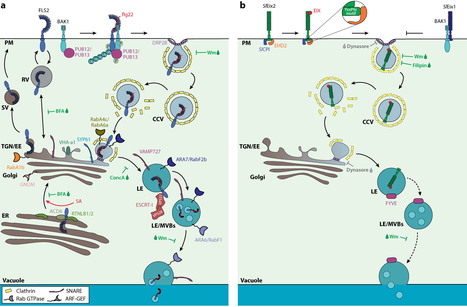
A significant challenge for plants is to induce localized defense responses at sites of pathogen attack. Therefore, host subcellular trafficking processes enable accumulation and exchange of defense compounds, which contributes to the plant on-site defenses in response to pathogen perception. This review summarizes our current understanding of the transport processes that facilitate immunity, the significance of which is highlighted by pathogens reprogramming membrane trafficking through host cell translocated effectors. Prominent immune-related cargos of plant trafficking pathways are the pattern recognition receptors (PRRs), which must be present at the plasma membrane to sense microbes in the apoplast. We focus on the dynamic localization of the FLS2 receptor and discuss the pathways that regulate receptor transport within the cell and their link to FLS2-mediated immunity. One emerging theme is that ligand-induced late endocytic trafficking is conserved across different PRR protein families as well as across different plant species.
Via The Sainsbury Lab
|