
Plants and Microbes
401.5K views |
+21 today


Everything related to the science of plant-microbe interactions
Curated by
Kamoun Lab @ TSL
 Your new post is loading...
 Scoop.it! 

Scoop.it!

Plant nucleotide-binding leucine-rich repeat (NLR) proteins enable plants to recognise and respond to pathogen attack. Previously, we demonstrated that the Rx1 NLR of potato is able to bind and bend DNA in vitro. DNA binding in siturequires its genuine activation following pathogen perception. However, it is unknown whether other NLR proteins are also able to bind DNA. Nor is it known how DNA binding relates to the ATPase activity intrinsic to NLR switch function required to immune activation. Here we investigate these issues using a recombinant protein corresponding to the N-terminal coiled-coil and nucleotide-binding domain regions of the I-2 NLR of tomato. Wild type I-2 protein bound nucleic acids with a preference of ssDNA≈dsDNA>ssRNA, which is distinct from Rx1. I-2 induced bending and melting of DNA. Notably, ATP enhanced DNA binding relative to ADP in the wild type protein, the null P-loop mutant K207R, and the autoactive mutant S233F. DNA binding was found to activate the intrinsic ATPase activity of I-2. Since DNA binding by I-2 was decreased in the presence of ADP when compared to ATP, a cyclic mechanism emerges; activated ATP-associated I-2 binds to DNA, which enhances ATP hydrolysis, releasing ADP-bound I-2 from the DNA. Thus DNA-binding is a general property of at least a subset of NLR proteins and NLR activation is directly linked to its activity at DNA.
Scoop.it!

New research from the Boyce Thompson Institute (BTI), the USDA Agricultural Research Service and the University of Washington finds that helpful bacteria living inside the insect that transmits the bacterial pathogen associated with citrus greening disease -- -an outbreak that is devastating Florida's citrus industry -- may be playing a role in the insect's spread of the pathogen. John S. Ramsey, Richard S. Johnson, Jason S. Hoki, Angela Kruse, Jaclyn Mahoney, Mark E. Hilf, Wayne B. Hunter, David G. Hall, Frank C. Schroeder, Michael J. MacCoss, Michelle Cilia. Metabolic Interplay between the Asian Citrus Psyllid and Its Profftella Symbiont: An Achilles’ Heel of the Citrus Greening Insect Vector. PLOS ONE, 2015; 10 (11): e0140826 http://dx.doi.org/10.1371/journal.pone.0140826
Scoop.it!

Plants defend against pathogens using both cell surface and intracellular immune receptors (Dodds & Rathjen, 2010; Win et al., 2012). Plant cell surface receptors include receptor-like kinases (RLKs) and receptor-like proteins (RLPs), which respond to pathogen-derived apoplastic molecules (Boller & Felix, 2009; Thomma et al., 2011). By contrast, plant intracellular immune receptors are typically nucleotide-binding leucine-rich repeat (NB-LRR or NLR) proteins, which respond to translocated effectors from a diversity of pathogens (Eitas & Dangl, 2010; Bonardi et al., 2012). These receptors engage in microbial perception either by directly binding pathogen molecules or indirectly by sensing pathogen-induced perturbations (Win et al., 2012). However, signaling events downstream of pathogen recognition remain poorly understood.
Scoop.it!

The 2015 growing season was a tough one for tomato researchers at the Boyce Thompson Institute, as bacterial speck disease descended on their field, but those infected plants may one day save others from a similar, spotted fate. Cool weather and heavy rains in early summer created the perfect environment for speck—a bacterial disease that attacks tomatoes, causing dark spots on leaves and fruits and withered flowers. The outbreak of speck turned Boyce Thompson Institute’s tomato field in Freeville, New York into a withered, mottled mess. When BTI tomato researchers saw spots, farm manager Steve McKay called in Chris Smart, a plant pathologist at Cornell University’s Geneva campus, and BTI Professor Greg Martin to diagnose the problem. Martin specializes in the study of tomato’s interactions with the bacterium that causes speck, Pseudomonas syringae pv. tomato. “This year speck really has been devastating to a lot of growers throughout the state of New York and to some researchers too.” said Smart. Since 2009, speck has been an issue for commercial producers in upstate New York who grow heirloom and fresh market tomatoes—the kind on grocery store shelves. Most of the tomatoes that end up in ketchup and tomato sauce, called processing tomatoes, carry a gene that makes them resistant to the bacteria. “Although it creates serious problems for growers, the outbreak gives us the opportunity to observe if any established or experimental varieties have resistance to the local strains of the bacteria,” said Martin. The tragedy of bacterial speck disease is that once farmers identify the problem, it likely has already progressed to a point where it is very difficult to control. In a bad year, growers can lose whole fields. “There are very few control products for bacterial diseases of vegetables,” said Smart. “If the symptoms are present in the field, the only thing they can do is to spray copper-based bactericides.” Because controlling speck once it takes hold is so difficult, prevention is key, said Smart. Growers should buy certified clean seed that is free of bacterial diseases, or they can heat treat their own seeds. They should also thoroughly clean all equipment, including trellis stakes, nursery flats, and greenhouse benches with a sterilizing solution. The bacteria survive in plant debris in the soil for up to three years, so Smart recommends rotating crops so that tomatoes—or related crops like peppers, eggplant and potatoes—grow in a field once every three years. A farmer’s best chance against speck is to use tomatoes that are naturally resistant. The gene present in processing tomatoes gives resistance only to types of Pseudomonas syringae pv. tomato designated as race 0. Another type, classified as race 1, has become much more common in recent years. “There isn’t any resistance to race 1 strains in cultivated tomatoes,” said Martin. “I have gotten more interested in race 1 strains because they’re emerging as more and more of a problem.” In a new paper published in The Plant Genome, Martin reports finding a segment of DNA from a wild relative of the cultivated tomato, which imparts resistance to race 1 bacteria. To find this stretch of chromosome, dubbed qRph1, researchers in his lab screened seeds from the Tomato Genetics Resource Center at the University of California at Davis. One sample of the fuzzy, green-fruited species Solanaum habrochaites, collected from Ecuador, showed resistance. They hybridized it to a cultivated tomato and then did the genetic work to map out the location of the gene. In future work, they will continue their breeding experiments to generate a variety of the cultivated tomato that carries the qRph1 resistance gene. The work highlights the importance of using wild relatives of cultivated crops as a source of valuable traits that have been lost through domestication. Martin and Smart plan to use the speck-infested Freeville field next year to field-test different plants’ resistance to the natural speck strains there. With any luck, they’ll find resistance genes in wild tomato plants that may spare future New York farmers from plowing under a speckled crop.
Scoop.it!

A viral protein hijacks the key effector of transcriptional gene silencing to evade host plant surveillance Transcriptional gene silencing (TGS) can serve as an innate immunity against invading DNA viruses throughout Eukaryotes. Geminivirus code for TrAP protein to suppress the TGS pathway. Here, we identified an Arabidopsis H3K9me2 histone methyltransferase, Su(var)3-9 homolog 4/Kryptonite (SUVH4/KYP), as a bona fide cellular target of TrAP. TrAP interacts with the catalytic domain of KYP and inhibits its activity in vitro. TrAP elicits developmental anomalies phenocopying several TGS mutants, reduces the repressive H3K9me2 mark and CHH DNA methylation, and reactivates numerous endogenous KYP-repressed loci in vivo. Moreover, KYP binds to the viral chromatin and controls its methylation to combat virus infection. Notably, kyp mutants support systemic infection of TrAP-deficient Geminivirus. We conclude that TrAP attenuates the TGS of the viral chromatin by inhibiting KYP activity to evade host surveillance. These findings provide new insight on the molecular arms race between host antiviral defense and virus counter defense at an epigenetic level.
Scoop.it!

The Arabidopsis Research Roundup is ‘defense-focused’ this week. We present three papers that highlight different aspects of plant immunity, two of which result from UK-US-China collaborations. Firstly a team from the Sainsbury Lab, Norwich looks at two molecular mechanisms that control stomatal closure. There are then two studies that involve University of Exeter researchers that investigate either the role of plant hormones in the response to bacterial pathogens or the role that the physical barrier of the cell wall plays in the prevention of infection. Gou M, Zhang Z, Zhang N, Huang Q, Monaghan J, Yang H, Shi Z, Zipfel C, Hua J (2015) Opposing effects on two phases of defense responses from concerted actions of HSC70 and BON1 in Arabidopsis. Plant Physiol. http://dx.doi.org/10.1104/pp.15.00970 GARNet Advisory Board Member Cyril Zipfel is the UK lead on this US-China-UK collaboration that looks at two aspects of the plant immune response that are regulated by the same proteins, albeit in an antagonistic way. The heat shock protein HSC70 and the calcium binding protein BON1 both are involved in stomatal closure, the formers effect mediated by the SNC1 protein and the latter (BON1) via the activitation of SGT1 that in turn inhibits HSC70. These new functions demonstrate opposing roles for HSC80 and BON1 in the immune response and further highlight the complexity of the signaling pathways that ultimately feed into the gross phenotypic change of stomatal closure. de Torres Zabala M, Zhai B, Jayaraman S, Eleftheriadou G, Winsbury R, Yang R, Truman W, Tang S, Smirnoff N, Grant M (2015) Novel JAZ co-operativity and unexpected JA dynamics underpin Arabidopsis defence responses to Pseudomonas syringae infection New Phytol. http://dx.doi.org/10.1111/nph.13683 This is another UK-USA-China collaboration led by Murray Grant at the University of Exeter, in which the role of the plant hormones is assessed in the response to bacterial pathogens. The defence response is mediated by both the hormones salicylic acid (SA) and jasmonic acid (JA) which antagnise many of each others activity. Pathogens have been shown to produce a JA-mimic cornatine (COR) in order to stall SA-mediated effects. In this study the authors use a systems-biology based approach that involved targeted hormone profiling, high-temporal-resolution micro-array analysis, reverse genetics and mRNA-seq to introduce a complex network of regulation that involves JAZ proteins, which are repressors of the JA signal. In short they show that JAZ5 and JAZ10 specifically co-operate to inhibit pathogen growth by restricting COR cytotoxicity by novel mechanisms, which do not involve previously well-defined signaling proteins. Marcos R, Izquierdo Y, Vellosillo T, Kulasekaran S, Cascón T, Hamberg M, Castresana C (2015) 9-Lipoxygenase-derived oxylipins activate brassinosteroid signaling to promote cell wall-based defense and limit pathogen infection Plant Physiol. http://dx.doi.org/10.1104/pp.15.00992 This work was performed in Madrid under the supervision of Carmen Castresana but includes the work of Satish Kulasekaran who is now at the Exeter. The focus of the work is the oxylipins, which are oxygenated lipid derivatives that regulate plant development and immunity. Using a variety of noxy mutants (non-responding to oxylipins) they show that the effect of the oxylipins is mediated via changes in the cell wall and this is signalled via the Brassinosteriod response pathway. Suspectibility to bacterial and fungal infection was enhanced in noxy mutants but plants were resistance when BR signalling was switched on. Therefore this manuscript introduces an important interaction between the oxylipins and BR signalling and helps to clarify their role in modulating plant defense.
Scoop.it!
Tweets from #EffecTours2015 Insects, pathogens, and plant reprogramming: from effector molecules to ecology, Tours, France, October 5-7, 2015
Scoop.it!

The life cycles of many organisms are constrained by the seasonality of resources. This is particularly true for leaf-mining herbivorous insects that use deciduous leaves to fuel growth and reproduction even beyond leaf fall. Our results suggest that an intimate association with bacterial endosymbionts might be their way of coping with nutritional constraints to ensure successful development in an otherwise senescent environment. We show that the phytophagous leaf-mining moth Phyllonorycter blancardella(Lepidoptera) relies on bacterial endosymbionts, most likely Wolbachia, to manipulate the physiology of its host plant resulting in the ‘green-island’ phenotype—photosynthetically active green patches in otherwise senescent leaves—and to increase its fitness. Curing leaf-miners of their symbiotic partner resulted in the absence of green-island formation on leaves, increased compensatory larval feeding and higher insect mortality. Our results suggest that bacteria impact green-island induction through manipulation of cytokinin levels. This is the first time, to our knowledge, that insect bacterial endosymbionts have been associated with plant physiology.

Steve Marek's curator insight,
October 6, 2015 9:16 AM
More on enigmatic green islands, especially conspicuous in autumn.
Scoop.it!

The world’s rapidly expanding populations have created a sense of urgency regarding global agricultural output, which needs to expand by at least 70% by the year 2050. Plants will provide a significant proportion of the world’s food supply. This international conference focuses on a group of plant enemies that have an unique style of attack. Instead of simply removing plant tissue, survival, growth and reproduction are enhanced by manipulating the plant to create specialized nutritional resources. This attack strategy can have serious consequences for both natural and agro-ecosystems. Mechanisms of reprogramming host plants remain largely unknown but clearly involve secreted effectors that are applied during attack. Options for defense against reprogrammers include effector-triggered immunity. Historically the phylogenetically diverse plant enemies that reprogram plants have been studied by different groups. This interdisciplinary meeting will bring together the complementary strengths of key international laboratories to discuss advances in our understanding of the enemies that reprogram plants and their associated symbionts, the options that plants have for their defense, and the evolutionary potential of enemies to adapt to plant defense.

Bernadette Cassel's curator insight,
October 2, 2015 5:51 AM
SUR VARIÉTÉS ENTOMOLOGIQUES
|
Scoop.it!
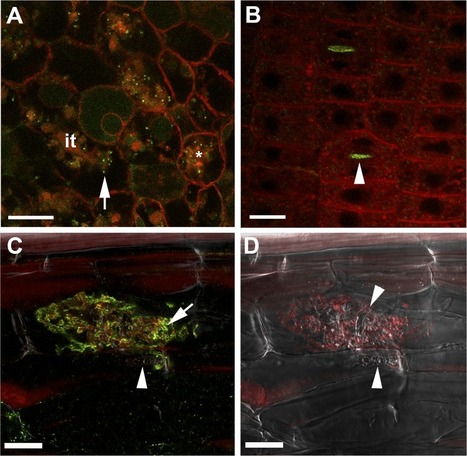
Endosymbiotic interactions are characterized by the formation of specialized membrane compartments, by the host in which the microbes are hosted, in an intracellular manner. Two well-studied examples, which are of major agricultural and ecological importance, are the widespread arbuscular mycorrhizal symbiosis and the Rhizobium–legume symbiosis. In both symbioses, the specialized host membrane that surrounds the microbes forms a symbiotic interface, which facilitates the exchange of, for example, nutrients in a controlled manner and, therefore, forms the heart of endosymbiosis. Despite their key importance, the molecular and cellular mechanisms underlying the formation of these membrane interfaces are largely unknown. Recent studies strongly suggest that the Rhizobium–legume symbiosis coopted a signaling pathway, including receptor, from the more ancient arbuscular mycorrhizal symbiosis to form a symbiotic interface. Here, we show that two highly homologous exocytotic vesicle-associated membrane proteins (VAMPs) are required for formation of the symbiotic membrane interface in both interactions. Silencing of these Medicago VAMP72genes has a minor effect on nonsymbiotic plant development and nodule formation. However, it blocks symbiosome as well as arbuscule formation, whereas root colonization by the microbes is not affected. Identification of these VAMP72s as common symbiotic regulators in exocytotic vesicle trafficking suggests that the ancient exocytotic pathway forming the periarbuscular membrane compartment has also been coopted in the Rhizobium–legume symbiosis.
Scoop.it!
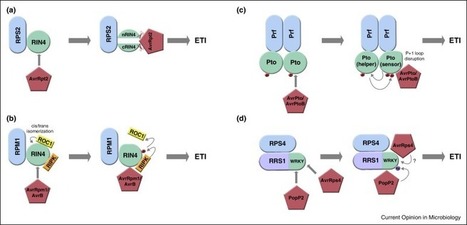
• Type III effectors perturb host cellular components to promote pathogen virulence. • Perturbations of type III effector sensors induce effector-triggered immunity. • We provide a current, characteristic overview of plant type III effector sensors. Effector-triggered immunity (ETI) is conferred by dominant plant resistance (R) genes, which encode predominantly nucleotide-binding and leucine-rich repeat domain proteins (NLRs), against cognate microbial avirulence (Avr) genes, which include bacterial type III secreted effectors (T3Es). The ‘guard model’ describes the mechanism of T3E perception by plants, whereby NLRs monitor host proteins (‘sensors’) for T3E-induced perturbations. This model has provided a molecular framework to understand T3E perception and has rationalized how plants can use a limited number of NLRs (∼160 in Arabidopsis) to contend with a potentially limitless number of evolving effectors. In this review we provide a characteristic overview of plant T3E sensors and discuss how these sensors convey the presence of T3Es to NLR proteins to activate ETI.

Rakesh Yashroy's curator insight,
November 28, 2015 8:09 AM
Type 3 secretion system of gram negative microbes affects both plants and animals. How proteins are threaded through a rather narrow injectisome and with what efficiency remains a riddle. T3SS proteins are also known to be secreted via outer membrane vesicles. A fusion of these two systems may provide answer to efficiency of bacteria-host interactions @ http://www.labome.org/research/Membrane-vesicle-trafficking-in-prokaryotes-molecular-biomechanics-of-biogenesis-of-outer-membrane-v.html
Scoop.it!

Theobroma cacao is a tropical understory tree that is one of the most important perennial crops in agriculture. Treasured by ancient civilizations in Mesoamerica for over 3,000 years, the cocoa bean now supports a multibillion-dollar industry that is involved in the production and commercialization of chocolate, a treat appreciated worldwide. The cacao tree is originally from the Amazon rainforest and is currently grown in more than 50 countries throughout the humid tropics, serving as a major source of income for over 40 million people. Each year, more than 3 million tons of cocoa beans are produced, mostly by smallholder farmers in areas of high biodiversity. Notably, the cacao tree does not require direct sunlight and naturally grows under the canopy of other, taller trees. This characteristic often encourages farmers to preserve existing forests and to plant additional trees to shelter their cacao plants [1], thereby reducing the environmental impacts of cacao cultivation. Despite its great importance, the cacao tree is affected by a number of untreatable diseases that reduce fruit production and threaten our global supply of cacao. Among them, witches’ broom disease (WBD) stands out as one of the most severe problems that affect this crop, accounting for production losses of up to 90%.
Scoop.it!
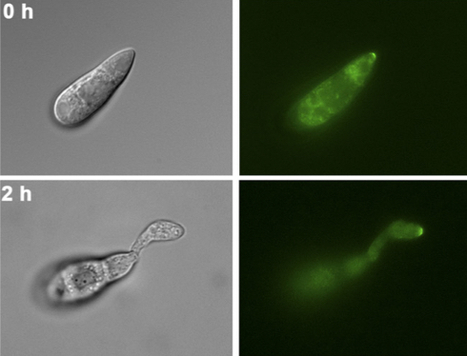
Magnaporthe oryzae is the causal agent of rice blast disease, the most devastating disease of cultivated rice (Oryza sativa) and a continuing threat to global food security. To cause disease, the fungus elaborates a specialized infection cell called an appressorium, which breaches the cuticle of the rice leaf, allowing the fungus entry to plant tissue. Here, we show that the exocyst complex localizes to the tips of growing hyphae during vegetative growth, ahead of the Spitzenkörper, and is required for polarized exocytosis. However, during infection-related development, the exocyst specifically assembles in the appressorium at the point of plant infection. The exocyst components Sec3, Sec5, Sec6, Sec8, and Sec15, and exocyst complex proteins Exo70 and Exo84 localize specifically in a ring formation at the appressorium pore. Targeted gene deletion, or conditional mutation, of genes encoding exocyst components leads to impaired plant infection. We demonstrate that organization of the exocyst complex at the appressorium pore is a septin-dependent process, which also requires regulated synthesis of reactive oxygen species by the NoxR-dependent Nox2 NADPH oxidase complex. We conclude that septin-mediated assembly of the exocyst is necessary for appressorium repolarization and host cell invasion. Via The Sainsbury Lab

The Sainsbury Lab's curator insight,
November 14, 2015 6:06 AM
Magnaporthe oryzae is the causal agent of rice blast disease, the most devastating disease of cultivated rice (Oryza sativa) and a continuing threat to global food security. To cause disease, the fungus elaborates a specialized infection cell called an appressorium, which breaches the cuticle of the rice leaf, allowing the fungus entry to plant tissue. Here, we show that the exocyst complex localizes to the tips of growing hyphae during vegetative growth, ahead of the Spitzenkörper, and is required for polarized exocytosis. However, during infection-related development, the exocyst specifically assembles in the appressorium at the point of plant infection. The exocyst components Sec3, Sec5, Sec6, Sec8, and Sec15, and exocyst complex proteins Exo70 and Exo84 localize specifically in a ring formation at the appressorium pore. Targeted gene deletion, or conditional mutation, of genes encoding exocyst components leads to impaired plant infection. We demonstrate that organization of the exocyst complex at the appressorium pore is a septin-dependent process, which also requires regulated synthesis of reactive oxygen species by the NoxR-dependent Nox2 NADPH oxidase complex. We conclude that septin-mediated assembly of the exocyst is necessary for appressorium repolarization and host cell invasion.
Scoop.it!

In the past decade, characterization of the host targets of pathogen virulence factors took a center stage in the study of pathogenesis and disease susceptibility in plants and humans. However, the impressive knowledge of host targets has not been broadly exploited to inhibit pathogen infection. Here, we show that host target modification could be a promising new approach to “protect” the disease-vulnerable components of plants. In particular, recent studies have identified the plant hormone jasmonate (JA) receptor as one of the common targets of virulence factors from highly evolved biotrophic/hemibiotrophic pathogens. Strains of the bacterial pathogen Pseudomonas syringae, for example, produce proteinaceous effectors, as well as a JA-mimicking toxin, coronatine (COR), to activate JA signaling as a mechanism to promote disease susceptibility. Guided by the crystal structure of the JA receptor and evolutionary clues, we succeeded in modifying the JA receptor to allow for sufficient endogenous JA signaling but greatly reduced sensitivity to COR. Transgenic Arabidopsisexpressing this modified receptor not only are fertile and maintain a high level of insect defense, but also gain the ability to resist COR-producing pathogens Pseudomonas syringae pv. tomato and P. syringae pv. maculicola. Our results provide a proof-of-concept demonstration that host target modification can be a promising new approach to prevent the virulence action of highly evolved pathogens.
Scoop.it!

A Scottish plant that is used to flavour gin is being killed off by disease, a report has concluded. A study by Plantlife said juniper was in a "critical state" due to the spread of the deadly fungal [sic] disease phytophthora austrocedrae. The report followed a science survey carried out by amateur enthusiasts. As well as an ingredient for Scottish gin producers, juniper provides food for some wildlife including the juniper shield bug. The report concludes that the decline of juniper is caused by the failure of juniper bushes - many of which are over a century old - to produce seeds. Campaigners say juniper is distinctive for its greenish blue needles and the dark purple berries that are used in the production of gin. The shrub has been living on Scotland's mountains, moors, and woodlands since the last ice age thousands of years ago. The Plantlife group say phytophthora austrocedrae has only been recorded in Argentina and the UK. Once infected, a juniper bush turns orange then brown. The Plantlife survey found that 63% of bushes surveyed in Scotland were found to have brown patches, and 79% of juniper recorded in 2014 was either mature, old or dead. Deborah Long, head of Plantlife Scotland, said: "Volunteer citizen science surveys are helping us understand what is happening to juniper in Scotland. "We know juniper populations are struggling, but they now face an additional threat. It is thanks to these citizen scientists who have been helping us monitor the species, that we can start working with land owners to help juniper communities become more resistant to the threats they face, including this new disease. "We need to ensure juniper has a future." Murdo Fraser MSP, the Conservative politician representing Mid-Scotland and Fife and a 'species champion' for juniper, added: "Juniper is one of our most iconic species. "Used not only by birds as cover and food, juniper is a key native plant for human use too. Today though, juniper is in trouble. "Plantlife's report is a call to action for us all to do what we can for juniper."
Scoop.it!

In cereals, several mildew resistance genes occur as large allelic series; for example, in wheat (Triticum aestivum and Triticum turgidum), 17 functional Pm3alleles confer agronomically important race-specific resistance to powdery mildew (Blumeria graminis). The molecular basis of race specificity has been characterized in wheat, but little is known about the corresponding avirulence genes in powdery mildew. Here, we dissected the genetics of avirulence for six Pm3 alleles and found that three major Avr loci affect avirulence, with a common locus_1 involved in all AvrPm3-Pm3 interactions. We cloned the effector gene AvrPm3a2/f2 from locus_2, which is recognized by the Pm3a and Pm3f alleles. Induction of a Pm3 allele-dependent hypersensitive response in transient assays in Nicotiana benthamiana and in wheat demonstrated specificity. Gene expression analysis of Bcg1 (encoded by locus_1) and AvrPm3 a2/f2 revealed significant differences between isolates, indicating that in addition to protein polymorphisms, expression levels play a role in avirulence. We propose a model for race specificity involving three components: an allele-specific avirulence effector, a resistance gene allele, and a pathogen-encoded suppressor of avirulence. Thus, whereas a genetically simple allelic series controls specificity in the plant host, recognition on the pathogen side is more complex, allowing flexible evolutionary responses and adaptation to resistance genes.
Scoop.it!

Most plant pattern recognition receptors induce immune responses by detecting molecular patterns typical to one group of microbes. A newly identified complex, on the other hand, monitors effector proteins widely distributed among bacteria, fungi and oomycetes, casting a new light on the evolution of pattern recognition in plants. See also Albert et al. An RLP23–SOBIR1–BAK1 complex mediates NLP-triggered immunity. Nature Plants http://www.nature.com/articles/nplants2015140
Scoop.it!

Background -- Geminiviruses (family Geminiviridae) are small single-stranded (ss) DNA viruses infecting plants. Their virion morphology is unique in the known viral world – two incomplete T = 1 icosahedra are joined together to form twinned particles. Geminiviruses utilize a rolling-circle mode to replicate their genomes. A limited sequence similarity between the three conserved motifs of the rolling-circle replication initiation proteins (RCR Reps) of geminiviruses and plasmids of Gram-positive bacteria allowed Koonin and Ilyina to propose that geminiviruses descend from bacterial replicons. Results -- Phylogenetic and clustering analyses of various RCR Reps suggest that Rep proteins of geminiviruses share a most recent common ancestor with Reps encoded on plasmids of phytoplasmas, parasitic wall-less bacteria replicating both in plant and insect cells and therefore occupying a common ecological niche with geminiviruses. Capsid protein of Satellite tobacco necrosis virus was found to be the best template for homology-based structural modeling of the geminiviral capsid protein. Good stereochemical quality of the generated models indicates that the geminiviral capsid protein shares the same structural fold, the viral jelly-roll, with the vast majority of icosahedral plant-infecting ssRNA viruses. Conclusion -- We propose a plasmid-to-virus transition scenario, where a phytoplasmal plasmid acquired a capsid-coding gene from a plant RNA virus to give rise to the ancestor of geminiviruses.
Scoop.it!

Parasite effector proteins target various host cell compartments to alter host processes and promote infection. How effectors cross membrane-rich interfaces to reach these compartments is a major question in effector biology. Growing evidence suggests that effectors use molecular mimicry to subvert host cell machinery for protein sorting. We recently identified CTP1 (chloroplast-targeted protein 1), a candidate effector from the poplar leaf rust fungus Melampsora larici-populina that carries a predicted transit peptide and accumulates in chloroplasts and mitochondria. Here, we show that the CTP1 transit peptide is necessary and sufficient for accumulation in the stroma of chloroplasts. CTP1 is part of a Melampsora-specific family of polymorphic secreted proteins. Two members of that family, CTP2 and CTP3, also translocate in chloroplasts in a N-terminal signal-dependent manner. CTP1, CTP2 and CTP3 are cleaved when they accumulate in chloroplasts, while they remain intact when they do not translocate into chloroplasts. Our findings reveal that fungi have evolved effector proteins that mimic plant-specific sorting signals to traffic within plant cells.
Scoop.it!

The oomycete genus Phytophthora contains a large number of plant pathogens that cause significant damage to natural and agricultural systems. Until recently species have been distinguished using a limited set of morphological characters. The development of DNA-based technologies has revealed much broader and more complex diversity than previously recognised, and has led to the recent description of many new species. This review looks at the underlying mechanisms for the generation of diversity within the genus. The intercontinental movement and transplantation of infected plant material partially explains the appearance of new species in unexpected places. However, it is also likely that novel species arise as a result of the hybridisation and rapid evolution of introduced species under episodic selection pressures. Hybrid progeny may possess equal or greater virulence than parent species, thereby posing an increasing risk to our natural environment and agricultural production systems. These discoveries amplify the threats posed by the introduction of plant pathogens into new environments, and expose a crucial weakness in current evidence-based biosecurity regimes. Further work is required to identify hybrids, anticipate and understand the occurrence of hybridisation, and to implement appropriate quarantine and risk management measures.
|






