Your new post is loading...

|
Scooped by
Kamoun Lab @ TSL
June 6, 2016 7:00 AM
|
Root endophytism and mycorrhizal associations are complex derived traits in fungi that shape plant physiology. Sebacinales (Agaricomycetes, Basidiomycota) display highly diverse interactions with plants. Although early-diverging Sebacinales lineages are root endophytes and/or have saprotrophic abilities, several more derived clades harbour obligate biotrophs forming mycorrhizal associations. Sebacinales thus display transitions from saprotrophy to endophytism and to mycorrhizal nutrition within one fungal order. This review discusses the genomic traits possibly associated with these transitions. We also show how molecular ecology revealed the hyperdiversity of Sebacinales and their evolutionary diversification into two sister families: Sebacinaceae encompasses mainly ectomycorrhizal and early-diverging saprotrophic species; the second family includes endophytes and lineages that repeatedly evolved ericoid, orchid and ectomycorrhizal abilities. We propose the name Serendipitaceae for this family and, within it, we transfer to the genus Serendipita the endophytic cultivable species Piriformospora indica and P. williamsii. Such cultivable Serendipitaceae species provide excellent models for root endophytism, especially because of available genomes, genetic tractability, and broad host plant range including important crop plants and the model plant Arabidopsis thaliana. We review insights gained with endophytic Serendipitaceae species into the molecular mechanisms of endophytism and of beneficial effects on host plants, including enhanced resistance to abiotic and pathogen stress.
|
|
Scooped by
Kamoun Lab @ TSL
June 4, 2016 1:29 PM
|
Recent studies have identified that proteinaceous effectors secreted by Parastagonospora nodorum are required to cause disease on wheat. These effectors interact in a gene-for-gene manner with host dominant susceptibilty loci, resulting in disease. However, whilst the requirement of these effectors for infection is clear, their mechanisms of action remain poorly understood. A yeast-two-hybrid library approach was used to search for wheat proteins that interacted with the necrotrophic effector SnTox3. Using this strategy we indentified an interaction between SnTox3 and the wheat pathogenicity-related protein TaPR-1-1, and confirmed it by in-planta co-immunprecipitation. PR-1 proteins represent a large family (23 in wheat) of proteins that are up-regulated early in the defence response, however their function remains ellusive. Interestingly, the P. nodorum effector SnToxA has recently been shown to interact specifically with TaPR-1-5. Our analysis of the SnTox3-TaPR-1 interaction demonstrated that SnTox3 can interact with a broader range of TaPR-1 proteins. Based on these data we utilised homology modeling to predict, and validate, regions on TaPR-1 proteins that are likely to be involved in the SnTox3 interaction. Precipitating from this work, we identified that a PR-1 derived defence signalling peptide from the C-terminus of TaPR1-1, known as CAPE1, enhanced the infection of wheat by P. nodorum in an SnTox3-dependent manner, but played no role in ToxA-mediated disease. Collectively, our data suggest that P.nodorum has evolved unique effectors that target a common host-protein involved in host defence, albeit with different mechanisms and potentially outcomes.
|
|
Scooped by
Kamoun Lab @ TSL
June 3, 2016 9:51 AM
|
|
|
Scooped by
Kamoun Lab @ TSL
June 2, 2016 1:12 PM
|
Terminal bacteroid differentiation (TBD) is a remarkable case of bacterial cell differentiation that occurs after rhizobia are released intracellularly within plant cells of symbiotic legume organs called nodules. The hallmarks of TBD are cell enlargement, genome amplification and membrane permeabilization. This plant-driven process is governed by a large family of bacteroid-targeted nodule-specific cysteine-rich (NCR) peptides that were until recently thought to be restricted to a specific lineage of the legume family, including the model plant Medicago truncatula. Recently, new plant and bacterial factors involved in TBD have been identified, challenging our view of this phenomenon at mechanistic and evolutionary levels. Here, we review the recent literature and discuss emerging questions about the mechanisms and the role(s) of TBD.
|
|
Scooped by
Kamoun Lab @ TSL
June 1, 2016 3:11 AM
|
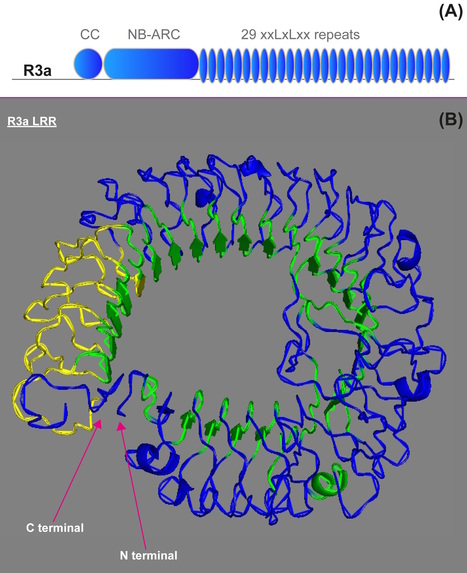
A recent study by Kroj et al. (New Phytologist, 2016) surveyed nucleotide binding-leucine rich repeat (NLR) proteins from plant genomes for the presence of extraneous integrated domains that may serve as decoys or sensors for pathogen effectors. They reported that a FAM75 domain of unknown function occurs near the C-terminus of the potato late blight NLR protein R3a. Here, we investigated in detail the domain architecture of the R3a protein, its potato paralog R3b, and their tomato ortholog I2. We conclude that the R3a, R3b, and I2 proteins do not carry additional domains besides the classic NLR modules, and that the FAM75 domain match is likely a false positive among computationally predicted NLR-integrated domains.
|
|
Rescooped by
Kamoun Lab @ TSL
from Plant pathogenic fungi
May 31, 2016 5:14 AM
|
Nucleotide binding site-leucine-rich repeat (NBS-LRR) genes comprise the largest plant disease resistance gene family (R genes), with hundreds of copies occurring in individual angiosperm genomes. However, the expansion history of NBS-LRR genes during angiosperm evolution is largely unknown. By identifying over 6,000 NBS-LRR genes in 22 representative angiosperms and reconstructing their phylogenies, we present a potential framework of NBS-LRR gene evolution in the angiosperm. Three anciently diverged NBS-LRR classes (TNLs, CNLs and RNLs) were distinguished with unique exon-intron structures and DNA motif sequences. A total of 7 ancient TNL, 14 CNL and 2 RNL lineages were discovered in the ancestral angiosperm, from which all current NBS-LRR gene repertoires were evolved. A pattern of 'gradual expansion' during the first 100 million years evolution of the angiosperm clade was observed for CNLs. TNL numbers remained stable during this period, which were eventually deleted in three divergent angiosperm lineages. We inferred that an intense expansion of both TNL and CNL genes was started from the 'Cretaceous-Paleogene (K-P) boundary'. Because dramatic environmental changes and an explosion in fungal diversity occurred during this period, the observed expansions of R genes probably reflect convergent adaptive responses of various angiosperm families. An ancient whole genome duplication event that occurred in an angiosperm ancestor resulted in two RNL lineages, which were conservatively evolved and acted as scaffold proteins for defense signal transduction. Overall, the reconstructed framework of angiosperm NBS-LRR gene evolution in the present study may serve as a fundamental reference for better understanding angiosperm NBS-LRR genes.
Via Steve Marek
|
|
Rescooped by
Kamoun Lab @ TSL
from Plant pathogenic fungi
May 28, 2016 7:10 AM
|
Highlights
• Interspecific hybridization is observed within various eukaryotic taxa.
• Globalization enhances the opportunity for hybridization events to occur.
• Hybridization often occurs under particular, often enigmatic, conditions.
• Hybridization affects microbial genome evolution and impacts pathogenicity.
• Stable hybrids are fitter than their parental lineages that may be outcompeted.
Interspecific hybridization is widely observed within diverse eukaryotic taxa, and is considered an important driver for genome evolution. As hybridization fuels genomic and transcriptional alterations, hybrids are adept to respond to environmental changes or to invade novel niches. This may be particularly relevant for organisms that establish symbiotic relationships with host organisms, such as mutualistic symbionts, endophytes and pathogens. The latter group is especially well-known for engaging in everlasting arms races with their hosts. Illustrated by the increased identification of hybrid pathogens with altered virulence or host ranges when compared with their parental lineages, it appears that hybridization is a strong driver for pathogen evolution, and may thus significantly impact agriculture and natural ecosystems.
Via Steve Marek
|
|
Scooped by
Kamoun Lab @ TSL
May 27, 2016 5:20 AM
|
The plant pathogenic fungus Fusarium oxysporum secretes an effector that is similar to a plant peptide hormone, underscoring the variety of mechanisms that plant pathogens have evolved to tamper with host physiology. Plant pathogens cause devastating diseases of crop plants and threaten food security in an era of continuous population growth. Annual losses due to fungal and oomycete diseases amount to enough food calories to feed at least half a billion people. Understanding how plant pathogens infect and colonize plants should help to develop disease-resistant crops. It appears that plant pathogens are sophisticated manipulators of their hosts. They secrete effector molecules that alter host biological processes in a variety of ways, generally promoting the pathogen lifestyle. A new study by Masachis, Segorbe and colleagues describes a new mechanism by which plant pathogens interfere with plant physiology. They discovered that the root-infecting fungus F. oxysporum secretes a peptide similar to the plant regulatory peptide RALF (rapid alkalinization factor) to induce host tissue alkalinization and enhance plant colonization. This study demonstrates that in addition to secreting classical plant hormones (or mimics thereof), fungi have also evolved functional homologues of plant peptides to alter host cellular processes.
|
|
Scooped by
Kamoun Lab @ TSL
May 20, 2016 6:26 AM
|
Plant infections caused by fungi are often associated with an increase in the pH of the surrounding host tissue1. Extracellular alkalinization is thought to contribute to fungal pathogenesis, but the underlying mechanisms are poorly understood. Here, we show that the root-infecting fungus Fusarium oxysporum uses a functional homologue of the plant regulatory peptide RALF (rapid alkalinization factor)2,3 to induce alkalinization and cause disease in plants. An upshift in extracellular pH promotes infectious growth of Fusarium by stimulating phosphorylation of a conserved mitogen-activated protein kinase essential for pathogenicity4,5. Fungal mutants lacking a functional Fusarium (F)-RALF peptide failed to induce host alkalinization and showed markedly reduced virulence in tomato plants, while eliciting a strong host immune response. Arabidopsis plants lacking the receptor-like kinase FERONIA, which mediates the RALF-triggered alkalinization response6, displayed enhanced resistance against Fusarium. RALF homologues are found across a number of phylogenetically distant groups of fungi, many of which infect plants. We propose that fungal pathogens use functional homologues of alkalinizing peptides found in their host plants to increase their infectious potential and suppress host immunity.
|
|
Scooped by
Kamoun Lab @ TSL
May 18, 2016 1:04 PM
|
- The tomato resistance protein Sw-5b differs from the classical coiled-coil nucleotide-binding leucine-rich repeat (CC-NB-LRR) resistance proteins by having an extra N-terminal domain (NTD). To understand how NTD, CC and NB-LRR regulate autoinhibition and activation of Sw-5b, we dissected the function(s) of each domain.
- When viral elicitor was absent, Sw-5b LRR suppressed the central NB-ARC to maintain autoinhibition of the NB-LRR segment. The CC and NTD domains independently and additively enhanced the autoinhibition of NB-LRR.
- When viral elicitor was present, the NB-LRR segment of Sw-5b was specifically activated to trigger a hypersensitive response. Surprisingly, Sw-5b CC suppressed the activation of NB-LRR, whereas the extra NTD of Sw-5b became a positive regulator and fully activated the resistance protein, probably by relieving the inhibitory effects of the CC. In infection assays of transgenic plants, the NB-LRR segment alone was insufficient to confer resistance against Tomato spotted wilt tospovirus; the layers of NTD and CC regulation on NB-LRR were required for Sw-5b to confer resistance.
- Based on these findings, we propose that, to counter the negative regulation of the CC on NB-LRR, Sw-5b evolved an extra NTD to coordinate with the CC, thus developing a multilayered regulatory mechanism to control autoinhibition and activation.
|
|
Scooped by
Kamoun Lab @ TSL
May 18, 2016 11:43 AM
|
The Arabidopsis immune receptor FLS2 perceives bacterial flagellin epitope flg22 to activate defenses through the central cytoplasmic kinase BIK1. The heterotrimeric G proteins composed of the non-canonical Gα protein XLG2, the Gβ protein AGB1, and the Gγ proteins AGG1 and AGG2 are required for FLS2-mediated immune responses through an unknown mechanism. Here we show that in the pre-activation state, XLG2 directly interacts with FLS2 and BIK1, and it functions together with AGB1 and AGG1/2 to attenuate proteasome-mediated degradation of BIK1, allowing optimum immune activation. Following the activation by flg22, XLG2 dissociates from AGB1 and is phosphorylated by BIK1 in the N terminus. The phosphorylated XLG2 enhances the production of reactive oxygen species (ROS) likely by modulating the NADPH oxidase RbohD. The study demonstrates that the G proteins are directly coupled to the FLS2 receptor complex and regulate immune signaling through both pre-activation and post-activation mechanisms.
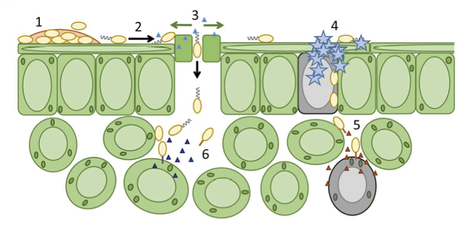
Plant infection is a complicated process. Upon encountering a plant, pathogenic microorganisms must first adapt to life on the epiphytic surface, and survive long enough to initiate an infection. Responsiveness to the environment is critical throughout infection, with intracellular and community-level signal transduction pathways integrating environmental signals and triggering appropriate responses in the bacterial population. Ultimately, phytopathogens must migrate from the epiphytic surface into the plant tissue using motility and chemotaxis pathways. This migration is coupled to overcoming the physical and chemical barriers to entry into the plant apoplast. Once inside the plant, bacteria use an array of secretion systems to release phytotoxins and protein effectors that fulfil diverse pathogenic functions (Fig. 1)(Phan Tran et al., 2011, Melotto & Kunkel, 2013).
Via The Sainsbury Lab, Ronny Kellner
|
|
Scooped by
Kamoun Lab @ TSL
May 4, 2016 6:56 AM
|
Pierre Gladieux: Thank you very much for sharing your work. I looked at the methods and results and I have a few concerns regarding the validity of species identification. Only the genealogy of the concatenated dataset is shown. The 10 individual gene trees are not presented, so I cannot get an idea of the level of discordance across genealogies. What would be the result of Genealogical Concordance Phylogenetic Species Recognition (http://taylorlab.berkeley.edu/... Table 3 suggests that most of the divergence in the total evidence genealogy is caused by one gene (MPG1). Table 4 shows that there is also exclusive polymorphism at one gene in one of the wheat-infecting lineages. Is it sufficient to conclude that these lineages are reproductively isolated and form distinct phylogenetic species? Mark Farman: Let's see how the proposed new Pgt species maps on a phylogenetic tree based on whole genome data. Below is a neighbor-joining tree built using genetic distances assessed across the whole genome. Gray shaded ovals encompass strains that fall under the proposed Pgt umbrella. Placements seem kind of arbitrary, don't they?
|
|
|
Scooped by
Kamoun Lab @ TSL
June 4, 2016 1:46 PM
|
Microbe associated molecular pattern (MAMP) receptors in plants recognize MAMPs and activate basal defences; however a complete understanding of the molecular and physiological mechanisms conferring immunity remains elusive. Pathogens suppress active defence in plants through the combined action of effector proteins. Here we show that the chloroplast is a key component of early immune responses. MAMP perception triggers the rapid, large-scale suppression of nuclear encoded chloroplast-targeted genes (NECGs). Virulent Pseudomonas syringae effectors reprogramme NECG expression in Arabidopsis, target the chloroplast and inhibit photosynthetic CO2assimilation through disruption of photosystem II. This activity prevents a chloroplastic reactive oxygen burst. These physiological changes precede bacterial multiplication and coincide with pathogen-induced abscisic acid (ABA) accumulation. MAMP pretreatment protects chloroplasts from effector manipulation, whereas application of ABA or the inhibitor of photosynthetic electron transport, DCMU, abolishes the MAMP-induced chloroplastic reactive oxygen burst, and enhances growth of a P. syringae hrpA mutant that fails to secrete effectors.
|
|
Scooped by
Kamoun Lab @ TSL
June 3, 2016 12:57 PM
|
Oomycete pathogens produce a large number of effectors to promote infection. Their mode of action are largely unknown. Here we show that a Phytophthora sojae effector, PsCRN63, suppresses flg22-induced expression of FRK1 gene, a molecular marker in pathogen-associated molecular patterns (PAMP)-triggered immunity (PTI). However, PsCRN63 does not suppress upstream signaling events including flg22-induced MAPK activation and BIK1 phosphorylation, indicating that it acts downstream of MAPK cascades. The PsCRN63-transgenic Arabidopsisplants showed increased susceptibility to bacterial pathogen Pseudomonas syringae pathovar tomato (Pst) DC3000 and oomycete pathogen Phytophthora capsici. The callose deposition were suppressed in PsCRN63-transgenic plants compared with the wild-type control plants. Genes involved in PTI were also down-regulated in PsCRN63-transgenic plants. Interestingly, we found that PsCRN63 forms an dimer that is mediated by inter-molecular interactions between N-terminal and C-terminal domains in an inverted association manner. Furthermore, the N-terminal and C-terminal domains required for the dimerization are widely conserved among CRN effectors, suggesting that homo-/hetero-dimerization of Phytophthora CRN effectors is required to exert biological functions. Indeed, the dimerization was required for PTI suppression and cell death-induction activities of PsCRN63.
|
|
Scooped by
Kamoun Lab @ TSL
June 2, 2016 1:29 PM
|
The Centre for Research and Development of Eszterházy Károly University of Applied Sciences (Eger, Hungary), in collaboration with the Plant Protection Institute, Centre for Agricultural Research, Hungarian Academy of Sciences (Budapest, Hungary), invites MSc and PhD students and postdoc researchers interested in the study of powdery mildew fungi (Erysiphales) to an exciting summer school covering all the major aspects of powdery mildew research. The official language of the course is English. This is the third Powdery Mildew Summer School; the first one was organized in 2014 and the second one in 2015. Participants of the first two summer schools are of course welcome again in Eger.
The programme includes: - lectures on the morphology, phylogeny, genomics, host range, invasive patterns, host-pathogen interactions, and control of powdery mildews;
- practical training in the classical and molecular identification of powdery mildews, quantification of infection levels, ascospore viability tests, and so on; the training activities will consist of hands-on experiments using light microscopy, including fluorescence techniques, DNA extractions from fresh and herbarium samples, PCR and qPCR methods, etc.;
- discussion seminars on a number of recent and important papers; these will be presented by those participants who volunteer in advance to present a paper from the list of papers to be discussed in Eger.
|
|
Scooped by
Kamoun Lab @ TSL
June 1, 2016 9:48 AM
|
In this review, I recount my personal history. My drive to study host-pathogen interactions was to find alternatives for agrochemicals, which was triggered after reading the book “Silent Spring” by Rachel Carson. I reflect on my research at the Laboratory of Phytopathology at Wageningen University, where I have worked for my entire career on the interaction between Cladosporium fulvum and tomato, and related gene-for-gene pathosystems. I describe different methods used to identify and sequence avirulence (Avr) genes from the pathogen and resistance (R) genes from the host. The major genes involved in classical gene-for-gene interactions have now been identified, and breeders can produce plants with multiple R genes providing durable and environmentally safe protection against pathogens. In some cases, this might require the use of genetically modified plants when R genes cannot be introduced by classical breeding.
|
|
Scooped by
Kamoun Lab @ TSL
May 31, 2016 12:40 PM
|
Root-knot nematodes (RKNs) Meloidogyne spp. cause major damage to cultivated woody plants. Among them, Prunus, grapevine and coffee are the crops most infested by worldwide polyphagous species and species with a more limited distribution and/or narrower host range. The identification and characterization of natural sources of resistance are important steps to develop RKN control strategies. In woody crops, resistant rootstocks genetically different from the scion of agronomical interest may be engineered. We describe herein the interactions between RKNs and different woody crops, and highlight the plant species in which resistance and corresponding resistance (R) genes have been discovered. Even though grapevine and, to a lesser extent, coffee have a history of rootstock selection for RKN resistance, few cases of resistance have been documented. By contrast, in Prunus, R genes with different spectra have been mapped in plums, peach and almond and can be pyramided for durable resistance in interspecific rootstocks. We particularly discuss here the MaToll/interleukin-1 receptor-like-nucleotide binding-leucine-rich repeat gene from Myrobalan plum, one of the longest plant R genes cloned to date, due to its unique biological and structural properties. RKN R genes in Prunus will enable us to carry out molecular studies aimed at improving our knowledge of plant immunity in woody plants.
|
|
Scooped by
Kamoun Lab @ TSL
May 30, 2016 6:15 AM
|
Somatic embryogenesis receptor kinases (SERKs) are transmembrane receptors involved in plant immunity. Tomato (Solanum lycopersicum; Sl) carries three SERK members. One of these, SlSERK1, is required for Mi-1.2-mediated resistance to potato aphids (Macrosiphum euphorbiae). Mi-1.2, encodes a coiled-coil nucleotide-binding leucine-rich repeat protein that in addition to potato aphids, confers resistance to two additional phloem-feeding insects and to root-knot nematodes (Meloidogyne spp.). How SlSERK1 participates in Mi-1.2-mediated resistance is unknown and no Mi-1.2 cognate pest effectors have been identified. Here, we study the mechanistic involvement of SlSERK1 in Mi-1.2-mediated resistance. We show that potato aphid -saliva and -protein extracts induce the Mi-1.2 defense marker gene SlWRKY72b, indicating that both saliva and extracts contain a Mi-1.2 recognized effector. Resistant tomato cultivar Motelle (Mi-1.2/Mi-1.2) plants overexpressing SlSERK1 were found to display enhanced resistance to potato aphids. Confocal microscopy revealed that Mi-1.2 localizes at three distinct subcellular compartments; the plasma membrane, cytoplasm and nucleus. Co-immunoprecipitation experiments in these tomato plants, and in Nicotiana benthamiana transiently expressing Mi-1.2 and SlSERK1, showed that Mi-1.2 and SlSERK1 co-localize only in a microsomal complex. Interestingly, BiFC analysis showed that the interaction of Mi-1.2 and SlSERK1 at the plasma membrane distinctively changes in the presence of potato aphid saliva suggesting a model in which a constitutive complex at the plasma membrane participates in defense signalling upon effector binding.
|
|
Rescooped by
Kamoun Lab @ TSL
from Plant-Microbe Symbiosis
May 28, 2016 4:03 AM
|
Nuclear-associated Ca2+ oscillations mediate plant responses to beneficial microbial partners—namely, nitrogen-fixing rhizobial bacteria that colonize roots of legumes and arbuscular mycorrhizal fungi that colonize roots of the majority of plant species. A potassium-permeable channel is known to be required for symbiotic Ca2+ oscillations, but the calcium channels themselves have been unknown until now. We show that three cyclic nucleotide–gated channels in Medicago truncatula are required for nuclear Ca2+ oscillations and subsequent symbiotic responses. These cyclic nucleotide–gated channels are located at the nuclear envelope and are permeable to Ca2+. We demonstrate that the cyclic nucleotide–gated channels form a complex with the postassium-permeable channel, which modulates nuclear Ca2+ release. These channels, like their counterparts in animal cells, might regulate multiple nuclear Ca2+ responses to developmental and environmental conditions.
Via Jean-Michel Ané
|
|
Scooped by
Kamoun Lab @ TSL
May 24, 2016 8:23 AM
|
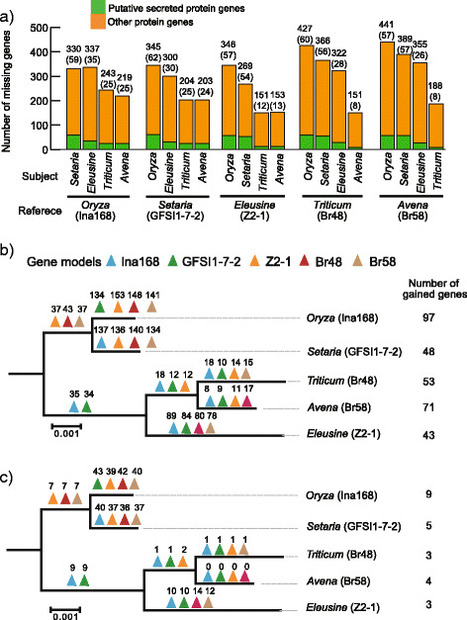
Background. Magnaporthe oryzae (anamorph Pyricularia oryzae) is the causal agent of blast disease of Poaceae crops and their wild relatives. To understand the genetic mechanisms that drive host specialization of M. oryzae, we carried out whole genome resequencing of four M. oryzae isolates from rice (Oryza sativa), one from foxtail millet (Setaria italica), three from wild foxtail millet S. viridis, and one isolate each from finger millet (Eleusine coracana), wheat (Triticum aestivum) and oat (Avena sativa), in addition to an isolate of a sister species M. grisea, that infects the wild grass Digitaria sanguinalis. Results. Whole genome sequence comparison confirmed that M. oryzae Oryza and Setaria isolates form a monophyletic and close to another monophyletic group consisting of isolates from Triticum and Avena. This supports previous phylogenetic analysis based on a small number of genes and molecular markers. When comparing the host specific subgroups, 1.2–3.5 % of genes showed presence/absence polymorphisms and 0–6.5 % showed an excess of non-synonymous substitutions. Most of these genes encoded proteins whose functional domains are present in multiple copies in each genome. Therefore, the deleterious effects of these mutations could potentially be compensated by functional redundancy. Unlike the accumulation of nonsynonymous nucleotide substitutions, gene loss appeared to be independent of divergence time. Interestingly, the loss and gain of genes in pathogens from the Oryza and Setaria infecting lineages occurred more frequently when compared to those infecting Triticum and Avena even though the genetic distance between Oryza and Setaria lineages was smaller than that between Triticum and Avena lineages. In addition, genes showing gain/loss and nucleotide polymorphisms are linked to transposable elements highlighting the relationship between genome position and gene evolution in this pathogen species. Conclusion. Our comparative genomics analyses of host-specific M. oryzae isolates revealed gain and loss of genes as a major evolutionary mechanism driving specialization to Oryza and Setaria. Transposable elements appear to facilitate gene evolution possibly by enhancing chromosomal rearrangements and other forms of genetic variation.
Bacterial AvrE-family Type-III effector proteins (T3Es) contribute significantly to the virulence of plant-pathogenic species of Pseudomonas, Pantoea, Ralstonia, Erwinia, Dickeya and Pectobacterium, with hosts ranging from monocots to dicots. However, the mode of action of AvrE-family T3Es remains enigmatic, due in large part to their toxicity when expressed in plant or yeast cells. To search for targets of WtsE, an AvrE-family T3E from the maize pathogen Pantoea stewartii subsp. stewartii, we employed a yeast-two-hybrid screen with non-lethal fragments of WtsE and a synthetic genetic array with full-length WtsE. Together these screens indicate that WtsE targets maize protein phosphatase 2A (PP2A) heterotrimeric enzyme complexes via direct interaction with B’ regulatory subunits. AvrE1, another AvrE-family T3E from Pseudomonas syringae pv. tomato strain DC3000 (Pto DC3000), associates with specific PP2A B’ subunit proteins from its susceptible host Arabidopsis that are homologous to the maize B’ subunits shown to interact with WtsE. Additionally, AvrE1 was observed to associate with the WtsE-interacting maize proteins, indicating that PP2A B’ subunits are likely conserved targets of AvrE-family T3Es. Notably, the ability of AvrE1 to promote bacterial growth and/or suppress callose deposition was compromised in Arabidopsis plants with mutations of PP2A genes. Also, chemical inhibition of PP2A activity blocked the virulence activity of both WtsE and AvrE1 in planta. The function of HopM1, a Pto DC3000 T3E that is functionally redundant to AvrE1, was also impaired in specific PP2A mutant lines, although no direct interaction with B’ subunits was observed. These results indicate that sub-component specific PP2A complexes are targeted by bacterial T3Es, including direct targeting by members of the widely conserved AvrE-family.
Via Suayib Üstün
|
|
Scooped by
Kamoun Lab @ TSL
May 18, 2016 12:18 PM
|
When news of xylella hit in 2013, I immediately thought: Scam. In Puglia, ancient olive trees are protected by law from being cut down or otherwise removed. As you can imagine, this law has been unpopular with certain businesses, like real estate developers and road-builders. The areas affected by xylella were, by strange chance, extraordinarily beautiful landscapes – ripe for posh new hotels. The emergency plan which a handful of authorities drew up shortly after the announcement of the xylella epidemic in Puglia was trenchant: cut down all the infected trees, along with a goodly number of their neighbors in case they too had been blighted. Ecco fatto: suddenly there would be more elbow (or hotel) room in several lovely seaside locales in Puglia. Which of course is only one interpretation of the facts. On the other hand, I'm no agronomist, and as reports of the seriousness of the xylella infection echoed in the press, I began to think I'd jumped to a hasty and cynical conclusion. (For more views on the xylella story, see this independent blog.) Developments over the last few months, however, suggest I may have been right all along. A 2015 report on mafia infiltration of Italian agriculture, written by a team led by the renowned anti-mafia prosecutor Gian Carlo Caselli, dedicated a 9-page sub-chapter to what it called “The Strange Case of Xylella Fastidiosa,” echoing Robert Louis Stevenson’s novella of Jekyll and Hyde. The report noted that xylella broke out shortly after an international agronomy conference had been held in Bari in 2010, though the infection appeared not in olive trees near Bari, but in the Gallipoli area – precisely where hordes of troublesome grandfather trees were holding up plans for a perfectly lovely new mega-resort. Cue yet another criminal investigation: in mid-December, prosecutors led by Cataldo Motta, chief magistrate in Lecce, charged ten agronomists and other public “experts” who’d launched the xylella jihad with a range of misdeeds, among which are spreading plant disease, making false official statements, and destroying and disfiguring natural landscapes. (Italian and English.) The Lecce prosecutors also blocked further eradication of ancient olive trees, at least for the time being.
|
|
Rescooped by
Kamoun Lab @ TSL
from Rice Blast
May 17, 2016 10:51 AM
|
A paradigm shift is needed to overcome these serious shortcomings in biosecurity. Risk assessments should target the genes of pathogens rather than their names. Genomic research over the last decade has paved the way towards gene-based biosecurity. Detailed information about fungal genomes can help predict risks posed by undescribed pathogens through (i) prediction of lifestyle, e.g., biotrophic and saprotrophic fungi can be distinguished from nectrotrophic and hemibiotrophic fungi, and saprotrophic fungi can be distinguished from pathogens. In time, protein families that exist in effective pathogens will be discovered and may be predictive for organisms that have an unknown ecology or life strategy. Software for rapid analysis of bacterial genomic data to screen for pathogenic proteins has been designed, and similar tools and databases will be developed for fungal pathogens. (ii) Identification of potential pathogenicity factors, i.e., factors necessary for disease development that suppress or manipulate host-cell physiology to the advantage of a pathogen, but which are not essential for a pathogen to complete its life cycle. One example is disease effector proteins, which are likely expressed by all plant pathogens and may target similar defensive proteins in their hosts . Effector genes do not have conserved motifs in fungi, and identifiers in the genome, such as diversifying selection, will be crucial to identify these genes that may be a clue to pathogenicity. (iii) Identification of transposable elements or high mutation rates, which are implicated in the evolution of pathogenicity genes in fungi.
Via Elsa Ballini
|
|
Scooped by
Kamoun Lab @ TSL
May 5, 2016 12:43 PM
|
Knowledge of pathogen populations, lineages, species, and their reproductive mode is an obligatory step to answer a host of questions common to all emerging diseases: is the disease due to a change in the environment that promotes disease, to the spread of a new pathogen, or to the emergence of a new lineage of an existing pathogen? What are the genomic changes and eco-evolutionary factors underlying disease emergence?
Here, our goal was to determine if « wheat blast » isolates recently collected in Bangladesh were related to Magnaporthe oryzae lineages infecting cereals and grasses using a phylogenomic approach. We also outline avenues for future research on the origins of wheat blast.
|