Your new post is loading...

|
Scooped by
Kamoun Lab @ TSL
May 3, 2016 9:48 AM
|
New research shows the sudden oak death epidemic in California cannot now be stopped, but that its tremendous ecological and economic impacts could have been greatly reduced if control had been started earlier. The research also identifies new strategies to enhance control of future epidemics, including identifying where and how to fell trees, as “there will be a next time.”
Sudden oak death — caused by Phytophthora ramorum, a fungus-like pathogen related to potato blight — has killed millions of trees over hundreds of square kilometres of forest in California. First detected near San Francisco in 1995, it spread north through coastal California, devastating the region’s iconic oak and tanoak forests. In 2002 a strain of the pathogen appeared in the south west of England, affecting shrubs but not oaks, since English species of oak are not susceptible. In 2009 the UK strain started killing larch — an important tree crop — and has since spread widely across the UK.
In a study published in PNAS, researchers from the University of Cambridge have used mathematical modelling to show that stopping or even slowing the spread of Phytophthora ramorum in California is now not possible, and indeed has been impossible for a number of years.
Treating trees with chemicals is not practical or cost-effective on the scales that would be necessary for an established forest epidemic. Currently the only option for controlling the disease is to cut down infected trees, together with neighbouring trees that are likely to be infected but may not yet show symptoms. “By comparing the performance of a large number of potential strategies, modelling can tell us where and how to start chopping down trees to manage the disease over very large areas,” explains Nik Cunniffe, lead author from Cambridge’s Department of Plant Sciences.
The authors say that preventing the disease from spreading to large parts of California could have been possible if management had been started in 2002. Before 2002 not enough was known about the pathogen to begin managing the disease. Their modelling also offers new strategies for more effectively controlling inevitable future epidemics.
Asian soybean rust (ASR), caused by the fungus Phakopsora pachyrhizi, is one of the most economically important crop diseases, but is only treatable with fungicides, which are becoming less effective owing to the emergence of fungicide resistance. There are no commercial soybean cultivars with durable resistance to P. pachyrhizi, and although soybean resistance loci have been mapped, no resistance genes have been cloned. We report the cloning of a P. pachyrhizi resistance gene CcRpp1 (Cajanus cajan Resistance against Phakopsora pachyrhizi 1) from pigeonpea (Cajanus cajan) and show that CcRpp1 confers full resistance to P. pachyrhizi in soybean. Our findings show that legume species related to soybean such as pigeonpea, cowpea, common bean and others could provide a valuable and diverse pool of resistance traits for crop improvement.
Via The Sainsbury Lab
Wild relatives of domesticated crop species harbor multiple, diverse, disease resistance (R) genes that could be used to engineer sustainable disease control. However, breeding R genes into crop lines often requires long breeding timelines of 5–15 years to break linkage between R genes and deleterious alleles (linkage drag). Further, when R genes are bred one at a time into crop lines, the protection that they confer is often overcome within a few seasons by pathogen evolution1. If several cloned R genes were available, it would be possible to pyramid R genes2 in a crop, which might provide more durable resistance1. We describe a three-step method (MutRenSeq)-that combines chemical mutagenesis with exome capture and sequencing for rapid R gene cloning. We applied MutRenSeq to clone stem rust resistance genes Sr22 and Sr45 from hexaploid bread wheat. MutRenSeq can be applied to other commercially relevant crops and their relatives, including, for example, pea, bean, barley, oat, rye, rice and maize.
Via The Sainsbury Lab
|
|
Scooped by
Kamoun Lab @ TSL
April 27, 2016 2:04 AM
|
Fields are ablaze in Bangladesh, as farmers struggle to contain Asia’s first outbreak of a fungal disease that periodically devastates crops in South America. Plant pathologists warn that wheat blast could spread to other parts of south and southeast Asia, and are hurrying to trace its origins. Efforts are also under way to find wheat genes that confer resistance to the disease. First detected in February and confirmed with genome sequencing by Kamoun’s lab this month, the wheat-blast outbreak has already caused the loss of more than 15,000 hectares of crops in Bangladesh. “It’s really an explosive, devastating disease,” says plant pathologist Barbara Valent of Kansas State University in Manhattan, Kansas. “It’s really critical that it be controlled in Bangladesh.” After rice, wheat is the second most cultivated grain in Bangladesh, which has a population of 156 million people. More broadly, inhabitants of south Asia grow 135 million tonnes of wheat each year. Wheat blast is caused by the fungus Magnaporthe oryzae. Since 1985, when scientists discovered it in Brazil’s Paraná state, the disease has raced across South America. The fungus is better known as a pathogen of rice. But unlike in rice, where M. oryzae attacks the leaves, the fungus strikes the heads of wheat, which are difficult for fungicides to reach. A 2009 outbreak in wheat cost Brazil one-third of that year’s crop. “There are regions in South America where they don’t grow wheat because of the disease,” Valent says. Wheat blast was spotted in Kentucky in 2011, but vigorous surveillance helped to stop it spreading in the United States. In South America, the disease tends to take hold in hot and humid spells. Such conditions are present in Bangladesh, and the disease could migrate across south and southeast Asia, say plant pathologists. In particular, itcould spread over the Indo-Gangetic Plain through Bangladesh, northern India and eastern Pakistan, warn scientists at the Bangladesh Agricultural Research Institute (BARI) in Nashipur. Bangladeshi officials are burning government-owned wheat fields to contain the fungus, and telling farmers not to sow seeds from infected plots. The BARI hopes to identify wheat varieties that are more tolerant of the fungus and agricultural practices that can keep it at bay, such as crop rotation and seed treatment. It is unknown how wheat blast got to Bangladesh. One possibility is that a wheat-infecting strain was brought in from South America, says Nick Talbot, a plant pathologist at the University of Exeter, UK. Another is that an M. oryzae strain that infects south Asian grasses somehow jumped to wheat, perhaps triggered by an environmental shift: that is what happened in Kentucky, when a rye-grass strain infected wheat. To tackle the question, this month Kamoun’s lab sequenced a fungus sample from Bangladesh. The strain seems to be related to those that infect wheat in South America, says Kamoun, but data from other wheat-infecting strains and strains that plague other grasses are needed to pinpoint the outbreak’s origins conclusively. The Open Wheat Blast website might help. Kamoun has uploaded the Bangladeshi data, and Talbot has deposited M. oryzae sequences from wheat in Brazil. Talbot hopes that widely accessible genome data could help to combat the outbreak. Researchers could use them to screen seeds for infection or identify wild grasses that can transmit the fungus to wheat fields. Rapid data sharing is becoming more common in health emergencies, such as the outbreak of Zika virus in the Americas. Kamoun and Talbot say that their field should follow suit. “The plant-pathology community has a responsibility to allow data to be used to combat diseases that are happening now, and not worry too much about whether they may or may not get a Nature paper out of it,” says Talbot. Last month, Valent’s team reported the first gene variant known to confer wheat-blast resistance (C. D. Cruz et al. Crop Sci. http://doi.org/bfk7; 2016), and field trials of crops that bear the resistance gene variant have begun in South America. But plant pathologists say that finding one variant is not enough: wheat strains must be bred with multiple genes for resistance, to stop M. oryzae quickly overcoming their defences. The work could help in the Asian crisis, says Talbot. “What I would hope for out of this sorry situation,” he says, “is that there will be a bigger international effort to identify resistance genes.”
|
|
Scooped by
Kamoun Lab @ TSL
April 19, 2016 7:04 AM
|
A team of scientists in the UK and Bangladesh are turning to the combined knowledge of the global scientific community to address an emerging threat to Asian agriculture. The target is the fearsome fungal disease wheat blast. The pathogen was spotted in Bangladesh in February this year—its first report in Asia. Wheat is the second major food source in Bangladesh, after rice. The blast disease has, so far, caused up to 90% yield losses in more than 15,000 hectares. Scientists fear that the pathogen could spread further to other wheat growing areas in South Asia. The UK and Bangladeshi teams are making raw genetic data for the wheat blast pathogen available on a new website—http://www.wheatblast.net—and inviting others to do the same. Professor Sophien Kamoun, of The Sainsbury Laboratory in Norwich, who is leading the project, said that a wide cultural change is needed for scientists to optimally address new threats to food security. "I have a beef with the way that research is typically done. We need a fundamentally new approach to sharing genetic data for emerging plant diseases," he said. "We need to generate and make data public more rapidly and seek input from a larger crowd because, collectively, we are better able to answer questions." Professor Kamoun, with colleagues at The Genome Analysis Centre and John Innes Centre in Norwich, and with Professor Tofazzal Islam's Team of Bangabndhu Sheikh Mujubur Rahman Agricultural University (BSMRAU) in Bangladesh, is hoping that the wheatblast.net website, together with an accompanying Facebook page, will provide a hub for information, collaboration and comment. They are basing the site on their successful Open Ash Dieback website, which brought scientists together in the fight against ash dieback disease. The blast fungus normally infects rice and over 50 types of grasses. Occasionally, a blast fungus strain would jump from one host to another resulting in a new disease. Such a "host jump" to wheat has happened in Brazil in the 1980s. The wheat blast pathogen is now rife in South America, where it infects up to 3 million hectares and causes serious crop losses. Prof Kamoun and colleagues are working with Professor Tofazzal Islam's team, of the Department of Biotechnology of BSMRAU in Gazipur, Bangladesh. They hope that the genetic data will help determine whether the Bangladeshi wheat-infecting strain has evolved independently from local grass-infecting fungi or was somehow introduced into the country. Professor Tofazzal Islam said "This pathogen causes a destructive disease on rice and it would be disastrous if the same situation arises now in wheat. Genomic and post-genomic research should clarify the origin of the wheat strain and guide measures for disease management. Prompt responses are needed from the scientific community and the government of Bangladesh for addressing this national crisis to ensure increasing wheat production, which is linked with future food and nutritional security of the nation." The group of scientists includes Dr Diane Saunders at The Genome Analysis Centre and John Innes Centre who developed a technique last year, known as Field Pathogenomics. To date, Field Pathogenomics has been applied to track another fungal crop disease - yellow rust. The method generates highly-specific genetic information directly from diseased wheat samples to determine the identity of the pathogen strain that's associated with an epidemic. Application of this method to wheat blast should unmask the pathogen in Bangladesh and contribute to a response plan. The recent wheat blast epidemic in Bangladesh has prompted Professor Nick Talbot, University of Exeter, to post on the wheatblast.net website a set of genetic data generated by his group from worldwide populations of the wheat and rice blast fungus. Prof Talbot said "In an emergency like this one, the community must come together to share data and compare notes. Only then, we will determine the true identity of the pathogen and put in place effective measures in a timely fashion." Professor Neil Hall, Director of The Genome Analysis Centre said: "It is critical in emerging crises like this that scientific data is rapidly generated and made available as soon as possible. Having an open-access site has already galvanized open exchange of information for the ash dieback disease. The scientific community needs to rally behind open science to respond to recurrent threats to global food security."
|
|
Scooped by
Kamoun Lab @ TSL
April 8, 2016 8:51 AM
|
Each year, staple crops around the world suffer massive losses in yield owing to the destruc- tive effects of pathogens. Improving the disease resistance of crops by boosting their immunity has been a key objective of agricultural bio- tech ever since the discovery of plant immune receptors in the 1990s. Nucleotide-binding leucine-rich repeat (NLR) proteins, a family of intracellular immune receptors that recog- nize pathogen molecules, are promising targets for enhancing pathogen resistance. In a recent paper in Science, Kim et al.1 describe a clever twist on this approach in which the host target protein for the pathogen effector is engineered rather than the NLR protein itself (Fig. 1).
|
|
Scooped by
Kamoun Lab @ TSL
April 2, 2016 3:43 AM
|
Although nucleotide-binding domain, leucine-rich repeat (NLR) proteins are the major immune receptors in plants, the mechanism that controls their activation and immune signaling remains elusive. Here, we report that the avirulence effector AvrPiz-t from Magnaporthe oryzae targets the rice E3 ligase APIP10 for degradation, but that APIP10, in return, ubiquitinates AvrPiz-t and thereby causes its degradation. Silencing of APIP10 in the non-Piz-t background compromises the basal defense against M. oryzae. Conversely, silencing of APIP10 in the Piz-t background causes cell death, significant accumulation of Piz-t, and enhanced resistance to M. oryzae, suggesting that APIP10 is a negative regulator of Piz-t. We show that APIP10 promotes degradation of Piz-t via the 26S proteasome system. Furthermore, we demonstrate that AvrPiz-t stabilizes Piz-t during M. oryzae infection. Together, our results show that APIP10 is a novel E3 ligase that functionally connects the fungal effector AvrPiz-t to its NLR receptor Piz-t in rice.
|
|
Scooped by
Kamoun Lab @ TSL
March 29, 2016 4:07 PM
|
Bangladesh, once derisively referred to by Henry Kissinger as a “basket case” for its seemingly intractable poverty, has made impressive strides across development sectors in the past three decades, particularly in agriculture. But an aggressive new wheat fungus, never before observed outside of the Americas, is threatening to destroy much of its wheat crop while pushing smallholder farmers deeper into poverty. The fungus, known as wheat blast, was only confirmed at the end of February, but its impacts in some communities are already catastrophic. While, and perhaps because, the harrowing incident and aftermath of the 1974 famine (with an estimated death toll of up to 1.5 million) still loom heavily in the national political consciousness, Bangladesh has more than tripled rice production since independence, from about 10 million metric tons in 1971 to 35 million today. No longer reliant on imports for its staple crop, it now seeks to expand and diversify both cereal and horticultural production. In so doing, smallholder farmers, who have historically grown one rice crop per year, are now expanding their production to two and sometimes three annual crop cycles. This shift, if enacted at sufficient scale, has the potential to buttress and smooth incomes in some of the country’s most vulnerable communities while simultaneously supporting dietary diversity and nutritional gains. As 1 of 19 Feed the Future focus countries, Bangladesh has also seen substantial U.S. government investment in agriculturally driven poverty reduction on the order of $50 million per year since the presidential initiative was launched in 2010. This robust resource stream has supported investments in deep-placement fertilizer, which is both more cost effective and more environmentally friendly; in improved mechanization and irrigation processes; in both the quality of and access to inputs (seed varieties, soil testing, pest management, advisory services); and in a battery of market integration activities from feeder road improvement to aggregation and auction centers to information and communications technology solutions, which correct information asymmetries for smallholders. Many interventions incorporate strong private-sector partnerships to maximize sustainability. A perennial challenge of such development program-led structural transformation relates to the mass adoption of new behaviors. Even in the face of compelling evidence that new practices will lead to significant economic gains for poor households, a host of rational impediments to large-scale behavioral change persists. Farming is a particularly risk-exposed enterprise, extraordinarily so for Bangladeshi smallholders, and the introduction of new and complex risks associated with unfamiliar practices is understandably unpalatable (development economists have written on the challenges of behavior change extensively; the Center for Global Development published an engaging and accessible policy paper in 2012). The cyclical nature of agricultural production also requires substantial front-end investments that are only recuperated many months later, if the harvest is successful. Credit-constrained smallholders are often unable to smooth their expenses accordingly, while also maintaining sufficient resources on hand for daily consumption needs. It is, then, no small feat to manage the broad adoption of new crops, but Feed the Future, in partnership with the International Maize and Wheat Improvement Center (CIMMYT) has achieved this in Bangladesh’s southern delta region through the Cereal Systems Initiative for South Asia (CSISA). In recent years, CSISA has supported over 82,000 Bangladeshi farmers to grow wheat for the first time. The project emphasizes research into new wheat varieties with higher yield potential and that perform well in the heat-intensive, stress-prone areas of southern Bangladesh. Five new varieties were introduced with Feed the Future support. Profit margins on wheat in this area are double those of rice, and farmers who have traditionally grown one rice crop per year thus face the potential to triple their annual incomes. With careful planning and the selection of appropriate short-season varieties, the introduction of a third annual crop may even be possible. But in a devastating turn of events, Bangladeshi and CIMMYT scientists have recently confirmed the widespread presence of wheat blast, a fungal disease, in southern Bangladesh—its first-ever appearance on the continent. “The fact that it is now in Asia is a real concern,” explained a Dhaka-based CIMMYT expert. Infected fields of susceptible varieties saw 90 percent losses in a matter of days, while fungicidal treatment of less susceptible varieties has curbed losses to about 10 percent. But no fungicidal treatment is effective if warm, rainy weather occurs during the wheat heading stage, and few resistant genes have been identified. First detected in Brazil in 1985, the wheat blast fungus quickly spread to neighboring Latin American countries but has never before been observed outside of the Americas. An unseasonably warm and wet winter, symptomatic of a changing climate, has likely contributed to the fungus’ growth, but the precise pathway of contamination is not yet understood.
|
|
Scooped by
Kamoun Lab @ TSL
March 29, 2016 10:12 AM
|
The Pto protein kinase from Solanum pimpinellifolium interacts with Pseudomonas syringae effectors AvrPto or AvrPtoB to activate effector-triggered immunity. The previously solved crystal structures of the AvrPto-Pto and AvrPtoB-Pto complexes revealed that Pto binds each effector through both a shared and a unique interface. Here we use natural variation in wild species of tomato to further investigate Pto recognition of these two effectors. One species, Solanum chmielewskii, was found to have many accessions that recognize only AvrPtoB. The Pto ortholog from one of these accessions was responsible for recognition of AvrPtoB and it differed from Solanum pimpinellifolium Pto by just 14 amino acids, including two in the AvrPto-specific interface, glutamate-49/glycine-51. Converting these two residues to those in Pto (histidine-49/valine-51) did not restore recognition of AvrPto. Subsequent experiments revealed that a single substitution of a histidine-to-aspartate at position 193 in Pto, which is not near the AvrPto-specific interface, was sufficient for conferring recognition of AvrPto in plant cells. The reciprocal substitution of aspartate-to-histidine-193 in Pto abolished AvrPto recognition, confirming the importance of this residue. Our results reveal new aspects about effector recognition by Pto and demonstrate the value of using natural variation to understand the interaction between resistance proteins and pathogen effectors.
|
|
Scooped by
Kamoun Lab @ TSL
March 28, 2016 8:28 AM
|
Damage-associated molecular pattern molecules (DAMPs) signal the presence of tissue damage to induce immune responses in plants and animals. Here, we report that High Mobility Group Box 3 (HMGB3) is a novel plant DAMP. Extracellular HMGB3, through receptor-like kinases BAK1 and BKK1, induced hallmark innate immune responses, including i) MAPK activation, ii) defense-related gene expression, iii) callose deposition, and iv) enhanced resistance to Botrytis cinerea. Infection by necrotrophic B. cinerea released HMGB3 into the extracellular space (apoplast). Silencing HMGBs enhanced susceptibility to B. cinerea, while HMGB3 injection into apoplast restored resistance. Like its human counterpart, HMGB3 binds salicylic acid (SA), which results in inhibition of its DAMP activity. An SA-binding site mutant of HMGB3 retained its DAMP activity, which was no longer inhibited by SA, consistent with its reduced SA-binding activity. These results provide cross-kingdom evidence that HMGB proteins function as DAMPs and that SA is their conserved inhibitor.
|
|
Scooped by
Kamoun Lab @ TSL
March 26, 2016 8:12 AM
|
|
|
Rescooped by
Kamoun Lab @ TSL
from Rice Blast
March 22, 2016 11:30 AM
|
Plants have a sophisticated innate immune system with which they defend themselves against a myriad of pathogens. During the past two decades, work in a range of species has advanced our knowledge of the molecular and biochemical details of plant immunity. Many of these studies have focused on the action of nucleotide-binding domain/leucine-rich repeat (NB-LRR or NLR) immune receptors. NLR genes constitute the most diverse gene family in plants, reflecting their role in perceiving a very diverse set of molecules that are released by pathogens. There has also been progress in unraveling the forces that drive diversification of NLR and non-NLR immune receptors in wild species. A major recent insight from mechanistic and evolutionary studies is that there is both cooperation and conflict in the plant immune system. Here, we propose that these two antagonistic forces are inherently entangled, and that they are potentially fundamental to our understanding of growth-defense trade-offs.
Via Elsa Ballini
|
|
Scooped by
Kamoun Lab @ TSL
March 21, 2016 5:55 AM
|
Focus on Noncoding RNA Regulation of Plant-Microbe Interactions John P. Carr and Steven A. Whitham Noncoding RNAs of Plant Viruses and Viroids: Sponges of Host Translation and RNA Interference Machinery W. Allen Miller, Ruizhong Shen, William Staplin, and Pulkit Kanodia Small RNAs Add Zing to the Zig-Zag-Zig Model of Plant Defenses Qili Fei, Yu Zhang, Rui Xia, and Blake C. Meyers Noncoding RNAs, Emerging Regulators in Root Endosymbioses Christine Lelandais-Brière, Jérémy Moreau, Caroline Hartmann, and Martin Crespi Satellite RNAs and Satellite Viruses Peter Palukaitis Epigenetic Mechanisms: An Emerging Player in Plant-Microbe Interactions Qian-Hao Zhu, Wei-Xing Shan, Michael A. Ayliffe, and Ming-Bo Wang Field Trial and Molecular Characterization of RNAi-Transgenic Tomato Plants That Exhibit Resistance to Tomato Yellow Leaf Curl Geminivirus Alejandro Fuentes et al.
|
|
|
Scooped by
Kamoun Lab @ TSL
May 1, 2016 12:57 PM
|
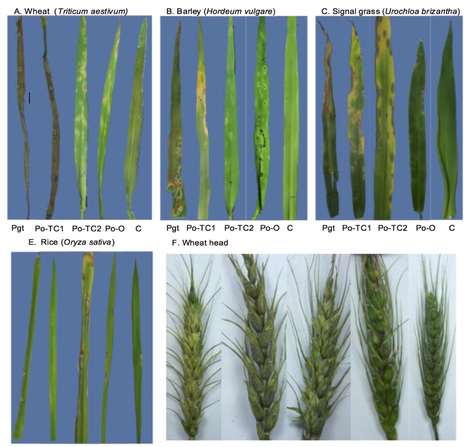
Pyricularia oryzae is a species complex that causes blast disease on more than 50 species of poaceous plants. Pyricularia oryzae has a worldwide distribution as a rice (Oryza) pathogen and in the last century emerged as an important wheat (Triticum) pathogen in southern Brazil. Presently, P. oryzae pathotype Oryza is considered the rice blast pathogen, whereas P. oryzae pathotype Triticum is the wheat blast pathogen. In this study we investigated whether the Oryza and Triticum pathotypes of P. oryzae were distinct at the species level. We also describe a new Pyricularia species causing blast on several other poaceous hosts in Brazil, including wheat. We conducted phylogenetic analyses using 10 housekeeping loci from an extensive sample (N = 128) of sympatric populations of P. oryzae adapted to rice, wheat and other poaceous hosts found in or near wheat fields. The Bayesian phylogenetic analysis grouped the isolates into two major monophyletic clusters (I and II) with high Bayesian probabilities (P = 0.99). Cluster I contained isolates obtained from wheat as well as other Poaceae hosts (P = 0.98). Cluster II was divided into three host-associated clades (Clades 1, 2 and 3; P > 0.75). Clade 1 contained isolates obtained from wheat and other poaceous hosts, Clade 2 contained exclusively wheat-derived isolates, and Clade 3 comprised isolates associated only with rice. Our interpretation was that cluster I and cluster II correspond to two distinct species: Pyricularia graminis-tritici sp. nov. (Pgt), newly described in this study, and Pyricularia oryzae (Po). The host-associated clades found in P. oryzae Cluster II correspond to P. oryzae pathotype Triticum (PoT; Clades 1 and 2), and P. oryzae pathotype Oryza (PoO; Clade 3). No morphological or cultural differences were observed among these species, but a distinctive pathogenicity spectrum was observed. Pgt and PoT were pathogenic and highly aggressive on Triticum aestivum (wheat), Hordeum vulgare (barley), Urochloa brizantha (signal grass) and Avena sativa (oats). PoO was highly virulent on the original rice host (Oryza sativa), and also on wheat, barley, and oats, but not on signal grass. We concluded that blast disease on wheat and its associated Poaceae hosts in Brazil is caused by multiple Pyricularia species: the newly described Pyricularia graminis-tritici sp. nov., and the known P. oryzae pathotypes Triticum and Oryza. To our knowledge, P. graminis-tritici sp. nov. is still restricted to Brazil, but obviously represents a serious threat to wheat cultivation globally.
Global yields of potato and tomato crops have fallen owing to potato late blight disease, which is caused by Phytophthora infestans. Although most commercial potato varieties are susceptible to blight, many wild potato relatives show variation for resistance and are therefore a potential source of Resistance to P. infestans (Rpi) genes. Resistance breeding has exploited Rpi genes from closely related tuber-bearing potato relatives, but is laborious and slow1, 2, 3. Here we report that the wild, diploid non-tuber-bearing Solanum americanum harbors multiple Rpi genes. We combine resistance (R) gene sequence capture (RenSeq)4 with single-molecule real-time (SMRT) sequencing (SMRT RenSeq) to clone Rpi-amr3i. This technology should enable de novo assembly of complete nucleotide-binding, leucine-rich repeat receptor (NLR) genes, their regulatory elements and complex multi-NLR loci from uncharacterized germplasm. SMRT RenSeq can be applied to rapidly clone multiple R genes for engineering pathogen-resistant crops.
Via The Sainsbury Lab
|
|
Scooped by
Kamoun Lab @ TSL
April 27, 2016 10:25 AM
|
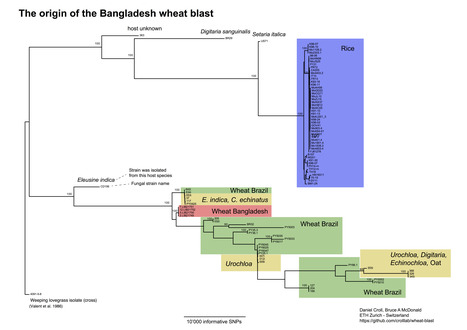
via Daniel Croll and Bruce McDonald What did we find out? The wheat blast outbreak in Bangladesh was not caused by a mutated rice blast strain. We found that the strains isolated from Bangladesh grouped very tightly with all known wheat blast strains from Brazil and not with any known rice blast strains. The wheat blast strains in Bangladesh are genetically very similar to wheat blast strains previously identified in Brazil. The genetically most similar strains were collected in Brazilian wheat fields and on associated weeds Eleusine indica (goose grass) and Cenchrus echinatus collected in Brazil. One of the genetically closest strains known from Brazil is PY0925. The genome sequence and annotation can be downloaded here. We made the genome sequence of an additional Brazilian wheat blast strain available. This is strain 205 isolated in São Borja (RS, Brazil) and is slightly more distant to the Bangladesh blast strains. Download the genome, gene models and protein sequences. The high similarity among the wheat blast strains from Bangladesh and Brazil suggests that wheat blast was introduced into Bangladesh from Brazil. Many fungal diseases can be transmitted via grains and previous research indicated that wheat blast can be seed-transmitted. A transmission of the disease from Brazil is plausible because Bangladesh is one of the largest Asian importers of wheat and Brazil is one of the major suppliers of wheat to Bangladesh. Other Asian countries that received wheat from Brazil, including Thailand, Philippines and Vietnam should increase surveillance efforts to learn if wheat blast has entered into their wheat fields.
|
|
Scooped by
Kamoun Lab @ TSL
April 24, 2016 2:50 PM
|
An update on current knowledge of the wheat blast pathogen in Brazil. Presented by Bruce McDonald at the Fungal Genetics Conference, Asilomar, March, 2015.
|
|
Scooped by
Kamoun Lab @ TSL
April 11, 2016 11:19 AM
|
The 8th International Geminivirus Symposium and the 6th International ssDNA Comparative Virology Workshop will be held in association with Indian Virological Society from 7th-10th November, 2016 at Vivanta by Taj, Dwarka, New Delhi, India. The symposium will present an excellent platform to discuss and share the latest developments in the subject of geminiviruses and ssDNA viruses of plants, animals and human beings. There will be facilities for commercial organizations to showcase their products to an international audience. Concessional rates for registration will be made available for PhD students and post-doctoral fellows.
|
|
Scooped by
Kamoun Lab @ TSL
April 2, 2016 3:55 AM
|
Welcome to 13th European Conference on Fungal Genetics!
The aim of ECFG13 is to showcase recent advances in fungal genetics and molecular biology, including cellular biology, evolutionary genomics, biotic intercations, systems and synthetic biology, ecogenomics and biotechnology. The program includes keynote lectures, 6 plenary sessions, 9 concurrent sessions, and 2 poster sessions for more informal discussions. These sessions will be complemented with satellite meetings, which will be held prior to the main conference. The conference will provide an interdisciplinary forum for scientists to present and discuss the most recent innovations, trends and issues in the field of fungal genetics and molecular biology.The conference will be held in Paris, France, a city with many attractions, in the setting of the Center of Science and Industry (La Cité des Sciences et de l'Industrie) in La Villette Park. The organizing committee looks forward to welcoming you in 2016 to enjoy springtime and some exciting science!
|
|
Scooped by
Kamoun Lab @ TSL
April 2, 2016 3:35 AM
|
Phytic acid (PA) is a major source of inorganic phosphate (Pi) in the soil; however, the plant lacks the capacity to utilize it for Pi nutrition and growth. Microbial phytases constitute a group of enzymes that are able to remobilize Pi from PA. Thus, the use of these phytases to increase the capacity of higher plants to remobilize Pi from PA is of agronomical interest. In the current study, we generate transgenic Arabidopsis lines (ePHY) overexpressing an extracellular form of the phytase PHY-US417 of Bacillus subtilis, which are characterized by high levels of secreted phytase activity. In the presence of PA as sole source of Pi, while the wild-type plants show hallmark of Pi deficiency phenotypes, including the induction of the expression of Pi starvation-induced genes (PSI, e.g. PHT1;4) and the inhibition of growth capacity, the ePHY overexpressing lines show a higher biomass production and no PSI induction. Interestingly, when co-cultured with ePHY overexpressors, wild-type Arabidopsis plants (or tobacco) show repression of the PSI genes, improvement of Pi content and increases in biomass production. In line with these results, mutants in the high-affinity Pi transporters, namely pht1;1 and pht1;1-1;4, both fail to accumulate Pi and to grow when co-cultured with ePHY overexpressors. Taken together, these data demonstrate the potential of secreted phytases in improving the Pi content and enhancing growth of not only the transgenic lines but also the neighbouring plants.
|
|
Scooped by
Kamoun Lab @ TSL
March 29, 2016 4:00 PM
|
|
|
Scooped by
Kamoun Lab @ TSL
March 28, 2016 8:37 AM
|
The ascomycete fungus Fusarium graminearum causes stalk rot in maize. We tracked this pathogen’s growth in wound-inoculated maize stalks using a fluorescence-labeled fungal isolate and observed that invasive hyphae grew intercellularly up to 24 h post inoculation, grew intra- and inter-cellularly between 36–48 h, and fully occupied invaded cells after 72 h. Using laser microdissection and microarray analysis, we profiled changes in global gene expression during pathogen growth inside pith tissues of maize stalk from 12 h to six days after inoculation and documented transcriptomic patterns that provide further insights into the infection process. Expression changes in transcripts encoding various plant cell wall degrading enzymes appeared to correlate with inter- and intracellular hyphal growth. Genes associated with 36 secondary metabolite biosynthesis clusters were expressed. Expression of several F. graminearum genes potentially involved in mobilization of the storage lipid triacylglycerol and phosphorus-free lipid biosynthesis were induced during early infection time points, and deletion of these genes caused reduction of virulence in maize stalk. Furthermore, we demonstrated that the F. graminearum betaine lipid synthase 1 (BTA1) gene was necessary and sufficient for production of phosphorus-free membrane lipids, and that deletion of BTA1 interfered with F. graminearum’s ability to advance intercellularly. We conclude that F. graminearum produces phosphorus-free membrane lipids to adapt to a phosphate-limited extracellular microenvironment during early stages of its invasion of maize stalk.
|
|
Scooped by
Kamoun Lab @ TSL
March 28, 2016 6:58 AM
|
Understanding recognition mechanisms of pathogenic microbes by plants is not only pivotal to crop protection programs, but has also revealed fascinating examples of co-evolutionary biology. A new phase has been initiated with a series of exciting discoveries on ‘integrated decoys’. In this issue of New Phytologist, Kroj et al. (pp. 618–626) show that the integrated decoys are diverse, but common in plants and illustrate that this model predicts novel components in plant immunity.
Sexual reproduction is ubiquitous among eukaryotes, and fully asexual lineages are extremely rare. Prominent among ancient asexual lineages are the arbuscular mycorrhizal fungi (AMF), a group of plant symbionts with a multinucleate cytoplasm. Genomic divergence among co-existing nuclei was proposed to drive the evolutionary success of AMF in the absence of sex1, but this hypothesis has been contradicted by recent genome analyses that failed to find significant genetic diversity within an AMF isolate2,3. Here, we set out to resolve issues surrounding the genome organization and sexual potential of AMF by exploring the genomes of five isolates of Rhizophagus irregularis, a model AMF. We find that genetic diversity in this species varies among isolates and is structured in a homo-dikaryon-like manner usually linked with the existence of a sexual life cycle. We also identify a putative AMF mating-type locus, containing two genes with structural and evolutionary similarities with the mating-type locus of some Dikarya. Our analyses suggest that this locus may be multi-allelic and that AMF could be heterothallic and bipolar. These findings reconcile opposing views on the genome organization of these ubiquitous plant symbionts and open avenues for strain improvement and environmental application of these organisms.
Via Francis Martin
|
|
Scooped by
Kamoun Lab @ TSL
March 21, 2016 10:10 AM
|
This is not a review paper in the traditional sense, of which there are many. Three of the most influential reviews that summarized well some of the “older” literature include those by Nicolson (1967), Gerdemann (1968) and Mosse (1973). Instead, in this brief and incomplete work, we attempt to show the historical development of research on arbuscular mycorrhizas. We owe much to those who have written other historical accounts, including Rayner (1926–1927), Trappe and Berch (1985), Mosse (1985), Schenck (1985), Harley (1991) and Allen (1996), but the contents of this work naturally reflect our own ignorance, interests and biases. It was often difficult to distinguish between the historical and the contemporary, and we did not use any specific cutoff date in making this distinction. The degree to which we include “contemporary” literature was determined by our own assessment of its connectedness to older literature. In any case, we hope this will be of some interest to those of you who study the arbuscular mycorrhiza, and that it will serve the purpose of providing what we consider to be an important historical context for current researchers. We wish you good fortune in your research.
|