Fred Ausubel’s talk was by far my favorite at the 2014 IS-MPMI Congress. Not because the other talks were boring or bad, but because he told the story of his science in the context of history and the various members who did the work over the years. He also shared the perspective from which the science was done.
Sharon Long’s talk at the 2016 IS-MPMI Congress followed a similar approach, and left a similar impression. I can begin to appreciate, when hearing these great pioneers of plant biology share their stories, how they must feel about us young folks with our kit-based, impact-factor driven mentalities. Of course, I fully appreciate the different selective pressures that have shaped the current science culture, but hearing Sharon talk I really began to wonder if we bear more responsibility for our current dilemma than we want to admit?
Sure, most of science is not the big discoveries, it is the mundane, every day drudgery of “no effect,” but this was true for them as well. Do we, in our efforts to claim one of those big results as our own, cut too many corners and miss them in the process? Sharon described the process of discovering the signals responsible for nodulation in the plant-rhizobium interaction and emphasized that they looked in EVERY fraction of plant exudate, not only the ones they thought might contain the compound of interest. She also encouraged us to never underestimate the need to just LOOK!
Sharon’s talk contained many other gems of wisdom for both new students and more seasoned scientists. I have outlined a few main points below. Also check out the Tweets on Storify, which captured the highlights more comprehensively than I could do alone! As you read through, I encourage you to challenge yourself with her advice. Do not just read it, think, “Wow, that sounds great!” and then stash it away. Think about what she said, test the ideas to decide if they are sound, and then apply the ones you believe to be true. You know, approach it like a scientist!
Themes:
Use genetics for discovery as well as for analysis
Use bacterial genetics as a probe of plant development
Plants & microbes have been studying each other longer and so know each other better than we know them
Draw from other systems
many discoveries only happen with combined efforts of multiple labs working with different systems/approaches
You may study plant-microbe interactions, but developmental biology may inform your work – think outside the box
Sharon Long’s tips for conducting rigorous science:
Never underestimate the need to just Look!
Your control is the most important part of your experiment – design it first.
Don’t narrow down your options prematurely. Broaden your mind.
Do blind experiments whenever possible to prevent bias from affecting your results.
Use your Community Of Minds! (Sharon borrowed equipment from a neighboring lab to do electrophysiology of root hairs.)
To get out of the box:
Consider your unique background, your personal set of experiences and skills. What you have to offer is unique because of this.
As professors, TEACH! You will gain unique insights. Students always ask unexpected questions.
How to pick important experiments:
Can you turn it into a Yes/No question? Doing this gives you a testable hypothesis
If you knew the answer to the question, would it change what you did next? If not, maybe it isn’t the right question to be asking.
Will knowing the answer change the way you and others think about the thing you are studying?
Programmed cell death (PCD) is a conserved process among eukaryotes that serves a multitude of functional roles during an organism’s natural life cycle. PCD involves the tightly regulated process of cell death cued by specific spatiotemporal stimuli, which confer survival benefits. In eukaryotes, PCD is an essential process involved in senescence, aging, embryo development, cell differentiation, and immunity. In animal systems, morphologically distinct forms of PCD have been described (Figure 1) [1, 2]. Type I, or apoptotic cell death, is the best understood form of PCD and is defined by cell shrinkage, nuclear condensation and fragmentation, and eventual disintegration of the cell into apoptotic bodies that are digested by phagocytes. Type II cell death is an autophagic process that is induced during nutrient deprivation and chronic stress. Autophagic cell death is characterized by the rupture of the lysosome and subsequent release of toxic chemicals that degrade the cell contents. Unlike type I and type II, type III PCD is distinguished by the swelling of organelles and subsequent rupture of the plasma membrane. A programmed necrosis or necroptosis was initially believed to be an uncontrolled process of necrosis, but has been recently reclassified as type III form of cell death. Finally, pyroptosis is another recently categorized form of cell death that is mediated by caspase-1 activity. Morphologically, pyroptotic cells share characteristics of both apoptosis and necrosis [1]. Noteworthy, necroptosis and pyroptosis are pro-inflammatory forms of PCD activated by microbial infections and diverse environmental stimuli.
In plants, PCD is less rigorously classified (Figure 1). One difficulty in distinguishing the forms of PCD in plants and animals comes as a result of the different cellular morphology in plant cells — most notably the presence of the cell wall and chloroplasts. Unlike the plasma membrane, the degradation of the cell wall is not a universal feature of PCD in plants. Additionally, the formation of apoptotic bodies is not observed in plant cells, as there are no circulating phagocytes to engulf them [3]. Instead, plant cells committed to PCD release autolytic compounds stored in the vacuole that degrade cell contents. In these cases, the cell wall may develop perforations for the absorption and recycling of cellular components by neighboring cells. Although not as well characterized as the mitochondria, the chloroplasts have been shown to induce light-dependent PCD through singlet oxygen species (1O2) that may function in parallel to mitochondrial-mediated PCD at an early step in initiating the rupture of the vacuole [3].
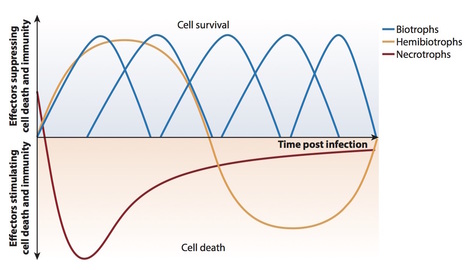
A specialized form of plant cell death called hypersensitive response (HR) is initiated as a defense response to pathogen infection. HR shares morphological features and molecular mechanisms reminiscent of both pyroptosis and necroptosis [4]. Moreover, HR is unique in that it induces a signaling cascade to propagate immunity in neighboring cells as well as priming distal tissues for potential pathogen challenge, a phenomenon known as systemic acquired resistance [5]. Here we will briefly describe diverse plant disease resistance pathways, early molecular events during pathogen perception, and downstream signaling components. We will thoroughly discuss how pathogens have evolved strategies to circumvent and/or suppress diverse immune responses, in particular plant cell death. While many of these mechanisms involve indirect disabling of upstream immune responses to avoid cell death, direct manipulation of PCD regulators by pathogen effectors has not been extensively explored in the literature, and will be the focal point of this article.
Welcome to Portland, the City of Roses, and the XVII International Congress on Molecular Plant-Microbe Interactions! We have put together a diverse and forward-looking program that highlights some of the most exciting upcoming research areas, such as the microbiome, tritrophic interactions, RNA-mediated interactions, and systems biology, as well as perennial favorites such as resistance mechanisms, mutualism, and microbial virulence functions. There is also a rich selection of special sessions on Sunday to serve as appetizers, including new training sessions on bioinformatics. Attendees and experts from nearly 50 countries around the world are here to discuss the future of molecular plant-microbe interactions. Seventy young scientist travel awardees will be networking with speakers and tweeting about their favorite talks.
Plant root border cells have been recently recognized as an important physical defense against soil-borne pathogens. Root border cells produce an extracellular matrix of protein, polysaccharide and DNA that functions like animal neutrophil extracellular traps to immobilize pathogens. Exposing pea root border cells to the root-infecting bacterial wilt pathogen Ralstonia solanacearum triggered release of DNA-containing extracellular traps in a flagellin-dependent manner. These traps rapidly immobilized the pathogen and killed some cells, but most of the entangled bacteria eventually escaped. The R. solanacearum genome encodes two putative extracellular DNases (exDNases) that are expressed during pathogenesis, suggesting that these exDNases contribute to bacterial virulence by enabling the bacterium to degrade and escape root border cell traps. We tested this hypothesis with R. solanacearum deletion mutants lacking one or both of these nucleases, named NucA and NucB. Functional studies with purified proteins revealed that NucA and NucB are non-specific endonucleases and that NucA is membrane-associated and cation-dependent. Single ΔnucA and ΔnucB mutants and the ΔnucA/B double mutant all had reduced virulence on wilt-susceptible tomato plants in a naturalistic soil-soak inoculation assay. The ΔnucA/B mutant was out-competed by the wild-type strain in planta and was less able to stunt root growth or colonize plant stems. Further, the double nuclease mutant could not escape from root border cells in vitro and was defective in attachment to pea roots. Taken together, these results demonstrate that extracellular DNases are novel virulence factors that help R. solanacearum successfully overcome plant defenses to infect plant roots and cause bacterial wilt disease.
All filamentous microbes produce and release a wide range of glycans, which are essential determinants of microbe–microbe and microbe–host interactions. Major cell wall constituents, such as chitin and β-glucans, are elicitors of host immune responses. The widespread capacity for glycan perception in plants has driven the evolution of various strategies that help filamentous microbes to evade detection. Common strategies include structural and chemical modifications of cell wall components as well as the secretion of effector proteins that suppress chitin- and β-glucan-triggered immune responses. Thus, the necessity to avoid glycan-triggered immunity represents a driving force in the convergent evolution of filamentous microbes towards its suppression.
Note – Morgan Halane (@themorgantrail) did a great job Tweeting all of the Plant-Microbe talks so please see his Twitter stream for better coverage than I was able to record….)
Jonathan Jones (The Sainsbury Laboratoy, U.K) – Functional dissection of paired immune receptor complexes in plants.
Gitta introduces the cytoplasmic kinases that operate downstream R genes. Receptor like cytoplasmic kinases are involved in PTI and ETI. Example BIK1, also PBL13. SIK1 kinase is part of the Map4 kinase family. Today Coaker is talking about SIK1 a conserved member of MAP4 family. sik1 T-DNA insertion mutants are stunted in growth and have high SA levels. sik1 mutants are compromised in RPS5-mediated hypersensitive response. sik1 mutants have a reduced ROS phenotype similar to bik1 mutants.
Ryohei Terauchi (Iwate Biotechnology Institute, Japan) – Arms race coevolution between pathogen and plant: The case of Magnaporthe oryzae AVR-Pik effector and rice heavy metal associated (HMA) domain proteins
Sheng Yang He (Michigan State University, U.S.A) – Bacterial pathogenesis: Toward reconstitution in a model plant-pathogen system
Sheng Yang works on the Arabidopsis – Pseudomonas syringae interaction, a “model plant-pathogen interaction”. For his good 2013 review, see Pseudomonas syringae pv. tomato DC3000: A Model Pathogen for Probing Disease Susceptibility and Hormone Signaling in Plants. Question – is PTI enough for immunity A – No. Limitations of study: growth chamber studies. Don’t forget the disease triangle – disease involves plant, pathogen and environment. Effective pathogenicity requires high humidity even when the pathogen is infiltrated directly into the leaf. Hypothesis HopM1 and AvrE establish an aqueous apoplastic living space for aggressive bacterial multiplication. Water soaking requires high humidity too.
Epichloë festucae forms a mutualistic symbiotic association with Lolium perenne. This biotrophic fungus systemically colonizes the intercellular spaces of aerial tissues to form an endophytic hyphal network. E. festucae also grows as an epiphyte, but the mechanism for leaf surface colonization is not known. Here we identify an appressorium-like structure, which we call an expressorium that allows endophytic hyphae to penetrate the cuticle from the inside of the leaf to establish an epiphytic hyphal net on the surface of the leaf.
We used a combination of scanning electron, transmission electron and confocal laser scanning microscopy to characterize this novel fungal structure and determine the composition of the hyphal cell wall using aniline blue and wheat germ agglutinin labelled with Alexafluor-488.
Expressoria differentiate immediately below the cuticle in the leaf blade and leaf sheath intercalary cell division zones where the hyphae grow by tip growth. Differentiation of this structure requires components of both the NoxA and NoxB NADPH oxidase complexes. Major remodelling of the hyphal cell wall occurs following exit from the leaf.
These results establish that the symbiotic association of E. festucae with L. perenne involves an interconnected hyphal network of both endophytic and epiphytic hyphae.
The oomycete pathogen Phytophthora infestans causes potato late blight, and as a potato and tomato specialist pathogen, is seemingly poorly adapted to infect plants outside the Solanaceae. Here, we report the unexpected finding that P. infestans can infect Arabidopsis thaliana when another oomycete pathogen, Albugo laibachii, has colonized the host plant. The behaviour and speed of P. infestans infection in Arabidopsis pre-infected with A. laibachii resemble P. infestans infection of susceptible potato plants. Transcriptional profiling of P. infestans genes during infection revealed a significant overlap in the sets of secreted-protein genes that are induced in P. infestans upon colonization of potato and susceptible Arabidopsis, suggesting major similarities in P. infestans gene expression dynamics on the two plant species. Furthermore, we found haustoria of A. laibachii and P. infestans within the same Arabidopsis cells. This Arabidopsis - A. laibachii - P. infestans tripartite interaction opens up various possibilities to dissect the molecular mechanisms of P. infestans infection and the processes occurring in co-infected Arabidopsis cells.
Plants host distinct bacterial communities on and inside various plant organs, of which those associated with roots and the leaf surface are best characterized. The phylogenetic composition of these communities is defined by relatively few bacterial phyla, including Actinobacteria, Bacteroidetes, Firmicutes, and Proteobacteria. A synthesis of available data suggests a two-step selection process by which the bacterial microbiota of roots is differentiated from the surrounding soil biome. Rhizodeposition appears to fuel an initial substrate-driven community shift in the rhizosphere, which converges with host genotype–dependent fine-tuning of microbiota profiles in the selection of root endophyte assemblages. Substrate-driven selection also underlies the establishment of phyllosphere communities but takes place solely at the immediate leaf surface. Both the leaf and root microbiota contain bacteria that provide indirect pathogen protection, but root microbiota members appear to serve additional host functions through the acquisition of nutrients from soil for plant growth. Thus, the plant microbiota emerges as a fundamental trait that includes mutualism enabled through diverse biochemical mechanisms, as revealed by studies on plant growth–promoting and plant health–promoting bacteria.
Background - The recognition of microbe-associated molecular patterns during infection is central to the mounting of an effective immune response. In spite of their importance, it remains difficult to identify these molecules and the host receptors required for their perception, ultimately limiting our understanding of the role of these molecules in the evolution of host-pathogen relationships.
Results - We employ a comparative genomics screen to identify six new immune eliciting peptides from the phytopathogenic bacterium Pseudomonas syringae. We then perform a reverse genetic screen to identify Arabidopsis thaliana leucine-rich repeat receptor-like kinases required for the recognition of these elicitors. We test the six elicitors on 187 receptor-like kinase knock-down insertion lines using a high-throughput peroxidase-based immune assay and identify multiple lines that show decreased immune responses to specific peptides. From this primary screen data, we focused on the interaction between the xup25 peptide from a bacterial xanthine/uracil permease and the Arabidopsis receptor-like kinase xanthine/uracil permease sensing 1; a family XII protein closely related to two well-characterized receptor-like kinases. We show that xup25 treatment increases pathogenesis-related gene induction, callose deposition, seedling growth inhibition, and resistance to virulent bacteria, all in a xanthine/uracil permease sensing 1-dependent manner. Finally, we show that this kinase-like receptor can bind the xup25 peptide directly. These results identify xup25 as a P. syringae microbe-associated molecular pattern and xanthine/uracil permease sensing 1 as a receptor-like kinase that detects the xup25 epitope to activate immune responses.
Conclusions - The present study demonstrates an efficient method to identify immune elicitors and the plant receptors responsible for their perception. Further exploration of these molecules will increase our understanding of plant-pathogen interactions and the basis for host specificity.
MAP kinase (MPK) cascades in Arabidopsis thaliana and other vascular plants are activated by developmental cues, abiotic stress, and pathogen infection. Much less is known of MPK functions in nonvascular land plants such as the moss Physcomitrella patens. Here we provide evidence for a signaling pathway in P. patens required for immunity triggered by pathogen associated molecular patterns (PAMPs). This pathway induces rapid growth inhibition, a novel fluorescence burst, cell wall depositions, and accumulation of defense-related transcripts. Two P. patens MPKs (MPK4a and MPK4b) are phosphorylated and activated in response to PAMPs. This activation in response to the fungal PAMP chitin requires a chitin receptor and one or more MAP kinase kinase kinases and MAP kinase kinases. Knockout lines of MPK4a appear wild type but have increased susceptibility to the pathogenic fungi Botrytis cinerea and Alternaria brassisicola. Both PAMPs and osmotic stress activate some of the same MPKs in Arabidopsis. In contrast, abscisic acid treatment or osmotic stress of P. patens does not activate MPK4a or any other MPK, but activates at least one SnRK2 kinase. Signaling via MPK4a may therefore be specific to immunity, and the moss relies on other pathways to respond to osmotic stress.
Plants are able to recognize conserved features of potential microbial invaders and mount an active defense in most cases. Over the course of evolution, a number of these microbes including plant pathogenic fungi and oomycetes have evolved means through the secretion of small molecules (effectors) to block these defenses and promote virulence. In recent years, research has uncovered a wealth of knowledge regarding how effectors function within the plant cell to promote disease. Function of effectors ranges from altering plant cellular metabolic pathways and signaling cascades, RNA silencing, anti-microbial inhibition, and interfering with recognition machinery. The importance of understanding effector function has given rise to a new area of research termed effectoromics, which in this review refers to high-throughput studies to elucidate the function of a large number of candidate effector genes. Effectoromics research has led to the identification of a number of effectors with redundant function, indicating that pathogenic fungi and oomycetes contain effectors that are individually dispensable but functionally redundant that act synergistically to promote disease.
Fungal and oomycete plant pathogens cause destructive diseases in crops and pose real economic and food security threats [1]. These filamentous, eukaryotic organisms can also upset natural ecosystems when they spread invasively [2]. The capability of plant immune systems to detect and respond to pathogen effector proteins is a major determinant of disease susceptibility. Plant pathogen effector proteins that trigger host immunity are often encoded by conditionally detrimental genes that are under strong and contrasting selective pressures [3,4]. Pathogen effectors evolved to play a positive role in virulence by enabling growth and reproduction on host plants [5,6]. Nonetheless, effectors can meet their match with host immune receptors that recognize their presence, a result that ends badly for the pathogen. Such immunity-triggering proteins are known as avirulence (Avr) effectors, encoded by Avrgenes.
Communication has played a key role in organismal evolution. If sender and receiver have a shared interest in propagating reliable information, such as when they are kin relatives, then effective communication can bring large fitness benefits. However, interspecific communication (among different species) is more prone to dishonesty. Over the last decade, plants and their microbial root symbionts have become a model system for studying interspecific molecular crosstalk. However, less is known about the evolutionary stability of plant–microbe communication. What prevents partners from hijacking or manipulating information to their own benefit? Here, we focus on communication between arbuscular mycorrhizal fungi and their host plants. We ask how partners use directed signals to convey specific information, and highlight research on the problem of dishonest signaling.
Plants possess large arsenals of immune receptors capable of recognizing all pathogen classes. To cause disease, pathogenic organisms must be able to overcome physical barriers, suppress or evade immune perception, and derive nutrients from host tissues. Consequently, to facilitate some of these processes, pathogens secrete effector proteins that promote colonization. This review covers recent advances in the field of effector biology, focusing on conserved cellular processes targeted by effectors from diverse pathogens. The ability of effectors to facilitate pathogen entry into the host interior, suppress plant immune perception, and alter host physiology for pathogen benefit is discussed. Pathogens also deploy effectors in a spatial and temporal manner, depending on infection stage. Recent advances have also enhanced our understanding of effectors acting in specific plant organs and tissues. Effectors are excellent cellular probes that facilitate insight into biological processes as well as key points of vulnerability in plant immune signaling networks.
We show that the genomes of maize, sorghum, and brachypodium contain genes that, when transformed into rice, confer resistance to rice blast disease. The genes are resistance genes (R genes) that encode proteins with nucleotide-binding site (NBS) and leucine-rich repeat (LRR) domains (NBS–LRR proteins). By using criteria associated with rapid molecular evolution, we identified three rapidly evolving R-gene families in these species as well as in rice, and transformed a randomly chosen subset of these genes into rice strains known to be sensitive to rice blast disease caused by the fungus Magnaporthe oryzae. The transformed strains were then tested for sensitivity or resistance to 12 diverse strains of M. oryzae. A total of 15 functional blast R genes were identified among 60 NBS–LRR genes cloned from maize, sorghum, and brachypodium; and 13 blast R genes were obtained from 20 NBS–LRR paralogs in rice. These results show that abundant blast R genes occur not only within species but also among species, and that the R genes in the same rapidly evolving gene family can exhibit an effector response that confers resistance to rapidly evolving fungal pathogens. Neither conventional evolutionary conservation nor conventional evolutionary convergence supplies a satisfactory explanation of our findings. We suggest a unique mechanism termed “constrained divergence,” in which R genes and pathogen effectors can follow only limited evolutionary pathways to increase fitness. Our results open avenues for R-gene identification that will help to elucidate R-gene vs. effector mechanisms and may yield new sources of durable pathogen resistance.
Microbe-associated molecular patterns (MAMPs) are molecules, or domains within molecules, that are conserved across microbial taxa and can be recognized by a plant or animal immune system. Although MAMP receptors have evolved to recognize conserved epitopes, the MAMPs in some microbial species or strains have diverged sufficiently to render them unrecognizable by some host immune systems. In this study, we carried out in vitro evolution of the Arabidopsis thaliana flagellin receptor FLAGELLIN-SENSING 2 (FLS2) to isolate derivatives that recognize one or more flagellin peptides from bacteria for which the wild-type Arabidopsis FLS2 confers little or no response. A targeted approach generated amino acid variation at FLS2 residues in a region previously implicated in flagellin recognition. The primary screen tested for elevated response to the canonical flagellin peptide from Pseudomonas aeruginosa, flg22. From this pool, we then identified five alleles of FLS2 that confer modest (quantitatively partial) recognition of an Erwinia amylovora flagellin peptide. Use of this Erwinia-based flagellin peptide to stimulate Arabidopsis plants expressing the resulting FLS2 alleles did not lead to a detectable reduction of virulent P. syringae pv. tomato growth. However, combination of two identified mutations into a single allele further increased FLS2-mediated responses to the E. amylovora flagellin peptide. These studies demonstrate the potential to raise the sensitivity of MAMP receptors toward particular targets.
RAB5 is a small GTPase that acts in endosomal trafficking. In addition to canonical RAB5 members that are homologous to animal RAB5, land plants harbor plant-specific RAB5, the ARA6 group, which regulates distinct trafficking events from canonical RAB5 GTPases. Here, we report that plant RAB5, both canonical and plant-specific members, accumulate at the interface between host plants and biotrophic fungal and oomycete pathogens. Biotrophic fungi and oomycetes colonize living plant tissues by establishing specialized infection hyphae, the haustorium, within host plant cells. We found that Arabidopsis thaliana ARA6/RABF1, a plant-specific RAB5, is localized to the specialized membrane that surrounds the haustorium, the extrahaustorial membrane (EHM), formed by the A. thaliana-adapted powdery mildew fungus Golovinomyces orontii. Whereas the conventional RAB5 ARA7/RABF2b was also localized to the EHM, endosomal SNARE and RAB5-activating proteins were not, which suggests that the EHM has modified endosomal characteristic. The recruitment of host RAB5 to the EHM was shared by the barley-adapted powdery mildew fungus Blumeria graminis f.sp. hordei and oomycete Hyaloperonospora arabidopsidis, but the extrahyphal membrane surrounding the hypha of the hemibiotrophic fungus Colletotrichum higginsianum at the biotrophic stage was devoid of RAB5. The localization of RAB5 to the EHM appears to correlate with the functionality of the haustorium. Our discovery sheds light on a novel relationship between plant RAB5 and obligate biotrophic pathogens.
In February 2016, a new fungal disease was spotted in wheat fields across eight districts in Bangladesh. The epidemic spread to an estimated 15,741 hectares, about 16% of cultivated wheat area in Bangladesh, with yield losses reaching up to 100%. Within weeks of the onset of the epidemic, we performed transcriptome sequencing of symptomatic leaf samples collected directly from Bangladeshi fields. Population genomics analyses revealed that the outbreak was caused by a wheat-infecting South American lineage of the blast fungus Magnaporthe oryzae. We show that genomic surveillance can be rapidly applied to monitor plant disease outbreaks and provide valuable information regarding the identity and origin of the infectious agent.
An Albugo sings about its relationships with some unwilling (and o occasionally willing) partners. Lyrics by Sophien Kamoun, performed by Jon Baker, inspired by "You Can Call Me Al" by Paul Simon.
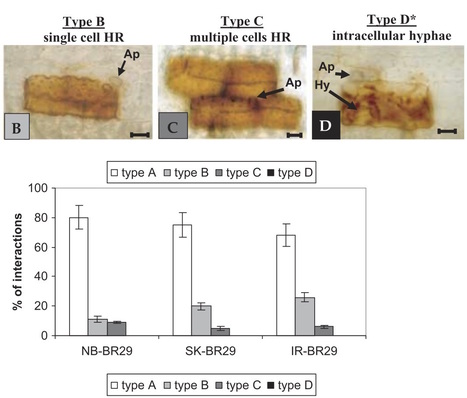
• The best characterized form of resistance is gene-for-gene resistance. Less well characterized is nonhost resistance in which an entire plant species is resistant to an entire pathogen species. Here, different rice genotypes were inoculated with host and nonhost strains of Magnaporthe isolated from rice, wheat and crabgrass. • The different types of interactions were characterized at a cytological level using a 3,3′-diaminobenzidine (DAB) stain to investigate the occurrence of reactive oxygen intermediates or by observing the occurrence of cellular autofluorescence. Gene expression of a set of selected PR-genes was analysed using quantitative real-time polymerase chain reaction. • Inoculation with the isolate from crabgrass resulted in a lack of penetration. The wheat isolate induced a hypersensitive response with varying degrees of pathogen growth inside the invaded cell according to the rice genotype. Expression analysis of our PR-gene set revealed clear differences between the different types of interactions in both kinetic and magnitude of gene induction. • Our integrated study opens the way to the dissection of molecular components leading to nonhost reactions to Magnaporthe grisea in rice and points to novel sources of durable resistance to fungal plant pathogens in other cereal crops.
Parasitic plants thrive by infecting other plants. Flowering plants evolved parasitism independently at least 12 times, in all cases developing a unique multicellular organ called the haustorium that forms upon detection of haustorium-inducing factors derived from the host plant. This organ penetrates into the host stem or root and connects to its vasculature, allowing exchange of materials such as water, nutrients, proteins, nucleotides, pathogens, and retrotransposons between the host and the parasite. In this review, we focus on the formation and function of the haustorium in parasitic plants, with a specific emphasis on recent advances in molecular studies of root parasites in the Orobanchaceae and stem parasites in the Convolvulaceae.
36th New Phytologist Symposium ‘Cell biology at the plant–microbe interface’ Munich, Germany, November/December 2015
The advances made during the twentieth century in understanding the genetics of host–pathogen interactions transformed crop breeding; however the field of plant pathology was founded from the earliest cell biology of Hooke and his contemporaries. During the twenty-first century phytopathologists have refocused their attention to the microscopic world to identify the molecular mechanisms responsible for inherited disease resistance, mutualistic interactions and virulence. For the first time a symposium was organized to specifically discuss the latest insights into plant– microbe interactions gained by merging rediscovered techniques, such as electron-microscopy, with new tools that allow in vivo highresolution tracking of cellular dynamics. These methods, together with the implementation of state-of-the-art proteomic and chemical biology approaches, are helping to elucidate the intricate mechanism of the interaction between two organisms. In this report we highlight emergent themes from the meeting and some of the cognate fundamental biological questions driving the contemporary study of phytopathology and mutualism.
To get content containing either thought or leadership enter:
To get content containing both thought and leadership enter:
To get content containing the expression thought leadership enter:
You can enter several keywords and you can refine them whenever you want. Our suggestion engine uses more signals but entering a few keywords here will rapidly give you great content to curate.


 Your new post is loading...