


Researchers predict that 2017 will be the first billion dollar year for wearable sensors.

 Your new post is loading...
 Scoop.it! Researchers predict that 2017 will be the first billion dollar year for wearable sensors. 
No comment yet.
Sign up to comment
Scoop.it!

With their ability to automatically send out SOS messages, these helmets are proving that wearable technology is a new reality in safety.
Richard Platt's insight:
The LifeBEAM Smart Helmet does a lot of things. It monitors heart rate, counts your calories, gives you an analysis of your performance and protects your head if you fall. Initially developed to monitor the vital signs of pilots and astronauts, the smart helmet was only recently made available to the rest of us as a wearable fitness device. The technology inside the helmet reads pulse signals directly from your forehead as you ride. Two light beams are transmitted to the skin and the reflection is measured in an electro-optical cell. A 3D accelerometer measures changes in direction and velocity. Algorithms then remove the ‘motion-generated noise’, and process all of the data in real time.
Scoop.it!

Startup Health Care Originals has created a wearable technology that can identify and alert users to precursor symptoms of asthmatic attacks much earlier.
Richard Platt's insight:
Although the CDC has released extensive reports and guidelines on how to control asthma, an estimated 44,000 asthma attacks occur every single day in the U.S. alone. The reason that many people struggle to control their asthma is often due to a lack of self-awareness of symptoms that could indicate risk of attack. Startup Health Care Originals has created a wearable technology that can identify and alert users to precursor symptoms of asthmatic attacks much earlier, allowing them to take the necessary steps to stop or reduce the attack and prevent future problems. “Right now a patient can only rely on when their coughing, wheezing, or shortness of breath, physically affects them so much that they have to stop what they are doing to address it,” said co-founder Jared Dwarika, in an interview with R&D Magazine. “If they wait until it is affecting them that much, it means they are already in an advanced stage of an asthmatic attack.” The technology, known as ADAMM Intelligent Asthma Monitoring, is a soft, flexible, waterproof, wearable Internet of Things (Iot) device, which communicates with a smart phone app and web portal using Bluetooth, WiFi, and cellular connections. It attaches to the upper torso using skin-safe adhesive and tracks precursor symptoms of asthmatic attacks, including cough rate, respiration patterns, heartbeat, and body temperature.
Scoop.it!

LTE is the best and worst feature about Apple’s newest Watch.
Richard Platt's insight:
Not one of the better reviews re: Apple's newest wearable watch, read the article for your disappointment (if you're an Apple fan that is).
Scoop.it!

NIKE has celebrated the beginning of its partnership with the NBA by revealing that its new fan jerseys will include a connected, interactive element.
Richard Platt's insight:
NIKE unveiled its new NBA jerseys for the 2017-18 season at an exclusive event in los angeles where designboom was in attendance. to learn more about the technology, designboom spoke with NIKE innovation’s michael hailey, and took a closer look at some of the uniforms and apparel that will grace the NBA hardwood for the upcoming season. globally launching on september 29, as soon as the NIKE jerseys go on sale, fans will be able to instantly unlock content via the NIKEconnect app. when the smartphone is tapped on the tag at the bottom of the NBA jersey it recognizes the special NFC chip located under the NIKEconnect logo. wearers are then able to ‘tap in’ around the clock, unlocking a wealth of team and player content such as pre-game arrival footage and highlight packages. game day brings even more access to exclusive offers. based on the jersey’s allegiance, the app navigates the central ‘team’ tab. here, a status bar has either a pre-game countdown to tip-off, an in-game score, or a post-game final score. other information provided includes where and when the team is playing next, as well as stats about the wearer’s player of choice. below, the ‘team’ feed combines performance and off-court highlights, including related recap videos and gifs. fans can ‘tap in’ to this content for greater detail or share externally with friends online.
Scoop.it!
INDYCAR driver Tony Kanaan's use of hitoe technology not only helps make him a better driver. He's also helping to change the (inter)face of healthcare.
Richard Platt's insight:
During every Indycar race, Tony Kanaan wears a special garment created by his sponsor, NTT Data, that incorporates hitoe, a material that acts as a sensor to capture electrocardiogram (ECG), heart rate, and electromyogram (EMG) data. In simple terms, Tony's hitoe shirt collects data from his heart and muscles that his Chip Ganassi Racing team monitors in real time during the race. The use of wearable technology not only helps Tony understand and improve his performance, it serves as a practical case study for other applications of the technology. "Tony was already extremely fit," says Adam Nelson, COO of Life Sciences & Healthcare Technologies for NTT Data. "He's a specimen. In fact, Tony was so physically fit that he was able to compensate for some of what was happening in the car." For the first year, NTT focused on Tony's heart rate and ECG. One early finding was surprising: Tony often held his breath for long periods. "Especially on road tracks under heavy G-force loads," Adam says, "he tended to hold his breath. Going through turn after turn... Tony held his breath too long, and we knew he could help stave off fatigue if he focused on breathing." While that sounds like a simple point, drivers expend a huge amount of energy counteracting G-forces that often range between 3 and 5 Gs and higher; to withstand that force, drivers contract their muscles to maintain physical balance and seating posture as well as to prevent blood from being forced to one side of the body. (Sounds weird, I know, but that's what happens when you experience heavy horizontal G-force loads.) "Our engineers also noticed an unusual EMG signal," Adam says, "so in the second year we put sensors in the upper arm of the shirt to started capture muscle activity. Tony said during some races he experiences cramping, his fingers would grow numb... so he wanted help with dehydration. By plotting his grip strength and grip consistency, we could show him where he was gripping the steering wheel tightly when contextually (where he was on the racetrack) he might not need to. For example, he could relax and release his grip a little earlier as he came out of a turn."
Scoop.it!

Verizon has discontinued its Wear24 smartwatch only four months after its release. Android Police first spotted the takedown, and Verizon separately confirmed the news to The Verge. If you tr
Richard Platt's insight:
The Android Wear 2.0 device launched in May for $350. We didn't think it was very good, and clearly it didn't sell well. At the time, we pointed out that the actual hardware was mediocre, including the built-in speakers. The software also encouraged wearers to use Verizon's Messaging app both on their phone and the watch. This app highlights words and turns them into monetized links. That's a feature no one wants. Dieter Bohn’s review called this watch an upsell that carriers tried to sell to customers as a way to make a little more money, just like how they used to sell no-name Android tablets. Apparently, people don't want to buy an expensive-but-cheap-looking smartwatch from their phone carrier. Shocker.
Scoop.it!

The potential for wearables that use new types of information — such as galvanic skin response for deeper readings into healthcare — could change the value and perception of wearables.
Richard Platt's insight:
“Fitbit is down 80% in value since its IPO,” said Cavan Canavan, cofounder of FocusMotion, a machine-learning software company that captures and crunches data on all types of human movement. “We’ve seen a major stagnation in wearables because step tracking was the only feature.” Rather than follow in the footsteps of step-tracker, wearables need to take a giant leap forward and provide higher-level functionality and benefits. That was the conclusion of Canavan and Daniel Chao, a physician and neuroscientist whose company, Halo Neuroscience, creates products that stimulate the brain so athletes can improve their performance. Tapping Fitness Tech’s Deep Potential Chao said one problem is that people can now do step tracking with an app on their phone, making wearables that do that task seem redundant. “Gadget people” might like devices for the sake of devices, but for most people the added inconvenience or “friction” of using a wearable must provide a bigger payoff. “A wearable has to be continuously novel,” Chao said. “When I wear a Fitbit, I can predict with good accuracy how many steps I’ve taken in a day because I’ve self-calibrated against the Fitbit. As technologists, we have to ask what we’re bringing to the table, and what we are asking people to do. You might track how much the muscles contract, or do motion tracking on the wrists or knees to get a different quality of motion.” In fact, Canavan’s technology does just that. His company collects and uses information on a wide range of movements, which allows sensor-infused clothing to determine if the wearer is doing yoga poses correctly. Reaching this higher level is, at its heart, a data issue. And that brings up many complex issues: Is the data actionable? From a fitness standpoint, data becomes valuable when it is actionable. For example, Chao said he would not want to use a wearable that detected the early signs of Alzheimer’s unless it allowed the wearer to take some steps that delayed or prevented its onset. While overall disappointed in the current state of wearables, Chao and Canavan remain excited about the prospects for the future. The potential for wearables that use new types of information — such as galvanic skin response for deeper readings into healthcare — could change the value and perception of wearables.
Scoop.it!

A new study has shown that more than a half of all manufacturing settings would be using some form of wearable tech in just five years.
Richard Platt's insight:
The wearable tech study, commissioned by Zebra Technologies, was based on online reports from 1,100 North American, Latin American, European and Asia Pacific ‘decision makers’ in the manufacturing industry. The primary finding of the study was that one-half of those surveyed planned to deploy wearable tech with their employees by 2022. Furthermore, 55% of those already using this technology said that they planned to increase the number of these wearable devices over the same time period. The survey also showed that the continuing trend towards manufacturers integrating the so-called ‘Industrial Internet of Things’ (IIoT) into smart factories was accelerating. This combines the use of wearable and internet-connected monitoring systems to enable factories to have a real-time overview of their production. The Zebra study found that by 2022, 64% of the manufacturers it contacted expect to be ‘fully connected’ compared to just 43% today. Zebra itself markets a range of IIoT solutions for businesses, meaning it is well-placed to take advantage of this shift towards Industry 4.0. “Manufacturers are entering a new era in which producing high-quality products is paramount to retaining and acquiring customers as well as capturing significant cost savings that impact the bottom line,” said Jeff Schmitz, senior vice president at Zebra.
Scoop.it!

Your Fitbit can be hacked, says new report
Richard Platt's insight:
A joint study published a few days ago by University of Edinburgh researchers and researchers from Germany and Italy, shows that personal information can be stolen from popular Fitbit devices. To prove this point, the team managed to successfully intercept messages from the Fitbit One and Flex bands and access personal information and activity logs. Fitbit secures its devices with end-to-end encryption. This is important as collected sensor data is sent to the company’s cloud servers for analysis. Messages are scrambled in transit and are only decrypted when they reach the destination. Nevertheless, researchers managed to access and decipher the data while it was on-route, demonstrating that encryption can be circumvented.
Scoop.it!

Nike is releasing an NFC chip-enabled jersey that’s designed to connect fans to players. Gimmick or smart UX?
Richard Platt's insight:
Connected experiences have been the holy grail in a number of businesses. For instance, Carnival cruise lines is set to unveil a groundbreaking IoT platform, in which an NFC wearable unlocks seamless service aboard their ships. Meanwhile Sephora has experimented with a number of ways to infuse the store experience with digital customization. In this case, Nike had the canny UX insight that the fans’ relationship to the jersey they’ve bought is a unique leverage point: They’re highly engaged and emotionally connected to a particular player. So they’re probably apt to download the NikeConnect app, if doing so means getting in closer with the player they love. “We spend a lot of time watching people’s behavior. The purest insight we had was that we see kids playing sports and staying connected to their phones. This extends that behavior by blending the physical and the digital,” says John Hoke, Nike’s vice president of global design. “We like to say this uniform is really an all-access pass.” The new jerseys themselves bear a magic mix of high-tech sensibility and marketing pixie dust. Hoke says the new jerseys are 20% lighter, with a front panel that has a sturdier drape than the back, thus creating better pockets for air circulation. When a player runs, that air exits the back, through an “exhaust” panel composed of a more porous fabric. Sussman says that the hypothesis that fans really would want all this extra content came from Nike’s experience creating apps. In the core Nike app, the company discovered that the “We Reserve For You” tab was actually the most well-engaged feature. That engagement in turn created enough signal to custom-tailor offerings. Nike has also been able to lure customers using AR. Inside the Nike SNKRS app, there have been virtual treasure hunts, in which users have to go to a physical location to unlock the chance to buy a particular pair of shoes. Within NikeConnect, Nike intends to extend those learnings, whether through carefully curated highlights linked to a particular player or team, or swag that can be purchased early. The highlights themselves come in GIF form, so they can easily be shared and texted.
Scoop.it!

Researchers from the Duke University School of Nursing have launched a five-year study on pressure ulcer reduction powered by the Leaf Patient Monitoring System.
Richard Platt's insight:
Researchers from the Duke University School of Nursing have launched a five-year study on pressure ulcer reduction powered by the Leaf Patient Monitoring System. The wireless, wearable sensor developed by Leaf Healthcare will track patient’s movements to determine the optimal timing for nurses to turn or reposition patients at risk for ulcers. "We need this information to decide how to deliver the best prevention care realistically and safely," Tracey L. Yap, registered nurse, associate professor at Duke University School of Nursing, and the principal investigator of the study, said in a statement. "The standard patient turn protocol of two hours was originally set by Florence Nightingale. We are overdue to find updated ways to improve quality of life while reducing facility-acquired pressure ulcers and lowering healthcare costs.” The study will enroll nearly 1,000 nursing home residents at nine sites. Two of these will follow the standard two-hour repositioning intervals, while three will use a three-hour interval and the last three sites a four-hour interval. Along with monitoring for a change in pressure ulcer incidence, it will examine staff satisfaction, costs resulting from various repositioning intervals, and the impact of repositioning patients on a high-density foam mattress.
Scoop.it!

Amazon.com Inc is working on its first wearable device - a pair of 'smart glasses', the Financial Times reported on Wednesday.
Richard Platt's insight:
The device, designed like a regular pair of spectacles, will allow Amazon's digital assistant Alexa to be summoned anytime at all places, the report said, citing people familiar with the plans. bit.ly/2jIMrIq There would be a bone-conduction audio system in the device to allow the wearer to hear Alexa without inserting headphones into his or her ears, according to the report. Amazon was not immediately available to comment on the report outside regular business hours. Earlier this year, Alphabet Inc re-introduced its own wearable glass headset, Google Glass, after discontinuing its production last year.
|
Scoop.it!

Official site of The Week Magazine, offering commentary and analysis of the day's breaking news and current events as well as arts, entertainment, people and gossip, and political cartoons.
Richard Platt's insight:
It's Marketing 101: When you want to sell a product, you extol its virtues. But when Apple recently announced its new Watch 3, the company pitched the device as more than merely practical or fun. In the video that preceded the announcement, the company suggested the Watch helped people become better versions of themselves — and even suggested it can help save lives. Maybe this is Marketing 102, updated for the 21st century: When you really want to sell a product, make it seem like a person's life will be empty without it. So when reviews of the latest Apple Watch landed this week, it was a surprise to see that disappointment abounded. Numerous reviewers had connectivity problems, while almost everyone found the battery life lacking — one tester saw their power drop to 30 percent by noon. More generally, while the Watch can hardly be called a failure, it hasn't exactly become a blockbuster hit either, in no small part because the promise of the device — a vital piece of tech for tracking health, staying connected, and being safe — has yet to entirely come to fruition. The problem is that for all the lofty rhetoric, wearables as a category aren't yet either especially necessary or in demand. While Apple obviously keeps updating the Watch, Samsung and LG continue to partner with Google to make their own Android Wear watches, and all sorts of other wearables continue to be made. Despite the lack of success, everyone keeps throwing things at the wall to see what sticks. It can seem puzzling.
Scoop.it!

New tools like eSight3 glasses help the visually impaired see, thanks to high-definition cameras and video displays placed on the wearer's eyes.
Richard Platt's insight:
Scoop.it!
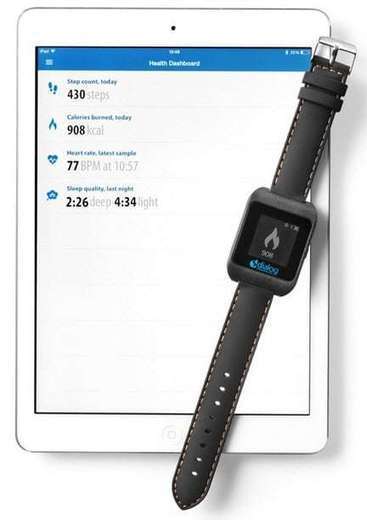
Dialog Semiconductor SmartBond™ DA14681 Wearable Development Kit is a wearable development platform for the wrist that delivers the right features and functionality with a long battery life.
Richard Platt's insight:
Mouser Electronics announced that it is now stocking the SmartBond DA14681 wearable development kit from Dialog Semiconductor. The flexible kit provides the hardware and software required to help manufacturers minimize time to market when creating next-generation wearable devices. The Dialog SmartBond DA14681 wearable development kit comprises a complete hardware and software design for a wrist-worn wearable that offers heart-rate monitoring, activity tracking, and environmental sensing. The kit is based on the high-performance, low-power SmartBond DA14681 SoC, which combines flexible processing power for advanced applications, integrated battery charging, and data security. The kit features a complete range of sensors, including a 6-axis accelerometer and gyroscope; 3-axis digital geomagnetic sensor; and a temperature, humidity and pressure sensor. With a 128×128-pixel ultra-low-power LCD screen, capacitive touch button, and support for NFC payment, the kit enables manufacturers to start prototyping without needing extra hardware. The kit comes with a complete software package that is specifically designed for wearables, including royalty-free advanced algorithms for sensor fusion, activity classification, and sleep monitoring. With full documentation and tooling, the kit is easy to set up, allowing engineers to start prototyping out of the box.
Scoop.it!

Sidestepping the traditional FDA approval process
Richard Platt's insight:
Food and Drug Administration has announced the names of nine companies participating in a pilot program that could let them pre-clear products instead of going through the agency’s traditional application process. The program, called Pre-cert, will include Apple, Fitbit, Samsung, Alphabet-owned Verily, Johnson & Johnson, Pear Therapeutics, Phosphorus, Roche, and Tidepool. The program had attracted over 100 interested companies, and the FDA made its selections based on factors like company size and risk profile of the product(s). The FDA’s usual timeline for approving new products can often take months, which can delay developers as tech advances faster than the agency can approve it. “We need to modernize our regulatory framework so that it matches the kind of innovation we’re being asked to evaluate,” said FDA commissioner Scott Gottlieb. “These pilot participants will help the agency shape a better and more agile approach toward digital health technology that focuses on the software developer rather than an individual product." The Pre-cert program was initially launched on July 27th. The companies that participate must provide access to the methods they use to develop, test, and maintain their products as well as give information to the FDA about how they collect data and maintain quality. Direct-to-consumer health products have faced multiple roadblocks in the past as the FDA tries to keep up with how to regulate unknown territories. DNA testing service 23andMe was ordered to halt sales of its at-home kit in 2013, and was approved earlier this year to detect genes linked to certain medical conditions. It wasn’t until 2016 that the agency outlined recommendations for how manufacturers should tackle cybersecurity in devices, and that guidance took more than a year to create.
Scoop.it!

Inside Thalmic Labs's secret wearables warehouse
Richard Platt's insight:
Waterloo has its own wearables factory Inside Thalmic Labs' secret wearables warehouse. In an old woodworking warehouse in Waterloo, the wearables of the future are becoming a reality. It’s home to Thalmic Labs, the company known for the Myo armband, which allows users to control an array of devices with a flick of the wrist—PowerPoint slides, lights in a DJ set, even a prosthetic hand. Last year, Thalmic got $120 million (U.S.) from Amazon and Intel to develop a new interface for wearable technology that would rival iOS. The space buzzes with the thrill of innovation as jumpsuited engineers work to invent not only next-level wearables, but also the machines required to manufacture them. If there were ever a place to build self-lacing sneakers, this would be it.
Scoop.it!
Richard Platt's insight:
Fitbit announced today that it will be launching the Ionic — the company’s first true smartwatch — on October 1st for $299.95. Also set to launch that day is the company’s first foray into the headphone market, the Fitbit Flyer, for $129.95. The Ionic was announced back in August with no firm release date. It distinguishes itself from Fitbit’s earlier offerings by adding support for third-party applications and a new software platform called Fitbit OS, which is designed to work similarly to how Pebble smartwatches did with a simple, web standards-based SDK. (That makes sense, since Fitbit bought Pebble last December.) Fitbit also claims the Ionic is better than any previous Fitbits at fitness tracking. The company hopes that the wearable may even soon be able to help track sleep apnea, but whether it can pull it off is more complicated than it seems. Fitbit is coming fairly late to the smartwatch market. Competitors like Apple and Samsung having had plenty of time to build out loyal communities of developers and users, along with devices that are more technically advanced with LTE than the Ionic. Users will be able to decide which device is right for themselves come October 1st.
Scoop.it!

The new 'smart jacket' from Levi's and Google arrives in select stories this Wednesday for $350.
Richard Platt's insight:
Google seems to have atoned for its sins, though, with Levi's Commuter Trucker Jacket with the search giant's Jacquard technology, which lets you control your Android device or iPhone with a few pats and swipes on the left sleeve. After months of quiet hype,the jacket is finally going on sale at select locations this Wednesday, with wider availability opening up next week. In line with previous statements from Google at SXSW last March, The Verge reports that it'll sell for $350 (about £260 / AU$440). Don't expect the Commuter Trucker Jacket to fully replace a wearable device like the Apple Watch for that price. It is chiefly aimed at foot and bike commuters who need rapid information or access to their music without stopping to fumble with their phones, and so the touch-sensitive Jacquard fabric supports only a few gestures that you can set up with an accompanying app. You can brush up or brush down on the sleeve to change musical tracks, for instance, or you can double tap your sleeve to tell Google Maps to set a course for home. Merely holding the fabric makes the whole interface to shut off if you need some quiet. And, yes, you can wash it, so long as you remove the little plastic tag you attach to the cuff before tossing it in the machine. After all, it's basically just a regular $150 Commuter Trucker Jacket from Levi's with Google's Jacquard fabric, but that combination makes it a fun toy and a charming conversation piece. Best of all, unlike with the Google Glass, you probably won't look like a square while wearing it, and that's partly because Google went straight to the source rather than relying on a bunch of techies to create stylish digs. "We don't want to be in the garment business; this is not our place to be," Project Jacquard chief Ivan Poupyrev said when we interviewed him in 2015. "There's a depth of knowledge in these apparel companies that none of us have, because they're spending years and years - in the case of Levi's, hundreds of years - learning."
Scoop.it!

Inquire for Wearable Apps Market Competitive Analysis, Trends and Forecast till 2022, with free sample copy of the report.
Richard Platt's insight:
The wearable technology market is expected to reach USD 51.65 Billion by 2022 at a CAGR of 15.51% between 2016 and 2022. This study answers several questions for stakeholders, primarily which market segments they should focus upon during the next five years to prioritize their efforts and investments. These stakeholders include Wearable Apps manufacturers such as, Apple, Fitbit, Google, Samsung Electronics, Appster, DMI, Fuzz Productions, Intellectsoft, Intersog, LeewayHertz, PointClear Solutions, Redmadrobot, Sourcebits, Touch Instinct, Worry Free Labs. Primary sources are mainly industry experts from core and related industries, and suppliers, manufacturers, distributors, service providers, and organizations related to all segments of the industry’s supply chain. The bottom-up approach was used to estimate the global market size of Wearable Apps based on end-use industry and region, in terms of value. With the data triangulation procedure and validation of data through primary interviews, the exact values of the overall parent market, and individual market sizes were determined and confirmed in this study.
Scoop.it!

Medical errors are the 3rd leading cause of death in the US. While Singapore has developed a solid reputation as a healthcare hub, issues continue to surface, including how the wrong donor’s sperm was used in an in-vitro fertilization operation last year. The healthcare industry needs to maximize visibility into its assets to deliver the right care to the right patient at the right time.
Richard Platt's insight:
Wearables: Sullivan asserts that MedTech is revolutionizing the healthcare industry by taking over the traditional ways of delivering patient care in Asia Pacific, and wearables technology is one of them. For example, barcode wristbands are used in monitoring patient care as they can encapsulate all the data required to offer the right medication at the right time, minimizing the risks of mislabelling bio-samples and more. Real-time RFID or BLE technology-based locationing wearables are also extending visibility into the entire patient caregiver journey and into every aspect of the health facility for healthcare providers. "In a hospital where time is of the essence, wearables equip healthcare providers with greater efficiencies by cutting down on the need for manual managing and tracking of processes. This, in turn, allows for more time dedicated to patient care and building strategies that can improve how they operate," he suggests. Hospitals, like any enterprise or organization, have to ensure that their equipment are in working order, on top of the pressure of having to save lives. With the right solutions in place, hospitals can keep better track of their assets and are therefore better able to manage their assets. Arming medical facilities with the critical intelligence results in better decisions and improved outcomes. For Sullivan, the key is issuing unique RFID tags to every hospital asset - this will enable doctors to track the availability of each respective equipment in real-time and schedule surgeries or tests accordingly. "The ability to anticipate demand allows healthcare staff to administer resources where they’re needed most, ensuring hospitals get the most out of their existing assets and positively influencing their bottom line," Sullivan states.
Medical errors: With long working hours, challenging working conditions, and the need to simultaneous treat a multitude of patients with different complications and symptoms, it is perhaps not surprising that human errors often occur in the healthcare industry. According to researchers from Johns Hopkins Medicine, preventable medical errors are the third leading cause of death in the U.S., with more than 250,000 Americans dying every year from medical oversights. IoT is helping to automate manual processes throughout the patient care workflow and helps reduce preventable medical error risks by allowing healthcare providers to easily attach smart labels such as barcodes, RFID tags, and sensors to almost anyone and anything – including clinicians, patients, equipment and medications – and link them to the internet, giving them digital voices. "This lets organizations put in place frameworks that ensure that staff administer the right medications to the right patients at the right times and in the right doses through multiple verification steps, minimizing the chance of human error occurring. This can also be applied when blood needs to be drawn for tests: nurses can use mobile computers to view the tests that are needed, scan patient wristbands to confirm their IDs, be guided through the steps required for blood collection, and immediately print barcode labels to be affixed to the samples," says Sullivan.
Scoop.it!
Bioengineered fibres with unnatural properties like fluorescence and magnetism could be a boon to wearable technology. Andrew Masterson reports.
Richard Platt's insight:
Growing cotton in commercial quantities, as everyone knows, requires hefty amounts of water, sunlight and labour. In the very near future, in might also require two extra ingredients, both a little tricky to pronounce: 6-carboxyfluorescein–glucose, and dysprosium–1,4,7,10-tetraazacyclododecane-1,4,7,10-tetraacetic acid–glucose. Proof-of-concept research published in the journal Science suggests that inoculating these two molecules into cotton plants might well catalyse a second period of commercial ubiquity for the crop, re-engineering the familiar fabric made from it to take a central role in the widely predicted boom in wearable technology. A study led by Filipe Natalio, of Martin Luther University in Halle, Germany, demonstrates a bio-engineering pathway in which the addition of the molecules into the plant produces fibres with “unnatural properties such as fluorescence or magnetism”. The results were achieved after inculcating the molecule pair into fertilised cotton ovules in a laboratory. The glucose molecule acts as a carrier, transporting the second substance through the growing plant’s vascular system and depositing it in its epidermal layers. The outcomes demonstrated by Natalio and colleagues serve in part as demonstration of process, but also promise directly useful adaptations. Fluorescent fabrics have multiple potential uses, as high-visibility clothing, for instance, or in wearable monitors. Magnetic fibres also have many possible applications in areas where electrical conductivity is beneficial. According to the researchers, the new uber-cotton has a big advantage over other wearable smart-textiles in development: durability. “Current approaches that rely on fibre coatings suffer from function loss during wear,”
Scoop.it!

The problem with the Apple Watch Series 3 with LTE is that it's a sign that Apple has abandoned one of its strongest characteristics from its meteoric rise.
Richard Platt's insight:
Apple's new Watch made lots of headlines on Wednesday — but for all the wrong reasons. The latest version of the company's wrist-worn gadget — the Apple Watch Series 3 with LTE — was found to have an embarrassing glitch. It turns out that the watch's LTE cellular connectivity, which is supposed to let users make phone calls directly from their wrists and has been touted by Apple as a key selling point, doesn't always work very well. Actually, it's a bug with the watch's Wi-Fi, but the end-result is the same: LTE doesn't work the way it's supposed to. Reviews of the device, which hits stores shelves on Friday, were merciless. Apple's stock fell as much as 3% at one point on Wednesday. Apple is working on a fix, which will be delivered in a future software release, an Apple spokesperson told Business Insider.
Scoop.it!

Defense, aerospace, news, exhibitions, C4ISR, aircraft, procurement, pentagon, contracts, companies, categories, events, interviews.
Richard Platt's insight:
BAE Systems has introduced a new wearable technology dubbed ‘Broadsword Spine’ – an invisible power and data network that is built directly into clothing using conductive fabrics instead of wires and cables. The new technology allows vital electronic devices to be plugged straight into a vest, jacket or belt, with custom-built connectors hooking directly into power and data sources via USB. Developed in collaboration with Intelligent Textiles Limited, Broadsword Spine has been successfully tested by armed forces across the world in past 12 months. This offers military, security and first responder personnel - all of whom rely on carrying electronic equipment and need a durable power supply for long periods of time - with a more flexible and robust alternative to existing power and data systems. The system also delivers an estimated 40 per cent weight saving for the user versus alternative options – crucial when on the move. Richard Checkley, Defence Information Director here at BAE Systems Military Air & Information said: "Broadsword Spine is built to operate in the harshest environments and to reduce the burden on soldiers on the frontline. Through the unique e-textile technology, and power and data management system at the heart of the product, we are reducing both the workload of troops and the weight they have to carry. We have sold Broadsword Spine to potential future users who will trial and evaluate the technology in a number of operational environments. We are working with our customers to support these trials and look forward to meeting their future programme requirements”.
|






Those observant researchers at IDTechEx are predicting 2017 will be the first billion dollar year for wearable sensors. One might’ve expected that number to be much higher, given all the hype wearables get. Also, since wearables are primarily consumer-centric, again one would expect the figures to be higher. However, the company’s exhaustive report, ““Wearable Sensors 2018-2028: etc.” spans three-plus years of observation that yields a comprehensive characterization and outlook for each type of wearable sensor. The report addresses 21 different types of wearable sensors across nine different categories:
Just as a side note, wearables, like any and all products that employ sensors in all applications, use pretty much all sensor types. These include pressure sensors, position sensors, temperature, moisture, and motion sensors, etc.