


Staff working on major roads, including motorways, are set to be given 'personnel-tracking technology' Credit: PA Highways England is formulating a plan to roll out wearable technology “to monitor the location and wellbeing” of its workforce.

 Your new post is loading...
 Scoop.it! Staff working on major roads, including motorways, are set to be given 'personnel-tracking technology' Credit: PA Highways England is formulating a plan to roll out wearable technology “to monitor the location and wellbeing” of its workforce. 
No comment yet.
Sign up to comment
Scoop.it!

Business Insider France est un site d’information sur l’économie, les technologies, les entrepreneurs, l’innovation, les découvertes et bien plus encore. En texte, en images, en vidéos et en graphiques, de l’actualité essentielle et percutante.
Richard Platt's insight:
Consumers and developers could find heightened value in the Apple Watch.
Apple has also addressed several challenges vendors have faced when trying to add cellular LTE connectivity to their smartwatches. The extra computing load that SIM integration requires can at times lead to a sluggish experience, bulky form factor, and bigger drain on the device’s battery. However, along with up to 18 hours of battery, the Series 3 Apple Watch comes with a novel dual-core processor with 70% better performance than the Series 2 and a new W2 chip, which will improve Bluetooth and wireless connectivity by 85% and power efficiency by 50%. The Series 3 also features a smaller electronic SIM, and the display itself functions as an antenna. These new additions will likely enhance the user experience and drive wireless cellular LTE connected smartwatches to the mainstream.
Scoop.it!

Australia is developing a data recorder to be worn by soldiers on the battlefield, Minister for Defense Industry Christopher Pyne said Thursday.
Richard Platt's insight:
The "Fight Recorder" -- akin to the so-called black box used on aircraft -- would act as an emergency beacon to reduce the time taken to reach and treat battlefield casualties. "In addition to serving as a location beacon, the data captured by the Fight Recorder could be used to inform the design and performance of soldier equipment and protective wear," Pyne said in a press release. Australian telecommunications company Myriota and wearable technology company IMeasureU, will conduct the system development with about $559,000 of funding from the government's Next Generation Technologies Fund. "Defense will work closely with these companies to help deliver this world-first innovation,"
Scoop.it!

Garmin has launched a supremely fitness-focused watch, along with two other smart wearables
Richard Platt's insight:
The Fitbit Ionic, Samsung Gear Sport and Garmin Vivoactive 3 were all unveiled at IFA Berlin, and of these three it’s the Garmin that looks the most impressive all-round package for fitness enthusiasts. - The Vivoactive 3 has taken all the latest fitness tech from Garmin’s other wearables – VO2 max estimation, automatic rep counting, structured workouts (including pre-loaded workouts), and a new optical heart rate sensor – and crammed it into a round-watch design that can be worn at all times. As you’d expect from a Garmin wearable, the Vivoactive 3 is waterproof to 50m, and has built-in GPS. It also boasts a seven-day battery life (13 hours in GPS mode) which is excellent for a smartwatch.
Scoop.it!

Researchers from MIT have created a new type of shirt that will automatically ventilate when exposed to moisture using the power of bacteria.
Richard Platt's insight:
Researchers from MIT have created a new type of shirt that will automatically ventilate when exposed to moisture using the power of bacteria. The team is aiming to commercialize their technology in collaboration with companies like New Balance. REDUCED SWEATING: Using Bacillus subtilis, a bacteria found in soil, a triple-layer fabric with responsive vents was made. Volunteers wearing the shirt were monitored while running and cycling, and after five minutes, the vents within the shirt began opening up, allowing sweat to evaporate and lowering the body temperatures of the wearer.
Scoop.it!
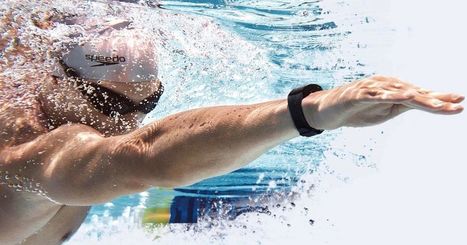
Wearables are only as good as the apps they're compatible with. And companies making health-focused products, like smartwatches, fitness bands and eve
Richard Platt's insight:
In order to have applications that lure people to your platform, whether you're Apple, Samsung or Fitbit, often it's better if you have a hand in developing them. That's why, especially at IFA 2017, many tech firms are teaming up with brands from different industries to add a new element of usefulness to their wearables. In some cases, that often includes special-edition products created between two companies. Just days before the trade show here in Berlin began, Fitbit introduced its highly anticipated Ionic smartwatch, featuring a 1.42-inch LCD touchscreen, a new wearable operating system called FitbitOS and the ability to make contactless payments. While those specs are enough to get Fitbit fans excited, the start of a partnership with sportswear giant Adidaswas what stood out most. The multiyear deal will see Adidas make an athlete-focused version of the Fitbit Ionic in 2018, which is expected to launch with exclusive content including personal-training programs.
Scoop.it!

As militaries worldwide struggle with soldiers suffering from heat stress – due to increased training pressures and heavier kit – Equivital looks to combat these injuries and fatalities by designing wearable technology that can save soldier’s lives.
Richard Platt's insight:
Equivital’s Black Ghost system provides valuable information to commanders and medics on a soldier’s temperature, heart rate, breathing rate, position, and activity. The Black Ghost application also now includes a novel Heat Strain Index (HSI). HSI is the ultimate tool in estimating current heat strain and predicting an impending heat related injury. Alerts and thresholds can be tailored to each user and the data allows commanders to intervene in a timely manner when a threshold is breached. Not only does the Equivital system provide a current estimation of heat strain, it also has the functionality to predict 15 minutes in the future the heat risk related to an individual if they were to continue in the same environment at the same activity level. This information could be vital in preventing heat stress injuries in military units worldwide.
Scoop.it!

From biomechanics to blood analysis and beyond, here’s a primer on the next-gen technologies that NFL players and teams are embracing in perpetual sea
Richard Platt's insight:
Football is getting smarter. As scientific advances and inventions push humankind towards an increasingly digital future, the pace at which the NFL, its teams, and its players are embracing technology is quickening. “Right now we’re witnessing this explosion of digital health applications,” says Chargers offensive tackle Russell Okung, “and it has real significant value, especially for professional athletes.” When he’s not standing on the O-line, Okung sits on the Athlete Advisory Board of the OneTeam Collective, the NFLPA’s technology accelerator. (The NFL also established its own venture capital fund, 32 Equity, in 2013, and teams like the 49ers are investing in technology firms.) Some football tech developments have been public, but many have taken place behind the scenes, with teams and players wary about surrendering newfound edges. “If you go public,” says Luke Bornn, a statistics professor who has worked with many professional teams and is currently VP of strategy and analytics for the Sacramento Kings, “then everyone will follow suit, and the advantage disappears.”
Scoop.it!
The much-anticipated wearable will run third-party apps and measure blood oxygen levels.
Richard Platt's insight:
The new device also marks the first time Fitbit has included an SpO2 sensor in one of its wearables. The component estimates the amount of oxygenated haemoglobin in blood. The firm suggests this could be used to provide new types of health alerts, including warnings of sleep apnoea - a disorder that causes people to briefly stop breathing or take shallow breaths during rest. The technology is relatively rare outside of medical equipment, although Nokia does include an SpO2 sensor in its Pulse Ox wristband. Fitbit also says the Ionic's heart rate tracker is more accurate than those found in its other products. The new watch's other advertised features include:
Scoop.it!

From
bgr

It has now been more than eight months since Apple unveiled its AirPods. In typical Apple fashion, the company wasn't the first to release cord-free earbuds, as was the case with the iPhone and iPad.
Richard Platt's insight:
Samsung was one of several companies that released truly wireless earbuds long before Apple, and on Wednesday that company unveiled a brand new version of its cord-free earbuds during its IFA 2017 press conference on Wednesday. Alongside the new wireless in-ear headphones, we were also introduced to two more wearable devices, the Samsung Gear Fit2 Pro and the Gear Sport. Beginning with the Gear Fit2 Pro, which is pictured at the top of this post, this is Samsung’s new flagship fitness band. The Tizen-powered device features a 1.5-inch Curved Super AMOLED display, integrated GPS, and 4GB of internal storage. More importantly, it’s Samsung’s most durable fitness tracker ever, water-resistant to 5 ATM and MIL STD 810G-rated. It also features built-in heart rate monitoring and a suite of workout tracking features as well as automatic activity detection. Samsung unveiled its second-generation Gear IconX in-ear headphones. These cord-free Bluetooth earbuds will come in three colors — black, gray, and pink. They also feature Bixby integration, just as Apple’s AirPods work with Siri. The Gear IconX headphones also feature 4GB of storage, so they can play music without being connected to a smartphone
Scoop.it!

Dr. Brian Matthys is working with several local companies to develop a wristband powered by the sun that will tell you when you’re getting too much sun.
Richard Platt's insight:
“After 20 years of watching people get skin cancer and not knowing what they need to do to prevent it, I just felt like, enough is enough,” said Matthys, who practices in Riverside. Matthys is working with several local companies to develop a fitness wristband that will not only track steps, it will also track sun exposure and tell the wearer when it’s time to put on more sunscreen or find some shade. There’s a few similar products on the market, but Matthys’ said his would be the first that’s solar powered. It would also be more personalized than most, with the ability to customize its alerts to the wearer’s skin tone on a 1-through-6 scale and it would be the first wearable sun monitor that syncs with the Apple Health app. Matthys said the app is intended to be a clinical tool that stores information on daily UV exposure that can be used just by the wearer or shared with the wearer’s dermatologist.
Scoop.it!

Sales of smartwatches to total 41.5 million units in 2017.
Richard Platt's insight:
In 2017, 41.5 million smartwatches will be sold. They are on pace to account for the highest unit sales of all wearable device form factors from 2019 to 2021, aside from Bluetooth headsets. By 2021, sales of smartwatches are estimated to total nearly 81 million units, representing 16 percent of total wearable device sales. “Smartwatches are on pace to achieve the greatest revenue potential among all wearables through 2021, reaching $17.4 billion,” said Angela McIntyre, research director at Gartner. Revenue from smartwatches is bolstered by relatively stable average selling prices (ASPs) of Apple Watch. “The overall ASP of the smartwatch category will drop from $223.25 in 2017 to $214.99 in 2021 as higher volumes lead to slight reductions in manufacturing and component costs, but strong brands such as Apple and Fossil will keep pricing consistent with price bands of traditional watches,” she added.
Scoop.it!

Has the Apple Watch Series 3 already crushed the Samsung Gear Sport, Gear Fit 2 Pro and every wearable gadget maker out there? Exciting Apple Inc. news.
Richard Platt's insight:
This month held some exciting news about Apple Inc. quickly gaining control of the wearable tech market in the US? Samsung flexed its might and showed some resilience this week by unveiling the Galaxy Note 8. The consumer technology giant will also release its Gear Sport smartwatch next week. Talks about Apple’s third generation smartwatches are catching up to rumors surrounding the iPhone 8. It seems unlikely that the U.S. tech company would pass up the chance to shoot further ahead of the smartwatch race. CEO Tim Cook assures the public that last year’s holiday shopping season was the best in the gadget line’s history. We have to take his word for it. Apple refuses to share smartwatch sales figures. Analysts rely heavily on the findings of outside industry researchers for clear insight into the wearables market. However, analyst reports from as soon as April claim the Apple Watch led the wearables market for the first three months of 2017. This supported Cook’s assertions.
|
Scoop.it!

Fitbit's Ionic smartwatch will soon be compatible with Dexcom's G5 Mobile sensor, which allows diabetics to monitor their glucose levels sans finger pricks.
Richard Platt's insight:
The Dexcom G5 Mobile sensor gives people who suffer from diabetes a way to consistently monitor their glucose levels without pricking their fingers. Starting next year, users will be able to access that valuable data via the Fitbit Ionic smartwatch.
Scoop.it!

The Fully Wired Football Uniform: A Deconstruction
Richard Platt's insight:
❶ Virtual Reality: Strivr ❷ Next-Gen Mouth Guard: Athlete Intelligence ❸ Smart Undergarments: Athos ❹ 3-D Printed Shoes: Adidas/Carbon ❺ Wearable Camera: First Vision ❻ Neuropriming Headset: Halo Neuroscience ❼ High-Tech Helmet: Vicis
Scoop.it!

The Boston Red Sox were allegedly caught using an Apple Watch to steal signs. It's the latest in a more than century-old history of high-tec
Richard Platt's insight:
As the New York Times reported Tuesday, the Boston Red Sox used the wearable tech as part of an effort to steal signs the opposing catcher used to tell the pitcher what kind of pitch to throw. The rival New York Yankees turned in tapes to the league office that appear to show Red Sox assistant athletic trainer Jon Jochim looking at his Apple Watch and then relaying information to players. Exactly what app Jochim might have been using for this alleged cheating is unclear. In all likelihood, the scheme would have relied on a messenger app like iMessage or Slack, but it’s also possible he was taking advantage of a team-specific subscription with the MLB At Bat app.
Scoop.it!

Ground-breaking digital diabetes management technology gives people with type 1 diabetes the freedom to live life the way they want
Richard Platt's insight:
In the UK alone there are an estimated 400,000 people living with type 1 diabetes; over 29,000 are children. (Obviously there are far more in the US.) Type 1 diabetes isn’t caused by an unhealthy lifestyle; it’s an auto immune condition that can’t be predicted or prevented. Type 1 diabetes affects the immune system, attacking and destroying the insulin-producing cells in the pancreas. When the body fails to produce insulin, glucose levels in the blood start to rise and the body can’t function properly. There is currently no cure for people with type 1 diabetes and the condition needs to be managed on a daily basis. People with type 1 diabetes will have around 65,000 injections and measure their blood glucose over 80,000 times in their lifetime. Daily life and technology go hand-in-hand, but for people living with type 1 diabetes wearable technology can have a truly transformational impact, freeing them from the routines and anxiety of living with this condition. Dexcom G5® Mobile Continuous Glucose Monitoring (CMG) System is the world’s first continuous glucose monitoring (CGM) system approved for adults and children aged two years and above and you can eliminate the need for multiple finger pricks*, including the ones you may need to do during the night. The wearable technology provides real-time glucose readings every five minutes. For those with type 1 diabetes, that means the freedom to take control of their lives; to know more about their health while taking fewer finger pricks, and for parents and loved ones it grants a valuable peace of mind. Dexcom G5® Mobile CGM System continuously monitors glucose levels and sends customisable alerts when levels are high or low, allowing people with type 1 diabetes to see trends over time, make better informed decisions about their daily regime and live their life free from the tyranny of so many finger pricks. The system provides a platform to enter customisable events, giving users the ability to track how daily activities – such as exercise - influence blood glucose levels.
Scoop.it!

GAITHERSBURG, MD—The U.S. Commerce Department’s National Institute of Standards and Technology (NIST), the National Football League (NFL), GE (NYSE: GE), and Under Armour (NYSE:UA, UAA), today announced that a collaborative team of materials designers led by Dynamic Research Inc. has been selected as the grand prize winner of Head Health Challenge III. “I congratulate the
Richard Platt's insight:
The competition is the third in a series of challenges in the Head Health Initiative(link is external), a four-year, $60 million collaboration between GE and the NFL. Head Health Challenge III was designed to spur the discovery, design, and development of advanced materials to better absorb or mitigate force within helmets, pads and other sports and consumer products that protect against traumatic brain injury. The $500,000 grand prize winning team used advanced computer modeling and a series of iterative improvements to create a novel material with an unusual geometric structure. The winning entry is a multi-impact material for use in protective gear for athletes, first responders, military personnel and others who face potential impact injuries. The team is:
Scoop.it!

Professional athletes use wearable technology to improve performance. But key questions remain over who owns the data and how the information is used.
Richard Platt's insight:
Measuring a player's ability isn't limited to his or her skill. There's also a wealth of information in an athlete's body. Wearables that track bio-information have become more prevalent in elite sports, and potentially important to player development and health. How that growing glut of information is used — by the companies that gather it and the teams that use it — remains a concern. No ordinary sleeve. "So just put your arm out, palm up," O'Connell says to a college-age pitcher. O'Connell slides the sleeve onto the player's throwing arm so it stretches from midforearm to just under the shoulder. "Just keep an eye on it. If it slides down let us know. We'll be watching [your] readings." What makes this device uncommon is the small sensor nestled inside a slot in the sleeve."It's probably just a little bit bigger than someone's thumb," O'Connell says. "It sits on the inside of the forearm, about two finger widths below the funny bone." When the pitcher throws, gyroscopes inside the sensor start to churn out information. "The arm speed metric measures how fast the forearm is rotating," O'Connell says. He is now sitting outside the pitching cage, watching the measurements blink onto a laptop screen with each throw. "The arm slot [measurement] is going to give us an idea where his arm is in relation to the ground," he says. "So 90 degrees would be straight up; zero [degrees] would be a straight sidearm [pitch]. Shoulder rotation give us a guess of how much external rotation or arm lay-back they're getting." But the most important metric from the sleeve is elbow stress, or torque. "It's going to give us the best idea of how stressful is this throw on the elbow," says O'Connell. It's this measurement that could, in fact, be significant for the future of baseball. In recent years the game has had what's been called an epidemic of Tommy John surgeries. That's the revolutionary elbow procedure named after the first player who had it. In 2015, elbow injuries were the "leading cause" of baseball players' landing on the disabled list, according to Forbes, with a reported $420 million in pitchers' salaries "wasted" on the DL. The sleeve could be an important weapon against the epidemic, by detecting stress or weakness in the elbow early on. "The hope is we can train players to withstand fatigue,"
Scoop.it!

The 21st Century Senior Living Community is a series brought to you by CDW, a provider of technology solutions and services focused exclusively on serving the healthcare marketplace. The series takes a clear-eyed look at how leading providers and their partners are creating the next Read More »
Richard Platt's insight:
Promoting peace of mind At Hillside Haven Retirement Residence in Campbellford, Ontario, Canada, sensors have managed to make a positive difference in the lives of residents—and on the peace of mind of staff. Michael Gestetner, the director of Hillside Haven, categorizes his small community as “independent supportive living,” or “smack dab in between assisted living and independent living.” Hillside residents, in other words, expect a non-institutional environment where they can continue to live independently, but will have staff to assist them when needed. The intrusion of staff was becoming an issue for Hillside residents, though. Before purchasing sensor technology, Hillside staff would perform regular “wellbeing checks” on residents, checking in on them periodically throughout the day, and in some cases, at night. “It’s not so intrusive, but it can make a resident feel like they’re relying on staff members, or they’re beholden to them in a way,” Gestetner tells SHN of the wellbeing checks. As a result, Hillside adopted sensor technology manufactured by Zanthion earlier this summer. The system involves sensors the size of a quarter that seniors can wear around their necks as a locket, on their belts in a leather pouch, or in their pocket. Every single Hillside resident agreed to use the sensors—and the sensors’ appealing appearance likely played a part in that. “They’re not intrusive, they’re not bulky or ugly,” Gestetner says of the sensors. “You wouldn’t even notice them if you didn’t point them out.” Currently, the sensors only detect motion, but they also feature a button that seniors can push to alert staff they need assistance. Using the sensors, Gestetner and his staff can easily discover whether a senior has remained active during the day, or whether they have gotten up at night—all without performing wellbeing checks. “Now we don’t do [wellbeing checks] at all,” Gestetner says. “We can rely on the system.
Scoop.it!
Richard Platt's insight:
Four hundred Bankwest staff will spend the next 12 weeks making payments through one of three different wearable technologies the bank has built itself. Bankwest has taken the near-field communications (NFC) microchips normally located in its credit and debit cards and repurposed them into a key fob, a fitness-style wristband, and a clip that is attached to a person's wristband. The idea stemmed from a hackathon pitch, and has now evolved in a 12-week trial of the three wearable technologies. The concept was to allow people to make payments of up to $100 through "whatever comes to hand most easily", according to Bankwest managing director Rowan Munchenberg. “If they’re buying petrol and have their keys in their hand they may well pay with their key fob. If they’re out for a run and stop for a drink they could swipe their wristband," he said in a statement. "The technology is just as secure as in people’s cards – it’s just in a different form.
Scoop.it!

Smartwatches, VR headsets, and wireless earbuds are starting to improve as manufacturers focus in on important features.
Richard Platt's insight:
Gone are the days when smartwatch makers tried to peddle them as timeless timepieces that you proudly wear with your three-piece suit. Like smartphones, smartwatches need to be replaced every two to three years, so they can't exactly be family heirloom. But lately, smartwatch makers have mainly focused on two niches: Fashion and sports.
Scoop.it!
F.D.A. reviewed invincible technology to the rescue
Richard Platt's insight:
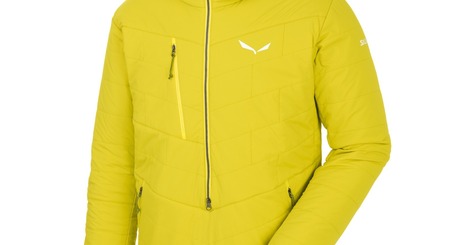
In July 2017, the F.D.A. designated of Hologenix textile, Celliant, as a medical device and general wellness product. A combination of the words cell and reliant, Celliant is a vasodilator and responsive textile that uses the wearers own energy to help regulate blood flow. But how does a fabric do all that? Developed over the span of 16 years, the textile has infrared fibers within its thread as a means of conducting blood flow and recycling the body’s energy. Like something out of a sci-fi novel, Hologenix CEO Seth Casden explains that the “fibers were selected for their thermo-reactive ability to convert body heat into infrared energy and emit it back into the body, it’s completely natural using the body’s own energy.” Created with a team of researchers, developers and scientists, Celliant can now make the physiological claim and be placed on the market giving consumers peace of mind to know it will help their blood circulation. What can good blood circulation do for you? The importance of blood circulation is simple, it supplies oxygen to the brain, heart and every organ of the body. To find out if poor blood circulation is an issue, all it takes is a quick Google search for “blood circulation medication” that yields over 1.8 million results. The epidemic is only set to grow because according to recent studies by the Center for Disease Control and Prevention, 1 in 6 Americans currently experiences chronic pain and 75 million have high blood pressure.
Scoop.it!

The market for wrist-worn devices to emerging tech such as augmented reality and exoskeletons
Richard Platt's insight:
One emerging technology for construction is in the realm of smart glasses and augmented reality (AR), where workers, project owners or builders can better visualize 3D construction projects and better understand 2D construction blueprints. Fogg says there are two types of glasses emerging: one that displays over a worker’s field of view with augmented reality (AR) and one without AR but with a heads-up display on the side of a worker’s field of view. Fogg sees both of these having slightly different benefits and both having potential in construction. Augmented reality-enabled smart glasses could play a role in allowing foremen to receive transparent AR imagery or detailed construction specs such as plumbing and electricity floor plans overlaid over the project areas to avoid mistakes. These glasses could also be used for remote support and troubleshooting such as installing HVAC or complex equipment.
Scoop.it!

A team of engineers has developed stretchable fuel cells that extract energy from sweat and are capable of powering electronics, such as LEDs and Bluetooth radios.
Richard Platt's insight:
A team of engineers has developed stretchable fuel cells that extract energy from sweat and are capable of powering electronics, such as LEDs and Bluetooth radios. The biofuel cells generate 10 times more power per surface area than any existing wearable biofuel cells. The devices could be used to power a range of wearable devices. The epidermal biofuel cells are a major breakthrough in the field, which has been struggling with making the devices that are stretchable enough and powerful enough. Engineers from the University of California San Diego were able to achieve this breakthrough thanks to a combination of clever chemistry, advanced materials and electronic interfaces. This allowed them to build a stretchable electronic foundation by using lithography and by using screen-printing to make 3D carbon nanotube-based cathode and anode arrays. The biofuel cells are equipped with an enzyme that oxidizes the lactic acid present in human sweat to generate current. This turns the sweat into a source of power. Engineers report their results in the June issue of Energy & Environmental Science. In the paper, they describe how they connected the biofuel cells to a custom-made circuit board and demonstrated the device was able to power an LED while a person wearing it exercised on a stationary bike
|






The government-owned company has kicked off a project to find “suitable personnel-tracking technology”. The aim is to find kit that staff working on England’s network of motorways and major A roads can wear to allow their employer to track their whereabouts and safety. “Such equipment should be discreet, robust, and lightweight, such that it can be worn by personnel throughout the working day,” Highways England said. To help identify such technology, the organisation has awarded a £36,000 contract to Fujitsu. The Japanese tech giant has been tasked with creating a report into the options available to Highways England. Fujitsu began work on compiling the report last month, and has until 30 October to deliver the finished article. During the process, the firm is expected conduct “a workshop… to liaise with industry, Highways England, and other stakeholders”.