


This smartwach lasts a year between charges, and it highlights what the whole industry is getting wrong.

 Your new post is loading...
 Scoop.it! This smartwach lasts a year between charges, and it highlights what the whole industry is getting wrong. 
No comment yet.
Sign up to comment
Scoop.it!
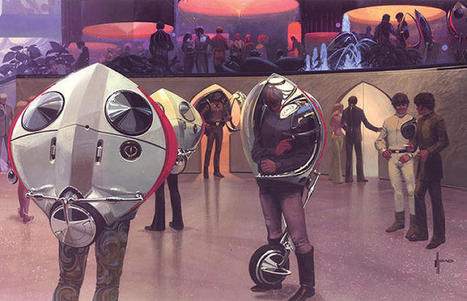
Mead chats with us about the Apple Watch, Glassholes, and Daft Punk copying one of his designs.
Richard Platt's insight:
Fashion is a temporary affectation. Fashion that's timeless is actually a practical response to need. - Some great science fiction illustrations of how technology has been envisioned before.
Scoop.it!
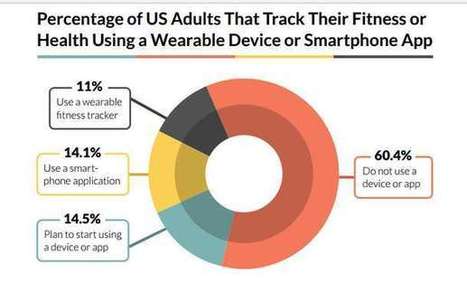
Late last month, TechnologyAdvice released an interesting study looking at whether most people want to use health wearables such as fitness trackers and other tools for health purposes. Here are the top-line results of this study: - 75 percent of U.S. adults do not track their weight, diet, or exercise using a health tracking apps or devices - 43.7 percent had no specific reason for not tracking their fitness - 27.2 percent won’t use these devices due to lack of interest - 25.1 percent of adults are currently using either a fitness tracker or a smartphone app to monitor their health, weight, or exercise. This sounds like pretty bad news for those who believe the era of health wearables is here. But, this study also raises another question: Are health wearables evangelists fools? Fard Johnmar, Founder of Enspektos explains why relevancy is the key to boosting the adoption of health wearables. Read more at http://hitconsultant.net/2014/10/08/are-health-wearables-evangelists-fools/ Via nrip, Lionel Reichardt / le Pharmageek
Scoop.it!

There is an emerging class of computers that adhere to the skin like temporary tattoos, or attach to the body like an old-fashioned Band-Aid. Via Lionel Reichardt / le Pharmageek
Scoop.it!

American musician-cum-entrepreneur Will.i.am thinks he's got a radical gadget to beat the band: a massive app-infused watch that he says can do everything a phone can.
Richard Platt's insight:
More on will.i.am's smartwatch in a sea of competitors (Google, Fossil, Samsung, Apple and LG) Unlike those devices, Will.i.am's makes phone calls without needing to be tethered to a smartphone. The device will also have 1GB of memory, 16GB of storage, Wi-Fi and Bluetooth connectivity, a pedometer, and accelerometer. It has a curved screen and wraps around the wrist like a cuff.
Scoop.it!

Representatives of the private sector and academia joined together to discuss the positive changes and attendant risks that the Internet of things and big data may bring to daily life.
Richard Platt's insight:
Mauritius Declaration on the Internet of Things
Mauritius Resolution on Big Data
Scoop.it!

Pop star and sometime Intel creative consultant will.i.am is launching an ambitious new company to combine tech and fashion.
Richard Platt's insight:
The most unusual aspect of the device is its ability to take calls without holding it up to your mouth. I conducted a phone call with my hands by my side; "I could hear the call crystal clear through the speaker and, more impressively, the caller could hear me talk at a normal volume." How will.i.am hopes to compete with the likes of Google and Apple, both which have entered the wearable space with a lot more engineering horsepower. The pop star’s device “This is your communication device, and your tablet will be your consumption device,”
Scoop.it!

Since it was invented in the 19th century, the basic concept of the bicycle has stayed the same. But as Michelle Miller explains, that may be changing.
Richard Platt's insight:
As one MIT Professor put it, "anything that is mechanical could become automated".
Scoop.it!

The $199 Basis Peak offers the same fitness tracking capabilities as the older B1, but does so in a thinner design, and adds some smartwatch-like notifications.
Richard Platt's insight:
The Peak's new trick, is that it can show notifications from your Android or iOS device, making it more practical for non-fitness activities. When a call, email or message comes in, the Peak will vibrate and the text will appear on-screen. However, you won't be able to respond from your wrist. Basis says it's releasing an API, so that third parties will be able to send notifications to the watch as well. Like the original Basis, the backside of the Peak has an optical heart rate monitor as well as four additional sensors that measure galvanic skin response -- how much you're sweating -- and skin temperature. All that, combined with a 3-axis accelerometer, will provide wearers with a much more accurate gauge of their overall fitness and activity than other wrist-based trackers.
Scoop.it!

The wearable revolution is underway, and sometime before the winter months hit, you'll see an increasing number of people talking and tapping on the top side of their wrists. The reason? Samsung on Wednesday put the word out that its Gear S smartwatch is headed to U.S. shores this fall and will be available at all four major wireless carriers...
Scoop.it!

Although smartwatches from major vendors are rapidly becoming the norm, it's clear that wearable technology is still in its infancy -- but the Apple Watch is expected to jumpstart the industry when...
Richard Platt's insight:
“These devices aren’t just for telling time,It’s going to be a business tool; to have employees use biometric data, to lock them into secure facilities, into hardware systems or the ability to make payments.” This tool comes with a cost to our privacy as well. Smartwatches are being billed as some of the most capable health and fitness devices on the market — this means that they will be gathering more personal data about us than ever before. The Apple Watch also features a remote camera feature which could incite some of the same fear that Google Glass did when it was first announced.
Scoop.it!
Richard Platt's insight:
CEO of Apple Tim Cook explains the discovery process of the Apple Watch as well as the advancement of the new iPhones. There are all sorts of nuggets for designers that makes this a very worthwhile interview
Scoop.it!

The best part about the Moto 360’s design is that you don’t always notice just how thick it is. At certain angles, the flat black version (it’s also available in... Keep reading →
Richard Platt's insight:
Unfortunately, Android Wear is still buggy and it’s sometimes frustrating to use. For example, the watch would sometimes just disconnect from the phone. "I had the same issue with the LG G Watch and figured it was new OS bugs. But nope, the problem is still there and it makes the watch less of a smart companion and more of just a really thick watch." - Unfortunately, it’s held back by an OS that’s about 85 percent ready and if Apple’s Watch delivers on its demo, Android Wear and the Moto 360 will look antiquated very quickly. The watch is also a battery chewing machine and if you’re checking your notifications every few minutes (like I do) you’re going to be disappointed when dinner starts and your watch is now just a bracelet.
|
Scoop.it!

By building EMG sensors into compression gear, Athos wants to put a high-tech fitness lab in your pocket.
Richard Platt's insight:
Interesting story of how a wearable tech company builds its use case for the market. Not sure it's that big of a market for them but hey it's a good example of thinking through the technology, the product and business model
Scoop.it!

Scoop.it!
Led by the co-founders of Vivametrica, the Stanford Center for Medical Mobile Technology aims to draw meaningful and useful data from consumer-facing wearable devices -- just what the doctor is waiting for. Via JP DOUMENG, Emmanuel Capitaine , Celine Sportisse, eMedToday, Lionel Reichardt / le Pharmageek
Scoop.it!

Choose. Play. Upgrade. Blocks is a fully customizable smartwatch. You can make your own unique smartwatch by snapping in the blocks you need. Via maher megadmini
Richard Platt's insight:
Playful way to come up with a smartwatch, not sure that it really makes for a viable approach.
Scoop.it!

“Android Wear watches are now in full gear, with the highly anticipated Moto 360 finally being in the hands of consumers and other manufacturers announcing new watches like the LG G Watch R. With this onslaught of new products, developers are seeing the potential of the OS and have released ... Continue reading »” Via Freewares&Tutos, Jesús Hernández
Richard Platt's insight:
Pretty good list
Scoop.it!

Four months ago, 16-year-old John Wall had introduced the prototype of his Atmel powered OLED smartwatch. Earlier this week, the Maker revealed that the design was on its own power and completed.
Richard Platt's insight:
You can almost hear the groan's in electronics companies when 16 yo's start designing smartwatches, and complain about the costs of the current offerings by companies.
Scoop.it!

Patient appeared to suffer withdrawal symptoms when prevented from using Google Glass and dreamed he was wearing itScientists have treated a man they believe to be the first patient with internet addiction disorder brought on by overuse of Google...
Richard Platt's insight:
Addiction caused by 18 hour / day use over an extended period of time, started dreaming he was wearing it. Unfortunately this will be added to the list of issues that will need to be addressed as a part of a mass consumer market roll out of such devices. - Like anything else that is overused, it can become an addiction.
Scoop.it!

Facebook is losing popularity among teens as more and more youngsters prefer Instagram and Twitter to fulfill their social media needs.
Richard Platt's insight:
The Apple Watch is not in demand among kids from higher earning households because they do not understand the need for this kind of device. In 2012, a study concluded that only 32% of Millennials wear a watch all the time, even though 71% own a watch. Those born after 1990 prefer to use a phone for checking the time and showing off. Piper Jaffray’s study shows that the most popular watch brand among them is Rolex–not that they actually own one or want to.
Scoop.it!

Following its recently-launched Kickstarter campaign, we spoke to Optinvent's CEO and co-founder Kayvan Mirza about the smart glasses that can rival Google Glass.Read more: http://www.itproportal.com/2014/09/29/go-go-gadget-glass-for-a-third-of-the-price-of-google/...
Richard Platt's insight:
What sets the ORA devices apart is the "Flip-Vu" dual-mode display, which is optimized for augmented reality and provides a significantly bigger display than any of its competitors. "Rather than positioning the display above your eye so you have to turn your eye to look at it, which isn't very comfortable, they have 2 positions; one is directly in front, right in your field of view, which is great for doing augmented reality type stuff. The other position is directly below your field of view, which is again much more comfortable than looking up." Some still debate around whether smart glasses will or won't become the pinnacle of wearable technology. - we think smartglasses are better suited for business / technical applications where it's value (what and how it changes how people work and organize that work) will be more clearly appreciated. There possibilities with gaming and recreational use are there, but with privacy concerns of others being a limit that has already been seen in Google Glass being outright rejected in some public venues.
Scoop.it!

Philips will soon launch a couple of iPhone- and iPad-controlled devices, but they're not the company's usual phone docks or Hue smartlight models -- they're gadgets designed to help suppress persistent pain. Via TechinBiz
Richard Platt's insight:
Good use case development
Scoop.it!
Richard Platt's insight:
The Flash is capable of tracking a user’s sleep habits, on top of being able to track physical activity when running, walking, swimming, or even playing certain sports; the Misfit Flash can actually discern if you’re playing one sport or another in some cases. It's water-resistant up to 30m, has a battery that’s good for six months (and not six days, mind you), and can be worn anywhere, and not just around a user’s wrist. Potential gotchas, the display isn’t capable of showing much as compared to other smartwatches, but then again, that’s mostly nitpicking considering all the Flash’s strong points.
Scoop.it!

Microsoft releases OneNote for Android Wear, gets OneNote ready for iOS 8, and introduces a major Office Lens update for Windows Phone.
|






It’s the "No Charge Smart Watch." It uses Bluetooth to put email, call, and SMS alerts on your wrist. And whereas existing smartwatches like the Moto 360 can’t make it a day before plugging in (and the Apple Watch’s runtime is still undisclosed but likely similar), the No Charge Smart Watch runs for a year on a standard watch battery. - The smartwatches of today are by all means bulky and inelegant, yet ironically, they’ve been designed for sizzle, for their superficial benefit in our lives and 20 features that can be checked off for the marketing department. But all the value-added features in the world mean nothing when the battery bites it eight hours later.