


Fitness tracking companies need to start embracing the FDA and making devices and apps for the old, the chronically ill, and the poor.
Via Celine Sportisse, Lionel Reichardt / le Pharmageek

 Your new post is loading...
 Scoop.it! Fitness tracking companies need to start embracing the FDA and making devices and apps for the old, the chronically ill, and the poor. Via Celine Sportisse, Lionel Reichardt / le Pharmageek
Richard Platt's insight:
It’s a shame because the people who could most benefit from this technology—the old, the chronically ill, the poor—are being ignored. Indeed, companies seem more interested in helping the affluent and tech-savvy sculpt their abs and run 5Ks than navigating the labyrinthine world of the FDA, HIPAA, and the other alphabet soup bureaucracies. This may be their own undoing, as there is a very real—and potentially lucrative—potential to shake up the healthcare system and frack the $2 trillion annual cost of chronic disease. Kabir Kasagood, director of business development for Qualcomm Life, which manufactures the semiconductors used in many wearable gadgets. He exhorted developers to stop screwing around in a saturated market for activity trackers and embrace the red-tape and regulatory friction of the healthcare industry. “Go from the children’s table to the grown-up table,” he said. “If you’re serious about this, embrace the FDA. Learn how HIPAA works. Make sure it’s connected to the [electronic medical record] and that all the health laws are observed. There’s a tremendous dearth of innovation here. I would move away from fitness and go hardcore into health. That’s where the money is.” 
Scoop.it!

Is wearable tech already wearing thin? Despite the hype for upcoming products from Apple, Google and Samsung Electronics, a number of analysts say Internet-connected personal devices such as smartwatches and fitness bands -- so-called wearables -- will be hard-pressed to reach the same sales heights as smartphones and tablets. That's because nearly every selling point for wearable tech -- a smartphone alternative, a better system for fitness tracking and a link to other Internet-connected devices -- may not have broad appeal, some analysts say.... Via Jeff Domansky
Richard Platt's insight:
Parks Associates analyst Harry Wang predicts that at best, smartwatch sales will top out at about 120 million around 2018 -- a far cry from smartphones and tablets. More than 1 billion smartphones and more than 195 million tablets were sold last year. Wang's forecast assumes that wearables would act more as a luxury watch, rather than a smartphone or tablet. - Wang cited several factors that could boost the smartwatch market, including technological advances that could make the devices more attractive to consumers. An app developer or innovative start-up, for instance, might come up with a new feature or sexier selling point for wearables that could brighten their prospects. - "I think wearables have tremendous potential, yes, but in the same way I think (No. 1 NBA draft pick) Andrew Wiggins has tremendous potential,"

Jeff Domansky's curator insight,
August 19, 2014 2:58 AM
Is the market already cooling for wearable technology before it even gets started?
Scoop.it!

(Reuters) - Wearable device maker Jawbone unveiled a set of new fitness trackers called UP Move and UP3 that track details of workouts, hours slept and heart rate.Up Move, which comes with an LED display
Richard Platt's insight:
Up Move, which comes with an LED display to view the number of steps and time taken, will be available at $50, and UP3 will be available at $180,
Scoop.it!

Experts say adoption of wearables at work will outpace it at home thanks to improved safety, productivity, and collaboration.
Richard Platt's insight:
“There’s a strong belief that wearable technology will take off in the workplace before the home because devices such as smart watches, intelligent ID badges, and fitness and health monitors can provide organizations with uncharted data collection points to greatly improve safety, productivity, collaboration, and overall workplace effectiveness,” says Workforce Institute director Joyce Maroney, “And while more and more types of wearable technologies have hit the market, the concept of wearables at work isn’t new. Workers have been wearing uniforms, safety gear, ID badges, communications headsets, and so on for years to do their jobs better
Scoop.it!
Share your videos with friends, family, and the world
Richard Platt's insight:
An interesting video on wearable and IoT technology use cases
Scoop.it!

We have iMacs, iPods, iPhones and iPads. But why didn't Apple call its hotly anticipated new smartwatch the iWatch? Via TechinBiz
Scoop.it!

Microsoft is joining the companies who see wearables as a way into the wellness business without all the red tape that comes from being a true medical company.
Richard Platt's insight:
MSFT’s black rubber bracelet resembles other products that have come before it. It contains a display that will show text messages from a cellphone, Facebook alerts and even bar codes that allow people to pay for coffee at a Starbucks from their wrists. Sensors in the device will continuously track heart rate, sleep quality and calories burned.- The band is a departure for MSFT in many respects, though, brimming with technologies often available only in more expensive products. For instance, the band includes GPS satellite tracking. The inclusion of GPS means runners who want to track distance only need to wear the band — they do not need to carry their cellphones. - price is going to be about ~$200.
Scoop.it!

Wearable sensors don't tend to do much; they're usually limited to health data like EKG readings or your heart rate. If BeBop Sensors has its way, though, they'll be useful for just about anything that comes in contact with your body. Via TechinBiz
Richard Platt's insight:
The company is only providing the basic technology, not finished products, so it'll be a while before you see this smart cloth in something you can buy.

Generic Student's curator insight,
October 30, 2014 9:31 AM
This seems like it would have many ingenious uses.
Scoop.it!

Product is difficult to use, intrusive, distracting and offers few reasons to buy Via Donald Maclean
Richard Platt's insight:
Well thought through analysis
Scoop.it!

Wearable tech needs to be more stealthy, according to Nike's CEO. Nike and Apple will play to each other's strengths to make wearable tech more fashionable and effective, he says.
Richard Platt's insight:
A design approach designed with "stealth" in mind could make smart watches and smart glass mesh with traditional fashions. On the compatibility side, recent studies by Wearables.com and PwC indicate Apple may need to widen its network beyond its own ecosystem and handpicked partners. For mass adoption of wearables, technology firms will need to drop the exclusivity of the past, says Mike Pegler, principal at PwC's U.S. technology practice. "For wearables to be effective across both primary and secondary devices, there needs to be an established frequency of measurement," says Pegler. "Enterprises must forge partnerships and develop IT and platform alliances to deliver seamless experiences on both the front-end and back-end of wearable implementations."
Scoop.it!
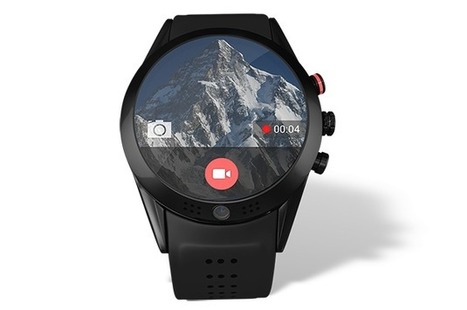
The ability to spin the camera lens around to get the right angle is a great idea. In fact, I don’t know why other smartwatches didn’t think of it first! Via Pekka Puhakka
Richard Platt's insight:
In addition to the spinning camera feature that everyone will remember Arrow for, it also has some other stand-out features. It will have wireless charging so it can be left on a charging dock, like a lot the Powermat accessories or other products that follow the Qi wireless charging standard. Then there is also the heart rate monitor, designed to imitate all the body monitors that have flooded the market this year.
Scoop.it!

Image: Eigen Lifescience
Richard Platt's insight:
11 finalists’ gadgets are designed for a wide variety of applications. One is a handheld spectrometer, which can detect biomarkers of liver function in a drop of blood, another is a pressure sensor implanted in the pulmonary artery of a heart disease patient. Other devices include a wearable sensor to detect sleep apnea, a mobile phone-based imaging app to find symptoms of eye disease, and a variety of mobile lab gadgets. Judges have a list of criteria that include technical innovation, reliability, ease of use, and relevance to a public health need. He also notes that crowd voting accounts for 10 percent of the teams’ scores; you can cast your vote for the winner through the end of October.
Scoop.it!
Richard Platt's insight:
Salesforce has jumped into recent investments in wearable startups and an initiative to get developers to build applications that connect devices worn on the face, wrist and body with Salesforce’s technology. Salesforce’s interest in wearables illustrates that in addition to being a dominant provider of business applications, the company is also a major computing platform that other developers use to access customers or actually run their own businesses, Irvine said. Wearables are just one emerging technology that will get attention at Dreamforce, and are part of Salesforce’s larger goal of capitalizing on the so-called Internet of Things, which refers to the increasing number of Internet connected devices that are spewing out unprecedented quantities of data that promise countless insights to come. - To get out front on the wearable trend, Salesforce in June launched Salesforce Wear to entice developers to create more enterprise applications for wearable devices, with support for devices from Samsung Electronics Co., Google and Pebble, among others.

Techstore's curator insight,
October 9, 2014 3:20 PM
Salesforce unveils big push into Wearable Technology. #wearabletech |
Scoop.it!

Onyx is the real-life Star Trek communicator badge, just like the one Captain Picard and his crew wore on the Enterprise.
Richard Platt's insight:
Communicator technology has technically been around for two decades. Nextel's nationwide push-to-talk technology debuted in 1996, turning cell phones into extremely long-range walkie-talkies. But texting and unlimited cell phone minutes killed push-to-talk, and Sprint shuttered the Nextel brand last year. But instant voice communication is making somewhat of a comeback. Apple just introduced voice messaging as part of iMessage, and Facebook's WhatsApp recently added voice to its texting app as well. OnBeep thinks Onyx can also help revitalize digital voice tech, which Robbins calls "the most powerful way of communicating when you're not face-to-face." Robbins envisioned "countless" uses for the technology, including families and friends staying in touch.
Scoop.it!

Research is evidence-based. But how much information is too much? The life sciences industry is facing an onslaught of digital data, coming from the proliferation of mobile devices and genetic sequencing, to new biomarkers and diagnostics. For the life science industry to make use of all this input – to [...]
Richard Platt's insight:
It's all about improving processes

Ivan Frain's curator insight,
November 5, 2014 5:29 AM
I was not aware of the 12 factor app (http://12factor.net/) and I agree it makes sense in the IoT world.
Scoop.it!

From
phys

In less than a minute, a miniature device developed at the University of Montreal can measure a patient's blood for methotrexate, a commonly used but potentially toxic cancer drug. Just as accurate and ten times less expensive than equipment currently used in hospitals, this nanoscale device has an ...

Pascal Corbel's curator insight,
November 4, 2014 10:52 AM
Ces petits appareils capables de contrôler des paramètres clés en permanence constituent sans doute des éléments clés des dispositifs de santé de demain. Ce qui ne va pas sans poser de réels problèmes en matière de sécurisation des flux d'informations.
Scoop.it!

Imagine a scenario in which an oil rig worker suddenly hears an alarm sound from somewhere on the rig. The adrenaline rush begins and the worker knows he has to move fast.
Richard Platt's insight:
Excellent example of use case development by Salesforce.com on how they're developing wearable tech for business and industry, where we believe the real break-throughs of wearable tech will start from.

Richard Platt's curator insight,
November 2, 2014 3:09 AM
Excellent example of use case development by Salesforce.com on how they're developing wearable tech for business and industry, where we believe the real break-throughs of wearable tech will start from.
Scoop.it!

"A new report by Juniper Research has forecast that more than 100 million smart watches will be in use worldwide by 2019, with a host of premium brand launches over the next 12-18 months bringing the category into mainstream consumer consciousness." (...) Via Michèle Martin, Lionel Reichardt / le Pharmageek

Michèle Martin's curator insight,
October 27, 2014 3:04 PM
Le rapport indique que les fonctions GPS et NFC pourraient être en standard dans les prochaines années.
Scoop.it!

The National Association of Theater Owners (NATO... no, really!) and the Motion Picture Association of America (MPAA) said in a joint statement that NATO's member theaters would classify wearable technology as recording devices, making users who wear the camera-equipped specs subject to ejection if the offending eyewear is not stowed.
Richard Platt's insight:
This isn't the first time the movie industry has been forced to confront the menace of Google Glass. Earlier this year, a man in Ohio was taken into custody by Homeland Security after he wore the tech into a movie screening. Many theaters in the US and UK have already issued their own bans on the Google headsets as well, citing piracy concerns.
Scoop.it!

Right now internet services don't always have the opportunity to show the same content as traditional TV, but the FCC might be about to change that.
Richard Platt's insight:
FCC Chairman Tom Wheeler claims it will let internet-based providers offer smaller channel bundles than what currently exists, giving customers more choices, and encourage the creation of broadband competitors that don't feel the need to bundle TV service. It will take some time to see how much, if any, of this comes true, but in the future companies like Apple, Google and Microsoft could jump in to compete with Comcast and its ilk right away, offering customers a way to switch providers without losing access to the stuff they want to watch.
Scoop.it!

Fitbit is trying again.
Scoop.it!

Instead of pricking and bleeding, diabetics will now get their glucose data straight from their eyes.
Richard Platt's insight:
One day, contact lens-based glucose readers could do away with the prick test inconvenience. The lens would monitor tears for sugars and interact with a smartphone device to keep logs for sufferers and their carers. - Could also be done via patch on the skin that monitors blood sugar, there are multiple technologies that can skin this cat.
Scoop.it!

A new report from PricewaterhouseCoopers offers some insights into how wearables can go from promising to useful
Richard Platt's insight:
1. Seamlessly integrate with other devices (needs to connect with other electronic platforms users utilize 2. Provide information that's meaningful (data is useless, but informed decision making that is actionable is desired) 3. Alleviate stress (unclear on how that would be achieved) 4. Instill trust (until users feel that data is secure, reluctance to adopt) 5. Win over employers (it needs to assist in employee productivity / solve a problem / address a real need)
Scoop.it!

Sensors might soon be embedded into everything from our socks to our hospital stretchers, which could be good for collecting data but will certainly change consumers' interactions with technology.
Richard Platt's insight:
In the future, sensors could actually be woven directly into textiles. That could be a big deal because clothes that are smart by default would eliminate what Vigano calls a “baby treasure hunt” for devices every morning, (let alone having to wash them). “Any time you actually ask a consumer to change his behavior, that’s super challenging,” “There are some senses that have not been explored completely,”
Scoop.it!

Keith Harris, 5, got to show off his new high-tech hand Friday as he exchanged high-fives with classmates at Mossman Elementary School in the Houston suburb of League City.
Richard Platt's insight:
A pretty cool wearable technology, that used a 3-D printer. Keith got his 3D hand through a group called the E-Nable Organization, a volunteer in North Carolina created the hand, which cost only $45. A new prosthetic would have been too expensive, about $40,000, and would have lasted only as long as Keith didn’t grow.
|







En effet, il est important de différentier dans la catégorie "wearable" ce qui relève du "bien-être" de ce qui relève de la "santé". Et même si des interactions naissent entre high tech grand public et santé, il reste du chemin à parcourir pour qu'existe une communauté de pensée entre des industries aussi différentes que la high tech et la pharmacie. Regarder en arrière ce qui s’est fait entre la pharmacie et l'agro-alimentaire sur le marché du nutraceutique peut être riche d'enseignement.
Les conséquences de la fertilisation croisée entre industries sont difficiles à précisément anticiper. Mais orienter ces développements est passionnant.