


From physics-driven high heels and mineral-infused shirts to sensor-embedded fabrics and new manufacturing platforms for smart textiles, there's no shortage of new developments in the weird, wide world of wearables.

 Your new post is loading...
 Scoop.it! From physics-driven high heels and mineral-infused shirts to sensor-embedded fabrics and new manufacturing platforms for smart textiles, there's no shortage of new developments in the weird, wide world of wearables. 
No comment yet.
Sign up to comment
Scoop.it!

This Viewpoint discusses issues that prevent wearable medical devices from effectively bridging the gap between recording information and changing health-related behavior.
Richard Platt's insight:
The authors (all are doctors) are correct that both wearables and the consumer technology companies are falling short – for now. Behavior change is the key to wellness and wearable devices today focus more on measuring the body than therapies that can change it for the better. - The article identifies four gaps that wearables and the tech companies have to bridge to deliver on the promise of improving healthcare – motivation, engagement, accuracy and usability.
Scoop.it!

Read About how New Smart Wearable Healthcare Devices Will Focus on Managing Cardiovascular, Respiratory Diseases in Aging Populations.
Richard Platt's insight:
According to the report, aging populations more vulnerable to chronic diseases are expected to play a pivotal role in boosting demand for smart wearable healthcare devices. Longer life expectancy has led increasingly greying populations in North America, Western Europe, Japan, and elsewhere, with concurrent increases in chronic disorders including diabetes, arthritis, cancer, obesity, heart disease, asthma, and COPDs in these regions. Consequently, monitoring the health conditions and daily activities of the elderly, especially, the huge baby boomer demographic, has become essential.
Scoop.it!

The chip maker is expanding its StrataGX family with some new ARM-based technology headed for mobile point-of-sale terminals.
Richard Platt's insight:
Mobile and e-commerce are the most obvious use cases on the surface as Broadcom is touting support for near-field communications (NFC) technology as well as EMV (a.k.a. chip and pin) smartcard and magstripe (MSR) readers. - But there are many more Internet of Things-minded opportunities at play here as the BCM58100 family is built for small connected devices in general, opening up potential for integration on home automation products and security systems. - Broadcom noted the BCM58100 technology will be delivered in tiny form factors of 10 x 10 millimeters.
Scoop.it!

The top-down approach that will ensure the success of some wearables in the enterprise is becoming more apparent daily. Here's why.
Richard Platt's insight:
Wearables will be a big deal in the enterprise and companies need to plan for them. The first step, ironically, is to understand what they are not: a simple extension of Bring Your Own Device.
Scoop.it!

Health tech was a big theme at SXSW last week, and I met up with Liat Ben-Zur, Senior Vice-President and Digital Technology Leader at Philips, to find out about how the…
Richard Platt's insight:
The photograph above shows a wearable diagnostic prototype for chronic illness, which was first unveiled at Salesforce’s Dreamforce event last year. Salesforce is a partner in Philips’ HealthSuite Digital Platform. The prototype patch feeds diagnostic information from the patient at home back to doctors via the platform. - In the audio interview, Ben-Zur explains how Philips wants us all to move beyond the novelty of connected devices and start to see how much broader the world of connected health can be.
Scoop.it!

Smartwatches more popular among consumers than other wearable technology such as fitness trackers, according to recent research from Apadmi, but not everyone thinks smart wear makes the wearer smart.
Richard Platt's insight:
40% of consumers in the U.K. surveyed by Apadmi most want to purchase a smartwatch. Just 28% had their eyes on a fitness tracker, 23% said they wanted to purchase smart glasses and 18% were interested in purchasing smart clothing. - However, when consumers were asked how they perceived currently available wearable technology, many of the responses were somewhat negative. While 10% said wearable technology made them feel cool, and 20% said it made people look intelligent and successful, a third (35%) said they would feel embarrassed or self-conscious and 34% feel wearable technology makes people look like show-offs.
Scoop.it!

With Google's total commitment, the launch of Apple's first wearable in April and mindblowing advances in VR technology, wearable tech is set to be part of a seismic shift in the consumer tech landscape. Read this: Wearables must get positive if they're going to change our lives As with any major gamechanger, the business world…
Richard Platt's insight:
A study titled The Human Cloud At Work (HCAW) A Study Into The Impact Of Wearable Technologies In The Workplace by Goldsmiths, University of London, concluded that employees, on average, were 8.5% more productive when using wearable technology and 3.5% more satisfied in their work. - "The results show that organisations and employees need to be developing and implementing strategies for introducing and harnessing the power of wearables in the workplace," Dr. Brauer, the report's author, concluded. But how?
Scoop.it!

Judy Tomlinson -- founder and CEO of the two year-old smart jewelry startup FashionTEQ -- is poised to offer women something different than just another smartwatch.
Richard Platt's insight:
"I know what women would like -- at least a majority of them." - Listening to the women close to her -- and trusting her own intuition -- is how Tomlinson realized the essence behind FashionTEQ and its first product, Zazzi. Unlike unwieldy do-it-all smartwatches that put form behind function, Zazzi emphasizes fashion aesthetics, extending only the core smartphone functions that women want most. "Minimalist function" may not be a fashionable term in the technology industry, but Tomlinson has insightful reasoning behind her approach; "So what's really important to women is jewelry that works with their outfits," Tomlinson said. "Women are emotional about fashion because it makes them look good," she added, "but another thing they're emotional about is staying connected to their friends, family, girlfriends, boyfriend, parents..."
Scoop.it!
TETON VILLAGE, Wyo., March 23, 2015 /PRNewswire-USNewswire/ --??Wearable technology is raising health concerns worldwide. A recent New York Times ar.....
Richard Platt's insight:
A recent New York Times article by Nick Bilton is raising important and unanswered questions about the safety of wearable tech, according to the non-profit research group, Environmental Health Trust (EHT). EHT believes, that in response to the article, several national media outlets such as Slate,Wired, and Medscape rushed to dismiss concerns raised by the NY Times piece and have each failed to report on growing evidence of harms linked with cell phones and other devices. - The authors note that exposures to wireless transmitting devices (WTDs) have increased exponentially in the past few years a trend that shows no signs of abating. They cite CERENAT, a national study in France, which found an up to 8-fold increased risk of brain cancer tied with cellphone use. "The CERENAT finding of increased risk of glioma [a specific type of tumor of the nervous system] is consistent with studies that evaluated use of mobile phones for a decade or longer and corroborate those that have shown a risk of meningioma from mobile phone use."
Scoop.it!

The FTC plans to hire a bunch of new technologists for new research office.
Richard Platt's insight:
the FTC's consumer protection powers left it in the position of policing big tech companies. But that job requires a set of highly technical skills, resulting in the creation of the chief technologist position at the FTC in 2010, among other agency efforts to expand its ability to investigate new challenges facing consumers. Bulking up further may be a sign that the agency wants to strengthen its grip on technology issues at a time when there's a potential turf battle brewing over enforcing privacy rules for Internet service providers, and some are questioning the agency's decision not to pursue action against Google in an investigation over alleged anti-competitive practices that closed in 2012.
Scoop.it!

From tips on designing beacon-enabled apps in the age of IoT to how brands like Lowe's are focusing on providing more value to their consumers rather than delivering offers, read on to learn the best of beacon updates this week.
Richard Platt's insight:
Coming soon to a City near you: Beacons are being used by marketers to get your eyeballs on the products and services they want to sell you, here are some interesting points about how to design for them - it's a lead in for downloading the publisher's e-book.
Scoop.it!

Tag Heuer said Thursday it will partner with US information technology companies Intel and Google on new products. The announcement was made by Jean-Claude Biver, head of the watches division at Tag Heuer's French parent LVMH Moet Hennessy Louis Vuitton
Richard Platt's insight:
Tag Heuer said Thursday it will partner with US information technology companies Intel and Google on new products. The announcement was made by Jean-Claude Biver, head of the watches division at Tag Heuer's French parent LVMH Moet Hennessy Louis Vuitton. - The Swatch Group is also preparing to enter the smartwatch market. The Swiss company recently unveiled the Smart Touch Zero One, a touch-screen watch capable of measuring how much the user has exercised and sending that data to smartphones. Ordinary Swatch models with contactless payment functions and other features are slated to be released as well
|
Scoop.it!
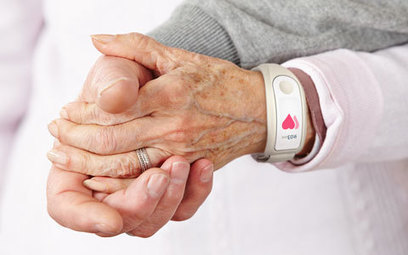
Until developers of wearable devices get the user experience down pat, the technology will struggle to gain adoption. Steve McPhilliamy The Near&Dear wearable device allows remote monitoring by caregivers. The growing trend of personalized medicine and a movement toward performance-based health outcomes are both responsible for driving significant market demand for wearable technology.
Richard Platt's insight:
Decent enough article, but if you want to learn "how to" to actually do the analysis on User Experience Innovation - let us know, we don't know anyone else who is actually teaching an effective method by which to capture that information and actually create a product from the ground up from a scientifically based, statistically significant (repeatable and reliable) methods.

Moolahonly's curator insight,
April 7, 2015 4:34 PM
We would like to partner with Wearable Tech firms,http://bit.ly/1ENNPtR ;
Scoop.it!
Compare How IoT Designs are measured Qualitatively - See the Microcontroller Guide (Bare Conductive)
RT @UDOO_Board: "The Einstein of the boards", "most powerful Linux board". http://t.co/lRFCaLbTyX Thnx @BareConductive, we're moved! http:/… Via F. Thunus, cnxsoft, maher megadmini
Richard Platt's insight:
The comparison of all the major Ardino players in the world of IoT, and how they stack up against one another, if you want to understand how these technologies will be adopted, understand how designers, and how the users of their devices will use them, this is comparison of which boards and micro-controllers have and don't have in capabilities needed for different applications
Scoop.it!

wearable technology that is actually customizable through the use of a mobile app accessible through a smartphone. These smart shoes have e-ink tech built
Richard Platt's insight:
These smart shoes have e-ink tech built right into them so that their appearance is highly customizable. - At the moment, the project is in its Indigogo campaign phase, but they are not simply a concept design. They are designed to be the ultimate combination of fashion and wearable technology. The idea is that they are an attractive, classic looking pair of high heeled shoes that have e-ink tech worked into their entire surface. That way, the wearer can use a smartphone app to be able to customize the shoe to match whatever outfit she may be wearing, that day.
Scoop.it!

"Now the car is becoming the ultimate technology product, and we are becoming more of an information company,” Ford CEO Mark Fields told CIO Journal.
Richard Platt's insight:
Ford is exploring a variety of ways to bring safety, health and wellness into its vehicles by connecting consumer wearable devices to its vehicles. “We’re not trying to turn the car into a medical device – we don’t want the FDA determining whether we can sell a Ford Focus,” Gary Strumolo, manager of vehicle design and technology in research and advanced engineering at Ford told CIO Journal. Instead, the idea is to let drivers and passengers bring devices they own that monitor everything from heart rate, blood oxygen and glucose levels to improve safety. Mr. Strumolo said that Ford would be respectful of privacy and health-care regulations by encrypting the data, not storing it and only sharing it in the ways the owner authorizes. For example, drivers may want to be alerted through Ford Sync, its in-vehicle multimedia system, if their blood glucose levels start to drop or to monitor a diabetic child sleeping in the back seat or perhaps share the information with physicians. The company is interested in working with manufacturers of those devices and software developers to determine the best ways to get that information out of the devices.
Scoop.it!

From
phys

Speaking in public is the top fear for many people. Now, researchers from the Human-Computer Interaction Group at the University of Rochester have developed an intelligent user interface for 'smart glasses' that gives real-time feedback to the speaker on volume modulation and speaking rate, while being ...
Richard Platt's insight:
However, there was no statistically significant difference among the three groups on eye contact, use of filler words, being distracted, and appearing stiff, judged by the Mechanical Turk workers. As part of their future work, the researchers want to test their system with members of Toastmasters International as a more knowledgeable audience. - The researchers also believe that live feedback displayed in a private and non-intrusive manner could also be useful for people with social difficulties (e.g., Asperger syndrome), and even for people working in customer service
Scoop.it!

From
wtvox
ProLogium is a Taiwanese company currently in the field of battery manufacturing that having spent the last 7 years in deep R&D mode, developing, testing have finally released a radically new b... Via TechinBiz
Richard Platt's insight:
As well as being lighter and much more flexible, FLCB-based batteries are also intrinsically safer. FLCB batteries do not catch fire, start to smoke or leak under almost any circumstances including physical, thermal or electrical impact. This is really good news for wearables which by their very nature will be close to the body, opening up several new applications that include today’s wearable technology in clothes, watches, jewellery, headsets and more. The FLCB batteries can be injection inserted or moulded in manufacturing processes that can reach temperatures of up to 2600 Celsius. They also don’t suffer from ‘Salting Out’ issues that plague electrolytic solutions and they can withstand cutting, piercing and even burning. It’s also important to note that in terms of battery life, ProLogium claim their FLCB technology also provides exceptional energy density, with anywhere up to double that of standard lithium polymer batteries today, so there is no performance hit in terms of mAh figures with FLCBs. The most exciting aspect however, is the fact that an FLCB will continue to function after physical impact or even outright mutilation. Being based on a printed circuit board, these FLCB batteries can also carry the signal and be joined to together as integral components in the device itself. This means that essentially the battery can be integrated in to the design, becoming part of the device itself, not a single and unwanted appendage that provides power.
Scoop.it!
This report, Wearable Technology Futures 2020: A New Path for Public Health?, lends insight into some difficult but important questions currently challenging t… Via Lionel Reichardt / le Pharmageek
Richard Platt's insight:
I like the approach on measuring the value of wearables to individual users, not a complete approach but definitely closer to the reality the "why" people would use a wearable technology.
Scoop.it!

PLEASANTON, Calif., March 26, 2015 /PRNewswire/ -- Desert Valley Medical Center, named a Top 100 Hospitals®...
Richard Platt's insight:
Clinical studies have shown that Leaf's novel, wearable patient sensor can help medical professionals' efforts to prevent the occurrence of pressure ulcers. One study found that using Leaf sensor increased compliance with hospital turn protocols – a standard of care to prevent pressure ulcers – from a baseline of 64 percent at the start of the trial to 98 percent after the monitoring system was deployed. - "Preventing even one pressure ulcer case can save a patient from excruciating pain and prevent tens of thousands of dollars from being spent on medical care to cure a preventable condition," said Reinhard. "Leaf technology is an investment in improved care."
Scoop.it!
Richard Platt's insight:
The questions McMullen and his counterparts analyzed had one common denominator -"wearable and embeddable technology". They examined surgically implanted items such as pacemakers and telemetry as well as wearable items ranging from physical fitness bands and chips to medical telemetry, including LifeAlert and GoogleGlass. - The annual initiative - officially known as the Intelligence Community Analyst-Private Sector Partnership Program - facilitates collaborative partnerships between members of the private sector and teams of experienced intelligence community analysts. It provides intelligence community analysts and private sector partners with a better understanding of select national security and homeland security issues.
Scoop.it!

Oregon News Coverage, Sports, Politics, Interviews. 26 newspapers all covering what is important for you locally.
Richard Platt's insight:
Not just a Portland Oregon issue, but a nationwide set of issues on how to integrate and use this technology. The article lays out the concerns of citizens regarding privacy rights of video data, access to that data and by whom, as well as the all important the costs of storing the video data that would be generated as a part of what LEO's (Law Enforcement Officers) will have to contend with. All boiling down to a solution (that industry has not yet provided) that manages not only the capture of video images but also addresses the issues articulated in the article. It seems as though it's the old problem found in managing health care documentation - there are legal ramifications to contend with. Some intelligent company will see the opportunity and build a complete solution for law enforcement.

QindredCam's curator insight,
April 1, 2015 3:48 PM
Privacy is a major concern for body worn cameras, even for law enforcement. How do we find the balance between the benefits these devices can bring with these privacy concerns? Automatic detection and obfuscation of individuals is one possibility.
Scoop.it!
The year is 2014 and It's clear - the technology dominates our lives. What will be the next big step to become a true "Super Human"? From smart Newspapers to... Via Donald Maclean
Richard Platt's insight:
Just in case you missed the PBS documentary on your local station
Scoop.it!
ABC News' Rebecca Jarvis got an exclusive first look at the company's secret health lab.
Richard Platt's insight:
Apple showing how to do the due diligence / homework on the Use Case for their Apple Watch - worthwhile to understand that developing a Use Case is measuring what the device is actually is supposed to be doing / achieving for the user - this is not a marketing approach, this is making sure that the engineering fundamentals are done correctly.
|







Thesis Couture: a sensible shoe theory - The first company to benefit from that $50-million fund, Thesis Couture is taking a fresh look at how high heels are designed. Founder and CEO Dolly Singh, who previously worked for Oculus VR and left SpaceX to launch the company, says the brand was born out of her frustration as a consumer when the towering heels she loved in her twenties began taking a toll on her body as she transitioned into her thirties — and she couldn't find options that met her demand for both unrelenting style and uncompromising comfort. "There isn't really a thoughtful, engineered, system-level approach to high heels out there," she say - We believe that CEO Ms Singh is spot on, a systems level and engineering approach is the way to go, you go girl.