


Sure, you drive a Volvo and not an Aston Martin, but that doesn't mean you can't pretend to be a charming spy who controls his car with a high-tech watch

 Your new post is loading...
 Scoop.it! Sure, you drive a Volvo and not an Aston Martin, but that doesn't mean you can't pretend to be a charming spy who controls his car with a high-tech watch 
No comment yet.
Sign up to comment
Scoop.it!

We now have a name for the “first luxury Android Wear smartwatch”. The Tag Heuer Carrera Wearable 01 moniker was revealed by the Swiss watchmaker’s CEO this week. Speaking with wearable tech site Wareable, Jean-Claude Biver said: "There is no other choice for Tag Heuer than to have all its DNA, [...]
Richard Platt's insight:
Tag’s debut smartwatch is one of the highest profile blurrings of traditional and contemporary timepieces, and the luxury watch brand is even prepared to lose its ‘Swiss Made’ certification in order to get involved in the wearable tech revolution. “For a traditional mechanical watch, ‘Swiss Made’ is a reference and criteria of reliability and quality,” said Biver. “For a connected watch, Android from Google and Intel Inside are the criteria of quality and reliability.” One of the most exciting aspects of the Tag smartwatch is that the internal components could be upgradeable.
Scoop.it!

Project Soli looks to make interacting with small devices far less fiddly
Richard Platt's insight:
Google has been looking at alternative input devices to the touchscreen. What it has come up with is a tiny radar chip that can sense gestures made by your hand. - It sounds a bit like Microsoft’s Kinect, but it works on a much smaller scale, looks to detect much finer motions, and just as importantly is far more compact. It can track your motions at 60fps, giving quite fine feedback though when you’re talking about quick and fine gestures it could be improved. It uses a broad radar beam to track your hand.
Scoop.it!

Wearable Tech Is Improving Employee Productivity and Happiness Via JP DOUMENG, Lionel Reichardt / le Pharmageek
Richard Platt's insight:
British grocery chain Tesco is using armbands that automatically track the goods that workers are transporting along close to 90 aisles of shelves. These armbands make it unnecessary for the workers to mark clipboards. The devices also give their managers an estimated completion time, and could check the correct order fulfillment, among other information. Sensors that monitor fatigue also help backhoe operators avoid accidents. Many companies are tapping into wearables to help make their wellness programs a success. Moreover, there are sensors that make way for more efficient knowledge work. These sensors analyze motion and time that are involved in completing a task, then give the operator or user more information, as needed. For instance, Boeing has been using gear that gives instructions to wire assembly personnel without them needing to look at the manuals.

wimi-teamwork.com's curator insight,
May 28, 2015 5:17 PM
There may be implications for employee satisfaction from developments in wearable tech,
Scoop.it!

SAN FRANCISCO (Reuters) - Wearable fitness tracking device maker Fitbit Inc is being accused by rival Jawbone of attempting to steal core confidential data about Jawbone's business, according to a lawsuit
Richard Platt's insight:
The lawsuit, filed in San Francisco Superior Court, alleges Fitbit engaged in a clandestine effort to steal talent, trade secrets and intellectual property. A number of recently departed employees used USB thumb drives and other tactics to take information about Jawbone's supply chain, gross margins, product lineup and market predictions, the lawsuit said. - Jawbone, which also makes fitness tracking devices, is seeking unspecified compensatory and punitive damages, along with an order prohibiting former Jawbone employees from disclosing additional trade secrets.
Scoop.it!
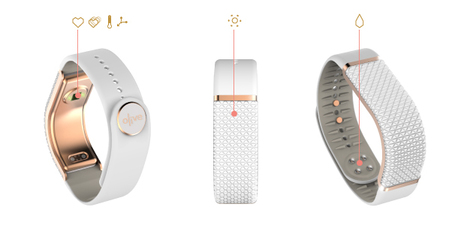
"Today we are announcing the shut down of Olive Labs. (...)Despite our efforts, we have been unable to secure the funding needed to turn this vision into a sustainable business. We are no longer able to pursue the development of Olive and have decided to shut down Olive Labs." Via Olivier Janin
Richard Platt's insight:
Olive Wristband seemingly had a good stress management solution. Unfortunately, they did not make it. - More firms in the wearable market to follow we suspect.

Olivier Janin's curator insight,
May 27, 2015 9:58 AM
Olive Wristband seemed to me a compelling stress management solution. Unfortunately, they did not make it.
Scoop.it!
Richard Platt's insight:
A wearable built to address social good (or any another good that the market would buy into for that matter) would ultimately need to follow a systemic, communitarian approach. It must be:
Scoop.it!

From
hbr

Do wearables invade your employees’ privacy? A recent survey by PwC found that 82% of respondents are worried about privacy when it comes to wearables, generally speaking. So even if your company is able to compel employees to use them, you’re likely to face questions about what information you’re actually obtaining. Will you suddenly have a detailed understanding of what people eat, how much they sleep, how much they drink, and what mood they are in? One very real risk is that some employees will feel that every aspect of their life is being watched, and will make choices — sometimes poor ones — based on this assumption. Another is that managers will consciously or unconsciously start making decisions about staff performance based on irrelevant data about their non-work lives.
Richard Platt's insight:
Do wearables invade your employees’ privacy? A recent survey by PwC found that 82% of respondents are worried about privacy when it comes to wearables, generally speaking. So even if your company is able to compel employees to use them, you’re likely to face questions about what information you’re actually obtaining. Will you suddenly have a detailed understanding of what people eat, how much they sleep, how much they drink, and what mood they are in? One very real risk is that some employees will feel that every aspect of their life is being watched, and will make choices — sometimes poor ones — based on this assumption. Another is that managers will consciously or unconsciously start making decisions about staff performance based on irrelevant data about their non-work lives.
Scoop.it!
Richard Platt's insight:
Interesting exploration of a "smart vest" Use Case for a plant network. - "Our designers are looking at “safety vests” with embedded sensors that link to the plant network. Location sensors, in a type of intra-plant GPS environment, can track the exact location of the vest and its wearer. A forklift, with a connected display and appropriate software, could then keep track of all pedestrians (equipped with vests) throughout the warehouse. The driver would be able to see (around corners and everywhere) when someone is close by. The vest wearer could also sound an alarm or otherwise to indicate an approaching truck. The warehouse can be one of the most dangerous places in the factory. The IoT safety vest could change that while allowing lift trucks to go faster and be more productive since they wouldn’t have to slow down to avoid non-existent pedestrians (or other trucks). The smart vest could also house environmental sensors to monitor exposure to hazardous conditions, warning the wearer and logging the event. It could monitor temperature and help workers avoid steam, extreme heat, or other hazards. “Sniffers” could watch for dangerous chemical gasses or radiation with enhanced central monitoring – the vest, after all, will be connected to the plant network so warnings and monitoring go into the log as well as feed local warnings and alerts.
Scoop.it!

From
www
What if your eyeglasses could track the calories you burn and distance traveled? VSP Global incoming CEO Jim McGrann shows off the spectacles on the News Hub. Photo: YouTube/VSP Vision Care
Richard Platt's insight:
VSP Global's CEO on the WSJ video blog, on how their new glasses that can track calories burned and distance traveled. Housed within the temple of Dragon Alliance frames, the current prototype enables wearers to monitor their stats in real time through the accompanying Android app.
Scoop.it!

Chronic pain affects more Americans than diabetes, heart disease and cancer combined. Now a new wearable aims to restore quality of life for sufferers.
Richard Platt's insight:
Founded in 2013, San Francisco based start-up Cur is launching an intelligent pain-relief wearable that brings TENS (Transcutaneous Electrical Nerve Stimulation) technology to chronic pain. Designed in partnership with the team behind Nike Fuelband, Sonos and Jibo products, The $299 device from Cur attacks chronic pain with the over-the-counter wearable. The device senses muscle vibrations from your body to provide accurate TENS therapy. TENS works by sending a non painful electrical system to the brain that gets there before the pain signal. The nerves become confused and the device offers relief from the pain within five seconds. The stimulation feels like a gentle tingling or light vibrating sensation. The intensity of the feeling can be adjusted by pressing buttons on the device.
Scoop.it!
Richard Platt's insight:
"This is not a space where we do a chip, throw it over a wall and let it happen," said Pankaj Kedia, Senior director of Qualcomm's smart wearables segment. "It's the wrong way to think about it: do I leverage a phone chip or do I want to do my own chip? - "The right way to think of it is, what kind of user experience do I want to deliver here?". Kedia's point was that the wearables category is much broader than smartphones. Smartglasses will have higher GPU and camera demands than a watch; a 3G-enabled wearable will have different needs to one that requires a phone connection. - Qualcomm has used its chips in many of the Android Wear devices to date, but for the time being it makes more sense to offer manufacturers the choice of chip from its existing portfolio rather than produce its own 'wearable'-labelled offering. As Kedia put it, this is the "first inning" of wearables. People are testing the waters, trying ideas and discovering what works and what doesn't.
Scoop.it!

From
www
The man behind the heartbeat-reading startup has warned of the potential abuses of the new technology.
Richard Platt's insight:
David Plans speaking at a Conference in London described how he went from making the Pulse app as "a gimmick" for tech festival South by Southwest (SXSW) 2013 to a new device being trialled in UK hospitals: the Breathing Stone. Co-developed by the University of Bath, the Breathing Stone is a handheld medical device that records your heart rate and breathing and generates music to ease anxiety. The potential advantages of medical devices are exciting both for patients and for healthcare providers: Plans envisages that, "if you know a nonagenarian is going to have stroke in two weeks you can deal with that without hospitalising them; and hospitalising them costs the National Health Service a huge amount of money." Plans worries some organisations are more interested in using wearables and the data they collect for "sinister purposes". In a twist he describes as "Orwellian", he claims that "some of the insurance providers we work with want to calculate insurance premiums in real-time," which he sees as problematic. He notes that "while some of the aspects of biometric data gathering from wearables may at first seem surveillance-like and therefore Orwellian in nature, they offer very clear and potentially life-saving advantages to human life and the provision of care. This means that whilst we have a lot of work to do to ensure privacy, security and choice for people and their data, we also have a tremendous amount of potential health benefit to deliver." And wearables are not just for patients, says Plans, as they could also be used to monitor and protect caregivers and other workers. Plans suggests a wearable device that monitors health and tiredness could answer questions like, "Should this nurse be on duty? Should this paramedic be in this ambulance? Are they too fatigued? "Is this soldier able to judge whether that child who may be carrying a bomb should be shot?" he continues. "This kind of decision-making happens a lot, especially in the Israeli army, who have some very interesting opinions about what should go in a biometric helmet."
|
Scoop.it!

McLaren, based in Woking, UK, is one of the biggest names in F1 but is now using their know-how in real-time data to help surgeons. Dr. Caroline Hargrove came..
Richard Platt's insight:
How F1 technology is working in the operating room A sensor is placed on a surgeon’s elbow while they operate. The data is sent via Bluetooth technology to computers. Hargrove explains that sensors can produce a stream of data that can be analyzed in real time for immediate feedback on a surgeon. She says, “We know there are certain traits that distinguish a great surgeon, such as speed and dexterity – how jerky or smooth is their movement when they cut. There’s always a subjective element in teaching any surgeon. This adds objectivity to it …in addition to another surgeon’s feedback.” - By comparing the results for different surgeons at all stages of their training – from beginners to highly experienced ones – it’s possible to predict their progression and gauge whether they’re hitting their development targets. She says this kind of analysis will not only save time on an operating table but in training a new surgeon. “Has the surgeon improved the last two to three times they did this procedure? Are they better at one thing more than another? Or, they don’t need to practice something 10 times more because they’re already doing it really well.”
Scoop.it!

1mm x 0.5mm x 0.5mm unit can add wireless connectivity to any small electronic device
Richard Platt's insight:
Antenova has announced the Weii 2.4GHz ceramic antenna, which measures 1mm x 0.5mm x 0.5mm and is designed for all 2.4GHz, Bluetooth, Wi-Fi, Zigbee and ISM applications. - It is designed specifically for the consumer, IoT and Machine-to-Machine (M2M) markets, and the omni-directional, SMD mounted dielectric antenna can be used to add wireless connectivity to any small electronic device, for example wearables, headsets, medical devices, PNDs, dongles and sensors
Scoop.it!
From
www
Control a smartwatch with your jeans? It's possible with Google's Project Jacquard, and Levi's is weaving the tech into its fabrics. And while Google gets into fashion, Amazon may be creating its own brand of food.
Richard Platt's insight:
Google's Project Jacquard and how it's weaving smarts into clothing with conductive yarn. The company also came up with a way to control devices with hand gestures. Why? As screens get smaller on smartwatches, touchscreen controls don't do us much good. We'll need new ways to navigate gadgets
Scoop.it!

CLSA analysts believes that short-term weakness in Apple Inc. (NASDAQ:AAPL) Watch will be offset by strong iPhone demand especially in China.
Richard Platt's insight:
In a research report published today, CLSA analysts lowered Apple Inc. (NASDAQ:AAPL) smartwatch unit sales estimates for 2015, as it believes that persistent supply chain issues could affect the product’s margin and sales. However, the research firm was optimistic over the long-term profitability of Apple Watch.
Scoop.it!

With wearable technology gaining popularity, it was only a matter of time before developers could find a way to improve the experience. Aria Wearable is now offering clip-on accessory that will enable users to control a smartwatch by doing simple gestures.
Richard Platt's insight:
The new accessory promises users that they would no longer have to use the small touchscreen of their watch in order to navigate it. The device clips onto the band of the smartwatch which is then able to detect the user’s finger movements. Users will just flick their fingers, open or close their hands or mime a tapping gesture to navigate and open apps. Gestures are detected by sensors within the small device. Gestures can be customised through the device’s companion app. The goal of the accessory is to make sure that users will only need one hand to use their smartwatch effectively keeping their other hand free for doing something else.
Scoop.it!

From
fortune
The tech giant has promised to donate in a big way to causes trying to help people with disabilities.
Richard Platt's insight:
The grant is part of a new initiative, Google Impact Challenge: Disabilities, that the tech giant announced Tuesday. Google said it will donate $20 million from its non-profit arm, Google.org, to “nonprofits using emerging technologies to increase independence for people living with disabilities,”. Enable Community, one of the two initial recipients of grants, connects volunteers who use 3D printing to create and customize prosthetic limbs for those who need them. - Google also announced a $500,000 grant for World Wide Hearing, an organization that will test and develop a low-cost kit for diagnosing hearing loss and fitting hearing aids. The kit will rely on smartphones to make the help affordable and accessible to people in developing countries.
Scoop.it!

Over the past few years, mobile devices and wearables have been passively or actively tracking a huge amount of personal data about us. Equipped with sensors from heart-rate tracking to GPS, they routinely capture all kinds of metrics and store them whether we like it or not. When it comes to matters of health, insurance…
Richard Platt's insight:
Over the last year Oscar New York insurance company started supplying customers with a Misfit Flash and offered users $1 credit every time they hit their step goal, with rewards in Amazon vouchers of up to $250 a year. - Then came John Hancock, which offers its users Fitbits and the potential to earn 15% off their premiums for hitting targets. The potential for growing customers with this attractive offer led the company's CEO to tell the New York Times that this new model could "reinvent" the "no-growth insurance industry." - It's no wonder the insurance companies are jumping on the wearable bandwagon, but has there been evidence that these nudges towards healthy attitudes have worked?
Scoop.it!

Sixty-three-year-old David Baker made a living driving tractor trailers in the South for 40 years.
Richard Platt's insight:
Excellent example of a Use Case of wearable technology being applied for Parkinson's patients - pretty amazing stuff, in particular if you've ever seen anyone with Parkinson's the use of a bracelet infused with pulsed electromagnetic field therapy (PEMFT). PEMF works by pulsing electromagnetic waves through the body to increase blood flow and reduce inflammation. PEMFT has been approved for use by the Food and Drug Administration (FDA) for decades, but Active Edge said its products are the first to offer these health benefits via wearable technology.
Scoop.it!

The organizations kick off a multiyear partnership by announcing a design contest to create potentially life-saving wearable devices.
Richard Platt's insight:
Unicef Innovation, which works on technologies to advance Unicef's work with women and children, hopes designers will come up with wearables that could alert people of fires, diagnose health needs, encourage behavioral changes such as washing hands, and track data in real time like the vitals of a mother and her fetus, Kochi said. Many of these wearables could be used in refugee camps or remote areas that are far from major infrastructure or medical facilities. In addition to the design challenge, ARM plans to help Unicef fast-track some of its pilot technology projects, offering several million dollars in funding, as well as its technological know-how and connections to the broader tech world. For instance, ARM could help Unicef Innovation's efforts to provide power in Burundi, treat HIV and AIDS in Zambia or create jobs in Kosovo. Longer term, the two organizations also plan to research potential business opportunities in developing countries -- looking into transportation, education, wearables and other areas -- in hopes of spurring on more investment in those regions.
Scoop.it!
Richard Platt's insight:
Tractica describes the category as including “patches, tattoos, or small devices that are affixed to the skin and worn for a limited period of time, ranging from an hour to several weeks” and adds that “the patches also have an element of wireless connectivity, and have a medical, health, or wellness purpose that can range from monitoring physiological data to delivering medication.” - That could include Proteus Digital Health‘s medication management and adherence system, which includes sensor-enabled pills, a peel-and-stick biometric sensor patch worn on the body, and companion smartphone apps. It could also include Vital Connect’s HealthPatch MD, the LifeWatch Vital Signs Patch, Fitlinxx’s AmpStrip, iRhythm’s Zio Patch, or SensiumVitals devices from UK company Toumaz, which made $1 million off peel-and-stick vitals sensors last year. It could also include peel-and-stick thermometers for tracking fertility or managing temperature in young children.
Scoop.it!

The idea of using wearable technology to help athletes with injuries isn’t a new concept. For example, the San Antonio Spurs has used a company called Catapult Sports to help its “older” roster maintain a competitive edge. The data from that technology allows teams to establish benchmarks of what a healthy performance is in order to compare that to a performance while a player is recovering.
Richard Platt's insight:
“The mThrow sleeve gathers 3D biomechanical data of the pitcher’s throwing arm,” Joe Nolan, Co-Founder and CEO of Motus Global, explained. “The most important measurement is the force being imparted to the UCL, which is analyzed by using a proprietary computation centered on a cumulative workload that takes into account factors such as throwing volume and stress on the ligament (newton metres of torque and deciphering between high and low effort throws).” - Motus Global has been working with MLB clients for nearly four years in conjunction with the American Sports Medicine Institute. Nolan explained that while the data was valuable for teams and players, it was often only measured once or twice a year. Without dynamic data flowing through during the year, it was only a small snapshot that didn’t accurately tell the whole story. - So far, the general consensus in the medical community as to what causes this type of injury is still overuse. According to Nolan, that hypothesis is still very vague. - “We are working to quantify what type of workload constitutes overuse,” Nolan said. “Moreover, we are looking at the epidemic at all levels, from Little League to MLB. With enough data and trends we hope to be in a position to answer that question.”
Scoop.it!

Formula 1 team McLaren are focused on bringing an end to jet lag with their own innovation in wearable technology.
Richard Platt's insight:
The team at McLaren Applied Technologies (MAT) believes that wearables in the future will be able to monitor you vital signs and help you to adapt your behaviour to deal with the stress of flying more effectively. “Everyone just accepts that when they travel by air, they’ll feel slightly peculiar when they arrive at their destination,” he said. “What we’re imagining developing is a scenario where you can turn that on its head – we’ll get people to think about the condition in which they’d like to arrive somewhere, and then make it possible for them to achieve this.” - The device would operate by collecting information about the wearer over a period of time, and then predicting the best way for them to travel.
|







Volvo will soon release its On Call app for Android Wear devices and the Apple Watch, after all, and it comes with all the features its predecessors for tablets and smartphones have. That means you can poke around your arm candy to remotely lock or unlock the car's doors, switch on the heater or air conditioner and check fuel and mileage. You can also ask it for help if your Volvo's lost in a sea of cars in a parking lot. And just like the older apps, it quickly connects you to an operator, who then tracks your location through GPS, if your airbags get deployed. Volvo wrapped the smartwatch apps in a new design based on the Sensus connected interface, but you'll have to wait until the end of June before you can give them a spin.