Wearable Tech and the Internet of Things (Iot)
22.8K views | +0 today
Wearable Tech and the Internet of Things (Iot)
Your new post is loading...
Scooped by Richard Platt
July 10, 2015 9:20 AM
Scoop.it!

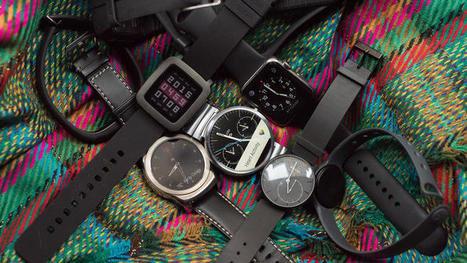
Smartwatch and fitness tracker buying guide

Smartwatch and fitness tracker buying guide | Wearable Tech and the Internet of Things (Iot) | Scoop.it
If you're in the market for a smartwatch or fitness band, here's what you should look for and what you should know before buying. (Hint: it's still a messy, muddy place.)
Richard Platt's insight:
What to look for in a smartwatch or fitness band:
  • Design: Does it actually appeal to you? This is a matter of personal taste.
  • Phone support: You'll need Bluetooth 4.0, and your phone and OS need to be supported.
  • Is it waterproof, or swim-friendly? Do you shower with your watch on?
  • Battery life: Our baseline is an average of three days for a smartwatch, seven days average for a fitness band -- but very few current products meet those expectations.
  • What apps does it run? Pebble, Android Wear and Samsung Gear all use different apps.
  • Color screen, or black and white, or something else, or none at all? Some screens are always on.
  • Can it recognize your voice, and can it act as a speakerphone? Do you want that?
  • Is there a heart-rate monitor? How does it track fitness? Heart-rate monitors vary greatly, too.
  • What apps and ecosystems is it compatible with? For fitness bands, this is a big deal.
No comment yet.
Scooped by Richard Platt
July 8, 2015 3:14 PM
Scoop.it!

Google Glass for enterprise will be larger and faster, report says

Google Glass for enterprise will be larger and faster, report says | Wearable Tech and the Internet of Things (Iot) | Scoop.it
The next version of Google Glass will reportedly be faster, longer lasting and designed for the enterprise, as opposed to regular consumers.
Richard Platt's insight:

Targeting Google Glass at enterprise customers instead of consumers would be a complete shift in strategy for Google, but it would be a smart one. Given that the most successful Glass apps are designed for medical, law enforcement and business applications, it may end up better-served as a product built for more specialized use cases instead of, say, playing virtual tennis.  -  Called "Enterprise Edition" (the first generation was called "Explorer Edition"), the updated Google Glass is said to sport a larger prism display, an Intel Atom processor (first model's CPU was made by Texas Instruments) that will be faster than existing Android Wear smartwatches, and better battery life.  The report also claims Google is experimenting with an external battery pack that connects to the new Google Glass to extend battery life.   -  Glass users have complained of eye strain related to constantly looking up and to the right at the prism display. A larger viewing prism would make the display more visible in the peripheral vision and could possibly reduce eye strain. 


No comment yet.
Scooped by Richard Platt
July 7, 2015 5:15 PM
Scoop.it!

Apple Watch Sales Plummet 90%

Apple Watch Sales Plummet 90% | Wearable Tech and the Internet of Things (Iot) | Scoop.it
Since its initial market debut during the April 10 launch week, the Apple Watch has seen its sales plummet 90 percent. That week in particular saw the sale of about 1.5 million watches, or almost 2
Richard Platt's insight:

Data collected by Slice Intelligence of Palo Alto, California shows that Apple has been, on average, selling 20,000 watches a day, and sometimes dipping down to fewer than 10,000 units.

Slice Intelligence has access to electronic receipts sent to millions of consumers after a purchase is made, allowing it to accurately to gauge the success of a product.  -  Exacerbating the issue for Apple is the fact that two thirds of the watches sold have been the “Sport” variety. This $349 model, although profitable, pales in comparison to the models starting at $549, where the real money can be made.  -  The solid gold “Edition” — costing upwards of $10,000 — has proved a monumental disappointment in the United States, selling fewer than 2,000 units.  -  Apple has declined to comment on the sales of their watch.

No comment yet.
Scooped by Richard Platt
July 7, 2015 3:55 PM
Scoop.it!

Wimbledon wearable technology strategy from Jaguar

Wimbledon wearable technology strategy from Jaguar | Wearable Tech and the Internet of Things (Iot) | Scoop.it
wearable technology route as a part of its first ever strategy as the official auto sponsor of Wimbledon, which started on June 29 and runs all the way
Richard Platt's insight:

Yes, Jaguar, the Luxury Auto Maker, implemented wearables and court sensors throughout the tournament, wearable technology in the form of biometric wristbands will be helping to gauge the mood and emotion of the crowd. Certain select spectators have been provided the wearables that record the movement, heart rate, and location of the individuals. They work with atmospheric, in-ground sensors that will then provide the brand with data that they are able to analyze in order to gauge the energy level of the crowds, as well as their movement, and audio levels, in combination with infrared.

The intent was to see if the application of wearable technology and sensors could offer any kind of significant insight on the spectator experience. 

No comment yet.
Rescooped by Richard Platt from E-SANTÉ : COMPRENDRE. RELIER. TRANSFORMER.
July 7, 2015 3:35 PM
Scoop.it!

Privacy a priority during health system's Apple Watch deployment

Privacy a priority during health system's Apple Watch deployment | Wearable Tech and the Internet of Things (Iot) | Scoop.it
Protecting patient data and privacy requires prime attention when deploying mHealth technology, according to Michael Ash, chief transformation officer at Nebraska Medicine. The health system is conducting a $10 million research project on the impact of remote health monitoring of chronically ill patients, and is now deploying an Apple Watch-based version of its Epic MyChart app to let patients and physicians communicate and access data from test result notices to appointment information.

In a recent interview with HealthcareInfoSecurity, Ash says that security strategies surrounding such mobile endeavors must encompass all potential risk points, from user access to data sharing.

In deploying the app, Nebraska made a series of decisions regarding security to ensure data is protected at every point, from creation to transmission to storage. No data resides on the Watch and encryption technology is used for transmitting data between the Epic system and the wearable.

Via Alex Butler, Lionel Reichardt / le Pharmageek
Richard Platt's insight:

Michael Ash, Chief Transformation Officer at Nebraska Medicine, 

said that In deploying the app, they made a series of decisions regarding security to ensure data is protected at every point, from creation to transmission to storage. No data resides on the Watch and encryption technology is used for transmitting data between the Epic system and the wearable.  -  "We turned off Siri [Apple's digital voice assistant] capability for data transmission," Ash says, noting that user authentication also is a priority to ensure data security and privacy. "No permanent patient identifiable information is stored on the smartphone and that is the same for patient and physician apps.

Antonio Pastor Serrano's curator insight, July 8, 2015 6:13 AM

añada su visión ...

Scooped by Richard Platt
July 5, 2015 12:52 PM
Scoop.it!

Q&A with Matt Johnston, CMO of Applause (App metrics and Analytics firm)

Q&A with Matt Johnston, CMO of Applause (App metrics and Analytics firm) | Wearable Tech and the Internet of Things (Iot) | Scoop.it
The wave of wearable tech is forcing software developers to think and develop in new ways. ...
Richard Platt's insight:

Q: Is wearable tech being used differently “in the wild” than creators anticipated?


MJ: Wearables, by their nature, get used differently than anticipated and exposed to vast amounts of environmental variance. They are used in ways and in locations that the creators never intended. As an example, one wearables customer told us they have users pairing the devices with a large number of unapproved devices – despite the fact that they list compatible devices on the box. This leads to frustrated users. Because almost all mobile and wearable apps are used in the wild, they need to be tested in the wild. For example, how does the wearable app react to moisture if it’s a fitness band? By constantly vetting the app’s performance under real-world conditions you can discover performance, interoperability or even battery issues that you thought were fine when you tested in the lab.

No comment yet.
Scooped by Richard Platt
July 5, 2015 12:47 PM
Scoop.it!

China RFID leverages the Internet of Things

China RFID leverages the Internet of Things | Wearable Tech and the Internet of Things (Iot) | Scoop.it
China RFID leverages the Internet of Things | Printed Electronics World
Richard Platt's insight:

Leading analyst on the project, Dr Xiaoxi He, a Chinese national, says, "HF technology was developed much earlier in China compared to UHF technology and now the Chinese companies have mastered the core technologies in HF chip design. HF RFID covers a wide range of government-led projects including National Identification cards, transit cards, new bank cards with higher security requirements, passports and subway and bus tickets. UHF tags can be read at a longer distance and the cost is lower than with HF tags. The shipment of UHF tags exceeded that of HF tags for the first time in 2012. The annual shipment of UHF tags in China is very similar to that of HF tags. However, for the real applications in China, HF tags take 80% of the total value while the others (including UHF, LF and microwave) take the other 20%. That is because a large amount of UHF tags manufactured by market-oriented companies are for export. There are about 300 million UHF tags/cards used annually in China, including 50 million tags/cards for the smart meter project of national electricity grid application and 20 million for clothing projects of the People's Liberation Army".

No comment yet.
Scooped by Richard Platt
July 5, 2015 12:42 PM
Scoop.it!

While Wearable Patents increase they are NOT the Hottest Patent Market

While Wearable Patents increase they are NOT the Hottest Patent Market | Wearable Tech and the Internet of Things (Iot) | Scoop.it
Richard Platt's insight:

Lux Research said that the “printed, flexible and organic electronics” (PFOE) patent market is far hotter than the wearable patent market, saying that the number of PFOE patents registered since 2010 stood at 140,926, more than three times higher than that of wearable patents. Even in the PFOE patent category, Samsung Electronics has the largest share of 10%.

No comment yet.
Scooped by Richard Platt
July 5, 2015 12:37 PM
Scoop.it!

Colorblind Artist Listens To Color To Paint Symphonies

Colorblind Artist Listens To Color To Paint Symphonies | Wearable Tech and the Internet of Things (Iot) | Scoop.it
Colorblind artist Neil Harbisson has been claimed to be the first recognized cyborg in the world after being able to listen to color, even in his dreams.
Richard Platt's insight:

“Hearing colors changes the way you see everything. I started perceiving colors through sound and the eyeborg soon became part of my body,” Harbisson says in the Vimeo video “The Man Who Hears Colors, Even In His Dreams.” He added: “My body and technology have united.”  -  Harbisson has never been able to see color (only seeing shades of gray) before because he suffers from a visual condition called achromatopsia or total color blindness. This is a non-progressive and hereditary visual disorder which is characterized by decreased vision, light sensitivity, and the absence of color vision, says the National Institutes of Health. In the U.S. it affects about 1 in every 33,000 people.  -  This compelled Harbisson and cyberneticist Adam Montandon to come together to develop the electronic eye. Harbisson’s eyeborg is able to process the color frequency of the item that passes in front of it, which turns it into a sound frequency and passes the information to a chip installed at the back of his head. This is how he is then able to hear the color through the sound waves that are produce as they pass from the bones of the skill to his inner ear.

No comment yet.
Scooped by Richard Platt
July 5, 2015 12:24 PM
Scoop.it!

Show me your brain - employers now scanning workers minds

Show me your brain - employers now scanning workers minds | Wearable Tech and the Internet of Things (Iot) | Scoop.it
Companies are scanning their employees brain waves throughout the day to reduce fatigue and increase productivity.
Richard Platt's insight:

Workers at several Australian mining companies are already using the technology, which analyses their brain waves through the working day, and other sectors like aviation and oil and gas are starting to follow suit.  -  Dubbed "SmartCap", the device looks like a regular baseball cap but is wired up with equipment to conduct regular electroencephalogram (EEG) tests on the wearer.  -  The information is analysed to determine the alertness of the person wearing the cap and relayed to them immediately, as part of efforts to reduce fatigue-related accidents in the workplace.

No comment yet.
Scooped by Richard Platt
July 5, 2015 12:21 PM
Scoop.it!

What's holding back wearable tech?

What's holding back wearable tech? | Wearable Tech and the Internet of Things (Iot) | Scoop.it
Personal health and wellness technologies are projected to be a $5 billion business this year, according to the Consumer Electronics Association.  Even
Richard Platt's insight:

Wearable technologies have a big obstacle to overcome: sensors — the miniaturized devices that measure things like speed and motion.  -  They are technically called MEMS, or microelectromechanical systems. We are most familiar with them in the forms of the accelerometers and gyroscopes that help smartphones and tablets keep track of motion. This is how we play games on our smartphones by just tilting and moving them, and how wearable wrist trackers count up our steps. -  "The sensor market today is being driven by mobile technology," Charlene Marini, VP of Marketing of Embedded segments at ARM, said earlier this year, in an interview with Marketplace at the Consumer Electronics Show. "There's a huge volume, of course, in mobile. And so mobile technology is being reused in things like wearables."

That reuse has had its limits. In wearable devices, current MEMS sensors have not been able to keep up with some of the rigors imposed on them. For example, they have not been as power efficient as needed.  -  They (reused MEMS device designs) also do not perform all the functions that wearable device designers dream up.  -  "A lot of these wearables end up in a sock drawer," says Karen Lightman, executive director of the MEMS Industry Group. "After you watch your steps for one week you're like, 'Yeah, I get it. I understand. I need to walk more. OK, that's not helpful.'"  -  There are efforts to do more than that by addressing the shortcomings of current MEMS sensors in key ways: building new sensors, creating software that better operates those sensors in more rigorous conditions, and better understanding the data coming out of current sensors.

No comment yet.
Scooped by Richard Platt
July 2, 2015 3:24 PM
Scoop.it!

PIQ Unveils Wearable and Announces Global Golf Partnership with Mobitee

PIQ announces today the world's most advanced multi-sport sensor platform and a partnership with Mobitee. Golf is the first sport to have PIQ sensors
Richard Platt's insight:

Mobitee and PIQ comes bundled with an advanced PIQ multi-sport sensor and battery bank charger and is compatible with future PIQ sport products. It includes 18 NFC Club identification tags for each club and a clip for fastening the sensor to your golf glove. In addition, it provides unlimited access to the Mobitee and PIQ applications. Pair the sensor and attach the included NFC tags to each club and you are ready to go.  PIQ has created a lightweight and sleek GPS rangefinder that clips onto a golf glove and provides easy to read yardage to the front, center and back of the green. The yardage is shown on a vibrant LED display that is even viewable in extreme sunshine.

No comment yet.
Scooped by Richard Platt
July 2, 2015 3:16 PM
Scoop.it!

Rithmio Raises $3M For Its Technology That Makes Wearables Smarter

Rithmio Raises $3M For Its Technology That Makes Wearables Smarter | Wearable Tech and the Internet of Things (Iot) | Scoop.it
Rithmio, a Chicago-based maker of software that integrates with wearable technology to more accurately measure movement, just raised a $3 million seed round from several local and national...
Richard Platt's insight:

Rithmio says it can integrate with any motion sensing device to track exactly how objects move. And over time, it keeps learning and better understands how each person moves. Rithmio's software can be used by sports companies that are making new wearables, doctors who are looking to improve outpatient rehabilitation, and could even allow restaurant goers to sign their bill at dinner with a flick of their wrist.

No comment yet.
Scooped by Richard Platt
July 8, 2015 3:16 PM
Scoop.it!

Apple Plans Record Number of New iPhones

Apple Plans Record Number of New iPhones | Wearable Tech and the Internet of Things (Iot) | Scoop.it
Apple is preparing for a larger initial production run of its next iPhones, betting that even modest hardware changes will entice consumers to upgrade handsets and outstrip demand for the larger-screen phones that it released last year.
Richard Platt's insight:

Apple is preparing for a larger initial production run of its next iPhones, betting that even modest hardware changes will entice consumers to upgrade handsets and outstrip demand for the larger-screen phones that it released last year.  -  Apple is asking suppliers to manufacture between 85 million and 90 million units combined of two new iPhone models with 4.7-inch and 5.5-inch displays by Dec. 31, according to people familiar with the matter. The screen sizes are the same as in the iPhone 6 and iPhone 6 Plus.  -  By comparison, Apple last year ordered a then-record initial production run of 70 million to 80 million for its first larger-screen iPhones.

No comment yet.
Scooped by Richard Platt
July 8, 2015 12:54 PM
Scoop.it!

U.S. Women’s National Team Aided by Polar Wearable Technology In World Cup Win

U.S. Women’s National Team Aided by Polar Wearable Technology In World Cup Win | Wearable Tech and the Internet of Things (Iot) | Scoop.it
U.S. Women’s National Team Aided by Polar Wearable Technology In World Cup Win
Richard Platt's insight:

Last week 25.4 million people watched the United States Women’s National Team win a record third World Cup with a 5-2 victory over rival Japan. One of the unsung heroes of the US women’s success was the team’s fitness tracker that helped prepare them through a physically demanding World Cup schedule.  -  The Women’s National Team’s fitness, strength and health were clear factors in the team’s successful run. Those important traits were aided by wearable devices made by Finish company Polar Electro.  -  The World Cup winners wore Polar’s M400 fitness watches before and after games to track player vitals and supply fitness coach Dawn Scott with quantifiable workout metrics. These metrics use a number system specific to each player’s profile – height, weight, gender, age, and sitting and standing heart rate are all taken into account to give an estimate as to how hard each individual should work out before and after games.  While the collegiate level has recently allowed live telemetry, FIFA does not allow for trackers to be worn in games. The Women’s National Team relies on the devices during training and when the players are away from the team.

No comment yet.
Scooped by Richard Platt
July 7, 2015 3:59 PM
Scoop.it!

Why Beats, Apple and other companies are marketing wearable devices as high-tech fashion accessories

Why Beats, Apple and other companies are marketing wearable devices as high-tech fashion accessories | Wearable Tech and the Internet of Things (Iot) | Scoop.it
In February, Chinese researchers released the results of a poll asking consumers what luxury brand was the most attractive to the country's upper-class gift givers.
Richard Platt's insight:

In February, Chinese researchers released the results of a poll asking consumers what luxury brand was the most attractive to the country's upper-class gift givers.  -  Both male and female respondents agreed on the front- runner, which beat out emblematic fashion houses such as Gucci, Louis Vuitton and Chanel. The winner — and by a healthy margin — wasn't Prada or Giorgio Armani. It wasn't Versace.  It was Apple.  -  In recent years, the perception of high fashion and high technology as mutually exclusive spheres has eroded in the face of the growing mainstream popularity of fitness trackers, smart watches and other wearable devices. Not only can these products gain functionality when wirelessly paired to smartphones which have become nearly ubiquitous, they also happen to be worn in the same places typically occupied by traditional, analog fashion accessories.

According to an analysis released in June by researchers at MarketsandMarkets.com, the wearable technology industry is forecast to expand tremendously in the next several years and could be worth more than $34 billion by 2020.  -  These devices now are vying with traditional fashion companies for customers' attention, and Apple and other technology firms are taking their design cues from luxury brands to create wearable tech they hope consumers similarly will associate with style and desirability.

No comment yet.
Scooped by Richard Platt
July 7, 2015 3:51 PM
Scoop.it!

Mood-changing wearable tech sets pulses racing

Mood-changing wearable tech sets pulses racing | Wearable Tech and the Internet of Things (Iot) | Scoop.it
Doppel is a new breed of wearable device, one that its developers say can actually change the wearer's mood by delivering a tactile beat to their wrist.The makers of 'doppel' call it the next generation of wearable technology - one that c
Richard Platt's insight:

The doppel design team had the product independently tested by psychologists at Royal Holloway University of London; with their controlled tests showing the device can improve alertness when correctly set to the user's preference. The team is planning further independent tests aimed at validating doppel's ability to calm people down and reduce anxiety.  -  Doppel is a new breed of wearable device, one that its developers say can actually change the wearer's mood by delivering a tactile beat to their wrist.   The makers of 'doppel' call it the next generation of wearable technology - one that can actually change the mood of the user. They say the device taps in to the body's natural rhythm and gives the wearer control over how alert or relaxed they are.  -  Similar to the way that upbeat music can motivate the body, while downbeat music relaxes; doppel provides a tactile beat to the wearer's wrist that they can adjust to make themselves feel more alert or relaxed.  -  "Doppel, as it stands, delivers two separate rhythms -- one high and one low. The high rhythm essentially delivers a rhythm which is higher than your resting heartbeat, and the lower one which is lower. And it works in a very similar way as to when you listen to upbeat or downbeat music. So, in the same way that upbeat music can excite you or bring you up, make you more alert; doppel does this. And it does the same thing with the downbeat tempo which you feel calming you down and even helping you into sleep," said Andreas Bilicki, co-creator of doppel.  -  It's similar in size and shape to a wristwatch, but with the active mechanics positioned on the sensitive inside part of the wrist. This was crucial for the device to work effectively, said Hooper. "We wear it on the inside of the wrist rather than the outside of the wrist. Because this is a psychological mechanism, having doppel's pulse wear you expect feel your own pulse amplifies the effect," he said.  -  Bennett conceded that convincing people to wear doppel on one of their wrists -- instead of, say, a watch or a fitness tracker -- was something they had to consider. "Although 'wrist real-estate' is very expensive these days, it is actually the most suitable place to have it because if you think 'I need to tune down a little bit and relax', you're not going to start stroking your ankle or pressing buttons behind your head. So, it also needed to be somewhere that was very easily assessable," he said.

Team Turquoise says prototype models have been successfully tested on hundreds of people. 

No comment yet.
Scooped by Richard Platt
July 6, 2015 2:43 PM
Scoop.it!

Huawei's got another low-end smartwatch in the works

Huawei's got another low-end smartwatch in the works | Wearable Tech and the Internet of Things (Iot) | Scoop.it
Huawei's working on a low-cost smartwatch for its Honor budget sub-brand.
Richard Platt's insight:

Huawei hasn't even launched its first Android smartwatch yet and it's already talking-up the following entry into the wearables business. The company revealed that it's working on the Band Zero, a watch-style device for low cost sub-brand Honor. There are only rendered images to go on for the time being, but it's believed that the device will tell the time, offer fitness tracking and some basic smartphone notifications. In addition, Leiphone is reporting that the hardware will have a battery life for four days and be both dust and water resistant to IP68 standards. 

No comment yet.
Scooped by Richard Platt
July 5, 2015 12:49 PM
Scoop.it!

Review of the Microsoft Band: How this wearable tracker helped — and hurt — my Golf game

Review of the Microsoft Band: How this wearable tracker helped — and hurt — my Golf game | Wearable Tech and the Internet of Things (Iot) | Scoop.it
Sweating my butt off in 90-degree heat while donning the Microsoft Band at Pumpkin Ridge. AURORA, Ore. — As we approach the fifth hole at Langdon Farms, on
Richard Platt's insight:

Well thought out analysis on the pro's and con's of MSFT's Band

No comment yet.
Scooped by Richard Platt
July 5, 2015 12:45 PM
Scoop.it!

Scientists create stretchable, printable, wearable conductor for biological sensors

Scientists create stretchable, printable, wearable conductor for biological sensors | Wearable Tech and the Internet of Things (Iot) | Scoop.it
Researchers have developed an electrically conductive ink that can be used in clothing to provide a more comfortable way to measure biological data.
Richard Platt's insight:

The ink developed by researchers at the University of Tokyo can be applied to fabrics used in data-collecting clothing that can cover a wider area.  -  “The technology will allow for simultaneous measuring of assorted biological information from the entire body,” said Takao Someya, an engineering professor at the university. “The ink is expected to be used not only in sports but also in many other fields, such as medicine and welfare services.”  -  To create an electrically conductive ink with high elasticity, Someya and his colleagues dissolved a fluorine rubber material in a solvent and then added silver and a surface-active agent to the mixture.

Lines printed on fabric with the ink can maintain extremely high conductivity even if the cloth is stretched to more than three times its original length, according to the researchers. -  The researchers said they still have some challenges to overcome, including the ink’s vulnerability to water.  -  But they also succeeded in monitoring the movements of muscles using “wires” and “electrodes” printed with the special ink, and said the success is a huge step toward the development of sportswear that contain biological sensors. Scientists have been developing technologies to attach sensors to as many points on clothing as possible to obtain more accurate data while maintaining comfort.

No comment yet.
Scooped by Richard Platt
July 5, 2015 12:39 PM
Scoop.it!

Big Pharma company steps into wearable devices market

Big Pharma company steps into wearable devices market | Wearable Tech and the Internet of Things (Iot) | Scoop.it
Drugs giant Novartis has stepped into the wearables technology market with an app called ViaOpta, designed for the visually impaired. Established as a prototype, the company this week unveiled modifications.
Richard Platt's insight:

The ViaOpta app by Novartis  has been configured for use with the Apple Watch and rival devices as investment in the wearables market continues. The app also works on Apple’s iPhone and Android mobile devices, as well as the new generation of wearables.  -  The app is designed to help people with different forms of visual impairment. The primary function is to help people with vision problems to become more independent. This is achieved through a navigation function. The device also helps people recognize common objects, such as money and a set of familiar objects.  -  The app has a camera function and the wearer can direct the device in front of them and receive information via an audio feed about what is in front of them. In trials the app has also recognized traffic crossings, alterations to pavements and other traffic sounds. Voice commands are currently available in several languages, including English, Spanish, Portuguese and French.
As well as voice instructions the device can also be configured to produce vibration signals. Vibrations are designed to work when the user is coming close to a road intersection or major landmark in the middle of the pathway. Due to this functionality, Novartis claim that the device is the first so-called “turn-by-turn” navigation application designed for a wearable device. This means the app works in a similar way to Google Maps.  -  Another useful addition is that the device allows the user, or their carer, to pinpoint the wearer’s exact position. This location can also be shared.

No comment yet.
Scooped by Richard Platt
July 5, 2015 12:27 PM
Scoop.it!

Wearable technology struggles for consumer fit amid patent production boom

Wearable technology struggles for consumer fit amid patent production boom | Wearable Tech and the Internet of Things (Iot) | Scoop.it
The technology behind wearable electronics finally may have arrived, but whether consumers will greet it with open wallets is another question.
Richard Platt's insight:

Leading the pack is Samsung Electronics, followed by Qualcomm Inc. and Apple Inc. Market watchers say Samsung is trying to take advantage of a burgeoning technological market with wider consumer interest in the years to come.  -  “1st, moving into wearable electronics agrees with the general interest of using electronic devices to better understand oneself in a quantitative way,” Lux research analyst Tony Sun said in an email. “2nd, Samsung is a major consumer electronic device and component developer. Wearable devices, like smartwatches, are a natural fit for Samsung’s existing manufacturing capability, technology portfolio as well as customer base.”  -  Analysts also say increased patent production could be a sign that developers are looking to transform the wearable technology industry.

No comment yet.
Scooped by Richard Platt
July 5, 2015 12:23 PM
Scoop.it!

How a Turkish bank is using Apple’s Watch to engage people with ‘short, powerful’ interactions’

How a Turkish bank is using Apple’s Watch to engage people with ‘short, powerful’ interactions’ | Wearable Tech and the Internet of Things (Iot) | Scoop.it
Turkish bank Akbank is looking to wearable technology for the future of banking, using the Apple Watch to create a new banking channel...
Richard Platt's insight:

The app captures information about the smartwatch wearer, allowing them to manage their accounts in a myriad of ways including accessing daily statements, performing currency conversions based on location and locating the nearest branch. Importantly, the app can withdraw money from ATMs via SMS Pass or iBeacon. 

No comment yet.
Scooped by Richard Platt
July 3, 2015 5:39 PM
Scoop.it!

Casio Throwing Its Hat Into Burgeoning Smartwatch Market Early Next Year

Casio Throwing Its Hat Into Burgeoning Smartwatch Market Early Next Year | Wearable Tech and the Internet of Things (Iot) | Scoop.it
As smartphones became increasingly popular, the market for wrist watches took a nosedive. The irony is that smartphone makers are now focusing their...
Richard Platt's insight:

To help itself stand out from the competition, Casio will take a bit of a different approach -- the company says its wearable will be a watch with smart functions, rather than a smart device that is also a watch.  "we are trying to bring our smartwatch to a level of watch perfection -- a device that won't break easily, is simple to put on and feels good to wear."  -  Kashio also said the watch will be priced around $400. That's a bit more than Apple's lower-end Apple Watch that starts at $349, and quite a bit more than several Android alternatives. It will be interesting to see what Casio brings to the table to command a $400 price tag.

No comment yet.
Scooped by Richard Platt
July 2, 2015 3:17 PM
Scoop.it!

Samsung Ranked As No. 1 Patent Filer For Wearable Devices

Samsung Ranked As No. 1 Patent Filer For Wearable Devices | Wearable Tech and the Internet of Things (Iot) | Scoop.it
The company now accounts for 4% of all wearable patents filed since 2010, with a strong focus on arm and head form factors.
Richard Platt's insight:

Samsung accounts for 4% of the 41,301 patents published on wearable electronics between 2010 to May 2015. Following close behind in the rankings are Qualcomm with 3% of patents and Apple with 2.2%. Developers not associated with the top 15 companies filing wearable patents make up the vast majority of filers, at 77%.

Samsung’s place at the top of the rankings shouldn’t come as a complete surprise, considering it was the first major tech company to launch a smartwatch in Sept. 2013 with the Samsung Galaxy Gear. Still, being first hasn’t led to a resounding success. The Gear launched to mixed reviews and by October 2013 around 30% of Gear watches being sold at electronics retailer Best Buy were reportedly being returned by customers.

No comment yet.