


In its first foray into wearable tech, the Swiss watchmaker strikes a deal with Visa. The Swatch Bellamy will sport an NFC chip, enabling contactless payments.

 Your new post is loading...
 Scoop.it! In its first foray into wearable tech, the Swiss watchmaker strikes a deal with Visa. The Swatch Bellamy will sport an NFC chip, enabling contactless payments. 
No comment yet.
Sign up to comment
Scoop.it!
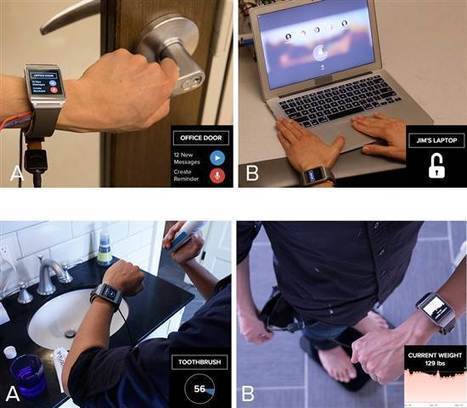
Some smartwatches know your heart rate, and some know your location — but do any know what appliance you're using, or what door you're opening? A new device from Disney Research and Carnegie Mellon University does just that, then gives intelligent feedback suited for just that item or place. Via Olivier Janin
Richard Platt's insight:
Disney in Wearable Tech? Disney's smartwatch knows your heart rate, and your location — and what appliance you're using, or what door you're opening. The system, called EM-Sense, works by carefully monitoring for the minute electromagnetic signals that propagate through your body whenever you touch anything — every object produces a different pattern, and the computer can be trained to recognize it. Combined with other information, it can guess that you're on your way to work, fixing a specific meal or working on a certain project in the shop. This electromagnetic detection of objects is a keen way to figure out what people are doing and using it as a feedback mechanism within the device, and presents the opportunity for a full range of practical daily use.

Olivier Janin's curator insight,
November 12, 2015 1:55 PM
I am impressed by the sudden entrance of Disney in the Wearable Tech area. This electromagnetic detection of objects is bright, and opens up a full range of practical daily use. Well done ! read also the complete research study published by Disney.
Scoop.it!

Apple has some interest in another wearable: smart rings. A patent application published today describes an interactive smart ring that could work in conjunction with larger devices, like a phone.... Via Olivier Janin
Richard Platt's insight:
Apple's idea for a smart ring, may have some traction, but it will likely play into the fashion side of people, the functionality will of course need to be of benefit. Lots of opportunities for measuring biological measurements.
Scoop.it!
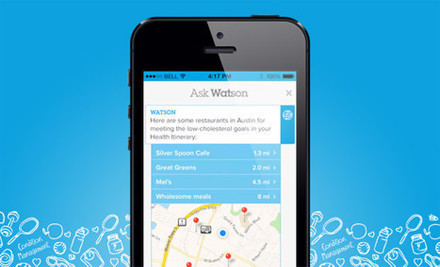
Health care goes cognitive. The cognitive computing IBM Watson is pairing its artificial intelligence with the mobile sensing power of Apple’s smartwatch to create a health platform that can interact and adapt to each individual user. It’s the first time Watson’s super computing power will be used with the Apple Watch to transform how people manage their wellbeing. It all happens within an app called CaféWell Concierge, Powered by Watson, and developed by Welltok of Denver. Via Olivier Janin
Richard Platt's insight:
The main features are :
You can also watch a hands-on video of the iPad App to get the principles.
Olivier Janin's curator insight,
November 2, 2015 4:22 AM
To register to the iOS App "Cafewell concierge, you must be sponsored by a health plan, employer, provider or other health organization to register. Or contact info@welltok.com to request an invitation. App is available on the Apple Store. The main features are :
You can also watch a hands-on video of the iPad App to get the principles.
Scoop.it!

Fossil's Q Founder, the first smartwatch made available for purchase by the Texan clothier, might come off as a bit heavy — but this classic-looking wearable packs a real sartorial and functional punch.
Richard Platt's insight:
Fossil revealed its plan to release a line of smartwatches and wearables, the company's first brand line, the Fossil Android Wear Q Founder, is priced at $295, is not only compatible with iOS and Android and functional, but it is also touted as a much more stylish option to the wider array of more Spartan wearables out there — and a lot more affordable than TAG Heuer's $1,500 smartwatch, which was more or less created with the same mission in mind. The Intel chip-powered wearable contains 4 GB of storage and 24-hour battery life before it needs a recharge. The Q Founder has all of the heft of a traditional class act timepiece, weighing in a at 71 grams (the Apple Watch Sport, one of its more direct competitors, clocks in at about 50 grams), with a face that is 46 mm long and 13 mm thick. While the Q Founder might be the first in the Fossil Q line to be made available for purchase, it's certainly not the last; as per Fossil's October announcement, we'll be sure to see Fossil's other smartwatch, the Q Grant, as well as the company's smart bands the Q Reveler and the Q Dreamer, come out just in time for the rest of the holiday shopping season.
Scoop.it!

No, it's not another attempt at high-tech eyewear. This one-of-a-kind prototype draws its inspiration from the communicator worn on a stylish shirt.
Richard Platt's insight:
Inspired by the sci-fi ingenuity of Star Trek, engineers at Google have worked up a one-of-a-kind prototype wearable device to test out the possibilities of a real-life communicator. It doesn't connect to any starships, though. Instead, it's meant to suggest new ways to tap into the vast knowledge banks of Google search. The device, about the diameter of a casino chip but somewhat thicker. It's designed to be activated with a tap, and an embedded microphone would pick up your spoken query to relay via Bluetooth to a nearby smartphone and from there on to Google. The answer could come back through speakers or headphones. "The destiny of search," by Google senior vice president Amit Singh wrote at the time, "is to become the Star Trek computer, a perfect assistant by my side whenever I need it." The tech in the Star Trek-like prototype, which remains in testing, apparently isn't all that far removed from today's average Bluetooth headset, but it does give Google a way to play around with how we might continue to use its search tools in the future.
Scoop.it!

Fossil Group acquires wearable fitness maker Misfit at $260 million, marking the second big union between a watchmaker and Silicon Valley.
Scoop.it!

The new version of Android Wear has support for many more wrist gestures... although you're going to look silly doing them.
Richard Platt's insight:
That big Android Wear update isn't just about allowing cellular data on smartwatches -- it's also really helpful if you don't have a hand free. Google has quietly revealed that Android Wear 1.4 has a ton of new wrist gestures beyond the usual flicks to navigate cards. You can take action on a card by pushing your arm down, for instance, or go back to your watch face by wriggling your wrist. You're probably going to look silly if you use nothing but wrist gestures, but this beats dropping a bag (or freezing your hands) just to touch your watch for a brief moment.
Scoop.it!

SAN ANTONIO, TX--(Marketwired - October 20, 2015) - Compass Intelligence (www.compassintelligence.com), a market analytics and consulting firm specializing in metrics-driven intelligence and insights, has released a series of wearable technology studies highlighting various aspects of the consumer wearables market within its “Emerging Technologies” research track. The reports combine market size...
Richard Platt's insight:
Within the U.S. market, revenues from the sale of wearable devices are expected to reach $9.7 billion by 2019. Revenue growth in this market is largely driven by rising adoption of smart watches, as well as higher-end wrist band and fitness devices. Key findings of the study include: a) Adoption of wearable technology continues to gain momentum as nearly 30% of U.S. consumers now own/use such devices. b) Fitness and health tracking devices including bands and smart watches remain the most popular among consumers. c) While consumers perceive various benefits from using wearable devices, nearly 60% of those surveyed by Compass Intelligence perceive wearable devices as “too expensive.” d) An overwhelming majority of those surveyed also stated their desire to have some homogeneity between wearable device and smartphone interfaces.
Scoop.it!

Three new GPS running watches, compatible with the updated Garmin Connect Mobile app, will launch later this year.
Richard Platt's insight:
Garmin today announced a handful of new products for everyone from treadmill trainers to regular marathoners. The satellite navigation firm later this year will launch three new GPS running watches, compatible with the updated Garmin Connect Mobile app Set to ship in Q4 the Forerunner 230 and 235 track distance, pace, time, steps, calories, and sleep, as well as heart rate. But while the 230 must be paired with a chest strap to monitor your pulse, the 235 features Garmin Elevate wrist heart rate technology. Connect the watch with your smartphone to receive notifications, control music, and hear audio prompts announcing lap times.
Scoop.it!

Swatch has revealed that it's working on a mobile payments watch that it'll launch in partnership with banks in China. Bloomberg reports that the timepiece will... Via Kenneth Carnesi,JD
Richard Platt's insight:
Swatch has revealed that it's working on a mobile payments watch that it'll launch in partnership with banks in China. Bloomberg reports that the timepiece will let users make purchases at point-of-sale machines in stores, thanks to an NFC chip that's embedded beneath the dial. The device, named Swatch Bellamy, will launch in January 2016 in the country, priced at 580 yuan ($91), with releases in Europe and the US coming afterward. Unfortunately, we're not sure too many people are going to be camping out days ahead of time to buy a bargain-basement fashion watch with an NFC chip inside. After all, you could buy a regular watch now and just grab an NFC sticker from any bank that offers them to its users.
Scoop.it!
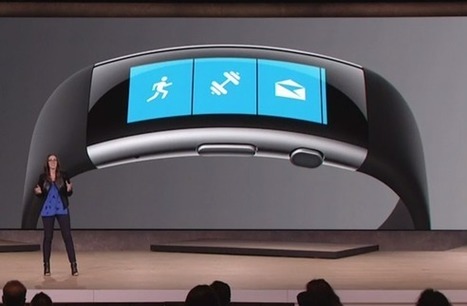
Microsoft revealed the new Microsoft Band at its Tuesday hardware event, and it intertwines hardware and software.
Richard Platt's insight:
The new Band is “optimized for the individual who goes to work and works out,” said Microsoft’s Lindsey Matese. The most notable fresh feature is the Band’s curved Gorilla Glass 3 display, which hugs your wrist in a much more eye-pleasing fashion than its predecessor. Plus, it’s more scratch-resistant and more responsive to touch commands, and the Band’s band breathes easier around your wrist. “We kept grinding to push the product... no rigidity in any direction, no uncomfortable shoulders, no hard edges, and above all it must curve nicely around the wrist,” said Matese. Beyond the aesthetic upgrade, the new Microsoft Band now features enhanced Cortana integration—the digital assistant can now reschedule workouts that you miss—as well as a new barometer sensor so you can track your elevation in real time. So why would you opt for a Microsoft Band over, say, an Apple Watch or Fitbit? Matese repeatedly stressed the personalized “big data” that the Microsoft Health app provides, especially when paired with the sensor-laden Band. Calorie tracking, stair climbing, GPS, guided workouts, sleep tracking, calorie tracking, notifications—Microsoft’s blend of the Band hardware and the cloud-bolstered Health app software does it all, Matese said. And the combo enables capabilities that no other fitness wearable offers, she said, such as measuring VO2 max (the maximum oxygen volume an athlete can use) and the ability to discern whether you’re practicing your golf swings or crushing long balls down the fairway. Curious? You’ll be able to preorder the new Microsoft Band for $250 today
Scoop.it!

#WearablesForGood design challenge set by UNICEF, ARM and frog attracts 250 entries from 46 countries across the world
Richard Platt's insight:
The completed projects will be submitted in October, with the two winners announced in November at a tech event in Helsinki, Finland and ARM TechCon (Santa Clara, US). The winners will each receive a prize of $15,000, along with incubation and mentoring from UNICEF, ARM and Frog Design. The finalists are:
Erica Kochi, co-lead and co-founder of Unicef Innovation said: "The ideas from the 10 finalists demonstrate how wearable technology can be applied in resource-constrained environments, creating viable business opportunities for the technology sector in developing markets. We’re excited to review the finalists’ refined ideas over the coming months to pick two that have the potential to improve the lives of women and children at a national or global scale."
|
Scoop.it!

Richard Platt's insight:
Consumable electronics are on the way to you via Jawbone, albeit this is likely to infringe on big Pharma's move into this space, interesting vision presented on where this technology is going and how it can help us.
Olivier Janin's curator insight,
October 16, 2015 4:42 AM
The concept of embedding a chipset into a pill is not new. Proteus already get an approval from the FDA in 2012 for a system that use pills+patch that communicates with the chipset +iPhone App. The news is more that Jawbone, a mass-market brand, intends to develop such product. That means something, like an intrusion in the Pharma walled garden. But how to reinsure the consumers to make them swallow a pill in their body ? Read also this article about Christopher Bettinger of Carnegie Mellon Univ. who presents a vision for creating safe, consumable electronics.
Scoop.it!

Microsoft is testing a wearable "clip" for women that is Cortana-enabled and can allow certain functions, such as setting reminders. Via Olivier Janin
Richard Platt's insight:
The project — described as a "hearable" — is a small device that can either be worn or used as an earpiece. The final implementation is unknown, and Microsoft is currently testing how people react to different prototypes, the report says. Just as with the Moto Hint, Microsoft's wearable would allow for quick interactions, such as reminders, making it ideal for a parent. According to Wareable, the target audience would be on-the-go women.
Scoop.it!
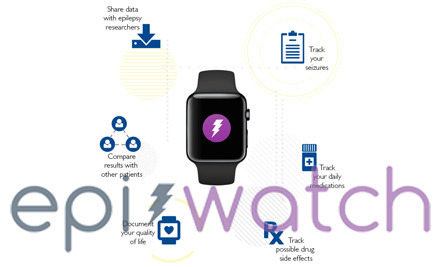
Johns Hopkins EpiWatch™ is an app for Apple Watch™ and research study. EpiWatch helps you manage your epilepsy by tracking your seizures and possible triggers, medications and side effects. You can view this information at any time, and a dashboard lets you share a summary of the data with your doctor or caregiver if you want. With EpiWatch, you can also send a message to family members or caregivers to let them know when you are having a seizure. Via Olivier Janin
Richard Platt's insight:
EpiWatch helps you manage your epilepsy by tracking your seizures and possible triggers, medications and side effects. You can view this information at any time, and a dashboard lets you share a summary of the data with your doctor or caregiver if you want. With EpiWatch, you can also send a message to family members or caregivers to let them know when you are having a seizure.
Olivier Janin's curator insight,
October 16, 2015 9:26 AM
This project does not propose any Physiological data tracking, It is bright to take position on this market, but limited. Embrace are to release their wristband for Epilepsy tracking. About epiwatch, read also this article on Futurity.org
Scoop.it!

Austin-based tech company Chaotic Moon is engineering a "smart" stick-on gadget: Tech Tats, they're called. They're applied just like the temporary tattoos of your childhood—stick on and wash off—except these high-tech tats can monitor vital signs, track GPS location, even hold credit card information. Via Olivier Janin
Richard Platt's insight:
The Tech Tattoos are compelling for their low-cost approach (this needs to be verified). The challenge is how to deliver power to their components ? Classic micro-batteries ? Piezo resistances? Energy harvesting from the human body itself. Short time wearable devices, is there a market for that, likely yes, but Use Cases will need to be defined. More work to be done on the viability of this technology to be proven.
Olivier Janin's curator insight,
November 29, 2015 9:46 AM
The Tech Tattoos are compelling regarding their fashion potential and their low-cost approach (this needs to be verified). The challenge is how to deliver power to their components ? Classic micro-batteries ? Piezo resistances ? And what can motivate me to spend some money for a very short time wearable device ?
Scoop.it!

Over the past couple of years, we’ve asked every major maker of virtual reality headsets and content what their stance is on children in the VR realm. The answer is (almost) always the same: …
Richard Platt's insight:
The Samsung Gear VR appears to be sold out online, tiny and all is well in the VR universe. Why, you might wonder, would anyone suggest that using a virtual reality headset is bad for your kids? Maybe because their eyes are still developing. Perhaps because their brains are still learning what to attach to as real, and deciding what's to be believed in their universe. You might also find that after wearing a VR headset for several minutes will result in slightly blurred vision once you take the headset off - but only for a moment. The real reason any one of the companies we've spoken with would have said "no comment" with regard to children is the relative lack of research done with this specific application of displays and magnifying glasses. If your kids want to use your VR headset, feel free to let them - but do so at your own risk. You'll find every VR headset released with a warning that suggests you and your loved ones take caution when wearing.
Scoop.it!

The new Activite Steel has the high-end feel of the original wearable with the price of the Activite Pop.
Richard Platt's insight:
Withings today announced the latest member of its Activité line of activity trackers. The new Activité Steel has the high-end feel of the original Swiss-made wearable. "While the tracker market is booming we see growing demand from health conscious people who are not willing to compromise their style," Withings CEO Cédric Hutchings said in a statement. "Steel is the perfect Christmas gift for those demanding trendsetters." It also resembles its predecessors, with dual dials—one showing the time, the other highlighting how much of your daily activity goal has been achieved. That target can be set in the free Withings Health Mate iOS or Android app—which, along with the wearable, keeps users in-the-know about their progress. Also known for its smart home products, Withings in September upgraded The Aura connected alarm clock to integrate with Spotify, allowing users with a Spotify Premium account to fall asleep or wake up to their favorite tunes. The Aura Connected Alarm Clock and sleep sensor accessory retail for $299.95, or $189.95 without the sleep sensor.
Scoop.it!
One of the biggest criticisms leveled at the current generation of smartwatches, be they from Apple or one of the many companies supporting Google's Android Wear, is that without a connection to a phone, they're little more than glorified MP3 players that can tell the time. However, that is all about to change.
Richard Platt's insight:
One of the biggest criticisms leveled at the current generation of smartwatches, be they from Apple or one of the many companies supporting Google's Android Wear, is that without a connection to a phone, they're little more than glorified MP3 players that can tell the time. However, that is all about to change. From now on, with the latest update to the Android Wear operating system, smartwatches will support cellular connection via the LTE/4G network so that many of the apps function as will the ability to send and receive messages and even take or make calls, with or without a smartphone. As Android Wear's product manager, Peter Ludwig, explains: "No more worrying about Bluetooth or WiFi – your watch will automatically switch to a cellular connection when you're out of range." "The wearable category is still in its infancy and we plan to continue introducing exciting devices that appeal to a diverse audience," said Juno Cho, president and chief executive officer of LG Electronics Mobile Communications Company, about LG's approach to the segment. The inbuilt obsolescence of anything that uses silicon was a fundamental issue for TAG Heuer, a brand renowned for products that last a lifetime. Its solution is to offer owners regular upgrades (for a fee) so that their watches stay up to date as the technology supporting them evolves. Better still, for those who decide a smartwatch isn't for them, they can trade in the Connected for a mechanical Tag Heuer Carrera instead.
Scoop.it!

Healthcare systems around the world are facing a ‘perfect storm’, contending with rising costs, changing demographics and growing consumer expectations. In a recent report on healthcare in the UK, PA Consulting concluded that a vital component in helping to solve these problems could be the use of ultra-low-power wearable technology. Wearable technology, increasingly enabled by miniaturised ultra-low-power electronics, is said to be used by 8million people in the UK already, with many of those devices being healthcare related.
Richard Platt's insight:
Here it comes folks, wearables as health maintenance devices, like it or not, this tech is coming to you and yours soon enough. Now the questions become how should the data be used, and by whom, make it secure, and not let those who would profit by this data at the expense of our own vulnerabilities.
Scoop.it!

WME | IMG has formed a joint venture with AGT International, a company that specializes in developing "Internet of Things" technology and delivering big data analytics, The Hollywood Reporter has learned.
Richard Platt's insight:
AGT will help develop an IoT platform for WME | IMG’s vast portfolio of more than 800 events, which include concerts as well as Wimbledon and Fashion Weeks around the world. The joint venture launched this week at Toronto Fashion Week with a small test sampling of volunteer models, designers and WME | IMG employees. The models are wearing biometric sensors and cameras that allow users to experience the catwalk from a first-person perspective. Meanwhile, employees in the audience are outfitted with their own biometric sensors that send real-time data to the designers about their physical reactions to each piece in their collections. After a few more test runs at select events in the U.S. and Europe over the next couple of months, the joint venture will embark on a more comprehensive rollout next year. For WME | IMG clients, event organizers will be able to monitor user experience in real-time, allowing them to respond and adapt quickly as needs arise. And with enough attendee opt-ins, artists and organizers alike will have access to deeper and more detailed consumer feedback. “Consumer and entertainment companies have been collecting insights for years, but very few of our clients and partners have had access to analytics that allow them to act on those insights to deliver relevant content and better experiences for their audiences,” WME | IMG co-CEO Ari Emanuel said in a statement. “Our partnership with AGT marks a paradigm shift, recognizing that IoT technology and data science will fundamentally change the way people experience live events, as well as how they consumer and share content that matters to them.”
Scoop.it!

Everything you need to know about the Fossil Q Founder, including impressions and analysis, photos, video, release date, prices, specs, and predictions from CNET. - Page 1
Richard Platt's insight:
The Fossil Q Founder is the first Android Wear watch to include an Intel processor, but it won't be the last. The chipmaker also partnered with TAG Heuer for a still-unreleased Android Wear watch. To date, a majority of Android Wear watches have been equipped with a quad-core Snapdragon 400 processor from Qualcomm. It will be interesting to see how Intel's processor performs. We will know more in a few weeks when we begin testing the watch. The Q Founder runs Android Wear and works with both iPhones and Android devices. You can view notifications on your wrist for things like calls, text messages, emails and calendar events. You will also get personalized Google cards with information on weather, sporting events, traffic and more. The watch doesn't include cellular capabilities, however, so you will have to be in Bluetooth range of your smartphone or connected to Wi-Fi for complete functionality.
Scoop.it!

Lumo, makers of the Lumo Lift posture correcting device, have released something to help runners create better form, too. Called Lumo Run, it's a wearables..
Richard Platt's insight:
Lumo, makers of the Lumo Lift posture correcting device, have released something to help runners create better form, too. Called Lumo Run, it’s a wearables system consisting of Lumo “smart garments” – shorts for men and capris for women – and a device that fits inside the pocket of these garments that gives real-time feedback on an app to show the runner how they are performing with every strike of the heel. Good form can not only increase a runner’s speed and distance, but it can also prevent injuries that could limit a runner’s ability to hit the pavement. The Lumo Run embeds sensors and conductive thread into the waistband of the Lumo shorts or capris to detect a joggers biometrics, posture, and mileage and assist in real-time coaching. Using Lumo’s specialized algorithms, the device uses all that information to track and give feedback while on the jog so a runner can see how they are performing and make a correction in the moment. There are plenty of apps out there to show a runner how far and how fast they’ve gone, but not much is available for runners who want to improve form and prevent injuries. Athos comes close as a wearable fitness startup in Silicon Valley with similar capris and shorts that can detect muscle strength and movement while you workout, but it’s not specifically for running. Will we always need to purchase the pants to get the benefits? Nike offered a similar device called the Nike+ that fit in specially made Nike brand shoes. It came with a bracelet instead of an app at the beginning but can now be found on smartphones everywhere. While the device initially needed to stay snug inside a pocket in the sole of the shoe, consumers eventually came up with accessories that would allow them to use the device on their own shoes instead of needing to purchase Nike’s proprietary shoe to make it work. Lumo’s CEO Monisha Perkash emphasized the need to get the garments. “Having it placed on our waistband helps the sensor to be placed correctly and also be more stable,” she said. “And so the readings that you get are far more accurate.”
Scoop.it!

When it comes to wearables, women aren’t buying it–not what’s out there at least, according to a new study by Saatchi & Saatchi Wellness. Fitbit, which had the third largest U.S. IPO of 2015, had a valuation of $4.1 billion but men accounted for 70% of those profits. The agency found that 95% of women are aware of wearable technology but only a third of them followed through with purchasing it. Via Olivier Janin
Richard Platt's insight:
1. Wearables Creators Don’t Get the Meaning of “Wellness”: Contrary to what smartwatches like the Apple Watch and Fitbit advertise in targeted fitness ads, the study showed that women want a wellness app dealing with emotional, social and mental aspects. Only 12% of respondents ranked physical health as their definition of wellness, placing them a significant 64% below emotional benefits. “Overwhelmingly, women recognize that there’s an interconnection between health and wellness but they’re very, very different,” Suchotliff says. “Health for women is something very concrete. It’s measurable. It’s ‘I have a cold’ or ‘I have an eye infection’ or ‘I’m overweight.’ It’s got specifics you can determine. Wellness is much more emotional and very personal.” According to the study, women can’t relate to the current goal-setting wearables of today. “Women feel very intuitive and when they thought about setting goals, they thought about tracking,” says Suchotliff. “They didn’t want the kind of tracking that would remind them of any sort of barriers or not meeting their goals.” Other aspects of wellness included a job change and making specific changes for wellness around the age of 40. Suchotliff says another was in relation to services of others meaning, “I’m going to make this change in my wellness because I want to make a better mother” or “When I’m well, my business thrives.” 2. There’s a Disconnect Between Form and Function: The big players seem to be under the misconception that women will embrace their products as long as they’re glamorous–i.e. Google Glass bringing in Diane Von Furstenberg and Fitbit partnering with Tory Burch says Suchotliff. The study found that 57% of respondents say while design and aesthetics play somewhat of a factor in their purchasing decisions it’s not the most important element–function is. Only 43% of respondents said aesthetics and design was the primary factor in their last major purchase of over $1,000. “At the end of the day, it’s about value and overwhelmingly we heard that women don’t see the value of wearables out there now and it’s mainly because they’re not meeting women’s needs,” Suchotliff says. “Tech companies creating a fashionable wearable without an understanding of what women want out of health and wellness is ineffective.” - When women think about technology for wellness, the study showed that mobile and fitness-tracking were the first things that came to their minds. “Partly, I think because our mobile devices are attached to us but partly there’s two other elements,” she says. “One is that we cannot imagine the things that are not yet invented–women are not used to these devices being designed for them,”
|





Swatch has partnered with Visa on a watch capable of making smartphone payments with the swipe of your wrist. The Swatch Bellamy, scheduled to launch in early 2016, can be used anywhere contactless Visa payments are accepted, the companies jointly announced Monday. It looks much like any other Swatch watch, but has an NFC (near-field communications) chip inside, giving it its payments power. Unlike other smartphones, the Bellamy doesn't connect to the Internet and makes payments without using the watch's battery. Switzerland-based Swatch is the world's largest watchmaker by revenue. It's one of several traditional watchmakers collaborating with companies outside of their industry to make connected timepieces. Watchmaking for many years had seen little innovation, but partnerships that have sprung up in 2015 show the industry's biggest names are now embracing change.