
Wearable Tech and the Internet of Things (Iot)
22.8K views |
+12 today


 Your new post is loading...
 Scoop.it! 
Houston researchers developed the Smarter Balance System using smartphone-based biofeedback to help patients with Parkinson’s regain balance.
Richard Platt's insight:
According to the SMART research group, about 60% of people with Parkinson’s disease fall annually, and two-thirds of those people fall more than once or twice a year. While medication or deep brain stimulation could help with many of Parkinson’s symptoms, postural instability and muscle weakness are usually responsible for causing falls. While treatments for this often are ineffective, physical rehabilitation could help. The goal of Lee’s team in developing SBS is to bring physical rehabilitation into patients’ homes where clinics are not widely available. The technology does not aim to replace the need for patients to see rehabilitation physicians, but rather to serve as an alternative, even at a distance. Because the system is connected to the internet, a patient could use SBS with the guidance of a doctor or physical therapist. The system uploads all collected information to an online server, where it can be accessed to track a patient’s progress or to adjust the exercise regimen. “It’s important to develop a system that is easy to use and readily available in the home environment,” Lee said. “Most of the time, patients have to rehab at a clinic but there might be limited access. We’re not trying to replace traditional therapy but there is a shortage of physical therapists.” 
Scoop.it!

Google Glass, the smart head-up display and camera that was supposed to become everyone’s next portable computer, isn’t dead. It’s gotten a job — multiple jobs, in fact. The second iteratio
Richard Platt's insight:
(Google parent company) Alphabet today lifts the non-disclosure requirement on its Glass EE partners and is opening up the program for more businesses to participate. The failure of Google’s information-augmenting glasses as a mass market product, it seems, might spawn the success of Alphabet’s workplace-focused assistive device. - Alphabet’s product managers sound bullish about the prospects of Glass in the workplace. Project lead Jay Kothari is quoted as saying, “This isn’t an experiment. It was an experiment three years ago. Now we are in full-on production with our customers and with our partners.” Indeed, according to the latest report, the feedback from workers and companies has been overwhelmingly positive, with Glass providing assistive information on the work floor and improving productivity.
Scoop.it!

Cutting-edge 'wearable tech' is set to improve the health of Hertfordshire's most vulnerable
Richard Platt's insight:
The clothing, which incorporates the use of activity trackers and sensors, will help people to stay safe and independent in their own homes. The authority says it will also offer greater peace of mind for carers and family members - and ease pressures on social care services. Information that's collected will be used by care teams to improve support and will also be available to family members and carers.
Scoop.it!

TRAVERSE CITY, MI - The routine for NHL players is usually the same after games.
Richard Platt's insight:
All camp long, the players have had a heart rate monitor strapped to their chest that take real-time measurements tracking the intensity of each player’s training session. It’s fascinating to watch play out live as the players are on...
Scoop.it!
These slides discuss how improvements in ICs, MEMS, cameras, and other electronic components are making wearable computing and new forms of human-computer int…

Richard Platt's curator insight,
July 2, 2017 1:11 PM
Wearable Computing and Human Computer Interfaces http://sco.lt/...Preso on how improvements in ICs, MEMS, cameras, and other electronic components are making
Scoop.it!

According to the Cairns-based firm behind the helmet, the CycleVision weighs just 280 grams, has two 1080p cameras capturing a 160-degree field of view each.
Richard Platt's insight:
Designed by Australian firm Cyclevision, the lightweight helmet has two HD cameras embedded into the frame and can even stream the footage from the rear camera to a phone on the handlebars. Footage captured by the cameras is recorded on 4.5-hour 'continuous overwriting loop' which is stored on a 32GB SD card. The helmet has two 1080p micro HD cameras - one in the front and one in the back. Cameras capture a 160-degree field of view each, recording everything going on in front and behind of the rider. Footage is recorded on a 4.5 hour 'continuous overwriting loop' which is stored on a 32GB SD card. But a 256GB upgrade is available. A rechargeable lithium polymer battery provides 5 hours of recording time. By connecting the camera to a phone mounted on the handlebars, the rider can keep track of hazards behind them. But the firm offers an upgrade to 256GB for better vision data storage. According to the Cairns-based firm, the CycleVision helmet weighs just 280 grams and all the components are waterproof. To get the footage from the cameras, wearers plug into a USB port and vision and audio files can be easily transferred to a laptop. It is powered by a rechargeable lithium polymer battery that can provide five hours of recording time. But the most notable feature is the Wi-Fi connection of the rear camera. By connecting the camera to a phone mounted on the rider's handlebars, the rider can keep track of how close that truck is to their mud guard.
Scoop.it!

Pacif-i is hitting the market at a time when smart baby products are becoming more and more popular.
Richard Platt's insight:
Pacif-i, like so many other products these days, comes with its own application, which can be accessed on an Android or iOS device. The pacifier, created by Blue Maestro, can detect a child’s temperature, “without disturbing them,” surely a big selling point for parents who are loathe to wake their child to check for fever. The smartphone simply needs to be within 30 feet of the pacifier, meaning parents can check their child’s temperature from the next room. “If a baby is too hot, they have trouble regulating their temperature and they can’t get to sleep,” said Blue Maestro CEO Richard Hancock. “This application provides parents with a very easy way to monitor their child’s temperature and take action.”

Lionel Reichardt / le Pharmageek's curator insight,
March 30, 2016 3:04 AM
Pacif-i, like so many other products these days, comes with its own application, which can be accessed on an Android or iOS device. The pacifier, created by Blue Maestro, can detect a child’s temperature, “without disturbing them,” surely a big selling point for parents who are loathe to wake their child to check for fever. The smartphone simply needs to be within 30 feet of the pacifier, meaning parents can check their child’s temperature from the next room. “If a baby is too hot, they have trouble regulating their temperature and they can’t get to sleep,” said Blue Maestro CEO Richard Hancock. “This application provides parents with a very easy way to monitor their child’s temperature and take action.”
Scoop.it!

Michael Kors has shown the world what he has planned in the wearables market with two watches that will ship in the Fall of 2016.
Richard Platt's insight:
Only two watches will make it to department stores and Michael Kors stores when they ship in the fall of 2016 ahead of the holiday shopping season. The wrists of women will have the opportunity to be adorned by a gold-plated wearable, while men will be treated to a sporty black number with both retailing for $395. “We began by exploring a large number of designs, which we eventually narrowed down to a few body options,” Kors, chairman and chief creative officer, said. “There were many rounds of prototypes to get to the final product line. “We looked closely at a range of colors and materials, so there were a lot of samples with various plating and material combinations before we arrived at the best options for both the watch and the straps. We also spent a lot of time exploring designs for the digital watch faces, because they’re an important part of what we are offering our customer.” As each runs Android Wear, users will simply need either an Apple iPhone or one of the many Android options in order to get the true “smart” aspects from these timepieces. Those include but are not limited to: fitness/health tracking, text messages, email, and app notifications. Both allow for customization - “It was important to us that the display watch was customizable, so users can incorporate their own personal style into their smartwatch,” Kors chairman and CEO John Idol told Mashable. “For example, through the day, customers will be able to change out straps or the watch face to reflect their mood or personal style.” “Not only do we think the wearable technology business is going to grow in the future, we also saw the huge opportunity in the current space for products that look luxurious and focus on the design as well as functionality,”
Scoop.it!

A smartphone may be able to measure your heart and breathing rates, even if you’re not directly touching it, researchers say. Via Olivier Janin
Richard Platt's insight:
Biophone is exploring the possibility of using commercially available phones to monitor your heart and breathing rates, even if the devices are in your pockets or bags. The idea is to rely on a phone's accelerometer and gyroscope to pick up even small vibrations and body movements that come from your heart beating and from the rise and fall of your chest as you breathe.

Olivier Janin's curator insight,
December 9, 2015 5:15 AM
Called Biophone, this research project is led by Rosalind Picard's Affective Computing Departement at the MIT Medialab in Boston. Biophone is exploring the possibility of using commercially available phones to monitor your heart and breathing rates, even if the devices are in your pockets or bags. The idea is to rely on a phone's accelerometer and gyroscope to pick up even small vibrations and body movements that come from your heart beating and from the rise and fall of your chest as you breathe.
Scoop.it!

For the past two weeks, I ditched my Apple Watch for the new Activité Steel, which is available exclusively through the Withings website. The $170 device, like the Activité Pop and Activité before it, is a 24/7 smartwatch that tracks physical activities during the day and sleep patterns at night. Via Olivier Janin
Richard Platt's insight:
Very comprehensive review of pretty good wearable design, particularly since they've differentiated along user profiles for what each of the Activité versions do. The Activité Pop ($150), Activité Steel ($170), and Activité ($450) each target a different audience. At the same time, the Health Mate app guarantees that no one is missing out on the many features each watch offers. This is a brilliant move on Withings’ part and one that Apple is currently lacking with its Watch line, which starts at a pricey $349 for its entry-level model.
Olivier Janin's curator insight,
December 3, 2015 3:02 PM
Good review of the Withings Activité, well documented.
Scoop.it!

Smart watches and glasses are the two most-cited wearable technologies being evaluated among 200 companies queried in the industrial sector.
Scoop.it!

Wearables aren’t quite ready for prime-time business use, but advances to the Apple Watch and other wearable devices are expected to address their shortcomings.
Richard Platt's insight:
A February 2015 Salesforce.com survey of 500 business professionals found that 79% believe that wearable technology will be a key to future success. Already, 76% report improvements in business performance for wearable devices in the enterprise. The appeal? Real-time access to customer data, hands-free instruction for guides in field service, access to business analytics and alerts, and "see-what-I-see" coaching with a live remote tech or trainer. In addition, wearables will generate new and valuable data that will feed analytics. Meanwhile, Google Glass is being redesigned for the enterprise. Other wearables fall into the same general category of not-quite-ready-for-prime-time business. But expect things to begin tilting toward the enterprise when Apple releases the next version of Apple Watch in 2016. Also expect to see a greater use of smart cameras, embedded apparel or accessories as well as an array of clip-on or wrist-based devices.
|
Scoop.it!

Irish Tech Startup Releases Wearable Cryptocurrency Device
Richard Platt's insight:
The tech, called Festy, is the brainchild of Irish tech firm Bitcart and will be the first of its kind on the market. It utilizes a QR code with a Blockchain infrastructure that takes advantage of Dash’s InstantSend technology, making payments nearly immediate, but with much lower fees than legacy credit cards. CEO Graham de Barra said, “...Unlike existing traditional bank payments that take a two to five percent fee, there is no cost on receiving Dash for merchants.” - The concept is new in the cryptocurrency world, as companies seek to find ways to capitalize on the sudden surge of public interest in decentralized currencies and Blockchain technology. The clear advantages of Blockchain in terms of security and payment verification have prompted the rise in interest as well.
Scoop.it!
Richard Platt's insight:
Apple is never going to be done in this area, and neither are its partners or its competitors. There’s lots of work still to be done by all these players in a field that I suspect is going to receive increasing attention from the tech industry over the coming years, even as politicians argue over the best ways to manage the funding of healthcare and the structure of insurance plans that will pay for much of this. I’m hopeful that we’ll see much faster change and greater benefits coming on the technology side, and this week I saw promising signs in that direction.
Scoop.it!
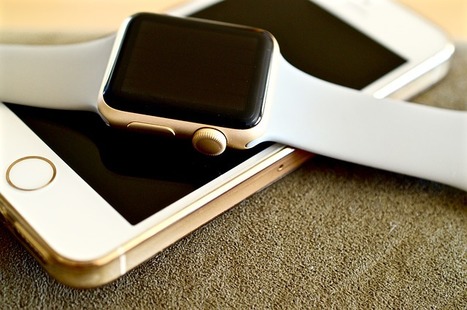
Wearable technology is the new frontier for companies seeking to remain on the cutting edge of consumer technology. After witnessing the transformation from laptop to tablets and smartphones the next…
Richard Platt's insight:
Scoop.it!

Disruptive Technology and the Plastic in Your Wallet Look around you. It’s no longer an esoteric or ethereal concept – it’s real. The Internet of things is
Richard Platt's insight:
Wearable tech has a way to go yet before it gains mainstream appeal. These strongest growth markets are still iOS and Android apps, while wristbands, smart watches, and headgear are slow on the uptake. Credit card companies are not waiting for the disruptive effects to cause an avalanche in the industry – they are leading from the front with innovative digital payment models that are changing the e-commerce landscape forever.
Scoop.it!

The news comes after more than a year of financial turmoil at the company, which led to deteriorating customer service, dwindling inventory, and key executive departures — all as the company entered into a legal battle with rival Fitbit.
Richard Platt's insight:
The news comes after more than a year of financial turmoil at the company, which led to deteriorating customer service, dwindling inventory, and key executive departures — all as the company entered into a legal battle with rival Fitbit.
Scoop.it!

Powered by your body heat, solar panels or an electromagnetic charger, sensors would capture information both about you and everything around you. From knowing your heart rate, location, direction you’re proceeding, outside temperature and activities also your weight, sensors would know all about you.
Richard Platt's insight:
With the pricing of sensors has dropped 200 times over the last two decades,some sensors are one-tenth the price they were just four years ago, despite having vastly improved their function. This is why it's easy for people to think sensors will get cheaper. But a lot of sensors are still expensive, and many of them don't perform as well as they should. There are hundreds of different sensors whose prices needs to drop to 10 cents for the wearable Internet to reach its full potential. Accelerometers used to be the size of a human thumb and costed about $25. Now a millimeter square cost 10 cents and also perform better than the thumb-sized version. The 10-cent compass in your smartphone is navigation-grade, meaning it is about as good as the compass in an airplane cockpit.Medical sensors are also in their infancy. Sensors are unlike other smartphone components where you cannot outsource manufacturing to other nations just to have them cheaper but they solely rely on technological innovation. Since more sensors are analog, they need to convert their readings to digital so that it can be shared. Since these are innovated by highly paid engineering, master engineers with a PhD, they cannot come cheap. The sensor section is also highly diversified since each entity relies on different technology. Ranging from chemical to physical and medical, each of these have their own sensors, it takes a lot of research and innovation to have them work upon. These are some problems that need to be solved before reaching the required potential for wearable internet and while there are problems like these it might take a while. But the change is real, it has already started with smartwatches and wearable technology is only about less than a decade away.
Scoop.it!

Not The Internet Of Things Generation: Only 9% Of Teens Likely To Own A Wearable - 03/29/2016
Richard Platt's insight:
Discussions about IoT adoption often take into consideration the expectations of what the next generation will do. This is a challenging concept, since the next generation won’t be looking at buying the current generation of IoT products. But there are starting to be some early indicators of some of the thinking of the next generation, at least about the current state of smart or connected objects. For example, only 9% of teens are likely to own a wearable, according to a study of how teens and millennials use email, conducted by Adestra, a marketing a technology company. More (19%) millennials, in this case those 19-34 years old, are more likely to own wearables. As yet another indicator of not yet jumping aboard the IoT train, the majority (54%) of elementary school age children and 59% of those in middle school have no great interest in autonomous cars, as I wrote about here recently

Philippe Marchal's curator insight,
March 29, 2016 5:39 PM
Discussions about IoT adoption often take into consideration the expectations of what the next generation will do. This is a challenging concept, since the next generation won’t be looking at buying the current generation of IoT products. But there are starting to be some early indicators of some of the thinking of the next generation, at least about the current state of smart or connected objects. For example, only 9% of teens are likely to own a wearable, according to a study of how teens and millennials use email, conducted by Adestra, a marketing a technology company. More (19%) millennials, in this case those 19-34 years old, are more likely to own wearables. As yet another indicator of not yet jumping aboard the IoT train, the majority (54%) of elementary school age children and 59% of those in middle school have no great interest in autonomous cars, as I wrote about here recently
Lionel Reichardt / le Pharmageek's curator insight,
March 30, 2016 3:03 AM
Discussions about IoT adoption often take into consideration the expectations of what the next generation will do. This is a challenging concept, since the next generation won’t be looking at buying the current generation of IoT products. But there are starting to be some early indicators of some of the thinking of the next generation, at least about the current state of smart or connected objects. For example, only 9% of teens are likely to own a wearable, according to a study of how teens and millennials use email, conducted by Adestra, a marketing a technology company. More (19%) millennials, in this case those 19-34 years old, are more likely to own wearables. As yet another indicator of not yet jumping aboard the IoT train, the majority (54%) of elementary school age children and 59% of those in middle school have no great interest in autonomous cars, as I wrote about here recently
Scoop.it!

Stroll around the office or neighborhood six times a day, and earn $1.50 toward your health insurance.Step up activity a bit more and bring the total ..
Richard Platt's insight:
'Gamification' As a further incentive, Target said it would allow teams of employees which log the most average daily steps to collect more than $1 million for local non-profit organizations. This strategy of providing financial incentives for healthy activity is known in the industry as "gamification." "We have a lot of clients who want to subsidize the program and make it free, but it's less effective," Fleming said. "There has to be both a carrot and a stick." One program being offered through health services firm Vitality Group provides an Apple Watch for $25, a fraction of the retail cost. But employees must "pay" for the device by completing workouts and gym visits each month. Growth in such programs over the past few years coincides with incentives to meet Obamacare goals on preventive care, and with new research suggesting that more activity can ward off many medical ailments. Data mining But the new programs raise questions about private data collected and stored by insurers. While employers and insurers must comply with US privacy regulations so that health data cannot be seen or used by employers, critics still worry. "Technology is outpacing the legal protections in place,"
Scoop.it!

In this article we are specific to smart textiles that contain electronics. There has been extreme progress in the chemical side of manufacturing textiles that can repel odors, stains, as well asprotect against impact, and even change color and shape. These new findings have affected the global progress of smart textiles evolution; yet do not fall into the category of wearables -unless stimulated with the power of electrons. Via Olivier Janin
Richard Platt's insight:
An overview of Smart Textiles projects that have been developed over the last 10 years, worthwhile read
Olivier Janin's curator insight,
December 15, 2015 4:02 AM
You like fashion ?
Scoop.it!

Before CES 2016 began, I was expecting wearable technology to occupy less space on the floor than in 2015. I'd reasoned that the industry's failure to make the...
Richard Platt's insight:
What all of these devices show is that maybe crafting a smartwatch that does as many things as a smartphone is the wrong goal. The most interesting devices that I saw at this show were all designed to do a single thing, and do it well. Maybe the idea of a general-purpose device that acts as an analog or companion to your phone is simply not the way to appeal to the masses. There were plenty of smartwatches on the floor, but none of them do anything new that we haven't already seen. Wearables are still a niche proposition but this year has made me think that it's not actually a bad thing. As companies and startups move away from just making a second, smaller screen for your phone, the less inessential they become. We're still a long way away from everyone in the world owning or desiring one of these things, but maybe it's time to admit that a Swiss Army Knife isn't the way forward.
Scoop.it!

The annual wearable device shipments in 2016 are expected to grow 64% to above 112 million units, according to TrendForce. Wearable VR technologies wi
Richard Platt's insight:
Smart bracelets focus on functionality whereas smartwatches rely on brand names Smartwatch vendors so far have only been able to leverage their brand names to sell their devices. The market positioning of smartwatches is still unclear and provides too few reasons for consumers to buy them. Apple Watch is currently the only smartwatch that has exceeded 10 million sets shipped this year. Nonetheless, Tsai noted that sales of Apple Watch have fallen short of expectations since its launch over six months ago. TrendForce therefore has lowered the projected annual shipments of Apple Watch for 2015 from 15 million to 12 million sets. Next year’s annual shipments are expected to reach 20 million sets. “Smartwatches will become more appealing if vendors can aggressively market two or three device-specific features that consumers would find valuable,” Tsai pointed out. “Apple, for instance, has successfully used its brand name to build an initial user base for its smartwatch. The next step is to capture consumers who want value for their money, or else Apple’s smartwatches will remain only as collectibles for Apple fans.”
Scoop.it!

The wearables market is ripe for further takeovers, the founder of Misfit told CNBC, in the wake of his company's $260 million takeover this month.
Richard Platt's insight:
Speaking to CNBC on the sidelines of London's unBound startup conference, Misfit founder and director Sridhar Iyenga, said that his company's sale to Texas-based clothing and accessory firm Fossil Group is part of a larger trend sweeping the wearable technology sector. "What you're seeing is that the audience that the new technology companies can address and garner is very different than what the traditional companies can actually get a hold of," He pointed to the exercise app company MapMyFitness, which clinched a $150 million takeover by sports group Under Armour back in 2013. But it's Fitbit's successful flotation that's had the biggest impact on the wearables market, with shares soaring in the wake of its New York Stock Exchange debut in June. The company is now worth around $4.1 billion."What they've done for the industry has been really good for us. They've actually legitimized the fitness tracker market and because of that all of us have benefitted,"
|







"As you may be aware, there have been several negative randomized control trials on post-discharge wearable monitoring, in heart failure as well as COPD patients. So, while I think a lot of these things could make intuitive sense and I’m interested in different projects, I’m also a big skeptic, because the literature would suggest that it doesn’t work, right now, the way that we’re doing it. Home hospital is very different than a simple program where a patient is being discharged from the hospital and we’re going to slap a wearable on them and try to figure out if their getting worse and intervene before they come back, because that, so far, has not been shown to work. It’s not necessarily a question of the technology. It’s a question of whether or not monitoring somebody after they have left the hospital actually prevents them from coming back to the hospital. That is the key question, and, so far, the answer is, probably not."