


Travel Gear: A glowing jacket, a packable dinghy and skin-loving wearable tech

 Your new post is loading...
 Scoop.it! Travel Gear: A glowing jacket, a packable dinghy and skin-loving wearable tech 
No comment yet.
Sign up to comment
Scoop.it!

The 10 best wearable technology TED talks: TED (Technology, Entertainment, Design) is a global set of conferences run under the slogan "Ideas Worth Spreading".
Richard Platt's insight:
TED’s early emphasis was technology and design, consistent with its Silicon Valley origins, but it has since broadened its focus to include talks on many scientific, cultural, and academic topics. This is a collection of our favorite TED talks on wearables and technology.
Scoop.it!

From
phys

From fitness bands to smart glasses, wearable technology has grown in popularity in recent years. But what prompts people to put on a wearable device? A recent study conducted by researchers at Missouri University of Scienc
Richard Platt's insight:
The study, published recently online, examined what features and attributes of two wearable products – Google Glass and the Sony SmartWatch 3 – were attractive or unappealing to users. The researchers interviewed two groups of users – one made up of university students and one made up of staff. While the researchers found some differences in what appealed most to the different groups, they also found common attributes that influenced users' adoption behavior. Those attributes included a device's look and feel as well as its brand, and common values, such as image and value for money. "One of the main takeaways for researchers and practitioners is that wearable technology, unlike traditional technology, is a 'fashnology' because they are both fashion accessories as well as functional technology," says Dr. Fiona Fui-Hoon Nah, a professor of business and information technology at Missouri S&T and one of the study's co-authors. "The findings suggest that wearable technology needs to be designed with fashion, aesthetics, and the look and feel in mind." "For example, weight, form factor (due to bulkiness) and battery heat were identified as inhibiting factors," Nah says. "Privacy was also identified as a concern for wearable devices. To increase adoption, it is critical to have fitness apps and trackers in a smart watch, and messaging and social media apps in smart glasses."
Scoop.it!

How do you feel when technology you saw in a movie is made into reality? Collaboration between the electrical engineering and textile industries has made TVs or smartphone screens displaying on clothin
Richard Platt's insight:
A research team led by Professor Kyung Cheol Choi at the School of Electrical Engineering presented wearable displays for various applications including fashion, IT, and healthcare. Integrating OLED (organic light-emitting diode) into fabrics, the team developed the most highly flexible and reliable technology for wearable displays in the world. Recently, information displays have become increasingly important as they construct the external part of smart devices for the next generation. As world trends are focusing on the Internet of Things (IoTs) and wearable technology, the team drew a lot of attention by making great progress towards commercializing clothing-shaped 'wearable displays'. The research for realizing displays on clothing gained considerable attention from academia as well as industry when research on luminescence formed in fabrics was introduced in 2011; however, there was no technology for commercializing it due to its surface roughness and flexibility. Because of this technical limitation, clothing-shaped wearable displays were thought to be unreachable technology. However, the KAIST team recently succeeded in developing the world's most highly efficient, light-emitting clothes that can be commercialized.
Scoop.it!

Taking activity tracking to the next level, real time coach tracker
Richard Platt's insight:
Wearables finally starting to create products that can actually coach you while you're running - Moov. Still I would say that is a narrow market niche and isn't some huge financial or technological capability that no other wearable firm couldn't do (not protect-able IP) or thought possible or couldn't do. But at least one of these wearable products has begun to reach the market with a use case that actually has a market to sell to.
Scoop.it!

New fabrics in development by the US military promise to keep hands warm and dry in extreme conditions, reports Andrew Masterson.
Richard Platt's insight:
Research by Paola D’Angelo and a team based at the US Army Natick Soldier Research, Development and Engineering Centre in Massachusetts look into cold-weather glove development. D’Angelo and her colleagues are working on incorporating heat-transmitting silver nanowires into fabrics such as polyester and cotton-nylon amalgams. The scientists report that applying the low-voltage output of a watch battery to the augmented textiles raises its temperature by around 36 degrees Celsius in under a minute. To create proof-of-concept fabrics, the researchers built on the work of Stanford University’s Yi Cui, who has published several papers exploring the use of electrically conductive silver nanowires in flexible substrates. Gloves that grow out of the work of D’Angelo and her team will also incorporate an absorbent hydrogel, ensuring sweat is rapidly removed. The team also reports that the new fabric withstands repeated washing without loss of efficiency – a problem that currently plagues most items of wearable tech. Once replacement gloves for the military have been rolled out, the next target is clothing for torsos and legs. The scientists says that at some stage the silver nanowire fabrics are likely to cross over into commercial development – something that may well please many a mountaineer.
Scoop.it!

MarketResearchNest.com adds "Global Smart Wearable Gloves Market 2017-2021" new report to its research database. The report spread across 76 pages
Richard Platt's insight:
Research analysts forecast the global smart wearable gloves market to grow at a CAGR of 15.27% during the period 2017-2021.
Scoop.it!
Richard Platt's insight:
The fertility tracker works much like a FitBit, hence the nickname "FitBit for Fertility." The bracelet contains sensors that track physical symptoms, such as heart rate, breathing and body temperature. Women wear the device while they sleep and the next day, the bracelet (which connects to a phone app) predicts their most fertile days. After just three months of wearing the bracelet, McGee conceived her baby boy.
Scoop.it!

Everlast and PIQ Sport Intelligence have teamed up to bring wearable technology to the boxing world.
Richard Platt's insight:
In recent years, the basic tallies used to measure success and an athlete’s performance have began to expand as advanced analytics have taken hold on the basketball court, the baseball diamond, the hockey ice surface and countless other fields of play. In many cases, the information gleaned from that data helps shape the work that is done in the practice facility, where inefficiencies are examined and time is committed to addressing weaknesses and building on strengths. In the combat sports arena, a new product is offering athletes a way analyze their boxing skills. Everlast and PIQ Sport Intelligence have teamed up to produce the PIQ Robot Blue, a wearable nano-computer that tracks punch types, speed and impact of every punch thrown during a training session. Whether strapped around boxing gloves while working the heavy bag or worn as wraps while shadowboxing, the PIQ Robot Blue records each punch and gives users a detailed look at their performance via the downloadable Everlast PIQ app. While this type of technology has not yet made its way into the boxing ring or mixed martial arts cages, it has the potential to become a valuable piece of equipment in the training room as coaches and athletes can track the progress being made on a session-by-session basis.
Scoop.it!

Samsung Gear Fit 2 Pro likely gets confirmed by the official Samsung website listing. The Gear Sport, which is an upcoming wearable device clears the FCC.
Richard Platt's insight:
According to a report by SamMobile, none of the details about the Samsung Gear Fit 2 Pro are known as yet but the device is believed to feature a design that is similar to that of the standard Gear Fit 2. There are speculations that this one might feature enhanced step-tracking accuracy. There are claims that the device might be made official around the end of this month along with the Galaxy Note 8. A different report by SamMobile has spilled the beans about its upcoming wearable device. It looks like the next hybrid smartwatch from Samsung will be called Gear Sport. The device was spotted visiting the FCC with features such as Wi-Fi and Bluetooth support but the other details remain unknown. From the FCC documentation, a schematic of how the wearable device might look like has been revealed. The Gear Sport appears to resemble the existing Samsung Gear smartwatches in terms of design with a round form factor. However, it is suggested that the Samsung Gear Sport is meant to bridge the gap that exists between a fitness tracker and a smartwatch.
Scoop.it!

How tech is helping the health industry disarm disease.
Richard Platt's insight:
Interesting list, worth a look on How tech is helping the health industry disarm disease.
Scoop.it!

Smart Wearable Healthcare Devices Market – Premium Insight of Latest Report Wearable technology (also called wearable gadgets) is a category of technology
Richard Platt's insight:
This report highlights the manufacturing cost structure includes the cost of the materials, labor cost, depreciation cost, and the cost of manufacturing procedures. The report is assembled with the determination of providing necessary market information to retailers operating in the Global market. Hence, thus makes for a resourceful data repository that can help decision makers comprehend the most effective business strategies.
Scoop.it!

Australian sensor technology used by several professional sports leagues in the U.S. is being used by SSM Healthcare in Creve Coeur. dorsaVi is wireless technology that tracks and measures in real time how elite athletes move, providing valuable information during recovery from sports injuries.
Richard Platt's insight:
Australian sensor technology used by several professional sports leagues in the U.S. is being used by SSM Healthcare in Creve Coeur. dorsaVi is wireless technology that tracks and measures in real time how elite athletes move, providing valuable information during recovery from sports injuries. Lauren Nuelle was living her dream, playing college soccer at Webster University, until three knee surgeries cost her two years of eligibility. “My first ACL tear, I tore in 2015. It was a non-contact tear. I planted my foot, tried to run and I heard a pop,” said Nuelle. “I’ve torn it twice since.” Recently Nuelle worked out with SSM Healthcare sports therapists, with dorsVi sensors attached to both legs. As she performed squats, lunges, and jumps in every direction, the sensors sent instant information to an app displayed on a tablet, measuring how close she was to returning to soccer action. “Numbers to look at to see and give us a better idea if these athletes are safe to return to play, or just an injury risk profile from the preventive side of it as well,” said Caroline Jaycox, a board certified sports therapist with SSM Healthcare. Sports therapist Sara Wallingsford discussed the dorsaVi data with Nuelle. “This test is telling me that her left [leg] is actually better than her right after all this training after her few surgeries.”

Alejandro Buldón's curator insight,
August 11, 2017 10:37 AM
Wearable sensor tech helps athletes recover from injuries
|
Scoop.it!

As reported by The Verge : Elon Musk has posted the official first photo of his SpaceX space suit on Instagram , teasing that mor Via TechinBiz
Richard Platt's insight:
The suit reminds me of the old 1960's TV show "UFO" that was made in the UK and distributed worldwide. Kinda cool looking
Scoop.it!

Body sensors have long been bulky, hard to wear, and obtrusive. Now they can be as thin as a Band-Aid and about as big as a coin. The new sensors, created by..
Richard Platt's insight:
The new sensors, consists of a silicone case that contains “50 components connected by a network of 250 tiny wire coils.” The silicone conforms to the body and transmits data on “movement and respiration, as well as electrical activity in the heart, muscles, eyes and brain.” This tiny package replaces many bulky sensor systems and because the wires are suspended in the silicone you are able to create a denser electronic. The researchers can power the device wirelessly which means it can sit almost anywhere on the body. Further, the team expects to be able to use this system inside of robotics where a softer, squishier connector is needed. “Combining big data and artificial intelligence technologies, the wireless biosensors can be developed into an entire medical system which allows portable access to collection, storage, and analysis of health signals and information,” said Jang. “We will continue further studies to develop electronic skins which can support interactive telemedicine and treatment systems for patients in blind areas for medical services such as rural houses in mountain village.”
Scoop.it!

This silicon interposer fabric lets developers integrate multiple die into a single, compact chip. It is ideal for compact form factors needed for applications
Richard Platt's insight:
Silicon interposer technology allows multiple die to be combined onto a single chip. This is different from stack or multi-die chips that use wires to connect to a substrate. Essentially, the interposer is similar to a printed circuit board (PCB), but on a much smaller scale. Silicon interposers used to be exotic technology, but they have become more common as fabrication practices have improved. It was used in high-end FPGA solutions like Xilinx’s Virtex-7 2000T where it delivered 10,000 connections between multiple die in a 2.5D architecture. Altera used a slightly different approach to link its high-speed serial interfaces to the FPGA fabric. Silicon interposer system design tends to be less complex that an SoC design, but it is still a challenge. Up until now it hasn’t put the technology into the same realm as PCB design, but a company called zGlue is looking to change this—at least on a small scale. zGlue has developed a programmable silicon interposer fabric that targets compact applications (e.g., wearable tech) that includes applications such as medical devices. It allows developers to combine die onto the fabric, resulting in a much smaller compact form factor. The programmability of the underlying structure speeds the implementation process allowing chips to be delivered in as little as eight weeks while reducing the form factor by a factor of 10.
Scoop.it!

‘Twistrons’ built from carbon nanotubes harvest energy from small movements of breathing or ocean waves to provide electricity, writes Andrew Masterson.
Richard Platt's insight:
Haines and his team have created a new type of yarn, constructed from carbon nanotubes. Dubbed the “twistron”, the yarn generates electricity when stretched or twisted. Twistrons, the scientists suggest, have a wide range of potential uses. They could be deployed to harvest power from ocean waves. Equally, they could be woven into shirt fabrics and designed to function as a wearable heart monitor. To create the basic structure for their invention, Haines and his team compiled component nanotubes – tiny carbon tubes around 10,000 times smaller than the width of a human hair – and twisted them together, not unlike a strand of wool. The tight twists give the nano-yarns significant elasticity. Beforehand, though, the yarns were coated with a conductive substance – an electrolyte. At this stage, high tech met low, because a combination of salt and water was all that was needed, at least to establish proof of concept. The tighter the yarns were twisted, the closer together the electric charges embedded in them became, increasing their energy output. “Fundamentally, these yarns are super-capacitors,” says co-author Na Li.
Scoop.it!

From smart socks to workout clothes that measure exertion, wearable body sensors are becoming the latest 'must-have' technology. Now scientists report they are on the cusp of using silk, one of the world's most coveted fabrics, to develop a more sensitive and flexible generation of these multi-purpose devices that monitor a slew of body functions.
Richard Platt's insight:
Body sensors, which are usually made with semiconductors, have shown great potential for monitoring human health. But they have limitations. For instance, strain sensors, which measure changes in force, cannot be highly sensitive and highly stretchable at the same time. Silk, a natural material that is stronger than steel and more flexible than nylon, could overcome these problems. The fiber is also lightweight and bio-compatible. However, silk doesn't conduct electricity very well. To address this challenge, Zhang and colleagues at Tsinghua University in China sought to find a way to boost the conductivity of silk so it could be successfully used in body-sensing devices. "There is a whole world of possibilities for silk sensors at the moment. Silk is the ideal material for fabricating sensors that are worn on the body," Yingying Zhang, Ph.D., says. "One possibility we foresee is for them to be used as an integrated wireless system that would allow doctors to more easily monitor patients remotely so that they can respond to their medical needs more rapidly than ever before."
Scoop.it!
A new type of wearable thermometer allows researchers to gather data to make predictions of seasonal influenza outbreaks. The device sends data to the Thermia online health educational tool.
Richard Platt's insight:
The new way of tracking and predicting flu outbreaks is an example of how hospitals create with technology which can be commercialized. With the new development – a wearable thermometer - the Thermia online health educational tool was developed at Boston Children's Hospital. The system, when tested out, predicted seasonal influenza outbreaks in China one month earlier than ahead of conventional epidemiological tracking. The development is one of the first examples where an integrated wearable device and online tool has been used to successfully predict a disease outbreak. This type of data is of benefit to health services and governments in terms of planning for and responding to major health emergencies. According to lead researcher Yulin Hswen: "The fact that we were able to predict influenza outbreaks faster than China's national surveillance programs really shows the capacity for everyday, wearable digital health devices to track the spread of disease at the population level.” With the technology, the Thermia platform is a fever educational tool which can operate as a standalone digital application or it can collect temperature data via a wearable device called the iThermonitor. This is a type of patch-like medical device affixed under the arm. Bluetooth technology links the iThermonitor to a smartphone or tablet, allowing the user to continuously and quietly monitor the wearer’s temperature via an iOS or Android App.
Scoop.it!

This isn’t just gonna be another post about, like, Apple Watches. I know y’all already know about those.
Richard Platt's insight:
here are some of the snazziest looking pieces of wearable technology I could find — and no, this isn’t just gonna be another post about, like, Apple Watches. I know y’all already know about those.
Scoop.it!

Researchers from the University of Tokyo's graduate School of Engineering have created a tattoo-style sensor that can be comfortably worn for up to a week.
Richard Platt's insight:
The super-light and ultra-thin patch could potentially be used for continual health monitoring for both patients and athletes, offering an alternative to more invasive devices. Designed to be hypoallergenic, the sensor can be worn for longer than similar stick-ons – such as MIT's gold-leaf temporary tattoos that can control electronics remotely. This is because of the nanoscale mesh the electrode is made from, which includes a water-soluble polymer, polyvinyl alcohol (PVA) and a gold layer – chosen because it's known to be biologically compatible. The patches are placed on the skin and sprayed with water, dissolving the PVA and allowing the wearable's gold threads to seamlessly attach to the contours, pores and ridges of human skin. Because it's breathable, it avoids the skin irritation created by other wearables with a non-dissolvable layer.
Scoop.it!

Thousands of wearable devices hit the market each year aiming to help you live a healthier life. CNN's Samuel Burke spent a week testing a few to discover what difference they can make.
Richard Platt's insight:
On top of my Fitbit, I'm also putting the "brain sensing" meditation headband Muse on my head five minutes a day. I'm also trying out the CheckMe health monitor, a small device which can check for more things than I ever care to know I may have. Among its capabilities is its role as a sleep monitor, thermometer and even an electrocardiogram (ECG) monitor. Next, I strap the Muse to my head which, from the outset, was the device I was most skeptical about. I have a hard time believing this headband can really read my brain waves.
Scoop.it!

From rifles that can track targets to providing battlefield monitoring via augmented reality, the military is seriously engaging with wearable technology to help improve its capabilities.
Richard Platt's insight:
The drivers behind the adoption of wearable technology applications are varied but one key application is using this technology to monitor a soldier’s physical condition. By employing sensors it is possible to both optimize the well-being of the soldier or, should they be wounded in action or injured in training, sensing injuries and relaying pertinent medical data back to medical support services. Figures show that every year fatalities are being recorded, many of which are preventable. The protection of service personnel, whether during training or on active duty, is now seen as a priority by the military.
Scoop.it!

From
phys
The rapid development of wearable technology has received another boost from a new development using graphene for printed electronic devices.
Richard Platt's insight:
The current hurdle with wearable technology is how to power devices without the need for cumbersome battery packs. Devices known as supercapacitors are one way to achieve this. A supercapacitor acts similarly to a battery but allows for rapid charging which can fully charge devices in seconds. Now a solid-state flexible supercapacitor device has been demonstrated by using conductive graphene-oxide ink to print onto cotton fabric. As reported in the journal 2-D Materials the printed electrodes exhibited excellent mechanical stability due to the strong interaction between the ink and textile substrate. Further development of graphene-oxide printed supercapacitors could turn the vast potential of wearable technology into the norm. High-performance sportswear that monitors performance, embedded health-monitoring devices, lightweight military gear, new classes of mobile communication devices and even wearable computers are just some of the applications that could become available following further research and development. To power these new wearable devices, the energy storage system must have reasonable mechanical flexibility in addition to high energy and power density, good operational safety, long cycling life and be low cost.
Scoop.it!

Apple fell to third place with 2.7 million shipments.
Richard Platt's insight:
Xiaomi overtook Apple in the global wearable band market in Q2, according to an industry analyst. The market grew 8 percent year on year in the second quarter, Canalys said in a research report. Xiaomi topped the market with shipments of 3.5 million units, closely followed by U.S. firm Fitbit, which shipped 3.3 million units, a 34-percent year-on-year decline, Canalys estimated. Apple fell to third place with 2.7 million shipments. The smartwatch market will grow in H2, driven by cellular-enabled smarwatches, with 12 million units forecast to be shipped by the end of the year, according to the report. Xiaomi also posted record-high quarterly smartphone sales in the second quarter and aims to ship 100 million smartphones in 2018.
|







The jacket may be solar-charged, but it’s free from electronics. The secret is a phosphorescent compound embedded in the fabric which absorbs light (whether sunlight or artificial) and then glows in the dark. Its makers claim a couple of hours “charging” delivers up to 12 hours of green luminescence. The jacket itself is lightweight, compact and waterproof, with tape-sealed seams and waterproof zipper. Albeit, being seen in the dark does come at a price.€325, ($387 USD) check out vollebak.com
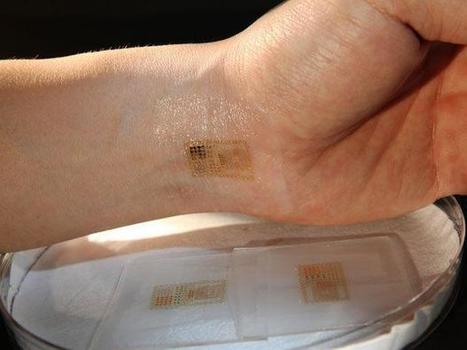
Skincare brand La Roche-Posay is hardly expected to break new ground in wearable technology, yet My UV Patch does just that. The patch in question is about the size of a two euro coin and as unobtrusively thin as a layer of skin. Stick it anywhere exposed, (back of a hand or wrist is recommended), set up a skin profile on the associated free app and you’re set. Photosensitive dyes in the patch react to sunlight and scanning it with the app advises on calibrating exposure to keep your skin healthy. See laroche-posay.ie for more.