



A blog of quick videos about key teacher technologies that we can use in our teaching and learning
Via Elke Höfler

 Your new post is loading...
 Scoop.it! A blog of quick videos about key teacher technologies that we can use in our teaching and learning Via Elke Höfler No comment yet.
Sign up to comment
Scoop.it!

"Explore the online teaching tools we've rounded up for you in this list. There are 50 of them for lesson planning, assessment, collaboration, and more ..."
Via Leona Ungerer
Scoop.it!

Schweineherz-Sezieren mit YouTube Via Elke Höfler
Scoop.it!
Scoop.it!

From
www

emaze lists 51 presentation software, alternatives to PowerPoint. Explore them, starting with emaze, free presentation software that offers many templates! Via Larrys Redlich Hvalibota, Gumersindo Fernández
Scoop.it!
The Office of Educational Technology (OET) sets the policy and charts the vision for how to successfully incorporate tech advances into classroom curricula. Via Alfredo Calderón
Scoop.it!
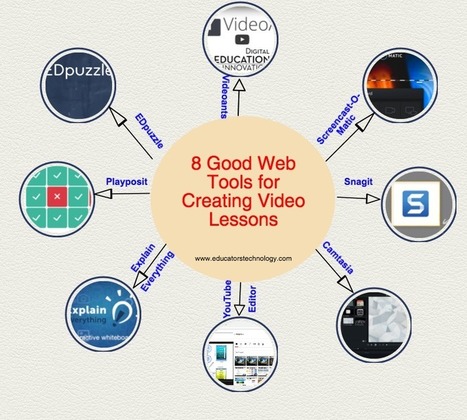
“ Free resource of educational web tools, 21st century skills, tips and tutorials on how teachers and students integrate technology into education”
Via Bhushan Thapliyal, Evdokia Roka
Scoop.it!

In an age when simple facts can be Googled and students create with a combination of analog and digital tools, they need to think about note taking as an opportunity to curate and synthesize information so that they can make conclusions, build deeper understanding, and construct new knowledge. Whether students choose to handwrite, sketch, or type their notes, the challenge lies not in choosing, but in creating a system that allows them to ultimately curate, synthesize, and reflect on what they learn. Via Dr. Doris Molero 
Dr. Doris Molero's curator insight,
January 15, 2017 7:41 PM
Curation implies more than just collecting resources into a folder or notebook. It assumes a level of thoughtfulness as the curator considers the value that each artifact possesses within the context of the overall experience. Students may choose to work on paper as well as digitally, taking photos to merge the two together. However, without careful consideration of curation, synthesis, and reflection, they may confuse the process rather than enhance it. Regardless of whether students prefer to initially take notes in physical or digital media, they need an opportunity to organize their work and connect ideas across the curriculum. At that point, the process shifts from simply transcribing notes to archiving learning. What are your thoughts about and experiences with digital curation? Beth Holland Johns Hopkins University Doctoral Student & EdTechTeacher Instructor
Scoop.it!

"Much has been said about transforming the teacher: From a conceptual point of view, teachers stop being the ones giving knowledge in a masterful lecture in the classroom, and they become the guides to their students in an active learning process." Via EDTECH@UTRGV
Scoop.it!

Technology and interactive tools can help support students as they develop expand their collaboration skills. Via Grant Montgomery, Dean J. Fusto, Bhushan Thapliyal, Evdokia Roka 
John Zuluaga's curator insight,
May 29, 2017 12:52 PM
Pretty nice tools to take into account in our classes! They will help us with the management of the class; besides, it will promote collaborative learning through the development of critical thinking and will enhance participation. One of the best things of technology is that it will help learners to come up with some learning strategies; on the other hand, the use of ICT's in the class create awareness of the positive effects of technology once it is used wisely.

Elishia Mata's curator insight,
January 22, 2019 10:00 PM
Looking for a way to quickly and cheaply collaborate? Google has you covered. Here are seven builing tools to help you collaborate in the classroom.
Google: Between Google Drive and Google+ Hangouts, students can work together on documents and presentations, or meet up online to discuss homework assignments or group projects.
Scoop.it!
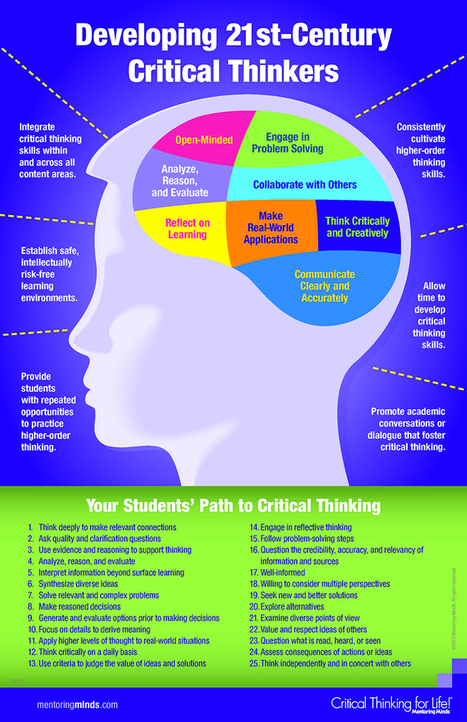
The need to develop critical thinkers has never been as urgent as it is now. In a world that is digitally focused and where there is an outpouring of information surfeit, students need to be equipped with the right tools to live up to the new learning exigencies. Critical thinking as a skill is the mother of all other skills and one that underpins and solidify students overall learning.
Via Heather Peretz 
Won Ho's curator insight,
January 14, 2017 7:58 PM
Use OKMIndmap to do this:)
OKMIndmap을 사용하면 창의적 교육을 할 수 있습니다^^ 
jokin uzkudun's curator insight,
March 10, 2020 2:59 PM
Good advice to promote critical thinking among your students
Scoop.it!

Pixiclip is a free tool for creating simple instructional videos. I featured it in the Practical Ed Tech newsletter a couple of week Via Yuly Asencion
Scoop.it!

Pocket (Read It Later, Inc) was founded in 2007 by Nate Weiner to help people save interesting articles, videos and more from the web for later enjoyment. Once saved to Pocket, the list of content is visible on any device — phone, tablet or computer. It can be viewed while waiting in line, on the couch, during commutes or travel — even offline. Via Nik Peachey 
Nik Peachey's curator insight,
January 11, 2017 2:03 AM
This looks like a really useful curation tool. 
Georgette's curator insight,
January 12, 2017 8:54 AM
I have used Pocket for years to keep articles that deserve revisiting or more than a glance. I also like the feature that will allow the user to email links to pocket. |
Scoop.it!
Edmodo is a great teacher tech tool. This set of videos looks at 10 common questions and their solutions. Ideal teacher tech tool for blending learning Via Elke Höfler
Scoop.it!

"Though it’s the administrators’ job to steer the ship with regards to technology use in school, every teacher has their favorite edtech websites and apps they love to use with their students. Here’s a list, in no particular order, of some of the most talked-about edtech websites and apps that might not yet be on your admins’ radars ..."
Via Leona Ungerer
Scoop.it!
Free resource of educational web tools, 21st century skills, tips and tutorials on how teachers and students integrate technology into education Via Marie-Hélène Fasquel-Erhart
Scoop.it!

There needs to be some positive acceptance that young people are going to use this technology. I don't think that just denying it is reasonable. I also don't think an extended period of removing technology is likely to be helpful. I think that it is reasonable to take technology "time outs," to have environments and maybe even times where the family interacts with each other and not the outside world through texts. It's sort of a return to the dinner table as a place where you learn how to engage in face-to-face, meaningful contact. Put your tech aside. You can return to it afterwards. Via Kim Flintoff, Elke Höfler 
Daniel Collins's curator insight,
December 5, 2016 10:12 PM
A look at how to cope in the age of digital distraction
Scoop.it!

Whilst instructional designers agree that using Moodle as a file repository isn’t a good idea, sharing files using Moodle is still necessary in a lot of scenarios. In this blog post, I explore 10 simple ways to keep your file sizes as small as possible, before uploading them to Moodle. Via Miloš Bajčetić
Scoop.it!

By 2020, there will be tens of billions of data-spouting devices connected to the Internet. Here's how they're changing everything Via Alfredo Calderón
Scoop.it!

Dass gezielt gestreute Falschnachrichten eine ganze Wahl beeinflussen könnten, befürchten auch deutsche Wahl- und Internetbeobachter. Facebook soll deswegen zugesagt haben, seinen Filter für Fake News auch in Deutschland einsetzen zu wollen. Via Elke Höfler
Scoop.it!

It is easy to say that people need to keep learning throughout their careers. The practicalities are daunting
Via AgileBelma
Scoop.it!

From
pin
See more about Apps, Storytelling and Instructional technology.
Scoop.it!

The traditional lecture format found in nearly every university isn’t the most effective instructional approach if faculty want to help students develop problem-solving skills, according to a new study from the University of British Columbia. Via Nik Peachey
Scoop.it!

|






