Microeconomics: IB Economics
33.6K views | +0 today
Follow
 
Scooped by Graham Watson
onto Microeconomics: IB Economics
January 28, 2:19 AM
Scoop.it!

Vets may have to publish prices of common treatments in government plans

Vets may have to publish prices of common treatments in government plans | Microeconomics: IB Economics | Scoop.it
The government sets out proposals as data finds vet prices rose at nearly twice the inflation rate.
Graham Watson's insight:

It looks like the Competition and Markets Authority is 'getting its teeth' into the veterinary sector, by recommending a number of changes to current practice.


In the first instance, they are going to ensure that vets publish prices of common treatments such as vaccinations, to stop the possibility of of first- or third-degree price discrimination, as well as getting practices to disclose who owns them. 60% of practices aren't owned by vets, but many are owned by private equity groups, which on its own suggests that there's money to be made in the sector. 


As if always the case, the vets themselves don't think these changes will have much of an impact on the price of treatment. 

No comment yet.
Microeconomics: IB Economics
A brief overview of relevant articles for IB, A-Level and Pre-U economists relating to microeconomic issues
Curated by Graham Watson
Your new post is loading...
Scooped by Graham Watson
January 31, 5:41 AM
Scoop.it!

UK new car buyers drive a bargain as average discount nears £6,000 | Automotive industry | The Guardian

UK new car buyers drive a bargain as average discount nears £6,000 | Automotive industry | The Guardian | Microeconomics: IB Economics | Scoop.it
Motorists benefit as industry offers deals of up to 18% off to attract buyers for petrol, diesel and electric models
Graham Watson's insight:

This story has been doing the rounds for a while, but it seems like it's a good time to buy a car, with the average discount on showroom prices being over 10%. 


However, what's good for the consumer isn't good for the manufacturers who are warning that such a level of discounting is unsustainable. You might ask your Year 13 economists to draw a an equilibrium position for a car manufacturer that shows it to be loss-making in the short-run but not yet having to shutdown, and then ask them to speculate why they would choose to continue to trade in these circumstances. 


It's more nuanced than you might think, not least in the market for electric cars where they are have specific sales targets and are fined for not achieving them. In this case, it simply be the fact that the marginal cost of the discount is less than the marginal cost of the fine!

No comment yet.
Scooped by Graham Watson
January 30, 2:39 AM
Scoop.it!

What is behind the extraordinary rise in investment into silver and gold? | Gold | The Guardian

What is behind the extraordinary rise in investment into silver and gold? | Gold | The Guardian | Microeconomics: IB Economics | Scoop.it
Experts say factors including Trump’s aggressive policies and pressure on the dollar are pushing investors toward ‘safe haven’ of precious metals
Graham Watson's insight:

A Guardian explainer of why the price of gold and silver has increased in the past year, noting that the demand for the metals is as a store of value in uncertain times, with ongoing geopolitical issues and, of course, the uncertainty associated with President Trump's policymaking encouraging investors to seek safe havens.


I'll just put this out there - I wonder if the President's family themselves bought gold and silver ahead of him taking office. I'm not saying that they have but if it transpires that they have, well, draw your own conclusions. 

No comment yet.
Scooped by Graham Watson
January 29, 3:38 AM
Scoop.it!

Even more energy suppliers are short of capital. Ofgem needs to toughen up | Nils Pratley | The Guardian

Even more energy suppliers are short of capital. Ofgem needs to toughen up | Nils Pratley | The Guardian | Microeconomics: IB Economics | Scoop.it
With almost one in five firms breaching targets, the watchdog’s new get-tough approach on capital levels seems to be anything but
Graham Watson's insight:

This might seem a slightly niche article at first, dealing as it does with the balance sheets of energy companies, hardly something to set the pulse racing. 


However, Nils Pratley makes the a number of genuinely insightful points about the nature of regulation and the costs of regulatory failure. Starting from the premise that the collapse of a number of energy companies in 2021-22 cost every billpayer £94, he notes that OFGEM lax enforcement of capital targets is unfair at best, in that in allowing them to continue to take on new customers, they may be doing so with an unfair cost advantage.


A more general point though is that not enforcing this sort of seemingly 'minor' regulatory requirement seems to signal that regulation isn't going to be robust and at worst, this might trigger another crisis in the sector which billpayers, and potentially taxpayers, will end up paying for rather than the companies themselves. 

No comment yet.
Scooped by Graham Watson
January 28, 2:23 AM
Scoop.it!

EasyJet ad banned for claiming bags available for £5.99

EasyJet ad banned for claiming bags available for £5.99 | Microeconomics: IB Economics | Scoop.it
The airline said the fact there were no bags available for less than £5.99 meant the claim was not misleading.
Graham Watson's insight:

Another article about information and transparent prices, with the Advertising Standards Authority (ASA) banning an EasyJet advert for implying that customers would be able to book their carry-on bags for £5.99.


The reality appeared to be somewhat other - with the airline claiming that this was the price on some flights, on some routes, the authorities discovered that there was little to no evidence of this. Hence the ban.

No comment yet.
Scooped by Graham Watson
January 27, 2:56 PM
Scoop.it!

One in four adults in England do not drink alcohol, survey finds | Alcohol | The Guardian

One in four adults in England do not drink alcohol, survey finds | Alcohol | The Guardian | Microeconomics: IB Economics | Scoop.it
Questionnaire completed by 10,000 people finds sobriety on rise, with women slightly more abstemious than men
Graham Watson's insight:

A lovely example of changing consumer tastes, with the number of teetotal consumers on the rise. A survey of 10,000 people conducted by the Institute of Alcohol Studies suggested that around a quarter of all adults no longer drink. 

No comment yet.
Scooped by Graham Watson
January 26, 3:25 AM
Scoop.it!

Gold tops $5,000 for first time ever, adding to historic rally

Gold tops $5,000 for first time ever, adding to historic rally | Microeconomics: IB Economics | Scoop.it
Gold is seen as a so-called safe-haven asset that investors buy in times of uncertainty and low interest rates.
Graham Watson's insight:

I've already talked about this a couple of times - just an application of D&S, with the macroeconomic environment determining the demand for gold as a safe haven.

No comment yet.
Scooped by Graham Watson
January 20, 2:34 AM
Scoop.it!

Water companies to face regular MOT-style checks in industry shake-up

Water companies to face regular MOT-style checks in industry shake-up | Microeconomics: IB Economics | Scoop.it
The government says the industry will have "nowhere to hide", but campaigners say the reforms do not go far enough.
Graham Watson's insight:

The government has published a White Paper outlining how its going to change the regulation of water companies, bringing in oversight for each company, inspections for each company and MOT-style checks on infrastructure and other measures including compulsory water efficiency labels. 


However, critics of the government suggest that far from being a once-in-a-lifetime change, it's going to be more of the same. And even then you need to couch this in cost-benefit terms. The equilibrium level of regulation will occur when the marginal cost of regulation equals its marginal benefit. 

No comment yet.
Scooped by Graham Watson
January 16, 4:10 PM
Scoop.it!

A Breath of Change: Solutions for Cleaner Air

Air pollution across the Indo-Gangetic Plains and Himalayan Foothills— which comprises parts of Bangladesh, Bhutan, India, Nepal, and Pakistan—is one of the most pressing health and development challenges in South Asia.


Nearly one billion people are exposed to hazardous air every day, leading to around one million premature deaths annually and shortening average life expectancy by more than three years.


The economic cost is immense, with an estimated 10 percent of regional GDP lost to reduced productivity, illness, and related damages. 

Graham Watson's insight:

I'd normally put this in the International Economics section of the board but it's too good an example of a negative externality with considerable scope, affecting, as it does, 1 billion people. 


The clip is pretty brutal in identifying the adverse effects on public health and the economic cost, equivalent to 10% of regional GDP on an annual basis. 

No comment yet.
Scooped by Graham Watson
January 15, 2:35 PM
Scoop.it!

South East Water boss in line for £400,000 bonus despite outages | Water industry | The Guardian

South East Water boss in line for £400,000 bonus despite outages | Water industry | The Guardian | Microeconomics: IB Economics | Scoop.it
Exclusive: David Hinton, who faces calls to resign, will receive payout regardless of performance if he stays until July 2030
Graham Watson's insight:

If you read this board, you know what I think about executive pay: here's one of the reasons why I think there's no significant downside to executive pay - bonuses if you exceed your targets, but not prospect of losing anything if you under-perform, even significantly. 

No comment yet.
Scooped by Graham Watson
January 13, 2:34 AM
Scoop.it!

Coal power generation falls in China and India for first time since 1970s | Energy industry | The Guardian

Coal power generation falls in China and India for first time since 1970s | Energy industry | The Guardian | Microeconomics: IB Economics | Scoop.it
‘Historic’ moment in biggest coal-consuming countries could bring decline in global emissions, analysis says
Graham Watson's insight:

Good news for the environment, with the Centre for Research on Energy and Clean Air suggesting that for the first time since 1973 the amount of electricity generated by coal-fired power stations in both India and China has fallen. 


There are some remarkable statistics in this article - the one that's caught my eye is the following: "China added more than 300GW of solar power and 100GW of wind power last year – together, more than five times the UK’s total existing power generation capacity". Wow!

No comment yet.
Scooped by Graham Watson
January 12, 4:16 AM
Scoop.it!

Vets under increasing pressure to make money for corporate owners, BBC told

Vets under increasing pressure to make money for corporate owners, BBC told | Microeconomics: IB Economics | Scoop.it
Questions have been raised about whether the pet-care market is giving customers value for money.
Graham Watson's insight:

Tonight's Panorama is going to be looking at the veterinary sector, the change in the ownership structure of many veterinary practices and the ongoing Competition and Markets Authority investigation into the sector.


It's interesting from an economic perspective because it highlights how ownership matters in determining the objectives of a firm and in this case how it has meant that the emphasis is now far more on profit maximization, and the impact that this has had on prices in the sector, up by 63% between 2016 and 2023.


Overall, this might be a good starter to get you thinking about the difference between market structure, market conduct and market performance. 

No comment yet.
Scooped by Graham Watson
January 8, 10:12 AM
Scoop.it!

Greggs puts up price of sausage roll by 5p to £1.35 amid rising costs | Greggs | The Guardian

Greggs puts up price of sausage roll by 5p to £1.35 amid rising costs | Greggs | The Guardian | Microeconomics: IB Economics | Scoop.it
Bakery chain also adds 10p to a latte, bringing it to £2.25, as CEO warns of ‘a tough, challenging market’
Graham Watson's insight:

Year 13 economists should be able to draw this, using a cost and revenue diagram and distinguishing between variable and fixed costs.


As a result of higher variable costs, the equilibrium price and quantity are likely to change

No comment yet.
Scooped by Graham Watson
January 7, 5:53 AM
Scoop.it!

Revealed: how aviation emissions could be halved without cutting journeys | Airline emissions | The Guardian

Revealed: how aviation emissions could be halved without cutting journeys | Airline emissions | The Guardian | Microeconomics: IB Economics | Scoop.it
Exclusive: Getting rid of premium seats, ensuring flights are near full and using efficient aircraft could slash CO2, analysis suggests
Graham Watson's insight:

Aviation remains a major carbon emitter, so this article investigates how this can be tackled in some fairly rudimentary ways. In the first place, ensuring fuel- efficient aircraft are used, filling flights, in as much as this is possible and abolishing premium seats, could between them reduce emissions by up to 75%, according to research by Prof Stefan Gössling, at Linnaeus University in Sweden.


Of course, this then implies that solutions, both market-based, such as increasing landing fees for the most polluting planes, and regulation, in banning them entirely, could further improve the environmental performance of the sector. You might wish to think about how you would evaluate the success of any such measures, and the extent to which you would think that the market would promote these outcomes in any case. 


As someone who once flew from Newcastle to Southampton on a FlyBe flight with 9 passengers, I'm as guilty as anyone of generating air pollution in this way.  

No comment yet.
Scooped by Graham Watson
January 31, 5:23 AM
Scoop.it!

Three reasons for the record rise in gold prices, and one why they are falling

Three reasons for the record rise in gold prices, and one why they are falling | Microeconomics: IB Economics | Scoop.it
Gold has fallen from recent highs but there are several reasons investors are still finding refuge in the precious metal.
Graham Watson's insight:

Analysis of the demand and supply-side factors that have driven the price of precious metals - notably platinum, gold and silver higher in recent months. 


Fairly straightforward stuff. 

No comment yet.
Scooped by Graham Watson
January 30, 2:35 AM
Scoop.it!

UK’s first rapid-charging battery train ready for boarding this weekend | Rail industry | The Guardian

UK’s first rapid-charging battery train ready for boarding this weekend | Rail industry | The Guardian | Microeconomics: IB Economics | Scoop.it
Great Western Railway service recharges in three and a half minutes between trips on west London line
Graham Watson's insight:

The UK is launching its first battery-powered train albeit only on a small section of track in West London. The train is reported as being able to travel 200 miles on a single charge and the converted underground train will travel between West Ealing and Greenford.  

No comment yet.
Scooped by Graham Watson
January 29, 2:35 AM
Scoop.it!

Households in England and Wales must splash out more as water bills rise again | Water bills | The Guardian

Households in England and Wales must splash out more as water bills rise again | Water bills | The Guardian | Microeconomics: IB Economics | Scoop.it
Average bills to go up by 5.4% in April, with Ofwat approving record spending plans amid outrage over sewage spills
Graham Watson's insight:

Households are in the firing line again, with water bills going up by an average of 5.4% a month, to £639. OFWAT has approved record levels of spending, and critics argue that the billpayers are on the hook for the failings of previous management and its inability to invest sufficient sums into the water infrastructure and preventing sewage spills. 


I'm a harsh critic but I wonder how many retired water executives ever wonder whether their lucrative pensions are really merited, or whether shareholders received too much in dividends rather than using the money to fund infrastructure investment. 

No comment yet.
Scooped by Graham Watson
January 28, 2:19 AM
Scoop.it!

Vets may have to publish prices of common treatments in government plans

Vets may have to publish prices of common treatments in government plans | Microeconomics: IB Economics | Scoop.it
The government sets out proposals as data finds vet prices rose at nearly twice the inflation rate.
Graham Watson's insight:

It looks like the Competition and Markets Authority is 'getting its teeth' into the veterinary sector, by recommending a number of changes to current practice.


In the first instance, they are going to ensure that vets publish prices of common treatments such as vaccinations, to stop the possibility of of first- or third-degree price discrimination, as well as getting practices to disclose who owns them. 60% of practices aren't owned by vets, but many are owned by private equity groups, which on its own suggests that there's money to be made in the sector. 


As if always the case, the vets themselves don't think these changes will have much of an impact on the price of treatment. 

No comment yet.
Scooped by Graham Watson
January 27, 2:26 AM
Scoop.it!

National insurance hike and energy bills behind food price rise, say UK retailers | Retail industry | The Guardian

National insurance hike and energy bills behind food price rise, say UK retailers | Retail industry | The Guardian | Microeconomics: IB Economics | Scoop.it
Latest BRC figures show year-on-year rate of increase was 3.9% in January, up from 3.3% the month before
Graham Watson's insight:

Quite a nice article for revising the impact of cost changes on prices - even though the issue of food price inflation is ostensibly a macroeconomic one. 


However, Year 13 economists might wish to read the article and differentiate between fixed and variable costs and think about how this might alter the profit-maximizing equilibrium of grocery retailers. There's a difference in how the react depending upon which type of cost increases, and, of course, prices needn't go up at all if they can cut other costs or are prepared to accept lower profit margins. 


Then you might think about how the existing market structure is likely to determine what's going to happen to prices. The market is an oligopoly, so this might also suggest that there's going to be co-ordinated change in prices across the sector. 

No comment yet.
Scooped by Graham Watson
January 22, 3:37 AM
Scoop.it!

Wind and solar overtook fossil fuels for EU power generation in 2025, report finds | Renewable energy | The Guardian

Wind and solar overtook fossil fuels for EU power generation in 2025, report finds | Renewable energy | The Guardian | Microeconomics: IB Economics | Scoop.it
Researchers say event described as ‘major tipping point’ for clean energy in era of destabilised politics
Graham Watson's insight:

Good news for the global economy, with the latest data suggesting that renewable energy has overtaken fossil fuels in terms of electricity generation across the EU. Is this a 'tipping point' - and what does this mean in terms of the cost of energy both currently and into the future, as well as air quality and climate change targets. 

No comment yet.
Scooped by Graham Watson
January 19, 3:34 AM
Scoop.it!

Gold and silver prices hit high after tariff threat

Gold and silver prices hit high after tariff threat | Microeconomics: IB Economics | Scoop.it
Donald Trump's plan to impose import taxes over Greenland pushed investors toward precious metals.
Graham Watson's insight:

D&S, XPED, the global economy and uncertainty all feature in this brief BBC piece that notes that the price of precious metals has gone up again, after President Trump announced tariffs over Greenland. 

No comment yet.
Scooped by Graham Watson
January 16, 3:21 AM
Scoop.it!

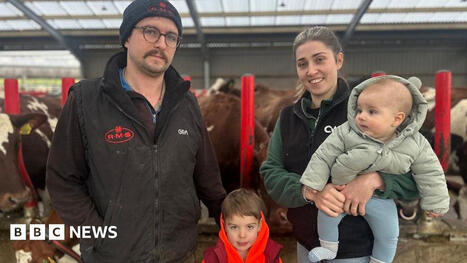
Dairy farm crisis: The money we earn from selling our milk doesn't cover our costs

Dairy farm crisis: The money we earn from selling our milk doesn't cover our costs | Microeconomics: IB Economics | Scoop.it
Adam and Lucy Johnstone have seen the money they receive for their milk tumble over the last three months.
Graham Watson's insight:

You could approach this article a number of ways: for Year 12, you might look at it using a simple D&S model and talk about what has happened to the price of milk as a result of market forces. 


However, the best consideration of this would be to look at a cost and revenue diagram with Year 13. To start with, I'd look at from the perspective of it being a perfectly competitive market, with the small farms being the producers. You might want to ask why the price of milk has fallen and what this means for small farmers relative to larger dairy farmers. You could look at what's happened to the cost of farming, and draw the appropriate cost changes. 


And as an extension exercise, you might suggest that a firm such as Arla has market power - and might be behaving like a monopsonist - which would also have implications for the price that they are offering for milk. 

No comment yet.
Scooped by Graham Watson
January 14, 2:33 AM
Scoop.it!

Lidl to open 19 stores and create up to 640 jobs

Lidl to open 19 stores and create up to 640 jobs | Microeconomics: IB Economics | Scoop.it
The discount retailer says it is also investing about £43m in revamping more than 70 UK shops.
Graham Watson's insight:

Is Lidl a profit maximizer or is it still pursuing other objectives - perhaps still focusing on growth maximization as it tries to consolidate its position in the market?


It's interesting - given recent economic uncertainty - and YED, the discounters have continued to gain ground on established grocery retailers and with it market share. However, can they sustain this? 


It might be the given the smaller size of Lidl stores, they've discovered that the conventional retailers stores generate diseconomies of scale, and that competing on price and location, as well as having comparable quality, is enough to out-compete other retailers. At present, the seem to be right. 

No comment yet.
Scooped by Graham Watson
January 12, 1:26 PM
Scoop.it!

UK set for a 'booming' mortgage market, say analysts

UK set for a 'booming' mortgage market, say analysts | Microeconomics: IB Economics | Scoop.it
Competition among lenders in the UK suggests that rates could be cut in the coming weeks.
Graham Watson's insight:

It seems as though competition in the mortgage market is hotting up, with mortgage interest rates falling and the variety of products on the market increasing. 


However, don't conclude that this implies that the housing market is on the point of another boom - as one agent astutely notes: "The biggest problem remains price - sellers think that it's 2022 while buyers think it's 2014."

No comment yet.
Scooped by Graham Watson
January 9, 12:39 PM
Scoop.it!

Mining firms Rio Tinto and Glencore restart $260bn merger talks | Mining | The Guardian

Mining firms Rio Tinto and Glencore restart $260bn merger talks | Mining | The Guardian | Microeconomics: IB Economics | Scoop.it
Deal would create world’s largest mining company and come almost a year after previous discussions failed
Graham Watson's insight:

It seems as though the prospect of a massive mining merger - horizontal integration between Glencore and Rio Tinto - is back on the cards with talks between the two having restarted. 


The proposed consolidation in the mining sector would create a behemoth, a firm with a market value of around $260bn and over 200,000 employees. Given the scale of the business you would have thought that there would be economies of scale to be obtained from any rationalization of the merged entity. 

No comment yet.
Scooped by Graham Watson
January 7, 10:30 AM
Scoop.it!

Venezuela reportedly to continue supplying oil to US beyond 50m barrels announced by Trump | Oil | The Guardian

Venezuela reportedly to continue supplying oil to US beyond 50m barrels announced by Trump | Oil | The Guardian | Microeconomics: IB Economics | Scoop.it
US to remove some sanctions to allow Venezuelan oil sales ‘indefinitely’, CNBC reports, citing White House sources
Graham Watson's insight:

D&S basics - if Venezuela starts supplying oil to the US, and is no longer under an embargo, the supply of oil will increase and thus price would be expected to fall.


Of course, given that President Trump seems to want to stabilize oil prices around $50-60 per barrel, increasing its supply might seem counter-intuitive, not least if other oil exporters also look to compensate for a lower price by producing more.

No comment yet.