


It's not all doom and gloom for UK retailers, some are managing to buck the trend.
Get Started for FREE
Sign up with Facebook Sign up with X
I don't have a Facebook or a X account

 Your new post is loading...
 Your new post is loading...
Your new post is loading...
 Scoop.it!
It's not all doom and gloom for UK retailers, some are managing to buck the trend. No comment yet.
Sign up to comment
Scoop.it!

Facebook, Google and co pose a problem to society, not least because of data misuse and extreme content. Only some level of regulation will do, writes Liberal Democrat leader Vince Cable
Graham Watson's insight:
His Holiness, Vince Cable, argues that the tech giants need to be broken up, arguing that their size is a threat to welfare. He argues that these companies represent new forms of monopoly, and are able to hide behind the fact that ostensibly they offer 'free' services.
He argues that they should be broken up, and that people should be given more property rights over their own data - an application of an essential feature of market economies. I can foresee problems with this - it will be difficult for people to 'value' their data and thus, they won't be able to allocate resources accordingly, by selling aspects of it at the appropriate price, for example.
All in all, a classic microeconomic dilemma.
Scoop.it!

The US President criticises producer group Opec and says high oil prices "will not be accepted".
Graham Watson's insight:
The economic titan that is President Trump has issued a critical tweet, highlighting OPEC's attempts to prop up oil prices above what he considers to be the 'fair' level.
Of course, as the President of a nation that has ample domestic oil, he's easily able to say that. However, for OPEC members like Libya and Venezuela who need high oil prices to be profitable and even contemplate balancing their budget, this is unlikely to come as welcome news.
Scoop.it!

Drivers say Green Tomato, Blacklane and A2B did not provide holiday pay or minimum wage
Graham Watson's insight:
More workers' rights issues in the taxi market sector - with companies other than Uber.
Scoop.it!

How can you create public transport in the jungle without polluting it? The isolated Achuar peoples of Ecuador have created an ingenious solution.
Graham Watson's insight:
An innovative approach to school transport in the Amazonian rainforest - solar powered school transport.
Scoop.it!

Shire shares rise after Allergan said it was considering making an offer for maker of ADHD medicine Adderall
Graham Watson's insight:
Merger activity in the pharmaceutical sector, with Allergan and Takeda apparently in the running to buy pharma giant, Shire. IT's unsurprising that this is the case; a lot of these companies have substantial cash piles waiting to be spent.
Scoop.it!

Brent crude has risen 1.7% – reaching its highest level since November 2014
Graham Watson's insight:
I love this sort of thing. a standard application of demand and supply theory, with a number of commodity markets reflecting changed market conditions.
Scoop.it!

Plan for a ban in England is announced as Commonwealth leaders are urged to tackle plastic waste.
Graham Watson's insight:
It appears that CHOGM is going to focus on the issue of plastic waste - with proposals for a ban on plastic straws and cotton buds, both of which contribute to marine pollution.
But rhetoric aside, is this not a 'drop in the ocean? For want of a better phrase...
Scoop.it!

It's not as easy to recycle your takeaway coffee cup as people may have thought.
Graham Watson's insight:
More on coffee cups - it seems remarkable but it's true, almost all takeaway cups are non-recyclable. This article explains why.
Scoop.it!
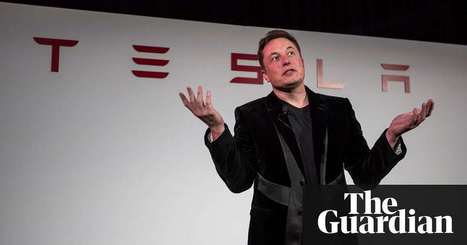
Firm struggles to hit targets for mass-market electric car after reeling from excessive automation and mounting pressure
Graham Watson's insight:
Electric cars are coming, just more slowly than Tesla would like. This has cost implications too, but you'd expect this to be borne by the company in the form of lower profit margins.
Scoop.it!

Poorest are hardest hit with many developing countries falling behind on cleaning up toxic air pollution
Graham Watson's insight:
The extent to which air pollution is a negative externality is made clear, and perhaps the extent to which it's a problem merits evaluation, in this Guardian article.
According to the Health Effects Institute, 95% of the world's population are exposed to dangerous air, making it the 4th largest global cause of death. Could you identify the external costs of air pollution?
Scoop.it!

Coffee in five charts: How coffee drinking varies around the world.
Graham Watson's insight:
Really nice industry summary of the coffee industry, looking at the biggest producers, consumers, coffee companies and so on. Equally, it also highlights who pay the most for their coffee. Within the EU, it's us.
Scoop.it!

American firms discuss how they are dealing with the looming trade war.
Graham Watson's insight:
The hidden consequences of President Trump's tariffs on Chinese goods, and the prospect of a looming trade war are dealt with in this BBC article. It gives a fascinating insight into the cost to individuals of the tariffs.
|
Scoop.it!
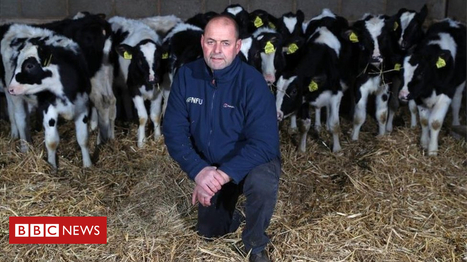
Low stocks and high demand for straw have combined to push prices to historic highs.
Graham Watson's insight:
Really nice microeconomic starter for 10, elementary D&S regarding the market for straw and a nice link to the interconnected nature of markets, and perhaps to costs too.
This might lead to all sorts of discussion of the consequences of this.
Scoop.it!
The move follows recent increases announced by energy giants EDF Energy and British Gas.
Graham Watson's insight:
And still they come: the drip, drip of energy companies raising their prices, trying to imply that there's no form of collusion whatsoever between them.
This time, it is Scottish Power's turn to increase prices - after EDF and British Gas. Of course, the companies will all say that price increases represent changing cost conditions alone. But as good economists, you might have other explanations of firm behaviour in this oligopolistic market.
Scoop.it!

Unions alarmed by suggestion that deep structural reforms are required to adjust to changing nature of work
Graham Watson's insight:
And yet, at the same time, the World Bank is seeking to reduce labour market restrictions, and increase labour market flexibility.
That said, a leading union representative, Peter Bakvis, representative for the International Trade Union Confederation, has argued that "the proposals were harmful, retrograde and out of synch with the shared-prosperity agenda put forward by the bank’s president Jim Yong Kim."
Scoop.it!

Farmers are turning to robots to plant seedlings and pick produce because of human worker shortages.
Graham Watson's insight:
Here's the clip to accompany the robo-farmer. White asparagus all round!
Scoop.it!

Farmers are working on robotic solutions due to a shortage of human workers to pick difficult crops.
Graham Watson's insight:
Automation is coming, and this BBC article investigates the extent to which they can even be applied to agriculture. In this case, an asparagus-picking robot has been developed which can, apparently, do the work of 70 workers. Wowsers.
Scoop.it!

Electric vehicles’ share of new UK registrations rises to 2%, still falling far short of Norway’s 48%
Graham Watson's insight:
Drinks all round in Guardian Towers - as the UK joins the elite, in terms of the rate of growth of electric car sales, up 11% this year.
This is Guardian squared territory.
Scoop.it!

Legal and General Investment Management wants to see more women on boards at the UK's top 350 firms.
Graham Watson's insight:
An interesting aside on the gender pay gap, with a large investor suggesting that shareholder activism might be one way of increasing the pressure on companies to promote able women faster.
Scoop.it!

Maharashtra in India has imposed a wide-ranging ban on plastic. How does that affect producers?
Graham Watson's insight:
Mumbai produces a remarkable amount of plastic waste each day, with much of it ending up polluting rivers, canals and going into the sea.
Thus, surely a ban on plastic makes sense? This BBC clip looks at the consequences of this seemingly straightforward solution, from the perspective of those involved in the plastic industry.
Scoop.it!

The UK's biggest coffee chain says it will recycle as many disposable cups as it sells by 2020.
Graham Watson's insight:
The issue of the disposability of coffee cups has become big news ad Costa have committed themselves to recycling in a big way, pledging to recycle as many cups as they sell by 2020. It's a headline grabbing target: is it achievable? Is it good economics?
Scoop.it!

Energy use for air conditioning, refrigeration and other cooling appliances expected to jump 90% on 2017 levels
Graham Watson's insight:
And thus it started. Climate change begetting further climate change.
Unless, of course, you factor in the incentives provided by the market to reduce the effects of climate change and to provide cheaper cooling and refrigeration.
Scoop.it!

Designed to disappear into the landscape, Britain’s vast super-warehouses also reflect a world in which we expect online purchases to arrive as if by magic
Graham Watson's insight:
Architecture meets economics. It might be "a shed the size of a town" to you. To me, it's a classic example of economies of scale.
Scoop.it!
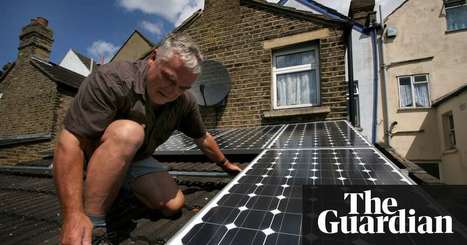
With news that utility bills are on the rise, experts say technology will revolutionise both consumer use and generation of power
Graham Watson's insight:
The prospect of smart systems has been tantalising. We're promised that the future will herald cheaper and cleaner electricity. And that may be the case, but it's not really revolutionised the sector yet. |






Let's counter the high street gloom: the BBC highlights six companies that have adapted to the increased demand for experiential shopping, and are currently doing well.