The FT's Latin America editor John Paul Rathbone reports on what the appointment of a new president means for a country marked by economic stagnation and fading influence.
Get Started for FREE
Sign up with Facebook Sign up with X
I don't have a Facebook or a X account
Your new post is loading...
The FT's Latin America editor John Paul Rathbone reports on what the appointment of a new president means for a country marked by economic stagnation and fading influence.
Graham Watson's insight:
A fascinating FT clip looking at the end of an era in Cuba, and the end of the Castro regime in a week's time. What will this mean for the Cuban economy as a whole, and entrepreneurs, in particular? The clip looks at the factors that explain why the Cuban economy is one-third smaller than it was thirty years ago, and uncertainty about future economic reform. No comment yet.
Sign up to comment
One of George Osborne’s last acts as chancellor in 2016 was to announce the so-called sugar tax. This came into force last week, in line with the original timetable. Drinks manufacturers are taxed …
Graham Watson's insight:
Hat tip to Tutor2U - still the best blog site for post-16 Economics - for carrying this Paul Ormerod article about the efficacy, or otherwise of the UK sugar tax. Lots of obvious starting points, PED and the question of it being regressive. An excellent IA article, perhaps?
Frozen food specialist will reformulate own-label range to be free of controversial ingredient which drives deforestation by the end of 2018
Graham Watson's insight:
Another negative externality - this time deforestation is being tackled by Iceland who've announced that the are getting rid of palm oil from all of their own brand products, and thus trying to reduce consumption of an ingredient that has played a significant role in deforestation.
It is more than two decades since Cool Britannia ruled the airwaves, but the boom in subscription music streaming via Spotify has the record industry partying like it’s 1995.
Graham Watson's insight:
Just a lovely article about the changing dynamics of markets, and how technology has the power to alter business models.
The European Commission says it is looking into several companies involved in sports media rights.
Graham Watson's insight:
Regulatory worries for 21st Century Fox in the market for sports media rights. EU Competition authorities are concerned that there's been anti-competitive behaviour in the sector.
Yellow taxis are symbolic of New York. But ride-hailing apps mean cabbies find it harder to make a living.
Graham Watson's insight:
Really interesting look at 'creative destruction' in the taxi sector, in the iconic New York market where ride-hailing apps, like Uber have had a dramatic effect on the sector.
More than 10,000 companies publish gender pay gap data ahead of Wednesday's midnight deadline.
Graham Watson's insight:
This BBC article summarises the latest on the gender pay gap, as firms have declared their gaps. The article summarises the average pay gap, the firms with the highest pay gap and those with a negative pay gap. It's fascinating, if slightly uncomfortable reading.
The big firms have raised tariffs to within a pound of the prepayment-meter maximum. What price government promises of savings now?
Graham Watson's insight:
The first part of Sunday's Observer Business leader is excellent, highlighting the fact that the threat of a price cap has prompted an unintended consequence, with energy firms raising the tariff for pre-payment meters to exceptionally close to the proposed price cap. Proof that legislating to promote efficiency is harder than we might sometimes think.
Government urged to protect holiday pay and minimum wage for workers in supply chains
Graham Watson's insight:
The issue of paying the National Minimum Wage (NMW) is in the news - with the TUC arguing that not all workers receive the benefit of governmental protection under the scheme.
The FT's Rob Armstrong looks at how Donald Trump's trade tariffs could impact the global economy.
Graham Watson's insight:
The FT's Rob Armstrong looks, in wry fashion, at the logic behind President Trump's steel tariffs arguing that there's little rationale to them. Not only will it have an adverse effect on the US economy, but it will have negligible effect upon China, which exports little steel to the US. Additionally, he argues that the subsequent round of tariffs on Chinese goods are also likely to be counter-productive.
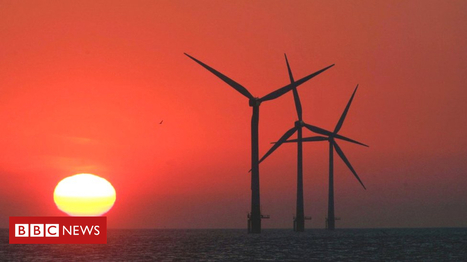
Wind power capacity is growing thanks to giant offshore turbines, but can they get much bigger?
Graham Watson's insight:
A lovely example of how renewables are growing cheaper, in part as a result of economies of scale that have permitted wind turbines to grow to a remarkable size, lowering costs, and reflecting technological development in new materials.
21st Century Fox says it would sell Sky News to Disney in an effort to ease its proposed acquisition of Sky.
Graham Watson's insight:
The 21st Century Fox - Sky merger is still alive, although Rupert Murdoch appears prepared to accept that he might have to sell Sky News to facilitate the deal. One wonders if, even then, that will be enough for the regulator - however, I suspect that he's got a number of big hitters, notably several members of the Cabinet, doing his bidding in this regard. Will it go through, or does it still represent too much of the threat to media plurality?
As employers with 250+ workers approach the deadline for reporting their gender pay gap data, the FT analyses the key figures so far, and highlights the best and worst sectors.
Graham Watson's insight:
A brief FT summary of the gender pay gap as revealed by the UK requirement for firms with more than 250 workers to reveal their gap. As of 27th March, the overall median gap is 9.9%, which effectively means that women work for free after 30th November. A fascinating little insight.
|
The increase follows that imposed by British Gas this week and will affect 1.3 million customers.
Graham Watson's insight:
See my earlier post about British Gas increase their energy prices: classic oligopoly market behaviour. I'm always minded of the nursery rhyme, 'Three Blind Mice' at this point. Look at the other members of the Big Six - and see how they run in due course.
Dairy firms say more consumers are switching from plastic to glass to buy their milk.
Graham Watson's insight:
Changing consumer tastes - with a move back to the future and a rise in the market for glass milk bottles, despite the fact that home-delivered milk costs more. But equally, there's an interesting environmental take on this change. It's reckoned that in order for this to have environmental benefits, the bottles need reusing 20 times. The average bottle is reused 18 times. Costs and benefits, anyone?
Supermarket’s customers will still be able to claim free drink if they bring a reusable cup
Graham Watson's insight:
Things that won't exist by 2030? The petrol engine, the disposable coffee cup? The latter features in this article, with Waitrose announcing that they're getting rid of the disposable cup from their stores, doing their bit to tackle waste.
The increase will affect 4.1 million customers who will see average bills rise by £60 a year.
Graham Watson's insight:
More criticism for another underfire sector, as British Gas have announced price rises. Watch to see if others in the sector follow, a classic feature of oligopolistic markets. Additionally, it does seem as though the larger firms in the sector are attempting to game the threat of a price ceiling by raising prices as close as they possibly can to their view of a proposed price cap. This, of course, raises the spectre of the law of unintended consquences making a re-appearance.
The rebound follows years of poor results linked to over-expansion and an accounting scandal fine.
Graham Watson's insight:
Does a return to profitability for Tesco spell another shift in the grocery retail sector? Or is the rise of the discounters still inevitable? And what is profit anyway? Lots of questions to ponder.
What practical steps can employers take to help ensure women earn as much money as men?
Graham Watson's insight:
This BBC article looks at nine possible ways that the gender pay gap could be tackled, and yet doesn't make a point that I'm fond of. I don't deny that the issue merits tackling but it is also prone to the law of diminishing marginal returns. Logically, it should be easy to tackle the structural things that cause the gender pay gap, but it will be harder to tackle attitudinal factors. And sometimes, coverage of the issue overlooks this.
The Tories finally deliver on Osborne’s living wage promise, but this is a masterclass in political deceit
Graham Watson's insight:
The National Minimum Wage - one of the great 'triumphs' of George Osborne's Chancellorship - might not be all that it seems according to the Observer. The paper argues that although nominal wages have risen, wages are still 6% below their pre-crisis level, and thus workers are worse off than they were.
Government funding delay for £1.3bn scheme may force company to lay off staff within weeks
Graham Watson's insight:
The Swansea Bay tidal lagoon scheme is on the brink of stalling: in the absence of governmental agreement, it seems that the company behind the project are likely to have to lay off workers.
Most businesses have faced late payments from customers in the past 12 months, making life difficult for small and medium-sized companies in particular.
Graham Watson's insight:
An unusual aside, highlighting the ability of large firms to abuse their position - exploiting their monopsony power. In this instance, the Institute of Directors, report that the majority of firms have experienced late payments from large firms and this is seen as unfair, and rightly so.
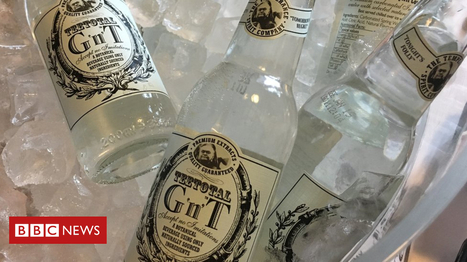
A new breed of adult-focused soft drinks is providing alternatives to traditional alcoholic tipples.
Graham Watson's insight:
Non-alcoholic gin. Whatever next? A reflection of changing consumer tastes.
Far fewer jobs are at high risk of being lost than had previously been claimed, says an OECD study.
Graham Watson's insight:
The OECD has investigated the impact of artificial intelligence on employment and concludes that despite earlier surveys predicting that the effect on US and UK jobs would be severe, the threat is over-estimated. The OECD view is that AI will affect around 10% of American jobs and 12% of UK jobs. Of course, the important fact to bear in mind is that the impact of AI is a net one - substitution if they replace workers, but also complementary, in that workers are required to operate the new technology.
Repeat of shareholder revolt of two years ago is unlikely after oil firm’s strong 2017 performance
Graham Watson's insight:
More on executive pay - one of my favourite subjects. Is anyone worth $13.4m per year? Bob Dudley doesn't tweet and I'm fairly sure he doesn't have a Scoop It! board either. But he earns more than I do in a little over two days. He must be worth every penny.
|
Your new post is loading...