


Statistics Canada yield model forecasts year-over-year drop in 2023

 Your new post is loading...
 Scoop.it! Statistics Canada yield model forecasts year-over-year drop in 2023 
No comment yet.
Sign up to comment
Scoop.it!

The fragile state of global food systems has reached a crossroads. Recent headlines underscore the profound challenges we now confront.
Scoop.it!

The shortage of olive oil production in Mediterranean countries has negatively affected domestic prices, prompting the Turkish Trade Ministry to introduce additional measures, including the suspension of olive oil exports until November, to prevent a price increase in the domestic market. Via internationalolivecouncil, CIHEAM News
Scoop.it!

From the mountain pastures of Savoy to the Rhone delta and undergrowths of Andalusia, climate change is having a serious impact on agriculture.
Scoop.it!

Satish Kumar sits in front of his submerged rice paddy in India’s Haryana state, looking despairingly at his ruined crops.
Scoop.it!
Global Crisis Response Group - United Nations: A world of debt A growing burden to global prosperity
Debt has become a substantial burden for developing countries due to limited access to financing, rising borrowing costs, currency devaluations and sluggish growth. These factors compromise the countries’ ability to react to emergencies, tackle climate change and invest in their people and the future. The latest report, A World of Debt, discusses the actions needed to unleash the resources needed to build a more prosperous, inclusive, and sustainable world.
CIHEAM News's insight:
Scoop.it!

The World Bank’s response to the food insecurity crisis, the solutions it’s working on, including financing food and fertilizer—and commodities and agricultural data. Domestic food price inflation remains high around the world. Information from the latest month between February 2023 and May 2023 for which food price inflation data are available shows high inflation in most low- and middle-income countries, with inflation higher than 5% in in 63.2% of low-income countries, 79.5% of lower-middle-income countries, and 67% of upper-middle-income countries, with many experiencing double-digit inflation. In addition, 78.9% of high-income countries are experiencing high food price inflation. The most-affected countries are in Africa, North America, Latin America, South Asia, Europe, and Central Asia. In real terms, food price inflation exceeded overall inflation in 80.1% of the 166 countries where data is available.
Scoop.it!

Ag sector struggles with low productivity; millers deal with rising costs
Scoop.it!

This month’s review period (1 July to 13 August 2023) was marked by frequent rains in large parts of north-western, northern central, and northern Europe, while heatwaves were a common feature in the south. At EU level, impacts of these events on yield expectations have been limited. The yield forecast for sunflowers was revised upwards, mainly due to better-than-expected conditions in Spain and France, which offset the yield effect of worsened conditions in Bulgaria.
CIHEAM News's insight:
Scoop.it!

The forecast for total grains (wheat and coarse grains) production in 2023/24 is placed slightly lower m/m (month-on-month), at 2,294m t, including another cut for barley, as well as for oats. Among the main growers, estimates for Canada, the EU and China are reduced, partly offset by an upgrade for Ukraine, where yield prospects have improved. Global use is placed 1m t higher m/m, on modest increases for feed and industrial uptake. With supplies boosted by a larger carry-in, the projection for closing stocks (aggregate of respective local marketing years) is up by 3m t, to 584m, still a nine-season low. Primarily because of an increase for maize, world trade is forecast 3m t higher than before.
CIHEAM News's insight:
Scoop.it!

Nation seeking self-sufficiency in agricultural commodities
Scoop.it!

The El Niño-Southern Oscillation (ENSO) is currently in the El Niño phase. This event is forecast to reach a peak strength of moderate-to-strong intensity during November to January and to remain active until February to April (85% chance), according to the IRI/CPC forecast.
CIHEAM News's insight:
Scoop.it!

The FAO Food Price Index* (FFPI) averaged 123.9 points in July 2023, up 1.5 points (1.3 percent) from June but remaining 16.6 points (11.8 percent) below its value in the corresponding month last year. The FFPI’s rebound in July was led by a solid rise in the vegetable oils price index, partially offset by a significant decline in the sugar price index, together with small decreases in the price indices for cereals, dairy and meat. The FAO Cereal Price Index averaged 125.9 points in July, down 0.7 points (0.5 percent) from June and 21.3 points (14.5 percent) below its value a year ago. This month’s slight decline stems from a fall in international coarse grain prices, which declined by 4.8 percent from June. International maize prices continued their downward trend due to increased seasonal supplies from ongoing harvests in Argentina and Brazil and potentially higher-than-initially-anticipated production in the United States of America, where conditions slightly improved and the planted area was revised upwards. Among other coarse grains, world prices of sorghum declined in tandem with those of maize, while world barley prices were nearly stable, influenced by spillover ...
|
Scoop.it!
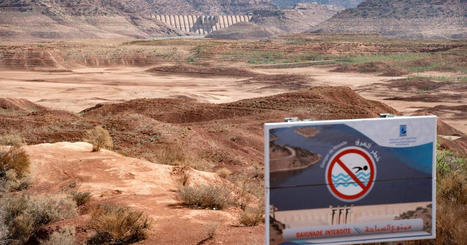
Morocco’s budget for water infrastructure is rising as desalination and dam projects advance amid droughts and increasing international partnerships.
Scoop.it!

Certains boulangers ne peuvent plus s’approvisionner en matière première depuis une décision gouvernementale prise le 1er août, ce qui force nombre de commerces à baisser leur rideau. Via CIHEAM News
Scoop.it!
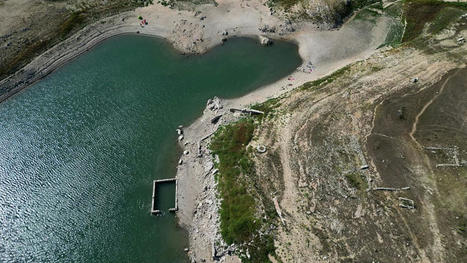
A drought emergency has been declared in some parts of Catalonia where people are being urged to reduce their water consumption.
Scoop.it!

Annoncé le 20 août, un accord sur la livraison de farine subventionnée aux boulangeries non étatiques devrait permettre de débloquer en partie la situation. Mais des questions demeurent sur l’approvisionnement général du pays en blé tendre. – Jeune Afrique Via Système de veille, CIHEAM News
Scoop.it!

The latest move follows the imposition of a 20 per cent export tax on parboiled rice by India on Friday, confirming an earlier report by Bloomberg News
Scoop.it!

One of the key elements of the Global Alliance is the Global Food and Nutrition Security Dashboard. Our goal is to pull timely and up-to-date information on the global food situation, development of the crisis, and the areas where action is needed in one place. The Global Food and Nutrition Security (GAFS) Dashboard, from the World Bank, G7 and partners, is a tool that provides timely, high-quality data at country and global levels on the food crisis.
Scoop.it!

There is a growing awareness of the need to transform food systems. Yet successful actions require sound evidence: on the extent, characteristics, and drivers of issues; on the effectiveness of different policy instruments, and their synergies and trade-offs; on how policy proposals would affect stakeholders; and on citizens’ values and preferences. There are considerable evidence gaps on many of these aspects. This paper presents the main findings from the OECD project “Overcoming Evidence Gaps on Food Systems,” which aimed to identify different types of evidence gaps, as well as pragmatic approaches to overcome these. The project explored this question through three “deep dives” on food insecurity and food assistance programmes across OECD countries, gender and food systems, and environmental impacts along food supply chains. Overall, there is a strong case for greater investment in overcoming evidence gaps for food systems.
Scoop.it!

The International Conference aims to review the current state of food security in the world and Central Asia member states, deliberate on some key agrifood system challenges hindering progress towards SDG 2, and attempt to find solutions to these challenges. The state of implementation of measures to achieve the goal of SDG-2 “Zero Hunger”, which includes specific tasks to eliminate hunger, improve food security and nutrition, and develop sustainable agriculture until 2030, will be carefully analyzed.
CIHEAM News's insight:
Scoop.it!
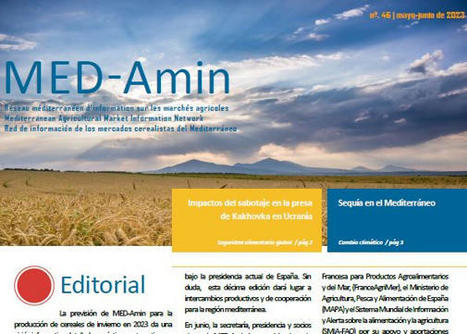
The last newsletter has been published, available in French/English and Spanish. If you want to read more about:
Download the newsletter HERE and share it to your networks.
Scoop.it!

India is in talks with Russia to import wheat at a discount to surging global prices in a rare move to boost supplies and curb food inflation ahead of state and national elections next year, according to four sources.
Scoop.it!
Certains boulangers ne peuvent plus s’approvisionner en matière première depuis une décision gouvernementale prise le 1er août, ce qui force nombre de commerces à baisser leur rideau.
Scoop.it!

Les nouvelles prévisions de la FAO concernant la production mondiale de céréales en 2023 ont été relevées de 5,9 millions de tonnes (0,2 pour cent) en juillet par rapport au mois précédent et s’établissent désormais à 2 819 millions de tonnes, soit une hausse de 1,1 pour cent en glissement annuel, atteignant ainsi un niveau inégalé. L’ajustement à la hausse de ce mois-ci s’explique presque entièrement par de meilleures perspectives pour la production mondiale de blé, les prévisions ayant été rehaussées de 0,9 pour cent pour s’établir à 783,3 millions de tonnes, tout en restant inférieures de 18,4 millions de tonnes au record enregistré en 2022. Les prévisions relatives à la production de blé dans l’Union européenne ont été révisées à la hausse, les conditions météorologiques ayant été globalement favorables, ce qui a engendré des rendements légèrement meilleurs que prévu, en dépit des répercussions qu’ont eues les déficits pluviométriques dans la péninsule ibérique. Pour le Canada et le Kazakhstan, où l’on cultive principalement du blé de printemps, les prévisions ont également connu un ...
|




