Your new post is loading...

|
Scooped by
CIHEAM News
March 26, 2020 8:05 AM
|
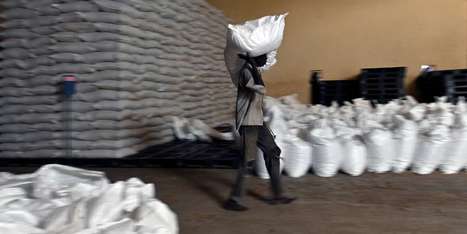
Le Monde, 26/03/2020 - Gêné dans son travail par la fermeture des frontières, le PAM estime que ses grandes priorités se trouvent en Afrique de l’Ouest, en Afrique centrale et au Moyen-Orient. La fermeture des frontières et les restrictions à la circulation, des marchandises et des hommes, décidées pour endiguer la progression du Covid-19, mettent en danger les opérations humanitaires en ...
|
|
Scooped by
CIHEAM News
March 26, 2020 7:36 AM
|
The IGC projections released in March 2019 are still reliable and consistent with reality, despite natural fluctuations of the markets and this time of crisis. It represents a possible supply and demand scenario for the major grains (wheat and maize (corn)), rice and soyabeans for the five years to 2023/24, taking into account a number of broad assumptions.
The outlook assumes that growing conditions are conducive for yields to reach average levels and does not take account of any variability linked to particularly favourable or unfavourable weather in an individual season.
|
|
Rescooped by
CIHEAM News
from DÉMOGRAPHIES & LONGEVITÉS
March 25, 2020 11:26 AM
|
I promise that this isn’t one of those schmaltzy “Look on the bright side”/”There is a silver lining to all this” articles. Coronavirus has no bright side, and there is no silver lining. But over the past couple of days, I have become a bit more grateful for the technologies and technology-based services that are …
Via Système de veille
|
|
Rescooped by
CIHEAM News
from CIHEAM Press Review
March 25, 2020 8:10 AM
|
La difficulté d’importer de la viande d’Espagne et la hausse de la demande ont fait grimper les prix du poulet et du bœuf de 30 % en une semaine, annonce le quotidien portugais Jornal de Notícias.
L’agroalimentaire n’échappe pas aux nombreux secteurs impactés par l’actuelle pandémie de Covid-19. Au Portugal, le Jornal de Notícias annonce à sa une ce matin qu’en une semaine le prix de la viande s’est envolé dans le pays. Jusqu’à 30 % pour le poulet et le bœuf.
|
|
Rescooped by
CIHEAM News
from CIHEAM Press Review
March 25, 2020 8:05 AM
|
La notion de « démondialisation » est amplement débattue depuis des années. Mais de quoi s’agit-il exactement ? Est-ce un phénomène conjoncturel lié aux incertitudes d’un environnement géopolitique régulièrement électrisé par les tweets de Donald Trump et aujourd’hui accentué par la crise du coronavirus, ou sommes-nous en présence d’une tendance de fond et, en ce cas, pourquoi ? Quelles hypothèses pouvons-nous en tirer à propos de l’évolution de l’économie mondiale, des stratégies des entreprises et des territoires ?
|
|
Scooped by
CIHEAM News
March 24, 2020 11:18 AM
|
The Cairo Review of Global Affairs, Winter 2020 - As a whole, the Arab World doesn’t produce enough food to feed its growing populace. One by one, each Arab country faces a different set of limitations, including natural resource endowment and production constraints, which impact the ability of nations to weather food-price shocks. Arab states are facing increasing demand for food and water due to population growth, urbanization, and the expansion of the middle class. Many governments are also grappling with instability following the 2011 upheavals and multiple crises in the last decade, which caused new challenges for governance, provoked more external intervention, and prompted widespread internal discontent ...
|
|
Scooped by
CIHEAM News
March 24, 2020 9:55 AM
|
IFPRI, 10/03/2020 - The novel coronavirus (COVID-19) continues to spread rapidly. So far, more than 116,000 cases and over 4,000 deaths have been reported worldwide. Since its start in China in December, the outbreak has spread to over 100 countries in less than three months. To contain the pandemic, entire cities and regions in Asia and Europe have been by and large shut down, putting a halt to much economic activity, quarantining workers and idling factories and many service activities. Major sports events are being cancelled and, around the world, international travel is being curtailed. In an unprecedented move, the IMF and World Bank have decided to hold their spring meetings virtually to avoid a large gathering of people in Washington, D.C., that might become a breeding ground for the virus to spread...
|
|
Scooped by
CIHEAM News
March 23, 2020 11:47 AM
|
MARS bulletin, 23/03/2020 - In most of Europe, the 2019/2020 winter was the warmest or one of the warmest in our records starting in 1979. In most regions, mean daily temperature exceeded the long-term-average by 2 °C to 4 °C. Even greater temperature anomalies prevailed in eastern and northern Europe. As a consequence of the mild winter, winter crops in central, eastern and northern Europe are generally advanced in development and in good condition. Significant lack of precipitation is observed in the main durum wheat producing regions (southern Italy, large parts of Spain, Greece), as well as in large parts of ...
|
|
Scooped by
CIHEAM News
March 23, 2020 11:20 AM
|
VILLARTA DE SAN JUAN, SPAIN — Companies that supply equipment to the grain and flour milling industries say they are maintaining production during the COVID-19 pandemic and taking extra precautions to keep employees and customers safe. Symaga Silos, based in Villarta De San Juan, Spain, said it is following the government’s instructions to guarantee the operability and productivity of its factory and offices and safety of its team. Office people are working remotely, while phone lines and e-mail remain operative. All employees in the production . . .
|
|
Scooped by
CIHEAM News
March 19, 2020 5:38 AM
|
The United Kingdom left the European Union in January 2020. During a transition period that lasts until the end of 2020, the European Union and the United Kingdom aim to determine their future trade relations. In this Research Paper, we explore quantitatively the role of non-tariff measures (NTMs), including regulatory measures such as sanitary and technical requirements, in shaping the United Kingdom's future trade relations with the European Union and the impact on developing countries. We simulate the possible impacts of Brexit using a panel data gravity model and compare the European Union membership effect with the effects of free trade agreements and customs unions. The Paper finds that there is a significant European Union membership effect well beyond zero tariffs, an effect we do not find for the other two agreements. It interprets the effect above and beyond tariffs as the European Union's impact on NTMs. The economic effects for the United Kingdom, the European Union and developing countries are about 2.5 times larger in the scenario that takes rising trade costs related to NTMs in addition to potentially rising tariffs into account. A potential increase of tariffs between the United Kingdom and the European Union and rising trade costs related to NTMs could decrease United Kingdom's exports to the European Union by 14 per cent. Even in the case a "standard" free trade agreement is signed, such exports could drop by 9 per cent. Exports from developing countries into the United Kingdom, and to a much smaller extent into the European Union, could increase if the United Kingdom would not increase its tariffs for third countries.
|
|
Scooped by
CIHEAM News
March 19, 2020 5:29 AM
|
UNCTAD is monitoring the effects of the global pandemic on manufacturing, trade, foreign direct investment and economic growth.
|
|
Scooped by
CIHEAM News
March 19, 2020 5:07 AM
|
Consacré à la place de l'Europe dans la mondialisation et aux transformations du commerce et des politiques agricoles, le Déméter 2020 propose dix analyses de fond (partie « Agrosphères »), esquisse huit réflexions prospectives (partie « Regards d'avenir ») et rassemble les grands chiffres de l'alimentation mondiale (partie « Repères »). En ouverture, S. Abis et M. Brun (Déméter) décrivent les enjeux moteurs pour la prochaine décennie : probable retrait des États-Unis des affaires globales mais mondialisation des corridors d'approvisionnement d'une Chine soucieuse de sa sécurité alimentaire ; raréfaction de certaines ressources (eau, phosphates) poussant les coûts de production à la hausse, mais prix internationaux toujours fluctuants ; renforcement des réglementations environnementales ; nouvelles solutions technologiques ; etc. Plusieurs contributions privilégient l'histoire longue. B. Daviron (Cirad) étudie le couplage entre hégémonie dans les relations internationales et échanges de biomasse. Le leadership américain au XXe ...
|
|
Scooped by
CIHEAM News
March 17, 2020 7:45 AM
|
Zawya, 12/03/2020 - Initial trade estimates put the purchase at around 600,000 tonnes, but more details are expected later on Thursday. Some traders put the volume purchased at nearer 700,000 tonnes. Algeria, one of the world's largest grain importers, does not disclose details of its tenders and results are based on trader estimates.
|
|
|
Scooped by
CIHEAM News
March 26, 2020 8:03 AM
|
Terre-net 26/03/2020 - La forte hausse du prix du blé n’a pas dissuadé les acheteurs, qui profitaient encore récemment du recul des prix pour faire des affaires à bon compte. Les achats se poursuivent, à l’instar de l’Algérie, qui vient d’acheter près de 240 000 t de blé meunier ...
|
|
Scooped by
CIHEAM News
March 25, 2020 12:48 PM
|
Modern Diplomacy, 23/03/2020 - Nations of the world, enthralled in their own custom-tailored masks at the masquerade-ball of Coronavirus struggling to calm restless citizenry already wrapped in colorful flags chanting hymns of survival and populism. What’s not musical is the outdated lips-service, watery promises, putty economical ideas all rejected for composting. The Masquerade Ball of Coronavirus: advancements on human endeavor neglected, now liberated harshly by Coronavirus; in simultaneous synchronization across the 200 nations a new world-order of new business hierarchy appears, where critically thinking isolated for higher productivity, performance and profitability measured on new digital platforms, remote working, replacing old corporate bureaucracies and global dominance of downtown cores. No, please, do not blame the national leaderships; expectancy on this special expertise was never there, caught in their own convictions, political agenda and Teleprompter guidance they are doing their best. The political rhetoric is numbing, the ignorance of science and lack of skills to understand managing restless citizenry is unforgiving. The time to face the music has arrived. The time to change the economic values measurement systems has arrived. Unfortunately, neither required are the photo-ops; nor the regular G50 or G100 lalalands but surely a G200 –a 200 nations gathering, 24-Hour Marathons of collaborations on humanity, global mobilization of Coronavirus medical facts based deployments, interconnected conference via latest circuitry streamed to the world now being critically missed since last 100 days. Political posturing precluded such demonstration of special global level leadership; the collaborative synthesizim to bring ...
|
|
Scooped by
CIHEAM News
March 25, 2020 8:29 AM
|
|
|
Rescooped by
CIHEAM News
from CIHEAM Press Review
March 25, 2020 8:06 AM
|
Alors que l'Organisation mondiale de la santé (OMS) s'inquiète de l'impréparation du continent africain face au nouveau coronavirus, dans son édition du 20 février 2020, la revue scientifique britannique The Lancet publie une étude qui révèle que les trois pays africains qui présentent le plus de risques d'importer le Covid-19 sont l'Egypte, l'Algérie et l'Afrique du Sud. Jusqu'à présent, l'Egypte est d'ailleurs le seul pays d'Afrique a avoir enregistré un cas confirmé de contamination. Cependant, selon la même étude, ces trois pays seraient parmi les mieux préparés d'Afrique pour faire face à une urgence sanitaire, notamment grâce à des tests de dépistage.
|
|
Rescooped by
CIHEAM News
from CIHEAM Press Review
March 25, 2020 8:05 AM
|
La pandémie de Covid-19 montre à quel point la souveraineté alimentaire de la France est stratégique. Notre pays doit alors renoncer de manière temporaire à ses contraintes normatives parfois excessives du « temps de paix » si elle entend gagner cette guerre de l'arrière contre le coronavirus, écrit Pascal Perri.
|
|
Scooped by
CIHEAM News
March 24, 2020 10:04 AM
|
|
|
Scooped by
CIHEAM News
March 24, 2020 9:43 AM
|
China Daily, 06/03/2020 - The COVID-19 outbreak is showing a new trend. While the situation in China has improved dramatically, several countries, especially the Republic of Korea, Japan, Italy and Iran, have been reporting more new cases. That the first case was reported from Nigeria on Feb 28, the day when the World Health Organization raised its alert level against the epidemic to "very high", is particularly worrying as the continent is also fighting another threat from the desert locusts that could affect food security of millions in the region. COVID-19 is a health crisis. But it could also lead to a food security crisis if proper measures are not taken. The world is already facing food and nutrition security challenges...
|
|
Scooped by
CIHEAM News
March 23, 2020 11:26 AM
|
World Grain, 23/03/2020 — Panic buying of pasta and flour because of the COVID-19 pandemic has the French grain industry searching for enough trucks and staff to keep factories and ports operational, Reuters reported. The food sector has been designated as a strategic priority, helping pasta manufacturers, flour mills and grain exporters get through the first week of a lockdown in France. But industry groups say there’s a concern logistics needed by the grain industry will become strained as the pandemic continues, the news agency reported. . . .
|
|
Scooped by
CIHEAM News
March 23, 2020 11:10 AM
|
World Grain, 18/03/2020 — The Organization for Economic Co-operation and Development’s (OECD) recent report expects the outbreak of the coronavirus (COVID-19) to create a severe impact on China and global economy. “Restrictions on movement of people, goods and services, and containment measures such as factory closures have cut manufacturing and domestic demand sharply in China,” the OECD said. “The impact on the rest of the world through business travel and tourism, supply chains, commodities and lower confidence is growing.” The report offers a best and worse . . .
|
|
Scooped by
CIHEAM News
March 19, 2020 5:36 AM
|
Dans son numéro de février 2020, l’European Review of Agricultural Economics (ERAE) a publié un article analysant les effets de la politique commerciale de l’Union européenne (UE) sur ses importations de produits agricoles et agroalimentaires avec le reste du monde, entre 2005 et 2017. Les données proviennent des bases COMEXT pour les échanges et TRAINS pour les droits de douane. Depuis le démantèlement tarifaire engagé à l’OMC, à la fin des années 1990, les droits de douane ont fortement diminué. Il est généralement admis qu'ils constituent aujourd'hui une entrave mineure aux échanges, à l'inverse des barrières non tarifaires qui en sont les principaux obstacles. Cet article apporte un éclairage intéressant en se penchant à nouveau sur les droits de douane. L'étude montre que les droits de douane influencent encore les importations de l’Union de manière significative, sauf pour les produits animaux et les boissons (tableau ci-dessous). Ces deux groupes sont plus impactés par des barrières non tarifaires : règles sanitaires et phytosanitaires (SPS) pour les premiers, réglementations (monopoles d’État, licences d'importation, etc.) et taxes internes pour les seconds. L’analyse des effets sur le commerce montre, par ailleurs, que les tarifs appliqués par l'UE ont réduit ses importations de ...
|
|
Scooped by
CIHEAM News
March 19, 2020 5:13 AM
|
INRAE a présenté, le 14 février 2020, une étude prospective sur les agricultures européennes à l'horizon 2050. L'objectif était d'analyser l'évolution de l'offre et de la demande en productions agricoles, en considérant un scénario « intermédiaire » de changement climatique (RCP 6.0 du GIEC) dans 21 régions du monde, dont huit européennes (cf. carte ci-dessous pour le découpage hors Europe). Il apparaît entre autre qu'en hypothèse de rendements bas, avec une évolution tendancielle des régimes alimentaires, le besoin supplémentaire de terres cultivées serait de 223 millions d'hectares (+ 15 % par rapport à 2010). À l'opposé, en hypothèse de rendements hauts et de régimes « sains », 51 millions d’hectares de terres cultivées pourraient être libérés...
|
|
Scooped by
CIHEAM News
March 18, 2020 6:13 AM
|
Chaire UNESCO Alimentations du Monde, mars 2020 - Dans un article récent publié dans The Guardian, G. Monbiot présente une technologie qu'il vient de découvrir dans un laboratoire à Helsinki. Il s'agit de la production industrielle de protéines, de lipides ou de glucides par fermentations de bactéries avec l'usage de l'hydrogène de l'eau comme source d'énergie. Comme l’annonce G. Monbiot, une telle perspective permettrait d’en finir avec l’agriculture, cette activité destructrice de l’environnement depuis 12 000 ans, et de sauver la planète. Une telle position prônant l’abandon de l’agriculture est une rupture civilisationnelle des rapports Homme/Nature ...
|