


The production, trade and consumption of pulses have seen substantial growth over the last fifteen years. This report examines the trends and patterns of this growth, and the factors that explain these for different kinds of pulses.

 Your new post is loading...
 Scoop.it! The production, trade and consumption of pulses have seen substantial growth over the last fifteen years. This report examines the trends and patterns of this growth, and the factors that explain these for different kinds of pulses. 
No comment yet.
Sign up to comment
Scoop.it!

The FAO forecast for global cereal production in 2020 is raised while early prospects for this year point to a modest increase in wheat production in the northern hemisphere but a decline in maize production in the southern hemisphere. The latest forecast for world cereal production in 2020 stands at nearly 2 744 million tonnes, up slightly (0.1 percent) from the previous report in December. Among the major cereals, the forecast for world wheat production has been revised upward by 4.8 million tonnes to an all-time high of 766.5 million tonnes. The increase since the previous report rests mostly on better-than-expected yields that boosted production to its second highest level on record in both Australia and Canada while wheat production in Iraq is also lifted to reflect latest official estimates. The forecast for world rice production in 2020 has also been raised, by 2.2 million tonnes, to 510.6 million tonnes, up 1.8 percent year-on-year and marking an all-time high. The revision mainly stems from better than previously anticipated 2020 yield outturns in China (Mainland), the Philippines and Guinea, although upward, area-based, historical revisions were also introduced for the Democratic Republic of Congo and Venezuela (Bolivarian Republic of). By contrast, the forecast for world coarse grains production has been trimmed by nearly 5 million tonnes, reflecting sizeable cuts to maize production estimates in the United States of America and Ukraine, owing to poor weather conditions that curtailed yields.
Scoop.it!

World Pulses Day is an opportunity to raise awareness of the nutritional benefits of pulses and their contribution to sustainable food systems and a world without hunger. Pulses are critical in addressing the challenges of poverty, food security, human health and nutrition, soil health and environment, thereby contributing to the Sustainable Development Goals and the Food and Agriculture Organization’s (FAO) Hand-in-Hand Initiative. Building on the success of the International Year of Pulses in 2016 led by FAO, the United Nations General Assembly designated 10 February as World Pulses Day, which has since been supported by many Member countries.
Scoop.it!

Le musée marseillais propose une exposition sur ce patrimoine culinaire ancestral, aujourd'hui mis en danger par la malbouffe, qui favorise le risque d'accident cardio-vasculaire. – Jeune Afrique
Scoop.it!
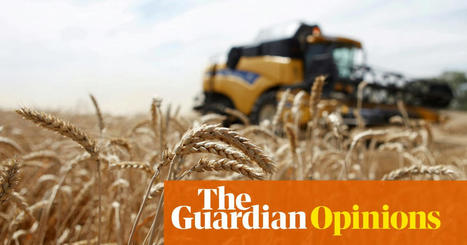
Over the last year, Covid-19 has undone the economic, health and food security of millions, pushing as many as 150 million people into extreme poverty. While the health and economic impacts of the pandemic have been devastating, the rise in hunger has been one of its most tangible symptoms.
Scoop.it!

Tight grain supplies in the European Union should be replenished next season by an improved harvest, but prices could remain high as Chinese demand keeps the global surplus limited, French analyst firm Strategie Grains said. European wheat futures soared this week to seven-year highs as reduced U.S. supply forecasts and Russian plans to curb grai
Scoop.it!

The Ministry of Economy and grain market participants have agreed on a maximum corn export volume for the 2020/2021 marketing year (MY) in the amount of 24 million tonnes and will amend the annex to the memorandum of understanding between the grain market participants, the ministry said in a statement following a meeting held on January 25.
Scoop.it!

26 Jan 2021 --- The UK’s new Trade and Cooperation Agreement (TCA) with the EU is resulting in additional tariffs being applied to Irish flour imports. As a point of contention for local traders, the new deal stipulates that if the wheat used to make flour is more than 15 percent of third country origin, the full tariff of €172 (US$209) per metric ton becomes payable. This is equivalent to a 50 percent increase in product cost. Ireland has had no industrial milling options available since the closure of a number of mills in recent years. It currently imports around 80 percent of the flour, mainly from Great Britain.
Scoop.it!
Argentina is looking for ways to ensure ample domestic wheat supplies without resorting to shutting down exports, a top official said on Wednesday, as farmers fretted about possible state intervention in the markets. The government, worried about food price inflation, recently tried to limit corn exports, but the idea was beaten back by growers. Now the focus is on wheat, with rumors swirling around the Pampas grains belt that export limits might be on the way. “In the case of wheat, we are seeing what we can do to ensure that we have enough in the country without closing the export market,” Agriculture Minister Luis Basterra told local radio. “There is room for the wheat value chain to allow for the provision of the domestic market,” he said. Argentina is the world’s No. 7 wheat supplier.
Scoop.it!

Le ministre de l’Agriculture, de la Pêche maritime, du Développement rural et des Eaux et forêts, Aziz Akhannouch, a lancé lundi dans la province de Khénifra, plusieurs projets de développement agricole et forestier, et ce dans le cadre des stratégies “Génération Green 2020-2030” et “Forêts du Maroc”. A cette occasion, Akhannouch, qui était accompagné […]
Scoop.it!
L'Algérie a une nouvelle fois impacté à la hausse les cours du blé européen qui ont augmenté, soutenus par la perspective d'une nouvelle commande de l'OAIC.
Scoop.it!

Après les autres filières, le Crédit Agricole du Maroc (CAM) poursuit ses échanges avec les professionnels de l’agriculture. Le Groupe a rencontré les opérateurs ...
Scoop.it!

In Europe, food insecurity is still a serious concern for individual and public health. Although progress has been made in reducing undernourishment, other types of malnutrition such as obesity and overweight are on the rise. Policies that aim at improving healthy eating and addressing food insecurity tend to focus on food aid, nutritional education and financial incentives. These policies are generally not targeted at the problem of insufficient income as a key barrier to access a healthy diet.
|
Scoop.it!

This quarterly bulletin features agricultural trade policy changes in the region. It provides current trade measures, agreements, statistics and articles by experts covering trade-related issues in countries across the region, and it is sent to members of the Agricultural Trade Expert Network. The network connects experts from around Europe and Central Asia as part of the Regional Initiative on Agrifood Trade and Market Integration. These experts research, train and advise governments and the private sector on agricultural trade issues in the region, including participation in multilateral and regional trade agreements. The newsletter is available in English on a quarterly basis in 2020, and in Rusian every month.
CIHEAM News's insight:
Scoop.it!

Global food prices rose in January for the eighth consecutive month, led by cereals, vegetable oils and sugar, according to the Food and Agriculture Organization of the United Nations (FAO). FAO's Food Price Index, which tracks monthly changes in the international prices of commonly-traded food commodities and was released today, averaged 113.3 points in January, marking a 4.3 percent increase from December 2020 and reaching its highest level since July 2014. The FAO Cereal Price Index showed a sharp 7.1 percent monthly increase, led by international maize prices, which surged 11.2 percent and are now 42.3 percent above their January 2020 level, reflecting increasingly tight global supply amid substantial purchases by China and lower-than-expected production and stock estimates in the United States of America as well as a temporary suspension of maize export registrations in Argentina. Wheat prices rose 6.8 percent, driven by strong global demand and expectations of reduced sales by the Russian Federation when its wheat export duty doubles in March 2021. Robust demand from Asian and African buyers underpinned strong rice prices.
Scoop.it!

Le bassin méditerranéen, qui comprend la mer et les pays qui la bordent, est régulièrement présenté comme un « point chaud » des changements climatiques et de la biodiversité. Ces bouleversements engendrent, en interaction avec la pollution, l’utilisation non durable des terres, de l’eau et l’invasion d’espèces non indigènes.
Scoop.it!
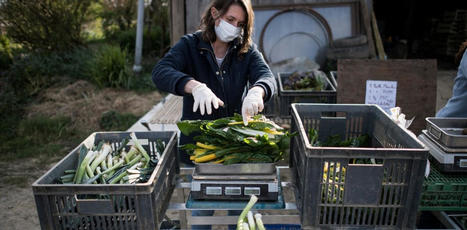
Comme de nombreux pays dans le monde, la France enchaîne depuis plusieurs mois les épisodes de confinement et de couvre-feu, restreignant les interactions, les déplacements et les activités. Conséquence directe, les échanges de biens et de personnes sont plus limités et l’on note une tendance à un certain repli sur soi, notamment du point de vue économique.
Scoop.it!

The US Department of Agriculture (USDA) on Tuesday upped its forecast of Indian wheat exports for 2020-21 (July-June) to 1.8 million tonnes (mt), as against its earlier estimate of one mt. That would be the highest ever in the last six years. After rice, India is set to turn a major exporter of wheat as well – thanks to surging international prices from Chinese stockpiling and ultra-low interest rate money increasingly finding its way into agri-commodity markets. The US Department of Agriculture (USDA) on Tuesday upped its forecast of Indian wheat exports for 2020-21 (July-June) to 1.8 million tonnes (mt), as against its earlier estimate of one mt. That would be the highest ever in the last six years (see chart). The trebling of shipments this year is mainly on the back of rising global prices. Wheat future contracts for March
Scoop.it!

MEXICO CITY, MEXICO — A recent drought and limited irrigation is expected to impact Mexico’s corn production, according to a Global Agricultural Information Network (GAIN) report from the US Department of Agriculture (USDA). The USDA estimates Mexico’s corn production to be 27.8 million tonnes for the 2020-21 marketing year, a slight reduction from the previous forecast due to water availability. As of mid-December, water available for irrigation was approximately 271% below the level registered in 2019 at the national level. Mexico is planning to phase . . .
Scoop.it!
The Russian government has formally approved a proposal to impose a higher export tax on wheat from March 1, it said on Tuesday, in another push to curb a rise in domestic food prices triggered by the COVID-19 crisis. Russia is one of the world’s largest wheat exporters. Global wheat prices jumped after the proposal to raise the tax was first announced by Russian officials earlier in January on expectations that it could make buyers prefer wheat from other countries. The government approved a 50 euro ($61) per tonne wheat export tax starting from March 1 to June 30 compared to the 25 euro-per-tonne tax set for Feb. 15 to March 1. A barley and corn export tax is set at 10 euro/t and 25 euro/t, respectively, from March 15 to June 30.
Scoop.it!

South African barley farmers are bracing for a tough market ahead as demand for the grain used to make beer falls and stockpiles grow after a ban on the sale of alcohol was reinstated as the country battles a surge in COVID-19 cases. The government in December enforced its third ban on alcohol sales since the outbreak of the virus to alleviate pressure on strained healthcare facilities after a rise in infections. Unutilised stocks of barley, which is mainly planted for malting purpose in South Africa, stood at around 719,307 tonnes by December, 49% higher than a year ago, according to data from the South African Grain Information Service. Farmers say the ban is further hurting a sector still reeling from effects of drought conditions in 2019. “The biggest impact will be on next year’s mandate to supply malt barley for the industry,”
Scoop.it!

16th ICC Cereal And Bread Congress At the heart of the ICC activities lies the International Cereals and Bread Congresses which takes place every four years, and which involves numerous cereal scientists, technologists, millers, bakers, ingredients, and equipment suppliers around the globe.
In 2021 this cosmopolitan mix of ICBC gathers stakeholders with the comfort of your own home to discuss and share knowledge on the challenges and opportunities facing the cereal science and technology community; to benefit from a network carousel with smart matchmaking, to have 1-on-1 meetings with peers and to explore in a dedicated area for exhibitors and sponsors latest equipment and food trends.
Scoop.it!

Food systems around the world face a triple challenge: providing food security and nutrition for a growing global population; supporting livelihoods for those working along the food supply chain; and contributing to environmental sustainability. Better policies hold tremendous promise for making progress in these domains. While the performance of food systems in terms of the triple challenge has not been as black and white as some suggest, there are major shortcomings. Better policies for food systems are a powerful lever to improve food security and nutrition, livelihoods, and environmental sustainability. Coherence across these areas will require breaking down silos between agriculture, health and environmental policies, but will also require overcoming knowledge gaps, resistance from interest groups, and differing values. Robust, inclusive, evidence-based processes are thus essential to making better policies for food systems.
Scoop.it!

Akhannouch, ministre de l'Agriculture, a déclaré cette semaine que cette saison agricole du Maroc montrait des signes d'une année de récolte abondante.
Scoop.it!

La peste porcine africaine, est une maladie virale dû à un Astivirus (virus à ADN double brin) qui affecte les suidés (porcs, sangliers notamment). Elle n’est pas zoonotique. D’origine africaine, elle se retrouve maintenant à l’état panzootique, notamment dans l’est de l’Europe, en Asie et tout particulièrement en Chine. Elle constitue un fléau économique d’importance mondiale.
CIHEAM News's insight:
|





http://newsletters.fao.org/c/1bUA8OOFE2gtqo30ISNcrke1P