


Comme en Algérie, l'agriculture en Australie est sous contrainte hydrique. Mais ces conditions semi-arides n’empêchent pas la production de céréales et leur exportation.

 Your new post is loading...
 Scoop.it! Comme en Algérie, l'agriculture en Australie est sous contrainte hydrique. Mais ces conditions semi-arides n’empêchent pas la production de céréales et leur exportation. 
No comment yet.
Sign up to comment
Scoop.it!

The evaluation of the role of different agronomic strategies in achieving sustainable wheat yields under variable Mediterranean climate conditions may involve the use of resource-use indicators that combine productivity and environmental impact. A two-seasons field experiment was conducted in South Portugal to study the effect of water regimes and nitrogen fertilization on wheat yield, grain quality and water use evaluated with water productivity and water footprint indicators. The water regime treatments were full irrigation, supplemental irrigation, and rainfed. Nitrogen fertilizer treatments, including conventional and enhanced efficiency fertilizers (EEF) were distinguished by N splitting and timing over the crop cycle. Contrasting meteorological variables in the two years caused distinct wheat productive responses. Although leading to lower grain yields, supplemental irrigation guaranteed a water productivity similar to full irrigation. The use of EEFs in which 50% of the total nitrogen was applied at the booting phase had a positive significant effect on grain protein content and on dough rheologic properties, indicating that late nitrogen applications benefit the technological quality of wheat. The average total water footprints estimated for the two seasons showed no relevant differences but the partition of the green, blue and grey components in irrigated wheat varied, with an ...
CIHEAM News's insight:
Scoop.it!

This study aims to explore the prevalence and correlates of food insecurity among Lebanese households since the ordeals of COVID-19, economic crisis, and Beirut port explosions. At the core of the study, a mobile application entitled Nutrition Assessment System (NAS) that simplified the data collection was used as toolkit and a technical test was carried out in all Lebanese governorates between November 2020 and March 2021. Findings show that food insecurity is an immediate problem for households in Beirut and in many governorates in Lebanon. Nine in every 16 households ate less than 2 meals per day and more than 70% of them skipped their meals to spare food. Even though half the population studied had a low food consumption score, 82.4% of the people were not relying on livelihood coping strategies. However, more than three out of ten of these households relied on at least three food-based coping strategies. In addition, as for the livelihoods, this assessment found that most Lebanese households reported a drop in income along with an expansion in debt incurrence in the last 24 months to be able to buy food. Improving food security in Lebanon requires effort not only on the part of the government, but through regional and international actions.
CIHEAM News's insight:
Scoop.it!

The epidemics and pandemics can severely affect food supply chains, including producers, retailers, wholesalers, and customers. To minimize their impacts, it is fundamental to implement effective policies that ensure continuity in the provision, affordability, and distribution of basic food items. This research identifies the main impacts of pandemics and epidemics on food supply chains and policies that can minimize these impacts. Based on a systematic literature review (SLR), 173 documents are analysed to propose a taxonomy of impacts on four supply chain links: demand-side, supply-side, logistics and infrastructure, and management and operation. The taxonomy presents the main impacts and respective mitigation policies. In addition, the literature review leads to the development of a comprehensive causal loop diagram (CLD) with the identification of main variables and their relationship with food supply chains. Finally, a specific research agenda is proposed by identifying the main research gaps. These findings provide a structured method for evaluating policies that ensure the functioning of food supply chains, particularly in disruptions such as epidemics and pandemics.
CIHEAM News's insight:
Scoop.it!
Secure and equitable access to land and natural resources is a key factor in promoting sustainable farming systems underpinning agroecology, resilience and climate change adaptation throughout the developing world. The event will share lessons learnt from beneficiaries and partners involved in IFAD supported projects from different contexts.
Scoop.it!

Cette tension sur les prix agricoles intervient dans un contexte déjà fragilisé par la pandémie. Portée par les dérèglements climatiques, elle souligne la nécessité de développer l’agroécologie.
Scoop.it!

Le Maroc est fortement dépendant de l’agriculture, de la pêche et du tourisme – des secteurs qui sont déjà fortement touchés par le changement climatique. En outre, les ressources du pays sont soumises à des pressions croissantes. Certaines régions sont déjà menacées de pénurie d’eau à l’horizon 2020 – 2040.
Scoop.it!

Imports from US are increasing but still lower than 2016-17. With increasing demand from the swine and poultry sectors, China imported a record 99.8 million tonnes of soybeans in 2020-21, according to the Foreign Agricultural Service of the US Department of Agriculture (USDA). Imports in 2021-22 are expected to reach 101 million tonnes. The US share of China’s soybean imports rebounded but were still less than 2016-17 levels. Soybean meal imports are limited due to adequate domestic supply and have remained generally stable at 1 million tonnes. Growth in the aquaculture sector is increasing demand for fish meal. Fish meal imports are forecast at 1.65 million tonnes, the USDA said, up from 1.43 million tonnes in 2020. The swine sector accounts for 40% to 45% of China’s corn consumption, the USDA said. The live pig inventory in September was up 18.2% from the same time a year ago...
Scoop.it!

Pick up any packaged item in a store, and there’s a 50% chance it’s got palm oil — and it’s most likely not certified as sustainable
Scoop.it!

Deux stratégies européennes fixent des cibles à atteindre dans les domaines de l'agriculture et de l'environnement d'ici à 2030
Scoop.it!

The future of biofuels beyond 2045 does not look promising, according to a new study by Rabobank. Demand is expected to decline, which will encourage biofuel companies to look for alternative uses for their products. Decarbonization of EU road transportation will require a multifaceted approach beyond traditional biofuels that includes renewable electricity, green hydrogen and other advanced biofuels. This, along with regulations banning internal combustion engine cars by 2035, will impact the demand for fossil fuel and biofuel as early as 2025, with a bigger impact after 2030.
Scoop.it!
Constant rains in recent weeks have delayed wheat planting in main production regions in China, a government official said on Wednesday. China had completed 26% of winter wheat planting across the nation by Oct. 19, slower by 27 percentage points than normal years, due to constant rains since September, according to Pan Wenbo, head of the planting management division under the Ministry of Agriculture and Rural Affairs. The ministry will take "extraordinary measures" to tackle the "unfavourable impact and austere challenges" the rains have posed for harvest and planting, Pan said during a press briefing.
Scoop.it!

Cereal crops in Kazakhstan, hit hard by dry conditions, have a raft of factors hampering trade and export revenue earnings this year... There is nothing like a drought, global pandemic, artificial trade barriers and an indignant neighbour to disrupt trade flows. While Kazakhstan will undoubtedly have enough wheat to meet its domestic requirements in the 2021-22 marketing year, the picture for grain imports and exports, in particular wheat, is opaque at best. This season’s winter crop harvest in Kazakhstan is all but complete, a dry seedbed at planting followed by an abnormally warm and dry growing season and numerous dust storms culminated in lower-than-average yields but above-average grain quality in most regions. Kazakh farmers had harvested 15.8 million hectares (Mha) or 99.7 per cent of the forecast harvested area at October 22. The Ministry of Agriculture reported 16.1 million tonnes (Mt) grains and pulses had been reaped with an average yield of 1.02t/ha.
|
Scoop.it!

The COVID-19 pandemic has been a major stress test for the agri-food system. While most research has analysed the impact of the pandemic on mainstream food systems, this article examines how alternative and local food systems (ALFS) in 13 countries responded in the first months of the crisis. Using primary and secondary data and combining the Multi-Level Perspective with social innovation approaches, we highlight the innovations and adaptations that emerged in ALFS, and how these changes have created or supported the sustainability transition in production and consumption systems. In particular, we show how the combination of social and technological innovation, greater citizen involvement, and the increased interest of policy-makers and retailers have enabled ALFS to extend their scope and engage new actors in more sustainable practices. Finally, we make recommendations concerning how to support ALFS’ upscaling to embrace the opportunities arising from the crisis and strengthen the sustainability transition.
CIHEAM News's insight:
Scoop.it!

The food- and feed-value systems in the European Union are not protein self-sufficient. Despite the potential of legume-supported production systems to reduce the externalities caused by current cultivation practices (excessive use of N fertilizer) and improve the sustainability of the arable cropping systems and the quality of human diets, sufficient production of high-protein legume grains in Europe has not been achieved due to multiple barriers. Identifying the barriers to the production and consumption of legumes is the first step in realizing new pathways towards more sustainable food systems of which legumes are integral part. In this study, we engage stakeholders and decision-makers in a structured communication process, the Delphi method, to identify policy interventions leveraging barriers that hinder the production and consumption of legumes in the EU. This study is one of a kind and uses a systematic method to reach a common understanding of the policy incoherencies across sectors. Through this method we identify policy interventions that may promote the production of legumes and the creation of legume-based products in the EU. Policies that encourage reduced use of inorganic N fertilizer represent an important step toward a shift in the increased cultivation of legumes. Relatedly, investment in R&D, extension services, and knowledge transfer is necessary to support a smooth transition from the heavy use of synthetic N fertilizer in conventional agriculture. These policy interventions are discussed within current EU and national plant-protein strategies.
Scoop.it!

In semi-arid Mediterranean areas, there is a growing interest in adopting conservation tillage practices for their advantages in improving soils fertility, reducing production costs, and stabilizing crop yields. The aim of this study conducted in the 2019 and 2020 seasons was to investigate the effect of three tillage systems—conventional tillage (CT), minimum tillage (MT), and no-tillage (NT)—on grain yield, yield components, and quality indices of a durum wheat crop (Triticum durum Desf. cv. Simeto) grown in monoculture in semi-arid conditions of Northern Algeria. Tillage systems had a significant effect on the average yield of the 2 years, with NT being 28% and 35% higher than CT and MT, respectively—a trend even more evident in the second year under observation. The superiority of NT (p < 0.001) in the second year (2020) is mainly due to the increased spikes density (318.93 spikes m2 under NT vs. 225.07 and 215.20 spikes m2 under MT and CT, respectively). Yield components and quality parameters were more affected by climatic conditions than by tillage treatments. The number of kernels per spike being the most affected by water and heat stresses occurred in 2020 season. A decrease of 51% is noted regardless of the tillage treatment, which negatively affected the grain yield in ...
CIHEAM News's insight:
Scoop.it!

Egypt suffers from severe water scarcity, which affects the sustainability of agricultural production. Therefore, the sustainable use of available water resources under water scarcity requires the adoption of water allocation policies favoring conservative and efficient use. Water management with free satellite data and geographical information system modeling capabilities can be a valuable approach for optimizing the benefits from the available water resources to meet the requirements for agricultural lands. This study aims to (i) detect and evaluate changes in agricultural areas because of urbanization and reclamation activities using Landsat data in 1999, 2009, and 2019 and (ii) update the irrigation water demand by monitoring the seasonal changes of agricultural area based on normalized difference vegetation index. Water management of Fayoum Governorate in Egypt is characterized by a non-uniform distribution flow over its canals; thus, two pilot areas are selected...
CIHEAM News's insight:
Scoop.it!

Malta has experienced its wettest October in 64 years and the constant rainfall has come as a welcome relief to farmers after a summer of record-breaking heatwaves. Data from the Met Office showed a total amount of 246.2mm of rainwater fell last month, the wettest since 1957 when 254.2mm was registered. The wettest October on record was in 1951, with 476.5mm of rainfall.
Scoop.it!
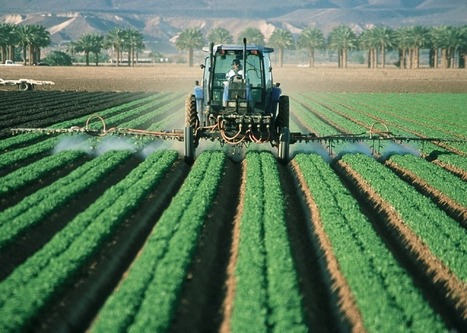
Le Conseil d’administration de la Banque africaine de développement a approuvé, à Abidjan, un prêt de plus de 114 millions d’euros en faveur du Maroc pour financer le Programme d’appui au développement inclusif et durable des zones agricoles et rurales (PADIDZAR).
Scoop.it!

Les bouleversements climatiques en cours au Moyen-Orient, où les enjeux géostratégiques passent avant les problématiques environnementales, semblent changer la donne. Au point que certains acteurs de la région cherchent à coopérer pour lutter efficacement contre un phénomène qui fragilise l'ensemble des pays.
Scoop.it!

The world food price barometer surged to a new peak reaching its highest level since July 2011, FAO reported. The FAO Food Price Index, which tracks monthly changes in the international prices of a basket of food commodities, averaged 133.2 points in October, up 3 percent from September, rising for a third consecutive month. The FAO Cereal Price Index in October increased by 3.2 percent from the previous month, with world wheat prices rising by 5 percent amid tightening global availabilities due to reduced harvests in major exporters, including Canada, the Russian Federation and the United States of America. International prices of all other major cereals also increased month-on-month.
Scoop.it!

Public support mechanisms for agriculture in many cases hinder the transformation towards healthier, more sustainable, equitable, and efficient food systems, thus actively steering us away from meeting the Sustainable Development Goals and targets of the Paris Agreement. This report sets out the compelling case for repurposing harmful agricultural producer support to reverse this situation, by optimizing the use of scarce public resources, strengthening economic recovery from the COVID-19 pandemic, and ultimately driving a food systems transformation that can support global sustainable development commitments. The report provides policymakers with an updated estimate of past and current agricultural producer support for 88 countries, projected up until 2030. The trends emerging from the analysis are a clear call for action at country, regional and global levels to phase out the most distortive, environmentally and socially harmful support, such as price incentives and coupled subsidies, and redirecting it towards investments in public goods and services for agriculture, such as research and development and infrastructure, as well as decoupled fiscal subsidies.
CIHEAM News's insight:
Scoop.it!

Researchers are turning gas into 5,000 tonnes of protein per year. Researchers in China claim to have found a way to make animal feed protein from carbon monoxide, Reuters reported. This could help the nation, which is the world’s top buyer of soybeans, reduce its reliance on the oilseed...
Scoop.it!

The World Bank’s latest Commodity Markets Outlook forecasts that energy prices—expected to average more than 80 percent higher in 2021 compared to last year—will remain at high levels in 2022 but will start to decline in the second half of the year as supply constraints ease. Non-energy prices, including agriculture and metals, are projected to decrease in 2022, following strong gains this year.
CIHEAM News's insight:
Scoop.it!

Supplies of milling wheat are tight in global markets after issues in multiple production regions of the world's major exporters. As well, the pace of exports from the European Union is running well ahead of the same time last year (up 36 per cent year on year), and market watchers are also suggesting that the pace of exports from Ukraine is unsustainable. There are three issues driving the market. One is China. They seem to be locking in a lot of purchases from France as well as Australia. The talk about imports of French wheat continues despite the poor quality of the French crop this year.
|




