Your new post is loading...

|
Rescooped by
CIHEAM News
from CIHEAM Press Review
May 30, 2022 4:59 AM
|
Gene banks play a vital role in safeguarding critical plant biodiversity, but boosting regional food security ultimately requires improving farmers’ access to seeds.
|
|
Rescooped by
CIHEAM News
from CIHEAM Press Review
May 30, 2022 4:58 AM
|
Le lieu: Tunis. L'occasion: "les Rencontres Maghreb Oléagineux" du 16 au 18 mai 2022. Une première. L'enjeu: la souveraineté alimentaire.
|
|
Scooped by
CIHEAM News
May 30, 2022 4:58 AM
|
Estimates range from 39 million to 41 million tonnes.
|
|
Scooped by
CIHEAM News
May 25, 2022 12:29 PM
|
The present bulletin gives an outlook about the progress of cereal crops in the Mediterranean region. It provides early qualitative forecasting of the 2021-2022 campaign, with particular focus on soft wheat, durum wheat and barley.
|
|
Scooped by
CIHEAM News
May 24, 2022 10:30 AM
|
Serge Zaka docteur en agroclimatologie, est chercheur-modélisateur dans le même domaine, il étudie l'impact du changement climatique sur l'agriculture. C’est donc l’une des très rares personnalités scientifiques aptes à mesurer et prédire les effets des évènements climatiques sur les rendements des cultures, ou l’effet du stress thermique…
|
|
Scooped by
CIHEAM News
May 23, 2022 4:22 AM
|
Harsh weather, geopolitical strains lower wheat supplies, corn production in latest USDA report. The US Department of Agriculture in its May 12 World Agricultural Supply and Demand Estimates report supported a bullish outlook for 2022-23 wheat and corn with reduced supplies for wheat, lower production for corn, and higher prices for both. But the outlook for soybeans was somewhat less bullish with projected increases in supplies, crush, exports, and carryover, although prices were forecast sharply higher. The USDA forecast 2022 US all-wheat production at 1.73 billion bushels, up 5% from 2021, with a projected yield of 46.6 bushels per acre, up 2.3 bushels from last year...
|
|
Scooped by
CIHEAM News
May 20, 2022 11:29 AM
|
|
|
Scooped by
CIHEAM News
May 20, 2022 11:27 AM
|
La fête de l’agriculture, célébrée le 12 mai 2022, était cette année en Tunisie un peu différente de celle des années précédentes.
|
|
Scooped by
CIHEAM News
May 20, 2022 10:48 AM
|
En Afrique du Nord, la Tunisie est le plus petit producteur de céréales. Cette situation la rend dépendante des achats sur le marché mondial pour
|
|
Scooped by
CIHEAM News
May 20, 2022 8:59 AM
|
La France est exportatrice nette de 2,7 millions d’hectares. Néanmoins, ce solde positif cache de nombreux flux d’imports et d’exports : "La face cachée de nos consommations". En effet, la France reste très dépendante de l’étranger. Les produits que nous importons (soja, cacao, café, viandes, huile de palme, coton, fruits et légumes, bois...) nécessitent une surface de 14 millions d’hectares hors de nos frontières soit 25% de la surface de la France. Pour la plupart, ces productions génèrent de fortes pressions environnementales : déforestation, assèchement des nappes, usage massif de pesticides...
Cette brochure illustrée décrit 7 des principaux produits d’importation et leurs conséquences. Elle présente les raisons pour lesquelles notre système n’est plus durable et décrit les leviers qui peuvent être mobilisés pour réduire notre empreinte importée : sobriété, efficience, relocalisation, substitution, équité.
|
|
Scooped by
CIHEAM News
May 20, 2022 8:29 AM
|
BackgroundTo limit the spread of COVID-19, a strict lockdown was imposed in France between March and May 2020. Mobility limitations and closure of non-essential public places (restaurants, open-air markets, etc.) affected peoples' food environment (FE) and thus their food purchasing practices (FPPs). This study aimed to explore changes in FPPs of French households during lockdown and associations with individual and environmental factors.MethodsIn April of 2020 households from the Mont'Panier cross-sectional study (n = 306), a quota sampling survey conducted in the south of France, were asked to complete an online questionnaire about their FPPs during lockdown and related factors, including perceived FE (distance to closest general food store, perception of increased food prices, etc.). Objective FE (presence, number, proximity, and density of food outlets) was assessed around participant's home using a geographical information system. Multiple correspondence analysis based on changes in frequency of use and quantity of food purchased by food outlet, followed by a hierarchical cluster analysis, resulted in the identification of clusters. Logistic regression models were performed to assess associations between identified clusters and household's sociodemographic characteristics, perceived, and objective FE.ResultsFive clusters were identified. Cluster “Supermarket” (38% of the total sample), in which households reduced frequency of trips, but increased quantity bought i
|
|
Rescooped by
CIHEAM News
from CIHEAM Press Review
May 20, 2022 5:52 AM
|
An Egyptian engineering student has devised an onsite treatment unit to treat small-scale agricultural wastewater, which may become one strategy for reducing the country's many water challenges.
|
|
Scooped by
CIHEAM News
May 20, 2022 4:04 AM
|
The objective of this paper is to evaluate the indirect impacts of a set-aside policy on the environment through crop intensification. We estimate a structural, multi-output model on a panel of French farmers from 2006 to 2010, accounting for multivariate selection (corner solutions) on crops and land use. We use a parametric and a semi-nonparametric (based on sieve estimation) version of a quasi-maximum likelihood (QML) estimator, compare their goodness of fit and parameter efficiency and check for closeness with a test for non-nested models. We then perform a simulation experiment based on elasticity estimates for set-aside area and input demand, to evaluate intensive margin effects of the set-aside policy. Results show that a set-aside subsidy can provide farmers with incentives to intensify their production, leading to potential adverse environmental effects.
|
|
|
Rescooped by
CIHEAM News
from CIHEAM Press Review
May 30, 2022 4:59 AM
|
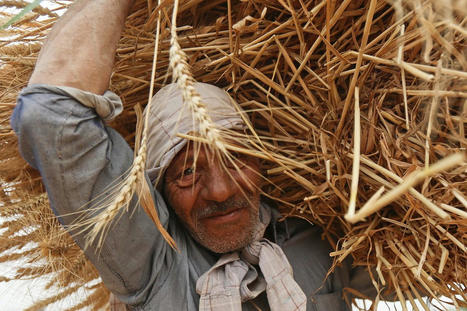
At an agricultural storage complex in the Egyptian city of Banha, Ahmed Nasser watches truck after truck offload freshly-threshed grain from the surrounding Nile Delta. Cut off from much of the Black Sea wheat it depended on by Russia's invasion of Ukraine, Egypt, often the world's biggest importer, is straining to extract whatever it can from a local harvest, now in full flow.
|
|
Rescooped by
CIHEAM News
from CIHEAM Press Review
May 30, 2022 4:58 AM
|
Lebanon’s minister of industry on Friday issued an order barring factories from producing certain goods using state-subsidised flour.
The decision, first reported by Lebanon’s National News Agency, will only allow bakeries that produce the pocketed flatbread known as “pita” or “Arabic bread” — a staple food item in the majority of Lebanese households — to purchase subsidised flour.
|
|
Scooped by
CIHEAM News
May 30, 2022 4:58 AM
|
Gro Intelligence CEO disputes wheat inventory estimates by government agencies.
|
|
Scooped by
CIHEAM News
May 24, 2022 10:31 AM
|
La transition écologique que bon nombre d’organisation politiques appellent de leurs vœux sans en mesurer réellement les enjeux ni la portée, ne peut se faire que sur le temps long et implique une prise de risque pour l’agriculteur, qu’il est nécessaire d’accompagner, techniquement et économiquement. Pour beaucoup,…
|
|
Scooped by
CIHEAM News
May 23, 2022 4:23 AM
|
According to the Commerce Ministry statement, the government also allowed a wheat shipment headed for Egypt, which was already under loading at the Kandla port.
|
|
Scooped by
CIHEAM News
May 23, 2022 4:19 AM
|
India is the latest nation to put limits on foreign shipments. While much of the recent attention has been focused on India’s decision to restrict most wheat exports — just weeks after declaring that it planned to drastically increase shipments of the food grain — several other countries that are traditional net exporters also have restricted or banned exports. These decisions, coupled with Ukraine’s inability to export grain from its ports because of a Russian blockade, have led to record-high grain prices and growing food insecurity for developing countries that depend on grain imports. The list of countries that recently have banned grain exports, according to the International Food Policy Research Institute, includes: - Argentina (soybean oil and soybean meal, through Dec. 31, 2023)
- Algeria (pasta, wheat derivatives and vegetable oil, through Dec. 31, 2022)
- Egypt (vegetable oil, corn, wheat, wheat flour and pasta, through June 12, 2022)
- Russia (sunflower seed, wheat, meslin, rye, barley and corn, through June 30, 2022)
- Serbia (wheat, corn, wheat flour, through Dec. 31, 2022)
- Kuwait (grains, vegetable oil, through Dec. 31, 2022).
Another notable ban that has put pressure on the global food supply is Indonesia’s ban on palm oil exports. Then there are countries that have placed limits on grain exports. Kazakhstan, for instance, announced in April that it will limit wheat and flour exports to 1 million tonnes and 300,000 tonnes, respectively, through July 15.
|
|
Scooped by
CIHEAM News
May 20, 2022 11:28 AM
|
Le ministère de l’Agriculture a décidé une augmentation des prix des céréales à la production, a indiqué, jeudi, à Tunis, le porte-parole du gouvernement, Nasserdine Nssibi, précisant que cette hausse sera appliquée à partir de cette saison. L’objectif étant de réduire l’importation de …
|
|
Scooped by
CIHEAM News
May 20, 2022 10:53 AM
|
La suppression ou non du mécanisme de subvention pour l’importation de blé au Liban, mis en place par la Banque centrale depuis le début de la crise, demeure sans réponse.Depuis l’invasio
|
|
Scooped by
CIHEAM News
May 20, 2022 9:02 AM
|
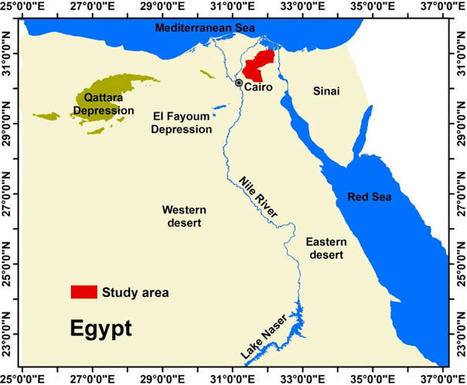
The Corona pandemic limits human activities at a time when the world is facing challenges in food safety. Wheat is foremost cereal crop grown healthy in Egypt, especially in El Sharkia Governorate. The target of this work is to monitor wheat cultivation in El Sharkia Governorate during COVID-19 pandemic. The Normalized Difference Vegetation Index (NDVI) estimates were made by band 4 and band 5 of Landsat-8 images of 2018, 2019 and 2020. At the start of May 2020 a field visit was made to 50 sites cultivated with wheat to find out their yield and collecting soil samples. The Yield with NDVI was shown to have a strong relationship (R2 = 0.84). The NDVI maps of 2018, 2019 and 2020 were produced using ENVI 5.3 software. The changes in wheat cultivation during 2018–2020 were analyzed and discussed in detail. Decrement in wheat yield was noticed in 2020 due to the lack of production requirements owing to the pandemic.
|
|
Scooped by
CIHEAM News
May 20, 2022 8:36 AM
|
Covid-19 had a negative effect economically and socially in Tunisia, as illustrated by the highest mortality rate recorded in Africa in March 2020 and the economic growth rate estimated at -9.3% by the Central Bank of Tunisia in 2020. The main cause of this situation is the quarantine and the sudden halt of several activities resulting in the drop in domestic demand and the loss of Tunisia’s main trading partners. The agricultural sector, and particularly small and family farms, forced to align with the quarantine measures since March 2020, have suffered the full impact of Covid-19. Indeed, the pandemic crisis put a strain on food supply chains: a complex network of interactions involving farmers, agricultural inputs, processing plants, retailers, and others. This study proposes to analyze the impact of the sanitary crisis, and of the national lockdown measures imposed since March 22, 2020, on small farms in the most vulnerable rural areas of Tunisia and on the functioning of small local chains. A survey based on the approach of the Participatory Systemic Rapid Diagnosis (PSRD) was conducted during the month of June 2020 just after 2 months of containment, with a sample of 240 farmers operating in local channels and distributed from north to south of Tunisia on 6 governorates the poorest and most vulnerable, according to the economic development indicator and poverty line. The results of this survey have shown that the health crisis has resulted in major disruptions to agricultural activities mainly at the level of supply chains of raw materials (treatment products, fertilizers, seeds, animal feed, … etc.), and marketing channels due to the closure of weekly markets (leafy vegetables, small livestock, … etc.). This dysfunction of the production system and local agricultural sectors has not only had an impact on farmers’ incomes, which have dropped significantly compared to a normal year, but has also disrupted the functioning of the entire food system at the local level. Consequently, the need for a new model of production, processing, and marketing of food products is necessary.
|
|
Rescooped by
CIHEAM News
from CIHEAM Press Review
May 20, 2022 5:53 AM
|
Alors qu'avant la guerre, l'Ukraine exportait 12% du blé, 15% du maïs et 50% de l'huile de tournesol au niveau mondial, son absence durable de la scène internationale pèse notamment sur le cours des huiles, dont les prix ont atteint de nouveaux sommets cette semaine.
|
|
Scooped by
CIHEAM News
May 20, 2022 5:47 AM
|
La hausse du cours des matières premières agricoles, conséquence du conflit en Ukraine, est utilisée comme motif pour exhorter la Commission européenne à abandonner la stratégie « De la fourche à la fourchette » (F2F). Il s’agirait par là d’encourager un accroissement de la production en se « libérant » des contraintes environnementales. Dans ce billet de blog, nous montrons qu’à court terme, les enjeux se situent sur le terrain du soutien aux pays et secteurs les plus dépendants face à la flambée des prix et non sur celui de la production ; et qu’à moyen terme, la trajectoire de transition esquissée par la F2F vers plus d’autonomie et de sobriété est la plus à même de renforcer la résilience du système alimentaire européen et sa contribution aux équilibres alimentaires mondiaux — pour peu qu’on prenne réellement en compte sa dimension systémique.
|


 Scoop.it!