(Mediterranean Agricultural Information Network) Fostering cooperation and experience sharing among the national information systems on agricultural (cereals) markets in the Mediterranean. The network of 13 countries is coordinated by CIHEAM, and more specifically by its Mediterranean Agronomic Institute (MAI) of Montpellier.
Une série vidéo sur l'inflation pour comprendre, en 4 fois 2'20, le panier de consommation, la mesure des prix, à quoi sert l'inflation, l'effet qualité, l'évolution de l'inflation et l'écart entre la mesure et le ressenti qu'on peut en avoir.
4 May 2022 Global Report on Food Crises - 2022 The 2022 Global Report on Food Crises (GRFC 2022) highlights the remarkably high severity and numbers of people in Crisis or worse (IPC/CH Phase 3 or above) or equivalent in 53 countries/territories, driven by persistent conflict, pre-existing and...
Edito NL#41 "Déjà tendus par des difficultés logistiques et la reprise de la consommation globale, les marchés agricoles internationaux ont atteint les niveaux de la crise de 2011. Plusieurs records historiques sont dépassés pour les prix de l'énergie, des intrants, des commodités.
GASC buys 815,000 tonnes of wheat to be imported over three months. With wheat prices starting to decline from near record highs, Egypt booked its largest wheat tender in more than a decade to increase stockpiles that have been impacted by the war between its two biggest suppliers – Russia and Ukraine, according to a June 30 Bloomberg report.
Egypt’s General Authority for Supply Commodities recently purchased 815,000 tonnes of wheat, according to Bloomberg, with France being the largest supplier of the tender.
The Bloomberg report noted that the tender was not only unusual in its size but also the length in which it is contracted to be delivered – over three months as opposed to several weeks.
Egypt, which is perennially the world’s largest wheat importer, provides subsidized bread to more than 70 million of Egypt's estimated 103 million people. It has set an ambitious target to buy 6 million tonnes of domestic wheat this year, a more than 60% increase over the previous two years.
In marketing year 2022-23, the world is projected by the US Department of Agriculture (USDA) to produce 779.03 million tonnes of wheat and provide 204.89 million tonnes for export.These are the eight major wheat importing nations/regions as listed in the monthly USDA World Agricultural Supply and Demand Estimates (WASDE) report and their annual tonnes with production.Russia’s invasion of Ukraine in February and the persistent La Niña climate phenomenon have combined to create some of the most volatile market conditions in recent memory, sending prices skyrocketing as nations that depend on wheat to feed their populations scramble to secure supplies.Each month, the WASDE releases new projections to reflect the most recent global market and production conditions, and this slideshow will be updated with those changes.
Increased productivity and sustainability of the agricultural sector are core policy objectives in OECD and non-OECD countries. This Guide provides an overview of the current state of the art in measuring sustainable productivity of th
Chickpea shortages caused by climate change and the Russian war in Ukraine are threatening hummus supplies, experts say. Data from the Global Pulse Confederation shows that global chickpea production could dip by as much as 20 percent this year. Weather conditions this spring meant that farmers in the United States, the fourth-largest chickpea exporter, planted fewer trees as they prioritised more lucrative crops like corn.
MEDITERRANEE. La sécheresse frappe cette année la méditerranée occidentale, avec partout des risques d'incendies fortement accrus, et dans les pays les plus touchés une baisse des récoltes et une menace sur les approvisionnements en eau potable. English version
Egypt’s imports of Russian wheat climbed 84% y-o-y in the three months from March to May despite disruption caused by the war in Ukraine, Reuters reports. Freight data shows that Egypt imported almost 1.1 mn tons during the three-month period, up from 573k during the same period in 2021. Wheat imports have still fallen this …
FAO Cereal Supply and Demand BriefThe Cereal Supply and Demand Brief provides an up-to-date perspective of the world cereal market. The monthly brief is supplemented by a detailed assessment of cereal production as well as supply and demand conditions by country/region in the quarterly Crop...
The present bulletin gives an outlook about the progress of cereal crops in the Mediterranean region. It provides early qualitative forecasting of the 2021-2022 campaign, with particular focus on soft wheat, durum wheat and barley.
Stratégie Grains, a Feedinfo sister publication which provides specialist analysis and market forecasts for agricultural commodities, recently conducted a 1,500 km crop tour to assess yield potentials of French soft wheat by counting wheat ears and recording observations.
This year, the team of experts were present in key grain areas of France, covering the regions of Bourgogne-Franche-Comté, Centre-Val de Loire, northern Nouvelle-Aquitaine and the south of Pays de la Loire. The tour took place on 20-23 June 2022.
The wheat harvest is underway in the northern hemisphere, with hot and dry conditions impeding winter wheat yields in several major producing regions, which further confirm an expected decline in global wheat production in 2022. While maize production prospects improved this month, global maize output is also forecast to fall below last year's level. Against this background, and with exports from Ukraine still largely constrained, international wheat and maize markets are expected to stay tight. This means prices will remain volatile and continue to be highly sensitive to daily news on crop development, weather conditions and policy changes. By contrast, global rice production prospects appear strong despite high input prices while soybean output could hit a new record.
Un rapport publié par l'IPES Food en mai 2022 s'intéresse aux conséquence de la guerre en Ukraine sur la sécurité alimentaire mondiale. Quatre faiblesses structurelles, déjà identifiées lors de la crise de 2007-2008, restent d'actualité selon les auteurs : la dépendance aux importations alimentaires, notamment pour les pays africains ; le manque de transparence des marchés céréaliers sujets à la spéculation ; un défaut de diversité dans les systèmes et les modes de production ; la récurrence de chocs liés au climat, aux conflits et à la pauvreté. En matière de soutienà apporter aux pays fragilisés par ces phénomènes, les auteurs considèrent qu'il serait dangereux de chercher à augmenter la production au détriment de l'environnement. Ils font sept recommandations, comme la diversification de la production alimentaire, la réduction de la dépendance à l'égard des engrais et de l'énergie fossile, ou encore la constitution de stocks de céréales à l'échelle régionale.
The Centre for Food Policy at City, University of London is holding a webinar at which Dr Shu Wen Ng of the University of North Carolina at Chapel Hill will discuss the options for pricing policies that increase the price of unhealthy beverages and foods (e.g., taxation, tariffs) or to decrease the price of healthier beverages and foods (e.g., subsidies, cash transfers) to improve diets.
The European Union's Common Agricultural Policy (CAP) has not halted farmland biodiversity loss. The CAP post-2023 has a new ‘‘Green Architecture,’’ including the new ‘‘Eco-scheme’’ instrument. How can this new Green Architecture help tackle the biodiversity crisis? Through 13 workshops and an online survey, over 300 experts from 23 European Member States addressed this question.
From experts’ contributions, key principles for success include preserving and restoring (semi)natural elements and extensive grasslands; improving spatial planning and landscape-scale implementation, including through collective actions; implementing result-based approaches; and improved knowledge exchange. To maximize the effectiveness of Eco-scheme for biodiversity, experts highlighted the need to prioritize evidence-based actions, allocate a sufficient budget for biodiversity, and incentivize management improvements through higher payment levels. Additionally, stronger coherence is needed among CAP instruments.
Ukraine and Russia supply key goods to the world economy: food products such as wheat, corn, and seed oils, and energy products and fertilisers for agriculture. The war in Ukraine has exacerbated existing inflationary pressures in the Middle East and North Africa (MENA) region related to drought, conflict, and other issues.
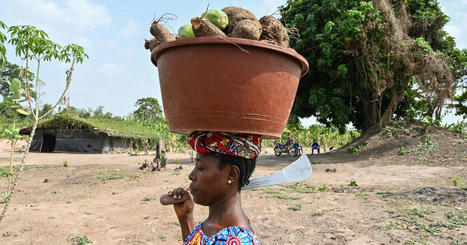
Expecting Ukraine war-induced wheat supply problems, Egypt is experimenting with using sweet potatoes in bread, amid hopes that the new measure will significantly reduce wheat imports.
Crop Monitor for Early Warning No. 73: Published July 7th, 2022 Conditions as of June 28th PDF Download link For previous reports visit the Archive. Overview: In East Africa, harvest is underway for secondary Belg crops in Ethiopia under poor conditions, and conditions are mixed for Meher season...
Indice FAO des prix des produits alimentairesL’indice FAO des prix des produits alimentaires est une mesure de la variation mensuelle des cours internationaux d’un panier de produits alimentaires de base.
Farmers in the agricultural city of Edirne, one of Turkey's important wheat production areas, stated that they are hopeful for the wheat harvest this year.
Producers, who go to their fields early in the morning to get the reward of their 1-year labor, continue the harvest until late at night. Wheat producers, who have a yield of approximately 400-500 kilograms per decare, stated that they get good yields despite the low rainfall in the spring months and they are even more hopeful for the upcoming period. After a long hiatus, the combine harvesters, who started harvesting in the fields, experienced the joy and abundance of the harvest period. Stating that they have achieved high yields in Thrace with the last...
At the end of June, conditions remain generally favourable for maize, rice, and soybeans while mixed for wheat. In the northern hemisphere, areas of concern for wheat remain in North America, Europe, and Central Asia. In the southern hemisphere sowing begins under mixed conditions in Argentina. Maize harvest continues in the southern hemisphere while crop growth continues in the northern hemisphere. Rice conditions remain generally favourable, except southern China and Indonesia. Soybean harvesting is wrapping up in Argentina as sowing wraps up in the northern hemisphere.
To get content containing either thought or leadership enter:
To get content containing both thought and leadership enter:
To get content containing the expression thought leadership enter:
You can enter several keywords and you can refine them whenever you want. Our suggestion engine uses more signals but entering a few keywords here will rapidly give you great content to curate.


 Your new post is loading...