Your new post is loading...

|
Scooped by
Kim Flintoff
October 7, 2016 8:59 PM
|
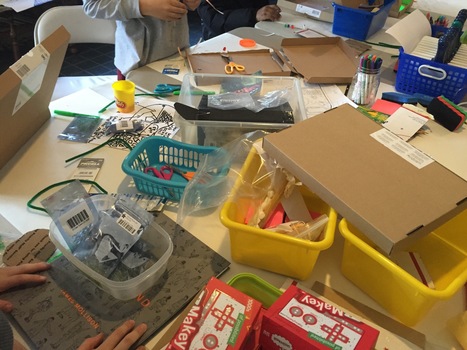
Below is a growing collection of our favorite tweets that focus on makerspace ideas. These ideas range from how to get started to what maker project to do in your makerspace. Whenever we put something online or on Twitter, we want it to be actionable for the makerspace operator. We know you’re busy and we want to help simplify the process of starting and running a makerspace. Hopefully these ideas help! As always, follow us on Twitter and share with us your own makerspace ideas.
|
|
Scooped by
Kim Flintoff
October 7, 2016 8:47 PM
|
Presented at 5 Indiana public libraries in Fort Wayne, Indianapolis, Columbus, Terre Haute, and Winnemac in Sept 2016.
|
|
Scooped by
Kim Flintoff
October 7, 2016 8:44 PM
|
They’ve long served as communal gathering spots, but these civic institutions are becoming gateways to technological tinkering.
|
|
Scooped by
Kim Flintoff
October 5, 2016 2:23 AM
|
Alongside universities, libraries and librarians are now using social media platforms to connect with users in a range of exciting and innovating ways. The latest platform that libraries are experimenting with is Instagram, which allows users to take photos on their smart phones, apply exciting filters and add hashtags, and then share these images online with their followers. Amy Mollett and Anthony McDonnell investigate how libraries are making the most of this visually-engaging platform.
With photos of the latest books available to borrow, snaps of library visitors attending workshops, and shots of behind the scenes activities, Instagram is fast becoming an exciting platform through which libraries and librarians can share news, achievements, and images of everyday life among the bookshelves. But it’s not only for its novel approach to photo-sharing that libraries are using Instagram: the social media platform is growing faster than Twitter, Facebook, and Pinterest combined, and with the majority of users in key university student age brackets it certainly makes sense for libraries to consider Instagram’s merits.
|
|
Scooped by
Kim Flintoff
October 5, 2016 12:44 AM
|
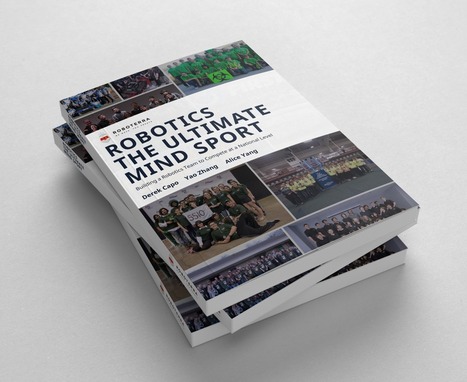
We believe every team that wants to compete at FIRST or VEX deserves a shot at doing so, regardless of their financial situation. But until schools get their act together and start supporting their robotics teams, it’s up to us as pioneers to get our teams to those competitions.
So we designed this how-to guide with both beginner and advanced robotics teams in mind, with the singular goal of helping them manage their teams in such a way that they can stay afloat financially and get the help they need, all without costing them time during their building season.
We just want those with an interest in robotics to know that with the right knowledge and mindset, you can create a team that can compete at the highest level. If you have the drive and dedication, you can raise funds and find mentors—just like the super-competitive teams do.
This guide shows you how to run your robotics team like you would a business. We’ll show you what it takes to build a team from scratch. And if you already have a team, we’ll address the major hurdles of organization and finding resources—the two largest reasons that robotics teams fail.
|
|
Scooped by
Kim Flintoff
October 4, 2016 8:08 PM
|
Six summer “Make It Up” ideas
1. Set up a maker space.
2. Supply materials for making things.
3. Provide minimal guidance needed to encourage and keep kids focused.
4. Encourage persistence.
5. Encourage teamwork where appropriate.
6. Celebrate their experiences as they make and learn.
|
|
Scooped by
Kim Flintoff
October 4, 2016 8:05 PM
|
Personally, I like to think of maker spaces as spots that fuel curiosity-driven learning – engaging spaces that nurture your students’ curiosity and creativity. Just think how productive your STEM lessons would be if they were driven by student curiosity!
Before reading on, note that maker spaces are not intended to substitute for STEM projects. For example, intentionally applying specific grade-level math and science content knowledge is not necessarily part of a maker project; however, it is a critical component of STEM challenges.
|
|
Scooped by
Kim Flintoff
October 2, 2016 9:52 PM
|
Ultimately, when we construct LibGuides around the resources that the librarian thinks the student should know about in order to ace their research paper, we attempt to simplify the processes of research. Yet, as Freire points out, this is problematic because it positions research as a transferral of information, rather than as an act of exploratory and liberatory meaning-making. In effect, when we fail to engage critically with new technologies such as LibGuides, we run the risk of perpetuating banking-model pedagogies that deny learner agency and position inquiry as a procedural skill instead of a rich, sociocultural practice that forms an integral part of human activity. While this lack of conversation about pedagogy and design is not unique to LibGuides, librarians have a long commitment to social justice, critical praxis and liberatory teaching. Let’s make sure our instructional materials don’t let us down.
|
|
Scooped by
Kim Flintoff
September 29, 2016 2:40 AM
|
The students before me & their attendant informational needs are more important than the technological tools/databases they & the professor expect to use.
|
|
Scooped by
Kim Flintoff
September 25, 2016 10:03 PM
|
Excitement about school makerspaces has been in the air, but many educators eager to create hands-on learning spaces in their schools still aren’t sure how to get started or why it’s worth the effort. New Canaan High School librarian Michelle Luhtala recently jumped headfirst into creating a makerspace in her library and documented what she learned, how her space changed and how it affected students along the way. Her experience was very different from elementary school librarian Andy Plemmons, whose makerspace started with a 3-D printer obtained through a grant and blossomed into a core teaching resource at his school.
|
|
Scooped by
Kim Flintoff
September 20, 2016 7:07 AM
|
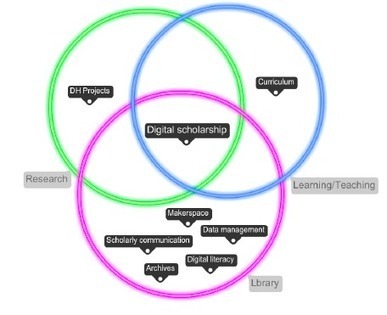
I first came across the concept of ‘digital scholarship’ around 3 years ago when I was the Faculty Librarian for Humanities at Curtin University and first learned about the wonderful but nebulous thing called ‘digital humanities’, its relationship to digital scholarship, and how academic libraries were central to both.
Digital scholarship is a broad term and can mean a number of different things. One definition that captures some of its complexity is “the use of digital evidence and method, digital authoring, digital publishing, digital curation and preservation, and digital use and reuse of scholarship.” (Abby Smith Rumsey, 2011)
According to the ACRL, digital scholarship is one of the top academic library trends of 2016. The increasing importance of the role of academic libraries in supporting and contributing to digital humanities projects is evident in the growth of digital scholarship centres, often established as partnerships between the academic library and humanities faculty. (For more on this see Rikk Milligan’s discussion ‘Digital Scholarship Support in ARL Member Libraries: An Overview‘)
Different elements feed into digital scholarship, which sits at the intersection of the library, teaching and learning, and research.
|
|
Scooped by
Kim Flintoff
September 19, 2016 8:18 PM
|
When we launched the Agency by Design website early last year, we also released a white paper previewing the findings from our investigation of the promises, practices, and pedagogies of maker-centered learning. At the time, we had developed the two key concepts of maker empowerment and sensitivity to design, and we had also conceived of the three maker capacities that lie at the heart of our framework for maker-centered learning: looking closely, exploring complexity, and finding opportunity. But we had not yet finished analyzing the data we had collected in a way that allowed us to answer our primary research questions.
A year and a half later, we are happy to report that we have completed that work. In our forthcoming book Maker-Centered Learning: Empowering Young People to Shape their Worlds, we fully describe what we have come to understand as the most salient benefits of maker-centered learning, as well as the practices and pedagogies that maker educators use to bring about those effects. In the spirit of sharing new ideas, here we present a preview of our findings in response to our first two research questions:
How do maker educators and leaders in the field think about the benefits and outcomes of maker-centered learning experiences?
What are some of the key characteristics of the educational environments and instructional designs under which maker-centered learning thrives?
|
|
Scooped by
Kim Flintoff
September 19, 2016 8:13 PM
|
A paper circuit is a low-voltage electronic circuit that is created on paper or cardboard using conductive copper tape, LEDs and a power source such as a coin-cell battery. Creating paper circuits is a good way to teach the basics of electricity and how circuits function. In addition to being educational, they can also be a fun makerspace project that helps to bring artwork and paper craft to life. By adding sensors, buzzers and motors to your circuit, you can also add another dimension of interactivity. These simple projects are great for all ages and all makerspaces.
|
|
|
Scooped by
Kim Flintoff
October 7, 2016 8:48 PM
|
VERTICAL HORIZON: Expect to see makerspaces, coding and online learning opportunities in schools within the next year, according to the latest K-12 Horizon report (PDF) from The New Media Consortium and Consortium for School Networking (CoSN). The annual report, written by and for researchers, educators, entrepreneurs and policymakers around the world, forecasts key trends, challenges and adoption timeline in education technology.
“Wicked” challenges, described as “those that are complex to even define, much less address” include closing the achievement gap and figuring out how best to personalize learning. Solvable problems, on the other hand, include rethinking teachers’ roles and creating real-world learning problems and experiences to students.
|
|
Scooped by
Kim Flintoff
October 7, 2016 8:45 PM
|
What if the first question you were asked every day at school was ‘what will you make today?’ How would you respond? Makerspaces provide both students and teachers with opportunities to make what they imagine. They allow teachers to introduce students to the growth mindset of ‘making’ and to develop students’ skills for both digital and physical content creation. Students are able to explore STEM and literacy concepts through hands-on projects while developing skills in the areas of innovation, collaboration, and creativity.
From a curriculum or school district standpoint, the opportunity to design a makerspace is an opportunity to design a new way in which teachers approach their craft. It is an opportunity for that third grade social studies unit on immigration to shift from students finding facts about a country to asking the question ‘How might we learn from others?’ With this as the starting point, and a bit of background knowledge on immigration, students could then head down a path of inquiry, asking questions
|
|
Scooped by
Kim Flintoff
October 6, 2016 8:07 PM
|
In March 2016, Digital Promise and Maker Ed issued a call-to-action for school leaders around the country to commit to growing the next generation of American makers, by committing to dedicate a space, designate a champion, and display the results of maker education.
School leaders across the country answered the call.
Over 1,400 schools representing one million students in all
50 states
signed the Maker Promise.
These schools are leading the movement to harness new digital design and production abilities to unleash students’ passion, creativity, and capacity to make. But it doesn’t stop with them.
|
|
Scooped by
Kim Flintoff
October 5, 2016 12:45 AM
|
Fashionable, interactive, wearable, electronic tattoos integrated directly on the skin.
Skintillates is a wearable technology that mimics tattoos - the oldest and most commonly used on-skin displays in human culture. We demonstrate that by fabricating electrical traces and thin electronics on temporary tattoo paper, a wide array of displays and sensors can be created. Just like the traditional temporary tattoos often worn by children and adults alike, Skintillates flex naturally with the user's skin. Our simple fabrication technique also enables users to freely design and print with a full range of colors to create application-specific customized designs. We demonstrate the technical capabilities of Skintillates as sensors and as expressive personal and private displays through a series of application examples. Finally, we detail the results of a set of user studies that highlight the user experience, comfort, durability, acceptability, and application potential for Skintillates.
|
|
Scooped by
Kim Flintoff
October 4, 2016 8:09 PM
|
"Have you seen this video?" The Twitter message from my good friend and fellow thought-instigator Daniel Scibienski pointed me toward If You Build It, a recent PBS documentary about designer/educator/activists Emily Pilloton and Matthew Miller persuading an underfunded school board to create a new kind of design-based program for the students at Windsor High School in Bertie County, North Carolina.
What I saw affected me profoundly: students, confused and reluctant at first, gradually developing skills and abilities with tools they'd never used before, designing and building increasingly complex things; failing, trying again, improving, collaborating, and ultimately succeeding and celebrating.
I, too, have a vision for a new kind of classroom. I, too, am building something radical, exciting, and even revolutionary. I want to tap the power of design thinking to transform learning in my classroom. We're bringing shop class back to my middle school -- but this time, it's digital.
|
|
Scooped by
Kim Flintoff
October 4, 2016 8:06 PM
|
We must reimagine middle school science and math not as a way to prepare students for high school, but as a place where students are inventors, scientists, and mathematicians today.”
So say Sylvia Martinez and Gary Stager in this exciting guest article about the Maker Movement and its implications for kids, schools and STEM studies.
|
|
Scooped by
Kim Flintoff
October 4, 2016 6:27 AM
|
More than a passing trend, the makerspace holds tons of potential for teachers and students
When Connecticut’s New Canaan High School said goodbye to students in the summer of 2015, it said hello to an ambitious new project: boxing up 7,000 books to make room for a brand-new makerspace to encourage students’ creative thinking, problem-solving and self-directed learning.
When the school’s new principal asked what library media specialists were doing with all the library’s books, and inquired about a makerspace, head librarian Michelle Luhtala knew she had a chance to do something unique with the library’s learning environment.
“Kids just come in and make what they want,” Luhtala said. “That’s the thing that is so much fun.”
As the year progressed, so too did the makerspace’s purpose.
|
|
Scooped by
Kim Flintoff
October 1, 2016 2:46 AM
|
The Internet continues to change the way we do things in many areas.
But what impact has it had on libraries?
What is the role of a librarian in 2016?
Lynne Vautier is an Associate Director at the Curtin University Library.
She joins Mark Sutton to answer these questions and more.
|
|
Scooped by
Kim Flintoff
September 29, 2016 1:49 AM
|
Sound waves are actually waves of physical pressure. We’ve used them in haptics technology to create invisible, touchable shapes in midair. Manipulating waves in 3D requires a phased array of transducers, but phased arrays are limited in spatial resolution by the physical size of each transducer. They’re also expensive. Now a team of researchers from the Max Planck Institute in Stuttgart, Germany have figured out an inexpensive way to shape sound waves in 3-space, using 3D printing.
|
|
Scooped by
Kim Flintoff
September 20, 2016 7:27 PM
|
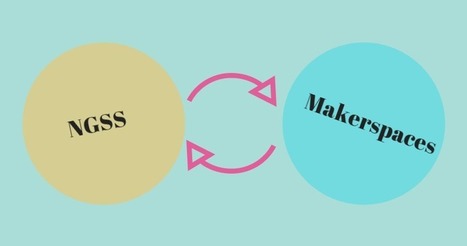
I recently began giving away a FREE Makerspace Planning Cheat Sheet on my Worlds of Making site. One of the the steps on that Cheat Sheet suggests unpacking the standards and using them to inform your makerspace planning. This includes the Next Generation Science Standards (NGSS), which many states have adopted. These standards offer a new vision on what teaching and learning should look like that speak directly to the K-12 Maker Movement.
The NGSS are based on 3 Dimensions.
-Science and Engineering Practices (SEP): Consists of behavior scientists and engineers engage in; experts design and develop models to design and test abstract phenomena.
- Disciplinary Core Ideas (DCIs): Describe core ideas in the science disciplines. These are grouped into 4 domains: the life sciences, the physical sciences; the earth & space sciences; the engineering & technology applications of science.
- Crosscutting Concepts (CCC): concepts linking the different domains of science.
|
|
Scooped by
Kim Flintoff
September 20, 2016 7:02 AM
|
The First Desktop Waterjet Cutter
WAZER is the first waterjet cutter that can fit in every workshop. It cuts through any material and is compact and contained, making it, clean, safe and quiet to operate. WAZER's digital control achieves detail and accuracy impossible by hand, while freeing you up to complete other tasks.
|
|
Scooped by
Kim Flintoff
September 19, 2016 8:14 PM
|
When you make broth, it’s easy to stir. So easy, you pour it from the can and nothing splashes. You gently stir it, barely getting a spoon dirty, and warm it on the burner. When you eat broth? You’re barely filled up. It’s like food, but not the satisfying kind.
When you cook a turkey dinner, you destroy the kitchen. Specks of mashed potatoes on the wall. Stuffing mixed and scraps of veggies cut up on the counter. It feels better when you have help. Someone to add in their ingredients and cook a few of the dishes along with you. Green beans to snap and steam. A kitchen filled with different smells. A meal served with something for everyone. Delicious… and afterward? Satisfaction. It tasted good, you’re full, and you need to step away and digest all the goodness.
|


 Scoop.it!