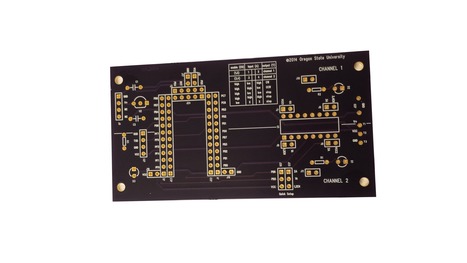
The School of Electrical Engineering and Computer Science (EECS) is making a fundamental change in the way we teach engineering concepts to students. We're innovating teaching and learning by energizing the curriculum with exciting, hands-on platforms for learning.® Our aim is to put the fun and excitement into EECS and thus retain and inspire interest among students in engineering. Unique to Oregon State and seed-funded by Tektronix, this program helps students understand how class content is interconnected. It also gives them hands on experience in applying theoretical concepts to their robots, turning theories into realities.
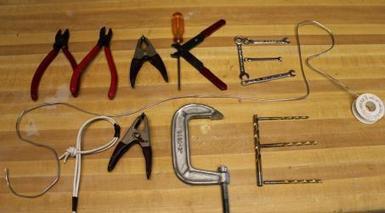
Over the last couple of months the Mach 30 community has been talking more about the concept of virtual Makerspaces. I’m guessing that most of our readers know what a Makerspace (a.k.a. Hackerspace) is, but just in case, I’ll give you a definition I might use.
The Enkel gang in Freo got their ambitious plans for a collective creative (or a creative collective) off to a great start this month by opening a temporary makerspace in Freo’s High Street.
People who are blind can now read more than just words, such as graphs and graphics, following the development of an affordable digital reading system by Curtin University researchers.
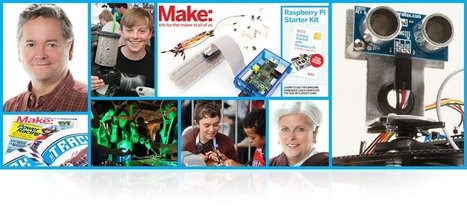
Maker Media is a global platform for connecting makers with each other, with products and services, and with our partners. Through media, events and ecommerce, Maker Media serves a growing community of makers who bring a DIY mindset to technology. Whether as hobbyists or professionals, makers are creative, resourceful and curious, developing projects that demonstrate how they can interact with the world around them. The launch of MAKE Magazine in 2005, followed by Maker Faire in 2006, jumpstarted a worldwide Maker Movement, which is transforming innovation, culture and education. Located in Sebastopol, CA, Maker Media is the publisher of MAKE Magazine and the producer of Maker Faire. It also develops “getting started” kits and books that are sold in its Maker Shed store as well as in retail channels.
As the movement has gathered increasing momentum, makers have created their own market ecosystem, developing new products and services. The combination of ingenious makers and innovative technologies such as the Arduino microcontroller and personal 3D printing are driving innovation in manufacturing, engineering, industrial design, hardware technology and education. Over the years, the MAKE division has become synonymous with the Maker Movement and is the recognized leader of this growing community of makers.
Many makers are hobbyists, enthusiasts or students (amateurs!)–but they are also a wellspring of innovation, creating new products and producing value in the community. Some makers do become entrepreneurs and start companies.
This is grassroots innovation that we can foster in every community. It’s being called the Maker Movement, and MAKE Magazine and Maker Faire are very proud of having been (and continuing to be) a nurturing ground for this growing community of creative and curious people.
An apt description of Maker Culture can be found on Wikipedia (below):
"The maker culture is a contemporary culture or subculture representing a technology-based extension of DIY culture. Typical interests enjoyed by the maker culture include engineering-oriented pursuits such as electronics, robotics, 3-D printing, and the use of CNC tools, as well as more traditional activities such as metalworking, woodworking, and traditional arts and crafts. The subculture stresses new and unique applications of technologies, and encourages invention and prototyping."
For further reading, we also recommend this Huffington Post article.
While the PlayMaker approach empowers students to tap into their imaginations and discover their unique talents, it integrates student interest with highly creative and rigorous curriculum, targeting state and national academic standards. Students are assessed holistically, while their individual progression is made visible to students, parents, and teachers on a daily basis.
The GameDesk Institute, in an effort funded by the Bill and Melinda Gates Foundation, created this new curriculum and school design to help usher education into the 21st century and transform the way society views learning.
The maker movement is a global, DIY movement of people who take charge of their lives, solve their own problems and share how they solved them. And it's growing in schools that are searching for more authentic learning experiences for their students.
Since the beginning of time, people have made things to solve problems and otherwise improve their quality of life. But previously, the amount of exposure individual projects received was limited. Now the Internet has driven projects into the limelight.
During the past year, makerspaces have been gaining traction in libraries. A makerspace is a place where people come together to design and build projects. Makerspaces typically provide access to m...
Maker Faire has catalyzed a global interest in tinkering to understand. Is it only a matter of time before this approach to learning makes it into mainstream classrooms?
Setting up a Makerspace has been a priority of mine from the moment I started here at New Milford High School, and it’s already well on its way to being achieved. Having a school principal who provides the perfect mix of encouragement and autonomy has, of course, been a great help, but it has also been very much a team effort: the school’s tech team and custodians have been very supportive and cooperative, along with a diverse variety of students interested in ‘making’ experiences.
A makerspace is a physical location where people gather to share resources and knowledge, work on projects, network, and build. Makerspaces provide tools and space in a community environment — a library, community center, private organization, or campus
Presentation during my visit at the Serious Games Institute in Coventry, UK.
Gamification Integrating game dynamics into your site, service, community, content or campaign, in order to drive participation. the use of game design elements in non-game contexts motivational elements of games + learning activities + communicate and share accomplishment + goals = direct the attention + motivate for action fun, play, passion
How can the libraries of the present and future be influenced by those of the past? In the spirit of ideas worth spreading, TEDx is a program of local, self-...
The Resource for Education Technology Leaders focusing on K-12 educators. Site contains a Software Reviews Database, articles from Technology & Learning Magazine, articles from Educators in Educators' eZine, Event and Contest listings, Reader suggested Web sites, and weekly news updates on education technology leaders.
From TechShops to Fab Labs, makerspaces are popping up around the country and the world, helping makers gain experience, develop support networks, and build bigger and better than ever before.
Welcome to the Maker Movement, an evolution of millions of people who are taking big risks to start their own small businesses dedicated to creating and selling self-made products....
Explore the links below for some examples of how makerspaces are being incorporated into both academic and public library settings. Many of these makerspaces include 3D printing services, but most expand beyond to offer a number of different services to library patrons. If you are thinking about creating your own makerspace, check out Emily Thompson's Technology Toolbox for a list of useful software. If you are thinking about partnerships with local makerspaces, you can start with the Maker Community Groups and Spaces list.
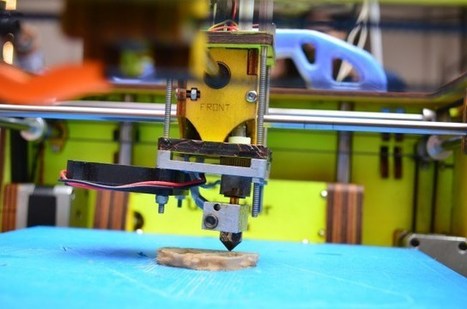
"The libraries of the future are different in so many ways to what we have now, especially in our schools. Step into the future in this MindShift article by Luba Vangelova." 3D printers like this o...
To get content containing either thought or leadership enter:
To get content containing both thought and leadership enter:
To get content containing the expression thought leadership enter:
You can enter several keywords and you can refine them whenever you want. Our suggestion engine uses more signals but entering a few keywords here will rapidly give you great content to curate.


 Your new post is loading...