


Marijuana, Cannabis, Longevity, Legacy
2.1K views |
+0 today
Exploring the medical benefits of marijuana & cannabis worldwide. How does it affect your health and longevity. Policies, advocacy, politics, legislation, insurance and the whole industry of experts.
Curated by
shelbylaneMD
 Your new post is loading...
 Scoop.it! When game designer Jane McGonigal found herself bedridden and suicidal following a severe concussion, she had a fascinating idea for how to get better. She dove into the scientific research and created the healing game, SuperBetter. Via David McGavock 

David McGavock's curator insight,
July 25, 2013 11:35 PM
You might be tempted to dismiss Kelly's message during the video. But if you hang with it, I think you will agree that her suggestions are worth the time it takes and the time you will earn. She's a kick.
Scoop.it!

Research on garlic indicates that it may provide an ideal low-cost and safe alternative to drugs and vaccines in reducing the three most common causes of death in the world.
Inexpensive, time-tested, safe and delicious, many spices are attaining recognition for being, quite literally, 'life saving,' which is likely one reason why, in ancient times, many were worth their weight in gold.
This time around, the health benefits of ancient 'folk remedies' like garlic are being confirmed by straight-laced men and women in lab coats... Via Sepp Hasslberger

MatthewGarlicShaker's curator insight,
October 22, 2014 5:25 PM
The Nutritional and Health Benefits of Garlic are tremendous! http://www.garlicshaker.com/nutritional-and-health-benefits-of-garlic/
Scoop.it!
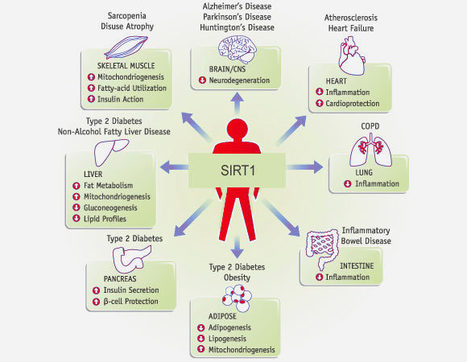
A new research published in the March 8, 2013 issue of Science finally proves that a single anti-ageing enzyme in the body can be targeted, with the potential to prevent age-related diseases and extend lifespans.
“Drugs that combat ageing may be available within five years,” said study senior author Prof David Sinclair from Harvard Medical School, and the University of New South Wales.
The target enzyme, SIRT1, is switched on naturally by calorie restriction and exercise, but it can also be enhanced through activators. The most common naturally-occurring activator is resveratrol, which is found in small quantities in red wine, but synthetic activators with much stronger activity are already being developed.
Although research surrounding resveratrol has been going for a decade, until now the basic science had been contested. The study shows all of the 117 drugs tested work on the single enzyme through a common mechanism. This means that a whole new class of anti-ageing drugs is now viable, which could ultimately prevent cancer, Alzheimer’s disease and type 2 diabetes.
“Ultimately, these drugs would treat one disease, but unlike drugs of today, they would prevent 20 others. In effect, they would slow ageing,” Prof Sinclair said. “In the history of pharmaceuticals, there has never been a drug that tweaks an enzyme to make it run faster.”
“Our drugs can mimic the benefits of diet and exercise, but there is no impact on weight,” Prof Sinclair said. “The first therapeutic to be marketed will be for diabetes.” There have been limited trials in people with type 2 diabetes and the skin inflammatory disease, psoriasis. There were benefits to the metabolism in the first group and a reduction in skin redness in the second.
The drugs can be administered orally, or topically. So far, there have been no drugs developed targeting ageing skin, but one major skin care range has developed a crème with resveratrol in it. “While any drug would be strictly prescribed for certain conditions, one day, they could be taken orally as a preventative. This would be in much the same way as statin drugs are commonly prescribed to prevent, instead of simply treating, cardiovascular disease.”
In animal models, overweight mice given synthetic resveratrol were able to run twice as far as slim mice and they lived 15 per cent longer. “Now we are looking at whether there are benefits for those who are already healthy. Things there are also looking promising,” the scientist said.
“We’re finding that ageing isn’t the irreversible affliction that we thought it was,” Prof Sinclair said. “Some of us could live to 150, but we won’t get there without more research.”
Via Dr. Stefan Gruenwald

george sperco's curator insight,
February 7, 2023 9:53 AM
https://farmaciadicura.com https://farmaciadicura.com/Prodotto/acquista-metaqualone-in-linea/ https://farmaciadicura.com/Prodotto/acquista-ossicodone-10-mg-sandoz/ https://farmaciadicura.com/Prodotto/acquista-ossicodone-15-mg-sandoz/ https://farmaciadicura.com/Prodotto/acquista-ossicodone-20-mg-sandoz/ https://farmaciadicura.com/Prodotto/acquista-ossicodone-30-mg-sandoz/ https://farmaciadicura.com/Prodotto/acquista-ossicodone-5-mg-sandoz/ https://farmaciadicura.com/Prodotto/acquista-ossicodone-60-mg-sandoz/ https://farmaciadicura.com/Prodotto/acquista-ossicodone-80-mg-sandoz/ https://farmaciadicura.com/Prodotto/acquista-quaalude-online/ https://farmaciadicura.com/Prodotto/acquista-adderall-in-linea-italia/ https://farmaciadicura.com/Prodotto/acquista-ambien-in-linea-italia/ https://farmaciadicura.com/Prodotto/acquista-buprenorfina-in-linea-italia/ https://farmaciadicura.com/Prodotto/acquista-cocaina-boliviana-in-linea/ https://farmaciadicura.com/Prodotto/acquista-cocaina-a-squame-di-pesce/ https://farmaciadicura.com/Prodotto/acquista-desoxyn-in-linea-italia/ https://farmaciadicura.com/Prodotto/acquista-dilaudid-in-linea-italia/ https://farmaciadicura.com/Prodotto/acquistare-eroina-in-linea-italia/ https://farmaciadicura.com/Prodotto/acquista-fentanil-in-linea-italia/ https://farmaciadicura.com/Prodotto/acquista-fentermina-in-linea-italia/ https://farmaciadicura.com/Prodotto/acquista-la-morfina-iniettabile-italia/ https://farmaciadicura.com/Prodotto/acquista-morfina-in-linea-italia/ https://wereldwijdeapotheek.com/ https://wereldwijdeapotheek.com/product/ketamine-poeder-kopen/ https://wereldwijdeapotheek.com/product/koop-4-aco-dmt-online/ https://wereldwijdeapotheek.com/product/koop-adderall-online/ https://wereldwijdeapotheek.com/product/koop-boliviaanse-cocaine-online/ https://wereldwijdeapotheek.com/product/koop-bruine-heroine-online/ https://wereldwijdeapotheek.com/product/koop-codeine-linctus-online/ https://wereldwijdeapotheek.com/product/koop-crack-cocaine-online/ https://wereldwijdeapotheek.com/product/koop-desoxyn-online/ https://wereldwijdeapotheek.com/product/koop-dexedrine-online09/ https://wereldwijdeapotheek.com/product/koop-fentanyl-citrate-online-09/ https://wereldwijdeapotheek.com/product/koop-fentanyl-poeder-online/ https://wereldwijdeapotheek.com/product/koop-fentanyl-pleister-online09/ https://wereldwijdeapotheek.com/product/koop-fishscale-cocaine-online/ https://wereldwijdeapotheek.com/product/koop-flakka-a-pvp-online/ https://wereldwijdeapotheek.com/product/koop-gouden-leraar-paddenstoelen-online1/ https://wereldwijdeapotheek.com/product/koop-heroine-online/ https://wereldwijdeapotheek.com/product/koop-hydromorphone-online/ https://wereldwijdeapotheek.com/product/koop-morfine-online/ https://wereldwijdeapotheek.com/product/koop-natriumcyanide-100-mg-online/ https://wereldwijdeapotheek.com/product/koop-nembutal-pentobarbital-online1g/ https://wereldwijdeapotheek.com/product/koop-oxycodon-hcl-online/ https://wereldwijdeapotheek.com/product/koop-oxycodon-nachts-online/ https://wereldwijdeapotheek.com/product/koop-oxycontin-online/ https://wereldwijdeapotheek.com/product/koop-psilocybe-cubensis-b-online/ https://farmaciadicura.com/Prodotto/acquista-ossicodone-in-linea-italia/ https://farmaciadicura.com/Prodotto/acquista-ossicodone-pillole-in-linea-italia/ https://farmaciadicura.com/Prodotto/acquista-percocet-in-linea-italia/ https://farmaciadicura.com/Prodotto/acquista-ritalin-in-linea-italia/ https://farmaciadicura.com/Prodotto/acquista-stilnox-in-linea-italia/ https://farmaciadicura.com/Prodotto/acquista-strisce-di-suboxone-italia/ https://farmaciadicura.com/Prodotto/acquista-subutex-in-linea-italia/ https://farmaciadicura.com/Prodotto/acquista-vyvanse-in-linea-italia/ https://farmaciadicura.com/Prodotto/acquista-xanax-in-linea-italia/ https://wereldwijdeapotheek.com/product/koop-ritalin-online/ https://wereldwijdeapotheek.com/product/koop-seconal-sodium-online/ https://wereldwijdeapotheek.com/product/koop-stilnox-online/ https://wereldwijdeapotheek.com/product/koop-suboxone-online/ https://wereldwijdeapotheek.com/product/koop-suboxone-strips/ https://wereldwijdeapotheek.com/product/koop-subutex-online/ https://wereldwijdeapotheek.com/product/koop-ultram-online/ https://wereldwijdeapotheek.com/product/koop-vicodin-online/ https://wereldwijdeapotheek.com/product/koop-vyvanse-online/ https://wereldwijdeapotheek.com/product/koop-witte-heroine-online/ https://wereldwijdeapotheek.com/product/koop-xanax-online/ https://wereldwijdeapotheek.com/product/koop-percocet-online1/ https://wereldwijdeapotheek.com/product/koop-phentermine-adipex-online09/ https://healthmartpsychedelics.com/ https://healthmartpsychedelics.com/produit/acheter-acxion-fentermina-30mg/ https://healthmartpsychedelics.com/produit/acheter-adderall-en-ligne/ https://healthmartpsychedelics.com/produit/achetez-ambien-en-ligne/ https://healthmartpsychedelics.com/produit/achetez-des-bandes-de-suboxone/ https://healthmartpsychedelics.com/produit/acheter-buprenorphine-en-ligne/ https://healthmartpsychedelics.com/produit/acheter-contrave-en-ligne/ https://healthmartpsychedelics.com/produit/acheter-desoxyn-en-ligne/ https://healthmartpsychedelics.com/produit/acheter-du-dilaudid-en-ligne/ https://healthmartpsychedelics.com/produit/acheter-duromine-en-ligne/ https://healthmartpsychedelics.com/produit/acheter-de-lephedrine-en-ligne/ https://healthmartpsychedelics.com/produit/acheter-fentanyl-en-ligne/ https://healthmartpsychedelics.com/produit/acheter-de-la-morphine-injectable/ https://healthmartpsychedelics.com/produit/achetez-du-cyanure-de-sodium-en-ligne/ https://healthmartpsychedelics.com/produit/acheter-meratrim-en-ligne/ https://healthmartpsychedelics.com/produit/acheter-morphine-en-ligne/ https://healthmartpsychedelics.com/produit/acheter-de-loxycodone-en-ligne/ https://healthmartpsychedelics.com/produit/acheter-80-mg-doxycodone-en-ligne/ https://healthmartpsychedelics.com/produit/achetez-ozempic-en-ligne/ https://healthmartpsychedelics.com/produit/acheter-du-percocet-en-ligne/ https://healthmartpsychedelics.com/produit/acheter-phentermine-en-ligne/ https://healthmartpsychedelics.com/produit/acheter-qsymia-en-ligne/ https://healthmartpsychedelics.com/produit/acheter-ritaline-en-ligne/ https://healthmartpsychedelics.com/produit/acheter-rybelsus-en-ligne/ https://healthmartpsychedelics.com/produit/acheter-saxenda-en-ligne/ https://healthmartpsychedelics.com/produit/acheter-stilnox-en-ligne/ https://healthmartpsychedelics.com/produit/acheter-subutex-en-ligne/ https://healthmartpsychedelics.com/produit/acheter-trulicity-en-ligne/ https://healthmartpsychedelics.com/produit/acheter-victoza-en-ligne/ https://healthmartpsychedelics.com/produit/acheter-vyvanse-en-ligne/ https://healthmartpsychedelics.com/produit/acheter-wegovy-en-ligne/ https://healthmartpsychedelics.com/produit/acheter-xanax-en-ligne/ https://healthmartpsychedelics.com/produit/acheter-du-xanax-vert-en-ligne/ https://healthmartpsychedelics.com/produit/acheter-xenical-en-ligne/ https://farmaciadesalud.com/tienda/comprar-dexedrina-en-linea/ https://farmaciadesalud.com/tienda/comprar-heroina-blanca-en-linea/ https://farmaciadesalud.com/tienda/comprar-heroina-de-alquitran-negro/ https://farmaciadesalud.com/tienda/comprar-heroina-lobo-artico/ https://farmaciadesalud.com/tienda/comprar-heroina-marron-en-linea/ https://farmaciadesalud.com/tienda/comprar-makatussin-en-linea/ https://farmaciadesalud.com/tienda/comprar-oxicodona-10-mg-sandoz/ https://farmaciadesalud.com/tienda/comprar-oxicodona-15-mg-sandoz/ https://farmaciadesalud.com/tienda/comprar-oxicodona-20-mg-sandoz/ https://farmaciadesalud.com/tienda/comprar-oxicodona-30-mg-sandoz/ https://farmaciadesalud.com/tienda/comprar-oxicodona-5-mg-sandoz/ https://farmaciadesalud.com/tienda/comprar-oxicodona-60-mg-sandoz/ https://farmaciadesalud.com/tienda/comprar-oxicodona-80-mg-sandoz/ https://farmaciadesalud.com/tienda/comprar-pastillas-de-nembutal/ https://farmaciadesalud.com/tienda/compre-polvo-de-nembutal-en-linea/ https://farmaciadesalud.com/tienda/comprar-crack-de-cocaina-en-linea/ https://farmaciadesalud.com/tienda/comprar-desoxyn-en-linea/ https://farmaciadesalud.com/tienda/comprar-dilaudid-en-linea/ https://farmaciadesalud.com/tienda/comprar-efedrina-hcl-en-linea/ https://farmaciadesalud.com/tienda/comprar-fentanilo-en-linea/ https://farmaciadesalud.com/tienda/comprar-fentermina-en-linea/ https://farmaciadesalud.com/tienda/comprar-heroina-en-linea/ https://farmaciadesalud.com/tienda/comprar-morfina-inyectable-en-linea/ https://farmaciadesalud.com/tienda/comprar-morfina-en-linea/ https://farmaciadesalud.com/tienda/comprar-pastillas-de-oxicodona-en-linea/ https://farmaciadesalud.com/tienda/comprar-oxycodone-en-linea/ https://farmaciadesalud.com/tienda/comprar-oxycontin-en-linea/ https://farmaciadesalud.com/tienda/comprar-percocet-en-linea/ https://farmaciadesalud.com/tienda/comprar-ritalin-en-linea/ https://farmaciadesalud.com/tienda/comprar-nembutal-inyectable-en-linea/ https://farmaciadesalud.com/tienda/comprar-stilnox-en-linea/ https://farmaciadesalud.com/tienda/comprar-tiras-de-suboxone-en-linea/ https://farmaciadesalud.com/tienda/comprar-suboxone-en-linea/ https://farmaciadesalud.com/tienda/comprar-subutex-en-linea/ https://farmaciadesalud.com/tienda/comprar-viagra-en-linea/ https://farmaciadesalud.com/tienda/comprar-vyvanse-en-linea/ https://farmaciadesalud.com/tienda/comprar-xanax-en-linea/ https://acquistaossicodoneitalia.com/ https://acquistaossicodoneitalia.com/negozio/acquista-ossicodone-10-mg-sandoz-italia/ https://acquistaossicodoneitalia.com/negozio/acquista-ossicodone-15-mg-sandoz-italia/ https://acquistaossicodoneitalia.com/negozio/acquista-ossicodone-20-mg-sandoz-italia/ https://acquistaossicodoneitalia.com/negozio/acquista-ossicodone-30-mg-sandoz-italia/ https://acquistaossicodoneitalia.com/negozio/acquista-ossicodone-5-mg-sandoz-italia/ https://acquistaossicodoneitalia.com/negozio/acquista-ossicodone-60-mg-sandoz-italia/ https://acquistaossicodoneitalia.com/negozio/acquista-ossicodone-80-mg-sandoz-italia/ https://acquistaossicodoneitalia.com/negozio/acquista-adderall-in-linea-italia/ https://acquistaossicodoneitalia.com/negozio/acquista-ambien-in-linea-italia/ https://acquistaossicodoneitalia.com/negozio/acquista-buprenorfina-in-linea-italia/ https://acquistaossicodoneitalia.com/negozio/acquista-cocaina-boliviana-in-linea/ https://acquistaossicodoneitalia.com/negozio/acquista-cocaina-a-squame-di-pesce/ https://acquistaossicodoneitalia.com/negozio/acquista-cocaina-crack-in-linea/ https://acquistaossicodoneitalia.com/negozio/acquista-desoxyn-in-linea-italia/ https://acquistaossicodoneitalia.com/negozio/acquista-dilaudid-in-linea-italia/ https://acquistaossicodoneitalia.com/negozio/acquistare-eroina-in-linea-italia/ https://acquistaossicodoneitalia.com/negozio/acquista-fentanil-in-linea-italia/ https://acquistaossicodoneitalia.com/negozio/acquista-fentermina-in-linea-italia/ https://acquistaossicodoneitalia.com/negozio/acquista-la-morfina-iniettabile-italia/ https://acquistaossicodoneitalia.com/negozio/acquista-morfina-in-linea-italia/ https://acquistaossicodoneitalia.com/negozio/acquista-ossicodone-in-linea-italia/ https://acquistaossicodoneitalia.com/negozio/acquista-ossicodone-pillole-in-linea-italia/ https://acquistaossicodoneitalia.com/negozio/acquista-oxycontin-in-linea-italia/ https://acquistaossicodoneitalia.com/negozio/acquista-percocet-in-linea-italia/ https://acquistaossicodoneitalia.com/negozio/acquista-ritalin-in-linea-italia/ https://acquistaossicodoneitalia.com/negozio/acquista-stilnox-in-linea-italia/ https://acquistaossicodoneitalia.com/negozio/acquista-strisce-di-suboxone-italia/ https://acquistaossicodoneitalia.com/negozio/acquista-subutex-in-linea-italia/ https://acquistaossicodoneitalia.com/negozio/acquista-viagra-in-linea-italia/ https://acquistaossicodoneitalia.com/negozio/acquista-vyvanse-in-linea-italia/ https://acquistaossicodoneitalia.com/negozio/acquista-xanax-in-linea-italia/ https://acquistaossicodoneitalia.com/negozio/acquista-laudano-droga-online/ https://acquistaossicodoneitalia.com/negozio/acquista-metaqualone-in-linea/ https://acquistaossicodoneitalia.com/negozio/acquista-quaaludes-in-linea/ https://pharmacieanglaise.com/ https://pharmacieanglaise.com/shop/acheter-adderall-en-ligne-canada/ https://pharmacieanglaise.com/shop/achetez-ambien-en-ligne-canada/ https://pharmacieanglaise.com/shop/achetez-des-bandes-de-suboxone-canada/ https://pharmacieanglaise.com/shop/acheter-buprenorphine-en-ligne-canada/ https://pharmacieanglaise.com/shop/acheter-desoxyn-en-ligne-canada/ https://pharmacieanglaise.com/shop/acheter-du-dilaudid-en-ligne-canada/ https://pharmacieanglaise.com/shop/acheter-fentanyl-en-ligne-canada/ https://pharmacieanglaise.com/shop/acheter-de-la-morphine-injectable-canada/ https://pharmacieanglaise.com/shop/achetez-du-cyanure-de-sodium-en-ligne/ https://pharmacieanglaise.com/shop/acheter-morphine-en-ligne-canada/ https://pharmacieanglaise.com/shop/acheter-de-loxycodone-en-ligne-canada/ https://pharmacieanglaise.com/shop/acheter-80-mg-doxycodone-en-ligne-canada/ https://pharmacieanglaise.com/shop/acheter-de-loxycontin-en-ligne-canada/ https://pharmacieanglaise.com/shop/acheter-du-percocet-en-ligne-canada/ https://pharmacieanglaise.com/shop/acheter-phentermine-en-ligne-canada/ https://pharmacieanglaise.com/shop/acheter-ritaline-en-ligne-canada/ https://pharmacieanglaise.com/shop/acheter-stilnox-en-ligne-canada/ https://pharmacieanglaise.com/shop/acheter-subutex-en-ligne-canada/ https://pharmacieanglaise.com/shop/acheter-le-viagra-en-ligne-canada/ https://pharmacieanglaise.com/shop/acheter-vyvanse-en-ligne-canada/ https://pharmacieanglaise.com/shop/acheter-xanax-en-ligne-canada/ https://pharmacieanglaise.com/shop/acheter-du-xanax-vert-en-ligne-canada/
Scoop.it!
Dr. John Westerdahl speaks before the Vegetarian Society of Hawaii on the secrets of a plant-based diet for a healthy and ageless lifestyle. Via Troy Mccomas (troy48)
Scoop.it!
You HAVE to watch this 1 minute video! - The most powerful wisdom you will ever hear - by 109 year old Holocaust survivor Alice Herz-Sommer. Alice Herz-Somme... Via Happiness Blueprint
Scoop.it!

Caretaker's health important too
Scoop.it!

Healthy Alternatives empowers women to age gracefully and have peace of mind about their health...
Scoop.it!

Smart tips from former financial journalist Stan Hinden, the best-selling author of a retirement planning book.
Scoop.it!


Dr. Amy Fuller's curator insight,
August 26, 2013 12:10 AM
Kindness to others is kindness to yourself... 
Donovan Baldwin's curator insight,
August 26, 2013 7:58 AM
It has been shown by research, by the way, that personal connections and interactions are a great anti-aging tonic.
Scoop.it!

Background The impact of diet on specific age-related diseases has been studied extensively, but few investigations have adopted a more holistic approach to determine the association of diet with overall health at older ages. We examined whether diet, assessed in midlife, using dietary patterns and adherence to the Alternative Healthy Eating Index (AHEI), is associated with aging phenotypes, identified after a mean 16-year follow-up. Methods Data were drawn from the Whitehall II cohort study of 5350 adults (age 51.3±5.3 years, 29.4% women). Diet was assessed at baseline (1991-1993). Mortality, chronic diseases, and functioning were ascertained from hospital data, register linkage, and screenings every 5 years and were used to create 5 outcomes at follow-up: ideal aging (free of chronic conditions and high performance in physical, mental, and cognitive functioning tests; 4%), nonfatal cardiovascular event (7.3%), cardiovascular death (2.8%), noncardiovascular death (12.7%), and normal aging (73.2%). Results Low adherence to the AHEI was associated with an increased risk of cardiovascular and noncardiovascular death. In addition, participants with a “Western-type” diet (characterized by high intakes of fried and sweet food, processed food and red meat, refined grains, and high-fat dairy products) had lower odds of ideal aging (odds ratio for top vs bottom tertile: 0.58; 95% confidence interval, 0.36-0.94; P=.02), independently of other health behaviors. Conclusions By considering healthy aging as a composite of cardiovascular, metabolic, musculoskeletal, respiratory, mental, and cognitive function, the present study offers a new perspective on the impact of diet on aging phenotypes. Via Seth Bilazarian, MD

Seth Bilazarian, MD's curator insight,
May 16, 2013 4:02 PM
"Western-type” diet (characterized by high intakes of fried and sweet food, processed food and red meat, refined grains, and high-fat dairy products) has been attributed to many disease of older age. This study characterizes ideal aging as avoidance of these disease. The additional life style strategies of exercise and smoking are strongly associated with favorable aging but diet is an independent predictor. It makes common sense that the cumulative effect of daily diet over the middle third of life will have an impact on outcomes in the last third of life. 
Cynthia Tait's comment,
May 18, 2013 1:24 AM
hmmm - this sounds all to plausible - not sure I am going to share this with my parents - as this will mean they have been on the right path all their lives - searching and reading and modifying their diets to suit the long lives they wish to live. Go Mum and Dad. <yeah, I still didn't share it with them - i can hear the 'i told you so' echoes through from the future> :)

Alexis Dickerson's curator insight,
September 22, 2013 9:44 AM
Standard American Diet = SAD diet. Ancestoral health diets seek historic dietary principles with the goal of restoring/optimizing health and reducing diseases of affluence (diabesity, CHD, etc)
Scoop.it!

Every day in this country about 10,000 people turn 65. And rather than basking in the sun in some pricey exotic locale, many of them are struggling to make ends meet. In 2011, the median income for people 65 and older was $27,707 for men and $15,362 for women. That same year, almost 3.6 million elderly people — nearly 1 in 10 — were living below the poverty line. The recent recession hit baby boomers, the generation born between 1946 and 1964, particularly hard.
Yet these realities do not have to presage a grim future. Just because the golden years aren’t what we were promised, that doesn’t mean we can’t create a more achievable image of retirement — a positive one that takes into account new opportunities to change people’s lives. In his book The Blue Zones: 9 Lessons for Living Longer From the People Who’ve Lived the Longest, Dan Buettner studies communities with a significantly disproportionate number of centenarians. These “Blue Zones” exist in diverse cultures — from Okinawa, Japan, to Sardinia, Italy, to Loma Linda, California — but almost all of the centenarians share one characteristic: They are not just alive, they are living. Throughout his book, Buettner shows the benefits of continued purposeful engagement, whether through work, volunteering, strong social connections, or involvement in a faith-based community. In these “Blue Zones,” older farmers still farm, older physicians still practice medicine, and older parents help care for later generations. These aren’t people who chase youth in the gym; they live in environments where physical activity is built into everyday life. Maybe most important, older adults in these communities aren’t shuffled to the side and ignored; they are respected and treated as learned advisers and mentors. All of this purposeful engagement correlates with longer life and better health. Via Seth Bilazarian, MD
Seth Bilazarian, MD's curator insight,
July 1, 2013 10:22 AM
For those living to age 65 the AVERAGE life expectancy is 17 more years. The negative impact on heart, mind, soul and body of a leisure only retirement is signiciant and will not help seniors age optimally.
Scoop.it!

This first-ever AEGON Retirement Readiness Survey looks at how people are preparing for a world in which we live longer than at any time in history.
Despite the fundamentally positive news that we're all living longer, longevity increases bring greater costs and potential reductions in retirement systems, including government and private pensions. The global economic crisis of recent years and ongoing economic uncertainty and austerity measures have put even greater pressure on these retirement systems and shifted more of the responsibility to individuals to save for their own retirement.
This first-ever AEGON Retirement Readiness Survey of 9,000 people across nine countries was conducted with the aim of understanding the prevailing attitudes toward retirement and the levels of financial readiness among the current working generation in Europe and the United States.The survey was conducted with the Transamerica Center for Retirement Studies (external link)® and Cicero Consulting. Via The Learning Factor, shelbylaneMD
|
Scoop.it!

A lot of the focus in wearable computing has been on delivering products that help everyday users monitor some of the more basic activity traits, such as steps taken and heart rate. While these are certainly useful metrics for health monitoring, they do not paint the full picture. Computational biologists instead study the chemical changes that occur in people’s bodies with the help of optical sensors, non-invasive devices that use the red-to-near-infrared spectral region to assess the chemical changes that occur in the user’s blood vessels, among other places. By leveraging this cutting-edge technology and wearable computing, we are equipped to understand the changes that occur in a person’s body at a whole new level. The implications of this change span from improved training of athletes to better management of chronic diseases and healthcare. Some interesting recent cases in research that show the potential for disruption include:
Via nrip

Dan Baxter's curator insight,
October 12, 2013 11:20 AM
The next step for quantified and teleheath sensors
Scoop.it!

Coenzyme Q10 decreases all cause mortality by half, according to new results. It is the first drug to improve heart failure mortality in over a decade and should be added to standard treatment, according to experts.
Coenzyme Q10 (CoQ10) occurs naturally in the body and is essential to survival. CoQ10 works as an electron carrier in the mitochondria, the powerhouse of the cells, to produce energy and is also a powerful antioxidant. It is the only antioxidant that humans synthesise in the body.
CoQ10 levels are decreased in the heart muscle of patients with heart failure, with the deficiency becoming more pronounced as heart failure severity worsens. Statins are used to treat many patients with heart failure because they block the synthesis of cholesterol, but these drugs also block the synthesis of CoQ10, which further decreases levels in the body. Via Sepp Hasslberger

Sepp Hasslberger's curator insight,
May 26, 2013 11:58 AM
This study should herald the end of statin drugs - meds which lower cholesterol and which have been a multi-year blockbuster dream of pharmaceutical medicine.
Statins have an awful record of negative side effects and one of them happens to be that they block the human body's ability to synthesizie life-saving CoQ10...
Scoop.it!

Could a deficiency in a magnesium be to blame for some of your chronic health problems, lack of sleep or anxiety?
Mark Hyman, M.D. reveals why this “secret antidote to stress” works so well and tells you how to get more of it — naturally. Via Sepp Hasslberger
Sepp Hasslberger's curator insight,
September 10, 2013 6:59 AM
This is so important - many are deficient in magnesium. It's a preventor of heart attacks and much more...
Scoop.it!

Friends are a surprisingly strong influence on how long you live -- for better or worse. WebMD's slideshow explains this and other secrets of longevity.
Scoop.it!
shelbylaneMD's insight:
Brilliant concept in a unique package. I'm better already just from reading the introduction. And no nasty side effects.

Robin Good's curator insight,
September 15, 2013 12:44 PM
Though you may have not heard about "bibliotherapy" before,"lovers of literature have been using novels as salves – either consciously or subconsciously – for centuries." Bibliotherapists, are expert book curators, who can, depending on your ailment or pain, suggest a specific set of books to read. And in 2008 an official Bibliotherapy Service was born.
"When the School of Life opened its doors in 2008, we began to see clients – in person, by skype, in London, in Bognor Regis, Barcelona, Bangkok – for individual 40-minute sessions, after which we sent them a tailor-made eight-book prescription. We became so busy we took on a third bibliotherapist, ex bookshop-manager, Simona Lyons. Five years on, having tried and tested our cures, we have written an alternative medical reference book, The Novel Cure: An A-Z of Literary Remedies* Whether you are "...moving house, looking for Mr/Mrs Right, or having a midlife crisis... ...losing a loved one or becoming a single parent... ...Whether you’ve got the hiccups or a hangover, a fear of commitment or a sense of humour failure..." in The Novel Cure there is a selected novel or book that can help you. The Novel Cure is not a medical reference book but a curated selection of what to read to heal any pain: physical or psychological without ever suggesting any traditional remedy or medicine. The suggested readings include anything from Apuleius to the contemporary Ali Smith embracing over two thousand years of world literature. Thanks to Ella Berthoud and Susan Elderkin, for having shared their wonderful story and for providing such an inspiring and useful resource for many. Quite an inspiring story. 8/10 Original article: http://www.theschooloflife.com/blog/2013/09/the-novel-cure/ see also: thenovelcure.com
Sepp Hasslberger's curator insight,
September 15, 2013 3:02 PM
Who would have thought it that reading could be curative ... but apparently it is! 
shelbylaneMD's curator insight,
September 30, 2013 6:51 PM
This is amazing, since I read all the time and I frequently prescribe a book and a joke. Great works. Not easy to get in America.
Scoop.it!

The most important difference between the world today and 150 years ago isn’t airplane flight or nuclear weapons or the Internet. It’s lifespan. We used to live 35 or 40 years on average in the United States, but now we live almost 80. Via Seth Bilazarian, MD
Seth Bilazarian, MD's curator insight,
September 5, 2013 3:15 PM
This extension of age has been in part due to progress in medical care. Not long ago cardiologists would hesitate taking aggressive approaches with people over 70 years old. We now take pause with patients who have an age with 3 digits. See my Vlog - "Cardiologists are Ageists" at theheart.org at http://www.theheart.org/columns/private-practice/cardiologists-are-ageists.do or on Medscape at http://www.medscape.com/viewarticle/807115
Scoop.it!

Our emotional health in a lot of ways is tied to our financial health.
Scoop.it!

Trips, concerts and the mantra of comedian Sarah Silverman are among the keys, says Elizabeth Dunn, the co-author of 'Happy Money'.
Scoop.it!

A new survey finds much optimism, and some denial, among people of all ages.
Scoop.it!

The ex-mayor, a fire victim and an insurance policy Times Herald-Record May 7, 2008: A check on the bank account of Albert Hudson – Kevin Hudson's brother – for the first insurance premium is rejected by underwriters, who note that third-party...
shelbylaneMD's curator insight,
August 25, 2013 1:57 PM
A tangled web we weave. Be careful who youu trust...or leave a trust
Scoop.it!

Even when you know physical activity is good for you, it's easy to keep dragging your feet—literally. We all have reasons to stay inactive, but sometimes those reasons are based more on myth than reality. Here are some of the most common myths about physical activity and ways to replace them with a more realistic, can-do spirit.
=> Myth 1: "Physical activity takes too much time." Physical activity does take some time, but there are ways to make it manageable. If you don't have 30 minutes in your daily schedule for an activity break, try to find three 10-minute periods. If you're aiming for 60 minutes daily—a good goal if you're trying to avoid weight gain—perhaps you can carve out some "fitness time" early in the day, before your schedule gets too busy. Another idea is to combine physical activity with a task that's already part of your daily routine, such as walking the dog or doing yard chores. => Myth 2: "Getting in shape makes you tired." Once you begin regular physical activity, you're likely to have even more energy than before. As you progress, daily tasks will seem easier. Regular, moderate-to-brisk physical activity can also help you to reduce fatigue and manage stress. => Myth 3: "The older you are, the less physical activity you need." Most people become less physically active as they age, but keeping fit is important throughout life. Regular physical activity increases older people's ability to perform routine daily tasks and to stay independent longer. No matter what your age, you can find a physical activity program that is tailored to your particular fitness level and needs. => Myth 4: "Taking medication interferes with physical activity." In most cases, this is not true. In fact, becoming more active may lessen your need for certain medicines, such as high blood pressure drugs. However, before beginning a physical activity program, be sure to inform your doctor about both prescription and over-the-counter medications you are taking, so that your health can be properly monitored. => Myth 5: "You have to be athletic to exercise." Most physical activities don't require any special athletic skills. In fact, many people who have bad memories of difficult school sports have discovered a whole world of enjoyable, healthful activities that involve no special talent or training. A perfect example is brisk walking—a superb, heart healthy activity. Others include bicycling, gardening, or yard work, as long as they're done at a brisk pace. Just do more of the activities you already like and already know how to do. It's that simple. Via Seth Bilazarian, MD
Seth Bilazarian, MD's curator insight,
June 16, 2013 10:58 AM
NIH publication on exercise facts and fiction. 5 myths debunked.
Scoop.it!

Aluminum is everywhere, in our cars, our food, our medical products and drugs, vaccines, and even our water. It was once safely sequestered in the earth’s crust, but now is torn from it to help produce every imaginable product under the sun—in spite of being a potent neurotoxin! Via Sepp Hasslberger
Sepp Hasslberger's curator insight,
August 22, 2013 8:38 AM
Something to stay away from as much as possible!
... aluminium is a toxic metal. |






