 Your new post is loading...

|
Scooped by
Mel Riddile
September 25, 2018 11:37 AM
|
71 percent of students succeeded on the assignments they were given, but only 17 percent of those assignments were actually on grade level. The United States’ system of mandatory public schooling operates under an unspoken social contract with students: Work hard, get good grades, and you can succeed in college, work, and life. Students are by and large holding up their end of the bargain, but too many schools break the contract by giving them classwork below grade level—leaving them underprepared for what’s next, a new study concludes. What’s more, the report finds that when given the opportunity, students of color and disadvantaged students do almost as well as their peers on challenging, grade-level assignments, so the notion that such students can’t or won’t do rigorous work “is a pernicious assumption, and it is wrong,” said Daniel Weisberg, the CEO of the research, teacher-training, and advocacy organization TNTP, which conducted the study.
|
|
Scooped by
Mel Riddile
September 24, 2018 4:26 PM
|
However, Burns says it's not fair to compare public schools in the U.S. with international schools like that based on how different the
Finland's total population is approximately five million, and Singapore is just under six million. The U.S. population is just under 270 million people. It is literally impossible to compare the school and teaching capacities due to those differences alone, even using sophisticated statistical techniques.
And when the studies are controlled for poverty levels, the education system in the U.S. ranks #1 across all metrics, Burns says.
Teachers here are never credited for their enormous success in the face of these realities. They are constantly compared unfavorably with other nation's schools that simply do not educate their youth in the same ways, or to the same level.
Burns also points out much of a student's sucess in school depends on outside factors beyond the teacher or school district's control. According to the RAND corporation, a teacher's quality *may* only account for up to 14% of a student's achievement in the classroom.
|
|
Scooped by
Mel Riddile
September 24, 2018 3:10 PM
|
Research shows that managers see far more leadership potential in their employees when their companies adopt a growth mindset — the belief that talent should be developed in everyone, not viewed as a fixed, innate gift that some have and others don’t. But what are those organizations doing to nurture their talent?
To explore this question, let’s look at Microsoft, which is deliberately creating a growth-mindset culture and, in that context, rethinking its approach to development. As a result, previously unidentified — yet skilled — leaders are rising to levels they might not have in a traditional development model.
|
|
Scooped by
Mel Riddile
September 23, 2018 12:24 PM
|
Before the start of every school year, I was always gripped by the tension between two things that felt equally urgent in the first days: On one hand there was the long term imperative of establishing strong procedures and routines for the things my class would do over and over during the year, and on the other there was the urgency of digging into rich academic content- there was just no time to wait in getting started learning.
Sometimes these imperatives seemed to conflict – how could I find the time to reinforce both strong procedures and deep academics in the first days of school? By focusing on one, wouldn’t I be sacrificing the other?
|
|
Scooped by
Mel Riddile
September 20, 2018 12:21 PM
|
Research is clear that emotions have a direct impact on learning and how we process and interpret our surrounding environment. "Students learn and perform more successfully when they feel secure, happy, and excited about the subject matter" (Boekaerts, 1993; Oatly & Nundy,1996). Emotions are the fast lane to the brain!
Regardless of one's title, every interaction with a student, no matter how brief, sends a message about the organization's philosophy on the role of positive connections and importance of a safe, welcoming learning environment. Addressing students' social and emotional needs is a foundational step toward delivering on academics. As I say, "You can't get to Bloom's Taxonomy without going through Maslow's Hierarchy." As much as some may want to focus primarily on rigor, without the relationship and relevance, the motivational on-switch won't flip.
If a student doesn't feel supported, accepted, and emotionally and physically safe, engagement and motivation won't exist because their basic needs aren't being met. The brain will remain in the hyperactive state of protection and vigilance until steps are taken to allow for a feeling of safety to enter. School communities that spend time and intentional effort putting emotional deposits in the bank accounts of students see tremendous benefits both academically and socially.
|
|
Scooped by
Mel Riddile
September 19, 2018 3:45 PM
|
The lack of access to technology and internet connectivity at home is especially severe among poor, rural, and minority students, a new survey from ACT reveals.
|
|
Scooped by
Mel Riddile
September 16, 2018 9:09 AM
|
How do you handle a class that is apt to talk to each other rather than listen to the instructor or other students? Here are 3 tips that you can incorporate to help reduce the chattiness of your class.
|
|
Scooped by
Mel Riddile
September 14, 2018 3:40 PM
|
Technology and the internet have become a vital part of modern living. Both crucially enable people to share information and ideas, and facilitate learning. Yet billions of people around the world lack access to these tools.
In the US alone, 24 million people don’t have access to high-speed internet and more than 20% of households do not have a computer. People living in low-income households or in poverty are more likely to experience difficulties accessing technology, according to the Pew Research Center.
This situation has created a digital divide in the educational attainment and income of those who can readily access technology and those who cannot. The digital divide also means that millions of students in the US struggle to realize their full potential.
Many schools, particularly in rural and low-income areas, do not have technological tools they need to enhance students’ learning and about a quarter of school districts in the US do not have high-speed internet.
|
|
Scooped by
Mel Riddile
September 13, 2018 12:45 PM
|
The brain is easily bored. This one fact explains why Apple does what it does in its product launches. A presentation based on the fundamentals of neuroscience includes frequent changes to keep people interested. But how frequent is 'frequent' change?
The answer: 10 minutes.
Neuroscientists say our brains have a built-in stopwatch that ends around 10 minutes. In my conversations with University of Washington Medical School molecular biologist, John Medina, he cites peer-reviewed studies that show people tune out of a presentation in the first ten minutes. "The brain seems to be making choices according to some stubborn timing pattern, undoubtedly influenced by both culture and gene," he says. "This fact suggests a teaching and business imperative: Find a way to arouse and then hold somebody's attention for a specific period of time."
Medina and other neuroscientists say that speakers can re-engage an audience every ten minutes if they introduce a change. A change can include a video, a story, a demonstration, etc.
|
|
Scooped by
Mel Riddile
September 12, 2018 3:24 PM
|
To some educators, it conjures visions of having to create a different lesson for every student in the room, and long nights of planning and grading," says veteran teacher and writer Larry Ferlazzo in a new explainer video for Education Week. "That insanity is not what differentation is all about."
|
|
Scooped by
Mel Riddile
September 11, 2018 11:17 AM
|
Consider that nearly two-thirds of students will experience the “ninth-grade shock,” which refers to a dramatic drop in a student’s academic performance.
Some students cope with this shock by avoiding challenges. For instance, they may drop rigorous coursework. Others may experience a hopelessness that results in failing their core classes, such as English, science and math.
This should matter a great deal to parents, teachers and policymakers. Ultimately it should matter to the students themselves and society at large.
One of the biggest reasons it should matter is because students’ fate as they transition to ninth grade can have long-term consequences not only for the students but for their home communities. We make these observations as research psychologists who have studied how schools and families can help young people thrive.
|
|
Scooped by
Mel Riddile
September 8, 2018 5:12 PM
|
An average of 16 percent of public school teachers change schools or leave teaching every year. This is over half a million teachers nationwide.
Welcome to the world of teacher turnover – a problem that can potentially set a child’s learning experience back significantly. Teacher turnover is one of the more disruptive things that I’ve discovered in my research on education policy and school improvement.
|
|
Scooped by
Mel Riddile
September 8, 2018 2:28 PM
|
if you focus on goal-setting without considering the larger vision, you are likely to end up with goals that don’t matter.
|
|
|
Scooped by
Mel Riddile
September 25, 2018 11:14 AM
|
Setting goals without setting intentions is a waste of time. While setting goals is fixated on the future, setting intentions keeps you grounded and present in the moment.
In order to achieve optimal success and stay in alignment with your values, your goals should be accompanied by daily intentions. Setting a goal is black and white—you either achieve it, or you don’t. Intentions, however, come from a growth mindset, and they set the standard for how you live and act, regardless of whether or not you achieve a set goal. The big difference here is that intentions are rooted in values, not external outcomes, and they keep your attention in the present, not the future. While accomplishing goals everyday may not be feasible, intentions are flexible and ever-changing, leaving you plenty of freedom to re-evaluate.
|
|
Scooped by
Mel Riddile
September 24, 2018 3:40 PM
|
When a teacher makes a student feel seen—and understood—it can lead to incredible learning, says educational consultant Nat Damon. And that doesn’t call for grand gestures: Taking few seconds to tell a student she was great in the soccer game can be profound. “These micro moments matter,” Damon says. “When students sense their teachers know them as people, amazing things can happen.”
That is the core of relational teaching, an educational approach that emphasizes the importance of connectivity and relationships. It’s also what Damon believes is the key to helping students really learn. When a student feels valued and part of a safe community, they will be open to expanding their mind, to exploring and engaging. “Only through this connection can you really challenge,” Damon says. “Learning is hard. And long-term retention doesn’t happen in a passive manner.”
Damon says that he “proselytizes the message” of how important connection in the classroom is in his new book, Time to Teach, Time to Reach. Published by the Relational Schools Foundation, the book explores the how behind teaching. Damon interviewed more than one hundred K through 12 teachers and educational experts from the United States, Finland, and England about their processes. How do they make students feel seen? How do they create a safe space for authenticity? How do they incorporate relational teaching? Each educator makes a compelling case that teaching is equally cognitive and emotional. Connection isn’t just obvious for successful teaching (and learning)—it’s essential. “We’re all wondering how we can grow our kids to give them confidence but also to be human with each other,” Damon says. “The best thing we can do is invest in them.”
|
|
Scooped by
Mel Riddile
September 23, 2018 12:29 PM
|
John McPhee, a master of telling nonfiction stories, became a teacher by accident 43 years ago when Princeton University needed a last-minute. “One analogy that I've often used is a sort of age-old sore question: Do you really think you can teach writing? And this is almost rhetorical because the person who's asking the question believes you can't. And my response to that is that I was a Red Cross Water Safety Instructor at a camp in Vermont, and I taught lifesaving, swimming and everything else. Everybody I dealt with—they were older kids—could swim. So what did I teach them? I taught them how to move through the water a little more smoothly and efficiently. I taught them this and that about swimming in a better way, and that's what I do as a writing teacher. I look at stuff and do this, but I don't create the writer at all.”
|
|
Scooped by
Mel Riddile
September 22, 2018 6:21 PM
|
Research has shown chronic absenteeism is linked to negative outcomes for students, including lower test scores, higher dropout rates, and even a greater risk of entering the criminal justice system.
Absenteeism has such a large impact on learning, districts are under pressure from new national legislation to include chronic absenteeism data in how they evaluate schools.
|
|
Scooped by
Mel Riddile
September 20, 2018 12:10 PM
|
High school teacher Sarah Brown Wessling likes to snap her fingers to show appreciation and affirmation for students' contributions in her English class. She describes how she introduces students to this classroom routine—even when her high schoolers find it awkward at first.
|
|
Scooped by
Mel Riddile
September 16, 2018 9:11 AM
|
Get your students thinking deeply while they’re taking notes—and show them how to make the most of those notes later.
|
|
Scooped by
Mel Riddile
September 16, 2018 9:07 AM
|
Joshua Parker and Marquis Colquitt discuss how they build a strong professional relationship. Joshua Parker helps new teacher Marquis Colquitt improve his teaching practice through instructional coaching. In order for the coaching to have a positive impact, both Marquis and Joshua work on building their relationship. They share their tips for keeping the relationship professional while having fun at the same time.
|
|
Scooped by
Mel Riddile
September 13, 2018 1:14 PM
|
Co-teaching is a marriage. There are good times and bad times, and you learn to weather them together for the children.
How can you make it work? Here are five tips I have learned over my eight years of successful co-teaching.
Be Realistic
Some teachers think that having a co-teacher will be half the work. Wrong! I would consider it double the work because it’s likely that you’ll enter this relationship without knowing much about the other. Be mindful that you’ve got two sets of everything now—ideas, beliefs, practices, etc. You’re going to be busy learning about each other and your students, so be realistic about what you expect to accomplish as a team right away. Get to know each other so that you can set realistic goals and expectations for yourself and your partnership. There is a lot to get used to when you are working with someone else, and it is easy to get overwhelmed by getting to know your partner and maintaining your workload.
|
|
Scooped by
Mel Riddile
September 12, 2018 7:45 PM
|
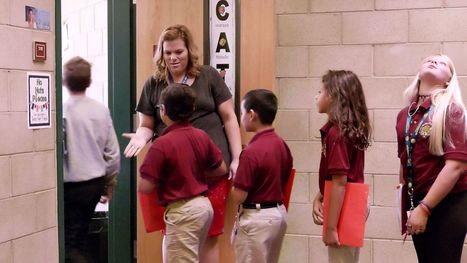
A widely cited 2007 study claimed that teachers greeting students at the classroom door led to a 27 percent increase in academic engagement. The problem? It included just three students.
Now a new, much larger and more credible study—comprising 203 students in 10 classrooms—validates that claim: Greeting students at the door sets a positive tone and can increase engagement and reduce disruptive behavior. Spending a few moments welcoming students promotes a sense of belonging, giving them social and emotional support that helps them feel invested in their learning.
The first few minutes of class are often the most chaotic, as students transition from busy areas such as the hallway or playground. Left unchecked, disruptions can become difficult to manage, but a proactive approach to classroom management can help students get focused and ready to learn. Rather than address disruptive behavior as it happens, proactive techniques—like greeting students at the door and modeling good behavior—reduce the occurrence of such behavior as teachers and students build a positive classroom culture together.
|
|
Scooped by
Mel Riddile
September 12, 2018 1:34 PM
|
Create routines, routines, and more routines. Don't start picturing Charlie Brown's teacher! "Routine" does not have to be synonymous with "dull and boring." I create a routine for any task, activity, or possible problem that may arise in my classroom from day one. This strategy does not mean that I teach them every routine right off the bat. It just means that I choose the routines that give me the most bang for the buck, such as those that will address the "I have to go to the bathroom" or "I need a pencil" or "Where do I put this?" issues. I try to teach only a few routines per day for the first few weeks of school because I want students to remember what we talk about and not become overwhelmed with too much new information. I also try to strike a healthy balance between the ho-hum routines and the more exciting ones, such as teaching brain breaks (a few minutes to refocus with dance, jumping jacks, Simon Says, or other recharging movement). When I teach any routine, I explicitly model what it should look like before we practice it together. If students make mistakes—which should be expected any time they are learning something new—we discuss them and try again, which nurtures a growth mindset.
|
|
Scooped by
Mel Riddile
September 8, 2018 5:16 PM
|
Too many university supervisors and administrators criticize the absence of lesson closure, a dubious assessment practice likely caused by the improper use of Madeline Hunter’s lesson plan model (PDF) as a de facto checklist of eight mandatory teaching practices -- anticipatory set, objective and purpose, input, modeling, checking for understanding, guided practice, independent practice, and closure -- a custom that Hunter decried in 1985 (PDF). Although it offers multiple benefits, please don't view closure as a professional must-do.
|
|
Scooped by
Mel Riddile
September 8, 2018 4:40 PM
|
What’s the opposite of scaffolding a lesson? Saying to students, “Read this nine-page science article, write a detailed essay on the topic it explores, and turn it in by Wednesday.” Yikes—no safety net, no parachute, no scaffolding—they’re just left blowing in the wind.
Let’s start by agreeing that scaffolding a lesson and differentiating instruction are two different things. Scaffolding is breaking up the learning into chunks and then providing a tool, or structure, with each chunk. When scaffolding reading, for example, you might preview the text and discuss key vocabulary, or chunk the text and then read and discuss as you go. With differentiation, you might give a child an entirely different piece of text to read, or shorten the text or alter it, and/or modify the writing assignment that follows.
|


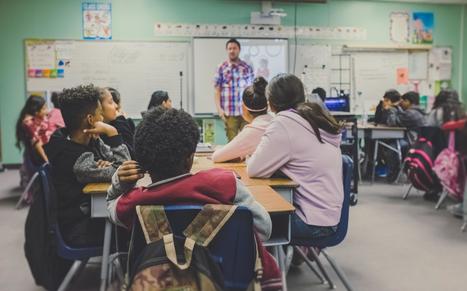

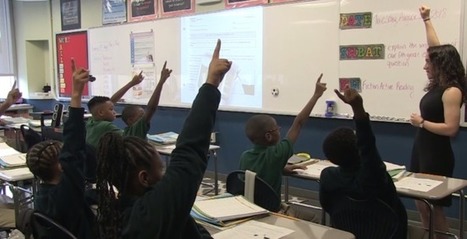






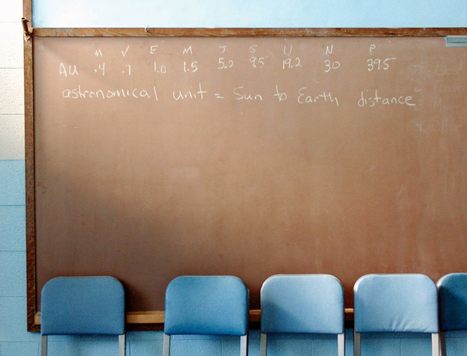
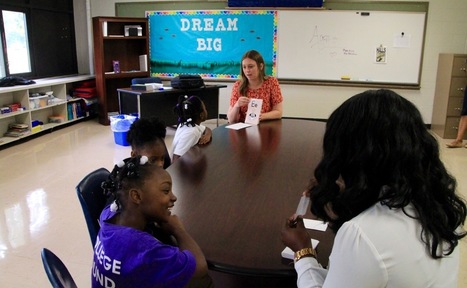










Students’ test-score results were consistently linked to teachers’ expectations that their students could master high standards.