Your new post is loading...

|
Scooped by
Mel Riddile
December 4, 2018 2:45 PM
|
Educators recognize that excessive absence comes with elevated anxiety and decreased educational self-efficacy. By intentionally reaching out during and after attendance struggles, educators provide students with HOPE.
|
|
Scooped by
Mel Riddile
December 3, 2018 5:41 PM
|
many researchers consider learning styles to be a myth. Prior research has shown little evidence that learning-style theory holds up. A 2009 meta-analysis of thousands of articles published on the subject found that most didn't test the concept in an experimental setting. Of those that did, several offered results that contradicted the theory.
But the idea's popularity in education circles persists—in part, said Papadatou-Pastou, because there are, of course, real differences among learners. "The intuitive appeal of learning styles rests on this reality," she said.
|
|
Scooped by
Mel Riddile
November 28, 2018 4:34 PM
|
Out of the 220 districts that responded to the survey, 91 percent reported experiencing a teacher shortage, with most feeling the pinch in science, math, and special education.
Eighty-five percent of the surveyed districts applied for emergency permits for people who don’t have teaching licenses, or educators who are hired to teach subjects outside their licensure.
Superintendents overwhelmingly said it was difficult to find qualified job candidates, and many mentioned high teacher turnover rates. They often pointed to low pay as the cause, competing against other higher-paying districts or the private sector.
|
|
Scooped by
Mel Riddile
November 28, 2018 1:26 PM
|
In terms of the amount, these are some guiding principles:
Feedback should correct major issues and misconceptions.
Feedback should provide students a guide on where to go next and what to focus on.
Teachers must realize that 100% mastery of the subject matter is not realistic for most.
It takes time and experience to learn to gauge the appropriate amount of feedback for each student. It will vary by student and lesson content.
It is critical that students are not overwhelmed by feedback that tries to correct everything so prioritization by the instruction is important.
Examples – select two or three points in a paper to comment on and be sure to comment on strengths as well as weaknesses.
|
|
Scooped by
Mel Riddile
November 25, 2018 9:15 AM
|
A period of rapid social change and the rise of social media may be shaping a society in which opinions are increasingly formed with little regard for the views of others. Turning this around starts with probing how we approach discussion in the classroom, says Doug Lemov, who suggests five steps to do just that
|
|
Scooped by
Mel Riddile
November 4, 2018 2:46 PM
|
If we want our students to actually learn the facts and concepts and ideas we’re trying to teach them, they have to experience those things in some way that rises above abstract words on paper. They have to process them. Manipulate them.
To really learn in a way that will stick, they have to DO something.
|
|
Scooped by
Mel Riddile
November 1, 2018 6:07 PM
|
What can I do to help you?
These words are hugely powerful and tragically underused at every level of the education world.
In the classroom, teachers have been taught since the dawn of time that they should be clear about their expectations. This is excellent practice; let the student know exactly what you want from her. If she has trouble meeting that expectation, be certain that you are explaining the expectation clearly. And then ask the student, "What can I do to help you?"
|
|
Scooped by
Mel Riddile
November 1, 2018 2:15 PM
|
A significant chunk of schoolwork these days necessitates a computer and internet connection, and this work includes tasks students are expected to complete at home without access to school resources. One federal survey conducted among American teachers several years ago found that 70 percent of respondents assign homework that needs to be done online—and 90 percent of high schoolers say they’re assigned internet-based homework at least a few times a month, according to a separate 2017 survey, including 48 percent who get such assignments daily or almost daily.
|
|
Scooped by
Mel Riddile
October 31, 2018 12:53 PM
|
Drawing improves memory across a variety of tasks and populations, and the simplicity of the strategy means that it can be used in any setting where it's okay to doodle," sums up Association for Psychological Science post highlighting the findings.
So next time you want to learn, don't read or write. Doodle instead.
|
|
Scooped by
Mel Riddile
October 26, 2018 4:51 PM
|
scientific research has shown how children learn to read. But many teachers either don't know that science or resist it.
"Most teachers nationwide are not being taught reading science in their teacher-preparation programs because many deans and faculty in colleges of education either don't know the science or dismiss it," Hanford writes. "As a result of their intransigence, millions of kids have been set up to fail."
Research shows that to learn how to read, children first need to be taught how letters represent speech sounds. But in many classrooms, teachers don't spend enough time on phonics, preferring to let students guess words from context clues and develop a love of reading through practice, rather than rote instruction, Hanford reported.
The "whole language versus phonics" reading wars have been raging for decades: Do we need to explicitly teach students how to read, or will they pick it up through enough exposure to good books? Studies have "failed to find a positive relationship between encouraging reading and either the amount of reading or reading achievement," states a 2000 report from the National Reading Panel. On the other hand, the federally funded report concluded that phonics lessons do help students become better readers. (There has been limited widescale research on the subject since then.)
Now, many educators advocate for balanced literacy, an approach to reading instruction that emphasizes student choice of texts, independent reading (also known as sustained silent reading), and group discussions. The approach includes some phonics, but does not make that a focus.
That approach is still the norm in many classrooms and teacher-preparation programs, Hanford reports. For instance, in 2014, the former New York City schools chancellor pushed for schools to reinstate independent reading time.)
|
|
Scooped by
Mel Riddile
October 26, 2018 4:42 PM
|
students from low-income and single-parent households tend to perform significantly lower as a result of wealth translating to fewer educational resources. According to the report, students from low-income and single-parent households are between 7 percentage points and 17 percentage points less likely than those from wealthier, two-parent homes to complete a higher education.
On average, the mean PISA science score among disadvantaged students was 452 points, while advantaged students saw an average score of 540 points. This gap of 88 points represents the equivalent of about three full years of schooling,the report says.
"The elephant in the room is the socio-economic profile of the schools," Schleicher said.
|
|
Scooped by
Mel Riddile
October 26, 2018 3:59 PM
|
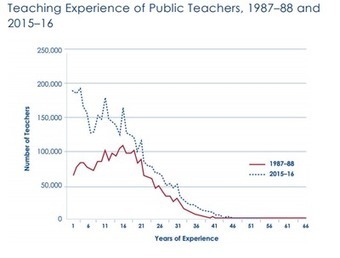
- Http The teaching force has continued to grow larger, less experienced, and more racially diverse. And the high numbers of teacher turnover have continued, especially among inexperienced and nonwhite teachers, a new analysis shows.
Richard Ingersoll, a professor of education and sociology at the University of Pennsylvania Graduate School of Education, has studied nearly three decades of federal data on teachers—now from 1987 to 2016—to explore what changes have taken place over time. This new report is his latest update, using 2015-16 data from the National Teacher Principal Survey. Here are some of the key findings:
1. Forty-four percent of new teachers leave teaching within five years.
Almost two decades ago, Ingersoll estimated that up to 50 percent of those who become teachers quit within five years—a figure that has been widely shared. That was always a rough estimate, and this new figure uses national longitudinal data and is more accurate, the report says.
Of course, given the ballooning of the teaching force, there are more beginners in the teaching force than before. Still, it's a high attrition rate. Teachers leave the profession at a higher rate than many other professionals, including police officers, Ingersoll said.
|
|
Scooped by
Mel Riddile
October 25, 2018 12:51 PM
|
From curricular offerings to extracurricular activities, shared milestones to cultural traditions, high schools have been remarkably consistent across the country and even across generations. Many Americans can remember the awkward school dances that memorialized the best (and worst) music of the day. Or bumping past different teenage archetypes on their way to classes. Or the pep fests and rallies they may have loved, or loved to hate. Football games that captured the attention of entire towns.
|
|
|
Scooped by
Mel Riddile
December 4, 2018 2:40 PM
|
Relationships come when we show learners: Your success is important to me I believe in you I am highly aware of your progress in this endeavor I will help you succeed Yesterday was one of the most intellectually intense days I’ve had in some time, and I came to realize some important things about Check for Understanding. I’m going to try to summarize some of them here. 1) Check for Understanding is quite possibly the single most important group of techniques in terms of buildin
|
|
Scooped by
Mel Riddile
November 29, 2018 4:44 PM
|
Credit recovery has come under increasing scrutiny as a quick, sub-par way to get high school diplomas into the hands of academically struggling students. And the schools likeliest to rely heavily on credit recovery are the ones that serve large populations of low-income and minority students, according to a study published Thursday.
The report, issued by the Thomas B. Fordham Institute, represents the most recent attempt to compose a heat map of the places that use credit recovery to help students graduate. With that map laid out, and questions about the misuse of credit recovery multiplying, the report poses the question: What should be done to
|
|
Scooped by
Mel Riddile
November 28, 2018 1:31 PM
|
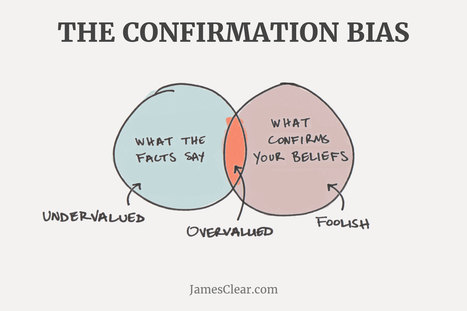
The Grandaddy of Them All. Confirmation bias refers to our tendency to search for and favor information that confirms our beliefs while simultaneously ignoring or devaluing information that contradicts our beliefs.
For example, Person A believes climate change is a serious issue and they only search out and read stories about environmental conservation, climate change, and renewable energy. As a result, Person A continues to confirm and support their current beliefs.
|
|
Scooped by
Mel Riddile
November 26, 2018 11:42 AM
|
the reason this strategy results in deep understanding is because it works with the way human beings instinctively learn. As we experience the world, we naturally organize things into categories based on common attributes. Concept Attainment is structured in the same way. Step-by-step instructions for using this engaging instructional strategy; video included!
|
|
Scooped by
Mel Riddile
November 5, 2018 1:07 PM
|
content or skills is never enough to be successful in a classroom.
Each child in our learning spaces has a story. There are learning strengths and challenges to be highlighted and developed. It is our job as students' teachers to find their strengths and play to them, building confidence as they venture into the skill-building and content areas of less proficiency.
In the assessment- and accountability-heavy world we live in right now, it is imperative for us to fight the urge to do what is easy; purchasing the textbook of the test-maker and following it with fidelity.
Students need an immersive experience that inspires and challenges their beliefs and empowers them beyond our current expectations. It is our duty to encourage their inquiry and curiosity and then follow the path that leads them.
|
|
Scooped by
Mel Riddile
November 4, 2018 2:43 PM
|
Many leaders agree that coaching is an important way to grow.
Let's rewrite that...
Many leaders believe instructional coaching is a great way for their teachers to grow. They understand how instructional coaches will work on a co-constructed goal with teachers, and can easily see how the relationship is beneficial because those leaders often see the impact of instructional coaching when they walk into classrooms to do their "learning walks," "walk throughs," or..."rigor walks."
What's interesting, is that when the coaching relationship is offered up to leaders, their openness to working with a coach isn't always immediately evident. And it's often for the same reasons that teachers aren't always open to being coached. Some of those reasons may be:
Insecurity sets in. They suddenly become insecure that they're doing something wrong or are no longer good enough for the position
They don't want others to know they are being coached because of the perception that may create...are they now seen as a bad leader?
They don't have time to be coached. They have much more important things to do.
What could the coach offer them, that they as the leader, don't already know?
|
|
Scooped by
Mel Riddile
November 1, 2018 2:44 PM
|
One of the biggest challenges U.S. math educators face is helping the large number of elementary teachers who are dealing with math trauma. Imagine being tasked with teaching children mathematics when it is one of your greatest personal fears.
Math trauma manifests as anxiety or dread, a debilitating fear of being wrong. This fear limits access to life paths for many people, including school and career choices.
While math trauma has multiple sources, there are some that parents and teachers have power to influence directly: outdated ideas of what it means to be good at math. These include speed and accuracy, which were important in decades past when humans were actual computers.
|
|
Scooped by
Mel Riddile
October 31, 2018 2:01 PM
|
In nearly 1,000 observed lessons, students met the demands of their assignments 71 percent of the time.
But those activities and assignments often did not meet the district’s and the state’s learning standards. The slow-motion math class was typical. Seventy-four percent of lessons observed were below grade level. “Even when we did see students offered grade-appropriate assignments, their teachers engaged them effectively with that content less than half the time, and students had the chance to do the deep thinking of the lesson just a quarter of the time,” the report said.
|
|
Scooped by
Mel Riddile
October 27, 2018 7:01 PM
|
Rather than setting homework that supports what pupils are currently learning in class, set work that goes back to previous topics. As with my first suggestion, you can kill two birds with one stone and set work that links the current topic with what has come before, but you want pupils to focus on recalling and using what they have already been taught.
One potential pitfall with using homework time in this way is that pupils find themselves reaching for their notes to complete the tasks set. For retrieval practice to work they need to be recalling from memory, not referring to something external. I find that as long as they understand the purpose they quickly get on board.
|
|
Scooped by
Mel Riddile
October 26, 2018 4:47 PM
|
While the report covers research on learning from birth through old age, its commission had some key conclusions for schools:
To be effective, teachers must understand how students' prior knowledge, experiences, motivations, interests, and language and cognitive skills interact with those of the teacher's own experiences and culture and the characteristics and culture of the classroom.
Students should be supported in directing their own learning, via targeted feedback, opportunities to reflect on what they've learned, challenges matched to their abilities, and help in developing meaningful goals.
Both curricula and instructional strategies should help students connect their academic learning goals to what they learn and do outside of school.
Teaching not just science or history content, but the specific language and practices of different disciplines, is critical to helping students develop deep understanding of those subjects.
|
|
Scooped by
Mel Riddile
October 26, 2018 4:38 PM
|
selective schools with a higher average achievement level may actually exert a negative influence on students' long-term success.
The nationally representative, longitudinal study of over 377,000 high school students found that while students who attend socioeconomically advantaged high schools tend to complete more schooling, earn higher annual incomes, and work in more prestigious jobs 11 and 50 years later, those who attend selective, high-achieving schools tend to experience the opposite.
The report, published by the Association for Psychological Science, claims that students in high-achievement schools had relatively lower expectations due to social comparison. In other words, these students, many of whom might've been near the top of their class in a more academically diverse school, develop a less positive self-image when all of their classmates are high-achieving.These expectations then negatively impacted students' attainment levels in the future
|
|
Scooped by
Mel Riddile
October 25, 2018 4:05 PM
|
Teacher shortages across the country are getting so dire that they’re forcing some school districts to live stream lessons, replacing educators in many classrooms.
According to The Wall Street Journal, tens of thousands of high school students nationwide are now getting lessons taught by a remote teacher to occupy many hard-to-fill positions in areas like science, math and special education.
All 50 states and Washington D.C. have reported teacher shortages over the last few years. The U.S. Department of Education said the number of people completing teacher programs has dropped from 217,506 in 2011 to 159,598 in 2016.
|


 Scoop.it!