Your new post is loading...

|
Scooped by
173 Sud
April 18, 2011 10:36 AM
|
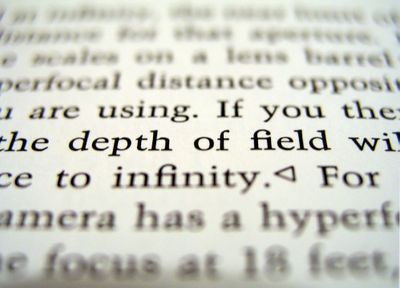
One of the first questions people always ask when they get their new Digital SLR is “how do I get that blurry background?” A shallow depth-of-field has become the hallmark of “professional” photos. While the technique has it’s advantages, by emphasizing it we’re ignoring how to properly use depth-of-field.
What most people don’t know is that when they upgrade from their point-and-shoot cameras, they are also accessing the ability to use a really deep depth-of-field. In this tutorial, we’ll go deep into the uses of the deep depth-of-field and some corresponding techniques.
|
|
Scooped by
173 Sud
April 16, 2011 11:33 AM
|
Vous êtes intéressés par l’achat d’un appareil photo numérique mais vous ne savez pas quoi choisir parmi les très nombreux modèles ? Vous ne savez pas quelle marque et quelle gamme choisir ?
Perdu dans les chiffres ? Submergé par les « technologies » et fonctions multiples ? Vous ne savez pas à quoi correspondent toutes ces indications sur les publicités ?
Et surtout, comment choisir un appareil photo numérique adapté à vos besoins, pas trop complexe, ni trop simple… Suivez mon petit guide d’achat, et déchiffrons ensemble les caractéristiques et les fiches techniques des appareils photos numériques pour bien choisir votre appareil photo numérique.
|
|
Scooped by
173 Sud
April 16, 2011 11:25 AM
|
A look at some of the differences between shooting in Ansel Adams’ era versus today...
|
|
Scooped by
173 Sud
April 16, 2011 11:15 AM
|
La profondeur de champ qui correspond à la zone où l'image est nette, dépend de l'appareil photo, de l'ouverture du diaphragme et de la distance entre l'appareil et le sujet.
|
|
Scooped by
173 Sud
April 16, 2011 11:11 AM
|
If you come from the world of films, you may remember using filters to correct for incandescent or fluorescent lighting. Most people don't bother and their indoors pictures invariably come out with a yellow/orange or bluish cast. In the digital world, these correction filters are no longer necessary, replaced by a feature found in most -- even the entry-level -- digital cameras called, "White Balance."
|
|
|
Scooped by
173 Sud
April 17, 2011 8:43 AM
|
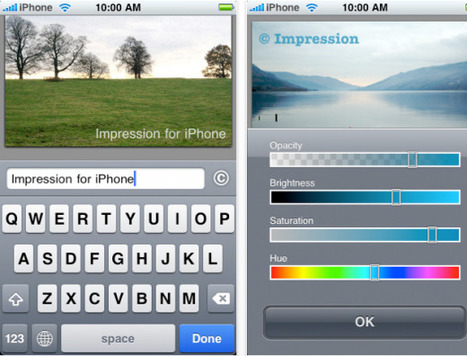
This is a carefully compiled list of camera replacement, editing studio and single-effect apps that will help enhance and enable your iPhone photography. There’s something in here for everyone from basic to advanced users and the choices range the gamut from perennial favorites to joyful new discoveries.
|
|
Scooped by
173 Sud
April 16, 2011 11:30 AM
|
The first step in resizing pictures is understanding aspect ratio. The aspect ratio is the longer side of the picture divided by its shorter side. This ratio is determined by the CCD in the camera being used. Most digital cameras have an aspect ration of 1.33:1 because this corresponds to the aspect ration of a standard computer monitor. Some high-end cameras and digital SLRs have an aspect ratio of 1.5:1, corresponding to the aspect ratio of 35 mm film.
|
|
Scooped by
173 Sud
April 16, 2011 11:16 AM
|
La balance des blancs (White Balance = WB en anglais), est le procédé qui permet de régler la couleur pour qu'elle soit réaliste, de manière à ce que les objets qui sont blancs dans la réalité soient aussi blancs sur votre photo.
|
|
Scooped by
173 Sud
April 16, 2011 11:14 AM
|
Savoir à quoi sert exactement le diaphragme de votre objectif vous permettra de maîtriser la profondeur de champ de vos photos.
|
|
Scooped by
173 Sud
April 16, 2011 11:09 AM
|
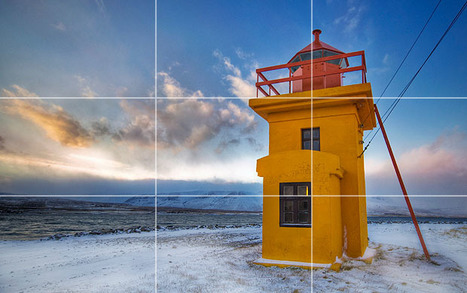
There are no fixed rules in photography, but there are guidelines which can often help you to enhance the impact of your photos.
|